Published on · updated on
Some links on this page are affiliate links: if you buy through them, Estate Romana receives a small commission at no extra cost to you. As an Amazon Associate, Estate Romana earns from qualifying purchases.
You can go to Saturnia from Rome in a day, and for many it’s the best thermal day trip within reach of the capital by car. The Cascate del Mulino are natural travertine pools where the sulfurous water comes down at 37.5 degrees all year round, entrance is free and there are no hours. The trip is long, though: Saturnia is in Tuscany, in the Maremma of Grosseto, a hamlet of the municipality of Manciano, and anyone who leaves late risks spending more time in the car than in the water.
That’s why the trip should be thought of as a full day, leaving at dawn or with a night in the area. Below you’ll find the history of the place, the roads and transport to get there, the best times to avoid the crowd, what to put in your backpack and the thermal alternatives closest to the city, for those who don’t feel up to so long a drive.
Data checked on October 3, 2026 on Visit Tuscany, the official tourism portal of the Tuscany Region, on the website of the Terme di Saturnia for the paid thermal park and on the encyclopedia entry devoted to Saturnia for the ancient history. Transport hours and parking rules change often: the operators’ websites are what counts.
Saturnia from Rome at a glance
- What: the Cascate del Mulino of Saturnia are natural travertine pools fed by sulfurous water at 37.5 degrees, with free access all year round.
- Where: the waterfalls are in the Maremma of Grosseto, along the road between Manciano and Saturnia, on Strada Vicinale Molino del Bagno, in the municipality of Manciano (Grosseto).
- When: the area is open day and night in every season. To find fewer people it’s best to arrive at dawn or on a weekday, avoiding summer weekends.
- How to get there: from Rome by car you follow the Aurelia north to Albinia and then the road to Manciano. By public transport you take the train to Orbetello or Albinia and continue with Tiemme buses.
- Paid alternative: a short distance away is the thermal park of Terme di Saturnia, with five outdoor pools, a white dress code and rates published on the operator’s website.
- Good to know: sulfurous water tarnishes silver and leaves a smell on swimsuits and towels, so it’s best to take off jewelry and bring a full change of clothes.
What are the Cascate del Mulino?
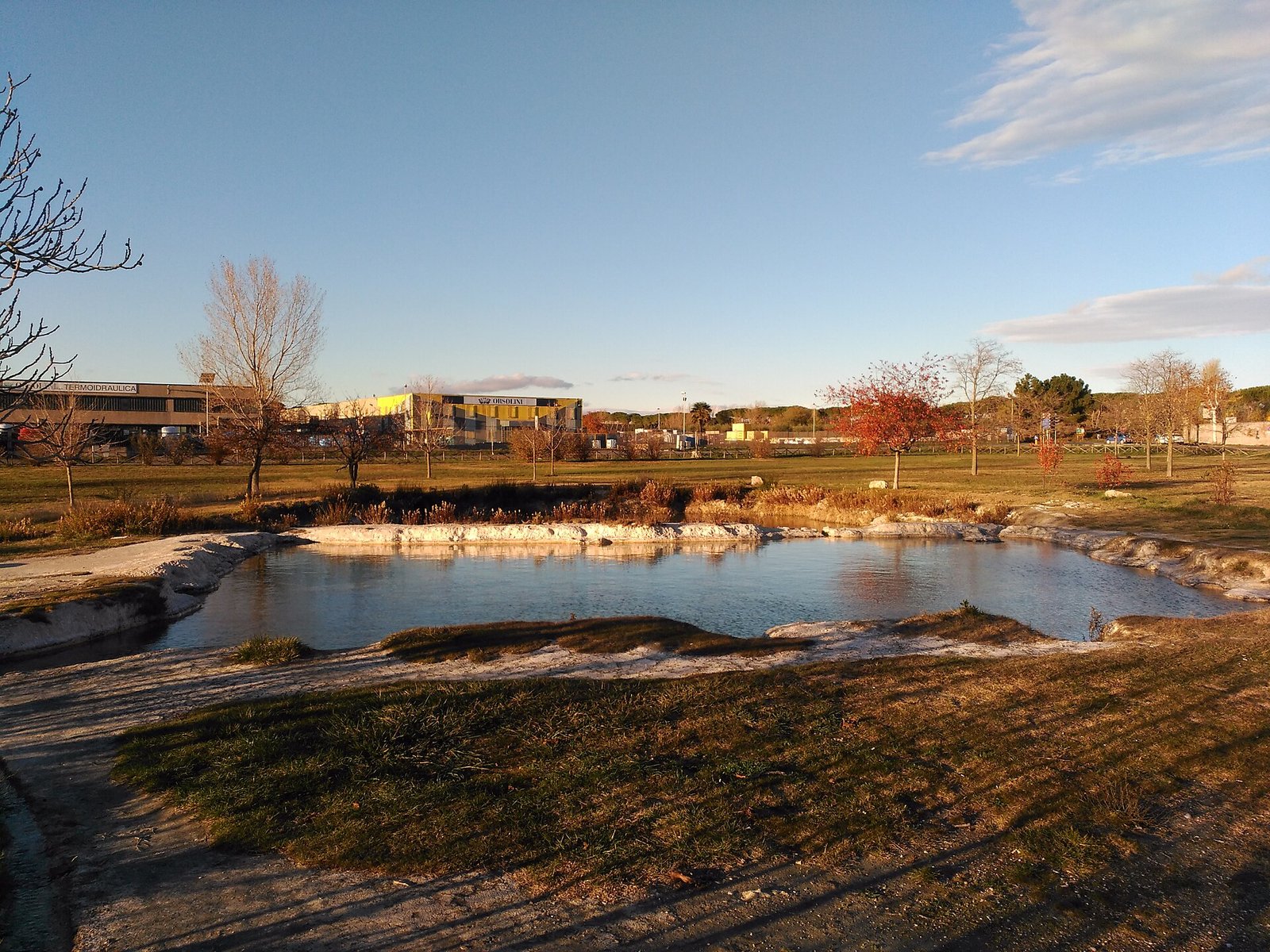
The Cascate del Mulino, also called the Gorello waterfalls after the name of the thermal stream that forms them, are a series of water drops that fill white and cream-colored pools. The name comes from an ancient mill that stood next to the waterfalls and used the force of the water. Travertine is the limestone deposited over the centuries by the water itself: that’s why the pools have rounded shapes and slowly change over time.
The water is sulfurous, rich in mineral salts, and according to Visit Tuscany it owes its origin to the volcanic system of Monte Amiata, now extinct. The operator of the thermal park speaks of a spring that gushes at a constant temperature and of a microorganism, the so-called thermal plankton, which would make the water beneficial for the skin. The therapeutic properties are a subject for doctors, not for a day trip: anyone with blood pressure or heart problems would do well to ask first, because soaking for a long time in hot water is tiring.
The free pools don’t have public services comparable to those of a spa establishment. There are bars and kiosks in the surroundings, but no guarded changing rooms or guaranteed showers: you change as best you can, leave your bag on the edge and get in. It’s exactly this absence of fences that makes them so loved, and so crowded in the middle hours.
What is the history of Saturnia and why is it called that?
The legend still told today by Tuscan tourism promotion says that the springs were born from a lightning bolt hurled by Jupiter at Saturn during a quarrel between the two: the bolt supposedly opened the earth and the hot water came out from there. It’s a nice story, modern in tone, that is not found in the ancient texts in this form. Take it for what it is, a tale to tell the kids in the car.
The true history is longer. The travertine plateau on which the town stands, at 294 meters above sea level, was inhabited already in the Bronze Age. From the 8th century BC Etruscan necropolises developed, but a real urban center appears only in the 4th century BC. After the Roman conquest of
Vulci, in 280 BC, Saturnia became a prefecture and in 183 BC a colony of Roman citizens was founded there, recorded by Livy in book XXXIX of his history of Rome.
The link with Rome can still be seen today: the town keeps the Porta Romana, on a stretch of Via Clodia, the consular road that went up from the capital toward inland Etruria. In the Middle Ages Saturnia passed to the Aldobrandeschi, was disputed between Orvieto and Siena and in 1410 was definitively conquered by the Sienese. In 1593 the Medici granted it to the Ximenes d’Aragona family. If you have a free hour, go up into town: Rocca Aldobrandesca and the church of Santa Maria Maddalena, already mentioned in 1188, are worth the detour.
How do you get to Saturnia from Rome, by car or public transport?
By car the most used road is the Aurelia north, past Civitavecchia and Montalto di Castro to Albinia. From there you take the road to Manciano and follow the signs for the baths. The travel time depends on the traffic leaving Rome and on roadworks on the Aurelia: rely on the navigator the evening before and add a margin. Anyone without their own car can rent one with Free2move or compare offers from several rental companies on Economybookings.
By public transport the trip is possible but requires patience. You take a regional train on the Tyrrhenian line toward Grosseto and get off at Orbetello, or at Albinia if the train stops there. Then you continue with Tiemme buses toward Manciano and from Manciano toward Saturnia, asking the driver for the stop for the baths. Connections are not frequent, especially on holidays: train tickets and times are checked on Trainline, bus ones on the operator’s website.
In our opinion, for anyone leaving without a car the train makes sense only with a night in the area, because the risk of missing the last useful bus to get back is real. A third way is the organized excursion from Rome: on GetYourGuide you find day trips with transport included to Saturnia. Read carefully how much time is really left in the water, because that’s the item that makes the difference.
When should you go to Saturnia to find fewer people?
The free pools are always open, and this is their biggest advantage. The advice is to take advantage of it: at dawn, in the early hours of the morning, the light is low, steam rises from the water and there are few people. From late morning on, on weekends and in August, the best pools are occupied and parking becomes a problem. Late afternoon and evening too, in the warm months, are quieter moments.
Autumn and winter are the seasons we prefer. The water stays at the same temperature, the cold air makes the bath more pleasant and there are few tour buses. The price to pay is the moment you get out: in December, wet and in the wind, you feel the cold. That’s why the bathrobe and a bag for dry clothes are worth more than any other accessory. In summer, on the contrary, at noon water at 37 degrees under the sun is anything but relaxing.
A note on rain: the waterfalls stay accessible and the water doesn’t change, but the bottom becomes more slippery and the stream, after heavy storms, can carry cloudy water. If serious bad weather is forecast on the day of the trip, consider the paid thermal park, which has covered facilities, or postpone.
Free waterfalls or Terme di Saturnia thermal park?
A short distance from the waterfalls, in the Follonata area, is the thermal park of Terme di Saturnia: five outdoor pools fed by the spring, hydromassage pools, vascular circuits with hot and cold water, mud treatments, a sauna, a bistro. You don’t need to be a hotel guest to enter with the daily ticket, whose rates are published on the operator’s website and vary with the season. The white dress code is mandatory for access. Anyone without a white bathrobe and towel can rent the kit on site.
The choice depends on what you’re looking for. The free waterfalls are free of charge, scenic, open at any hour, but without guarded changing rooms and often crowded. The thermal park offers showers, lockers, loungers and order, at the price of a ticket and a spa-establishment atmosphere. With small children or elderly people, in our opinion, the park is simpler. For a couple arriving at dawn, the waterfalls are unbeatable.
You can do both in the same day: waterfalls early in the morning, when they’re empty, and the thermal park in the afternoon, when the free pools fill up. It’s the most comfortable combination for those who sleep in the area, less so for those who have to get back to Rome in the evening.
What should you bring to the Saturnia waterfalls?
The right backpack is half the trip. Travertine is rough in some spots and smooth and slimy in others: you need pool slippers or water shoes with a rubber sole to walk among the pools. Sulfurous water soaks into fabrics, so bring a swimsuit you don’t mind ruining and a microfiber bathrobe, which dries fast and takes little space. A waterproof bag keeps dry clothes separate from wet ones for the trip back.
Take off silver rings, necklaces and earrings before getting in: sulfur tarnishes them in a few minutes. Anyone with long or dyed hair can use a cap to limit the smell and the effect of the mineral salts, even though in the free pools it’s not mandatory. The phone, if you really want to take photos in the water, goes in a waterproof case. Drinking water in a bottle is essential: with the heat of the water you get dehydrated without noticing.
Where to sleep and how to organize two days
A night in the Maremma turns a drive into a real trip. You sleep in Saturnia town, in Manciano or in the farmhouses of the countryside around, and in the morning you go down to the waterfalls before breakfast, when they are almost deserted. To compare availability and cancellation conditions it’s worth using Hotels.com, checking the real distance from the baths on the map: some properties listed as nearby are several kilometers away.
With two days you can add a piece of the Maremma: Pitigliano, Sorano and Sovana with the Etruscan sunken roads are inland, while Orbetello and the Argentario are on the road back toward the Aurelia. Families can alternate a day of water and one of villages, so the kids don’t tire of the pools and the adults don’t spend all the time keeping watch.
If you’re organizing for a group, be it friends, an extended family, a birthday party, a bachelor party or a company group, the logistics grow fast: minibus, driver, schedules, possible entrances to the thermal park. In these cases Tour Leader Pro can help, among the best tour operators and boutique agencies in Rome, which designs custom tours with professional tour escorts and, for the explanations of the villages and Etruscan sites along the road, with licensed tour guides.
How much time do you need for Saturnia from Rome in a day?
Let’s do the math honestly. Between the drive there and back a significant part of the day goes, and the time grows with Sunday return traffic. A few hours remain in the water, which is enough: long soaks in hot water are tiring and after a couple of hours almost everyone wants to get out. A good rhythm is an hour of bathing, a break, another half hour.
A scheme that works: leave Rome very early, waterfalls in the morning, lunch in Saturnia town or in Manciano, a walk among the walls and the Porta Romana, back in the early afternoon before the Aurelia clogs up. If you prefer the thermal park, reverse it: light lunch and afternoon in the pools. To choose where to eat, the Estate Romana restaurant map is a good starting point for the evening you’re back in the city.
The most common mistakes and the legend to debunk
Our contrarian view is this: the Cascate del Mulino in the middle hours of an August Saturday are overrated. The photos that circulate online are taken at dawn or off season, with empty pools and steam. At midday in summer you find dozens of people per pool, hot water under a hot sun and a long line to leave the parking lot. If you can only go at that time, the paid thermal park or another destination will satisfy you more.
The second mistake is thinking 37.5 degrees is a lot. It’s more or less body temperature: in summer the water feels lukewarm, in winter it’s pleasant as long as you stay in. The third is getting in with silver jewelry or with your best swimsuit. The fourth concerns the legend of Jupiter’s lightning bolt: fascinating, but it’s a local tale, while the documented history is that of the Roman colony of 183 BC and Via Clodia.
And if Saturnia is too far? The closest baths to Rome
Not everyone feels like driving to the Maremma. Lazio has thermal springs closer to the capital: in the Viterbo area there are free pools and spa establishments, and around Rome you find other baths reachable in less time. On our page devoted to baths near Rome you find the entries with addresses and services, and in the section on trips near Rome the ideas for a shorter day out of town.
And if it rains or you have only half a day, you find baths in the city too, in their ancient version. The Baths of Caracalla and the Baths of Diocletian tell how the Romans lived the bath. Tickets are booked on Tiqets for the Baths of Caracalla or among the attractions of Rome on Tiqets. Palazzo Massimo, the seat of the National Roman Museum in front of Termini, is another ideal stop for an indoor afternoon.
Useful products for a trip to the Saturnia baths
A selection of searches, with several alternatives for each category: individual items come and go, so choose based on recent reviews. For delivery times the estimated date at the time of the order is what counts: if you’re leaving in a few days, check it before buying.
For the thermal water
- Microfiber bathrobe: light, it dries fast and packs into little space in the backpack.
- Microfiber towel: an alternative to the bathrobe for those who prefer to change wrapped in a big towel.
- White bathrobe: useful for the thermal park, where the white dress code applies.
- Swim cap: limits the effect of sulfur on long or colored hair.
- Spare swimsuit: better to have one to dedicate to the baths, because the smell stays.
For the feet and for the travertine
- Pool slippers: for moving between parking lot, pools and changing rooms.
- Water shoes: they keep the foot steady on the slimy travertine inside the pools.
- Comfortable city shoes: for the walk in Saturnia town and for the next day in Rome.
For the backpack
- Waterproof bag: separates dry clothes from wet and sulfurous ones.
- Waterproof phone case: for photos near the waterfalls without risks.
- Anti-theft backpack: handy on trains and in stations, if you choose public transport.
- Insulated water bottle: cool water in summer, hot tea for getting out of the pools in winter.
- Power bank, 10000 mAh: the navigator uses battery and in the water nothing gets recharged.
- Folding hat: in summer your head stays in the sun while your body is in hot water.
To read
- Books on Rome: for the day before or after the trip, between the Baths of Caracalla and Diocletian.
- Books on the Maremma: useful if you extend to Pitigliano, Sovana and the Argentario.
- Books on the Etruscans: to understand the necropolises and sunken roads of the area.
Travel and stay
- Free2move: car rental with pickup in Rome, useful for leaving at dawn.
- Economybookings: comparison of several rental companies in stations and airports.
- Trainline: tickets for regional trains to Orbetello and Grosseto.
- Hotels.com: for the night in the Maremma or for those arriving in Rome from out of town.
- Saturnia excursions on GetYourGuide: day trips with transport from Rome.
Frequently asked questions
Are the Cascate del Mulino of Saturnia free?
Yes, access to the Cascate del Mulino is free all year round, at any hour of the day and night. There are no tickets or turnstiles. What you pay for, instead, is the thermal park of Terme di Saturnia, which is a different facility, and the private services in the surroundings. For parking, the information circulating doesn’t agree: check the signs on site and the communications of the Municipality of Manciano.
How far is Saturnia from Rome?
Saturnia is in the Maremma of Grosseto, beyond the border between Lazio and Tuscany, and from Rome you reach it by following the Aurelia north to Albinia and then the road to Manciano. Driving time varies a lot with the traffic leaving the city and on the Sunday return: calculate it with the navigator the day before and allow a generous margin.
Can you go to Saturnia from Rome without a car?
Yes, but it takes organization. You go by regional train to Orbetello or Albinia and then continue with Tiemme buses toward Manciano and Saturnia, asking for the stop for the baths. Runs are not frequent, especially on holidays, so check the times on the operator’s website. Alternatively there are organized excursions with transport from Rome.
What is the best time to visit the waterfalls?
Dawn on a weekday, in autumn or winter, is the best time. The water stays at 37.5 degrees all year round, the cool air makes the bath pleasant and the pools are almost empty. Avoid the middle hours of summer weekends and of August, when the pools are crowded and the parking lot fills up early.
Does Saturnia’s water ruin jewelry and swimsuits?
Yes, sulfurous water tarnishes silver and leaves a lingering smell on swimsuits and towels. Take off rings, necklaces and earrings before getting in and choose a swimsuit you’re not afraid to ruin. After the bath, if you find a shower, rinse off. At home wash the fabrics right away, separate from the rest of the laundry.
Can you bring a child to the free waterfalls?
Yes, many families do, but with care. The travertine is slippery, some pools are deep and the current under the waterfalls is strong. Besides, hot water tires the little ones quickly. Short baths, shoes with a rubber sole and an adult always close are the rule. The thermal park, with more orderly spaces, is a comfortable alternative.
What is the difference between the waterfalls and the thermal park?
The waterfalls are a free, no-cost natural area, without guarded changing rooms. The thermal park is a paid facility with five pools, hydromassage, sauna, showers and refreshments. In the park the white dress code applies and the rates are on the operator’s website. Those who want scenery choose the waterfalls, those who want comfort choose the park.
Who wrote this and on what sources
The text comes from the editorial team of Tour Leader Pro, the Rome-based outfit that designs itineraries, tours and cultural events across Rome and Lazio. The data come from Visit Tuscany, from the official website of Terme di Saturnia and from the history of Saturnia reconstructed from encyclopedia sources and from Livy, as of the date indicated at the start. Let us know what you find has changed.
Organizing Saturnia for yourself is easy, for six or 10 friends much less so: cars to coordinate, dawn departure times, who sleeps where, who wants the thermal park and who wants the free pools. A useful resource for those who organize group trips is Tour Leader Pro. If the trip to the baths is just one stop of a longer trip across Rome, the Tuscia and the Maremma, a useful resource for putting together a multi-day itinerary is Italy Planner.