Published on · updated on
Ottobrata romana 2026, in practice. The ottobrate have no single program. They’re the Sundays of October spent outside the city gates, with the sun still warm, a fraschetta in the Castelli and the new wine. This year the right dates are the Sundays October 4, 11, 18 and 25.
- In the city: on Saturday, October 10, Quartiere Vino in Pigneto, the neighborhood ottobrata with the wineries’ stalls.
- In the Castelli: Frascati for the fraschette, Marino (the Sagra dell’Uva is the first Sunday of October, so check the dates on the town’s website), Ariccia for the porchetta, Nemi and Castel Gandolfo on the lake. From Termini the regional train to Frascati takes half an hour.
- Without a car: a Castelli Romani tour with tasting, leaving from Rome (half a day, guide and wine included) or the regional train Rome-Frascati, with your ticket on your phone.
- If you stay in Rome: on Sunday at lunch the good trattorias are full. Book your table on TheFork, at many restaurants with menu promotions.
Some links are affiliate links. If you book from here, Estate Romana receives a commission from the seller, at no extra cost to you. On each Castelli page you’ll find “Plan your visit” to put the day together.
Ottobrate Romane: in Rome summer always lasts a little longer!
Don’t you think this year too there could be some memorable Ottobrate romane?
The origins of the ottobrate romane are very ancient and go back to the famous Bacchanalia that the ancient Romans dedicated to the God of Wine (Bacchus) starting in the 2nd century BC: very hot propitiatory festivals, to the sound of flutes and tambourines, with wild and licentious dances, as well as abundant libations.
The ottobrate romane in papal Rome (until the unification of Italy) were the name given to the many festivals held at the end of the grape harvest.
To celebrate the harvest and the end of the hard work, every family and every group of friends organized, on Thursday and Sunday mornings, outings “fori porta”, that is, group trips among the vineyards and the osterie, a tradition that became more and more established and spread to the Castelli Romani, until it became extremely popular from the 18th century on, as a form of collective leisure and escape, shared by nobles and common people who ended up mixing there.
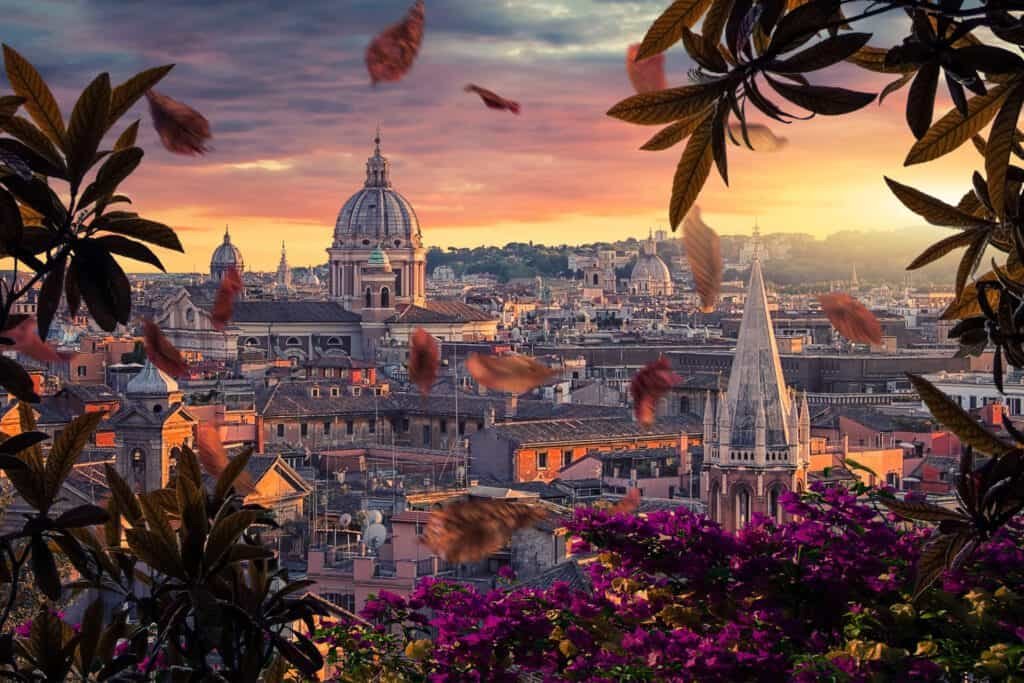
What were the Ottobrate Romane?
For centuries the ottobrate romane were held amid excesses of wine, food, dancing, love affairs and merrymaking.
For the aristocrats the ottobrate romane were a unique chance to escape the routine of the palace, and for the common people they were a singular opportunity to get away from an everyday life that was often gray and tiring: divided all year, but mixed together during the ottobrate in the wildest joy, fueled by the desire to live and by good wine.
To take part in the festival it was customary to dress very elegantly: women usually adorned themselves with flowers and feathers, but men too, as many prints and engravings of the time show, wore particularly sumptuous clothes.
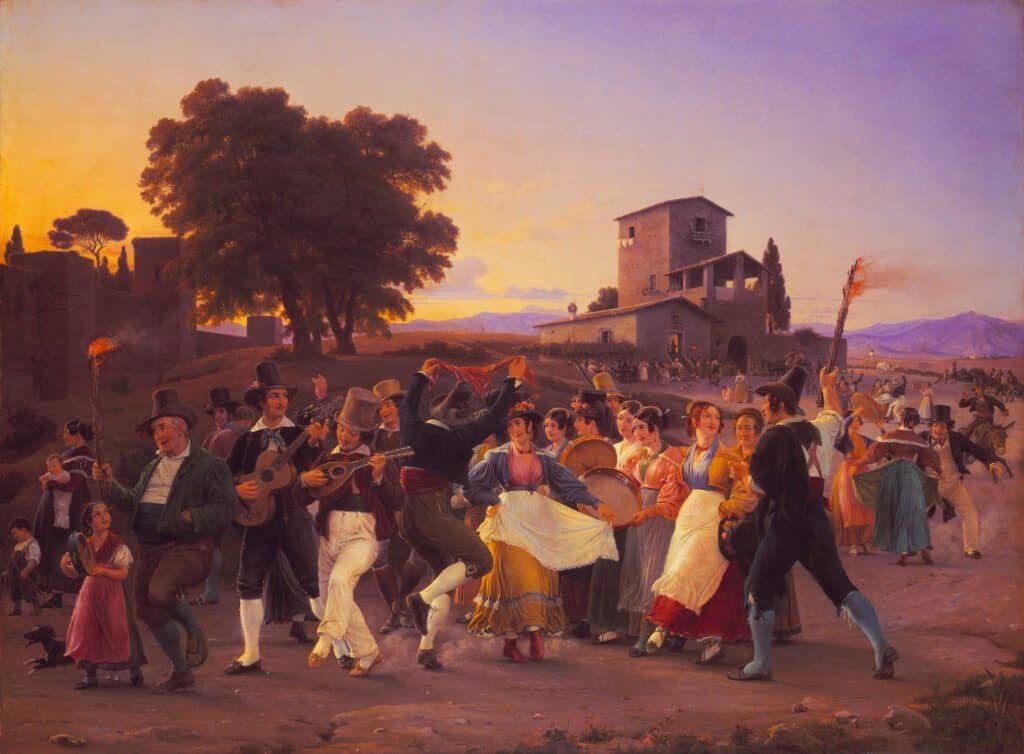
The programs of the ottobrate romane were based on games like bocce, ruzzola, swings and greased poles, then there were songs, dances, stornelli, rivers of wine and big meals. During the “outings” there were always gnocchi, turkeys, tripe and abbacchio.
People played tambourines, guitars and castanets and above all danced the saltarello
, whose moves were often accompanied by a refrain that went:
“birimbello birimbello
how good is this saltarello
move to the right, move to the left
move everything, with your foot and your hip.”
You should know that the Ottobrate romane were a festival (or rather a series of festivals) so eagerly awaited that people were willing to go into debt to take part, turning to the Hunchbacks of the “mount of impiety”, as the Monte dei Pegni was jokingly called, to have enough bajocchi to buy a new, eccentric dress just for the occasion, but also to rent the carriage and pay for wine and food at the festival.
Those who needed to resort to it pawned everything: linen and furnishings, old clothes and small valuables.
One of the traditional stories tells of a woman who, to buy the right dress for the ottobrata romana, went so far as to pawn the bed, since her husband, on coming home, would be so drunk he wouldn’t notice.
A burlesque chronicle from 1860 recalls that once a wife and husband each took the other’s clothes to the Monte de’ Pegni.
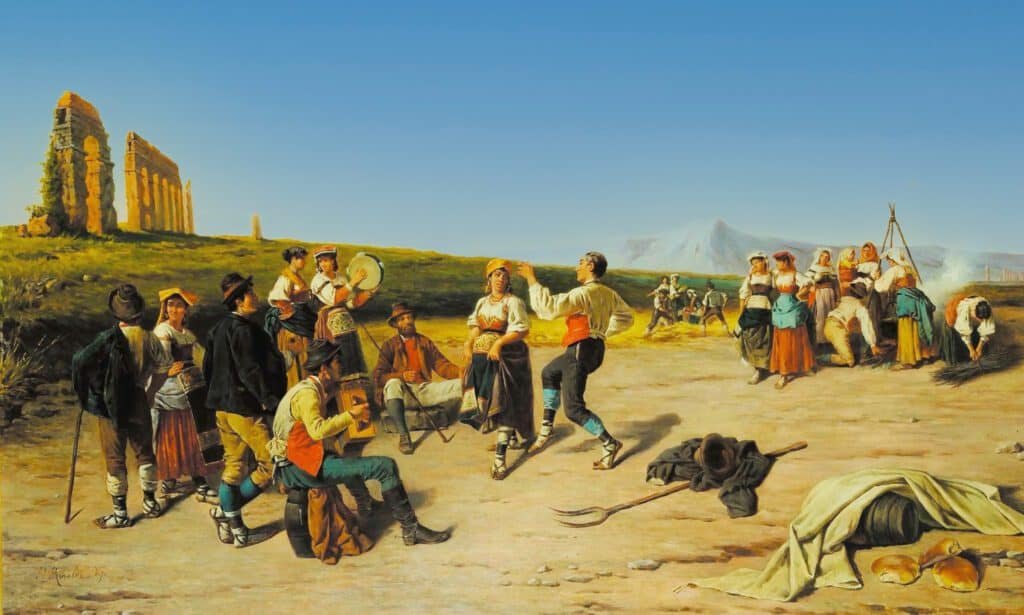
Where were the best festivals of the Ottobrate Romane?
“Since Testaccio is close to Rome, in October we went there gladly, by carriage and on foot.
Once there we ate, we drank that wine that came out of the caves, that gushed, then we went to dance the saltarello either on the meadow, or in the yard of the Capannone osteria, or we sang like poets, or we played morra.”
– Giggi Zanazzo (1907)
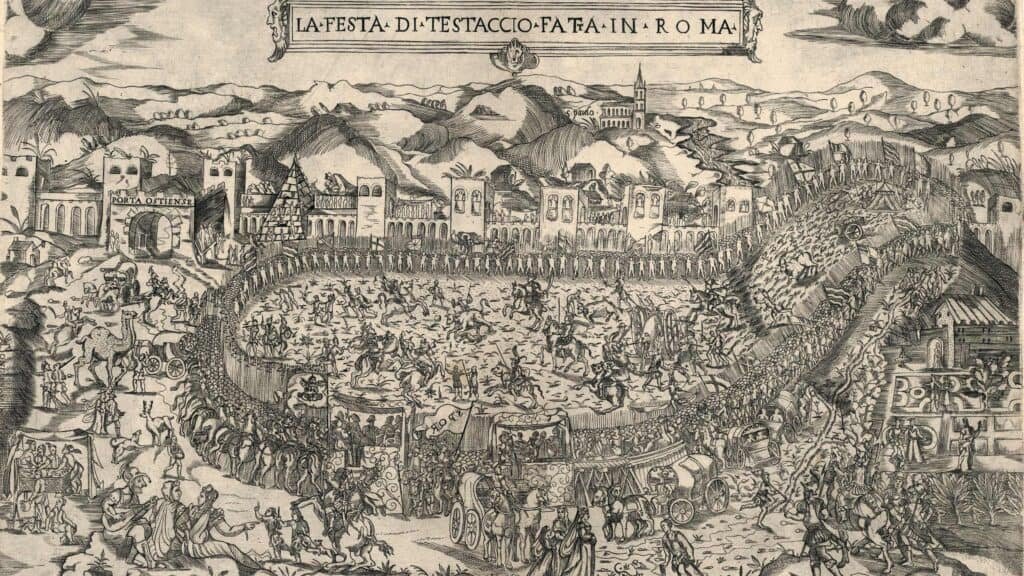
From the 1600s, several caves, cellars and warehouses were dug to store wine at the foot of Monte de’ Cocci in Testaccio.
In the late Middle Ages Monte Testaccio was already home to the ludus Testacie (a sort of bullfight), and so it also became the favorite destination of the well-known “ottobrate romane” of the 1700s.
Until the early 1900s, in October, you could see carts decorated for the festival, driven by the “mozzatore“, that is, the women who worked as grape pickers during the harvest, parading toward the osterie and cellars of Testaccio. Amid songs, dances, poetry contests, games and chatter, people refreshed themselves from work and “watered” it all down with wine from the Castelli Romani, also kept in the cellars dug into the slopes of the hill.
The presence of gardens and vineyards around the city gates encouraged the spread of the Ottobrate romane, beyond the Testaccio area, to other areas outside the gates too, in particular Ponte Milvio, San Giovanni, Porta Pia, Porta San Pancrazio, San Paolo, Monteverde and Monte Mario, which until 1900 were still cultivated as gardens and vineyards.
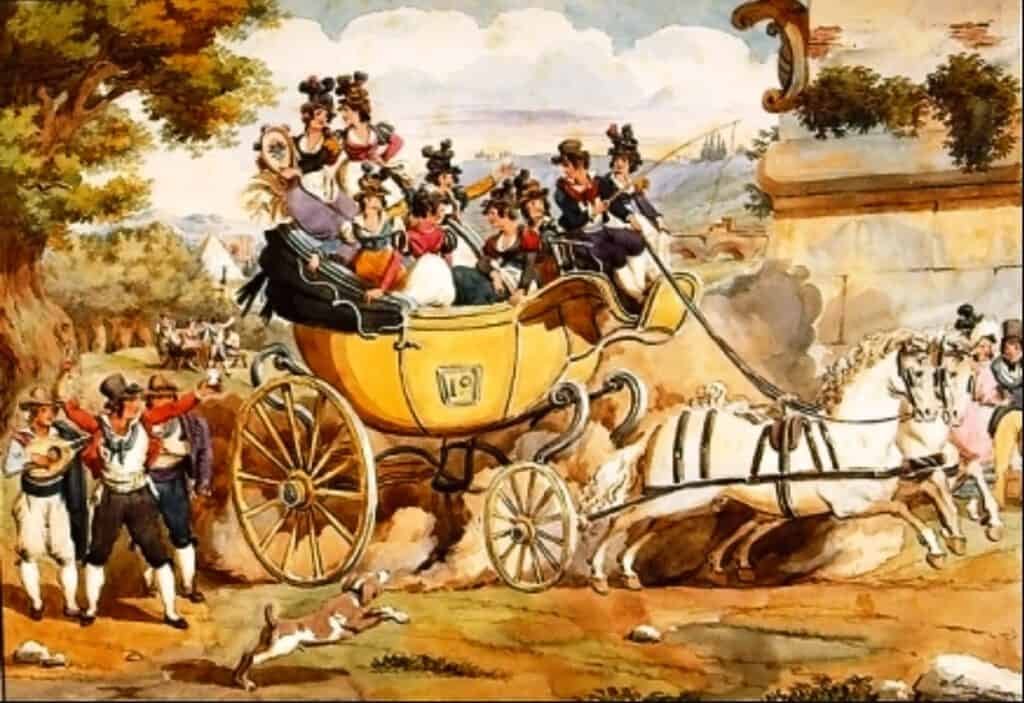
The Carettella of the Ottobrata Romana – Status symbol and tradition
Those who could afford it went to the ottobrata romana outings in the carettella (the characteristic egg-shell shaped carriage that carried up to nine minenti, that is, the women of the Roman middle class dressed up for the festival) and let the prettiest woman sit next to the driver to attract as many people as possible.
The rest of the group followed the carettella, playing and singing stornelli and folk songs at full volume:
“Flax flower / and the most beautiful one sits next to the coachman”
Once they arrived, the nobles, drunk on wine, mixed with the common people as had always happened in the Roman tradition.
The festive outings also drew the attention of famous foreign travelers of the time, philosophers, observers and the curious. Giacomo Casanova, for example, tells of having had a wonderful day, with a single flaw: the shortness of the trip from Rome to Testaccio, the destination of his own ottobrata, because the time spent in the carrettella in contact with his women was decidedly not enough.
The rhythm of the saltarello livened up the mood of the festival, which gradually heated up from the effects of the wine, so much so that, as Zanazzo himself tells us, the return to the city was always rowdier than the departure and the whole city sparkled, lit by the torches of the drunken ottobrari:
“in the evening we went back to Rome to the sound of tambourines, of castanets and of songs…
And we raced so much among carriages and carettelle that accidents always happened.”
For those who, for whatever reason, couldn’t afford to leave the city, there was an alternative to the trips outside the gates, kindly offered by the Borghese princes. On the Sundays of October the gardens of Villa Borghese (private at the time) were opened and you could spend the day there, in particular in Giardino del Lago and Piazza di Siena.
From the end of the 1700s, in fact, the Borghese princes had spaces set up for shows, games, orchestras, greased poles, the canoffiera (a group swing), equestrian displays and athletic contests, even hot-air balloons, to entertain the days and evenings of the Romans who stayed in the city.
What does Ottobrate romane mean?
Today the term “ottobrata romana” indicates a very favorable weather condition that Rome has always had in October, even though elsewhere it’s a decidedly colder and rainier month.
The ottobrata romana arises, technically, thanks to the Azores high pressure that dominates the central Mediterranean in these days, bringing stable atmospheric conditions with mostly sunny weather and a particularly mild climate that keeps disturbances away, especially around Rome, producing an unusual absence of rain in October, which elsewhere is among the rainiest months.
The tradition of the Ottobrate Romane, which survived the end of papal government, remained officially alive until the early 1900s, but still today, thanks to the many Romans who, to enjoy the excellent climate of the capital, don’t refuse to organize the celebrations.
The mild climate of this period is the basis of the ottobrata romana, a month that is particularly interesting for going out and discovering the beauties of the eternal city.
“What a beautiful ottobrata!” is still associated today with Rome’s good weather, so much so that many take the chance for one last vacation (in the Capital). The ottobrata romana generally lasts, in fact, the whole month, giving Romans, and people visiting the city, time to get used to the arrival of autumn and winter.
During the ottobrate romane nothing matters except being together outdoors, and there’s nothing nicer than making your way, with relatives and friends, through lunches, dinners, parties, visits to museums and to the tourist attractions of Rome, night walks in the city and trips outside the gates, in the countryside or for one last bit of sun among the many lakes and beaches near the city.
So today we can say that the expression ottobrata romana refers almost exclusively to the “weather phenomenon”, that is, to a mix of particularly pleasant and evocative temperatures that still evokes the warm season and the desire to live the city and its many beauties, but for Romans it still means something more.
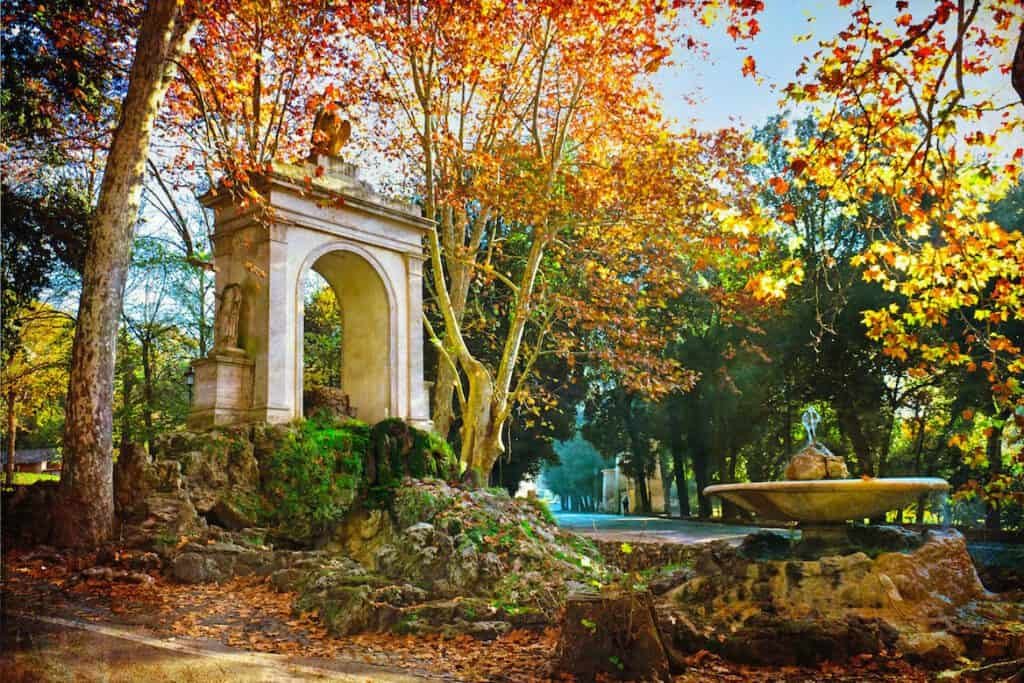
October events in Rome
Many visitors prefer to visit Rome in October, and there are generally many cultural and recreational events that brighten a visit this month.
Many tourists manage to organize short tours and start visiting the city at dawn to capture photos with fewer people getting in the way. Dawn in Rome in October is between 7:08 and 7:34, with the clock change on October 25 at 6:36.
Worth noting that in October Rome hosts:
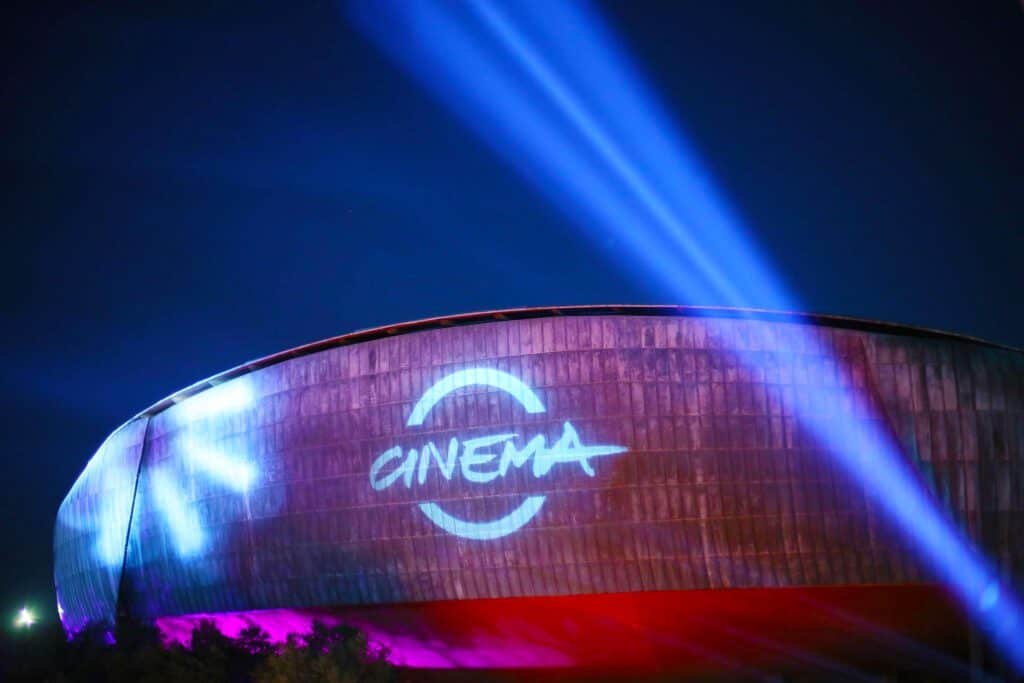
- since 2006 the Festa del Cinema, an international festival that fills the city with events and screenings everywhere.
- since 2001 Romics, the International Festival of Comics, Animation, Cinema and Games (even if the date has changed now and then, the first week of October has been the most frequent).
- since 2013 Maker Faire Roma, the fair of the inventions of digital makers.
- since 2007 the Auditorium hosts a folk concert dedicated to the ottobrata romana, with the Orchestra Popolare Italiana and several national guests, and since 2019 Fondazione Musica per Roma has established a special Gabriella Ferri Prize to remember one of the protagonists of 20th-century Italian music and to celebrate the great richness of Roman folk song.
- several theater and film festivals and the opening of many art shows…
Also in October the
FAI, Fondo Ambiente Italiano, organizes in Rome guided visits to places of Italian heritage that are normally not open to the public.
Many, then, are the characteristic sagre around Rome, from the famous Sagra dell’Uva di Marino, where wine flows straight from the fountain of the Castelli Romani town, to the countless festivals of wine, chestnuts, truffles, wild boar, … across the whole region, which vaguely recall the old spirit of the Ottobrata romana, which otherwise today can only be found in smaller and more intimate settings than two centuries ago.
Ottobrata Romana | The ancient origins
The origins of the ottobrata romana are very ancient and go back to the famous Bacchanalia that the ancient Romans dedicated to the God of Wine (Bacchus) starting in the 2nd century BC borrowing the ancient Greek cult of Dionysus: very hot festivals (first orgiastic, then) propitiatory, to the sound of flutes and tambourines, with wild and licentious dances, as well as abundant libations at the time of the grain harvest.
Republican Rome, however, couldn’t tolerate Greek customs influencing Latin culture, and therefore banned them.
Often the bacchanal involved several peoples of a territory who gathered for a number of days in a symbolic place, where animal sacrifices and orgiastic rites were practiced.
Surely the sexual practices that took place there were aimed at propitiation, but also at celebrating the shepherds returning from transhumance after a whole season.
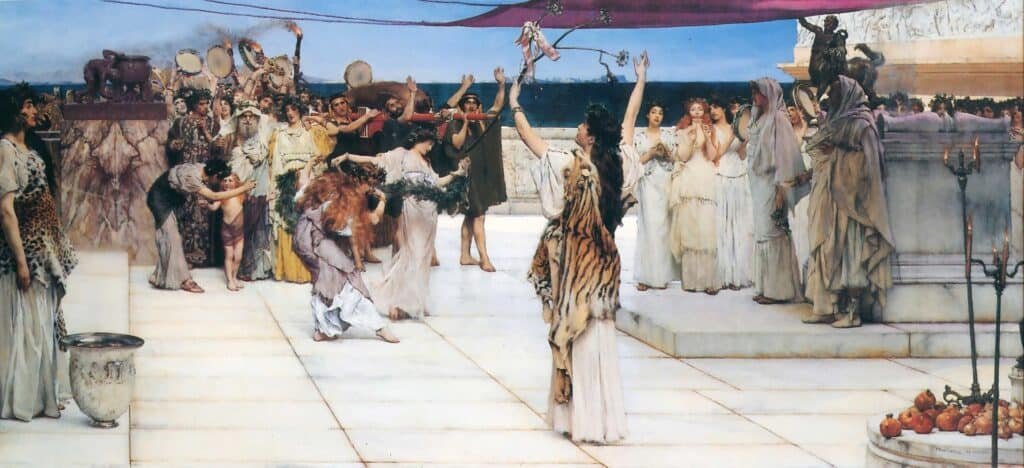
In 2nd-century Rome, though, these aspects were evidently absent, and one of the issues that led to the senatus consultum de Bacchanalibus was that during these rites some initiates committed extreme violence, striking free men and women without distinction, “so secret that sometimes not even the bodies were left for burial”, in addition to several other offenses.
This was in contrast with Roman laws, which forbade such acts among citizens, while allowing them against slaves, and the bacchanals were seen as dangerous to moral and social order.
This ban set penalties so severe for offenders that the Bacchanalia disappeared completely from Roman traditions, to be revived, in a decidedly more restrained form, many centuries later.
As happened with most ancient Roman festivals, the Church and the middle class then tried to make the traditional autumn festival a little more moderate, succeeding despite the high alcohol level of those who took part.
The ottobrata romana in papal Rome (until the unification of Italy) was therefore the name given to the many festivals held at the end of the grape harvest: the outing “fori porta”, that is, the trip among the vineyards and the osterie that became more and more established until it became extremely popular from the 18th century on, as a form of leisure and escape shared by nobles and common people.
The ottobbrate romane
***
The Sun, in October, when elsewhere it’s Winter,
warms the air in Rome already in the morning,
the blue sky looks like a shop window,
to bring peace to whoever looks outside.
And there’s no room for fog or frost,
and what is a moment becomes eternal,
to be copied out neatly in the notebook,
where to jot down divine immensity.
The people call them ottobbrate,
as if the month were acting as the climate,
to dress Autumn in rags of Summer.
But October, at heart, isn’t such a big deal,
however far it carries these days forward,
November overtakes it and arrives first.
Stefano Agostino