Published on · updated on
Some links on this page are affiliate links: if you book through them, Estate Romana receives a small commission, at no extra cost to you.
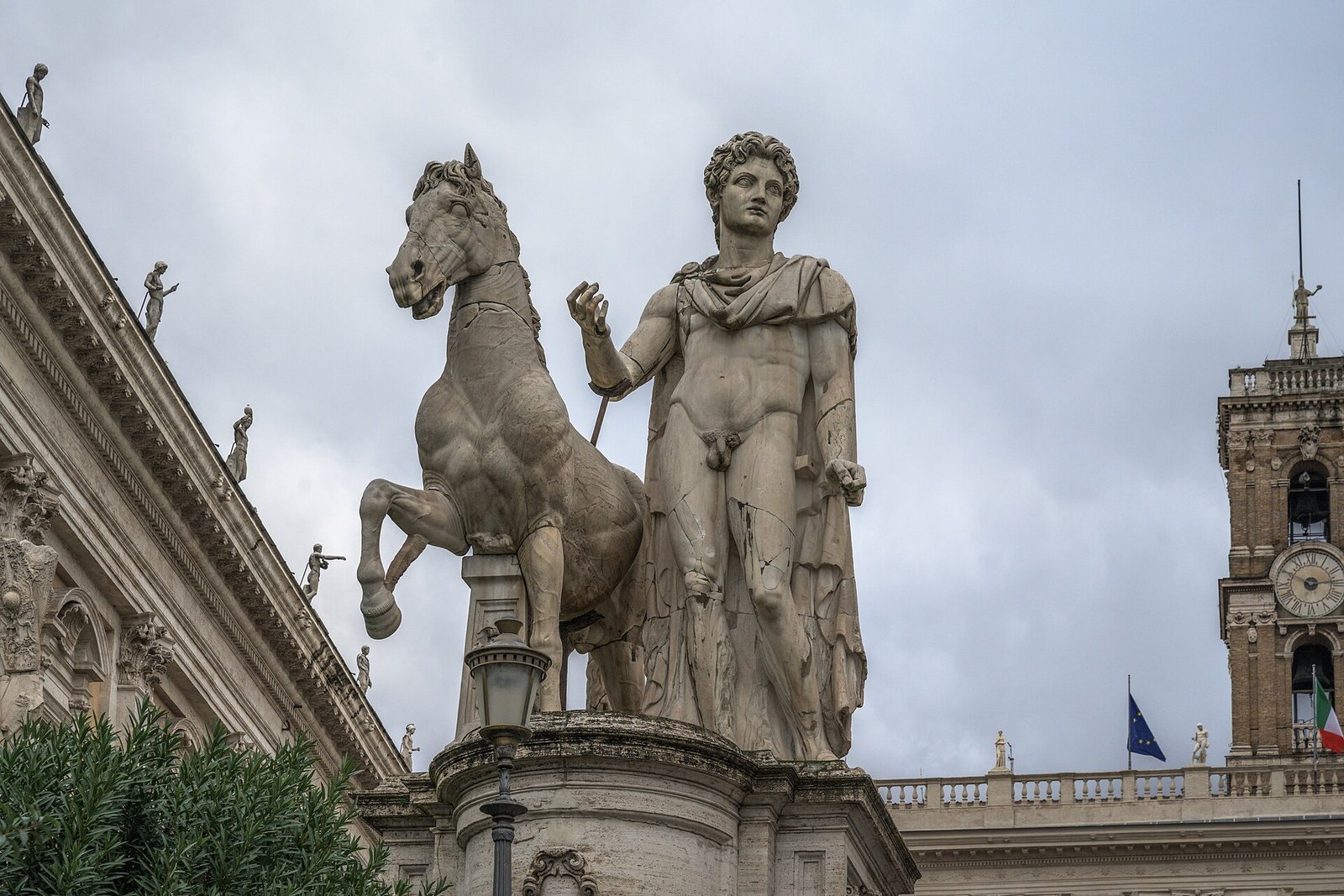
When an American arrives in Piazza del Campidoglio, they often don’t know it, but they are looking at the origin of the word that back home means the heart of politics: Capitol. Washington is full of Rome: in the names, in the Latin mottos on the dollar, in the bundles of rods on either side of the House flag, in the domes and the colonnades. Even the mile, the foot and the inch with which the United States still measures distances have Roman names.
Here we tell what the United States really took from ancient Rome, what instead arrived by other routes, and where in Rome to see the original of each thing. Data checked on October 17, 2026 against the websites of the United States Senate and the Architect of the Capitol, the National Park Service, the State Department, NIST (the American measurement agency), Treccani and Turismo Roma. Where a much-told story doesn’t hold up, we say so.
The United States and ancient Rome in brief
- The name: “Capitol” comes from the Campidoglio, the Capitolium: it was Thomas Jefferson who wrote it on the drafts of the Washington plan in place of “Congress Hall.”
- The institutions: Senate, republic, veto (“I forbid”) and census are words and ideas of republican Rome, the declared model of the Founding Fathers.
- The symbols: the lictor fasces are in the House of Representatives, in the seal of the Senate and under the hands of the statue of Lincoln. The mottos of the Great Seal are adapted from Virgil.
- The measures: mile, foot and inch have Roman names and structure, but different values: they came to America by way of England.
- Where to see it in Rome: Campidoglio and Capitoline Museums, Roman Forum, Pantheon, Baths of Caracalla and Diocletian, Arch of Constantine, Ara Pacis.
Why does the American Congress meet in the “Capitol”?
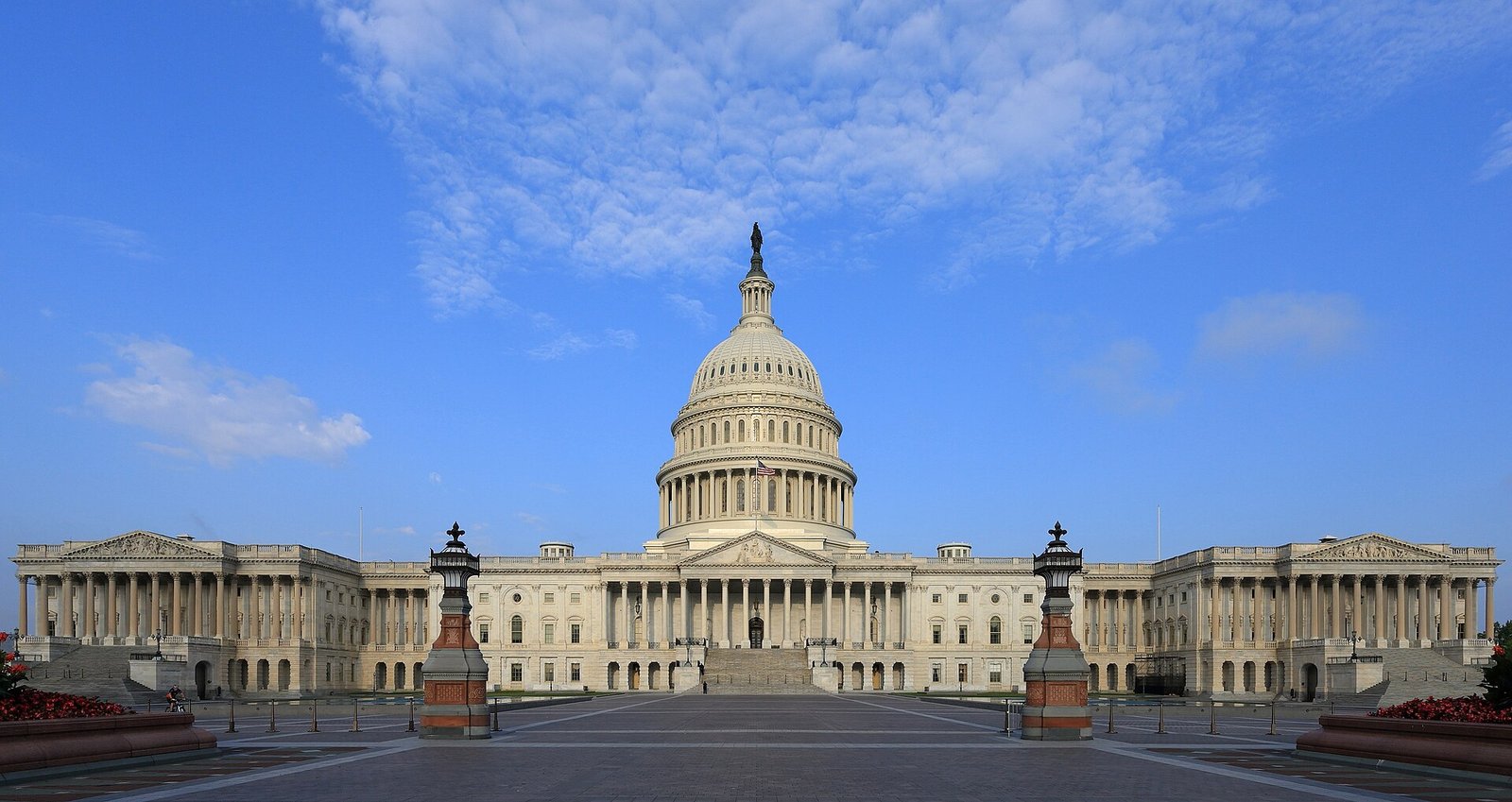
Because the Founding Fathers looked to the Roman republic as a model, and said so openly. According to the reconstruction by the United States Senate, the little hill chosen for the new Congress, which was called Jenkins Hill, was renamed on the model of the Capitoline Hill and became Capitol Hill. On the drafts of the city plan Thomas Jefferson crossed out “Congress Hall,” the name of the Philadelphia building, and wrote “Capitol.”
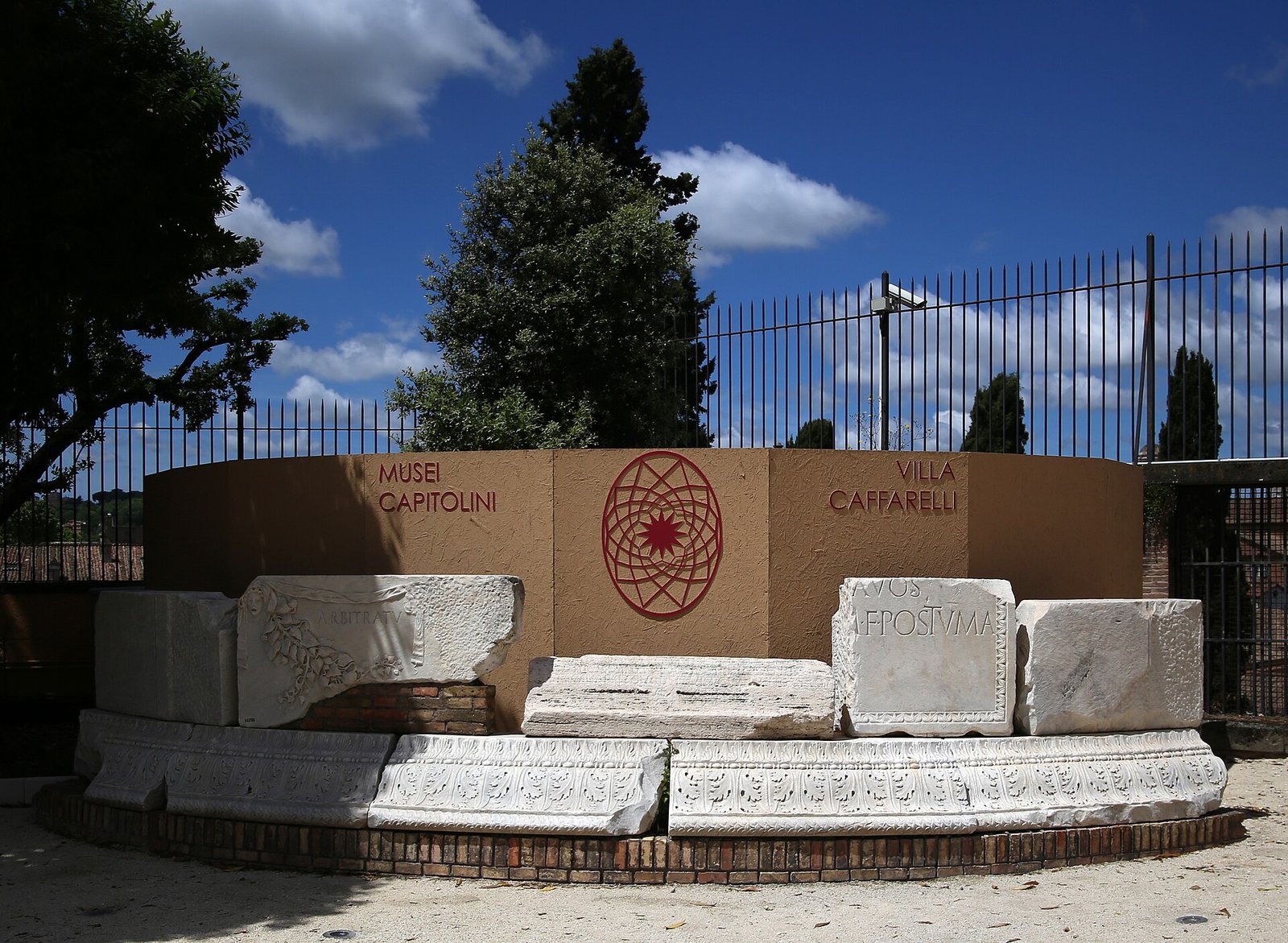
In Rome the Capitolium was the most sacred hill, with the great temple of Jupiter Optimus Maximus, inaugurated according to tradition in 509 BC, the year the republic was born. Today what remains are the blocks of the base, which you can see in the Roman Garden and in the rooms of the Palazzo dei Conservatori, inside the Capitoline Museums. To get in you can get the Capitoline Museums ticket on Tiqets or a guided visit on GetYourGuide. Watch out for a difference that confuses even Americans: Capitol is the building and comes from the Campidoglio, while capital, the capital city, comes from caput, “head.”
Which words of American politics are Roman?
- Senate: from senatus, the assembly of elders. In Rome the Senate met in the Curia, in the Roman Forum: the Curia Iulia you see today is a late-antique reconstruction, but the spot is the same.
- Veto: in Latin it literally means “I forbid.” It was the power of the tribunes of the plebs to block the decisions of the magistrates.
- Census: in Rome it was the register of citizens and their property, kept by the censors. The American census has the same name.
- Publius: the Federalist Papers, the articles that in 1787-1788 defended the new Constitution, were signed “Publius,” most likely in honor of Publius Valerius Publicola, one of the founders of the Roman republic.
- Cincinnatus: George Washington was portrayed as Cincinnatus, the Roman dictator who saved his country and went back to his plow. In 1783 he became the first president of the Society of the Cincinnati, and in 1790 the town of Losantiville took the name Cincinnati in honor of that society.
What does the Latin on the dollar say?
The Great Seal of the United States, printed on the back of the one-dollar bill since 1935, carries three Latin mottos. E pluribus unum, “out of many, one,” was proposed in 1776: many trace it back to a short poem attributed to Virgil, but the State Department points to the title page of a London magazine of the period, the Gentleman’s Magazine, as the more likely source. Annuit coeptis, “he has favored the undertaking,” and Novus ordo seclorum, “a new order of the ages,” were instead adapted in 1782 by Charles Thomson from two lines of Virgil, in the Georgics and the Eclogues. And they don’t mean “new world order”: they point to the new era that began in 1776.
At the base of the pyramid it says MDCCLXXVI, 1776 in Roman numerals. The same date in Roman numerals is carved on the tablet held by the Statue of Liberty. To practice reading them, Rome has a perfect spot: above the arches of the Colosseum you can still see the numbers that marked the entrances. To visit it you can use the Colosseum, Forum and Palatine ticket on Tiqets or the guided tour on GetYourGuide.
Why are there lictor fasces in Congress?
The fasces, rods bound together, sometimes with an ax, were the symbol of the authority of Roman magistrates: they were carried by the lictors who walked ahead of them. In the United States they are everywhere, and they are much older than fascism. In the chamber of the House of Representatives the flag is flanked by two bronze fasces. The Senate seal has two crossed fasces. The House’s ceremonial mace, remade in 1841, is a bundle of 13 ebony rods, one for each original colony. At the Lincoln Memorial, under the hands of the statue of Lincoln, the National Park Service invites you to look for the fasces. From 1916 to 1945 a fasces was even on the back of the 10-cent coin.
In Rome you can see lictors with fasces in the procession frieze of the Ara Pacis, Augustus’s altar of peace on the Lungotevere. The ticket is on Tiqets and on GetYourGuide.
Which American buildings copy Roman monuments?
- The Pantheon, twice: the Rotunda of the University of Virginia, designed by Jefferson, is an interpretation of the Pantheon at half scale. The Jefferson Memorial in Washington, by John Russell Pope, is modeled on the Pantheon. To see the original you can get the Pantheon ticket on Tiqets or the official guided visit on GetYourGuide.
- The Baths of Caracalla in New York: the waiting room of the old Pennsylvania Station, demolished in 1963, was modeled on the Baths of Caracalla. In Rome you can still visit them: ticket with audio guide on Tiqets or on GetYourGuide.
- Union Station in Washington: the three-arch facade echoes the Arch of Constantine and the vaults of the waiting room echo the Baths of Diocletian, now part of the Museo Nazionale Romano (combined ticket on Tiqets).
- The Virginia Capitol: Jefferson had it designed on the model of the Maison Carrée in Nîmes, a Roman temple in France. In Rome a temple of the same type, on a high podium, is the Temple of Portunus in the Forum Boarium, near the Bocca della Verità.
A story you often hear, however, doesn’t hold up: the great dome of the Capitol in Washington does not copy St. Peter’s or the Pantheon. According to the Architect of the Capitol, Thomas U. Walter was inspired by the Panthéon in Paris. The link with Rome is at the top: the statue that crowns the dome, the Statue of Freedom (not to be confused with the Statue of Liberty in New York), was modeled in plaster by Thomas Crawford in his Roman studio, and wears a Roman-style helmet. Crawford would have liked to give her the cap of the freedmen, Rome’s freed slaves, but the design was rejected.
Do the mile, the foot and the inch really come from Rome?
Yes and no, and it’s the most curious part. The name and the idea are Roman: the mile was mille passus, a thousand double steps, about 1,480 meters. The Roman foot measured about 29.6 centimeters, as shown by a ruler found at Ostia Antica, and was divided into 12 unciae. From uncia, “one twelfth,” come both the English inch and ounce. And the abbreviation “lb” for the pound comes from the Latin libra.
But the values changed along the way. Roman measures arrived in Britain with the conquest, were transformed over centuries in England, and from there passed to the American colonies. Today’s mile, 1,609.344 meters, is the English mile fixed in the time of Elizabeth I at 5,280 feet. The foot is worth exactly 30.48 centimeters and the inch 2.54 centimeters, by an international agreement of 1959. In short: Americans measure with Roman words, but not with Roman measures.
In Rome the starting point of all road measurements was the Miliarium Aureum, the golden column that Augustus had erected in 20 BC in the Forum, between the Rostra and the Temple of Saturn, from which the miles of the empire’s roads were counted. At the foot of the Temple of Saturn there are fragments attributed to its base, although the identification is disputed. For the Forum, the Forum Pass with audio guide on Tiqets works well. Washington has its own zero point, the Zero Milestone of 1923 near the White House: an evocative parallel, but no official source says it was inspired by the Roman one.
Which stories are better not repeated?
- “E pluribus unum is a line of Virgil”: the line in the poem says e pluribus unus and talks about the color of a sauce. The most likely origin is a different one.
- “The fasces in Congress are fascist symbols”: they are Roman and republican, and they were in America long before fascism.
- “The eagle on the seal is the eagle of the legions”: it is the American bald eagle, chosen in 1782. The link with Rome is only indirect.
- “The Los Angeles Coliseum is a copy of the Colosseum”: the name recalls it, the architecture doesn’t.
Frequently asked questions
Why is it called Capitol Hill?
Because the founders of the United States took the Roman republic as a model and renamed the hill of Congress on the model of the Capitoline Hill, the Campidoglio of Rome. Jefferson wrote “Capitol” on the city plan.
Is the American mile the same as the Roman mile?
No. The Roman mile, a thousand double steps, measured about 1,480 meters. The American mile, inherited from England, measures 1,609.344 meters. The name stayed, the measure didn’t.
What does “Novus ordo seclorum” mean?
“A new order of the ages”: it points to the new era that began with independence in 1776. Charles Thomson adapted it in 1782 from a line of Virgil’s Eclogues.
Where can you see lictor fasces in Rome?
In the procession frieze of the Ara Pacis, on the Lungotevere in Augusta, where the lictors who accompanied the magistrates march by.
Which monuments of Rome inspired American buildings?
Mainly the Pantheon (the Jefferson Memorial and the Rotunda of the University of Virginia), the Baths of Caracalla (the old Penn Station in New York), the Baths of Diocletian and the Arch of Constantine (Union Station in Washington).
Who wrote this and from what sources
The text comes from the editorial team of Tour Leader Pro, the Rome-based outfit that designs itineraries, visits and cultural events across Rome and Lazio. The main sources are the pages of the United States Senate and the Architect of the Capitol, the National Park Service on the Lincoln Memorial and the Statue of Liberty, the House of Representatives on the ceremonial mace, the State Department file on the Great Seal, the NIST circular on measurement systems, Treccani, the Library of Virginia, the American national archives and Turismo Roma, all consulted on October 17, 2026. Where the sources disagree, we say so in the text. Let us know what you find changed.
If you’re putting together a few days in Rome around these stories, you can add the places to your trip plan and see them day by day on the map. For a multi-day itinerary across Rome and the rest of Italy, a useful resource is Italy Planner.