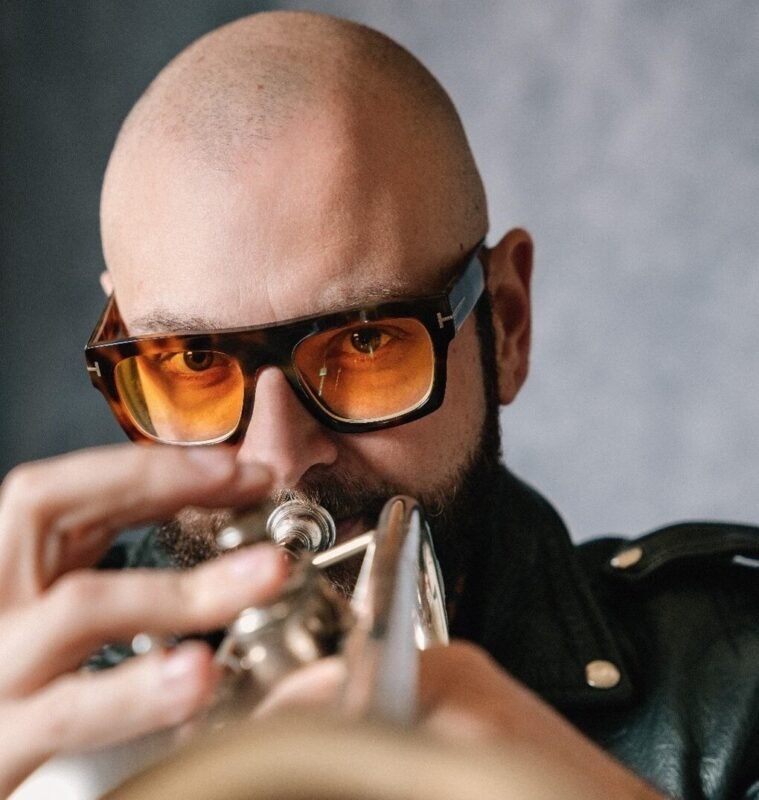
Zoe Pia’s EIC Eden Inverted Collective, Atlantidei at Casa del Jazz, November 7, 2026
In short. Atlantidei, the new album project by Sardinian clarinetist and multi-instrumentalist Zoe Pia leading the collective EIC Eden Inverted Collective, comes to Casa del Jazz in Rome on Saturday, November 7, 2026 at 19:30, in the "Armando…
Atlantidei, the new album project by Sardinian clarinetist and multi-instrumentalist Zoe Pia leading the collective EIC Eden Inverted Collective, comes to Casa del Jazz in Rome on Saturday, November 7, 2026 at 19:30, in the "Armando Trovajoli" concert hall, as part of Roma Jazz Festival 2026. The address is Viale di Porta Ardeatina 55, 00154 Rome, in the park of the former Villa Osio, between the Pyramid of Cestius and the Baths of Caracalla. There's a single ticket price, 20 euros, according to the official event listing. Tickets are sold on the official Casa del Jazz website, which points to its own online sales network, or at the venue's box office, open on show days from 19:00 until 40 minutes after the start. The FAQ on the Casa del Jazz website lists Metro B (Piramide stop) and bus 714 (Colombo/Marco Polo stop) as connections, with a parking lot next to the villa at the corner of Via Cristoforo Colombo and Viale di Porta Ardeatina. For the route from your area, use the ATAC trip planner. For information the venue gives 06 80241281 and info@musicaperroma.it.
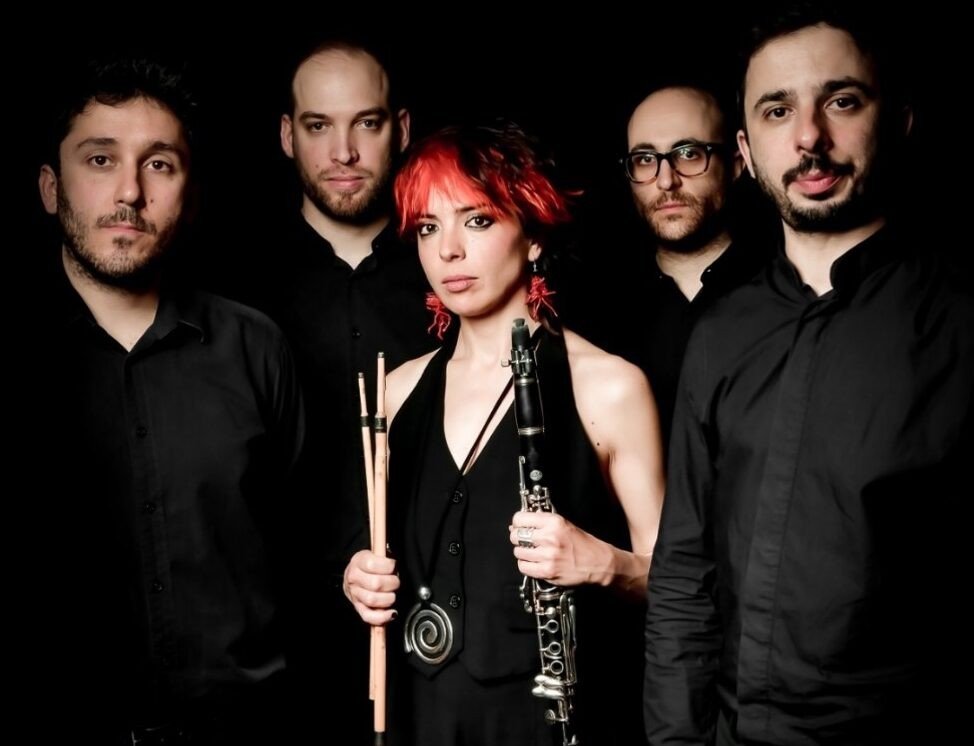
Atlantidei: the concert
Atlantidei was born from a journey. According to the Casa del Jazz presentation, the idea for the project took shape while sailing along the edges of Sardinia, around the constellation of sea stacks on the island's southwest coast, an area described as among the oldest emerged lands in Europe. From that landscape of rock and sea comes the question that gives the work its title: what is the relationship between Sardinia and the myth of Atlantis.
The official listing recalls that several scholars today place the mythical Atlantis on the island. The concert doesn't claim to settle the question, but uses it as poetic material: the collective's music becomes a way to question the remote past of the western Mediterranean through very ancient instruments and contemporary technology.
From Plato to Kircher
The full presentation of the project, published on the venue's website, traces the fortunes of the myth over the centuries. It starts from the first Greek explorations to the west and the references in Plato, Aristotle and Timaeus of Tauromenium, which link the story to Sardinia and to the sea peoples, including the Shardana. It then reaches the modern age with the Jesuit Athanasius Kircher, whose imaginary map of Atlantis, published in 1665 in Mundus Subterraneus, inspired the titles of the pieces and their sound language.
A map that becomes a score
The idea of starting from an imaginary map to compose music is one of the most interesting aspects of the project. A 17th-century map, built on scholarly hypotheses more than on observation, is treated as a score: imaginary places become titles, distances become structures. It's a process that recalls the way contemporary European jazz often works with non-musical material.
Who Zoe Pia is
Casa del Jazz presents Zoe Pia as one of the most important figures of the new Sardinian music scene, a clarinetist and multi-instrumentalist, and a player of the launeddas, the island's precious traditional instrument. She also creates festivals and concert series, an activity that places her among the musicians who build contexts as well as playing.
Earlier projects
The British magazine Jazz Journal reviewed in 2025 the album Indindara, by Zoe Pia with the Tenores di Orosei Antoni Milia for the Losen Records label: a work in which Sardinian tenore singing converses with clarinet, launeddas, percussion and electronics. The Free Jazz Collective reviewed Rite, her duo with saxophonist Mats Gustafsson, recorded in the studio, at concerts and at festivals during an Italian tour in May 2023: there Zoe Pia plays launeddas, B-flat clarinet, Sardinian percussion and synth. The same review mentions the Shardana project, led by the musician.
A consistent research path
The thread linking these works is clear: Sardinian tradition isn't treated as a repertoire to preserve, but as a living language to bring into dialogue with improvisation, electronics and avant-garde music. Atlantidei takes this research onto new ground, that of myth and imaginary geography.
The launeddas, an instrument thousands of years old
For anyone hearing them for the first time, the launeddas are a surprise. They're a reed wind instrument with a beating reed, originally from Sardinia, able to produce polyphony and played with the technique of circular breathing, which lets the musician never break the sound.
Three pipes, three functions
The instrument is made of three pipes of different sizes. The longest, the bass, called basciu or tumbu, has no holes and produces a single note, the drone. The second, the mancosa manna, is tied to the bass with pitched twine and provides the accompaniment. The third, the mancosedda, is free and plays the melody. Tuning is adjusted by adding or removing beeswax on the reeds.
A history that starts with the nuraghi
The use of launeddas is documented since prehistory: a nuragic bronze statuette found at Ittiri, thought to show a player, is often cited. Until the early 1960s the instrument accompanied the ballo tondo, with the dancers arranged in a circle around the player for pieces that could go on for more than an hour. Hearing it in a Roman concert hall, interwoven with electronics, means hearing a very long history from a new point of view.
The Seddori cane
A detail for the curious: to make the mancosa and mancosedda a particular cane is used, Arundo pliniana, called canna mascu or cann'e Seddori, which grows mainly in the area between Samatzai, Sanluri and Barumini. The distance between its nodes, much greater than in common cane, gives the instrument its distinctive timbre.
EIC Eden Inverted Collective: the lineup
The collective that plays with Zoe Pia is made up, according to the official listing, of musicians under 35 from Italy's leading opera and symphony orchestras. Mattia Pia and Paolo Nocentini are listed as permanent musicians of the Arena di Verona.
Clarinet, launeddas and electronics
Zoe Pia plays clarinet, launeddas and live electronics. The combination lets her move from the ancient sound of the Sardinian pipes to that of the modern clarinet, with electronics expanding and transforming both.
Four percussionists
Mattia Pia, Paolo Nocentini, Nicola Ciccarelli and Carlo Alberto Chittolina are all credited on percussion. A lineup with four percussionists around a single wind instrument is unusual in jazz and suggests very rich work on rhythm and color, closer to orchestral ensemble music than to the traditional quartet.
How to listen to Atlantidei
A concert like this is more rewarding if you know a few elements of its language. The first is the drone: the longest pipe of the launeddas gives a fixed, continuous note, on which the other two rest. In a contemporary setting, that unbroken sound can become the floor on which electronics build layers, or a fixed point against which the percussion moves freely.
Breath that never stops
The second element is circular breathing. The player breathes in through the nose while continuing to push air into the instrument with the cheeks, so the sound never breaks. For the listener, the effect is a melodic line without pauses, very different from clarinet phrasing, which breathes like a voice. Following the switch from one instrument to the other helps you understand the structure of the pieces.
Four percussionists, many colors
The third element is the orchestral dimension of the percussion. When four musicians used to opera and symphonic repertoire share the stage, the palette of timbres widens: drums, cymbals, pitched instruments, objects. The official pages don't list the instruments used, so you'll discover the exact setup in the hall. It's worth sitting where you can see the whole stage well.
Jazz and the Mediterranean, a long conversation
For decades European jazz has been in dialogue with the traditional music of the Mediterranean, and Sardinia holds a special place in this dialogue, because it has instruments and vocal forms with no equivalent elsewhere. Zoe Pia's work sits within this conversation with its own signature: tradition isn't quoted as folk color, but placed at the center of the musical construction and set against improvisation and electronic research.
From the ballo tondo to the concert hall
For centuries the instrument accompanied singing, festival processions, weddings and community occasions, as well as circle dancing. Bringing it into a concert hall means moving it from a social function to a listening function: the audience doesn't dance around the player, but follows the sound seated, with a different kind of attention. It's a shift many traditional musics have gone through, and one Atlantidei takes on with full awareness.
Who this concert is for
Atlantidei is a concert for curious listeners. If you love jazz tied to swing and standards, you'll find a different language, built on timbres, rhythms and atmospheres more than on song form. If you follow contemporary music, electronics or world music, you'll find familiar ground, enriched by an instrument rarely heard live outside Sardinia.
For those from Sardinia
For Sardinian audience members who live in Rome, the concert also has emotional value: the launeddas and the reference to the sea stacks of the southwest coast recall a specific landscape. The project, though, doesn't stop at nostalgia, because it turns that landscape into a reflection on myth and on the deep time of the Mediterranean.
For those discovering the festival
If you're coming to Roma Jazz Festival for the first time, a concert in an intimate hall like the Trovajoli is a good way to get into the spirit of the 50th anniversary edition: close-up listening and the setting of the park make the experience very different from that of the large halls.
The concert in Roma Jazz Festival 2026
The concert is part of Roma Jazz Festival 2026, which according to the Casa del Jazz website celebrates its 50th edition, called Anniversary, from November 1 to 24, 2026. This year's theme is "Rereading Miles, rethinking jazz", a title that invites you to see Miles Davis as a starting point for renewing the language.
The other dates at Casa del Jazz
On the venue's calendar, the festival opens on Sunday, November 1 with the duo of Roberto Gatto and Antonello Salis. After Atlantidei, the program continues on Sunday, November 8 with the Domenico Rizzuto Trio, Friday the 13th with the Eleonora Strino Trio and Saturday the 14th with the Nexus Quartet. The full festival program also takes place at other venues around the city.
A programming choice
The festival pairs established names with musicians of the new generations. Atlantidei represents the part of the program devoted to crossovers between jazz, traditional music and research, and responds sideways to the edition's theme: rethinking jazz also means opening it to instruments and stories that don't come from America.
Casa del Jazz in brief
Casa del Jazz is a complex of three buildings set in a public park between Viale di Porta Ardeatina and Via Cristoforo Colombo. It is run by the Fondazione Musica per Roma, which also runs Auditorium Parco della Musica. The venues page of the official website gives the villa an area of 2,500 square meters and the surrounding park 25,240 square meters. Our general page on the venue is here.
The three buildings
The main villa houses the concert hall. The second building has rehearsal and recording rooms and guest quarters for visiting musicians, the third a restaurant. Other descriptions add a media library, a public library, a bookstore and a café in the villa, and mention that a recording system makes it possible to document the concerts.
Sala Trovajoli
The concert hall is named after Armando Trovajoli, a Roman pianist and composer born in 1917 who died in 2013. He represented Italy at the 1949 Paris Jazz Festival before becoming one of the great writers of film scores and musical comedies, from Rugantino to the music for Ettore Scola's films.
A curious fact about Casa del Jazz
Inside a villa built in the 1930s and now devoted to African American music, a fragment of Baroque Rome survives. In the room that was once the dining room, on the ground floor, now used as a multimedia room, there's a fresco by Amerigo Bartoli showing a view of Piazza Navona. It's a detail few audience members notice, because people usually hurry through the room before the concert.
A painter for a banker's villa
The sources consulted don't say when the fresco was painted or who commissioned it. Today that view coexists with the most contemporary music program in the capital.
Something nobody tells you about Casa del Jazz
How many seats does the hall have? The answer depends on the source. Some descriptions speak of a 150-seat multipurpose auditorium. The venues page of the official website gives Sala Trovajoli about 150 seats, but the same page, in its introductory text, describes the main structure as a 134-seat auditorium. The sources don't agree, and the difference may depend on how the hall is set up, but no page explains it.
Why it matters
Either way it's an intimate hall, much smaller than the large halls of the Auditorium. For a concert like Atlantidei, with four percussionists and electronics, the small size means close-up listening and a very physical perception of sound. It also means that tickets, on a festival night, can sell out fast.
My tip for visiting Casa del Jazz
My tip is to arrive well ahead of time and enter the park before the hall opens. The FAQ on the official website explains that the audience usually enters the hall from 30 minutes before the start until five minutes before, and that once the show has started entry isn't guaranteed. For a 19:30 concert that means being in front of the hall between 19:00 and 19:25, right when the box office opens.
If you arrive by metro
If you get off at the Piramide stop on Line B, in front of you are the Pyramid of Cestius and a stretch of the Aurelian Walls, worth a few minutes of attention before the concert. Work out the travel time to the venue with the ATAC trip planner.
Accessibility
The venue is designed for full accessibility. Wheelchair users can book a seat by phone at 06 8024 1281, every day from 11:00 to 18:00. Dedicated spaces are limited, and it's best to book early for the most popular events.
Another well-known fact that rarely gets mentioned
It's well known that Casa del Jazz occupies a villa confiscated from organized crime. Less often remembered is the change of ownership that put the villa in the hands of Enrico Nicoletti, identified in court reports as the treasurer of the Banda della Magliana. In the 1980s Nicoletti bought it from the Vicariate of Rome, and the new owner had work and illegal building done that deeply changed the interiors and the exterior facades.
Giving it back
The official Casa del Jazz website recalls that the project was strongly backed by then-mayor Walter Veltroni and that the villa, after the confiscation, was assigned to the City of Rome. The result is there for anyone who walks in: a place tied to one of the best-known criminal gangs in Roman history has become a concert venue open to all.
The right photo to take at Casa del Jazz
The photo that best tells the story of the place is taken at the park entrance. There stands the stele made with the association Libera of Don Luigi Ciotti, which lists 683 names of Mafia victims from 1893 to 2005. Framing the stele with the villa in the background, in a single image, brings together the memory of the victims and the civic reuse of the confiscated property.
In November light
In November, at 19:00, it's already dark: the lit villa and the park's paths have a different atmosphere from the daytime. If you want a photo in natural light, come in the early afternoon, when you can walk through the park at a relaxed pace. During the concert, on the other hand, the hall's filming rules apply, and respect for the musicians suggests keeping your phone in your pocket.
Some important events that happened here
The 17th-century farmhouse
Before the villa, there was a 17th-century farmhouse in this area: the villa was built on its ruins.
1936-1939: building Villa Osio
Arturo Osio, a founding partner of the Banca Nazionale del Lavoro, takes over the area and entrusts the design to engineer Cesare Pascoletti, a student of Marcello Piacentini. The park is laid out by landscape architect Pietro Porcinai.
1980s: Nicoletti's villa
Enrico Nicoletti buys the villa from the Vicariate of Rome and alters it with illegal building work.
1996-2001: seizure and confiscation
On November 14, 1996 the villa is seized. On February 20, 2001 the confiscation becomes final, and on September 26, 2001 the property is assigned to the City of Rome under Law 109 of 1996, the so-called Pio La Torre law on confiscated assets.
2005: Casa del Jazz is born
In April 2005 Casa del Jazz opens, with Luciano Linzi as director.
2025: the searches in the park
In November 2025 the Prefecture of Rome ordered surveys in the park because of the well-founded possibility that the remains of magistrate Paolo Adinolfi, who disappeared in 1994, are hidden there. They may have been concealed when the villa belonged to Nicoletti.
Who has passed through Casa del Jazz
The villa's history begins with three names: Arturo Osio, the banker who wanted it, Cesare Pascoletti, the engineer from Piacentini's school who designed it, and Pietro Porcinai, the Florentine landscape architect born in Fiesole in 1910, who over his career designed gardens in Turin, Florence, Berlin and Portofino, and who laid out its park. The park you walk through to get to the concerts is, originally, his work.
The painter and the treasurer
Amerigo Bartoli passed through the villa, with his fresco of Piazza Navona. Then, in a darker period, Enrico Nicoletti, who made it his home. Two presences very far apart, living side by side in the same building.
The first director
When it opened, in 2005, direction went to Luciano Linzi and management to the special agency Palaexpo, which on behalf of the city also ran Scuderie del Quirinale, Palazzo delle Esposizioni and Casa del Cinema. Today the venue is run by the Fondazione Musica per Roma.
The musicians
Since 2005 the villa has hosted musicians, including those staying in the guest quarters of the second building. Among the resident ensembles, the official website now lists the CDJO Casa del Jazz Orchestra conducted by Mario Corvini and Massimo Nunzi's Jazz Campus Orchestra, for kids aged 7 to 14. On November 7 the sound of the launeddas joins this history.
The evening in practice
A few pointers for planning. The concert starts at 19:30 on Saturday, November 7. The box office opens at 19:00 and entry to the hall, according to the website's FAQ, usually starts half an hour before. The length of the concert isn't given in the official listing: the figure isn't published, and it's wise not to plan commitments too close to the start time.
Eating before or after
The third building in the complex houses a restaurant, as the official website points out, and a café is also mentioned in the villa. The hours and booking details for these services aren't given on the pages consulted and should be checked directly with the venue.
Seats and latecomers
The FAQ explains that latecomers, if admitted, may be seated in a different spot from the one they bought. That's one more reason to arrive early, especially in a hall this intimate, where your position greatly affects the quality of the listening.
Before the concert: the surrounding area
The location of Casa del Jazz, right by the ancient walls, lets you put together a short walk before the concert.
The walls and Porta Ardeatina
The avenue takes its name from Porta Ardeatina, an ancient opening in the Aurelian Walls between Porta San Sebastiano and Porta San Paolo, near the modern arches opened for Via Cristoforo Colombo. Probably closed very early, today it's little more than a postern framed in travertine. If you want to learn more about the history of the walls you can visit the Museum of the Walls at Porta San Sebastiano.
The cart tracks
The most interesting detail of Porta Ardeatina is a stretch of Roman paved road, visible both outside and inside the walls, which still bears the grooves left by cart wheels: traffic must have been fairly heavy. The humanist Poggio Bracciolini reports that this gate too bore the inscription for the restoration ordered by Emperor Honorius between 401 and 403.
Pyramid and Caracalla
On the metro side is the Pyramid of Cestius. On the opposite side, heading back toward the center, the Baths of Caracalla. They're two daytime destinations, to plan around their respective opening hours.
Frequently asked questions about Zoe Pia's Atlantidei
When and where is the concert?
Saturday, November 7, 2026 at 19:30, in the "Armando Trovajoli" concert hall at Casa del Jazz, Viale di Porta Ardeatina 55, Rome. The concert is part of Roma Jazz Festival 2026, now in its 50th edition, which runs from November 1 to 24 at several venues around the city with the theme "Rereading Miles, rethinking jazz".
How much is a ticket?
The official listing gives a single ticket price of 20 euros. The website's FAQ lists discounts for people with disabilities: 20 percent off for holders of Law 104 status or equivalent, with free admission for a companion if needed and while spaces last, and 50 percent for blind people. These discounts are available at the central box office of Auditorium Parco della Musica.
Where do you buy tickets?
On the official Casa del Jazz website, which links to its own online sales network, or at the venue's box office. The box office is open only on show days, from 19:00 until 40 minutes after the start. For a festival night in an intimate hall, buying online in advance is the safest choice.
What are launeddas?
A traditional Sardinian wind instrument, made of three pipes of different sizes: one produces the drone, one the accompaniment, one the melody. It's played with circular breathing, which allows a continuous sound, and its history is documented as far back as the nuragic age. Zoe Pia alternates it with clarinet and live electronics.
Who plays with Zoe Pia?
The collective EIC Eden Inverted Collective, made up of Mattia Pia, Paolo Nocentini, Nicola Ciccarelli and Carlo Alberto Chittolina, all on percussion. According to Casa del Jazz they're musicians under 35 from Italy's leading opera and symphony orchestras. Mattia Pia and Nocentini are permanent musicians of the Arena di Verona.
How do you get to Casa del Jazz?
The website's FAQ gives Metro B to Piramide, bus 714 to the Colombo/Marco Polo stop and a parking lot next to the villa, at the corner of Via Cristoforo Colombo and Viale di Porta Ardeatina. For the exact route from your area, and for evening transit times, use the ATAC trip planner.
Can you get in after the concert has started?
According to the website's FAQ, entry to the hall usually runs from 30 minutes before the start until five minutes before, and once the show has started entry isn't allowed, unless the organizers decide otherwise. In that case the staff may assign a seat different from the one you bought. So it's better to arrive with time to spare.
Is the concert wheelchair accessible?
Yes. Casa del Jazz states that the venue is fully accessible and lets you book dedicated spaces by phone at 06 8024 1281, every day from 11:00 to 18:00. Reserved spaces are limited, and the staff help audience members get around inside the venue.
Final advice on Zoe Pia's Atlantidei
Atlantidei is one of the most original concerts in the part of Roma Jazz Festival hosted at Casa del Jazz: a clarinet, a nuragic instrument, electronics and four percussionists telling the myth of Atlantis starting from the coasts of Sardinia and a 17th-century map. Buy your ticket in advance through the official channel, because the hall is small. Arrive when the box office opens, stop for a moment in front of the stele at the park entrance and let yourself be surprised by the continuous sound of the launeddas in a villa that has changed its life.
Article written by the editorial team of Tour Leader Pro, contact them for Private/Corporate/V.I.P. Tours and Experiences.
Planning a trip to Rome? The English-language guides for visiting the city are on ItalyPlanner.com.
Contact Information
Nearby
 Casa del Jazz100 m
- Roman Legionary Museum600 m
- Museum of the Walls600 m
- Tomb of the Scipios600 m
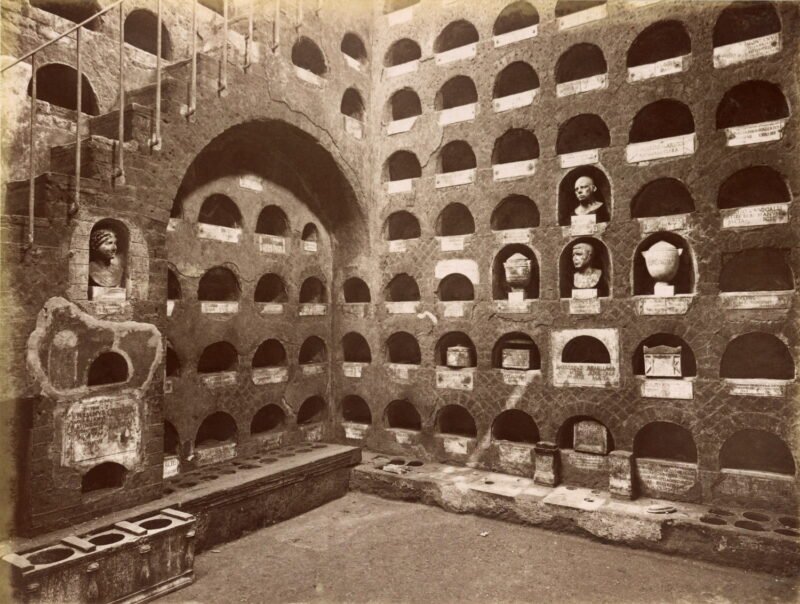
- Colombari di Vigna Codini600 m
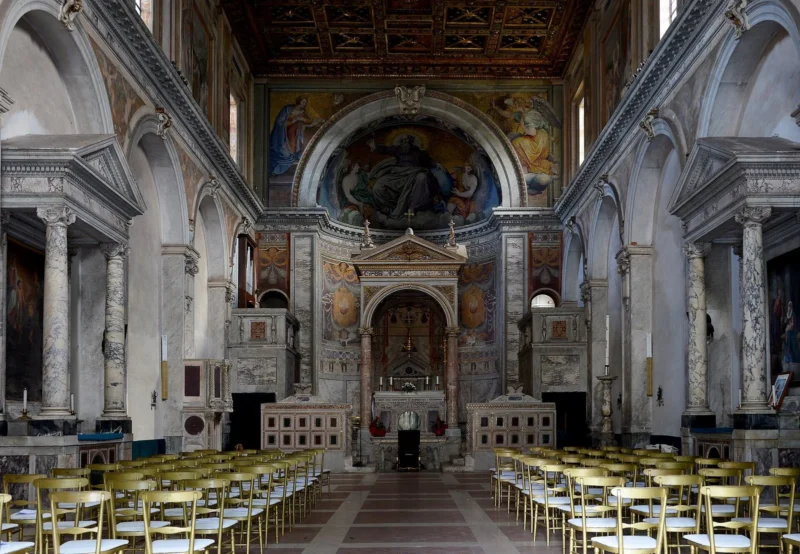
- San Cesareo de Appia600 m


Upcoming events nearby
- Sun Hee You, Unlimited at Casa del Jazz, December 10, 2026100 m
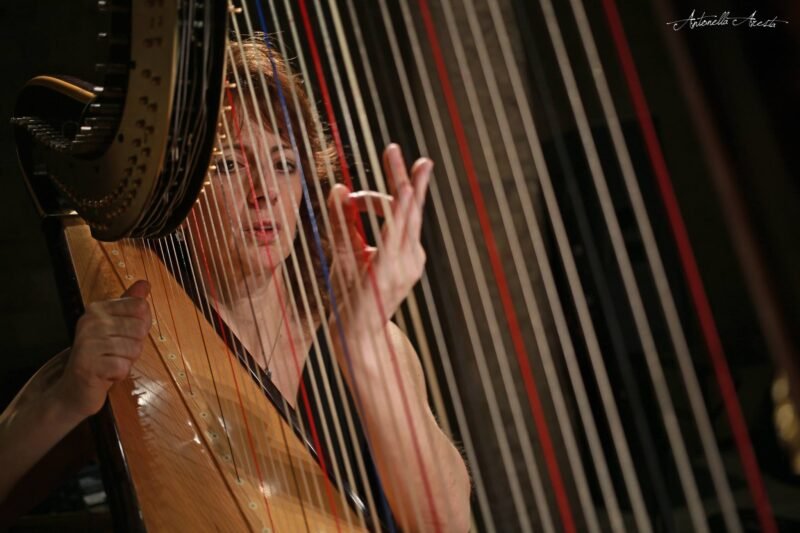
- Junctions Beyond Jazz: Le frontiere dell’arpa at Casa del Jazz, November 29, 2026100 m
- Elective Lines feat. Andrea Colella at Casa del Jazz, November 15, 2026100 m
- Danilo Rea 3×3 at Casa del Jazz, December 4 to 6, 2026100 m
You might also like
- Nexus Quartet, Appunti di viaggio at Casa del Jazz, November 14, 2026
- Eleonora Strino Trio, Lumithia at Casa del Jazz, November 13, 2026
- CDJO Casa del Jazz Orchestra conducted by Mario Corvini, Bob Brookmeyer at Casa del Jazz, November 27 and 28, 2026
- Domenico Rizzuto Trio, Disastri Quotidiani at Casa del Jazz, November 8, 2026
- Beatrice Gatto at Casa del Jazz, November 29, 2026
- Junctions Beyond Jazz: Accademia Brass Quintet at Casa del Jazz, December 13, 2026