The Cranach-Triegel Altarpiece at the Campo Santo Teutonico, from November 2, 2025 to November 2, 2027
In short. The Cranach-Triegel altarpiece, the altarpiece of Naumburg Cathedral painted by Lucas Cranach the Elder in 1519 and completed 500 years later by the Leipzig painter Michael Triegel, is on display from November 2, 2025 to November 2,…
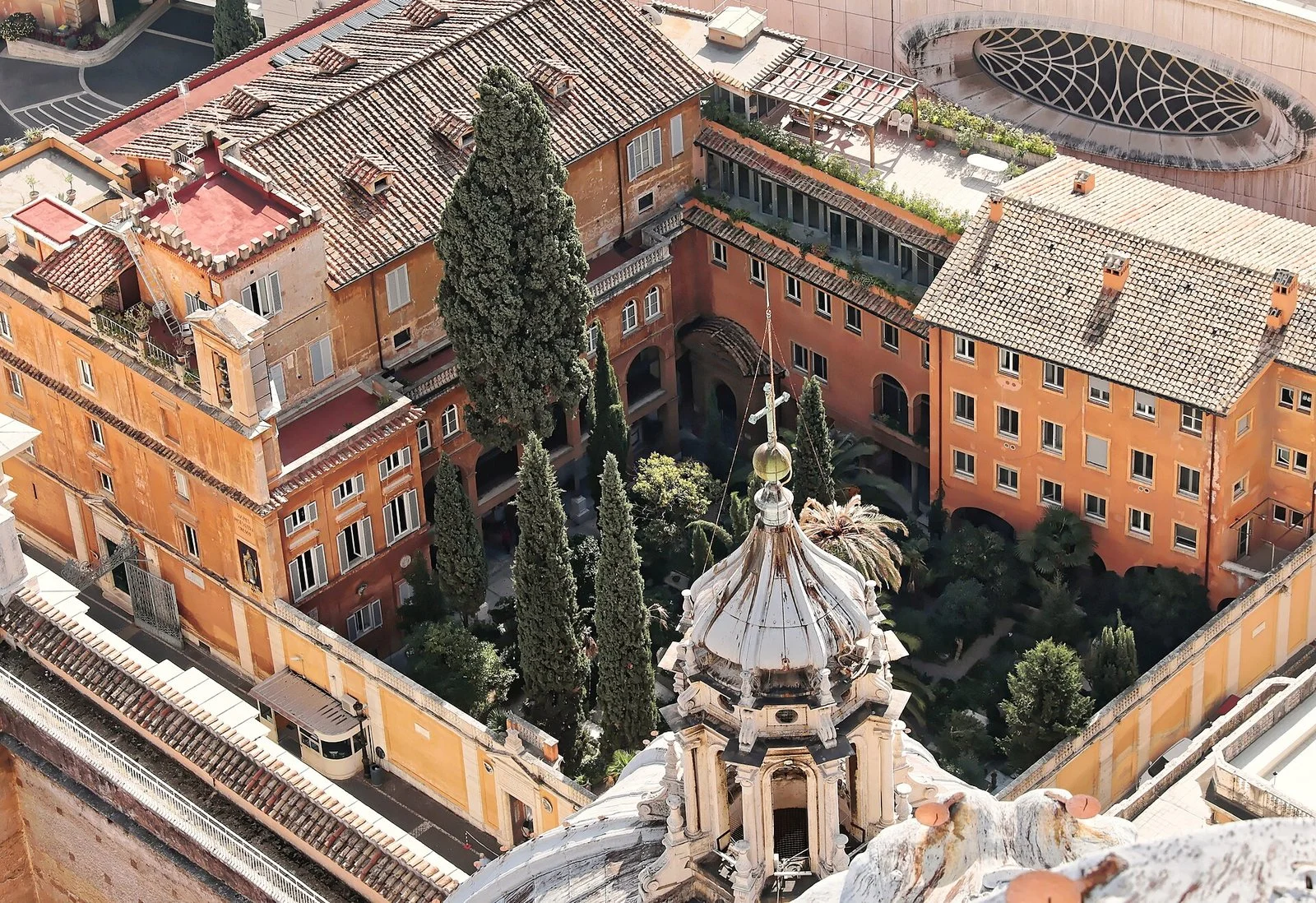
The Cranach-Triegel altarpiece, the altarpiece of Naumburg Cathedral painted by Lucas Cranach the Elder in 1519 and completed 500 years later by the Leipzig painter Michael Triegel, is on display from November 2, 2025 to November 2, 2027 in the church of Santa Maria della Pietà at the Campo Santo Teutonico, at Via della Sagrestia 17, next to St. Peter's Basilica. The Campo Santo is in an extraterritorial area of the Holy See, in the Borgo district: from the center you get there by metro line A to Ottaviano and then on foot toward St. Peter's Square, or by the FL3 train to Roma San Pietro station. For surface lines it's best to use the ATAC route planner. Opening hours of the church, access arrangements and any costs must be asked of the secretariat of the Archconfraternity of the Campo Santo Teutonico, at 06 69892603 or at sekretariat@teutonico.va, as listed by the tourism portal of Roma Capitale.
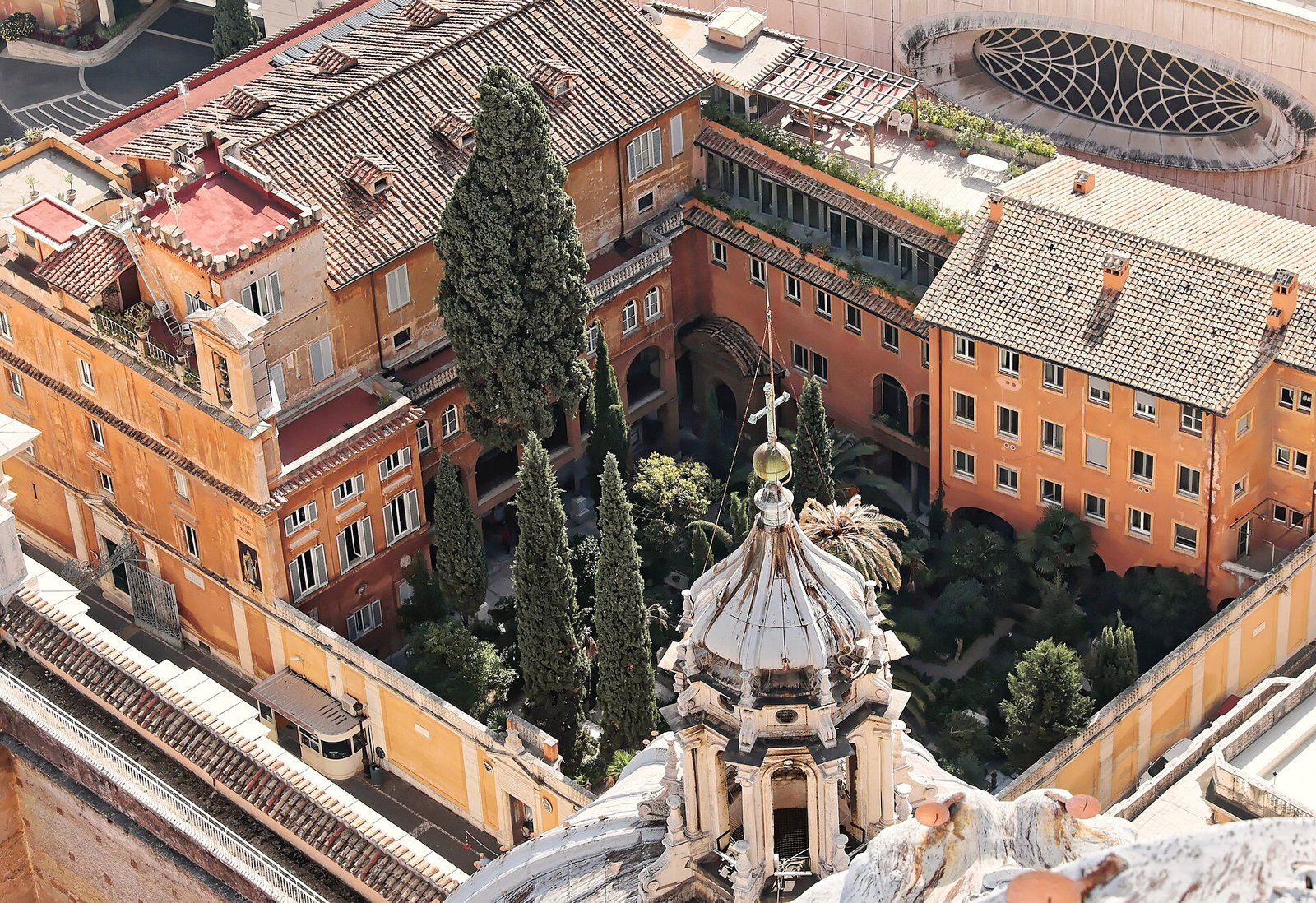
The Cranach-Triegel altarpiece in Rome: dates and practical information
The Cranach-Triegel altarpiece has been in Rome since November 2, 2025 and stays for two years, until November 2, 2027. This is confirmed both by the press release issued by the Archconfraternity of the Campo Santo Teutonico together with the United Cathedral Foundations of Merseburg and Naumburg and the Collegiate Church of Zeitz, and by the official website of Naumburg Cathedral.
A two-year loan
It is not an exhibition in the usual sense, with a ticket office and a display setup: it is a long loan of a work born for the liturgy, placed in a church that continues to be a place of prayer. The website of Naumburg Cathedral specifies that the transfer to Rome is supported by the state of Saxony-Anhalt and that, during the loan period, a shared solution for the final placement of the altar will be sought in Germany.
The address
The Campo Santo Teutonico is at Via della Sagrestia 17, next to St. Peter's Basilica, in the complex of the Pontifical Teutonic College. The area is Italian territory but enjoys extraterritoriality in favor of the Holy See, established by the Lateran Pacts of 1929.
How to get information before the visit
The Campo Santo is not a museum and does not keep museum hours. Before going it's best to write or call the secretariat of the Archconfraternity: the published contacts are 06 69892603 and the address sekretariat@teutonico.va. Anyone coming with a group must book in advance, out of respect for the religious services held in the church.
What you see: the Naumburg altarpiece between Cranach and Triegel
The Cranach-Triegel altarpiece is a three-panel altarpiece: the two side wings are originals by Lucas Cranach the Elder, from 1519. The central panel, painted on both sides, and two predellas are the work of Michael Triegel, who made them between 2020 and 2022.
The altarpiece of 1519
In 1519 Cranach painted a three-panel altarpiece for the Marian altar of the west choir of the Cathedral of Saints Peter and Paul in Naumburg. In the center was Mary with the Child. The side wings showed, according to the cathedral's description, the two bishops who commissioned it, in the form of portraits, and several saints. For centuries these wings survived separated from their center, displayed in the cathedral treasury.
The destruction of 1541
In 1541, during an iconoclastic action of the Reformation, the central panel with the Madonna was destroyed. The west choir thus lost its patron. It is a detail worth keeping in mind in front of the work: what you see in Rome is an altar that stayed mutilated for almost five centuries, and was put back together only in our time.
Triegel's panel
Michael Triegel painted the new center with Mary, the Child and a group of saints, and on the back the risen Christ. His style looks to the masters of the Renaissance, but the faces are those of people today. The painter told the German Protestant press agency epd that for Mary he took his daughter as a model and for Saint Anne his wife. The Lutheran theologian Dietrich Bonhoeffer appears in the scene. The apostle Paul has the face of a rabbi he met in Jerusalem, in front of the Western Wall.
Saint Peter with the red cap
The figure that strikes most is Saint Peter, painted with a red baseball cap. According to Triegel it is the portrait of Burkhard Scheffler, a German homeless man who lived in Rome, whom the painter had met and photographed years earlier. Scheffler died in 2022, of the cold, under the colonnade of St. Peter's, and is buried right at the Campo Santo Teutonico. The altarpiece, in Rome, is therefore a few steps from the tomb of the man who lends his face to its apostle. It is a coincidence no curator could have planned.
A curiosity about The Cranach-Triegel Altarpiece at the Campo Santo Teutonico, from November 2, 2025 to November 2, 2027
The strongest curiosity concerns why a Lutheran altar from central Germany ended up in a Catholic church next to St. Peter's. It was not an artistic choice, it was a matter of world heritage. Naumburg Cathedral has been on the UNESCO World Heritage list since 2018, and in the west choir are the historic statues of the founders.
When the completed altarpiece was placed in the choir, in June 2022, a controversy opened: according to the heritage protection bodies the altar blocked the view of the historic statues of the founders. ICOMOS took a critical position, and the press release of the Archconfraternity cites precisely this position as the origin of the decision to bring the work to Rome. There was fear for the World Heritage status.
From there a series of moves: in December 2022 the altar was removed from the choir, then displayed in Paderborn and in Klosterneuburg, then brought back to Naumburg in December 2023. The UNESCO ruling, according to the entry on Triegel in the German encyclopedia, asks for it to be moved from the west choir to the north transept. While waiting for a solution, the altar is in Rome.
The press release adds a historical link: the church of the Campo Santo was built at the end of the 1400s by the Archconfraternity, more or less in the same years in which Cranach was working as a painter in central Germany. A work and a church of the same age, born far apart and brought together 500 years later.
Who is Michael Triegel, the painter who completed Cranach
Michael Triegel is a German painter, draftsman and engraver born in Erfurt on December 13, 1968, who lives and works in Leipzig. The press release of the Archconfraternity calls him one of the most esteemed contemporary artists, and outside Germany his name is tied above all to the portrait of Pope Benedict XVI from 2010.
Training in Leipzig
After his school-leaving exam, in 1987, Triegel worked as a sign painter and graphic artist. In 1990 he began to study painting and graphics with Arno Rink at the Hochschule für Grafik und Buchkunst in Leipzig, where he graduated in 1995. From 1995 to 1997 he followed the advanced course with Ulrich Hachulla, and in 1998 he earned the Meisterschüler diploma. Triegel himself places his artistic revelation in those years, which took place in a Roman church: he describes it as a second birth, with an explicit reference to Goethe.
Awards and first commissions
In 1996 he received the Deutscher Kunstpreis of the people's banks and Raiffeisen, in 1998 the Der Mensch im Raum prize, in 1999 the Helen Abbott prize, in 2009 the Kunst und Ethos prize. In 2000 he painted in the historic town hall of Plochingen, in Baden-Württemberg, an Allegory of Good Government inspired by the civic paintings of the early Italian Renaissance: it was the work that made him known to the wider public.
The altars
The first commission for a church came on the recommendation of Werner Tübke: a new predella for a late Gothic altar in the chapel of Barsinghausen-Langreder, near Hannover. In 2006 came a winged altar for the Protestant community of Grave, with a Last Judgment in which Christ has the painter's face, and in 2007 the new altarpiece for the parish church of St. Lawrence in Ebern, in Franconia. In 2009 and 2010 he painted for the music of Würzburg Cathedral the ceiling Harmonia Mundi, 3.8 meters by 2.3, populated with ancient deities.
The portrait of Benedict XVI
In 2010 the diocese of Regensburg commissioned from him a portrait of Pope Benedict XVI for the Pope Benedict XVI Institute. The painting was presented on November 27, 2010 at the Museum der bildenden Künste in Leipzig, with all the preparatory studies, and divided German critics between those who found it weak and those who considered it his best work. A second version was unveiled in Rome on April 16, 2013, the day of Benedict XVI's 86th birthday, at the German embassy to the Holy See. Triegel, who was baptized Catholic as an adult, today finds the label of painter of the popes reductive: he has recalled having painted 400 other pictures.
Style and method
Triegel looks to the painters of the Renaissance and of Italian Mannerism, Raphael, Leonardo, Pontormo, Bronzino, and is often compared to the Leipzig school of Werner Tübke for the precision of the drawing and the engagement with biblical and mythological themes. His method is slow: a carefully prepared ground, a traced composition, volumes built in grisaille, then the color laid on in many glazes. On April 29, 2025 the Faculty of Theology of the University of Leipzig conferred an honorary degree on him.
Something nobody tells you about The Cranach-Triegel Altarpiece at the Campo Santo Teutonico, from November 2, 2025 to November 2, 2027
What almost nobody says is that, to see the Cranach-Triegel altarpiece, you don't enter a museum but a cemetery. The Campo Santo Teutonico is a real cemetery, with tombs still in use, reserved for the members of the Archconfraternity and of the German-speaking institutions in Rome. The church of Santa Maria della Pietà looks onto this small enclosure, and the Naumburg altar is there, inside a working church, not on a white wall.
This changes the way you visit it. No crowds: silence, and the respect due to a place of burial and prayer. Anyone who arrives with the idea of an exhibition risks feeling lost. Anyone who arrives with the idea of a church finds the best condition for looking at an altar, which is the one it was painted for.
Second unspoken thing: the Campo Santo is on Italian territory but extraterritorial, right up against the border of Vatican City, and it is not an attraction with a ticket office and posted hours. That is why the first step is not to get in line, but to write to the secretariat of the Archconfraternity and ask when and how you can enter.
Third thing: Triegel wanted his apostle Peter to have the face of a homeless man who died under the colonnade of St. Peter's. That man's tomb is a few meters from the church. In 2015, the history of the cemetery recalls, a Flemish homeless man, Willy Herteleer, was also buried here, with the approval of Pope Francis. Looking at the altarpiece knowing these things is another experience.
The Campo Santo Teutonico, home of the altarpiece
The Campo Santo Teutonico, also called the cemetery of the Teutons and Flemings or the Teutonic Cemetery, is a small cemetery next to St. Peter's Basilica, with the church of Santa Maria della Pietà attached. It is considered the only cemetery in the Vatican, even though it is on Italian territory.
The Circus of Nero and the first martyrs
The Campo Santo stands where in the imperial age the Circus of Nero was, the place of martyrdom of many of Rome's first Christians. Tradition links the chapel of the cemetery to the place of Saint Peter's martyrdom. It is this closeness to the places of the apostles and the martyrs, together with another tradition, that explains the name campus sanctus, holy field.
Charlemagne and the Schola Francorum
According to tradition, in 799 Pope Leo III gave Charlemagne the land for a hospice for Germanic pilgrims, the Schola Francorum, with a church dedicated to the Savior and a cemetery for the emperor's subjects who died in Rome. From the 1400s the belief spread that the earth of the cemetery came from Jerusalem.
The Archconfraternity
The cemetery belongs to the Archconfraternity of Santa Maria della Pietà, a lay confraternity of German-speaking men and women born in the mid-1400s: the press release says around 1450, other sources 1454. It was the Archconfraternity that built the church at the end of the 15th century. Today buried here are Austrians, South Tyroleans, German-speaking Swiss, citizens of Liechtenstein and Luxembourg, German-speaking Belgians, Flemings and Dutch.
The Teutonic College
In 1876 the Teutonic College of the Campo Santo took the place of the old hospice, to host German-speaking priests who stayed there two or three years for their studies and served in the church. Today two study institutes and two chapels are tied to the cemetery.
My advice for visiting The Cranach-Triegel Altarpiece at the Campo Santo Teutonico, from November 2, 2025 to November 2, 2027
The advice is simple: write first. An email to the secretariat of the Archconfraternity, sekretariat@teutonico.va, with the date you want and the number of people, is the proper way to enter the Campo Santo Teutonico without surprises. Anyone who arrives knowing nothing risks losing the morning.
Once inside, before going to the church, take a slow walk through the small cemetery. Look at the gravestones, the German and Flemish names, the dates. It is the right context to understand why an altar from central Germany ended up here: for centuries this has been the piece of Rome that belongs to German-speaking pilgrims.
In the church, in front of the altarpiece, start from Cranach's side wings and only then move to Triegel's center. The order matters: the wings are more than 500 years old and carry Cranach's hand. The central panel answers those wings in the same language, but with faces of today. Look for Saint Peter with the red cap, Bonhoeffer, the Madonna who has the face of the painter's daughter. Then, if conditions allow, ask to see the back with the risen Christ.
Finally, combine the visit with St. Peter's, but not right before: the Basilica and the square are crowded and noisy, the Campo Santo is recollected. Better after, at the end of the morning, as a pause of silence. For a private guided visit of Borgo and the Vatican area, Tour Leader Pro organizes tailor-made routes.
How to get to the Campo Santo Teutonico
The Campo Santo Teutonico is at Via della Sagrestia 17, next to St. Peter's Basilica, in the Borgo district. From the center the simplest way is metro line A to Ottaviano, then a walk toward St. Peter's Square.
By metro
The most convenient metro line A stop for the Vatican and for Borgo is Ottaviano, from which you walk to the St. Peter's area. From Termini metro line A is the fastest and most predictable solution, especially at rush hour.
By train
The FL3 regional line stops at Roma San Pietro station, from which you walk to the Basilica area. It is an alternative to the metro for those staying along the rail line.
By bus
The Borgo district is served by many surface lines, including the 40, the 46, the 62 and the 64, with stops along the Lungotevere and around Piazza della Rovere. Routes and stops change often in the Vatican area, especially on days of big celebrations: before leaving it's best to check the route planner of Rome's transport company.
By car
Borgo is in a limited traffic zone, and around the Vatican parking is almost impossible. Anyone arriving by car must leave it outside the ZTL and continue by public transport or on foot.
Another well-known fact, yet rarely mentioned
That the Swiss Guards defend the pope, everybody knows. That their most famous episode took place right here, in the Campo Santo Teutonico, few remember. On May 6, 1527, during the Sack of Rome, the Swiss Guards held off the mutinous Landsknechts long enough to let Pope Clement VII flee along the Passetto di Borgo to Castel Sant'Angelo.
The resistance of the Swiss Guards that day is one of the best-known episodes in the history of the papacy, yet few visitors connect it to the small cemetery next to the Basilica. Whoever enters the Campo Santo walks on the ground of that battle.
There is a second link with the Swiss Guard: attached to the cemetery is the chapel where the Swiss Guards who fell in 1870 are buried, in the defense of the city against the troops of the new Kingdom of Italy. Two dramatic moments in the history of Rome, the Sack of 1527 and the capture of 1870, touch in this enclosure of a few hundred square meters.
For the Cranach altarpiece the fact has an ironic side. The troops that assaulted the Vatican in 1527 were mutinous German soldiers. In 1541, 14 years later, an iconoclastic action destroyed in Naumburg the center of Cranach's altarpiece. Today that altarpiece, completed, is on display in the place where the German soldiers of that time clashed with the pope's guards.
How to plan the visit to the Cranach-Triegel altarpiece
The visit to the Cranach-Triegel altarpiece takes half an hour, an hour with the cemetery and a moment of reflection. It fits easily into a morning devoted to St. Peter's and Borgo.
Before leaving
Contact the secretariat of the Archconfraternity for day, time and access arrangements. Also ask if there are religious services scheduled on the day you choose: during celebrations a visit to the altar is not appropriate. Dress as you would to enter a church.
How much time you need
For the altarpiece 20 minutes of careful observation are enough. The cemetery asks for another 20. With St. Peter's Basilica and St. Peter's Square the morning fills up on its own.
To combine on the same day
The Campo Santo pairs naturally with St. Peter's Basilica, with the Vatican Museums and the Sistine Chapel, and with a walk through the Borgo district to Castel Sant'Angelo. Anyone who loves Renaissance painting finds in the Vatican Museums the closest point of comparison for understanding the models Triegel looks to, from Raphael to Leonardo.
Visiting as a group
For groups the Campo Santo is a delicate place: small spaces, religious services, tombs in use. Booking is essential and the group must be small. It's best to do the introduction outside, in the square, and inside let the altar speak.
The right photo to take at The Cranach-Triegel Altarpiece at the Campo Santo Teutonico, from November 2, 2025 to November 2, 2027
The right photo at the Campo Santo Teutonico is not the one of the altar: in a church in use the rules on photographs are decided by whoever looks after it, and it's best to ask before raising your phone. The right photo is outside, in the small cemetery, with the dome of St. Peter's rising above the gravestones.
It is a frame that says everything about the place: a recollected enclosure, with German and Flemish names on the tombs, and right above it the bulk of the Basilica. The closeness is such that the cemetery looks like a courtyard of the largest church in Christendom. My advice is to stand at the far end of the enclosure and look for a gravestone in the foreground, with the dome in the background.
If photos are allowed in the church, avoid the overall shot of the altar, which squashes the three panels into an unreadable image. Look for a detail: Saint Peter's red cap, for example. It is the point where Triegel's painting, which imitates the technique of the old masters, reveals that it is from today. A photo of that detail tells the story of the altarpiece better than any panorama.
Remember in any case that the Campo Santo is a burial place: no photos of recent tombs, no posing. Respect, here, is part of the visit.
Some important events that happened here in history
The history of the place where the Cranach-Triegel altarpiece is seen today runs from the Circus of Nero to the loan of 2025.
Imperial age: the Circus of Nero
Here stood the Circus of Nero, where many of Rome's first Christians were martyred. Tradition also places the martyrdom of Saint Peter here.
799: the Schola Francorum
Pope Leo III gives Charlemagne the land for a hospice for Germanic pilgrims, with a church and cemetery.
Mid-1400s: the Archconfraternity
The German-speaking lay confraternity is born that still owns the cemetery today and that at the end of the century builds the church of Santa Maria della Pietà.
1527: the Sack of Rome
On May 6 the Swiss Guards resist the Landsknechts here, allowing Clement VII to take refuge in Castel Sant'Angelo.
1876: the Teutonic College
The Teutonic College of the Campo Santo replaces the old hospice and hosts German-speaking priests engaged in studies.
1929: the Lateran Pacts
The Campo Santo becomes extraterritorial property of the Holy See, while remaining on Italian territory.
2025: the altarpiece arrives
On November 2, 2025 the Cranach altarpiece completed by Triegel goes on display in the church of the Campo Santo, for two years.
Who has passed through The Cranach-Triegel Altarpiece at the Campo Santo Teutonico, from November 2, 2025 to November 2, 2027
Through the Campo Santo Teutonico have passed, and in many cases stayed forever, figures of the German world in Rome. Buried here is the archaeologist Ludwig Curtius. Buried here is the landscape painter Joseph Anton Koch. Resting here are Cardinal Gustav Adolf of Hohenlohe-Schillingsfürst, Xavier de Mérode, Prince George of Bavaria and the Jesuit archaeologist Engelbert Kirschbaum.
Resting here are the Swiss Guards who fell in 1870. And resting here are two men without a home: the Fleming Willy Herteleer, buried in 2015 with the approval of Pope Francis, and the German Burkhard Scheffler, who died in 2022 under the colonnade of St. Peter's, whose face became that of Saint Peter in Triegel's altarpiece.
Since 2025 Lucas Cranach the Elder, who lived between 1472 and 1553, has passed through here with his work. And Michael Triegel has passed through, who has a personal link with Rome: he places his artistic revelation in a Roman church, in Rome in 2013 the second version of his portrait of Benedict XVI was unveiled, and he returned to Rome also in September 2026, with a delegation led by the minister-president of Saxony Michael Kretschmer, visiting the city and the Vatican.
Behind the altarpiece there are then the institutions that brought it here: the Archconfraternity of the Campo Santo Teutonico, the United Cathedral Foundations of Merseburg and Naumburg, the Collegiate Church of Zeitz, the state of Saxony-Anhalt that supported the transfer.
The journey of the altarpiece before Rome
The Cranach-Triegel altarpiece traveled a lot before arriving at the Campo Santo Teutonico. The website of Naumburg Cathedral reconstructs its stages.
Naumburg, 2022
In June 2022 the completed altarpiece was placed in the west choir of the cathedral, which temporarily regained its liturgical center. It stayed there until December 4, 2022.
Paderborn and Klosterneuburg
From December 17, 2022 to June 11, 2023 the altar was displayed at the Diocesan Museum of Paderborn. From June 22 to November 2023 it was in the Marble Hall of Klosterneuburg Abbey, near Vienna.
The return and the departure
In December 2023 it returned to the west choir of Naumburg. Since November 2, 2025 it has been in Rome. Its story is also told in the documentary Triegel trifft Cranach, by Paul Smaczny, released in German theaters on February 5, 2026.
Cranach and Triegel: how to look at an altar made by two hands
The Cranach-Triegel altarpiece asks for a precise exercise: distinguishing without separating. The wings of 1519 and the center painted between 2020 and 2022 form a single liturgical object, conceived to stand on an altar, and yet they carry two signatures five centuries apart.
The technique
Triegel paints like the old masters: he prepares the ground carefully, fixes the lines of the composition, builds the volumes in grisaille, that is in tones of gray, and then lays on the color in many thin glazes. It is a very slow method, the same one that gives depth to Renaissance painting. That is why the central panel doesn't clash next to Cranach's wings: it speaks the same technical language.
The faces
What changes is the people. Triegel explained that he wants figures you could meet at the bus stop or at the supermarket. Cranach's wings show the 16th-century bishops who commissioned the work, recognizable to their contemporaries. Triegel's center shows the contemporaries of today, the daughter, the wife, a rabbi, a martyr theologian, a homeless man. The logic is the same: sacred history with the faces of one's own time.
A work made for use
Triegel explained that for him an altar must have a function: in front of the altarpiece services, baptisms and weddings are celebrated. It is painting for use in the noblest sense. At the Campo Santo Teutonico this function remains, because the church of Santa Maria della Pietà is a living church. Looking at it here, and not in a museum, means seeing it as Cranach and Triegel wanted it to be seen.
Where to eat near the Campo Santo Teutonico
Around the Vatican the offer is wide but uneven: the streets closest to St. Peter's Square are designed for the tourist flow. It's best to move a few streets away.
Borgo
The inner streets of the Borgo district, between Via della Conciliazione and the Passetto, have trattorias, bakeries and bars. For a simple lunch they are the closest choice.
Prati
Toward Ottaviano, in the Prati neighborhood, you find restaurants, pizzerias and neighborhood bars, with fairer prices than the streets around the square. It is also the right direction for those picking the metro back up.
Frequently asked questions about the Cranach-Triegel altarpiece in Rome
Until when can you see the Cranach-Triegel altarpiece in Rome?
The Cranach-Triegel altarpiece is on display at the Campo Santo Teutonico from November 2, 2025 for two years, until November 2, 2027. The length of the loan is given by the Archconfraternity and by Naumburg Cathedral. In the meantime, a final placement for the altar is being sought in Germany.
Where is the Campo Santo Teutonico?
The Campo Santo Teutonico is at Via della Sagrestia 17, next to St. Peter's Basilica, in the complex of the Pontifical Teutonic College. It is on Italian territory but extraterritorial of the Holy See. From the center you get there by metro line A to Ottaviano or by the FL3 train to Roma San Pietro.
Do you need a reservation to see the altarpiece?
For the Cranach-Triegel altarpiece it's best to contact the secretariat of the Archconfraternity of the Campo Santo Teutonico first, at 06 69892603 or at sekretariat@teutonico.va, to learn the hours, access arrangements and any conditions. For groups booking is essential.
Who is Michael Triegel?
Michael Triegel, author of the central panel of the altarpiece, is a German painter born in Erfurt in 1968 and active in Leipzig. He trained at the Hochschule für Grafik und Buchkunst with Arno Rink, painted many altars for German churches and in 2010 the portrait of Pope Benedict XVI.
Why is the Naumburg altar in Rome?
The Cranach-Triegel altarpiece is in Rome because its placement in the west choir of Naumburg Cathedral, a UNESCO World Heritage Site since 2018, was contested by the heritage protection bodies: according to ICOMOS it blocked the historic statues of the founders. While waiting for a solution, the altar is on loan to the Campo Santo for two years.
What in the altarpiece is original Cranach?
In the Cranach-Triegel altarpiece the two side wings, painted in 1519, with the bishops who commissioned the work and several saints, are originals by Lucas Cranach the Elder. The central panel, destroyed in 1541, and the predellas are by Michael Triegel, who painted them between 2020 and 2022.
Who is the Saint Peter with the red cap?
The Saint Peter with the red cap in the Cranach-Triegel altarpiece is, according to the painter, the portrait of Burkhard Scheffler, a German homeless man who lived in Rome, died in 2022 under the colonnade of St. Peter's and is buried right at the Campo Santo Teutonico.
Final advice on the Cranach-Triegel altarpiece
Go calmly and in silence, after writing to the secretariat. The Cranach-Triegel altarpiece is not an attraction, it is an altar on loan in a pilgrims' cemetery, and it should be looked at that way: the old wings, the new center, and around them the tombs of those who came to Rome from far away and never left. Then go out, take 10 steps, and raise your eyes to the dome of St. Peter's. You will understand in a minute why this altarpiece, driven out of its choir, has found here a temporary home that resembles it.
Article written by the editorial team of Tour Leader Pro, contact them for Private/Corporate/V.I.P. Tours and Experiences.
Planning a trip to Rome? The English guides for visiting the city are on ItalyPlanner.com.