Tempo perduto, tempo ritrovato at the Rebibbia Prison Theater, December 18, 2026
In short. Tempo perduto, tempo ritrovato debuts on Friday, December 18, 2026 at 16:00 at the Rebibbia Nuovo Complesso Prison Theater, at Via Raffaele Majetti 70, in Municipio IV: on stage are the inmate actors of the project, with the…
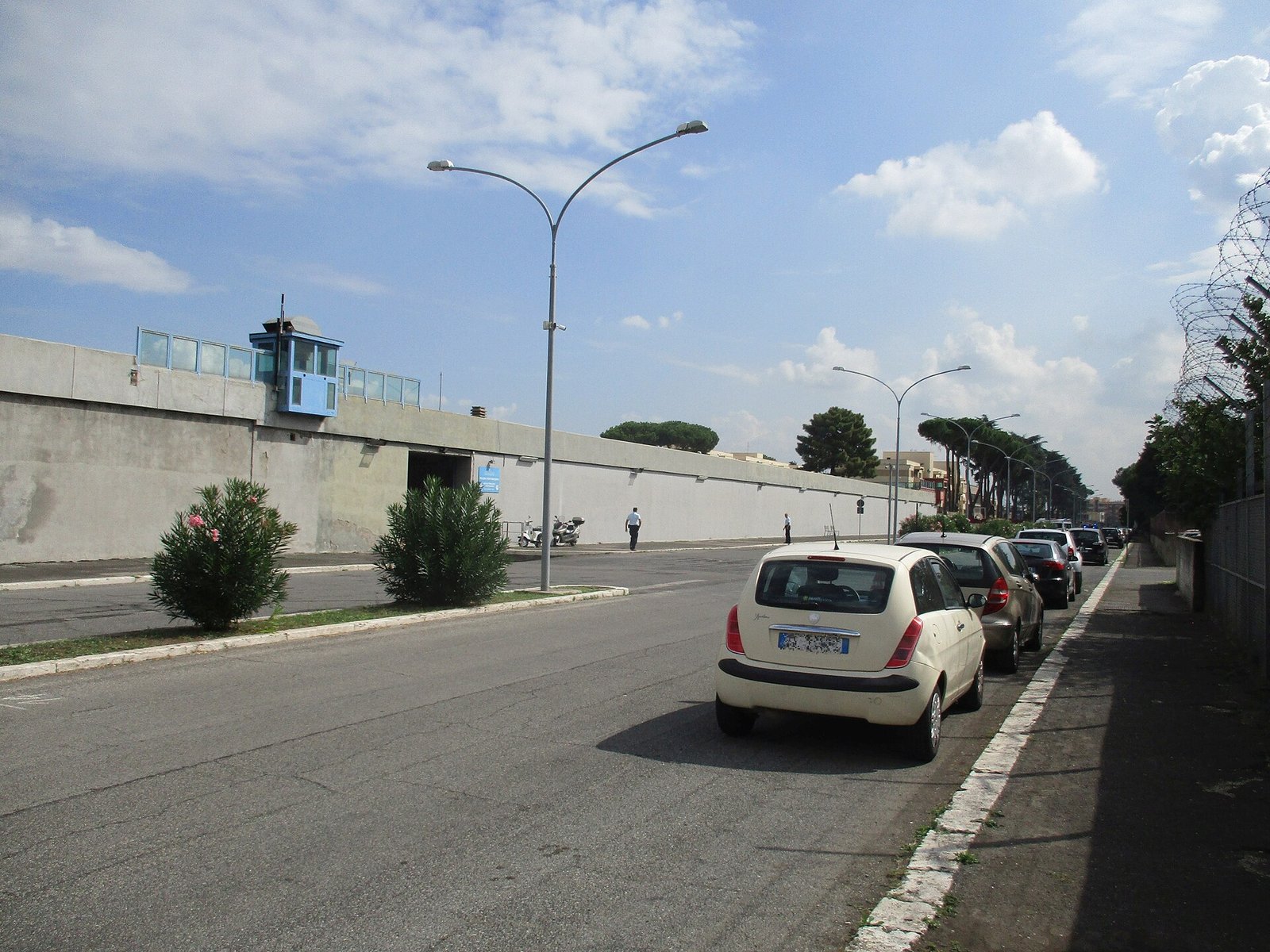
Tempo perduto, tempo ritrovato debuts on Friday, December 18, 2026 at 16:00 at the Rebibbia Nuovo Complesso Prison Theater, at Via Raffaele Majetti 70, in Municipio IV: on stage are the inmate actors of the project, with the participation of Agnese Nano and directed by Alessandro Marverti. The show is the culmination of the program run by La Ribalta, Centro Studi Enrico Maria Salerno, directed by Laura Andreini Salerno, devoted this year to the theme of memory and inspired by Marcel Proust. Admission is free until available seats run out, at most 50, with a mandatory reservation to be sent no later than November 18, 2026 to rebibbiafestival@gmail.com. For information the Centro Studi answers at 06 9079216. The prison is reached by Metro B, Rebibbia terminus, and from there by a short bus ride or on foot: for the exact route it's best to use the ATAC route planner.
Language: a performance based on dance, music or visual acts; no English version is announced, any spoken parts are in Italian.
Going into a prison to see theater is an experience that changes the way you look at the stage, and at the city too. In our view, among the December events in Rome, this is the one that asks the most commitment and gives back the most.
Tempo perduto, tempo ritrovato at a glance: date, time, venue, reservation
Friday, December 18, 2026 at 16:00, Rebibbia N.C. Prison Theater, Via Raffaele Majetti 70: debut open to the public, free, at most 50 seats, reservation by November 18.
Only one date for the outside public
The project's calendar includes open rehearsals and five performances inside the prison, but the December 18 debut is the date indicated as open to the public. On September 22 there was also an open performance, Le opere e i giorni, linked to the project's artistic residency. That date has already passed.
Booking a month ahead
The deadline is the most important thing to remember: the request must be sent to rebibbiafestival@gmail.com no later than November 18, 2026, exactly one month before the show. The limit lets the organizers manage entry into a penal institution. Whoever writes after that date stays out.
How many seats
The seats for the outside public are at most 50, assigned until they run out. The hall, which the Centro Studi describes as a 340-seat theater, also takes in the inside audience.
Contacts
La Ribalta, Centro Studi Enrico Maria Salerno: telephone 06 9079216, email rebibbiafestival@gmail.com, official website enricomariasalerno.it. Entry procedures for the public are communicated by the organizers to those who book.
The program may change
As with all events in the city's calendar, the program may be subject to changes. It's worth rechecking the event page in the days before.
What Tempo perduto, tempo ritrovato is
Tempo perduto, tempo ritrovato is a project of art workshops for the inmate population of Rebibbia Nuovo Complesso, active from July 15 to December 18, 2026, which closes with a show open to the city's public.
Two workshops and a residency
Between July and December the project set in motion two workshops, titled Il Tempo Perduto and Tempo Ritrovato, and an artistic residency, Le Opere e i Giorni. The work, according to the presentation, is organized in open rehearsals and five performances inside the prison, up to the debut open to the public.
The theme: memory
The thread of 2026 is memory, with a declared reference to Marcel Proust. For those who live in detention, time is the very substance of the sentence: the title puts together the time that is lost and the time that, through theater, people try to find again.
On stage
On stage are the project's inmate actors, with the participation of the actress Agnese Nano. The director is Alessandro Marverti, who appears among the collaborators of the Centro Studi Enrico Maria Salerno.
Who supports the project
The project is carried out with the support of the Ministry of Culture, Directorate General for Performing Arts, and is among the winners of the public call Lo spettacolo dal vivo fuori dal Centro, year 2026, promoted by Roma Capitale, Culture Department, in collaboration with SIAE.
Marcel Proust and Time Regained: the source of Tempo perduto, tempo ritrovato
In Search of Lost Time, the novel by Marcel Proust published between 1913 and 1927, is the source that gives the project its title and theme.
Seven volumes
For editorial reasons the work is divided into seven volumes: Swann's Way (1913), In the Shadow of Young Girls in Flower (1919, Goncourt Prize), The Guermantes Way (1920), Sodom and Gomorrah (1921 and 1922), The Captive (1923), The Fugitive (1925) and Time Regained (1927). The last three came out after the author's death.
The novel of memory
In the Recherche, the themes of memory and nostalgia stand out, the recovery of an era and an environment that have vanished but are relived in memory. The narrator, the true protagonist, discovers in the last volume the meaning of life in art and literature: the passage from lost time to time regained.
A cathedral of a work
For its length, about 9,609,000 characters in 3,724 pages, the novel entered the Guinness World Records. For its structure it is called a cathedral work. The first Italian edition came out between 1946 and 1951.
Why Proust in prison
Bringing the Recherche to people in confinement reverses the point of view: memory becomes the space of freedom that no wall can take away. It's a strong dramaturgical intuition and, in our view, much riskier than an already tested classic.
La Ribalta, Centro Studi Enrico Maria Salerno: who brings theater to Rebibbia
The Centro Studi Enrico Maria Salerno was founded in 1994, at the actor's death, by Laura Andreini Salerno, the widow and artistic collaborator of the maestro, who still runs its artistic direction.
A structure with a social vocation
The Centro carries out cultural promotion and theater and film-video production, with particular attention to social issues. It collaborates with theater institutions, universities and public and private bodies on training projects and on job placement of former inmates, actors and technicians, in the world of entertainment.
The archive
In 2004 the Lazio Superintendence for Archival Heritage recognized the Enrico Maria Salerno Archive as a national archive of particular historical interest. The association is also registered in the Ministry's Register of Film Companies.
The partners
Among the institutional partners listed by the Centro Studi are the Ministry of Culture, the Ministry of Justice, the Lazio Region, the City of Rome, the Teatro di Roma, the Fondazione Cinema per Roma, the Roma Tre and La Sapienza universities and the National Coordination of Theater and Prison.
Enrico Maria Salerno
The Centro bears the name of Enrico Maria Salerno, born in Milan on September 18, 1926 and died in Rome on February 28, 1994: actor, voice actor, director and television host, performer in 102 stage productions and 92 films, three of which he directed. 2026 is the centenary of his birth.
The Teatro Libero di Rebibbia: 20 years on stage behind the walls
Since 2002 the Centro Studi, directed by Laura Andreini Salerno and Fabio Cavalli, has worked on the promotion of theater, film and publishing in the Rome Rebibbia Nuovo Complesso Detention Center named for Raffaele Cinotti.
The numbers of the project
According to the Centro Studi, the project takes in about 100 inmates and has involved over 600 since the beginning. Since 2003, 40 shows have been produced with over 300 curtain raisings, and the theater has welcomed more than 45,000 spectators, inside and outside.
The companies
Three companies and a band work in the prison. The Compagnia del reparto G12 Alta Sicurezza, led by Fabio Cavalli since 2003, has staged Shakespeare (The Tempest, Hamlet, Julius Caesar), Dante's Inferno, Giordano Bruno, Eduardo, Pirandello, Tolstoy, Brecht. The Compagnia del reparto G8, directed by Laura Andreini Salerno, debuted in 2008. The Orchestra del reparto G9, directed by maestro Franco Moretti of the Orchestra Popolare Romana, offers musical theater and concerts.
Outside the walls
The Teatro Libero has opened up to the city's theaters, collaborating with the Eliseo, the Teatro Quirino and the Argentina. Since 2010 a protocol with some Roman theaters has taken shows of the G8 company outside, such as La leggenda di Fitzcarraldo, Exodus, La festa and Viaggio all'isola di Sakhalin. To celebrate the project's 20 years, the Teatro Argentina hosted on a December 22 the show Dalla città dolente with the inmate actors of the Rebibbia company.
Film
With the short film Naufragio con spettatore, presented at the 73rd Venice Film Festival as part of the MigrArti Prize, Fabio Cavalli received the jury's special mention. The theater also hosts the Festa del Cinema a Rebibbia, in collaboration with the Fondazione Cinema per Roma.
The Rebibbia Prison Theater, the venue of Tempo perduto, tempo ritrovato
The Rebibbia Theater is a 340-seat hall inside the Nuovo Complesso, equipped with stage technology, film projection with a giant screen and a fiber-optic connection.
A hall that broadcasts live
The Centro Studi stresses a first: the hall is connected by broadband, thanks to the intervention of Unidata, and is able to broadcast shows in high-definition live streaming, the only one in the world from a prison. Among the events broadcast was a Dante in streaming.
A real season
The theater hosts a season: shows produced with the inmate actors, outside shows, films and videos, concerts, workshops, meetings for young academy actors, trainees and master's students of the Roman universities, projects that put students of Lazio schools and inmates on the same stage.
The Rebibbia Festival
Since 2004 the prison has opened to the city with the first live performance festival of prison art. The theater is also home to the Festival dell'Arte Reclusa, funded by Roma Capitale, and to the Rebibbia CityFest.
Video training
On the set of Caesar Must Die, the Centro experimented with training inmates in audio and video shooting. Since then the project has included training courses in videography, also supported by the Otto per mille of the Waldensian Church.
The Rebibbia prison complex
The Rebibbia prison complex is made up of four independent institutions, three for men and one for women: considered as a whole, it's the prison with the greatest capacity in Italy, over 2,000 inmates.
The Nuovo Complesso
The Raffaele Cinotti Detention Center, called the Nuovo Complesso, is the main component of the complex, with a regulation capacity of 1,178 places, 351 single rooms and 319 multiple ones, on a covered area of about 27 hectares. It was designed in the 1960s by the architect Sergio Lenci, built starting in 1965 and inaugurated in 1971.
The other institutions
The first core of the complex was the penal house, later a house of reclusion, inaugurated in 1946. In the 1950s the women's detention center followed, now named for Germana Stefanini. The fourth institution, the III Casa, was inaugurated in 1992.
In culture
The writer Goliarda Sapienza, an inmate at Rebibbia, published in 1983 the autobiographical novel L'università di Rebibbia. In 2007 the artist Fabio Mauri presented at the Il Ponte gallery in Rome the work Rebibbia, a chest of drawers from the prison.
Rebibbia, the neighborhood around the Prison Theater
Rebibbia is an urban area of Municipio IV, in the Ponte Mammolo district, on Via Tiburtina before the Casale di San Basilio, in the northeast outskirts of Rome.
The name
The name recalls Cardinal Scipione Rebiba, owner of a large estate that included the present neighborhood around Ponte Mammolo. The settlement began to form in the early 1900s and grew above all from the 1970s, with low-rise houses and small gardens.
Pasolini at Rebibbia
Pier Paolo Pasolini lived in Rebibbia, as a plaque in Piazza Lino Ferriani recalls, the little square renovated in 2002. Also facing the square is the little church of Rebibbia, on Via Tagliere, a very simple 20th-century chapel with a bell on the roof.
The farmhouse and the tombs
At Via di Ponte Mammolo 30, on a bluff on the right bank of the Aniene, stands the Casale di Rebibbia, called de La Vannina, documented since the 1500s and visible in a view by Giuseppe Vasi of 1754 next to the ancient Ponte Mammolo. Along Via Tiburtina there remain tombs of the imperial era and warehouses of the late Republican era.
In the surroundings
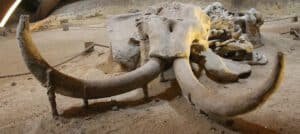
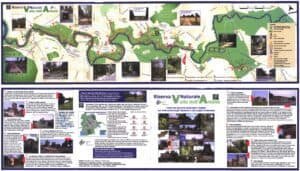
A short distance away, on the bank of the Aniene, is the Museo di Casal de' Pazzi, with a river bed from about 200,000 years ago. Along the river extends the Valle dell'Aniene Nature Reserve.
How to get to the Rebibbia Prison Theater
The reference station for the Rebibbia Prison Theater is Rebibbia, the northeastern terminus of Metro B, at the intersection of Via Tiburtina and Via di Rebibbia.
By metro
The Rebibbia station on Line B was inaugurated on December 7, 1990 as the terminus of the section from Termini and opened to the public the following day. The previous stop is Ponte Mammolo. Via Raffaele Majetti is north of the station, a few hundred yards as the crow flies.
By bus
In front of the station there is an interchange hub with ATAC buses. To choose the right line to Via Majetti it's best to use the ATAC route planner, setting arrival for 15:30.
By car
Via Raffaele Majetti is in the Ponte Mammolo district, postal code 00156. Those arriving by car must allow for the entry times of a penal institution: better to arrive well ahead.
Accessibility
The event page indicates the show as accessible. The Rebibbia station on Metro B is accessible to people with motor disabilities if accompanied.
How to organize the afternoon of Tempo perduto, tempo ritrovato
The show starts at 16:00 on a Friday: if you work, you need a half day off, and it's best to plan weeks ahead, since booking closes on November 18.
Arrive early
Entering a prison is not like entering just any theater: the entry instructions are communicated by the organizers to those who have booked. The advice is to arrive at the gate at least half an hour early and follow the instructions you receive to the letter.
What to expect
In the hall there are inside and outside spectators, as the Centro Studi recalls when counting over 45,000 attendances over the years. It's a real theater, and it should be experienced as such.
After the show
On the way back toward Metro B, the little square on Via Tagliere with the plaque for Pasolini is a small tribute to pay before heading back downtown.
Where to eat
Around Via Tiburtina you find neighborhood places. If you prefer to have dinner downtown, Metro B takes you from Rebibbia directly to Termini.
A curiosity about Tempo perduto, tempo ritrovato at the Rebibbia Prison Theater, December 18, 2026
The most surprising curiosity concerns technology. The Rebibbia Prison Theater, according to the Centro Studi Enrico Maria Salerno, is connected by fiber optic and broadband to the network, thanks to the intervention of the company Unidata, and is able to broadcast shows in high-definition live streaming: the only one in the world, the Centro claims, able to do so from a prison. Among the events broadcast was a Dante in high-definition streaming. Behind this first there is a precise idea: the technological gap that affects people in confinement is one more obstacle to reintegration, and the digitization of the prison becomes a training opportunity. On the set of Caesar Must Die the inmates had already experimented with training in audio and video shooting. With the short film Naufragio con spettatore, awarded a special mention in Venice in 2016, the relationship with the camera became systematic. Today the Teatro Libero di Rebibbia includes real training courses in videography. Anyone who goes in on December 18 to see Tempo perduto, tempo ritrovato therefore finds themselves in a hall that is at once stage, cinema and small television studio, with a giant screen and 340 seats. It's an eloquent paradox: the most closed place in the city is one of the most connected.
Something nobody tells you about Tempo perduto, tempo ritrovato at the Rebibbia Prison Theater, December 18, 2026
What nobody says is that the December 18 show is decided on November 18. The mandatory reservation must be sent to rebibbiafestival@gmail.com no later than that date, and the seats for the outside public are at most 50. Anyone who discovers the event in December, leafing through the holiday programs, arrives late. The reason is easy to guess: the entry of the public into a penal institution has to be prepared well in advance. The second aspect few consider is the time. 16:00 on a December Friday is not the theater's usual hour, and it has to be put on the calendar in time. For those who work it means asking for time off. For a student, skipping a class. In our view it's worth it. The third aspect is the nature of the audience: the Rebibbia Theater counts inside and outside spectators, and the 50 seats for those coming from outside are a part of the hall. It's not an audience of subscribers, and anyone used to the audiences of downtown theaters has to allow for a different atmosphere. Finally: phone off during the show, out of respect for those on stage, as well as for the institution's rules communicated to those who book.
My advice for visiting Tempo perduto, tempo ritrovato at the Rebibbia Prison Theater, December 18, 2026
The advice is to prepare with a book and a film. The book is Proust, of course: you don't need to take on the 3,724 pages of the Recherche, the beginning of Swann's Way is enough, or the last volume, Time Regained, published in 1927, in which the narrator discovers in art the meaning of his life. The film is Caesar Must Die by the brothers Paolo and Vittorio Taviani, shot in the Rebibbia prison itself in 2011 and awarded the Golden Bear in Berlin in 2012. 76 minutes that show how a show with inmate actors is born, from auditions to the premiere, and that help you understand what you will see. The second piece of advice is practical: write right away to reserve, follow the instructions you'll receive and keep the reply. The third piece of advice concerns attitude. Go to see a show, not a social curiosity. The actors on stage have worked for months, through workshops, residency and internal performances. They deserve the same respect, and the same severity of judgment, that is reserved for a professional company. It's the best way to take them seriously.
Another well-known fact, yet rarely cited
Everyone remembers that the Tavianis' Caesar Must Die won the Golden Bear in Berlin in 2012, an award Italian cinema had been missing since 1991, when it went to Marco Ferreri's La casa del sorriso. Less often cited is who was behind it. The screenplay is signed by the two brothers in collaboration with Fabio Cavalli, the theater director who led the Alta Sicurezza company. Among the producers is Laura Andreini Salerno, and among the production companies, next to Kaos Cinematografica and Rai Cinema, appears La Ribalta, Centro Studi Enrico Maria Salerno itself: the same association that signs Tempo perduto, tempo ritrovato today. The film told of the staging of Shakespeare's Julius Caesar by the inmates of the Alta Sicurezza section, with Cosimo Rega as Cassius, Salvatore Striano as Brutus and Giovanni Arcuri as Caesar. The Tavianis declared that one of the reasons for shooting it was having heard Shakespeare translated into Neapolitan, Sicilian and Apulian. The film also won five David di Donatello awards, including best film and best director, and was chosen as Italy's candidate for the Oscar for best foreign film. All this was born in the hall on Via Majetti, where on December 18 they return to acting.
The right photo to take at Tempo perduto, tempo ritrovato at the Rebibbia Prison Theater, December 18, 2026
Inside the prison, the right photo is the one you don't take. In a penal institution precise rules apply, which the organizers communicate to those who book: following them is the first condition for getting in. There's also a deeper reason. The actors on stage are people in detention, with families and stories that don't belong to the audience. Their faces aren't a subject to take away. The official images of the show, when there are any, are released by the Centro Studi. The right photo, then, is taken outside. The first is at the Rebibbia station of Metro B, where in December 2014 the cartoonist Zerocalcare painted a mural of a mammoth on the wall of the plaza. The second is in Piazza Lino Ferriani, in front of the plaque recalling that Pier Paolo Pasolini lived in Rebibbia. The third is in the light of the December sunset, coming out of the show, on Via Tiburtina: an outskirt made of low houses and gardens, far from the idea many people have of this name. Three images that tell the neighborhood better than any photo of the perimeter wall.
Some important events that happened here in history
The history of the Rebibbia prison complex begins in 1946, with the inauguration of the penal house, later become a house of reclusion. In the 1950s the women's detention center arrives, run at first by the Vincentian sisters and from 1979 by prison guards. In the 1960s the architect Sergio Lenci designs the Nuovo Complesso, built from 1965 and inaugurated in 1971, later named for Raffaele Cinotti: that's where the theater is. In 1992 the fourth institution, the III Casa, is inaugurated. The news records spectacular episodes: on November 23, 1986 a hijacked air ambulance landed in the prison's sports field for an escape, and in 1987 an escape attempt through a tunnel dug over a month was discovered three yards from its goal. The story that interests the theater is another: in 2002 the Centro Studi Enrico Maria Salerno starts work in the Nuovo Complesso, in 2003 the Alta Sicurezza company debuts, in 2004 the first live performance festival of prison art is born, in 2008 the G8 company debuts. In 2011 the Tavianis shoot Caesar Must Die here. In the same year the prison receives a visit from Pope Benedict XVI. In 2024 came that of Pope Francis, at the women's prison.
Who has come through Tempo perduto, tempo ritrovato at the Rebibbia Prison Theater, December 18, 2026
Important names of Italian culture have passed through the stage of the Rebibbia Theater. The Centro Studi Enrico Maria Salerno recalls many, who brought shows, performances, meetings and debates: Carlo Cecchi, Francesco Rosi, Luca De Filippo, Leo Gullotta, Nicola Piovani, Francesco Di Giacomo, Vincenzo Salemme, Umberto Orsini, Giovanni Marini, Alessandro Haber, Alessandro Gassman, Ninetto Davoli, Roman Vlad, Giancarlo De Cataldo, Ascanio Celestini, and of course Paolo and Vittorio Taviani. The prison complex was visited by Pope Benedict XVI in 2011 and by Pope Francis in 2024, by President of the Republic Sergio Mattarella, by Marco Pannella and Rita Bernardini, by the writer Erri De Luca, who gave writing lessons there. Among the past inmates is the writer Goliarda Sapienza, who drew L'università di Rebibbia from her experience. Among the inmate actors, the best known is Salvatore Striano, the Brutus of Caesar Must Die, today remembered as an actor. On December 18 Agnese Nano will pass through here, working alongside the inmate actors in the show directed by Alessandro Marverti. And you will be there, 50 spectators at most: few, and for that reason each one counts.
Other events on prison theater in Rome
The theater born at Rebibbia also reaches the city's halls, and this fall there were other chances to encounter it.
Rebibbia: la Città invisibile
At Spazio Rossellini, on October 12, 2026, Rebibbia: la Città invisibile was staged, a documentary theater piece inspired by Italo Calvino with former inmates of Rebibbia and directed by Laura Andreini and Francesca Di Giuseppe: it was a different event from Tempo perduto, tempo ritrovato, but it was born from the same story.
The theaters that have hosted Rebibbia
The Teatro Libero di Rebibbia has collaborated with the Argentina, the Eliseo and the Quirino. For the Argentina's program see the listing on the Teatro di Roma 2026 2027 season.
Custom visits
For individuals and companies who want a custom experience of the Rome of the outskirts and social theater, Tour Leader Pro organizes private, corporate and V.I.P. tours and experiences.
Frequently asked questions about Tempo perduto, tempo ritrovato
When is Tempo perduto, tempo ritrovato on stage at Rebibbia?
Tempo perduto, tempo ritrovato debuts on Friday, December 18, 2026 at 16:00 at the Rebibbia Nuovo Complesso Prison Theater, at Via Raffaele Majetti 70. It is the date open to the outside public. The project also includes open rehearsals and performances inside the prison.
How do you book Tempo perduto, tempo ritrovato?
For Tempo perduto, tempo ritrovato the reservation is mandatory and must be sent to rebibbiafestival@gmail.com no later than November 18, 2026. For information you can call La Ribalta, Centro Studi Enrico Maria Salerno, at 06 9079216.
How much is the ticket for Tempo perduto, tempo ritrovato?
Tempo perduto, tempo ritrovato is free admission, until available seats run out, which for the outside public are at most 50. Without a confirmed reservation you don't get in.
Where is the Rebibbia Prison Theater?
The Rebibbia Prison Theater is inside the Rebibbia Nuovo Complesso Detention Center, at Via Raffaele Majetti 70, in the Ponte Mammolo district, Municipio IV. The reference station is Rebibbia, the terminus of Metro B.
Who acts in Tempo perduto, tempo ritrovato?
In Tempo perduto, tempo ritrovato the inmate actors of the Rebibbia project perform, with the participation of the actress Agnese Nano. The director is Alessandro Marverti. The project is run by La Ribalta, Centro Studi Enrico Maria Salerno, directed by Laura Andreini Salerno.
What does Proust have to do with Tempo perduto, tempo ritrovato?
Tempo perduto, tempo ritrovato takes its title and its theme of memory from In Search of Lost Time by Marcel Proust, the novel in seven volumes published between 1913 and 1927, whose last volume is titled Time Regained.
Was Caesar Must Die shot in the Rebibbia Theater?
Yes, the Rebibbia prison hosted in 2011 the shooting of Caesar Must Die by the Taviani brothers, Golden Bear in Berlin 2012, with the inmates directed by Fabio Cavalli. The Centro Studi Enrico Maria Salerno, which runs Tempo perduto, tempo ritrovato, was among the co-producers.
Is the show Tempo perduto, tempo ritrovato accessible?
The official page of Tempo perduto, tempo ritrovato indicates the event as accessible. Anyone with specific needs does well to mention them already in the reservation email, so the organizers can prepare the entry.
The final advice on Tempo perduto, tempo ritrovato
It's best to write right away, without waiting for November: 50 seats and a deadline a month before the show don't forgive latecomers. Then, in our view, you go to Rebibbia with the same seriousness with which you'd go to an opening night at the Argentina.
Article written by the editorial team of Tour Leader Pro, contact them for Private/Corporate/V.I.P. Tours and Experiences.
Planning a trip to Rome? The English-language guides to visiting the city are on ItalyPlanner.com.
Contact Information
Nearby
 Museo di Casal de’ Pazzi800 m
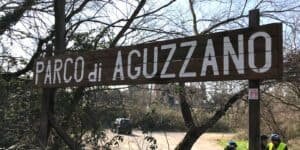
- Aguzzano Urban Park900 m
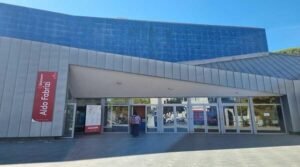
- Aldo Fabrizi Library and Cultural Center1.2 km
- Aniene Valley Nature Reserve1.4 km
Upcoming events nearby
- Visita alla Città invisibile (Visit to the Invisible City), art exhibition at Rebibbia Nuovo Complesso prison, Dec 15, 2026100 m
- Macbeth Machine at Centro Sociale Anziani Casal Tidei, November 30, 20261.4 km

You might also like
- Teatro Marconi 2026-2027 Season, September 28 to December 31, 2026
- Scappati di casa, il ritorno dei casalinghi disperati at Teatro Nino Manfredi, from February 25 to March 7, 2027
- I cattivi pensieri at Teatro Elsa Morante, performances from October 24 to November 6, 2026
- Uno scherzo del genere with Emanuela Grimalda and Gianluca Ramazzotti at Teatro Nino Manfredi, March 11 to 21, 2027
- Conigli by Salvo Di Paola at Hacienda Roma, November 30, 2026
- Martina Catuzzi, UOMA at Hacienda Roma, April 19, 2027