Room 26
In short. Room 26 is a nightclub in the EUR district of Rome, with its entrance at Piazza Guglielmo Marconi 31, a few steps from the Eur Palasport stop of metro line B, direction Laurentina.
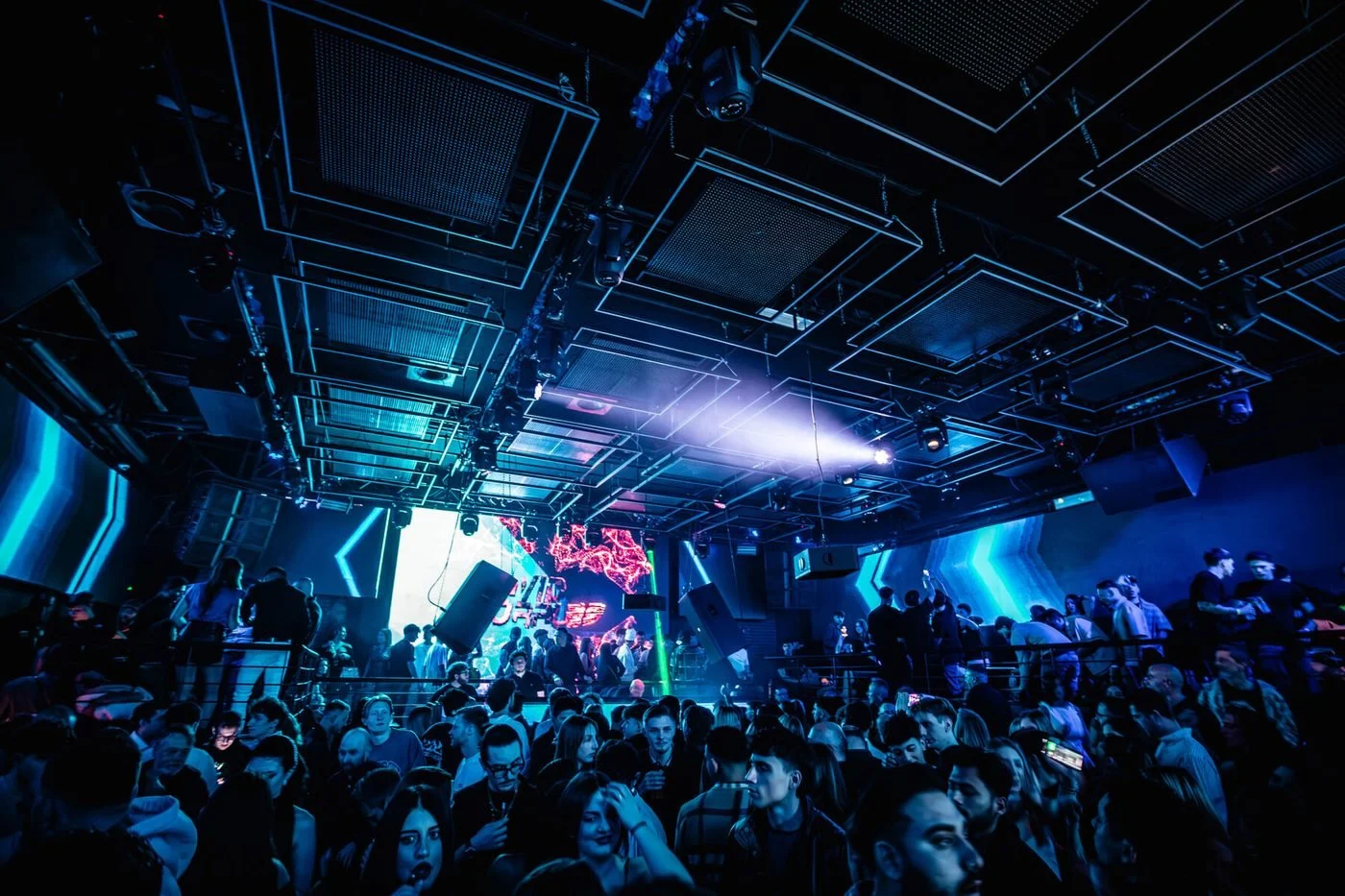
Room 26 is a nightclub in the EUR district of Rome, with its entrance at Piazza Guglielmo Marconi 31, a few steps from the Eur Palasport stop of metro line B, direction Laurentina. The square is the one dominated by the great obelisk dedicated to Guglielmo Marconi, a travertine cylinder more than 40 meters tall that symbolically marks the monumental entrance to the district designed for the 1942 Universal Exposition and never built in the planned form because of the war. The venue is in a central position with respect to the great buildings of Italian Rationalism that still define the face of EUR: a few minutes' walk away is the Palazzo dei Congressi designed by Adalberto Libera, and a little farther you reach the Square Colosseum, that is the Palazzo della Civiltà Italiana, and the basilica of Saints Peter and Paul, visible from much of the district thanks to its imposing dome. Room 26 was born as a reference point of Roman nightlife oriented to electronic and urban music, with a sound system that the venue itself points to as its distinctive trait: 26 latest-generation CROWN amplifiers, from which the name derives, able to deliver up to 130 dB SPL, with walls treated with Topakustik panels and Fiberform materials to obtain a sound absorption designed for club music rather than for the spoken voice or symphonic music. The project came from a group of entrepreneurs bound by a long-standing friendship and by international experience in the entertainment world, with the declared goal of bringing to Rome a club model inspired by the most successful international experiences, from the United States to the rest of Europe. The company that manages the brand is DEP 26 S.r.l., and the venue communicates its programming mainly through the official social channels and a dedicated app that can be downloaded from the stores, with which the season's nights are announced even before on the other channels. The pages that follow retrace the venue's location, the urban context of EUR in which it sits, the structure of its rooms, the weekly programming with which it alternates different genres from Thursday to Sunday and the DJs who over the seasons have stepped onto the stage of the Main Room, along with some practical indications for those who want to organize a night out or a private event in one of the best-known clubs of the south of Rome.
EUR nightlife and the positioning of Room 26
EUR has never historically been one of the liveliest districts of Rome after sunset: its original vocation as a business and residential center meant that, for decades, nightlife was concentrated almost exclusively in the historic center, in Trastevere, in San Lorenzo or along the Tiber in the summer months, leaving the great avenues of EUR silent as soon as the offices close. In this context, the presence of a structured club like Room 26 is a significant exception: it is one of the few venues in the south of Rome able to draw an audience from the whole city and not only from the district where it stands, thanks to continuous weekly programming and a technical system that the venue itself promotes as a draw. Those who know the Roman electronic music scene know that clubs with stable international programming, able to alternate established artists with resident DJs who have their own following, are not very many in the city, and that their geographic location weighs quite a lot on how easily the public reaches them: EUR, with the direct connection of metro line B and the proximity to the Grande Raccordo Anulare, suits an audience that also comes from outside Rome, from the towns of the Castelli Romani to the southern coast, without having to cross the traffic of the city center. This broader catchment area also explains why, on the nights with the highest attendance, the surroundings of the square fill up with parked cars and groups waiting from midnight on, a flow that the district doesn't know at all on weekdays and that represents, together with the venue's lights that stay on until dawn, one of the few visible signs of nightlife in a part of Rome otherwise devoted almost entirely to daytime functions. For this reason too, those who live in the district tend to distinguish clearly the nights when the venue is open from the rest of the week, and over the years the club has become a shared reference point for finding one's way among the few structured nightlife offerings of the south of the city.
Where Room 26 is and how to really get there
Those arriving by car from the Castelli Romani or from the southern coast can also take Via Pontina to the junction with Via Cristoforo Colombo, a route that is often smoother than crossing the city center in the evening hours, while those arriving from the north, from Fiumicino airport or from the Ostiense area, find it convenient to follow Via Cristoforo Colombo itself southbound to the turn for Piazza Marconi.
The official address is Piazza Guglielmo Marconi 31, 00144 Rome, in the heart of EUR, the district conceived in the 1930s as a showcase of the urban planning of the Fascist regime and then, in the postwar period, becoming one of the main business and residential centers of the capital, home to ministries, state companies and large insurance companies. Those arriving by public transport get off at the Eur Palasport stop of metro line B, direction Laurentina, and reach the venue's entrance in a few minutes' walk along the wide, tree-lined sidewalks typical of the urban design of EUR, conceived from the start with large pedestrian axes and double-lane avenues separated by flower beds. The other stops on the same line, Eur Magliana and Eur Fermi, remain at a reasonable distance anyway for those who prefer to get off one stop before or after and take a stroll among the buildings of the district. By car, the square can be reached from Via Cristoforo Colombo, the artery that links the center of Rome with the Ostia coast and that forms the backbone of the district, or from the Grande Raccordo Anulare via the exits dedicated to EUR, both from the north along Via Laurentina and from the south via Via Cristoforo Colombo itself. On opening nights parking on the neighboring streets fills quickly, helped by the offices and residences that already take up a good part of the parking spaces during the day, and it's best to allow a few extra minutes to park or rely on a private transport service to the door of the venue. Those coming from the historic center or from Termini station can also consider the regional rail line that stops at Roma Ostiense, then continue on metro line B in the direction of Laurentina to Eur Palasport, a route that avoids the evening traffic on Via Cristoforo Colombo. The nights at Room 26 traditionally follow a pattern that opens the doors at 23:00 and continues until the early hours of the morning, with events concentrated between Thursday and Sunday. This is the venue's recurring pattern, not a fixed calendar, because the actual dates, the themes of the nights and any invitation-only entries change from season to season and should always be checked on the club's official channels before planning the night.
EUR, from the 1942 project to the district of today
To understand the context in which Room 26 sits it helps to retrace the history of the district briefly. EUR, an acronym for Esposizione Universale di Roma, was born from an urban planning project begun in the 1930s to host a great international event planned for 1942, conceived as a celebration of the 20th anniversary of the Fascist regime and as a showcase of Italian industrial and cultural power. The master plan, entrusted to a group of architects including Marcello Piacentini, envisioned a rigorously symmetrical urban layout, with large straight road axes, monumental squares and public buildings built according to the canons of Rationalist architecture, characterized by pure volumes, repeated colonnades and a massive use of travertine as a facing material. The outbreak of the Second World War interrupted the work when many buildings had already been completed or were at an advanced stage of construction, among them the Palazzo della Civiltà Italiana itself and several other ministerial buildings. In the postwar period the district was completed and converted to civil functions, becoming home to ministries, public companies, bank and insurance offices, and later also to prestigious private residences, while keeping intact the original urban layout, with its great tree-lined avenues, wide squares and travertine buildings that still today make EUR one of the most recognizable districts of Rome from an architectural point of view. In the 1960s, on the occasion of the 1960 Olympics, EUR hosted several sports facilities, including the Palazzo dello Sport, and in recent decades it has been enriched by new contemporary works, from Fuksas's Nuvola to the skyscrapers of the Torrino area, which coexist with the original Rationalist architecture in a contrast that is by now part of the district's identity. In this rather formal and daytime urban context, the presence of nightlife venues like Room 26 is an element of continuity with the district's original vocation as a place of large public events, even if transferred from the monumental register to that of contemporary nightlife. Among the architects who left the deepest mark on EUR we should recall Adalberto Libera, author of the Palazzo dei Congressi that still today dominates Piazza John Kennedy a short distance from Room 26: the building, with its great hall covered by a suspended sail and its colonnaded facade opening onto a wide portico, is considered one of the masterpieces of Italian Rationalist architecture and is still a venue for conferences, exhibitions and public events, in a functional continuity with the role conceived from the start for the whole district. Alongside Libera, another central name in the construction of EUR is that of Giovanni Guerrini, Ernesto Bruno Lapadula and Mario Romano, the architects to whom we owe the design of the Palazzo della Civiltà Italiana, the building that the contemporary public knows best as the Square Colosseum for its sequence of repeated arches over six floors, which over the years has become a photographic symbol of EUR on a par with the monuments of Roman antiquity that inspired it.
What Room 26 really is: a sound system before a venue
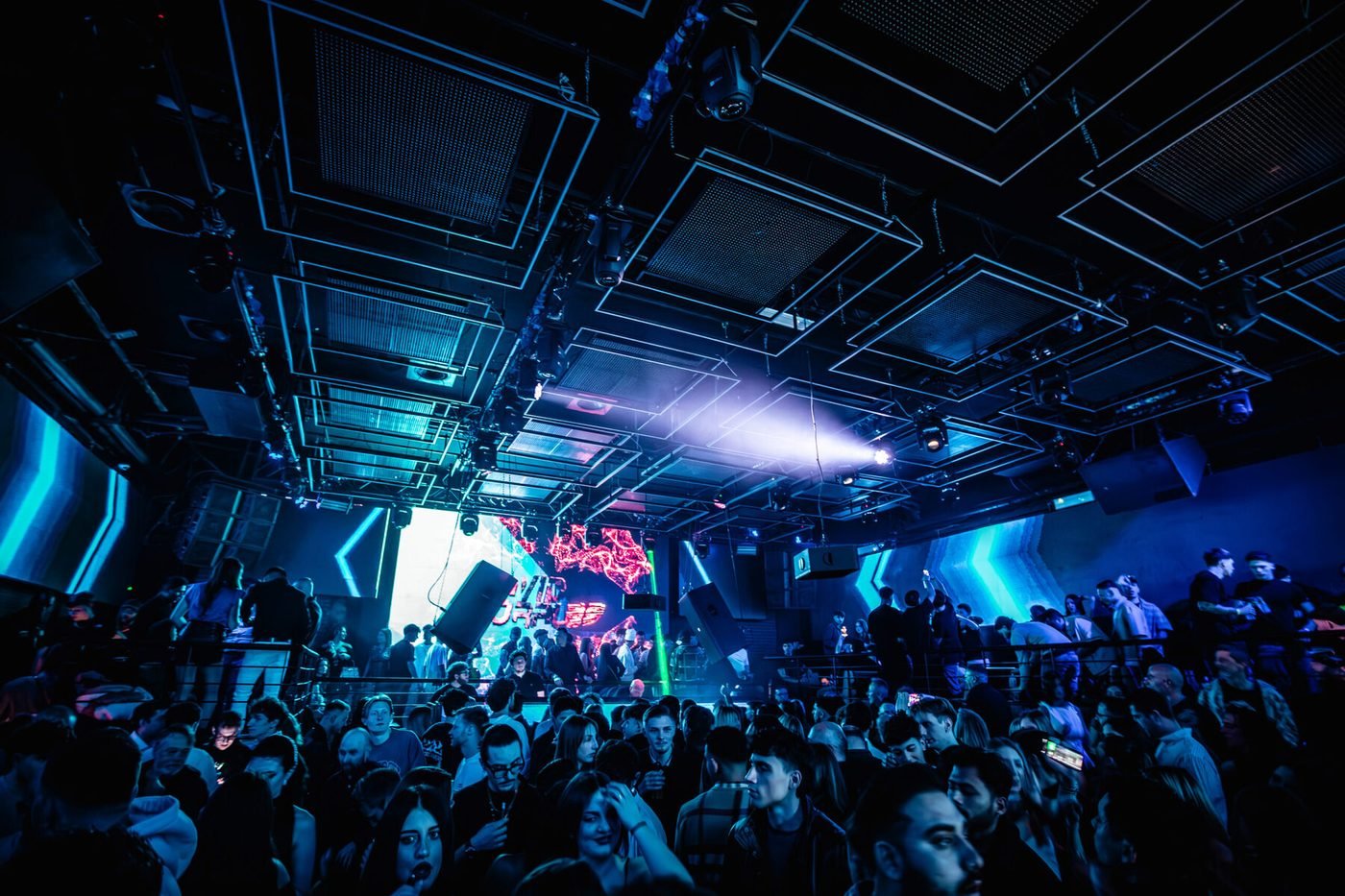
Beyond the name that recalls the amplifiers, Room 26 presents itself as a project built around sound. The main room, the Main Room, houses the large sound system and the stage for DJ sets, and is described by the venue as a true auditorium designed for dance music, with an acoustic treatment that includes Topakustik wood flooring and Fiberform panels to obtain the absorption coefficient considered ideal by those who designed the system, so as to deliver a defined sound even at very high volumes. The Plus Room is instead the more intimate room, designed for private parties, corporate events and the more commercial nights of the weekend, with a capacity that the venue itself indicates as between 100 and 200 guests for private events. The venue describes its philosophy as an attempt to go beyond the simple nightclub and become a hybrid space, where live music nights coexist with workshops and training moments aimed at artists, in addition to the weekly programming open to the general public, with the declared idea of being not just a venue but a cultural reference point for those involved in electronic music and urban culture in Rome. Over the years the rooms have also hosted film shoots: several productions have chosen the Room 26 spaces as a set for scenes set in a club, using both the interior spaces and the outdoor area, as well as the availability of technical staff to handle audio, lights and video during the shoots, a service that the venue explicitly offers to film and advertising productions looking for an already equipped nightclub setting, without having to build a set from scratch in a studio. On the corporate side, the Room26 brand belongs to the company DEP 26 S.r.l., while communication toward the public clearly distinguishes two operating tracks: an infoline dedicated to lists, tables and bookings for the public nights, and a separate contact reserved for corporate events and private parties, managed as a separate service with its own sales contact. This organization by distinct areas, recurring in the most structured large European clubs, allows the venue to treat differently the public looking simply for a night of music and the companies or private individuals who rent the spaces for a tailor-made event, with very different needs and timelines.
The sound system and the acoustics of the main room
The technical component holds a central place in the venue's communication, which explicitly points to the power of its system as a distinguishing element compared to other Roman clubs. The 26 CROWN amplifiers that make up the heart of the Main Room sound system allow, according to what the venue declares, a maximum sound pressure of 130 dB SPL, a very high value even by the standards of the great international clubs, which explains why the acoustic design of the room was entrusted to specific planning with sound-absorbing materials designed expressly for dance music. The combination of Topakustik wood flooring and Fiberform panels has the declared purpose of controlling reverberation inside the room, preventing the sound from becoming confused or muddy at such high volumes, a common problem in rooms not specifically designed for electronic music. The venue defines the Main Room as a true auditorium for dance music, a term that recalls the language of concert halls more than the traditional language of nightclubs, underlining how central the technical component is in the club's positioning against the city's competition. For those who work in audio production, the CROWN brand is historically associated with professional amplifiers used in concerts and in large-scale fixed installations, rather than in classic nightclub systems of contained size. The choice to build the venue's identity around this type of technical component, instead of around more traditional elements like lights or furnishings, remains one of the aspects that distinguishes the communication of Room 26 from that of most Roman clubs.
Piazza Guglielmo Marconi and the monumental axis of EUR
Stepping out of Room 26 you find yourself in one of the most scenic spaces in the district: Piazza Guglielmo Marconi is a large ring that can be walked on foot, with at its center the obelisk dedicated to the inventor of the radio, the work of the sculptor Arturo Dazzi, covered in travertine bas-reliefs that tell the history of telecommunications and Italian scientific progress through a series of allegorical scenes carved along the whole height of the monument. The square was conceived as a hinge between the main axes of EUR and remains today an almost obligatory crossing point for those moving on foot between the metro station, the ministerial buildings of the area and the grid of wide, orthogonal avenues that characterizes the whole district, designed from the start on a monumental scale conceived more for great public events than for the usual pedestrian measure of the streets of Rome's historic center. Office and business buildings face the square and during the day animate the area with a constant flow of workers, while in the evening, helped by the presence of venues like Room 26, the square changes function and becomes one of the few nighttime gathering points of a district otherwise rather quiet after sunset. Walking toward the center of EUR you meet in sequence the most photographed buildings of the area, from the Palazzo dei Congressi to the Square Colosseum, in an urban setting that by day looks almost like a museum and at night comes alive mainly thanks to venues like this one, in a contrast between the stillness of Rationalist architecture and the more dynamic life of the nights that few other districts of Rome offer with the same intensity.
The Torrino and contemporary EUR, a stone's throw from Room 26
Those who visit EUR thinking only of the Rationalist buildings of the 1930s risk missing a more recent and equally significant part of the district, the one that grew starting in the 2000s in the area known as Torrino, a little south of Piazza Marconi. Here, in the last two decades, some of the tallest skyscrapers in Rome have risen, home to large insurance and energy groups, which have added to the EUR skyline an architectural register completely different from that of travertine and Rationalist colonnades, made instead of glass, steel and vertical volumes. The contrast between this more modern part of the district and the historic core around the Palazzo dei Congressi and the Square Colosseum tells well how EUR never stopped at the original 1942 project, but kept growing and transforming while remaining faithful to a certain idea of a planned district, with large avenues, wide green spaces and a clear separation between residential, business and leisure functions. Room 26, located right at the boundary between the more monumental and the more contemporary part of EUR, sits in a position that sums up well this double identity of the district.
A curiosity about Room 26
The name of the venue is not a graphic whim but a technical fact: the 26 CROWN amplifiers that power the Main Room system give their name both to the room and to the brand, in a game of direct correspondence between hardware and identity that few other Roman clubs apply so literally. The choice communicates from the name itself the central idea of the project, that is that sound comes before everything else, from furnishings to lights, and that the quality of listening is the criterion by which the specialized public judges a club of this type. It is worth noting that the same number, 26, also returns in the name of the smallest room, called simply Hall 26 in some of the venue's communications tied to events that precede the opening of the main doors, as if to maintain a coherent visual and sonic identity across all the spaces that make up the complex.
The Main Room, the Plus Room and the weekly nights
The typical program of Room 26 is organized over four weekly nights, each with a distinct musical identity, designed to intercept different audiences within the span of a few days. Thursday is traditionally the night of the Milkshake Party, a format born in 2001 and become over the years a fixed appointment of Roman nightlife for those who love hip hop, R&B and dancehall. The fact that the format has returned several times to Room 26 over the seasons tells well how much the capital's scene for this musical genre revolves around a few historic nights rather than fixed venues, with an audience that follows the name of the night more than the address where it is held from time to time. On Friday the Main Room hosts DRIP Friday, dedicated to urban culture with a mix of hip hop, R&B, reggaeton, afrobeat and trap, curated by DJs Fabio Angeli and Mattia Olivi, who alternate trending international tracks with productions more tied to the Italian urban scene. On Saturday the main room becomes the stage of 100% Room 26, with an approach more oriented to tech house and club beats entrusted to DJ Miki Stentella, the night that the venue points to as the most representative of its sonic identity, the one in which the CROWN system is used most fully. On Sunday, finally, the Plus Room welcomes Báilame, the night dedicated to reggaeton, Latin music and urban dance, while the Main Room rests, in a choice that lets the venue offer a more intimate and less noisy alternative to close the weekend. Every season the resident DJs and the hours can vary, so the sequence described should be understood as the venue's usual pattern rather than a calendar to be considered valid without checking, and it's always good to verify on the official channels which format is actually scheduled before planning the night.
One thing nobody tells you about Room 26
What is rarely told is that the Plus Room, the smallest room, is also the one the venue invests in most for private and corporate events: on the nights dedicated to the general public it hosts the more commercial themed nights, but during the week it is set up for parties, presentations and business dinners, with audio, video and lighting service managed in-house and dedicated technical staff, plus a list of optional services that includes DJs, live performers, technical support for LED screen management, coat check service, hostesses and stewards, a bar with an open bar of soft drinks, wine and prosecco, and catering with buffet or dinner. Those who book a table or attend a private party therefore find two very different souls of the same venue: the Main Room designed for the general public and high-volume listening, and the Plus Room which in the club's daily life works more as a multipurpose event room than as a simple branch of the big room. Another little-told aspect concerns precisely the function as a film set: the venue makes available to productions not only the spaces but also its own technical staff to manage the systems during the shoots, a service that normally stays out of the communication aimed at the public of the nights and that instead represents a not marginal part of the club's activity. There is then a third little-told element, and it is training: in the description the venue gives of itself, training and workshop activities aimed at artists appear explicitly, designed to go beyond the commercial needs of the record market alone. It is not a marginal detail in the club's official communication, but it is rarely highlighted compared to the programming of the nights, perhaps because it concerns a different, narrower audience that is less immediate to communicate than a lineup of DJ sets.
The advice I give you for visiting Room 26
Before leaving home it's always best to check on the venue's official channels, website and dedicated app included, whether the night you've chosen has a list, a mandatory table booking or free entry until a certain hour: the rules change from night to night and from season to season, and showing up without updated information is the most common way to find long lines or entry criteria stricter than expected. For those arriving from outside Rome, the combination of metro B plus a few minutes on foot remains the simplest solution to avoid the search for parking on the streets around the square, which on the busiest nights fill up quickly. It is also worth keeping in mind the club's typical hours, with entry from 23:00 and nights that continue until late: those who aim for calmer listening of the main system, before the room fills up completely, would do well to arrive early compared to the peak of the night, which tends to concentrate between midnight and 2:00. Another practical piece of advice concerns clothing: since it is a club with a very powerful sound system and a room designed to stay full for a long time, it's better to avoid garments that are too heavy even in the coldest months, because the crowding in the Main Room quickly raises the perceived temperature. For those who need to book a table or organize a private event, finally, it's best to contact the dedicated infoline directly with a few days' notice, especially in periods of higher demand like the weekends close to holidays. One last piece of advice concerns those who come to Rome from out of town for a weekend and want to combine the night with a daytime visit: it's best to devote the afternoon hours to discovering EUR on foot, moving unhurriedly among the Palazzo dei Congressi, the Square Colosseum and the lake, and to arrive at Room 26 in the late evening, so as to experience in the same afternoon and the same night two very different faces of the same district, the monumental and daytime one and the livelier nighttime one tied to music.
Another well-known fact, yet rarely cited
It's fairly well known among those who follow the Roman scene that the Main Room of Room 26 has hosted over the years a series of international DJs of the caliber of David Morales, one of the historic figures of New York house music, with a career that spans four decades of club culture starting in the 1980s, along with more recent names of the house and tech house scene such as Eli Brown, Kasia Korolova, Layla Benitez, Lovra, Olympe, Tita Lau and Viviana Casanova. What tends to be forgotten, or not underlined enough, is that these international appointments coexist in the same venue with much more popular and general-audience formats like Milkshake or Báilame: Room 26 is therefore not a single-theme club aimed at an audience of electronic music enthusiasts only, but a container that in the same week alternates international club programming with nights designed for a broader and more cross-section audience, a strategy that lets the venue fill four consecutive nights with audiences different from each other instead of betting on a single musical genre for the whole week. David Morales, in particular, remains one of the most cited names when talking about the venue's recent history: a U.S. producer and remixer, he won a Grammy Award as remixer of the year and collaborated over his career with artists such as Whitney Houston, Mariah Carey and U2, besides being considered one of the protagonists of the New York house scene since the 1980s with the Def Mix collective. His presence among the international guests of Room 26 is cited by the venue as one of the elements that bring the club closer to the standards of the great names of world club culture, a reference that weighs quite a lot in the perception of the venue among the public most passionate about house music.
The right photo to take at Room 26
Inside the venue, the most representative shot is taken in the Main Room during the peak of the night, with the console stage lit and the wall of CROWN amplifiers in the background, the visual element that best tells the club's identity and that appears, not by chance, in most of the official images the venue circulates on its social channels. Outside, the photograph most coherent with the context is taken instead in Piazza Guglielmo Marconi, with the obelisk behind you and the wide perspective of the square opening toward the buildings of EUR: it is a framing that lets you tell in a single image both the district's nightlife and the monumental architecture that surrounds it, two elements that rarely coexist so closely in other areas of Rome. For those who visit EUR by day as well, before coming back in the evening for the club, it's worth stopping with a camera in front of the colonnade of the Palazzo dei Congressi or the repeated arches of the Square Colosseum, two subjects that together with the obelisk square make up the most classic photographic repertoire of this part of Rome.
Some important events that happened here in history
The most continuous chapter in the venue's recent history concerns the Milkshake Party, a format born in 2001 and returned several times to the rooms of Room 26 as one of the longest-lived hip hop, R&B and dancehall nights in the city, able to pass through more managements and more venues while keeping its name and its audience intact, an uncommon case in Roman nightlife, where historic nights often change address along with changes of management of the venues that host them. Alongside the weekly programming, the venue has built over time a chapter tied to the world of cinema, making its rooms available as a set for several productions that needed nightclub settings, both in the interiors and in the outdoor area of the structure, with the venue explicitly claiming this activity through a dedicated section of its website, where the posters of the films that used the club's spaces as a set are shown. On the special events front, Room 26 appears periodically among the venues involved in the big New Year's parties organized in the capital, in collaboration with other locations in EUR and the city center such as the Palazzo dei Congressi, the Spazio 900 and the Salone delle Fontane, as part of citywide events that involve several venues at once in a network of coordinated events for the last night of the year, a sign of its stable place among the reference venues for the high-draw events of Roman nightlife. The collaboration between Room 26, the Palazzo dei Congressi, the Spazio 900 and the Salone delle Fontane as part of the big New Year's events also tells well another aspect of Roman nightlife, that is how much the highest-draw events tend to be built on networks of several coordinated locations rather than on a single venue, with the public who on the same night can move from one site to another depending on the ticket bought or the time slot chosen.
Who has passed through Room 26
Among the names that appear in the recent history of the venue as international guests of the Main Room are David Morales, a historic figure of U.S. house music with a career spanning four decades of club culture and collaborations with some of the most important names in world dance music, and a series of younger DJs already established in the contemporary house and tech house scene such as Eli Brown, Kasia Korolova, Layla Benitez, Lovra, Olympe, Tita Lau and Viviana Casanova, names who in recent years have built international careers across festivals, European clubs and record collaborations. Among the residents who animate the weekly programming, the venue indicates, among others, Miki Stentella for the Saturday night dedicated to tech house, and Fabio Angeli and Mattia Olivi for the urban Friday, DJs who over the seasons have built their own following among the club's regular audience, becoming an integral part of the identity of their respective nights. It should be remembered that lineups change from season to season: the names reported here capture the programming that the venue itself has made public on its official channels, not a guaranteed calendar for the coming nights, and it's always advisable to check the most recent announcements before choosing a date based on a specific name.
What to see around Room 26, staying in EUR
The strength of Room 26's location is the proximity to a concentration of 20th-century Italian architecture that is worth a visit even by day, before or after the night. A few minutes' walk away you reach the Palazzo dei Congressi by Adalberto Libera, with its great suspended covering sail and its facade marked by columns, today home to events, conferences and, more recently, also renovated spaces for exhibitions and cultural events. Not far away is Fuksas's Nuvola, the convention center designed by Massimiliano Fuksas that added to the district an element of contemporary architecture alongside the historic Rationalist buildings, with its great suspended structure that gives the building its name. Continuing toward the heart of EUR you arrive at the Square Colosseum, the Palazzo della Civiltà Italiana with its repeated arches on six levels, one of the most photographed buildings in Rome along with the ancient Colosseum, and at the basilica of Saints Peter and Paul, whose dome dominates the district's skyline and is visible from much of the south of the city. For those who love museums, EUR also hosts the National Central Library of Rome, the largest public library in Italy, and the Museum of Civilizations, which gathers the ethnographic and prehistoric collections united in a single large museum hub. Those who have time for a more relaxed break before or after the night can go down to the EUR lake, the large artificial body of water surrounded by a tree-lined pedestrian path much frequented for an evening stroll, or swim a few laps at the Piscina delle Rose in the warm months, one of the best-known public pools in the city. For those looking instead for other entertainment moments in the same area, the Eur Social Park periodically hosts events series, markets and outdoor evening appointments that fit well with a night begun or ended at Room 26. Those who still have time before heading back, and who don't stop at EUR alone, can go up toward the Ostiense district, reachable in a few stops of metro B, where you find the Pyramid of Cestius and the remains of the ancient Aurelian walls, a sharp contrast with the squared-off urban design of EUR that helps to grasp how much Rome changes face from one district to another within a few minutes of metro.
Where to eat and drink before a night at Room 26
EUR, being a district born to host offices and ministries, offers a network of bars, restaurants and aperitivo venues concentrated mainly along the main avenues and around the most frequented squares, with an offering that in recent years has widened in parallel with the residential growth of the area. Those who want to have dinner before a night at Room 26 find several informal options within a few minutes' walk of the square, from evening aperitivo venues to more structured restaurants designed for the clientele of offices and the families who live in the district, while for a quicker aperitivo before the doors open many choose the bars around the EUR lake, which in the good season stay open until late with outdoor tables overlooking the water. Since there is no fixed food offering tied directly to the venue, it's always best to check the hours and availability of individual restaurants before planning the night, especially in the months when EUR comes alive more thanks to the outdoor events organized in the parks and public spaces of the district.
The Room 26 audience and the comparison with the city scene
Those who regularly go out in Roman nightlife often notice a basic difference between the venues of the historic center, smaller and tied to a niche scene, and the big clubs of the outskirts and business areas like EUR, which bet on larger capacities, more powerful systems and programming able to alternate different genres in the same week to intercept different audiences. Room 26 clearly falls into this second category: the choice to devote each night of the week to a different musical genre, from Thursday's hip hop to Saturday's tech house to Sunday's reggaeton, answers precisely the need to fill a structure of significant size continuously, avoiding dependence on a single niche audience. This approach, common to many large European clubs, requires stable programming that is recognizable over time, and it is probably one of the reasons why some of the formats hosted by the venue, such as the Milkshake Party, have survived more than 20 years of changes in the Roman music scene while keeping a loyal audience.
When to go to Room 26 and when to avoid it
The weekend nights, particularly Friday and Saturday, are those with the highest attendance and with the peak of entries concentrated between midnight and 2:00 in the morning: those looking for a calmer experience, with a shorter line at the entrance and more space in the Main Room, do well to show up as soon as the doors open, so around 23:00. Thursday, with the Milkshake format, draws a more loyal and specific audience tied to the hip hop and R&B world, while Sunday, with Báilame in the Plus Room, is aimed at those looking for Latin music and reggaeton in a more intimate setting than the main room. The nights with international guest DJs in the Main Room tend to draw a larger and more cross-section audience than the resident nights, so those looking for more concentrated and less crowded listening may prefer the dates with no announced guests, while those who want to live the event at its maximum intensity will do well to aim precisely at the nights with international guests, finding out in advance about the dedicated program. As with any nightlife venue that changes programming every season, before planning a specific night it's always best to check the updated calendar on the club's official channels, because formats, opening days and DJs can vary from the recurring pattern described here.
Organizing a private or corporate event at Room 26
Besides the weekly programming open to the public, Room 26 offers its spaces as a venue for private and corporate events, using mainly the Plus Room but with the possibility, for larger events, of using the whole complex including the Main Room. The basic package indicated by the venue includes exclusive use of the structure, the in-house audio, video and lighting system, a dedicated technician for management during the event, supervision of the restrooms, cleaning service, staff for setup and teardown, security service for handling entrances and exits and the SIAE license for the music used, along with a dedicated wifi connection. To this can be added, on request and at a separate cost, services such as DJ sets, live performers, technical support for LED screens, coat check service, hostess and steward staff, a bar with an open bar formula for soft drinks, wine and prosecco, and a catering service with buffet or a proper dinner. The venue indicates a dedicated phone contact for corporate events, distinct from the one used for lists and table bookings on the public nights, confirming how this part of the activity is managed as a service in itself, with its own contact person and its own internal organization. Over the years, according to what the venue itself reports, several brands have chosen Room 26 as the venue for corporate events, using the versatility of the spaces and the possibility of quickly transforming the setup according to the type of occasion, from the company presentation to the private party with hundreds of guests.
The social channels and the official app of the venue
Room 26 communicates its programming mainly through digital channels: an Instagram profile, a TikTok channel, a Facebook page and an X profile, all managed under the same official username, plus a Telegram channel and a WhatsApp channel designed for direct communication with the most devoted audience. Alongside these is an official app, available for both Apple and Android devices, which the venue indicates as the main tool for not missing the announcements of the season's nights, with every new date communicated there before the other channels. This choice to bet on a dedicated app, in addition to the general social networks, reflects a trend common to the large European clubs of recent years, which try to build a direct relationship with their audience without depending exclusively on the algorithms of social platforms, offering additional functions such as ticket purchase, table booking and list sign-up directly from the application. For those organizing a group night, the app generally lets you keep under control in one place both the events calendar and the status of your booking, avoiding having to look for the information on several different channels.
Metro B and the connections with the rest of Rome
Line B of the Rome metro is one of the two historic lines of the network, opened in stretches starting in the 1950s and then progressively extended until it reached EUR and, farther south, the Laurentina area. The branch toward EUR was built precisely in view of the great public events that the district was meant to host, and still today it is the fastest connection between the historic center, Termini station and the southern part of the city. From the Eur Palasport stop, the one closest to Room 26, you reach in a few minutes the other stops of the area, Eur Fermi and Eur Magliana, useful for those visiting other points of the district before or after the night, while going up the line toward the center you meet the Piramide stop, useful for the Ostiense area and Testaccio, and Circo Massimo, a stone's throw from the archaeological center of the city. For those returning late at night, when the metro service is suspended, taxis and the main private transport platforms remain available, along with the night surface lines run by the local public transport company, which still cover the Cristoforo Colombo axis with lower frequency.
Quick questions about Room 26
Where exactly is Room 26? At Piazza Guglielmo Marconi 31, in the EUR district of Rome, a few minutes' walk from the Eur Palasport stop of metro B. What kind of music do you hear? It depends on the night: hip hop, R&B and dancehall on Thursday with the Milkshake Party, urban sounds on Friday with DRIP Friday, tech house and club beats on Saturday with 100% Room 26, reggaeton and Latin music on Sunday in the Plus Room with Báilame. Is it inside the Palazzo dei Congressi? No: the venue has its own entrance on Piazza Marconi and is a separate building, even if a few steps from the Palazzo dei Congressi and the other Rationalist monuments of EUR. Are there private and corporate events? Yes, mainly in the Plus Room, with audio, lighting and video service managed in-house and a capacity indicated by the venue as between 100 and 200 guests, plus optional services such as catering, hostesses and technical support for LED screens. Is it worth booking? For tables and for access on some nights yes, through the club's official contacts. For free-entry nights the conditions change from season to season and should be checked each time. How do you get there without a car? By metro B to the Eur Palasport stop, continuing on foot for a few minutes along the district's avenues to Piazza Marconi. Who are the resident DJs? Miki Stentella for Saturday tech house, Fabio Angeli and Mattia Olivi for urban Friday, with lineups that can change from one season to the next. Have there been famous international DJs? Yes, among others David Morales, Eli Brown, Kasia Korolova, Layla Benitez, Lovra, Olympe, Tita Lau and Viviana Casanova have played in the Main Room on different occasions over the seasons. What does the name Room 26 mean? It comes from the 26 CROWN amplifiers that power the sound system of the main room, the technical element around which the whole project of the venue was built. Has the venue been used for film sets? Yes, several productions have shot scenes set in a nightclub in the spaces of Room 26, both in the interiors and in the outdoor area of the structure. What are the closest monuments to visit by day? The Palazzo dei Congressi, the Square Colosseum, the basilica of Saints Peter and Paul and the EUR lake, all reachable on foot from Piazza Marconi itself where the venue is located.
Frequently asked questions about Room 26
Where is Room 26?
Room 26 is at Piazza Guglielmo Marconi 31, in the EUR district of Rome, a few minutes' walk from the Eur Palasport stop of metro B. The name of the venue is not random: it recalls the 26 CROWN amplifiers that make up the Main Room's sound system.
Why is it called Room 26?
The name Room 26 derives directly from a technical fact: the 26 CROWN amplifiers that power the Main Room's sound system give their name both to the room and to the venue, in a direct correspondence between hardware and identity that few other Roman clubs apply so literally.
What kind of music do you hear at Room 26?
The programming at Room 26 changes depending on the night: Thursday is devoted to the Milkshake Party, a format born in 2001 with hip hop, R&B and dancehall. Friday offers urban sounds with DRIP Friday. Saturday is the night of tech house and club beats with 100% Room 26. Sunday, in the Plus Room, offers reggaeton and Latin music.
What are the rooms at Room 26?
Room 26 is organized in two main rooms: the Main Room, which houses the large sound system and the stage for DJ sets, designed as a true auditorium for dance music with Topakustik flooring and Fiberform panels for the acoustics. And the Plus Room, the smaller room, also used for private and corporate events during the week.
How powerful is the Room 26 sound system?
The Main Room system at Room 26 reaches, according to what the venue declares, a maximum sound pressure of 130 dB SPL, a very high value for a club, made possible by the 26 CROWN amplifiers that make up the sound system.
Can you organize a private event at Room 26?
Yes, Room 26 offers its spaces as a venue for private and corporate events, using mainly the Plus Room, with the possibility of also using the Main Room for larger events. The basic package includes exclusive use of the structure and the in-house audio, video and lighting system.
Which international DJs have played at Room 26?
The Main Room of Room 26 has hosted over the years international DJs such as David Morales, a historic figure of New York house music with a career spanning four decades of club culture, along with more recent names of the house and tech house scene such as Eli Brown, Kasia Korolova and Layla Benitez.
How do you get to Room 26 by public transport?
Room 26 is easily reached by line B of the Rome metro, getting off at the Eur Palasport stop, a few minutes' walk from the venue in Piazza Guglielmo Marconi. The branch of metro B toward EUR was built precisely in view of the great public events that the district was meant to host.
Article written by the editorial team of TourLeaderPro, the service of licensed tour guides for private, corporate and tailor-made tours in Rome and Lazio: to organize a night out or a guided itinerary that includes EUR and its Rationalist monuments, start from the TourLeaderPro contact page, while tour operators who build packages on the city find the dedicated service in the tour operators section.
For those planning a stay in Rome, the English guides on ItalyPlanner.com collect itineraries and practical advice on the city: among them, the guide to the best day trips from Rome for those who want to leave the center for a day, and the guide to free beaches in Italy for those who, after a night in EUR, want to extend the trip to the coast.
Contact Information
Piazza G. Marconi, 10
Roma Roma Città, Roma Città