Roma che cambia, la città possibile at the Mattatoio, from September 16 to October 30, 2026
In short. Roma che cambia, la città possibile is open from September 16 to October 30, 2026 at the former Mattatoio in Testaccio, in the Rimessini B12, Piazza Orazio Giustiniani 4, 00153 Rome, every day from 9:30 to 17:30.
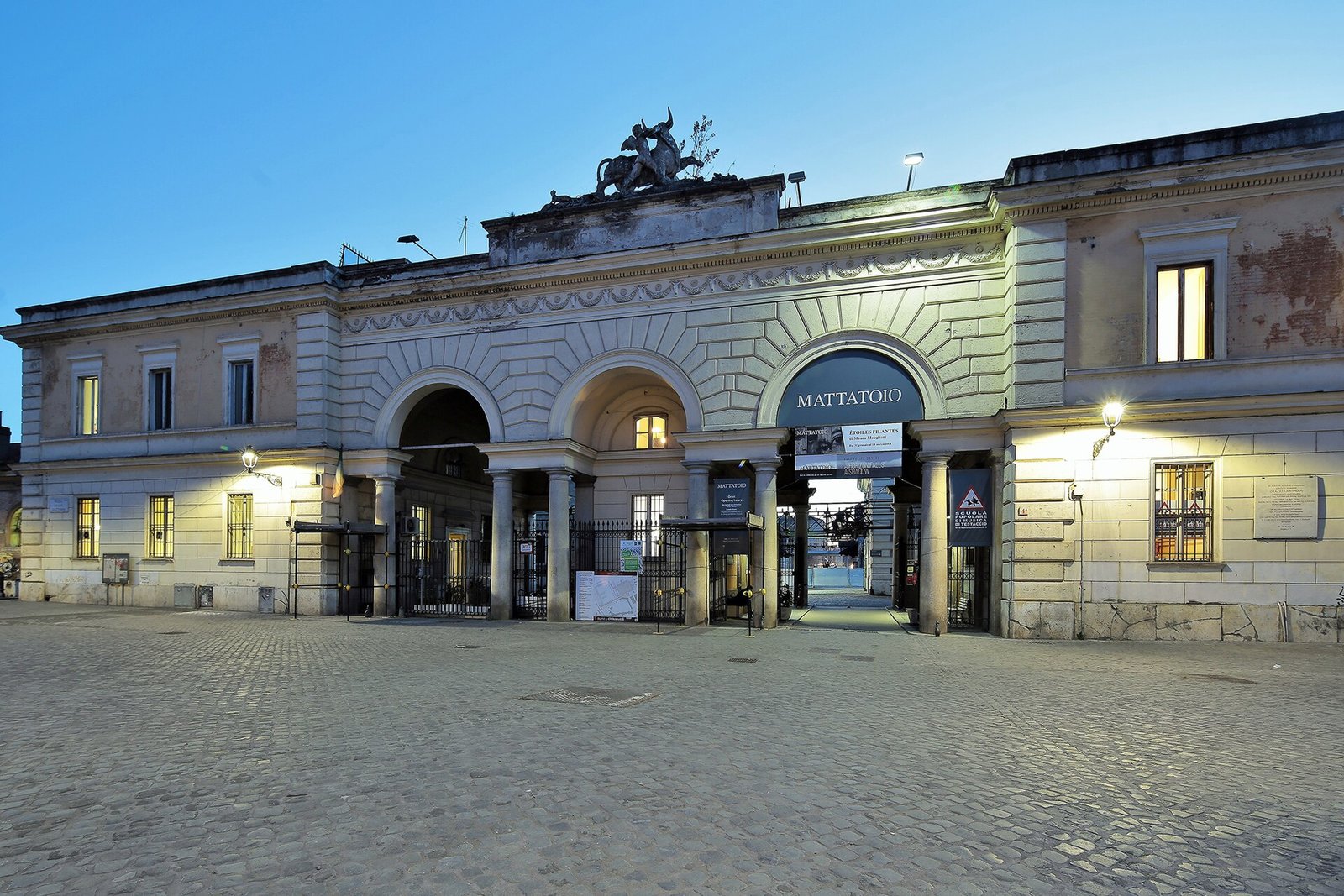
Roma che cambia, la città possibile is open from September 16 to October 30, 2026 at the former Mattatoio in Testaccio, in the Rimessini B12, Piazza Orazio Giustiniani 4, 00153 Rome, every day from 9:30 to 17:30. Admission is free, with no booking. You get to the Mattatoio by metro line B, Piramide stop, by tram 3, Marmorata/Galvani stop, by bus 719, Galvani/Zabaglia stop, or by buses 170 and 781, Largo Marzi stop. The photo exhibition is promoted by Roma Servizi per la Mobilità as part of European Mobility Week 2026.
Historic squares and streets freed from cars, photographed before and after: that's the theme of Roma che cambia, la città possibile, the show the city presents as a visual journey through the transformations of Rome's public space. It's a small show and openly one-sided, because it tells of choices made by the administration, but it has the merit of asking a question that comes back in Rome every day: who do the city's squares belong to? Many squares in the center were long used as parking lots, and in our view the subject deserves an hour of attention.
Roma che cambia at the Mattatoio: the essential information
The show stays open through Friday, October 30, 2026, every day from 9:30 to 17:30, with free admission. The venue is the Rimessini B12 pavilion of the former Mattatoio in Testaccio.
Dates and hours
According to Roma Servizi per la Mobilità, which organizes the show, it is open daily from 9:30 to 17:30. The city's tourist portal, instead, gives Monday through Friday: anyone thinking of going on the weekend would do well to check the organizer's site or call 060606 before setting out. The city's sources don't fully agree on the dates either: the press release for the presentation spoke of an opening from September 15 to October 31, while the organizer's page gives September 16 to October 30.
How much it costs
Admission is free. You need no ticket or booking: you enter through the Mattatoio complex and walk to the pavilion.
Where exactly it is
The show is set up in the Rimessini B12, one of the buildings of the former Mattatoio complex. The main entrance of the Mattatoio is at Piazza Orazio Giustiniani 4, but the complex also has entrances from Via Beniamino Franklin, from Lungotevere Testaccio and from Largo Dino Frisullo. Once inside, it's best to ask the complex's staff for directions to pavilion B12.
What Roma che cambia, la città possibile tells
The show is presented by the city as a visual journey through the transformations of squares and historic streets freed from cars. The principle is comparison: the same place, before and after a pedestrianization or a reorganization of mobility.
The theme: public space given back
The title already states the thesis. Roma che cambia is the observation, la città possibile is the proposal. The photographs serve to show that a square without parked cars becomes another place: you walk, you sit, you look at the architecture. It's an idea that anyone who has visited the capitals of northern Europe knows well, and that in Rome still meets resistance.
A public service show
It isn't an art show and doesn't claim to be. It's an institutional communication show, set up by Roma Servizi per la Mobilità. It should be read for what it is: an account of the city's mobility policies, with their results and with their inevitable partiality.
How to look at it
My advice is to look at it with a question in mind: which of these places do you already know, and how do you remember them? Anyone who has lived in Rome for many years will recognize squares that were once open-air parking lots. Anyone coming from outside will find a different way of reading the city: not by monuments, but by spaces.
European Mobility Week 2026 in Rome
Roma che cambia was born inside European Mobility Week, the initiative promoted by the European Commission to raise citizens' awareness of the importance of sustainable urban travel. In Rome the 2026 edition ran from September 16 to 22.
The theme of the 2026 edition
The theme chosen this year is Mobilità per tutti e tutte, with a central focus on fairness between generations: safe and independent access to mobility at every stage of life, from children going to school to the elderly. The Week was presented on September 11 by Mobility councilor Eugenio Patanè, by the chair of the Mobility committee Giovanni Zannola and by the president of Roma Servizi per la Mobilità Anna Donati.
More than 100 events in 15 districts
The city announced more than 100 events spread across all 15 municipi, including walks, bike rides, conferences, performances and initiatives for schools. Among the appointments: the Color Day on school streets, the measurement of bike traffic on the GRAB on Via Celio Vibenna, the presentation of the Biciplan in the presence of mayor Roberto Gualtieri, the switching on of the Appia Antica ZTL gates with a bike ride along the GRAB starting from the Colosseum, a day of free mobility with shared bikes and guided visits along the monumental pedestrian ring.
The show as the Week's legacy
The Week ended on September 22, the show remains. It is the only event in the program that lasts more than a month, and it's the simplest way to understand what the administration means by the possible city. Anyone who missed the bike rides and walks of September finds here the summary in images.
A curiosity about Roma che cambia, la città possibile at the Mattatoio, from September 16 to October 30, 2026
The curiosity is the place. A show about the city freed from traffic is housed in a complex that was born, at the end of the 19th century, for one of the heaviest functions of urban logistics: the slaughter and distribution of the capital's meat. The Mattatoio di Testaccio was built between 1888 and 1891 to a design by Gioacchino Ersoch, and the engineer Filippo Laccetti designed its system for disposing of waste toward the Tiber. For almost 90 years animals, carts and then trucks arrived here, in a continuous flow that shaped the whole district.
The very name of the show's venue, the Rimessini, points back to this story of movement and shelter: sheds, depots, service spaces in a complex conceived as a small rational city, with its avenues, its pavilions, its separate functions. In 1975 the slaughterhouse moved to Viale Palmiro Togliatti and the Testaccio complex began a second life.
Today, in those same spaces, people talk about streets where cars no longer pass. The circle closes in an almost ironic way: the place that for a century lived on traffic hosts the show about the city trying to do without it. In our view it's worth noticing, because the Mattatoio itself is an example of urban space given back to a different use.
The former Mattatoio in Testaccio: history of the venue
The former Mattatoio covers about 25,000 square meters at the foot of Monte dei Cocci, between Via Beniamino Franklin, Lungotevere Testaccio, Via Aldo Manuzio and Viale del Campo Boario. It was built between 1888 and 1891 to a design by Gioacchino Ersoch.
Ersoch's design
Ersoch had already worked on the earlier slaughterhouse behind Piazza del Popolo, commissioned by Pope Leo XII. The new capital of the Kingdom needed larger spaces and new hygiene rules, and the choice fell on Testaccio, an area that since 1872 had been set aside for workers' housing and productive settlements.
The architecture of the pavilions
The language of the Mattatoio is repetitive by choice: rectangular brick pavilions, gable roofs, arched openings at regular intervals, iron structures. The layout is geometric, almost a rational city in miniature, and you can still read it today walking among the inner avenues.
The new lives after 1975
Decommissioned in 1975, the complex has seen a long series of reuses. Since 2000 some pavilions have housed the Architecture classrooms of Roma Tre University. Since 2002 two pavilions became a MACRO location, first Macro Future and then Macro Testaccio. Since September 29, 2007 there has been the Città dell'altra economia. On February 18, 2010 La Pelanda was inaugurated, in the area where pigs were processed.
Management
Until 2017 the complex was managed by the Musei in Comune. From 2018 to 2025 it was run by the Azienda Speciale Palaexpo. Today it is run by the Fondazione Mattatoio di Roma, Città delle arti. The official site is mattatoioroma.it.
Something nobody tells you about Roma che cambia, la città possibile at the Mattatoio, from September 16 to October 30, 2026
The official sources don't agree on the opening days. The page of Roma Servizi per la Mobilità, which organizes the show, says every day from 9:30 to 17:30. The city's tourist portal says Monday through Friday, same hours. And the press release for the presentation gave slightly different dates, September 15 to October 31. It's the kind of inconsistency that happens with institutional initiatives, and that risks leaving anyone arriving on a Sunday facing a closed door.
My advice is practical: if you can, go on a weekday. On weekdays all the sources agree, and during the week the Mattatoio is frequented mostly by the Roma Tre Architecture students, who give the complex a lived-in feel very different from the weekends.
The second thing concerns the hours. The show closes at 17:30, while the Mattatoio's art shows, in pavilions 9a and 9b, stay open Tuesday through Sunday from 11:00 to 20:00. Anyone who wants to combine the two visits must start with Roma che cambia, within the afternoon, and then move on to the others. Until October 25 there is Giuseppe Modica. Il fuoco nel mare, with free admission, and until October 11 Saverio Ungheri. 100 anni di futuro.
My advice for visiting Roma che cambia, la città possibile at the Mattatoio, from September 16 to October 30, 2026
Turn the show into an itinerary. Look at the photographs of Roma che cambia, note two or three places you don't know or haven't seen in years, and go there in the following days. A show about the city only makes sense if you then go out into the street to check it: it's the only way to understand if the possible city has really changed or if the photographs mostly tell an intention.
For the visit to the Mattatoio, my advice is to take the metro to Piramide and do the last stretch on foot. It's consistent with the theme of the show, and it's also the best way to reach Testaccio, where parking is always difficult. Allow half an hour for the show, another hour for the art shows in pavilions 9a and 9b, and then a walk through the district.
If you have school-age kids with you, bring them: a show about how public space changes is a civics lesson more effective than many hours in class. Ask them which streets in their own neighborhood they would like without cars, and why. The answers are usually surprising.
How to get to the Mattatoio
The Mattatoio's official site gives metro line B, Piramide stop, tram 3, Marmorata/Galvani stop, bus 719, Galvani/Zabaglia stop, and buses 170 and 781, Largo Marzi stop. The main entrance is at Piazza Orazio Giustiniani 4.
By metro
The Piramide stop on metro line B is the simplest arrival point from Termini and from the Colosseum. From the station you cross the Testaccio district toward the Tiber as far as the Mattatoio. It's a walk that lets you see the Pyramid of Cestius and Porta San Paolo.
By tram and bus
Tram 3 stops at Marmorata/Galvani, a few steps from the complex. Bus 719 stops at Galvani/Zabaglia. Buses 170 and 781 stop at Largo Marzi, on the Lungotevere. For updated times and routes use the ATAC route planner.
By bike and on foot
For a show dedicated to sustainable mobility, the bicycle is the most consistent choice. Lungotevere Testaccio runs alongside the complex, and from Trastevere you walk there by crossing the river.
By car
Testaccio is a dense district, with difficult parking, especially on the days when the market and the bars draw people. My advice, for consistency with the theme and out of plain common sense, is to leave the car at home.
Another well-known fact, yet rarely mentioned
It's well known that Testaccio was born around the Mattatoio: the 1872 plan set the area aside for workers' housing and industrial settlements, and Ersoch's slaughterhouse was its engine. Less often remembered is that the Mattatoio, after it closed, was a laboratory of grassroots reuse long before becoming an institutional cultural hub.
In the years between the decommissioning in 1975 and the restorations of the 2000s, the Villaggio Globale social center settled in the pavilions, and the Muccassassina night of the Circolo di cultura omosessuale Mario Mieli was born there. From 2002 the complex hosted the first three editions of the Gay Village, as part of the Estate romana. Only later came the university, MACRO, the Città dell'altra economia, La Pelanda.
Why recall it when talking about a mobility show? Because the Mattatoio is itself a case of a possible city: a large abandoned productive space that the city managed, piece by piece and not without conflict, to give back to public uses. The photographs of Roma che cambia tell of squares freed from cars. The pavilion that hosts them tells of a complex freed from its original function. Anyone entering the Rimessini B12 is walking in an example of what the show proposes.
The right photo to take at Roma che cambia, la città possibile at the Mattatoio, from September 16 to October 30, 2026
The right photo, for a show like this, is the one you take yourself, outside. Choose a square in your neighborhood, or one of those shown in the exhibition, and photograph it from the same spot at two different times: a weekday at rush hour and a Sunday morning. It's the before-and-after principle at the base of the show, applied to your own city.
At the Mattatoio, the photo to take is on the main inner avenue, with the sequence of brick pavilions repeating toward the back. It's an almost perfect central perspective, with the arched openings and the gable roofs that Ersoch had conceived as the unified language of the complex. In the autumn afternoon the raking light lights up the brick.
The third framing is the front of the complex on Piazza Orazio Giustiniani, with Monte dei Cocci behind the district. Two centuries of urban history in a single shot: Monte dei Cocci, the 19th-century slaughterhouse, today's cultural hub.
Some important events that took place here in history
1872: an urban plan sets the Testaccio area aside for workers' housing and productive functions.
1888-1891: Gioacchino Ersoch designs and builds the capital's new slaughterhouse, with the engineer Filippo Laccetti.
1975: the slaughterhouse moves to Viale Palmiro Togliatti and the Testaccio pavilions are left empty. In the following years the Villaggio Globale and the Muccassassina nights settle in.
2000: some pavilions become classrooms of the Architecture Faculty of Roma Tre.
2002: two pavilions become a MACRO location. The series of the first three editions of the Gay Village begins, as part of the Estate romana.
September 29, 2007: the Città dell'altra economia opens.
February 18, 2010: La Pelanda is inaugurated, after a building site opened in November 2006.
2018: management passes to the Azienda Speciale Palaexpo, which turns the complex into a hub of artistic production. Today it is run by the Fondazione Mattatoio di Roma.
September 16, 2026: Roma che cambia, la città possibile opens in the Rimessini B12, on the first day of European Mobility Week.
Testaccio and the surroundings of the Mattatoio
The Mattatoio is at the foot of Monte dei Cocci and is surrounded by one of the most recognizable districts of Rome, born as a working-class district around the slaughterhouse.
Monte dei Cocci
Monte dei Cocci is the hill that gives the district its name. For a complete picture of the neighborhood there is the guide Testaccio: cosa vedere, and the Museo diffuso del rione Testaccio tells its history in the streets.
Piramide and the Non-Catholic Cemetery
Toward the metro you meet the Pyramid of Cestius, the Non-Catholic Cemetery and Porta San Paolo: three stops that combine well with the show, in a walk of an hour.
The market
The Nuovo Mercato Testaccio is the neighborhood's reference point for shopping and for a snack during the day.
Where to eat in Testaccio
Testaccio is one of the Roman neighborhoods where traditional cooking has stayed most alive, and the show, which closes at 17:30, leaves time for a lunch or an aperitivo in the district.
Trattorias and Roman cooking
In the streets between Via Marmorata and Piazza Testaccio there are neighborhood trattorias frequented by Romans, with traditional cooking. On Friday and Saturday evenings it's best to book.
Fast food
For a quick lunch, the Nuovo Mercato Testaccio has street-food stalls during the day, and between Via Marmorata and Piazza Testaccio you find bakeries and pizza-by-the-slice shops.
Aperitivo
The bars on the slopes of Monte dei Cocci open early in the evening, and are convenient for ending the day after the Mattatoio shows.
Accessibility at the Mattatoio
The former Mattatoio is a converted industrial complex, mostly on a single level, with wide, walkable inner avenues. For the specific conditions of the Rimessini B12 it's best to ask the organizer or the city's contact center, 060606.
Animals
The Mattatoio's rules forbid animals in the exhibition rooms and theaters.
With children
The show, with free admission and short in length, is suitable for children too. The complex's inner avenues are safe and away from traffic, which, for a show about the city without cars, is almost a practical demonstration.
Who passed through Roma che cambia, la città possibile at the Mattatoio, from September 16 to October 30, 2026
The first name to mention is Gioacchino Ersoch, the architect who designed the complex and who had already worked on Piazza del Popolo slaughterhouse commissioned by Leo XII. Alongside him the engineer Filippo Laccetti, author of the system for disposing of waste toward the Tiber.
For decades the slaughterhouse workers passed through here, the workers who built the identity of Testaccio. After 1975 came the activists of the Villaggio Globale and the Circolo di cultura omosessuale Mario Mieli, which gave life to Muccassassina at the Mattatoio. From 2000 the students and teachers of Architecture at Roma Tre made the complex a place of daily study, and with MACRO, La Pelanda and the Palaexpo management, artists, curators and performers of the international scene passed through.
This fall the Mattatoio hosts, besides Roma che cambia, the paintings of Giuseppe Modica and the works of Saverio Ungheri in pavilions 9a and 9b. And for European Mobility Week the city administration passed through the Mattatoio: the show is the legacy of the program presented by councilor Eugenio Patanè, by the chair of the Mobility committee Giovanni Zannola and by the president of Roma Servizi per la Mobilità Anna Donati.
The most important visitor, however, is the one the show is looking for: the Roman who crosses squares and streets every day without asking how they could be. The possible city is addressed to him, more than to the tourist.
How to organize a half day in Testaccio
The show takes half an hour, but the Mattatoio and the district deserve a whole afternoon. A concrete proposal for a weekday.
Early afternoon
Metro line B to Piramide, arriving at the Mattatoio around 14:30. First Roma che cambia in the Rimessini B12, while the show is open, then the art shows in pavilions 9a and 9b.
Late afternoon
A walk toward Monte dei Cocci, then the Pyramid of Cestius and the Non-Catholic Cemetery. Anyone with time can climb toward the Aventine.
Evening
Aperitivo or dinner in a trattoria in the district. For a private itinerary that ties together Testaccio, the Aventine and the places of the changing city, Tour Leader Pro organizes tailor-made visits.
After the show: the possible city to travel through
European Mobility Week 2026 pointed to a few places where the possible city can already be experienced. They are the natural complement to the show, and anyone visiting Rome can use them to organize their days.
The monumental pedestrian ring
On September 22 the city offered free guided visits of 30 minutes along the capital's monumental pedestrian ring, under the title Cammina nella Storia. The idea is a walking route linking the great monuments of the center, from the Colosseum to the Circus Maximus. Anyone leaving the Mattatoio has the Circus Maximus a walk away, past the Aventine.
The GRAB and the Appia Antica
The GRAB, the city's cycling ring, was at the center of two events of the Week: a temporary station measuring bike traffic on Via Celio Vibenna, active until September 30, and a group bike ride that started from the Colosseum on September 19, on the occasion of the switching on of the gates of the new Appia Antica ZTL. For bike lovers, the Appia is the most concrete test of a historic road taken away from traffic.
In our view
A show about the city without cars can only be understood by walking. My advice is simple: in Rome the best places are discovered on foot, from one square to the next, and the stretches freed from traffic are where the city lets itself be looked at best. Roma che cambia is the invitation to try it, and it's worth accepting.
Why Roma che cambia is worth seeing
It isn't a great photo exhibition and doesn't set out to be. It's worth it for two reasons. The first is the theme: public space is the subject that, more than any other, decides the quality of life in a city, and in Rome it's almost always discussed in terms of controversy. A show that tells it with images, however one-sided, forces you to look before judging. The second is the place: the visit is the chance to enter the Mattatoio, one of the most interesting industrial-archaeology complexes in the city, and to discover the other free shows it hosts.
The limit is obvious: it's institutional communication, and the photographs tell the results the administration is proud of. Look at it with a critical eye, and then go out and check in person. A free, short show, in a place worth the visit by itself: the ratio between time spent and things learned is favorable anyway, even for those who don't share the thesis. And anyone who lives in Rome will almost certainly find in it at least one square of their own municipio.
Frequently asked questions about Roma che cambia at the Mattatoio
Until when is the Roma che cambia, la città possibile show open?
Roma che cambia, la città possibile stays open at the former Mattatoio in Testaccio through Friday, October 30, 2026, according to Roma Servizi per la Mobilità, which organizes it. The hours are from 9:30 to 17:30. The city's press release gave October 31 as the closing date: in case of doubt the organizer's page governs.
How much does the Roma che cambia show at the Mattatoio cost?
The show Roma che cambia, la città possibile at the former Mattatoio in Testaccio has free admission. You need no ticket or booking: you enter the complex from Piazza Orazio Giustiniani 4 and walk to the Rimessini B12 pavilion.
Is the show open on weekends too?
Roma Servizi per la Mobilità gives for Roma che cambia an opening every day from 9:30 to 17:30, while the city's tourist portal gives Monday through Friday. Anyone thinking of going on Saturday or Sunday would do well to check first by calling the city's contact center, 060606.
Where is the show inside the Mattatoio?
Roma che cambia is set up in the Rimessini B12 of the former Mattatoio in Testaccio. The main entrance of the complex is at Piazza Orazio Giustiniani 4. There are also entrances from Via Beniamino Franklin, from Lungotevere Testaccio and from Largo Dino Frisullo.
How do you get to the Mattatoio in Testaccio?
You reach the Mattatoio in Testaccio by metro line B to Piramide, by tram 3 to the Marmorata/Galvani stop, by bus 719 to Galvani/Zabaglia or by buses 170 and 781 to Largo Marzi. These are the directions on the Mattatoio's official site.
Who organizes the Roma che cambia show?
Roma che cambia, la città possibile is organized by Roma Servizi per la Mobilità, as part of European Mobility Week 2026, which in Rome ran from September 16 to 22 with the theme Mobilità per tutti e tutte.
Can you see other shows at the Mattatoio on the same day?
Yes, in the fall the Mattatoio hosts other shows in pavilions 9a and 9b, open Tuesday through Sunday from 11:00 to 20:00: Giuseppe Modica. Il fuoco nel mare until October 25, with free admission, and Saverio Ungheri. 100 anni di futuro until October 11.
Final advice on Roma che cambia
Go on a weekday, arrive by metro or by bike and give yourself an assignment: leave the show with the name of a square to go and see. In our view Roma che cambia isn't a show to remember for its photographs, but for the question it leaves. My advice is then to stop in Testaccio, go into the Mattatoio's art pavilions and end the day in a trattoria in the district. The afternoon is worth the trip even for those who, on the possible city, think differently from the administration.
Article written by the editorial team of Tour Leader Pro, contact them for Private/Corporate/V.I.P. Tours and Experiences.
Planning a trip to Rome? The English-language guides to visiting the city are on ItalyPlanner.com.