Pantanello Park
In short. Parco Pantanello is in Doganella di Ninfa, at Via Provinciale Ninfina 66, in the territory of Cisterna di Latina (LT), with ample parking for cars, buses and campers in front of the entrance.
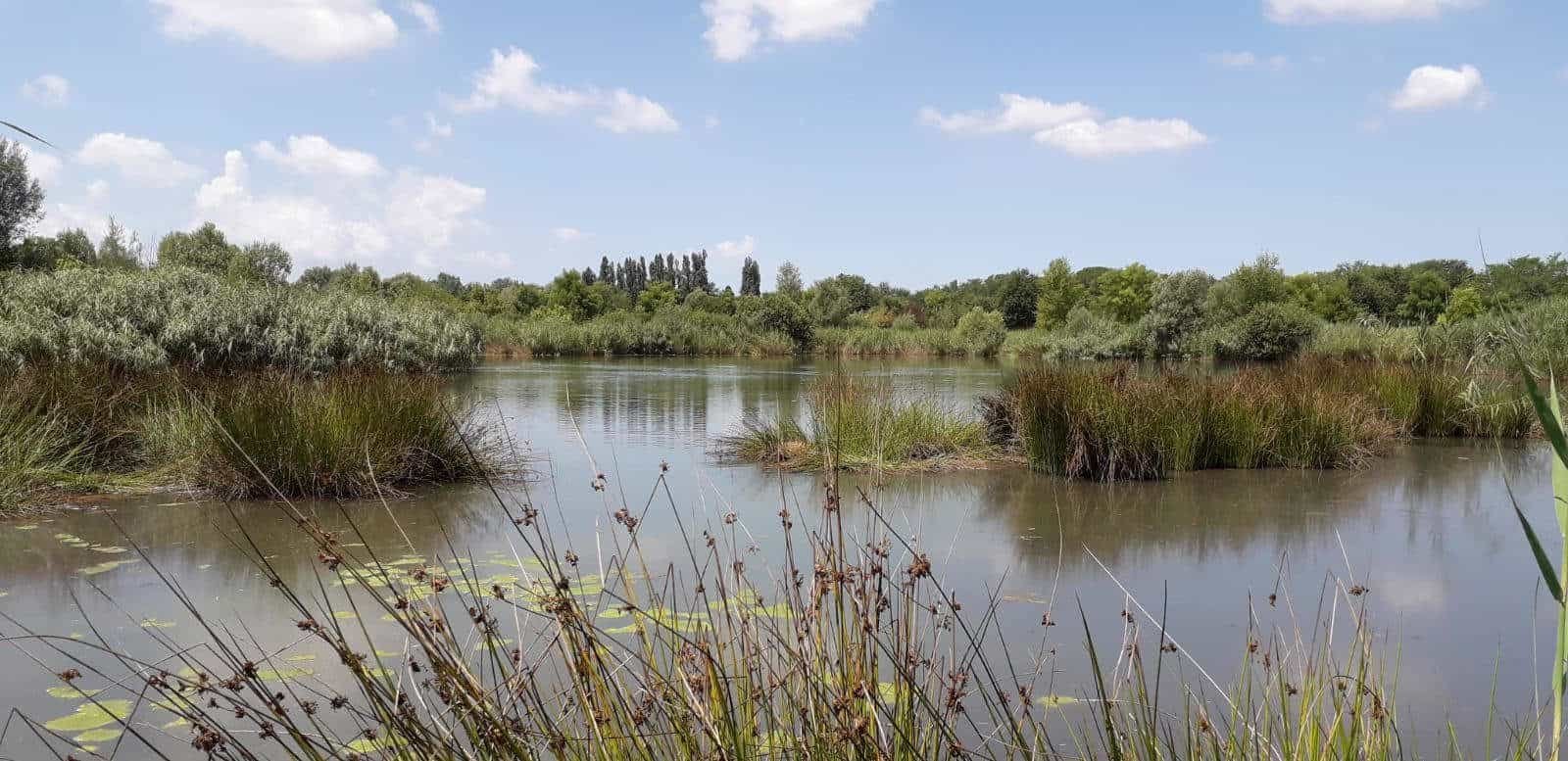
Parco Pantanello is in Doganella di Ninfa, at Via Provinciale Ninfina 66, in the territory of Cisterna di Latina (LT), with ample parking for cars, buses and campers in front of the entrance. From Rome you get there in just under an hour and a half by taking the Pontina to Cisterna and then the Ninfina provincial road, or by train to Latina Scalo station and from there with a road transfer of about 10 kilometers, because local public service to Doganella is scarce and should be checked before you leave. The individual ticket listed by the Fondazione Roffredo Caetani costs €6, free for children under 12 accompanied by a parent, €6 per person for groups of at least 20 participants, €5 for school groups with three free chaperones for every 25 students, and €4 for senior centers. You can only enter with a guided visit, which lasts about two and a half hours and takes place even in the rain. Public opening covers the cold season, roughly from October to May, with a Sunday departure at 10 a.m., while organized groups and schools book all year. Booking is mandatory and must be made by the Thursday before the visit, leaving a phone number, by writing to the Fondazione Roffredo Caetani (info@frcaetani.it, phone 0773 632231) or to the LIPU of Latina, which manages the oasis (oasi-parcopantanello.frc@lipu.it, 327 3860129 and 327 1057822). The calendar changes from season to season: check the exact dates for the current year on the Foundation's website and on the Ninfa booking portal before getting in the car. Inside the park, drones, balls, picnics and picking flowers and plants are forbidden, and dogs are not allowed.
If you are building a full day in this corner of the Pontine plain, the page for the Ninfa Garden is the natural starting point: Parco Pantanello is its wild flip side, and the two visits are bought and booked through the same circuit.

Where Parco Pantanello Is and How to Really Get There
The address says Cisterna di Latina, but the mental geography is different. Parco Pantanello occupies the strip of plain that runs under the Monti Lepini, at the exact point where the mountain stops and the reclaimed plain begins. Behind you can see the houses of Sermoneta clinging to the ridge and higher up, on the edge of the precipice, the silhouette of Norma. In front, the flat expanse that until 90 years ago was marsh and that today is countryside of canals and rows of trees. Parco Pantanello is the piece of that countryside that was made to go back.
By Car to Parco Pantanello
From the Grande Raccordo Anulare you exit onto the SS148 Pontina, continue to the Cisterna di Latina junction and from there take the Ninfina provincial road toward Doganella di Ninfa. It's a little over 60 kilometers, an hour and a quarter with no traffic, a good hour and a half on mornings of heavy turnout at Ninfa. Those coming from southern Lazio take the Latina Scalo exit and go up the Ninfina in the opposite direction. The parking is free and roomy, and that's not a detail: on the Sundays when Ninfa is open the provincial road clogs up, and having the car space already sorted changes the mood of the day.
By Train and Public Transport
The useful station is Latina Scalo, on the Roma Termini - Napoli via Formia line, served by frequent regional trains. The travel time from Rome is about 40 minutes. From the station to the entrance of Parco Pantanello there are about 10 kilometers left that must be covered by taxi, with a hired car and driver, or with the local buses, whose schedule is irregular and should be checked in advance with the province's transport company. It's not a destination you reach by improvising: if you don't have a car, work out the transfer before booking the visit, not after.
Parco Pantanello for Those Traveling in a Group
Frequently Asked Questions About Parco Pantanello
How much does a ticket to Parco Pantanello cost?
Individual admission to Parco Pantanello, as listed by the Fondazione Roffredo Caetani, is €6. Groups of at least 20 people pay €6 each, school groups €5 per student and senior centers €4 per person, but the rates should be confirmed at the time of booking.
Do children pay admission to Parco Pantanello?
Children under 12 enter Parco Pantanello free if accompanied by a parent or a paying adult. It is one of the reasons the park is a recommended stop for families visiting the Ninfa area.
Can you visit Parco Pantanello freely, without a guide?
No, Parco Pantanello cannot be visited on your own: you enter only as a group, with the guide, at a fixed time, and once the visit is over you don't linger. It's not rudeness, but a necessity tied to the fact that the oasis hosts nesting birds and is a wetland rebuilt on scientific criteria.
How much time do you need to visit Parco Pantanello?
The visit to Parco Pantanello runs along a nature trail equipped with educational panels that connects the bodies of water and the observation hides, with six ponds fed by the Ninfa river. The park covers about 100 hectares just outside the walls of the ancient city of Ninfa.
Is Parco Pantanello suitable for kids?
It works very well from age six and up, while under five two and a half hours of walking with a duty of silence at the hides is a challenge, and the route is not designed for strollers along its whole length. The advice is to bring a real pair of binoculars and put them in the hands of the youngest in the group.
Is Parco Pantanello accessible to people with mobility disabilities?
The observation hides at Parco Pantanello are designed to be accessible to people with mobility disabilities too, and the parking is large and very close to the entrance. The route, however, runs on natural ground in a wet environment: after rain some stretches of the trail can be soft or flooded, and it's best to mention it when booking.
When is Parco Pantanello open?
The public opening season of Parco Pantanello is the cold one, roughly from October onward, with Sunday visits departing at 10 a.m. Groups and schools instead book all year. The best period for birds runs from December to February, when the vegetation is bare and visibility over the water is at its maximum.
The parking area welcomes buses, and this makes Parco Pantanello one of the few nature destinations in lower Lazio that can really be handled with a large group. The guided, limited-capacity visit with a single departure, however, imposes a discipline of timing that late groups pay dearly for: whoever arrives after the departure does not get in. Those accompanying tour groups who want to rely on licensed professionals for the day will find a reference in the TourLeaderPro tour guide service. On this the Foundation is strict, and rightly so: behind it is an oasis with nesting under way, not a museum where you can slip in halfway through the route.
What Parco Pantanello Is: 100 Hectares of Rebuilt Marsh
Parco Pantanello extends over about 100 hectares just outside the walls of the ancient city of Ninfa. It was farmland, the Foundation's farm, flat fields cultivated right up to the edge of the ruins. Today it is a wetland rebuilt on scientific criteria, in which the areas of actual water cover a dozen hectares and the rest is floodable meadow, wet woodland, reed bed and hedgerow. It is not a garden and not an urban park: it is an experiment in naturalistic engineering, one of the very few in Italy where they tried to remake a marsh instead of draining it.
The key word is continuity. The Garden of Ninfa, with its roses and its ornamental cherry trees, is an island of eight hectares built inside the ruins of a dead city. Alone, surrounded by plowed fields, it was a jewel without a setting. Parco Pantanello has given the setting back: anyone who walks along the walls of Ninfa today and looks toward the plain sees still water, rushes and herons, which is more or less what a 14th-century customs officer saw looking out from the same wall.
The Role of the Ninfa River Inside Parco Pantanello
The park's whole water system is fed by the Ninfa river, which rises from springs at the foot of the Lepini with a constant flow and a practically unchanging temperature all year. It is the same water that runs through the garden and makes its microclimate possible, and it is the reason the ponds of Parco Pantanello do not dry up in summer and do not freeze in winter. A wetland fed by a spring is a different biological machine from a rain pond: life stays there all year, and this explains why the bird presence here is so rich for such a modest area.

The 1991 Idea: How Parco Pantanello Was Born
The story begins with a walk. In 1991, walking along the Foundation's fields, Fulco Pratesi, honorary president of WWF Italy, Arturo Osio and Lauro Marchetti, custodian and later director of Ninfa, told each other that the plowed expanse in front of the walls could become water again. Said today it sounds obvious. At the time it was almost heretical. In the Pontine plain the marsh had been for centuries public enemy number one, the thing that killed with malaria and that the land reclamation of the 1930s had finally defeated. Proposing to remake a marsh, right there, in front of an audience of children and grandchildren of reclaimers, meant touching a raw nerve.
The Scientific Study Before the First Dig
Between the idea and the work site came years of preparatory work: geologists to understand how the water tables and soils behave, botanists to establish which species were really present before the reclamation, zoologists to design the habitats, historians to read the old maps and travelers' descriptions. The botanical reference point is the work of Augusto Beguinot (1875-1940), who had surveyed the flora of the Pontine Marshes before they disappeared: thanks to those surveys the species planted at Parco Pantanello were not chosen by taste, but reconstructed from a documented list. It's an enormous difference from a thousand green redevelopments done with nursery plants.
The Inauguration on December 15, 2009
Parco Pantanello was inaugurated on December 15, 2009, after 18 years of design, permits, digging and first floodings. 18 years for a marsh is a lot and a little at the same time: a lot for Italian bureaucracy, very little for an ecosystem. Anyone visiting today walks inside an environment that is just over 15 years old and already behaves like a mature wetland, with complete food chains and stable nesting species. It is the most impressive result of the place, and the one visitors notice least.
The Visit Route at Parco Pantanello, Pond by Pond
The visit runs along a nature trail equipped with educational panels, which connects the bodies of water and the observation hides. The project provides for six ponds fed by the Ninfa river, each with a distinct ecological function: they are not six identical pools, they are six different environments in depth, exposure and population. The guide presents them in sequence, and the sequence has a precise logic.
The Three Floristic Ponds of Parco Pantanello
The first three basins are devoted to marsh vegetation. Shallow depth, sloping bottoms, long and gentle banks: these are the conditions that water lilies, marsh irises, sedges, cattails and rushes need to settle and form the concentric bands typical of a natural marsh. Look at the banks, not the center of the water: the real richness is in the transition band between land and water, the one that in reclaimed canals has been erased by concrete and vertical embankments.
The Amphibian Pond
One basin is deliberately kept free of fish. It's a technical choice worth understanding: fish prey on eggs and tadpoles, and in an environment with fish amphibians collapse. By excluding them you get a nursery for frogs, tree frogs, toads and newts, which in turn feed herons, water snakes and birds of prey. If you come in March or April, the evening chorus rising from this pond is one of the most beautiful sounds the Pontine plain can still produce.
The Waterbird Pond
Here the water is deeper, because it is needed by the diving ducks that feed below the surface. It is the pond that gives the best sightings in winter, when the wintering populations concentrate: teal, shovelers, pochards, gadwalls. The hide overlooking this body of water is the place where it's worth staying longer than the group usually does.
The Body of Water in Front of the Walls of Ninfa
The last basin is the one worth the ticket on its own. It is positioned so that the surface reflects the walls and towers of the medieval city: water, reed bed and ruins in the same frame. It is the point where the project stops being environmental engineering and becomes landscape, and where you understand that whoever designed Parco Pantanello also had a precise aesthetic idea in mind.
The Marshy Meadows and Seasonal Environments
Between one pond and the next you cross meadows that flood in winter and dry out in late spring. They are the most fragile and the most precious environments: they host a specialized ephemeral flora and serve as a feeding area for waders and migrating wading birds. They look like ordinary fields to those who don't know them, and in fact they are the part of the route that distracted visitors cross without looking.
The Visitor Center and the Hides of Parco Pantanello
The oasis has a visitor center with a screening room, the nature trail with the educational panels and a few bird observation hides designed to be accessible to people with mobility disabilities too. The hides are blind structures with slits: you go in quietly, wait a few minutes for the birds to get used to you again, then look. Whoever arrives chatting sees empty water, whoever goes in silent and patient sees the little egret 10 meters away.

The Birds of Parco Pantanello: More Than 150 Recorded Species
The figure LIPU reports for the oasis exceeds 150 recorded bird species. In 100 hectares, and in just over 15 years of life, it's a number that makes an impression. The explanation depends on the position: the Pontine plain lies under one of the migratory routes linking Africa to continental Europe, and after the land reclamation waterbirds lost almost all the intermediate stopovers between Circeo and the coastal lakes. Parco Pantanello put a piece back in the chain, and the birds noticed before humans did.
The Wild Ducks of Parco Pantanello
Teal, shovelers, pochards and gadwalls are the regular presences on the bodies of water. The teal is the smallest European duck and the easiest to underestimate: look at it against the light, the male has a green band on its head that lights up only when the sun catches it from the side. The shoveler is recognizable at a glance by its spoon-shaped bill, which it uses to filter surface water in slow circles.
Herons, Egrets and Waders
Gray herons and little egrets are at home all year, the purple heron appears in the favorable season and is the sighting regulars hope to make. The lapwing arrives in winter, often in flocks that wheel in unison, alternately showing the white of the belly and the metallic green of the back. The kingfisher is seen little and heard a lot: a sharp whistle and a blue line cutting across the pond, and by the time you notice, it has already gone by.
The Ferruginous Duck, the Species That Makes Parco Pantanello Special
Of all of them, the presence that ornithologists cite first is the ferruginous duck, a diving duck of coppery chestnut color with a white eye in the male. It is a rare species, in trouble across Europe precisely because of the destruction of inland wetlands: finding it in an environment rebuilt 15 years ago is proof that the project worked. If the guide names it, raise your binoculars and make no noise.
The Birds of Prey Over Parco Pantanello
The marsh harrier is the oasis's symbol raptor: you recognize it by its low, rocking flight over the reed bed, with its wings held in a wide V. Sightings of the short-toed eagle, the large white and dark raptor that hunts snakes on the slopes of the Lepini and comes down to the plain to scout, and of the peregrine falcon are also documented. Over the year the oasis also organizes activities tied to the release of rehabilitated raptors, as well as study and work camps and evening outings devoted to listening to birdsong.
The Flora of Parco Pantanello and the Memory of the Pontine Marshes
The vegetation was not planted at random and not chosen to add color either. The basis is the floristic list that Augusto Beguinot compiled between the 1800s and 1900s, when the Pontine marsh still existed and was one of the largest wetlands in Italy. Rebuilding a marsh from a historical herbarium means putting the right species back in the ground in the right bands: rooted hydrophytes in the center, helophytes on the banks, wet meadows at slightly higher elevations, a wet woodland of willows and alders on the outer edge.
The result is that Parco Pantanello, unlike almost all newly built green areas, doesn't look planted. It looks like it has always been there. It is the highest compliment you can pay to a renaturalization project, and it comes from a precise methodological choice: fidelity to historical documentation instead of landscape taste.
Ninfa, the Lost City Next to Parco Pantanello
You can't understand Parco Pantanello without the city in front of it. Ninfa takes its name from a Roman temple dedicated to the water deities, but its fortune is medieval and depends on a hydraulic fact: when the marsh came back to occupy the plain, Via Appia became impassable for long stretches of lower Lazio, and traffic toward southern Italy shifted to the foothill road that ran at the foot of the Lepini. At the spot of today's garden a customs post was set up, where a toll was paid to continue. Where a toll is paid, a city grows.
The Customs Post, the Toll and the Foothill Road
The place name Doganella di Ninfa, that is, the very address of Parco Pantanello, preserves the memory of that function. Along the same foothill route, since the Republican era, the ancient settlements of Cora, Norba, Sulmo, Setia and Privernum lined up, whose ruins can be visited today. This is the point visitors rarely grasp: the plain you see from the hides is not just any countryside, it is the valley floor of one of the busiest roads of the Italian Middle Ages.
Alexander III and the Pope Elected at Ninfa
In 1159 Ninfa hosted the consecration of Pope Alexander III, the pontiff who shortly afterward would clash with Frederick Barbarossa and who would give his name to the Lombard League. A pope consecrated in a customs town, under the protection of the Caetani and far from Roman turbulence, says how much this place mattered. The city came to have, according to reconstructions, more than 150 houses, a dozen churches, mills, bridges, two hospitals, a castle and a circuit of walls of about 1,400 meters with at least 11 towers.
The Destruction of the Late 1300s and the Abandonment
The end came with the Western Schism. Between 1380 and 1382 Ninfa was besieged and destroyed in the context of the clash between papal factions, and was never rebuilt: sources waver on the exact year, the substance is that after that blow a few farmhouses remained and then the marsh took everything back. Malaria did the rest. Ninfa became a ruin in the middle of the water, and remained the property of the Caetani, the family that for centuries held the fief of Sermoneta and Ninfa.
From Ruin to Garden: 1921 and the Foundation
In 1921 Gelasio Caetani began the reclamation of the site and the consolidation of the medieval ruins. His mother, the Englishwoman Ada Bootle Wilbraham, planted there the species collected on her travels, giving the place the stamp of the informal Anglo-Saxon garden. In the 1930s Roffredo Caetani and his American wife Marguerite Chapin expanded the collection of shrubs and roses. Lelia Caetani, a painter and the last heir, governed the color pairings the way one governs a canvas. At her death, in 1977, the garden and the castle of Sermoneta passed to the Fondazione Roffredo Caetani, which still runs them today together with Parco Pantanello and the Tor Tre Ponti complex. In 2000 the Lazio Region declared Ninfa a natural monument.

The Ninfa River, the Cavata and the Waters Around Parco Pantanello
The Ninfa river runs through the garden and feeds the ponds of Parco Pantanello: it is a short, crystal-clear stream of constant flow, and its transparency is not chance but the effect of the karst spring that generates it. A little way off runs the Cavata, another spring-fed watercourse that snakes across the plain and that, thanks to the work of the local association that looks after it, can be paddled by canoe. They are the last two living nerves of a water network that the land reclamation largely straightened and channeled.
It's worth dwelling on this point. The comprehensive land reclamation of the 1930s was an enormous undertaking and saved thousands of lives from malaria: nobody here regrets it. But it erased an entire ecosystem, and for 80 years nobody dealt with that. Parco Pantanello is the first serious attempt, in this plain, to say that a dozen hectares of rebuilt marsh take nothing from anyone and give something back to everyone.
Parco Pantanello and the Giardino di Ninfa: How the Two Visits Fit Together
They are two different tickets, two different routes, two separate bookings, and they should be treated as such. The Giardino di Ninfa opens on limited-capacity days, almost always on weekends and holidays, with guided visits of about one hour and a ticket around €15, which on the online booking channel comes to a little under €16 with presale fees. Parco Pantanello costs €6 and takes two and a half hours. The seasons, though, don't coincide: Ninfa is at its best in spring and fall, Parco Pantanello opens to the public mainly in the cold season, when the wintering birdlife is at its peak. Anyone who wants to do both on the same day has to look for the Sundays when the two calendars overlap, and book both.
The operational advice is to reverse the order from what everyone does. Parco Pantanello early in the morning, when the birds are active and the group is fresh. The garden in the early afternoon, when the light lowers on the ruins and the rush-hour groups have already cleared out. The reverse route, which common sense suggests, brings you to the hide with two hours of sun on your head and no wish to stand still in silence. Those who prefer to have someone else put the day together, driver included, can turn to those who organize private tours from Rome and in Lazio.
The Caetani Castle in Sermoneta and the Rest of the Day
The third vertex of the triangle is the Caetani Castle in Sermoneta, which dominates the valley from an elevation of 400 meters and is run by the same Foundation, with a ticket around €8. Ending the day up there makes precise sense: from the ramparts you see from above all the geography you crossed on foot, the ponds of Parco Pantanello, the compact green of the garden, the reclaimed plain all the way to the sea. If time is left over, or if you come back another time, within half an hour by car there are the acropolis of Norba, the village of Bassiano, the Priverno museums and, moving toward the coast, the Circeo National Park with its system of coastal lakes, of which Parco Pantanello is the inland relative. Anyone accompanying foreign guests will find the general overview of the region in the English guide to Lazio.
A Curiosity About Parco Pantanello
The most beautiful curiosity concerns the order of things. Usually a historic garden is born inside a landscape and takes its shape from it. Here the opposite happened: the landscape was built afterward, on purpose for the garden. Parco Pantanello was born to give Ninfa the setting that history had taken from it, that is, to make sure that whoever looks from the walls of the dead city sees what its inhabitants saw. It's an operation with very few precedents in Italy, because it costs a great deal and produces nothing measurable: no harvest, no building, no admission ticket able to pay it back.
I'll add the detail I like best. The botanical reconstruction is not based on a generic idea of a marsh, but on the surveys of Augusto Beguinot, a botanist who died in 1940 and who had recorded the Pontine flora before the land reclamation erased it. It means that whoever designed Parco Pantanello went looking for a herbarium from 80 years earlier to know which rushes to plant. That level of scruple, in work that no visitor would ever be able to verify, is the thing that gives confidence in everything else about the project. And it is the reason why, walking along the ponds, you never get the feeling of walking through a stage set: the marsh of Parco Pantanello seems centuries old because it was copied from a marsh centuries old.
Something Nobody Tells You About Parco Pantanello
That it is not a free stroll. Written like this it seems obvious, but it's the misunderstanding that ruins more visits than any other: many people arrive at Parco Pantanello convinced they'll find a park where you go in, walk and leave on your own schedule, and discover on the spot that you enter only as a group, with the guide, at a fixed time, and that once the visit is over you don't linger. It's not rudeness: it's an oasis with nesting and sensitive species, and the number of people present at the same time is a variable the manager controls on purpose. Anyone who shows up without a reservation, or 10 minutes after the group's departure, stays out.
The second thing little said concerns dogs: they are not allowed in, not even on a leash, not even small ones. For a bird oasis this is the norm across Europe, but here it surprises those who imagine a country outing. No picnics, no picking flowers or plants, no balls, and drones are forbidden without exception, which rules out the very common idea of filming the ponds from above. Last practical warning: the visit takes place even in the rain. That means if it rains you are not refunded and not rescheduled, and the ground of a wet environment with water on it is exactly what you imagine. Hiking boots, not city shoes.
My Advice for Visiting Parco Pantanello
Bring a real pair of binoculars and put them in the hands of the youngest in the group. Parco Pantanello is a place where the difference between a boring visit and a memorable one passes almost entirely through a lens: to the naked eye the bird pond is a stretch of water with dark dots, with 10x40 it becomes a catalog of ducks in bright colors. The guides have a few, but not one each, and in a group of 25 people a shared pair of binoculars doesn't go around much. A model costing a few tens of euros is more than enough.
Second piece of advice, on attitude. The observation hide works only with silence and waiting: you go in, sit down, stay quiet for four or five minutes, and at that point the wildlife that moved away when the group arrived comes back. Most visitors stay two minutes, see nothing, conclude there was nothing and leave. If the guide allows it, have yourself left behind by a few minutes and stay at the hide longer than the group.
Third: choose the season carefully. If you come for the birds, come between December and February, when the wintering birds are at their peak and the bare vegetation lets you see the water. If you come for the wet blooms and the amphibian chorus, come in March and April. Months like November, with little water and little passage, are the least rewarding. And remember that the Sunday departure is at 10 a.m.: for two and a half hours of walking on wet ground, eat breakfast beforehand and make it a hearty one.
Another Well-Known Fact, Yet Rarely Mentioned
That the oasis is run by LIPU, the Italian League for the Protection of Birds, under an agreement with the Fondazione Roffredo Caetani. You read it everywhere and nobody notices anymore, but it has concrete consequences for what you see. It means the guides who accompany you are not generic escorts but staff with ornithological training. It means the species census is continuous and methodical, and in fact there is a solid figure of more than 150 species. It means the oasis takes part in national and international monitoring programs, and that on some days of the year, such as those devoted to the European bird count in October, the visit coincides with real scientific activity the public gets to watch.
The lesser-known consequence is another one, and it's administrative: the visiting conditions, contacts and calendars may be published both by the Foundation and by LIPU, with wording that doesn't always match in the details. On the public opening windows the two communications are not always aligned, and the practical rule is simple: when you write to book, have the date and time confirmed by the body you are writing to, not by a calendar seen elsewhere. Sunday bookings close on the preceding Thursday in any case, and without a phone contact they are not accepted.

The Right Photo to Take at Parco Pantanello
There is only one and it's the one of the pond reflecting the walls of Ninfa. You stand on the bank opposite the city, keep the camera low, almost at the water's surface, and compose with the reed bed in the foreground, the reflecting surface in the middle and the medieval towers in the background. With still water and no wind, the line of the walls doubles perfectly and the image tells in one stroke the two times of the place: the dead city and the marsh come back. It is the photograph that explains Parco Pantanello better than any caption.
Technically: early morning light, which is exactly that of the 10 a.m. departure in the winter months, when the sun is still low and lights the walls from the side without burning out the sky. A polarizer helps manage the reflections, but don't overdo the rotation: if you remove all the reflection you lose the very subject. For birds you need a long telephoto, from 300 millimeters up, and the awareness that from the hides you shoot through narrow slits, so bulky tripods are more a hindrance than a help: better a monopod or a rest on the wood.
Two warnings worth more than any composition advice. The drone is forbidden, and it's not a formality: over a nesting area a drone is an aerial predator, and birds react to it as such. And never leave the trail to look for the best framing: in a rebuilt wetland, trampling off the path destroys in a minute vegetation that took years to establish.
Some Important Events That Happened Here in History
The first is from 1159, and concerns the immediate neighbor: the consecration of Pope Alexander III at Ninfa, in flight from Roman tensions. From there began the long tug-of-war with Frederick Barbarossa that marked 20 years of European history. The second is from the late 1300s: between 1380 and 1382, within the Western Schism, Ninfa was besieged and razed to the ground by the militias of the faction opposed to the Caetani. It was never rebuilt, and from that moment the plain that today hosts Parco Pantanello began to return to marsh, with malaria making sure nobody tried to resettle.
The third event is from the 1930s and did not happen here, but decided everything: the comprehensive land reclamation of the Pontine plain drained the marshes, erased the original ecosystem and turned this into a countryside of straight canals. The fourth is from 1921, when Gelasio Caetani began the recovery of the ruins and the creation of the garden. The fifth is from 1972, with the founding of the Fondazione Roffredo Caetani, to which in 1977, at the death of Lelia Caetani, the garden and the castle of Sermoneta passed.
The sixth is the 1991 walk, with Fulco Pratesi, Arturo Osio and Lauro Marchetti who, in front of the plowed fields, imagined flooding them again. The seventh is 2000, when the Lazio Region recognized Ninfa as a natural monument. The eighth is December 15, 2009, the day of the inauguration of Parco Pantanello. Put in sequence, these eight dates tell a complete arc: a city that is born from water, dies from water, is buried by water, re-emerges as a garden when the water is removed, and finally rebuilds around itself a piece of water made to return on purpose.
Who Has Passed Through Parco Pantanello
The names tied to this stretch of plain are mostly the people who conceived it. Fulco Pratesi, founder and honorary president of WWF Italy, a nature illustrator before he was an environmental leader, is the man behind the 1991 idea, together with Arturo Osio and Lauro Marchetti, who had been an apprentice at Ninfa under Lelia Caetani and later became its custodian and director. Marchetti is the key figure in the whole contemporary story: without his stubbornness in getting the idea of a rebuilt marsh accepted, there would be a wheat field today in front of the walls of Ninfa.
Go back a step in time, and the names become those of the family: Gelasio Caetani, mining engineer and diplomat, who in 1921 took the ruins in hand. Ada Bootle Wilbraham, the English aristocrat who brought the botanical taste from across the Channel. Marguerite Chapin, the American who kept a leading literary salon at Ninfa and in Rome and founded magazines that published some of the best European writers of the twentieth century. Lelia Caetani, a painter, the last of the line, who ran the garden until 1977. And before that, in 1159, Pope Alexander III, consecrated a few hundred meters from where the first pond opens today.
Today the people who come through Parco Pantanello are mostly ornithologists, nature photographers, school groups and the LIPU members who take part in the counts every year. It's not a parade of celebrities, and that's a good thing: this is one of the few places in Lazio where the quality of the visit doesn't depend on who has been before you, but on how long you're willing to stand still inside a hide.
Parco Pantanello with children
It works very well, on two conditions. The first is age: under five, two and a half hours of walking with a duty of silence at the hides is a big ask, and free admission under 12 doesn't make up for the fact that the route isn't suited to strollers along its whole length. From six up, though, it's one of the most effective nature experiences you can have an hour and a half from Rome: there's water, there are frogs, there are hides with slits that feel like a secret hideout, and there's a guide who can answer questions.
The second condition is preparation. Explain beforehand that you move as a group and that the silence is there to see the animals, not to be well behaved: put that way, children understand and cooperate. Bring water, a snack to eat outside the park since picnics aren't allowed inside, and shoes that can get muddy. School groups have a dedicated ticket at €5 per pupil with three accompanying adults free for every 25, and they can book all year: for an elementary or middle school class it's a trip worth more than 10 science lessons.
Accessibility at Parco Pantanello
The observation hides are designed to be accessible to people with motor disabilities too, and the parking lot is large and very close to the entrance. The route, however, runs on natural ground in a wet environment: after rain, stretches of the path can be soft or flooded, and this is a factor to assess case by case. Anyone with specific needs should let them know when booking, so the guide can adapt the route: since it's an accompanied visit at a fixed time, the organization has room to do so, which wouldn't be possible in a park with free entry.
When to go to Parco Pantanello
The public opening season is the cold one, roughly from October onward, with the Sunday visits starting at 10 a.m. Groups and schools book all year instead. The best period by far, if birds are the goal, runs from December to February: peak numbers of wintering birds, bare vegetation, visibility over the water. March and April are the time of amphibians and marsh blooms, and they give you a visit that's more about sound than sight. Summer, setting aside the openings for groups, is the least interesting season: heat, mosquitoes, little open water and scattered birdlife.
One last variable is the wind. In strong wind the birds shelter in the reed bed and the water surface ripples, which ruins both the observation and the reflection of the walls. If you can choose your Sunday, choose one with a forecast of still air and a clear sky: at Parco Pantanello the weather matters more than in any museum.
Quick questions about Parco Pantanello
How much is a ticket for Parco Pantanello?
The individual admission quoted by the Fondazione Roffredo Caetani is €6. Groups of at least 20 people pay €6 each, school groups €5 per pupil, senior centers €4 per person. Prices should be confirmed when you book.
Do children pay at Parco Pantanello?
Children under 12 get in free if accompanied by a parent. For classes the school rate applies, with three accompanying adults free for every 25 pupils.
Do I need to book to visit Parco Pantanello?
Yes, booking is mandatory and must be made by the Thursday before the visit, leaving a phone number. You book with the Fondazione Roffredo Caetani or with the LIPU of Latina, which manages the oasis.
Can I enter Parco Pantanello without a guided tour?
No. Access is only by guided visit, in a group and at a fixed time. There is no free-entry option with a self-guided walk.
How long does the visit to Parco Pantanello last?
About two hours and 30 minutes. Once the visit is over, you're not allowed to stay inside the area.
What time does the Sunday visit start?
The Sunday visits start at 10 a.m. It's best to show up at least a quarter of an hour early: anyone who arrives after the group has left doesn't get in.
Which months is Parco Pantanello open?
Public opening covers the cold season, roughly from October to May, while organized groups and schools can book all year. The calendar of individual Sundays should be checked on the website of the Fondazione Roffredo Caetani before you go.
Does the visit to Parco Pantanello go ahead in the rain?
Yes, visits are guaranteed even in the rain. You need suitable clothing and waterproof footwear, because the ground is natural and in a wet environment it quickly turns muddy.
Can I bring dogs to Parco Pantanello?
No, dogs are not allowed. It's a standard rule in oases dedicated to birdlife.
Can I have a picnic inside Parco Pantanello?
No, picnics are not allowed, nor are balls, picking flowers and plants, or using drones.
Can I take photographs at Parco Pantanello?
Yes, photography is allowed along the route and from the hides. Drones are banned, though, and you can't leave the path to look for a shot.
Is Parco Pantanello wheelchair accessible?
The observation hides are designed to be accessible to people with motor disabilities too. The route, however, runs on natural ground that can be difficult after rain: it's best to let them know your needs when booking.
Is there parking at Parco Pantanello?
Yes, in front of the entrance there is a large parking lot that takes cars, buses and campers.
How do I get to Parco Pantanello from Rome?
By car, take the Pontina to Cisterna di Latina and then the Ninfina provincial road toward Doganella di Ninfa, for about an hour and a half. By train, take a regional train to Latina Scalo and then a transfer of about 10 kilometers by road, to be arranged in advance.
What is the exact address of Parco Pantanello?
Doganella di Ninfa, Via Provinciale Ninfina 66, 04012 Cisterna di Latina (LT).
What's the difference between Parco Pantanello and the Garden of Ninfa?
The Garden of Ninfa is a historic garden of about eight hectares built inside the ruins of the medieval city, with more than a thousand ornamental plant species. Parco Pantanello is the nature area of about 100 hectares next to it, where the original marsh environment of the Pontine plain has been rebuilt. They are two separate visits, with separate tickets and bookings.
Can I visit Parco Pantanello and the Garden of Ninfa on the same day?
Yes, when the two calendars coincide, by booking both visits separately. Parco Pantanello is best early in the morning and the garden in the afternoon.
How many hectares is Parco Pantanello?
About 100 hectares in total, of which a dozen or so are taken up by the actual wetlands: ponds, marshes, flooded meadows and watercourses.
How many bird species can you see at Parco Pantanello?
The species recorded in the oasis exceed 150. Among the most significant are the ferruginous duck, the purple heron, the marsh harrier and the short-toed snake eagle.
When was Parco Pantanello opened?
On December 15, 2009, at the end of a renaturalization project that grew out of an idea from 1991.
Do I need binoculars to visit Parco Pantanello?
It's not mandatory, but it completely changes the visit. Binoculars, even cheap ones, from 8x40 to 10x42, are the tool that makes legible what to the naked eye remains a speck on the water.
Are there facilities and a visitor center at Parco Pantanello?
The oasis has a visitor center with a screening room, a nature trail with educational panels and hides for observing birds.
What can I see near Parco Pantanello?
Within a few kilometers: the Garden of Ninfa, the village and Caetani Castle of Sermoneta, the acropolis of Norba, the town of Bassiano. A little farther, the museums of Priverno with the archaeological area of Privernum and, toward the sea, the Circeo National Park.
To close, an opinion not everyone will share: Parco Pantanello is the smartest visit in the whole Ninfa area, and at the same time the least sought after. The garden fills the newspapers and social media, and deserves it. This marsh remade by hand, on the other hand, is visited almost only by people who already know what they're looking for. Go in winter, with binoculars, with the right shoes and in the frame of mind of someone who is in no hurry. If you have to explain it to a friend who doesn't speak Italian, the right place to start is the collection of day trips from Italy's big cities. If after two and a half hours you come out saying it was just water and reeds, it means you stayed in the hide for two minutes instead of 20: that time, the fault isn't the place's.
Article written by the editorial team of TourLeaderPro, contact them for Private/Corporate/V.I.P. Tours and Experiences.
Planning a trip to Rome? The English-language guides to visiting the city are on ItalyPlanner.com.