Music Inn
In short. Music Inn is the name by which Rome still refers to the jazz club that Prince Pepito Pignatelli opened in 1971 in a basement on Largo dei Fiorentini, in the Ponte rione, a few steps from the Tiber and Via Giulia.
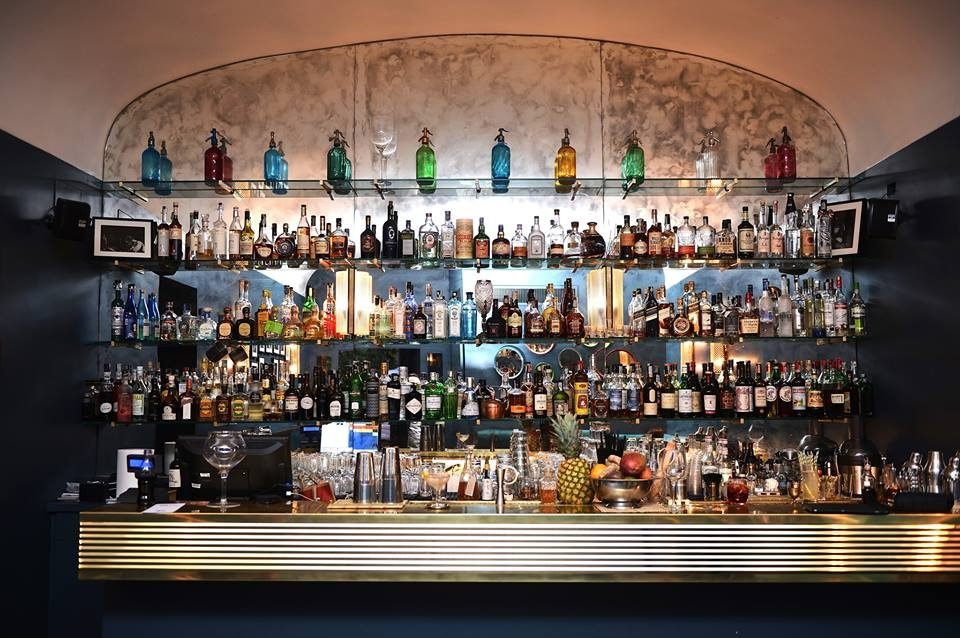
Music Inn is the name by which Rome still refers to the jazz club that Prince Pepito Pignatelli opened in 1971 in a basement on Largo dei Fiorentini, in the Ponte rione, a few steps from the Tiber and Via Giulia. For almost a decade it was one of the reference points of Italian and European jazz, with a stage that hosted names like Chet Baker, Bill Evans, Ornette Coleman, Charles Mingus and Dexter Gordon alongside the best Italian musicians of the generation that grew up between the 1960s and 1970s. The venue as a concert hall closed in 1980. The space then went through different managements, and the later signs tell a less linear story than the myth still surrounding the name suggests. Anyone looking for Music Inn today on Largo dei Fiorentini finds an address loaded with history, in a corner of Rome that deserves a visit even just for the rione around it: Castel Sant'Angelo is a few minutes on foot away, as is the basilica of San Giovanni Battista dei Fiorentini that gives the square its name.
Where Music Inn is and how to get there
Largo dei Fiorentini is a small square squeezed between the Lungotevere and Via Giulia, in the heart of the Ponte rione, one of the historic rioni enclosed in the bend of the Tiber between Castel Sant’Angelo and Campo de’ Fiori. It's an area that lives on narrow streets, Renaissance palaces and churches dedicated to the foreign nations that had their communities here in papal times: it was precisely the basilica of San Giovanni Battista dei Fiorentini, the church of the Florentine community in Rome, that gave the largo its name and, by reflection, a piece of the history of Italian music.
By car and on foot in the Ponte rione
The Ponte rione is a fabric of limited-traffic alleys, and getting there by car makes sense only if you already know where to park: the few free spots along Lungotevere dei Fiorentini are paid during daytime hours, while the most convenient surface lots remain those around Castel Sant’Angelo and along Lungotevere Castello, from which the venue is reached in about 10 minutes on foot along the river. Anyone staying in the historic center, in Trastevere or around Piazza Navona can easily get there on foot: from Piazza Navona it's less than 10 minutes' walk through Corso Vittorio Emanuele II and Via dei Banchi Vecchi, while from Campo de’ Fiori the trip is even shorter, taking Via Giulia or the parallel alleys that descend toward the river.
By bus and public transport to Largo dei Fiorentini
The area has no metro stop within comfortable walking distance: the nearest stations on line A are Ottaviano and Lepanto, both about 20 minutes on foot or two or three bus stops away. More practical are the surface lines that run along Corso Vittorio Emanuele II and the Lungotevere, with stops a few hundred meters from the largo. Anyone arriving from outside Rome and getting off at Termini can take a bus heading to Corso Vittorio or, more comfortably, a taxi: the distance from the central station is about four kilometers, covered in 15 or 20 minutes outside rush hours.
From St. Peter's and the Vatican
Anyone visiting St. Peter's and the Vatican Museums who wants to continue toward the historic center can walk the route along Borgo and Via della Conciliazione to Castel Sant’Angelo, and from there continue on the Lungotevere to Largo dei Fiorentini: a walk of about 25 or 30 minutes, almost entirely along the river, which passes through one of the most photographed views in Rome with the dome of St. Peter's behind you and Castel Sant’Angelo gradually drawing closer. Alternatively, the bus lines that connect Piazza del Risorgimento to the historic center cut the time to about 10 minutes, with a short final walk from the nearest stop.
What Music Inn really was: Pepito Pignatelli's jazz club
Giuseppe Pignatelli, known to everyone as Pepito, was a musician and a jazz enthusiast before he was a venue manager: he belonged to a Roman aristocratic family and had chosen to invest his energy in a project that in Rome, in the early 1970s, had practically no precedent in the form of a real club devoted to live jazz. Together with his wife, called Picchi, he opened the venue in a damp basement on Largo dei Fiorentini, reached by going down two flights of narrow stairs. It wasn't an elegant setting in the conventional sense of the term: stone walls, cramped corridors, a small piano that was not always up to the demands of the most exacting international musicians, so much so that according to some reconstructions Pignatelli had to insist personally to convince some artists to perform anyway, even though the instrument wasn't the one they were used to in the great European theaters.
The entrance and the ritual of the evening
People who have described their evenings at Music Inn talk about a recurring ritual: arriving at Largo dei Fiorentini, often late in the evening, the entrance that looked unassuming next to the club's fame, the walk down the stairs to the basement, the air getting thicker as you got closer to the room. There was none of the stage setting of the big international jazz clubs, with lit signs and imposing entrances: everything about the club's outward look seemed designed to promise nothing exceptional, letting the music, once you had gone down, justify the reputation the name had earned among people in the business. It was a contrast that many visitors, especially foreigners used to clubs with more polished interiors, remember as one of the most surprising things about a first visit.
What the club lacked in elegance, it made up for in authenticity and in the quality of its programming. Music Inn became, within a few years, one of the most important jazz clubs in Europe, an almost obligatory stop for anyone touring the continent who wanted to play somewhere small and real, far from the big stages. The sources that have pieced this story together describe a difficult start: regular programming, on a steady schedule and with a loyal audience, would have gained momentum mainly from 1974, when a concert on January 24 marked, according to some sources, the start of the season that would make the club a name known well beyond the borders of Rome.
Pignatelli was not just an enthusiast with the means to open a club: the accounts describe him as a musician himself, raised in an aristocratic family and able to move naturally both in Roman salons and on international jazz stages. This double belonging partly explains the project's success: Music Inn managed to bring to Rome artists who would hardly have agreed to play in a small basement for a modest fee, precisely because the offer came from someone the jazz world recognized as one of its own, not from a mere club operator looking for a grand name to put on the bill. His wife Picchi worked alongside Pignatelli in the daily running of the place, in a family-run project that kept a homemade, hands-on character for its whole life, far from the logic of the big commercial clubs that would only arrive in Rome later.
A curiosity about Music Inn
The basement piano has become, over the years, one of the most retold stories about Music Inn: a non-professional instrument, in a club that in a very short time found itself hosting some of the best jazz pianists in the world. More than one international musician, arriving at Largo dei Fiorentini for the first time, would have turned up his nose at that piano, only to be talked into playing anyway by Pignatelli. It's a detail that says a lot about the place: Music Inn never relied on stage design or equipment, but on the quality of its evenings and on the trust the founder had managed to build with the international jazz world, to the point that artists used to theaters and concert halls agreed to play in a Roman cellar with a piano that was far from perfect.
Rome in the 1970s: the context that made Music Inn possible
The 1970s in Rome were a complex decade, marked by strong social and political tensions, but also by a cultural vitality that ran through film, music and the visual arts. It's the decade of the auteur cinema that put the city on screens around the world, of the singer-songwriter tradition that found some of its leading figures in Rome, and of a live music scene that grew compared to previous decades, with new clubs, new spaces occupied for cultural initiatives and a young audience that was ever larger and ever more demanding. In this context, a project like Music Inn found fertile ground: an audience looking for authentic musical experiences, far from the big institutional theaters, and a city that despite the difficulties of the period remained a draw for international artists touring Europe.
The Ponte district and the historic center more generally, in those years, were not yet the mass tourist destination they would become in the following decades: rents were more affordable, many homes were lived in by artists, students and intellectuals, and small clubs like Music Inn could afford to grow gradually, without the economic pressures that today would make a similar project almost impossible in such a central location. It's an element that helps explain why experiences like this are hard to replicate today, in a historic center where commercial rents have made the small independent club formula increasingly rare.
The history of jazz in Rome from the postwar years to Music Inn
To understand why Music Inn carried so much weight in the history of Roman music, you have to step back to the years right after World War II, when jazz arrived in Italy mostly in the wake of the Allied troops and through the first imported records, listened to in cultural circles and in the offices of student associations. Rome, in the 1950s, developed a scene made up more of enthusiasts and small amateur bands than of permanent clubs: jazz was played in private gathering places, in the odd converted dance hall, in settings that rarely had the continuity of real programming.
In the 1960s things began to change, with musicians arriving in Rome who would make the history of Italian jazz and with the first attempts to give the genre a recognizable space in the city. It is in this context, one of growth but still without a real reference point, that Music Inn opened in 1971: a project that arrived at the right moment, when Rome already had an audience of enthusiasts but still lacked a place able to attract the international names of jazz touring Europe on a steady basis. In the following decade other clubs and cultural associations would try to copy the formula, but few would manage to build a lineup comparable in density and quality to the one Pignatelli put together in Largo dei Fiorentini.
The closing of Music Inn in 1980 left a gap for a few years that the city struggled to fill, before other historic addresses of Roman jazz were born in the 1980s and 1990s, among them the clubs that still carry on that tradition today in the center and in the neighboring districts. Only with the opening of the Casa del Jazz, in the early 2000s, did Rome get a permanent public space entirely devoted to the genre, able to guarantee continuous programming that in the 1970s had instead been left almost entirely to the private initiative of a single enthusiast.
The stage below street level and the programming of the 1970s
The physical structure of the club shaped for years the way evenings at Music Inn were experienced. The street level held a small entrance, while the heart of the club, with the stage and the tables squeezed one next to the other, was in the basement, between exposed stone walls and a corridor that led the audience toward the room. It was a smoky, noisy-in-the-right-way environment, where the distance between those who played and those who listened was minimal: a formula that in the 1970s made Music Inn a meeting place between emerging Italian musicians and established international artists, with jam sessions that according to several accounts went on well past official closing time.
The programming mixed historic names of American jazz touring Europe with the new generation of Italian jazz that in those years was forming in places exactly like this one. Rome, between the late 1960s and the 1970s, was living through a season of musical ferment that touched other fields as well, from the rock scene to the singer-songwriter scene, but in the specific field of live jazz Music Inn had few rivals for the continuity and prestige of its artistic offering.
The jam sessions and the club's audience
What made Music Inn different from a simple concert hall was the part that happened after the official set. Several accounts collected over the years tell of jam sessions that started late at night, when musicians who had just played in the city's bigger theaters stopped by Largo dei Fiorentini to play in a free setting, with no fixed set list, next to people who at that moment were still building their careers. It was a custom that few other clubs in Rome could offer, because it required both the willingness of international artists to stay after an official concert and the reputation of a place able to guarantee an informal but high-level atmosphere. The audience that frequented the club was a mix of real enthusiasts, musicians in training, intellectuals and curious people drawn by the club's growing fame: not an enormous audience, given the small capacity of the basement, but a loyal and knowledgeable one, able to recognize the quality of the evenings more than the stage effect.
Something nobody tells you about Music Inn
What is rarely said is that the arc of Music Inn, in the story that has been handed down, is shorter than its fame would suggest: less than a decade of continuous activity as a jazz club, from 1971 to the closing in 1980. In a landscape where other historic clubs in the city stayed open for generations, the legend of Music Inn was built over a relatively narrow span of time, sustained above all by the quality and density of its concerts rather than by the longevity of its sign. It's an aspect that tends to escape those who know the name only by hearsay: the club's reputation is not the fruit of decades of uninterrupted programming, but of a few very intense years in which Pignatelli's artistic choices brought to Rome a level of live jazz that the city had never seen with such continuity.
Another little-known detail concerns what happened to the space after the club closed: the basement at Largo dei Fiorentini was not left abandoned, but was converted into a nightclub under another sign, in a change of management that for years took jazz programming away from the address that had made it famous.
It's worth adding a third element that rarely appears in the more celebratory accounts of the club: the passing of the two historic founders. Several sources link the gradual drifting of the address from its original identity to the death of Pignatelli and his wife Picchi, which came in the years after the club closed as a concert hall: without the two founders, the direct link between the address and its history as a jazz club gradually loosened, leaving collective memory, more than continuous management, to keep the name Music Inn alive in Roman musical culture.
Why the sources give two different birth dates
Anyone comparing the different accounts of the history of Music Inn runs into a discrepancy that is worth explaining rather than ignoring: some sources give 1971 as the year the club opened, others cite 1974, and in particular a concert on January 24 of that year, as the turning point. The two pieces of information are not necessarily in contradiction. The most detailed accounts of the club's early life describe a slow start: the club opens, but struggles at first to build steady programming and a loyal audience, helped along by the inconvenience of a damp basement with a non-professional instrument. Only from 1974, according to this version, does Pignatelli manage to give the club a regular schedule of high-level concerts, and January 24 of that year becomes for some sources the symbolic date of the start of the season that would make Music Inn famous.
For those who work on the history of Roman music, this kind of discrepancy between different sources is not unusual when it comes to clubs born from private initiatives, with no institutional archive documenting every step: the dates that can be trusted are those confirmed by several independent sources, while the finer details of the internal chronology of the early years should be treated with the caution they deserve.
My advice for visiting Music Inn
If your interest is in the history of Roman jazz, the most honest advice is not to stop at the address of Largo dei Fiorentini: the story of Music Inn reads better alongside that of the city's other historic and current clubs, and it's worth pairing a visit to the place with a stop at the clubs that carry on that same tradition today, such as Alexanderplatz Jazz Club, Gregory’s Jazz Club and the seasonal programming of the Casa del Jazz, created on public initiative precisely to give Rome a permanent space devoted to this musical genre. If you arrive at Largo dei Fiorentini expecting to find an active jazz club in the same spirit as the 1970s, you risk being disappointed: the publicly available information on the current management and programming of the venue that now occupies the space is patchy and not always consistent, so before planning an evening it's best to check hours and music lineup directly on the venue's own channels, without assuming the formula is still that of the historic jazz club.
A second piece of advice concerns the length of the visit: Largo dei Fiorentini is a small square that is done in a few minutes if the goal is only to see the historic address. It's best to fit it into a wider itinerary that includes the Ponte district, Via Giulia and the stretch of Lungotevere toward Castel Sant’Angelo, so as to turn a simple stop into a walk of an hour or more through some of the less crowded corners of the historic center. The late afternoon hours, when the light drops over the river, remain the best time for this walk, both for photographs and to enjoy the area without the midday heat in the summer months.
Frequently asked questions about Music Inn
Where was Music Inn?
Music Inn was at Largo dei Fiorentini 3, in the Ponte district of Rome, between Lungotevere and Via Giulia, a few minutes' walk from Castel Sant'Angelo, in an area of narrow streets and Renaissance palaces in the historic center.
Who founded Music Inn?
Music Inn was founded by Prince Giuseppe Pignatelli, known to everyone as Pepito, together with his wife Picchi. Pepito Pignatelli was a musician and a jazz enthusiast even before being a club operator, and he chose to invest his energy in a project that in Rome had practically no precedent.
Is Music Inn still open?
No, Music Inn closed in 1980, after less than a decade of continuous activity as a jazz club. The space was later converted into a nightclub under another sign, geared more to disco nightlife than to live music.
When exactly was Music Inn born?
The sources give two different dates: some give 1971 as the year the club opened, others cite 1974, in particular a concert on January 24 of that year as the turning point for the programming. The two pieces of information are not necessarily in contradiction, because the first years were a running-in period with an audience still to be built.
Which musicians played at Music Inn?
Among the international musicians the sources list as having been on the Music Inn stage are Chet Baker, Bill Evans, Ornette Coleman, Charles Mingus, Dexter Gordon, McCoy Tyner, Gato Barbieri, Johnny Griffin, Art Farmer, Barney Kessel, Phil Woods, Teddy Wilson and the sextet led by Steve Lacy with Steve Potts on saxophones.
Where was the concert room inside Music Inn?
At Music Inn the street level held a small entrance, while the heart of the club, with the stage and the tables squeezed one next to the other, was in the basement, between exposed stone walls, in a smoky and informal setting where the distance between audience and musicians was minimal.
What link does Music Inn have with Italian jazz?
Music Inn played an important part in the careers of Italian musicians: Giovanni Tommaso, who played bass and double bass there, would become one of the founders of Perigeo, a group that in the 1970s took Italian jazz to a much wider audience.
For those organizing a stay in Rome built around the music and nightlife of the historic center, an itinerary put together by an expert guide helps you find your way among historic venues, addresses back in the spotlight and new places: the network of professionals at TourLeaderPro builds tailor-made routes on these themes too, while those planning the trip from a more general point of view can start from the practical information collected on ItalyPlanner.
What an evening at Music Inn was like: prices, hours and rules back then
Information on prices and opening hours of Music Inn in the years when it operated as a jazz club belongs to a specific era and no longer has practical value today: as in many clubs of the time, entry often required a membership card or an evening cover, with the drink at the table forming an integral part of the evening, in a formula common to most European jazz clubs of those decades. Anyone looking today for practical information on hours, prices or entry arrangements of any venue operating at the address on Largo dei Fiorentini must rely exclusively on current information provided directly by the management in charge, which has changed several times over the years and has no direct link, other than the address, with Pepito Pignatelli's original project.
This holds in general for any historic venue converted over time: fame and history tell the past of the address, they guarantee nothing about the current business formula, which should always be checked with the most up-to-date sources available at the time of the visit.
The 1980 closing and what the space became afterward
According to the available accounts, the jazz club founded by Pepito Pignatelli closed in 1980, ending a decade that had made Largo dei Fiorentini one of the most cited addresses in the history of Italian jazz. The space was later converted into a nightclub under another sign, geared more to disco nightlife than to live music in the strict sense: a change of use that for years made that address a stranger to the jazz scene, while leaving intact the physical structure of the basement that had hosted the historic concerts.
The memory of that season never fully faded: in recent years a documentary project was also born, devoted to the story of Music Inn and of Roman jazz in those golden years, which shows how much that decade of activity is still considered a fundamental chapter in the musical history of the city. Public information on the most recent situation of the address, with signs and managements that have followed one another over time, remains fragmentary: some sources describe at the address of Largo dei Fiorentini 3 a venue that still carries the name Music Inn, offering food, drinks and live music, while other listings classify it generically as a nightclub. Since there is no single source that can be updated with certainty on the activity currently under way, the advice remains to think of Music Inn first of all as a place of memory for Roman jazz, and to check on site or on the venue's social channels what its actual offering is at the moment.
Ponte district today: residents, professional offices and tourism
The Ponte district, like most of the historic center of Rome, has gone through a deep transformation of its resident population in recent decades: many of the homes that in the 1970s housed Roman families, artists and students are now occupied by professional offices, business offices or apartments used for short-term tourist rentals. It's a phenomenon common to the whole historic center, but in the Ponte district it is felt with particular clarity during the day, when the streets fill with workers and visitors, only to empty out in part in the evening, when mostly restaurants and the few remaining bars stay active, at a pace of life closer to that of a lived-in neighborhood.
With hindsight, this change has made the Music Inn experience even more significant: a club born at a time when the historic center was still, first of all, a lived-in neighborhood, with a social fabric that allowed a project like Pignatelli's to grow gradually thanks to a local audience as well as enthusiasts coming from other parts of the city. Today an identical project, in the same neighborhood, would have to deal with real estate costs and a social makeup of the area very different from those of the 1970s.
The Ponte district, Via Giulia and Castel Sant’Angelo around the club
The Ponte district takes its name from Ponte Sant’Angelo, the ancient Pons Aelius built in Roman times to connect the center of the city with Hadrian's mausoleum, which over the centuries became Castel Sant'Angelo. It is one of the districts most packed with history in the center of Rome, grown up along the roads that brought pilgrims to St. Peter's, with noble palaces, national churches and a tangle of alleys that has largely kept its Renaissance layout.
Castel Sant’Angelo, which ideally closes the district on the river side, began as a mausoleum built by Emperor Hadrian in the 2nd century for himself and his family, on the model of the mausoleum of Augustus built centuries earlier on the other bank of the Tiber. During the Middle Ages the structure was turned into a fortress, connected to the Vatican by a fortified passage, the so-called Passetto, used several times by popes as an escape route in moments of danger, the most famous of which remains the Sack of Rome in 1527. From military fortress the castle then became a papal residence, a state prison and finally, in modern times, a state museum, with routes through the Renaissance rooms of the papal apartments, the historic prisons and the terrace of the Archangel, from which you get one of the widest views over the center of Rome. It is one of the most visited museums in the city, and its closeness to Largo dei Fiorentini makes it natural to combine a visit to the castle with a walk through the places tied to the history of Music Inn.
Via Giulia, which runs parallel to the Tiber a few steps from Largo dei Fiorentini, is one of the most elegant and balanced streets in the historic center: commissioned by Pope Julius II at the start of the 16th century as the first great straight axis of modern Rome, today it keeps Renaissance palaces, art galleries and a quiet appeal that has made the street one of the most loved film locations in Rome. Walking from Via Giulia to Largo dei Fiorentini and from there to Lungotevere means crossing in a few minutes some of the most photographed places in the historic center, with Castel Sant’Angelo closing the view upstream.
Lungotevere and the history of the river embankments
Lungotevere dei Fiorentini, which runs along Largo dei Fiorentini on the river side, is part of the system of embankments built in Rome in the second half of the 19th century, after the great floods that had periodically hit the city throughout its history, the last of which was particularly devastating in 1870. Before the construction of the high walls, the Tiber ran at a different level from today, with lower and accessible banks, quays, floating mills and a much more direct relationship between the city and the river, as shown by period prints and photographs kept in Rome's museums. The river-control works, which raised the present embankments, made Rome safer from the hydrogeological point of view but also visually distanced the river from the city, a trade-off still debated today when people talk about urban redevelopment of the Tiber's embankments.
Walking today along Lungotevere dei Fiorentini, with Castel Sant’Angelo standing out a little further ahead, means moving along a route that in its current form is less than 150 years old, but that crosses one of the areas lived in without interruption for the longest time in the history of Rome, from Roman times to today, through the Middle Ages, the Renaissance and the centuries of the popes' temporal power.
The national churches of the Fiorentini district
The very name of Largo dei Fiorentini tells of a little-known aspect of the history of this part of Rome: between the 16th and 17th centuries, several foreign communities living in the city obtained permission to build a national church of their own, often accompanied by a hospital and by assistance facilities for fellow countrymen passing through. The Florentine community chose this very area near the river, and the basilica of San Giovanni Battista dei Fiorentini, designed by some of the most important architects of the time, became the focus of that presence. The same logic left in other parts of the historic center similar churches dedicated to other national communities, in an urban fabric that still bears today the marks of that layering of foreign presences, merchants, artists and diplomats who made Rome, since the Renaissance, a deeply international city.
Another well-known fact that is still rarely mentioned
Those who work on the history of music know that Rome, between the 1960s and the 1970s, did not have a real jazz club circuit comparable to that of other European capitals: the scene relied on a few halls, a few cellars and private initiatives rather than on an organized system of clubs. What tends to be forgotten is that this very scarcity of alternatives made Music Inn, for the years it operated, a reference point almost without direct competition in the city: anyone who wanted to hear live international jazz in Rome, in the second half of the 1970s, had very few other choices comparable in quality and continuity of programming. Only in the following years, and in a more organic way from the 2000s with the birth of the Casa del Jazz on public initiative, did the city build a broader and more structured offering devoted to this musical genre.
The right photo to take at Music Inn
The facade at Largo dei Fiorentini 3, with the sign and the narrow entrance that descends toward the basement, is the image most consistent with the history of the club: a vertical shot, telling the story of the descent toward the basement where concerts were held for years, conveys the idea of what Music Inn was better than a photo of the square alone. If you want to widen the frame, you can include a glimpse of the basilica of San Giovanni Battista dei Fiorentini, which closes the largo on one side and gives its name to the whole area, or move a few steps toward Lungotevere to have the bulk of Castel Sant’Angelo in the background, which from this stretch of embankment is seen very clearly in the late afternoon hours, when the low light brings out the stone of the castle and the reflections on the river.
Some important events that took place here in history
The 1970s: opening, growth and the great concerts
The year 1971 marks the opening of the club by Pepito Pignatelli and his wife Picchi, a project that came from the founder's personal passion for jazz more than from commercial calculation. The first years are a running-in period, with programming still uncertain and an audience to be built. On January 24, 1974, according to some accounts, an inaugural concert with Italian musicians marks the start of the season of regular programming that would make the club a name known outside national borders as well. From here on the lineup thickens, with rising Italian artists and the first great international names agreeing to go down into the basement at Largo dei Fiorentini.
During the second half of the 1970s the club becomes a regular stop for international artists touring Europe, with a density of high-level concerts that few other Italian clubs of the time could offer: it is the period in which, according to the available sources, musicians such as Chet Baker, Bill Evans, Ornette Coleman, Charles Mingus and Dexter Gordon pass through Music Inn, alongside a generation of Italian jazz players who find here one of the first important stages of their careers.
1980 and the following years
The year 1980 is the one the sources give as the closing of the jazz club, an event that ends a decade still considered among the most important in the history of jazz in Rome. In the years immediately afterward the space is converted into a nightclub with a different use, geared to disco nightlife more than to live music, a change that marks the end of the most celebrated phase of the address's history.
Recent memory and the documentary project
More recently the story of the club has become the subject of a documentary project, titled after the story of Music Inn and of Roman jazz in those golden years, with the stated aim of collecting direct testimony from musicians and regulars before that memory is lost for good. It is a sign of how much the story of this venue, even though it ended in a relatively short time, is still considered an important part of the cultural history of the city, to the point of deserving a separate documentation effort, beyond encyclopedia entries and the articles that have pieced together its main features over the years.
Who passed through Music Inn
Among the international musicians the sources list as having been on the Music Inn stage are Chet Baker, Bill Evans, Ornette Coleman, Charles Mingus, Dexter Gordon, McCoy Tyner, Gato Barbieri, Johnny Griffin, Art Farmer, Barney Kessel, Phil Woods, Teddy Wilson and the sextet led by Steve Lacy, with Steve Potts on saxophones. They are names that represent different decades of the history of American jazz: from leading figures of bebop and hard bop such as Dexter Gordon and Johnny Griffin, to figures who in the 1960s and 1970s had already redefined the language of the genre, such as Ornette Coleman with his free jazz or Charles Mingus with orchestral writing among the most original of the century. Finding them all, in different years, on the same small Roman stage gives the measure of how closely followed and respected Pignatelli's artistic offering was in the international circles of the field.
Alongside these names, the club was a place of growth for an important part of the Italian jazz of its generation: among the artists the sources cite are Giovanni Tommaso, later a founder of the group Perigeo, one of the most influential formations of Italian jazz fusion, Giorgio Gaslini, composer and pianist among the most important of 20th-century European jazz, Franco Cerri, guitarist and double bass player and one of the historic figures of Italian jazz, Carlo Loffredo, Lino Patruno, Enrico Pieranunzi, a pianist who would go on to build a leading international career, Maurizio Giammarco, Rita Marcotulli, Massimo Urbani, a saxophonist considered among the most gifted of his generation, Enzo Pietropaoli, Danilo Rea, Roberto Gatto and Fabrizio Sferra. It's a list that conveys the breadth of the role Music Inn played in shaping contemporary Italian jazz: many of the names mentioned, then young musicians, would become in the following years among the protagonists of the national jazz scene, taking the experience gained in that basement at Largo dei Fiorentini in the 1980s and 1990s into much bigger settings, from theaters to international concert halls.
Italian jazz's debt to Music Inn
Looking from a distance at the careers of the Italian musicians who passed through Largo dei Fiorentini in the 1970s, a thread emerges that ties that small basement to some of the most important paths of Italian jazz in the following decades. Giovanni Tommaso, after his time on bass and double bass in several settings, would become one of the founders of Perigeo, a group that in the 1970s took Italian jazz fusion to a much wider audience than that of the specialized clubs. Enrico Pieranunzi would build in the following years an international career as a pianist and composer, with collaborations and recordings that made him one of the most recognized Italian names in world jazz. Danilo Rea and Roberto Gatto, both of whom passed through Music Inn in different years, would become two of the reference musicians of Italian jazz from the 1980s and in the decades after, with a steady presence at the main festivals and in the most important bands on the national scene.
It's a fact that goes beyond anecdote: the chance to play side by side with the great international names, in an informal setting like that of the club's late-night jam sessions, was for this generation of Italian musicians a chance to grow that was hard to replicate elsewhere in the Italy of those years. In this sense, the closing of Music Inn in 1980 did not erase the club's legacy, which moved into the careers of the musicians who had trained there and who would go on carrying that experience through the following decades, in Italy and abroad.
What's around Music Inn
Largo dei Fiorentini is in one of the areas of the historic center of Rome with the most to see. A few minutes' walk away, along Lungotevere, you reach Castel Sant'Angelo, with its museum inside and the panoramic terrace over the city. Continuing toward the center you meet Piazza Navona, built on the footprint of Domitian's ancient stadium and still recognizable today in its elongated shape, with Bernini's Fountain of the Four Rivers in the middle and the Baroque facades of Sant’Agnese in Agone as a scenic backdrop. A bit farther on is Campo de’ Fiori, which by day hosts the historic market and at night turns into one of the liveliest spots of the center's nightlife, with the statue of Giordano Bruno dominating the square from the exact spot where the philosopher was burned at the stake in 1600. Toward the river, in the direction of Tiber Island, you can walk to Tiber Island, passing by the remains of the ancient Ponte Rotto.
Trastevere and the Janiculum, on the other bank of the Tiber
On the other bank of the Tiber, once you cross the river at Ponte Sisto or Ponte Mazzini, you enter Trastevere, one of the most characteristic neighborhoods in Rome, with cobblestone alleys, colorful facades and a very high concentration of restaurants, wine bars and venues that stay open late on summer evenings. It's an area that shares with Music Inn a part of its nightlife history: in the same decades in which Pignatelli's jazz club drew an audience of enthusiasts to Largo dei Fiorentini, Trastevere was establishing itself as one of the hearts of Rome's cultural and nightlife scene, among historic osterie, art-house cinemas and the first postwar live music venues. From Trastevere, going up the ramps that lead to the Janiculum, you reach one of the widest panoramic points over the city: the hill, which although not one of the seven hills of ancient Rome has an enormous historic and symbolic role, tied in particular to the defense of the Roman Republic of 1849, offers a view that sweeps from the dome of St. Peter's to the eastern districts of the city, with the Tiber in the middle drawing the bend where Largo dei Fiorentini also sits.
If you want to stay on the theme of live music, you can round out the day with a stop at one of the jazz clubs active in the city today, from Alexanderplatz Jazz Club to the Casa del Jazz, by way of Gregory’s Jazz Club: three addresses that differ in style and programming, but all heirs, in a broad sense, of the season opened in Rome by Pepito Pignatelli in the 1970s.
How to describe Music Inn to someone who doesn't know Roman jazz history
To someone not familiar with the history of Italian jazz, Music Inn can be described with a simple comparison: it was, for the Rome of the 1970s, what in other European capitals were the small clubs that hosted the most intimate stops on the tours of the great names of American jazz, a place where the informal atmosphere counted as much as, or more than, the official concert hall. It was not a theater, it was not an institutional auditorium: it was an uncomfortable basement, run by an enthusiast with the means and the connections to bring to Rome artists who otherwise would hardly have stopped in the city for a concert in such a small setting.
Telling the story of Music Inn today therefore means telling two things together: on one side the artistic quality of what happened at Largo dei Fiorentini between 1971 and 1980, with names that marked the history of world jazz, and on the other the fragility of that kind of project, tied to the presence and energy of those who created it rather than to a structure able to survive on its own over time. It's a lesson that holds not only for the history of music, but more generally for the history of Rome's historic venues, many of which have had similar paths, made of intense seasons followed by years of decline, changes of management and, in some cases, a partial return to collective memory thanks to documentaries, articles and reconstructions like this one.
Quick questions about Music Inn
Where was Music Inn?
At Largo dei Fiorentini 3, in the Ponte district, between Lungotevere and Via Giulia, a few minutes' walk from Castel Sant’Angelo.
Who founded Music Inn?
Prince Pepito Pignatelli, together with his wife Picchi, who opened the club in 1971.
When did Music Inn close as a jazz club?
The sources give 1980 as the year the club closed in its original jazz club formula.
Which musicians played at Music Inn?
Among others, Chet Baker, Bill Evans, Ornette Coleman, Charles Mingus and Dexter Gordon on the international side, and Giorgio Gaslini, Giovanni Tommaso, Franco Cerri, Enrico Pieranunzi, Rita Marcotulli and Danilo Rea among the Italian musicians.
Is Music Inn still open today?
The publicly available information on the current management and programming of the address is patchy: some sources describe a venue that still carries the name, but its offering and hours have no single source that can be verified with certainty, so it's always best to check directly before planning an evening.
What is there to see near Music Inn?
Castel Sant’Angelo, Via Giulia, the basilica of San Giovanni Battista dei Fiorentini, Piazza Navona, Campo de’ Fiori and Tiber Island are all reachable on foot in a few minutes.
Why was the club called Music Inn?
The name explicitly evokes the club's musical vocation, in line with the widespread habit in the 1960s and 1970s of giving English-language names to clubs devoted to live music, more immediately recognizable also to an international audience passing through Rome.
Was Music Inn a big venue?
No: the main room was in a basement of modest size, with tight tables and a small capacity compared with the big theaters, a format that favored the close relationship between musicians and audience typical of jazz clubs.
Are there other historic jazz clubs in Rome comparable to Music Inn?
Rome has other venues with a long history tied to jazz, but few have had in the same span of years such a dense international lineup. Today the continuity of that tradition is found mainly at addresses like Alexanderplatz Jazz Club and in the programming of the Casa del Jazz.
Do I need to book to visit Largo dei Fiorentini?
No: it's an open public space, freely visitable at any time of day, and it needs no booking, unlike a possible entry to a venue that might occupy the space of the old club today.
Does Music Inn have a link with film or television?
The name of the club recurs in several journalistic accounts and in documentary projects devoted to the history of Roman jazz, a sign of how much the story still interests those who work on the culture and memory of the city, even decades after the club closed as a concert hall.
What's the best time to visit the area around Largo dei Fiorentini?
The late afternoon hours and early evening remain the best, both for the light on Lungotevere and because the neighborhood, which by day is animated mostly by offices and professional studios, shows the livelier side of its nightlife right after sunset, when the restaurants and wine bars of the area open for dinner.
Did Music Inn inspire other cultural projects after it closed?
Yes: besides the documentary project devoted to its story, the name continues to be cited in articles, retrospectives and cultural initiatives on Roman music of the second half of the 20th century, a sign that the story of the venue remains a shared reference for those who reconstruct the history of jazz in Italy.
Contact Information
Largo dei Fiorentini, 3
Roma Roma Città, Roma Città