Madame Hirsch by Brigitte Niedermair at Richard Saltoun Gallery, from October 6 to December 18, 2026
In short. Madame Hirsch, Brigitte Niedermair's photographic series devoted to Renate Hirsch Giacomuzzi, is on view at the Richard Saltoun Gallery in Rome, at Via Margutta 48a-48b, from October 6 to December 18, 2026, curated by Paola Ugolini.
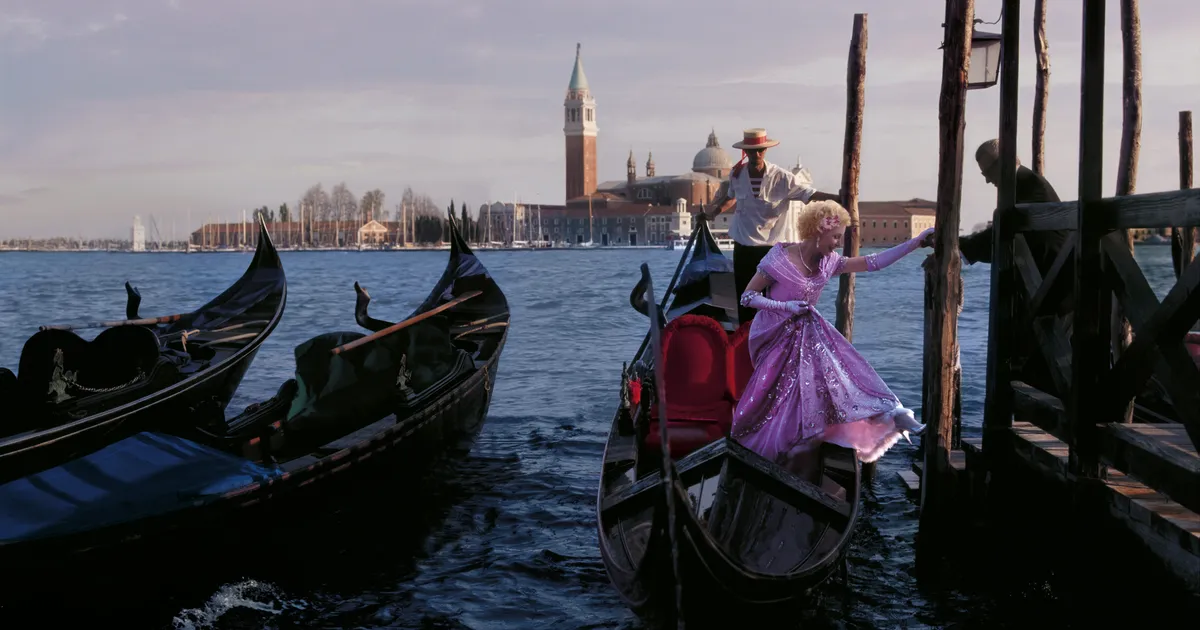
Madame Hirsch, Brigitte Niedermair's photographic series devoted to Renate Hirsch Giacomuzzi, is on view at the Richard Saltoun Gallery in Rome, at Via Margutta 48a-48b, from October 6 to December 18, 2026, curated by Paola Ugolini. The opening is on Tuesday, October 6 from 18:00 to 20:00. The gallery is open Tuesday to Friday from 10:30 to 18:00, Saturday by appointment, and admission is free. The most convenient stop is Flaminio (Metro A and tram 2), about 10 minutes' walk through Piazza del Popolo and Via del Babuino. Alternatively, the Spagna stop on Metro A. For information, the Rome venue answers at 06 86678 388 and at rome@richardsaltoun.com. There are no tickets to buy: just show up during opening hours.
The show brings together the large color prints of the series that the photographer from Merano built by following for a year the life of a lady of Central European high society, between Bolzano, Venice, St. Moritz and Sardinia. It's work on the border between document and staging, shown on one of the streets most tied to the history of artists in Rome.
Madame Hirsch by Brigitte Niedermair at a glance
Dates and hours
From October 6 to December 18, 2026. Hours of the Rome venue: Tuesday, Wednesday, Thursday and Friday from 10:30 to 18:00. Saturday by appointment. On Sunday and Monday the gallery is closed. The Rome tourism portal reports daily opening: before heading out on a Saturday, it's best to write or call.
Opening
Tuesday, October 6, from 18:00 to 20:00. It's the evening when Via Margutta fills with collectors and curious visitors.
Admission
Free. Private galleries don't charge admission: you walk in, look, and ask the staff for information without any obligation.
Curation
The show is curated by Paola Ugolini and produced by the Richard Saltoun Gallery, which has venues in London, Rome and New York.
What you see in the Madame Hirsch show
The show presents the famous photographic series centered on the figure of Renate Hirsch Giacomuzzi, known as Madame Hirsch: large chromogenic prints of 140 by 190 centimeters dated 2004-2005, which follow the life of the protagonist for a year.
A year like a diary
According to the gallery's text, the series follows the rhythm of Madame Hirsch's life through parties, trips, social engagements, family occasions and daily rituals. The sequence keeps the structure of a diary, and the titles of the works declare it: each photograph carries the hour, the month, the place and the occasion, in German, like a page of an agenda.
Titles as captions
Among the works presented, the gallery lists 18.20, Mai, Venedig, Fenice, Zauberflöte, auf dem Weg (18.20, May, Venice, La Fenice, The Magic Flute, on the way), 12.00, Januar, St. Moritz, Polospiele, Fototermin (12.00, January, St. Moritz, polo match, photo shoot), 15.30, Mai, Oberbozen, auf der Schaukel (15.30, May, Soprabolzano, on the swing) and 16.20, April, Bozen, Privatdomizil, Osterbaum (16.20, April, Bolzano, private residence, Easter tree). Reading the titles before looking at the images is a good exercise: the text promises a chronicle, the image delivers a theater scene.
Document or staging
The point, the gallery writes, is that Niedermair's photography resists the logic of reportage: it documents a reality that is already deeply constructed, in which every gesture, dress and setting helps define the scene. Daily life becomes representation, and the images take on the suspended quality of a tableau vivant. Everything seems real and everything is carefully orchestrated. It's in this ambiguity that the photographs find their strength.
Objects as characters
Niedermair keeps a certain distance from the subject and includes in the frame interiors, objects, flowers, furnishings and landscapes. They are not a backdrop: they build the visual identity of the protagonist. The house in Bolzano, with its porcelain, decorations and abundance of objects, becomes a theater of memory. The recurring occasions, Christmas, Easter, winter in St. Moritz, summer in Sardinia, mark a time made of returns and rituals.
Two authors in one photograph
The most interesting reading the gallery offers is that of a double author. There is Madame Hirsch, who all her life built and refined her own image, and there is Brigitte Niedermair, who translates that self-representation into photographic form, preserving it and questioning it at once. The result does not reveal an essential self hidden behind the pose. It shows the long work by which a person builds and inhabits her own image, until she turns it into memory.
The dates of the series
The works in the show are dated 2004-2005 in the gallery's list. The Rome tourism portal's entry, instead, speaks of a project made in 2009. The series was published as a book by the German publisher Kehrer. For those who see it today, 20 years later, time adds a layer: those parties and rituals are by now an era themselves.
The Madame Hirsch prints: the large format
The photographs of the Madame Hirsch series are chromogenic prints, that is, C-prints, of 140 by 190 centimeters: a format for a drawing-room painting, not a family album.
Why the size matters
At that scale every detail becomes legible: the embroidery of a tablecloth, the leaves of an Easter tree, the folds of an evening dress. It's the size of history painting and the official portrait, and Niedermair uses it deliberately to bring a lady's private life into the language of solemn representation.
The editions
At least one of the works, the photograph of the polo match in St. Moritz, is listed by the gallery in an edition of three. Limited print runs are the norm in art photography: anyone interested in buying can ask the gallery staff directly for information.
How to look at them
In front of a print of almost two meters, it's worth making two passes: one from a distance, to take in the composition and the relationship between the figure and the setting. One up close, to discover the objects. It's in that second pass that the series reveals its subtle humor.
Who is Brigitte Niedermair
Brigitte Niedermair was born in Merano in 1971 and has worked between art and fashion since the 1990s. The Richard Saltoun Gallery presents her as one of the most important fashion photographers of her generation, also thanks to her long collaboration with the maison Dior, for which she made some of her best-known images.
The beginnings
According to the published biographies, Niedermair dropped out of a photography course and moved to Milan, then to Miami. In those years she traveled between New York and Los Angeles working as a casting director for film and advertising, then as an assistant to directors on larger productions. She lives in Merano and works between Paris, Milan, London and New York.
The method: make, wait and see
The gallery describes a practice in which formal rigor and conceptual reflection converge, with images rooted in the history of representation and at the same time timeless. Niedermair draws on the tradition of classical painting and the codes of fashion with a slow, analytical method, which she herself sums up in the English formula «make, wait and see». She established herself in a field, fashion photography, historically shaped by a predominantly male gaze.
Identity and the female body
Since the 1990s her projects have revolved around identity, the representation of the female body and the role of the person looking. The Donata Pizzi Collection, which holds one of her works, calls her an almost anomalous figure in fashion photography for her ability to bring the spirit of personal research into commercial work.
A scandal in Bolzano
The image in the Donata Pizzi Collection belongs to the series Bibel bird & Fire, from 1996, which caused scandal and debate when it was shown at the Foto-Forum gallery in Bolzano. The model wore, in a provocative attitude, a costume lent by the Museo della Donna in Merano and traditionally reserved in South Tyrol for unmarried girls. It's a useful key for Madame Hirsch: there too the costume, the dress, the furnishings say who we are even before the face.
Magazines and shows
Her fashion photographs have appeared in CR Fashion Book, Wallpaper*, Dior Magazine and Vogue Italia. Among the solo shows: Screenshot with Martino Gamper at One Poultry for Wallpaper*, London, 2017. Transition at Palazzo Borromeo, Milan, 2017. Eccehomo at Castel Tirolo, 2018. Me and Fashion at the Museo di Palazzo Mocenigo in Venice, 2019.
Paola Ugolini and the project of the show
The Rome show is curated by Paola Ugolini, who chose to present the Madame Hirsch series as an investigation into the interweaving of identity, appearance and representation.
Why this series
The curatorial text places Madame Hirsch at the center of Niedermair's research: the point where the fashion photographer, used to constructing images, meets a woman who all her life has constructed her own. The meeting of two directors of the image is the real subject.
Photography as duration
Through Niedermair's gaze, the gallery concludes, Madame Hirsch is taken away from the fleetingness of society appearances and entrusted to the duration of photography. Not as the revelation of a hidden self, but as testimony of a conscious process. It's an idea that in Rome, a city of court portraits and family busts, sounds familiar.
The Richard Saltoun Gallery
The Richard Saltoun Gallery was founded in London in 2012 and specializes in modern and postwar art, with a strong focus on rediscovering important but little-recognized women artists.
Three venues
The gallery has three venues: Dover Street in London, Via Margutta in Rome and the Upper East Side of Manhattan in New York. The Rome venue is at Via Margutta 48a-48b.
A program devoted to women artists
In 2019 the gallery launched 100% Women, a year of programming devoted to gender disparity in the art world. In 2021 it devoted all its shows to the writings of Hannah Arendt in the program On Hannah Arendt. It represents pioneers of the avant-gardes of the 1960s and 1970s such as Eleanor Antin, Annegret Soltau, Penny Slinger and Renate Bertlmann, and younger artists such as Silvia Giambrone and Florence Peake. It also looks after the archives of Helen Chadwick, Romany Eveleigh, Franca Maranò and Jo Spence.
Why Niedermair here
A photographer who has worked on the female body and the male gaze in fashion fits naturally into a program built on the visibility of women artists. The Rome show is on the calendar in the same months in which the London venue presents Reena Saini Kallat and the New York one Cossette Zeno.
Via Margutta, the street of artists
Via Margutta is a small street in the Campo Marzio district, at the foot of the Pincio and parallel to Via del Babuino. For centuries it was the street of artists in Rome. Today it's a street of art galleries and restaurants.
An alley of stables
Originally it was a lane behind the buildings of Via del Babuino, with warehouses and stables, houses of stable hands, masons, marble workers and coachmen. The area took shape with the Tridente at the beginning of the 1500s. Pope Paul III encouraged its expansion with tax exemptions for the new owners and with an exemption from the trades tax, which attracted foreign artists and craftsmen.
The name
The etymology is uncertain. One theory derives it from «maris gutta», drop of sea, for a stream that came down from the Pincio. Another derives it from the nickname Margutte, and a «Margutto Barbiere» on Via Margutta is indeed attested in a death record of 1575. The place name already appears in 1536. Between the 1500s and 1600s the street was also called Via Nara, from the family of Orazio Naro.
The studios of the 1800s
Around 1850 Monsignor de Mérode bought the land and turned the alley into a street with building lots. In 1887 Palazzo Patrizi Naro Montoro was built, the first complex intended for artists' studios.
The Fontana delle Arti
Halfway along the street is the Fontana delle Arti, from 1927, designed by Pietro Lombardi: a triangular base, a bucket of brushes on top, two large masks, one sad and one happy, for tragedy and comedy, resting on painters' easels.
How to get to the Richard Saltoun Gallery on Via Margutta
Via Margutta is reached from the Flaminio and Spagna stops of Metro A and from the Flaminio stop of tram 2. The gallery is at number 48a-48b.
From Flaminio
From the Flaminio metro you enter Piazza del Popolo through Porta del Popolo, take Via del Babuino, and after a few hundred meters turn left onto Via Margutta. It's the most pleasant route, all on foot in a pedestrian area or nearly so.
From Spagna
From the Spagna metro you come out in Piazza di Spagna, go up Via del Babuino toward Piazza del Popolo and turn right onto Via Margutta. About 10 minutes' walk.
By car
The area is inside the ZTL of the historic center: better to leave the car outside and use the metro.
How to organize your visit to Madame Hirsch
The visit to the show takes between 20 and 40 minutes. It combines easily with a walk in the Tridente, between Piazza del Popolo and Piazza di Spagna.
A weekday afternoon
The gallery is open Tuesday to Friday until 18:00. The ideal moment is early afternoon, when the street is quiet. Then you go up to the Pincio for the sunset over the city, or down toward Piazza di Spagna and the Trinità dei Monti.
A tour of the galleries
Via Margutta and Via del Babuino host many art galleries. You can build a small walking route from one window to the next, going in wherever the door is open.
A day of photography and portraits
If you love portraits, you can pair the show with a visit to the Casa di Goethe on Via del Corso, another home of foreign artists in the Tridente, or to the Keats-Shelley House on the Trinità dei Monti steps.
Accessibility and visiting with children
The Richard Saltoun Gallery is a street-level gallery on Via Margutta. For information on wheelchair access, it's best to contact the Rome venue at 06 86678 388 before your visit.
With children
A photography show in a gallery is short and lends itself to a visit with kids: the images of Madame Hirsch, full of objects, flowers and costumes, can be looked at as an observation game. How many clocks, how many porcelain pieces, how many hats?
With groups
For organized groups it's good practice to announce yourselves, because a gallery space is not a museum's.
A curiosity about Madame Hirsch by Brigitte Niedermair at Richard Saltoun Gallery, from October 6 to December 18, 2026
The curiosity is in the titles of the photographs. Niedermair doesn't use poetic or allusive titles: she writes the hour, the month, the place, the occasion, in German, with the precision of a register. 12.00, Januar, St. Moritz, Polospiele, Fototermin. 15.30, Mai, Oberbozen, auf der Schaukel. They look like the notes of a society diary, or the reports of an investigator. This very dryness amplifies the effect of the images: the title promises a recorded fact, the photograph shows a picture composed with painterly care.
Then there's a detail that makes you smile: one of the titles contains the word «Fototermin», that is, photo shoot. Madame Hirsch, at the polo match in St. Moritz, is portrayed during a photo shoot: the photographer photographs the woman who has herself photographed. It's the key to the whole series, said in a single word, and the reason the gallery insists on the double authorship. Another work finds her in Venice, at 18.20 on a day in May, on the way to La Fenice where The Magic Flute is playing: a scene of real life that looks like a still from a costume film.
One thing nobody tells you about Madame Hirsch by Brigitte Niedermair at Richard Saltoun Gallery, from October 6 to December 18, 2026
What nobody tells you is that the show is in the right gallery, but some calendars place it in the wrong one. The Rome tourism portal, in its entry, gives the Galleria La Nuvola at number 51/a. The Richard Saltoun Gallery, which produces the show, presents it at its own venue at Via Margutta 48a-48b, and the same address appears on Zero's calendar. The two doors are a few meters apart, but walking into the wrong one takes a moment. The address to follow is 48a-48b.
The second thing has to do with the hours. Private galleries don't follow museum rhythms. The Rome venue of Richard Saltoun opens Tuesday to Friday, from 10:30 to 18:00, and on Saturday only by appointment. Sunday and Monday it's closed. If you're thinking of dropping by on the weekend, during a walk between Piazza del Popolo and Piazza di Spagna, you risk finding the shutter down. An email or a phone call on Friday solves the problem. And don't be afraid to go in: in art galleries nobody expects you to buy anything, and the staff is usually happy to talk about the works with anyone who shows interest.
My advice for visiting Madame Hirsch by Brigitte Niedermair at Richard Saltoun Gallery, from October 6 to December 18, 2026
It's worth looking at each photograph twice. The first time, look at Madame Hirsch: the dress, the pose, the gaze. The second time, ignore her and look at everything else: the tablecloth, the porcelain, the flowers, the snow of St. Moritz, the water of Venice. You'll notice that the protagonist is almost always in the minority in the frame, and that the objects tell more about her than her face does. It's the distance the photographer wanted, and it completely changes the reading.
The second piece of advice has to do with timing. Go on a weekday afternoon, around 16:00, when the light on Via Margutta turns golden and the street is almost empty. On your way out, before heading back toward the Corso, walk up to the end of the street and stop in front of the Fontana delle Arti, with its marble brushes and the two masks of comedy and tragedy. After an hour spent wondering what is true and what is acted in a life, those two masks will seem like a comment written especially for the show.
Another well-known fact, yet rarely mentioned
Everybody knows that Via Margutta is the street of artists. Less often mentioned is how old this vocation is. Already in the 1600s Pieter Paul Rubens, Nicolas Poussin, Jusepe de Ribera, Pieter van Laer and Jean Ducamps lived on Via Margutta or near it. Between the 1600s and 1700s Gaspar van Wittel, Pier Leone Ghezzi and the van Bloemen brothers, called l'Orizzonte and lo Stendardo, lived there. Between the 1700s and 1800s Antonio Canova worked there. In the 20th century came Augusto Mussini, Gregorio Maltzeff, then Pablo Picasso.
And even less often mentioned is the reason for this pull. Pope Paul III Farnese granted in the 1500s a tax exemption to the owners of the new houses and an exemption from the tax on arts and trades to those who settled in the area. It was a tax policy, even before a fashion, that created the neighborhood of foreigners and artists. Then came the revolutionary painting of Caravaggio, which attracted Flemish and Dutch painters. A London gallery that opens a venue here, and a South Tyrolean photographer who exhibits in it, continue in their own way a tradition of artists coming from elsewhere that has lasted almost five centuries.
The right photo to take at Madame Hirsch by Brigitte Niedermair at Richard Saltoun Gallery, from October 6 to December 18, 2026
Inside the gallery, always ask before photographing the works: they are prints protected by copyright, and some galleries allow only overall shots without flash. The right photo, though, is taken outside. Via Margutta is one of the most photogenic streets in Rome: ivy on the facades, artists' studios with glass walls, doorways with inner courtyards. The best framing is the one from the entrance on Via del Babuino toward the far end, with the narrow perspective closing on the green of the Pincio.
The second photo is the Fontana delle Arti: the bucket of brushes on top, the two masks, the easels. Shoot it at an angle, so that both masks show, the sad one and the happy one. It's the best possible visual comment on a show that plays on the border between life and performance. The third, for film lovers, is number 33, where some scenes of Roman Holiday were shot. A tip in line with the show: try photographing someone posing in the middle of the street, as Niedermair would, letting the street take up more space than the person.
Some important events that happened here in history
The history of Via Margutta begins with the Tridente, at the beginning of the 1500s, when the area takes shape between Via del Babuino, Via del Corso and Via di Ripetta. In 1536 the place name «Margutta» is already attested. Around 1580 Ascanio de' Massimi sells his properties on the street to Cardinal Antonio Maria Salviati, who leaves them to the Ospedale di San Giacomo. In 1734 other houses pass to the same hospital through the inheritance of Tranquillo Pizzuti. Around 1850 Monsignor de Mérode buys the land and turns the alley into a real street. In 1887 Palazzo Patrizi Naro Montoro goes up, the first complex of artists' studios.
In 1927 Pietro Lombardi's Fontana delle Arti is inaugurated. During the German occupation the painter Giordano Bruno Ferrari makes his studio on Via Margutta a center of the Resistance, tied to the clandestine Fronte militare. He is sentenced to death by the Germans in 1944, and a plaque remembers him. In 1953 some scenes of Roman Holiday are shot at number 33, and the street becomes famous around the world. The same year the open-air art fairs begin, with paintings hung on the walls. On June 22, 1970 the painters found the association Cento Pittori via Margutta, which since then has exhibited in the street twice a year. In 2007 the street's fig tree, grown since the 1970s and celebrated by plaques and poems, is knocked down by a car and replaced.
Who has passed through Madame Hirsch by Brigitte Niedermair at Richard Saltoun Gallery, from October 6 to December 18, 2026
Painters of four centuries have passed through Via Margutta. In the 1600s Rubens, Poussin, Ribera, Pieter van Laer. Then Gaspar van Wittel, the father of veduta painting, and Pier Leone Ghezzi, the caricaturist of 18th-century Rome. Antonio Canova between the 1700s and 1800s. In the 20th century Picasso and Alcide Ticò. In the 1950s the street becomes the home of cinema and modern art: Federico Fellini and Giulietta Masina live here, remembered by a plaque, along with Anna Magnani, Giorgio de Chirico, the sculptor Nicola Rubino, the painter Novella Parigini, Renato Guttuso and Alberto Burri. At Palazzo Patrizi Naro Montoro, according to the history of the street, names such as Gabriele D'Annunzio, Pietro Mascagni, Giacomo Puccini and Umberto Boccioni collaborated with the artistic association.
Cinema brought Audrey Hepburn and Gregory Peck here for Roman Holiday, Alberto Sordi for Un americano a Roma, and Mario Camerini named a film after the street in 1960. Literature has passed through it with Carlo Cassola, who opens Vita d'artista right on Via Margutta, and with Alberto Moravia, who has it come up often in La noia. In autumn 2026 Brigitte Niedermair arrives with her Madame Hirsch, a lady of Central European high society who enters Rome, in the form of a photograph, on the street where so many other figures built their own image.
What to see around Via Margutta
Via Margutta is in the Tridente, between Piazza del Popolo and Piazza di Spagna: one of the richest quarters of Rome for monuments, museums and walks.
Piazza del Popolo
To the north, Piazza del Popolo with the obelisk and the twin churches that open the Tridente. From here you go up to the Pincio.
Via del Babuino
Parallel to Via Margutta, Via del Babuino is the street of antique dealers, running between Piazza del Popolo and Piazza di Spagna.
Villa Borghese
From the Pincio you enter Villa Borghese, for those who want to extend the day with a museum or a walk in the green.
The Ara Pacis
10 minutes toward the Tiber, the Ara Pacis and the Mausoleum of Augustus complete an itinerary that goes from antiquity to contemporary photography.
Where to eat near Via Margutta
The Tridente offers everything, from historic cafés to elegant restaurants. Via Margutta itself has a few restaurants with outdoor seating, and the nearby streets abound in trattorias, wine bars and bars.
A coffee
For a coffee before or after the show, the Antico Caffè Greco on Via dei Condotti is a historic stop a few minutes' walk away.
Lunch or dinner
In the Tridente prices are higher than in the rest of the center. For a dinner after the opening it's best to book: on October 6 the street will be crowded.
Frequently asked questions about Madame Hirsch by Brigitte Niedermair
Where is the Brigitte Niedermair show Madame Hirsch in Rome?
The show Madame Hirsch by Brigitte Niedermair is at the Richard Saltoun Gallery, at Via Margutta 48a-48b, in the Campo Marzio district. Some calendars give the Galleria La Nuvola at number 51/a, but the venue given by the gallery that produces the show is 48a-48b.
Until when is the Madame Hirsch show open?
The Madame Hirsch show is open from October 6 to December 18, 2026. The opening is Tuesday, October 6 from 18:00 to 20:00. The show is curated by Paola Ugolini.
What are the hours of the Richard Saltoun Gallery in Rome?
The Richard Saltoun Gallery in Rome is open Tuesday to Friday from 10:30 to 18:00. On Saturday it can be visited by appointment. Sunday and Monday it's closed. For Saturday, it's best to write to rome@richardsaltoun.com or call 06 86678 388.
How much does it cost to see the Brigitte Niedermair show?
The Brigitte Niedermair show at the Richard Saltoun Gallery has free admission, as is the case in private art galleries. No tickets or reservations are needed on opening days.
Who is Madame Hirsch?
Madame Hirsch is Renate Hirsch Giacomuzzi, a lady of Central European high society with a home in Bolzano, whom Brigitte Niedermair followed for a year through parties, trips and family rituals: Christmas, Easter, winter in St. Moritz, summer in Sardinia.
How do you get to Via Margutta by public transit?
Via Margutta is reached by Metro A, Flaminio or Spagna stops, and by tram 2, Flaminio stop. From Piazza del Popolo you walk along Via del Babuino and turn onto Via Margutta. The area is in the ZTL, so it's better not to use a car.
Who is Brigitte Niedermair?
Brigitte Niedermair is a photographer born in Merano in 1971, active between art and fashion since the 1990s, known for her long collaboration with Dior and for projects on identity and the female body, exhibited among other places at Palazzo Borromeo in Milan and at Palazzo Mocenigo in Venice.
The final advice on Madame Hirsch
Madame Hirsch is a show small in size and big in questions: who decides how we appear, we or the people looking at us? Go on a weekday afternoon, at your own pace, and then walk Via Margutta all the way to the Fontana delle Arti. It's one of the rare occasions in which a private gallery offers, for free, a lesson in photography worth as much as a museum show.
Article written by the editorial team of Tour Leader Pro, contact them for Private/Corporate/V.I.P. Tours and Experiences.
Planning a trip to Rome? The English-language guides to visiting the city are on ItalyPlanner.com.