Madame, Disincanto Tour in Rome, Atlantico, December 5, 2026
In short. Madame Disincanto Tour in Rome: Madame brings the tour to Atlantico Live on Saturday, December 5, 2026, on Viale dell'Oceano Atlantico, in the EUR district.
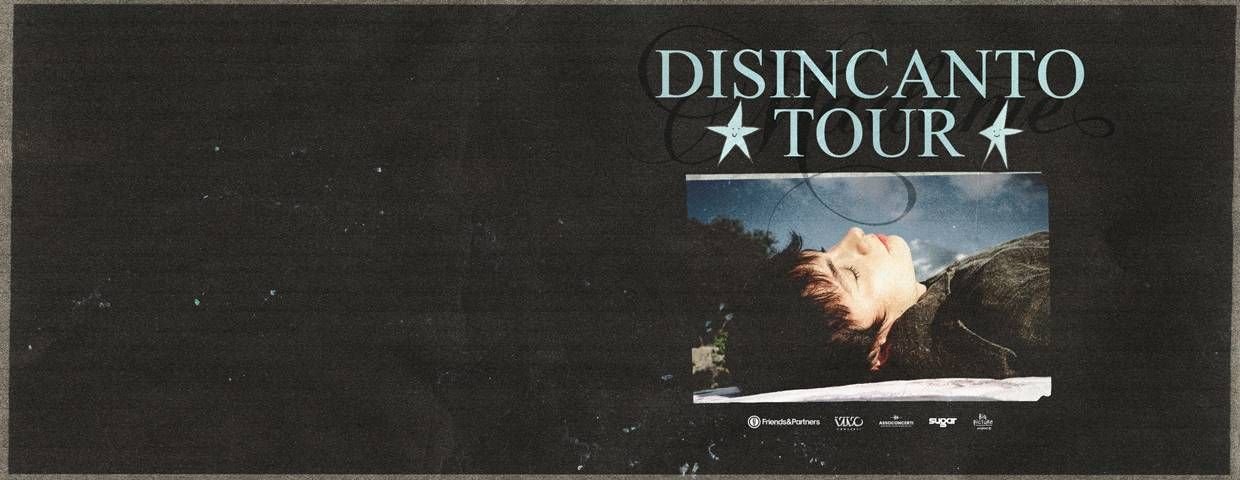
Madame Disincanto Tour in Rome: Madame brings the tour to Atlantico Live on Saturday, December 5, 2026, on Viale dell'Oceano Atlantico, in the EUR district. A single Rome date, in a hall holding a few thousand people, at the end of the year in which the singer-songwriter from Vicenza put a new record into circulation after three years of recording silence. Tickets on the official sales channels.

Francesca Calearo, who goes by Madame on stage, was born in Creazzo, in the province of Vicenza, on January 16, 2002. When she takes the Rome stage she'll be 24, with eight years of public career behind her, which puts her in that rare category of artists who started very early and who by their mid-twenties already have a discography with a recognizable shape. The December 5 concert is the Rome stop of the tour tied to “Disincanto”, her third studio album, released on April 17, 2026, by Sugar Music.
I'm writing well in advance, and I'm doing it on purpose. A single date in a hall this size doesn't behave like a stadium concert: tickets don't evaporate in an afternoon, but they sell in waves, and if you move in the last three weeks you get what the others passed over. Then there are two practical issues that weigh more in EUR than in any other part of Rome, and they are the times and getting back. They're exactly the things nobody tells you when they sell you a ticket, and they decide if you go home happy or angry at this city.
One warning has to be given right away. Two dates have been circulating that differ by 24 hours: one says December 6, the other December 5. December 5, 2026, falls on a Saturday, the 6th on a Sunday, and for a pop concert in a 3,000-person hall Saturday is the natural choice. Here we give Saturday the 5th, but checking the official confirmation in the days before is still the smartest thing to do anyway, and not only for this reason.
Where Atlantico Live is and how to really get there
The address, and why it doesn't look like any other Roman address
The hall faces Viale dell'Oceano Atlantico, the street that closes off to the south the Europa district, the one everyone in Rome calls EUR. It's not the monumental heart, the one with the obelisk and the vistas photographed a thousand times: it's the outer strip, where the rationalist design of the 1930s frays into postwar buildings, converted warehouses, office headquarters, extra-wide roadways designed for the car at a time when the car was the future. The concert space was born as an industrial building and was adapted for live music: high ceiling, rectangular floor plan, visual obstacles kept to a minimum, stage on the short side, capacity that in standing configurations is in the range of 3,000 people.
If you come from outside Rome for a concert, you tend to imagine an evening inside the walls, maybe with a dome in the background and an alley to cross on the way back to the hotel. Here the landscape is different and it's better to know it beforehand: low, wide buildings, tree-lined avenues, parking lots, and the silence of a planned suburb that at 20:00 seems unreal and at 23:30, when the hall empties, goes back to exactly how it was before. It's not a flaw. It's simply another Rome, and in some ways the most interesting one to walk through with your coat on.
The architectural logic of the place is that of the European multipurpose hall, not of the Italian-style theater. No tiers of boxes, no orchestra pit, no stalls with numbered rows except in the seated configurations the hall sets up for certain shows. For a pop concert like this the natural configuration is a standing floor with raised sections along the sides and at the back, and this single piece of information radically changes how you should plan the evening. I come back to it in detail further on, because it's the difference between a great night and three hours spent looking at a stranger's head.
By metro
Line B is the natural way to reach EUR from any point in the city served by that line: from Termini, Colosseo, Piramide, Ostiense, Garbatella. The useful stops for the southern strip of the district are EUR Palasport and EUR Fermi. From both you get out and walk, because Viale dell'Oceano Atlantico runs parallel to the southern edge and doesn't have a metro entrance at its door. The walk is flat, lit, on wide sidewalks, and takes a good quarter of an hour at a normal pace. It's not a scenic stroll, but it's clear and safe, and in December with your jacket zipped up it's even pleasant.
The tricky part isn't getting there. It's getting back. A concert that starts around 21:00 and that, between opening set, show and encores, ends between 23:00 and midnight, pours a few thousand people onto a half-empty avenue at the time of day when transit frequency is at its worst. Line B closes at its regular time around midnight on weekdays, with extended hours on Friday and Saturday nights. December 5, 2026, is a Saturday, which helps, but it's not a guarantee to build your whole evening on with your eyes closed. The rule I always apply: decide your plan for getting back before you go into the hall, not after the last encore, when tiredness and euphoria make anyone unreasonably optimistic.
By car, taxi or ride-hailing
EUR is one of the very few parts of Rome where arriving by car really makes sense. There's no limited traffic zone choking things like in the historic center, the streets are wide, and around the avenue there are parking areas and side streets where people park on concert nights. With 3,000 people arriving, though, the convenient spot disappears fast: showing up a good hour before doors open is the difference between stopping 200 meters from the entrance and circling in widening loops for 20 minutes, cursing under your breath.
Taxis and ride-hailing work very well on the way there and badly on the way back, for the simple reason that at the end of the concert demand concentrates in 15 minutes on a single point on the map. The countermove: walk away five or 10 minutes toward the inside of the district and call the car from there, from any intersection. You lose 10 minutes of walking and gain 40 of waiting. The same principle applies if you parked: getting out of the areas right next to the hall is the slowest part of the whole evening, and leaving 10 minutes after everyone else is better than leaving 10 minutes before.
A note on acoustics, if you've never set foot in a hall like this
Spaces born as industrial buildings have hard surfaces and large volumes, and reverb is the historic enemy of the singing voice. Serious halls correct it with acoustic treatments, curtains, panels and speaker placement, and the result, when the audience fills the floor, improves noticeably: 3,000 bodies absorb sound better than any panel you could hang. The practical consequence is that a concert in a converted warehouse almost always sounds better with a full house than during the opening set, when half the people are inside. If the first 20 minutes sound muddy to you, it's not a verdict on the night: wait for it to fill up.
Who Madame is, if you're just getting to know her
Creazzo, 16, and the first track
In 2018, at 16, Francesca Calearo debuted with the single “Anna”, produced by Eiemgei and distributed by AAR Music, the label then called Arcade Army Records. Shortly after she signed with Sugar Music, which from then on has released her whole discography. Also in 2018 came “Sciccherie”, the song that made her known outside industry circles and that for a couple of years remained her calling card for anyone who didn't follow Italian rap closely.
The age detail isn't folklore. It means that a 16-year-old girl attending the Don Giuseppe Fogazzaro human sciences high school in Vicenza, where the future Sangiovanni was her schoolmate, found herself inside the record industry before she had a driver's license. If you listen carefully to the first album, you hear that the writing is already adult and the biography isn't, and that friction is part of her style, not an accident.
In 2019 she came under the management of Paola Zukar, the historic manager of much of the Italian rap scene, and released, among others, the single “17”, produced by Eiemgei and Mago del Blocco. It's the year the project stopped being a local promise and started behaving like a career.
2020, the year everything stopped and she sped up
Between February and April 2020 came “Baby”, later certified platinum. In July came “Defuera”, with Dardust, Ghali and Marracash, also platinum: a collaboration that suddenly put her in the same picture as the biggest names in Italian rap, and not as a decorative guest. In September she took part in “Heroes”, the first collective streaming concert held in Italy, one of those events you can understand only by remembering what the months it was conceived in were like. In November the single “Clito” came out.
On December 3, 2020, she opened the semifinal of the 14th edition of X Factor singing “Baby” in a duet with contestant Blind. From a career standpoint it's a small step, from the audience's standpoint it's huge: it's the first time a mainstream TV audience, the one that had never opened a streaming platform to look for Italian rap, saw her face and heard her sing live.
2021: Sanremo, the first album, the Notte della Taranta, two Targhe Tenco
January 2021, “Il mio amico” came out with Fabri Fibra. Between March 2 and 6 she competed for the first time at the 71st Sanremo Festival, in the Campioni section, with the new song “Voce”. She finished eighth. The placing, as very often happens at the Ariston, tells only part of the story: “Voce” won the Premio Lunezia for the musical and literary value of the song and the Premio Sergio Bardotti for best lyrics, the two awards at Sanremo that reward songwriting rather than popularity.
On March 19, 2021, her debut album came out, simply called “Madame”: 16 tracks, eight of them built as collaborations, released by Sugar. It's a record the public listened to and critics took seriously at the same time, something that happens in Italy less than you'd think.
In July 2021 she was given the role of maestro concertatore of the Notte della Taranta for the August 28 Concertone, shared with composer Enrico Melozzi. The concert aired on Rai 1 on September 4 in late prime time. It's worth pausing on this point for a moment, because it's the kind of detail that slips by in a list and instead says a great deal: at 19, an urban singer-songwriter from the Northeast was put in charge of musically directing the biggest festival of Salento folk music. It's not a breakthrough-artist gig. It's a musician's gig.
In July 2021 the Targhe Tenco also came: best debut work for the album “Madame” and best single song for “Voce”. Winning two in the same edition at that age is the kind of result that Italian music reporting cites for years. On September 3 “Tu mi hai capito” came out featuring Sfera Ebbasta, and the next day her first mini tour, “Madame in tour Estate 2021”, set off from Brescia. On November 2 she joined Nicola Savino as co-host of an episode of Le Iene on Italia 1.
2022 and 2023: the series, the second Sanremo, “L'amore”
On April 15, 2022, “L'eccezione” came out, recorded for the Prime Video series “Bang Bang Baby”. On May 3 “Madame in tour 2022” began. That same year she received the Premio Basilica Palladiana, which the Veneto gives to people and institutions in culture and entertainment, and also got a nomination at the MTV Europe Music Awards as best Italian artist, as well as an award at the 2021 Music Awards for the album and for “Voce”. In 2022 she also appeared in the miniseries “2016 - L'anno della Trap”, four episodes that tell from the inside the moment that genre went mainstream in Italy.
In February 2023 she was back in competition at Sanremo, the 73rd edition, with “Il bene nel male”. Seventh place. Here too the placing counts less than the song's trajectory: it remains one of the most recognizable pieces in her repertoire and in the following years collected side but significant awards, from the Premio ballerino Lucio Dalla in the series dedicated to the Bologna singer-songwriter to the Billboard Italia award at the 2024 Videoclip Italia Awards.
In 2023 her second studio album came out, “L'amore”, which earned a Targa Tenco nomination for best album. That same year she made her film debut in “La primavera della mia vita”, directed by Zavvo Nicolosi. In October she recorded “Too Late” with Nitro, in November “Io ti conosco” with Gianmaria, and in April 2024 “Ho fatto un sogno” with Tananai and Rose Villain.
2024: winning Sanremo without competing
On February 10, 2024, Madame won the 74th Sanremo Festival. Not as a performer: as a songwriter. “La noia”, sung by Angelina Mango, was written by her together with Mango herself and Dario Faini, that is, Dardust. The same song won the Premio Giancarlo Bigazzi for best musical composition.
It's worth dwelling on this, because it's the detail that explains better than any other what kind of artist you're going to see on December 5. Winning Sanremo as a songwriter means your craft doesn't depend on your charisma on stage or on your voice: it means you know how to build a song that works even when sung by someone else, with another range, another biography and another face. That same year she also received the Targa dedicated to Fabrizio De André, which, for someone who lists De André among her stated influences along with trap, Sicilian neomelodic music and the instrumental music of Ludovico Einaudi and Eddie van Halen, feels like a circle closing.
2025: the break that wasn't a break
After “L'amore” the singer-songwriter took three years away from the album format, during which she wrote, collaborated and wrote songs for others. In 2025 she was a regular guest at the dates of Marracash's stadium tour. This detail, looking ahead to the Rome concert, matters more than it seems: it means that in the months right before returning with a record of her own, she spent a whole season on the biggest stages Italy can offer, in front of crowds who hadn't come for her. If you've been through that school, you arrive in a 3,000-person hall with a different craft from someone coming off a club tour.
2026: “Disincanto”, and the record that reopens the conversation
On March 13, 2026, the single “Disincanto” came out. On the 27th of the same month came “OK”. On April 13 it was the turn of “Rosso come il fango”. On April 17 the album “Disincanto” came out, 14 tracks, just under 42 minutes, released by Sugar Music, produced by Bias, Lester Nowhere, Mr. Monkey and Oddsphere. At the same time “Volevo capire” came out as the fourth single, with Marracash. On June 19 came “M'ama non m'ama”, the first track from the digital reissue.
The record reached number two on the Italian album chart and number 31 in Switzerland, and was certified gold. The reviews are good and, more interestingly, they're good for reasons consistent with each other. Claudio Cabona on Rockol describes it as a work that gathers and relaunches all the elements that have defined her trajectory so far, crossed by provocation, love, inquiry, doubt and sex, and stresses that the disenchantment of the title shouldn't be read as disillusionment but as a new form of freedom. Andrea Silvestri on Ondarock reads it as a synthesis of the first two chapters of her discography, built around a personal story that deals with sudden success, the reorganization of her life and the public's morbid interest, with writing that alternates rhythm and blues-based electronics and urban songwriting.
Also in 2026 she hosted “Radio Disincanto” on Rai Radio 2 and wrote the song “Avatar” for film, on the soundtrack of the movie “Nessun dolore”. Between July 3 and September 13, 2026, she crossed the peninsula's main festivals with the “Madame tour Estate 2026”. The December 5 Rome date belongs to the next leg, the indoor one, which in Italy is always the most interesting part of a tour: the setlist has settled, the band has hundreds of hours on stage together, and the hall doesn't impose the acoustic and staging compromises of an open-air festival stage.
What crowd you'll find in the hall
A career this layered produces a layered audience, and it's one of the things that make it fun to look around before the lights go down. There are those who have followed her since 2018, since “Sciccherie”, and know by heart even the tracks that never got radio play. There's the very wide group that arrived with the first Sanremo, who know two songs and sing both with touching conviction. There are those who came by side roads, from the collaborations with Mengoni or Ghali, without really knowing who the female voice stuck in their head was. And there's the not-small share of people who arrived in 2024, discovering that the Sanremo winning song, the one they'd sung all summer, had been written by her.
A curious fact about Madame, Disincanto Tour in Rome, Atlantico, December 5, 2026
The hall's name has nothing to do with the ocean, crossings or ocean liners. It comes from the street, and the street comes from a naming scheme that is one of the most beautiful and least told inventions of 20th-century Rome. When in the 1930s the district meant for the 1942 Universal Exposition was planned, it was decided to name the main avenues with non-Italian geographic names, a very rare choice in the national urban planning tradition: the avenues named after the continents, Europa, Asia, America, Africa, Oceania, all laid out perpendicular to Via Imperiale we know today as Via Cristoforo Colombo, and the avenues named after the oceans, Atlantico and Pacifico, placed on the southern edge.
This means that Madame's concert takes place, literally, on the southern rim of a world map drawn on the ground. Farther north are the continents. To the east the mountain ranges, Rockies, Carpathians, Caucasus, Pyrenees. In the southeast quadrant the streets dedicated to African states, from Algeria to Kenya to Morocco. In the southwest quadrant those dedicated to Asian and Oceanian states, from Lebanon to Indonesia to Australia, with Piazza Pakistan and the Passeggiata del Giappone next to the lake. If you walk from the metro to the hall, you cross a piece of globe without noticing, and if you know it while you do it, the walk takes on a completely different flavor.
There's a further level, and it's the most entertaining part. That avenue bears the name of an ocean because the ocean, in the symbolic logic of the Exposition that never happened, marked the boundary: beyond that line the world ended and the Roman countryside began. Today that same line is the place where 3,000 people line up to hear a girl who grew up in the province of Vicenza sing. The edge of the world map drawn by a regime has become the place where people dance on Saturday night. I don't know a more effective metaphor for how Rome digests its own history: it doesn't erase it, it doesn't worship it, it uses it for something else.
A second curiosity, of a much more practical kind, I add because it saves time for anyone looking for information online. The word Atlantico, in Rome, is annoyingly ambiguous: it refers to the avenue, to the hall, to a live record made right there, and also to other Italian albums with that title that have nothing to do with the street or the venue. When you look up times, prices or directions, always add the words “live” and “viale dell'Oceano” to your search, otherwise you'll end up reading the page of a record released 15 years ago.
Something nobody tells you about Madame, Disincanto Tour in Rome, Atlantico, December 5, 2026
What no presentation page writes is that in this hall the quality of your evening depends almost entirely on where you stand, and that the good spot isn't the one your instinct makes you look for. The floor plan is rectangular and wide, the stage occupies the short side. The front of the stage fills up fast, and past the first 10 or so rows you end up in a central band where the view is mediocre and the sound, from the hall's pure physics, arrives muddy. The best position if you care about listening isn't the geometric center of the floor: it's slightly off axis, at the height of the sound desk or just behind it, where the engineers mix and where the sound is therefore by definition what they decided you should hear.
Second thing nobody says, and it changes life for anyone under 1.70 meters: the raised areas along the sides and at the back of the hall. They're just a few steps, but they're enough to clear two rows of heads. If you get in an hour early and settle there, you see the whole stage, hear well, don't have to defend your space for three hours and can even go to the bar without losing everything. If instead you aim for the barrier, you have to factor in arriving very early, standing still for two or three hours and not leaving for any reason, because a lost spot can't be recovered. It's a legitimate choice with its reasons, but make it knowing the price.
Third thing, the most obvious and the most ignored: in December the coat check is the real bottleneck of the evening. A concert in the first week of December in Rome means 3,000 people with coats, scarves and often umbrellas. At the entrance the line moves because it's spread over a good hour. At the exit it concentrates into 20 minutes and is exasperatingly slow. If you can, go in with the bare minimum and keep a light jacket on. If you really have to check your coat, factor in an extra half hour at the end, or wait inside for the line to thin out instead of queuing right after the last note.
Fourth, and maybe the most useful of all: the time printed on the ticket isn't the time Madame sings. It's the doors time, or at most the show start time, which in a hall this size normally includes an opening set. Between doors and the headliner's first note there are usually between one and two hours. If you show up at the printed time thinking you'll hear the first song right away, you face a long wait on your feet. If you arrive half an hour before the end of the opening set, you walk into a hall that's already warm but find only poor spots. The reasonable compromise, as always, is to go in early and count the wait as part of the evening.
Fifth, about the repertoire, and I say it because it avoids disappointment. A concert that goes with a new album gives a lot of room to the new album. It's obvious, yet every time someone comes out surprised. “Disincanto” has 14 tracks and one more in the digital reissue: if half of them are played live, you've already filled a solid portion of the evening. The earlier repertoire, with two Targhe Tenco, two Sanremo competition entries and a long string of certified collaborations, exists and will be touched on, but if you're hoping for a career-spanning concert built on 2021, you're looking at the wrong tour. If you arrive having listened to the new record at least three times, on the other hand, you come out of the hall with twice the experience of someone who never opened it.
My tip for Madame, Disincanto Tour in Rome, Atlantico, December 5, 2026
My main tip is just one and I'll say it plainly: arrive in the district three or four hours before doors open, not 20 minutes. I don't say it because of the line. I say it because EUR at sunset in early December is one of the most beautiful and least visited places in Rome, and if you come here only for the concert you miss the better half of the day. Darkness, that week, comes shortly after 16:30. Between 15:00 and 18:00 you have the low light on the travertine, the fountains on, the empty lake and the lit avenues: it's a completely different city from the postcard one, and those three hours easily fit a proper walk.
The loop I recommend is short and dense. Start from the ring around the lake, which takes a good half hour among cypresses, willows over the water, fountains and the Passeggiata del Giappone. Go up toward the Palazzo della Civiltà Italiana, the district's signature building, four identical facades, rows of arches, cladding entirely in travertine and that nickname of Square Colosseum it earned on its own and that is now used more than the real name. From there, in a few minutes, you reach the basilica of Santi Pietro e Paolo, whose dome closes off the perspective of the monumental axis and from whose steps you see one of the least visited views in the city.
If you have more time and want to be indoors, there's the Museum of Civilizations complex, which gathers very different collections in a district nobody associates with museums, and the Palazzo dei Congressi, worth a stop even just for the facade and for the idea of monumentality it carries. A practical warning: afternoon openings of the district's museums end early, and in December they end very early. If the idea is to visit something indoors, do it in the early afternoon, not at 17:00. For the everyday face of the district, the one residents use and not tourists, there's the EUR Social Park, which is the exact opposite of the monumental and reminds you that people live here.
Second tip, about eating. I don't give names of places and the reason is precise: in an office district openings and closings change quickly, and a wrong list does more damage than no list. I give you the criterion instead, which never changes. EUR runs on the business lunch: much of the dining closes early in the evening or stays empty. The exceptions are concentrated toward Viale Europa and around the lake area, where there are places that also work in the evening and on weekends. Eat by 20:00, because after that you risk kitchens closing and because you need to be in the hall when doors open anyway. Don't eat heavy: two or three hours on your feet in a warm room after a big dinner is an experience I wouldn't wish on anyone. Bring cash or a backup card, because at some places in the district the card reader has a mind of its own.
Third tip, about what to wear, and it's more important than it seems. The first week of December in Rome isn't northern winter but it isn't mild either: highs are usually around 13 or 14 degrees, lows drop toward five or six, and the risk of rain is real. The practical translation is simple: a light waterproof jacket is better than a heavy coat, because inside the hall it'll be warm and the coat becomes a problem to manage all evening. A small umbrella that fits in a pocket. Closed shoes that can handle a puddle. If it rains, the walk from the metro is still doable because it's all on sidewalk, but the plaza in front of the hall offers no shelter, and the line in the rain is the least romantic part of any concert.
Fourth tip, about getting back, and I insist because it's what ruins the most evenings. Decide how you're getting back before you go in. If you're going back by metro, check the last useful run on Saturday night and set a reminder. If you're going back by taxi or ride-hailing, know that you'll have to walk five or 10 minutes toward the inside of the district to find a car in a reasonable time. If you're going back by car, park thinking about the exit and not the entrance. If you're staying in the area, and I'll get to that shortly, you have no problems: it's the option I recommend to anyone coming from outside Rome.
Fifth and last tip, the most important of all and the easiest to ignore: listen to “Disincanto” in full at least twice before December 5. Not to do homework. Because it's a record critics have read as a story with a direction, not as a collection of singles, and because live the sequence of songs will lean on that direction. If you know the thread, you follow the evening. If you know two songs, you wait for two songs. They're two different concerts for the same price.
Another well-known fact, yet rarely mentioned
The fact is this: Madame has won the Sanremo Festival. Everyone knows it and almost nobody says it, because she won it in 2024 as a songwriter and not as a singer, and Italian media memory records faces on stage well and signatures at the bottom of the score badly. “La noia”, the song brought to the competition and won by Angelina Mango, was written by Francesca Calearo together with Mango herself and Dario Faini. The same song won the Premio Giancarlo Bigazzi for best musical composition.
The orchestra's award deserves an extra line, because it's the recognition that at Sanremo counts a great deal among professionals and very little in the popular story of the Festival. It's voted by the orchestra players, that is, the only people inside that theater who read the score and know exactly how much work goes into an arrangement. Winning it means that that song, taken apart note by note by the people who have to play it, holds up. Keeping it in mind helps you listen to the December 5 concert with the right ear: what you'll hear isn't material built in the studio and reproduced with difficulty live, it's material written by someone who thinks in terms of parts to be played.
There's a corollary I find even more interesting and that almost nobody brings up. A singer-songwriter who wins Sanremo with a song sung by someone else, who shortly before had won two Targhe Tenco in the same year, and who at 19 had been called to musically direct the Notte della Taranta, is a figure the Italian industry rarely produces: someone the public sees as a pop personality and the trade sees as a songwriter. The two things don't usually coexist, and when they do, the live concert benefits, because whoever goes on stage knows exactly what they're playing and why.
A second fact, just as well known and just as rarely mentioned, concerns her stated influences. Her music is classified as urban with strong rhythm and blues components, and her main references are rappers like Izi and Rkomi. But in the list of things she says she draws inspiration from appear, side by side, trap, Sicilian neomelodic music, Fabrizio De André and the instrumental music of Ludovico Einaudi and Eddie van Halen. It's a list that seems provocative when you read it and that instead explains perfectly why some of her choruses have that melodic turn that doesn't belong to Italian rap and why some of her lyrics work read on the page.
Third fact. The general public associates this artist with Sanremo because television is the only place they've met her. But in her two competition entries she never made the podium: eighth in 2021, seventh in 2023. If you stopped at the placings, the record would be that of a supporting player. Counting the Targhe Tenco, the songwriting win, the Premio Lunezia, the Premio Bardotti, the Targa dedicated to De André and the musical direction of the Taranta, the record is that of one of the most awarded figures of her generation. It's the most instructive gap in this whole story, and it's worth keeping in mind as you walk into the hall.
The right photo to take at Madame, Disincanto Tour in Rome, Atlantico, December 5, 2026
First the annoying part, because it's needed. Photography inside concert halls is regulated by the organizer and changes from tour to tour. The general rule in Italy is that you can bring your phone in and you can't bring in a camera with interchangeable lenses. If you have a real camera and care about it, find out beforehand, because checking it at the coat check isn't always possible and finding yourself at the entrance with an object you can neither bring in nor leave is a situation that ruins the evening before it even starts.
That said: the right photo of this evening isn't of the stage. Everyone has the stage photo, it's always the same, and it's always bad, because a phone pointed at concert lights produces a colored blur with a silhouette in it. The photo that counts, here, is the one you take before going in, and the district offers you three.
The first, and the safest, is the Palazzo della Civiltà Italiana in the last half hour of light. The travertine, with the low December sun, goes from white to orange in a few minutes, and the rows of arches produce a pattern of shadows that reads very well even in a badly taken photo. The best position is at an angle to the corner, not head-on: head-on flattens it and gives you exactly the postcard you've already seen a thousand times, while the corner shows that those facades are four and identical.
The second is the lake after sunset, with the lights of the buildings reflected on the water and, if the evening is damp, the low mist that in early December often rises over the water. It's the image of Rome almost no visitor takes home, for the simple reason that almost no visitor is here at that hour. Rest your phone on a railing or a bench: with that light, a steady hand isn't enough.
The third is the least obvious and the best: the avenue in front of the hall, an hour before doors open, with the line forming. Wide roadway, streetlights, people in coats standing in the cold, and in the background a district designed in 1938 to look like the future. It's a photo that tells something true about this concert, namely that it happens in a place that has nothing to do with the tourist image of Rome, and that's why it works better than any shot inside the hall.
Some important events that happened here in history
Here I have to make a distinction, because mixing the two things is the most common way of telling tall tales. The concert hall is a recent structure, born from the conversion of an industrial space, and its history is a history of music calendars, not of events that end up in textbooks. The district it's in, on the other hand, has a very well documented history, and that's the one worth telling to anyone setting foot here for the first time on a concert night.
The district that was supposed to host the world and never did
The whole area was born as the site of the Universal Exposition planned in Rome for 1942. The project was gigantic: a district built from scratch south of the historic city, with a monumental axis, buildings clad in travertine, a system of avenues named after continents, oceans, mountain ranges and countries of the world, and an idea of modernity meant to be both rationalist and imperial. The Exposition never took place. The war came first, construction stopped, and what remained was an unfinished urban skeleton in the middle of the Roman countryside.
This is the first decisive event of the place: something that didn't happen. It's rare for a district's founding event to be an absence, and in EUR you can still see it, because the scale of the spaces is calibrated for crowds that never came. The roadways are wide for traffic that wasn't there, the squares are huge for a public that didn't come, the staircases are monumental for ceremonies that weren't held. If you walk here on a concert night, you're crossing a set built for a canceled show, and the sense of emptiness many find unsettling has exactly this origin.
The postwar completion
The second decisive moment is the revival of the project in the 1950s and 1960s, when the Republic took over the unfinished district and turned it into an office and residential district. It's in that phase that EUR became something different from what it had been designed for: headquarters of companies and public agencies, office buildings, convention hotels, a middle-class residential neighborhood. It's also the phase when the large venues for the public that still define the area were born, from Palazzo dello Sport onward, and when the area began working as an events hub for a city that has no room for anything big in its historic center.
This is, all things considered, the reason why on December 5, 2026, a pop concert takes place here and not elsewhere. It's not an urban planning coincidence: it's the direct consequence of a choice made 70 years ago, when it was decided that Rome's big things would be done in the south, outside the walls, where there was room to build them and roads wide enough to reach them.
The industrial conversion of the southern edge
The third step is the most recent and the least told. The strip along Viale dell'Oceano Atlantico doesn't belong to the monumental core: it's the edge, the area of warehouses and production activities. When, between the 1990s and the early 2000s, light industrial activity moved elsewhere, those buildings were left empty. High ceilings, large floor areas, no tight residential neighbors, good road access: these are exactly the features a modern concert hall needs, and conversion into a live music space was the natural consequence.
It's a story that has repeated itself several times in Rome and that's worth recognizing when you pass through it. Contemporary live music, in this city, almost always lives inside something built for another purpose: workshops, wholesale markets, depots, warehouses. The fact that Madame's concert takes place in a building born to hold goods and not people isn't a marginal detail, it's the standard model of the whole Italian live scene.
And recent events
On the strictly musical side, the most accurate thing I can tell you is that this hall has worked for years as one of the obligatory Rome stops for Italian artists who have outgrown the club size but aren't yet in arenas, and for mid-size international names touring Europe. Plenty of lists of historic nights circulate and most can't be verified, so I won't palm one off on you: what can be said with certainty, looking at the Rome calendar for fall 2026, is that in the weeks just before December 5 this same hall hosts a dense string of major Italian dates, and that Madame's concert comes at the end of that sequence.
Who has passed through Madame, Disincanto Tour in Rome, Atlantico, December 5, 2026
I'll start from the season that can be verified, that is, the current one, because it's the only one where I don't have to trust secondhand lists. Fall 2026 in this hall is particularly busy and says a lot about the kind of program you find there. On October 31 Willie Peyote plays. On November 13 it's Aiello's turn. On November 27, eight days before Madame, comes Ditonellapiaga, who this year finished third at Sanremo and released her third album. Then, on December 5, it's Madame's turn.
Look at this sequence for a moment as if it were a single list: songwriter rap from Turin, pop songwriting, Roman electronic soul, urban from Vicenza. Four different things in five weeks, all in the same hall, all by Italian artists with at least two albums behind them and at least one Sanremo appearance. It's not a random calendar: it's an exact portrait of what this market segment is today, the one that in Italy fills 3,000 seats and not 20,000, and that's also the segment where the best concerts happen.
Who has worked alongside Madame, on stage and in the studio
If instead the question is who has worked alongside her in these eight years, the answer is documented and worth reading all together, because it's the résumé of a whole career. In the studio: Marracash, Ghali and Dardust on “Defuera”. Fabri Fibra on “Il mio amico”. Sfera Ebbasta on “Tu mi hai capito”. Sick Luke and Chiello on “La strega del frutteto”. Sangiovanni on “Perso nel buio”. Marco Mengoni on “Mi fiderò”. Ghali again on “Pare”. Nitro on “Too Late”. Gianmaria on “Io ti conosco”. Tananai and Rose Villain on “Ho fatto un sogno”. On the new record, Marracash again, on “Volevo capire”.
On stage, in 2025, she was a regular guest at Marracash's stadium dates, and before that she had shared the musical direction of the Notte della Taranta with Enrico Melozzi. On TV she joined Nicola Savino on Le Iene and opened an X Factor semifinal in a duet with Blind. For Angelina Mango she wrote, together with Dario Faini, the song with which Mango won Sanremo 2024.
Put these names together and one thing comes out: she's not an artist who has crossed a genre, she's an artist who has crossed all the genres that have mattered in Italy over the last eight years, from hard rap to Ariston pop to Salento folk music to songwriting. If you come to the December 5 concert knowing only one of these boxes, you'll almost certainly find something you didn't expect.
There's no certainty about the lineup that will accompany her on the Rome stage, because tour lineups change and the only reliable source is the official announcement in the days right before. What can be said from how she has worked so far is that the live project has never been just voice and backing tracks: the productions on “Disincanto”, entrusted to four different producers, call for real instrumental handling, and the songs that worked best on the platforms are precisely the ones that open up most live.
What to expect from the December 5 evening
The likely repertoire
I don't make up setlists and I distrust anyone who publishes them in advance. Some honest reasoning, though, can be done, and I'll do it. The concert falls just under eight months after the release of “Disincanto” and almost six after “M'ama non m'ama”, the song added in the digital reissue. It's reasonable to expect the heart of the evening to come from there, and the four singles released between March and April, namely “Disincanto”, “OK”, “Rosso come il fango” and “Volevo capire”, to hold prominent places in the evening's structure.
Just as reasonable is that the earlier repertoire won't disappear. The 2021 album won a Targa Tenco as best debut work and contains “Voce”, awarded at Sanremo for its lyrics. “Il bene nel male” is the 2023 song a sizable part of the audience knows even without knowing whose it is. “Sciccherie” and “Baby” are the songs that built the first core of listeners and have that function, typical of debut tracks, of setting a room off out of all proportion to their artistic importance. How a setlist holds all this together without sounding like a jukebox is, for those who listen carefully, the most interesting part of the concert.
The voice, which is the real reason the ticket is worth it
This artist's strength is her timbre and phrasing, exactly the two things a recording always compresses. Live you hear the grain, you hear the register shifts, you hear the breath, you hear how much of her intonation is a choice and how much is nature. Those who know her only from the platforms and hear her live for the first time usually have a recurring reaction: they thought they were going to hear some songs and realize they've gone to hear a singer. They're two different experiences, and the second is the one that justifies the price of the ticket.
The surrounding district, before and after
Staying in the area
EUR has a concentration of hotels built for business and convention clients. On weekends those clients disappear and rates drop, which makes this one of the few cases where Roman logistics are generous to those coming from outside for a concert: you sleep a few minutes' walk from the hall, you go back after the encore without thinking about metro times, and the next morning line B takes you to the center in about 20 minutes. If you prefer to stay in the center you can, but then the late-night trip back becomes the critical point of the evening again and needs to be solved beforehand.
What the weather is like, realistically
The first week of December in Rome is one of the most variable of the year. It can give you a clear day at 15 degrees with a clean sky, and it can give you three days of steady rain at eight degrees with the wind blowing in from EUR's wide roadways, where nothing stops it. Statistically the month has a not insignificant number of rainy days, so rain should be factored in and not wished away. The good news is that the district, under a low sky, becomes spectacular in a way it isn't in summer: wet travertine changes color, reflections on the asphalt multiply the streetlights, and the lake in the evening haze is one of the images of Rome almost nobody takes home.
If December 5 doesn't work for you
It happens, and in Rome in December there's no shortage of alternatives. In the same area, a few hundred meters away, Palazzo dello Sport has a winter calendar of big productions. Toward the center, Auditorium Parco della Musica works all year on a much wider repertoire than its name suggests. In mid-size venues like Largo Venue, Monk or Orion you find the nights that in two years everyone will say they were at. And in summer, if the cold season really isn't for you, there's Circus Maximus with its concerts for tens of thousands of people, the exact opposite of what you'll find on December 5.
If instead the problem is that Madame interests you and the Rome date doesn't, the only serious answer is to wait for the rest of the tour calendar. An artist who comes back with an album after three years, takes it to number two on the chart and gets it certified usually doesn't stop at a single date.
Frequently asked questions about this concert
What time it really starts
The time printed on the ticket is almost always doors. Between doors, any opening set and the start of the main show there are usually one or two hours. The only reliable information comes from the official announcements of the hall and the organizer in the days right before, and it's worth checking them the night before.
Are there seats
It depends on the configuration chosen for the specific date, which for pop concerts in this hall is normally a standing floor with raised sections along the sides. If you have specific seating or accessibility needs, contact the organizers in advance: halls of this size almost always have a dedicated procedure, but it has to be activated beforehand and not on the night itself.
Can you bring a camera
The rules change from tour to tour and are set by the organizer. The general rule in Italy is that you can bring your phone and you can't bring a camera with interchangeable lenses. If it matters to you, find out beforehand: leaving it at the coat check isn't always an option.
Where to buy tickets
On the official sales channels listed by the organizer and the hall. It's the only answer that makes sense, and it applies doubly for a single date in a big city, which is exactly the kind of evening around which inflated resale thrives. A ticket bought outside the official circuits, at best costs double and at worst doesn't get you in.
Is the date confirmed
Always check in the days before, for any concert. In this case there's also the small discrepancy between December 5 and 6 I mentioned at the start, and there's the fact that EUR is far enough from the center to make a wasted trip particularly irritating. Five minutes of checking the night before are an excellent investment.
In short, before you leave home
Date and place: Saturday, December 5, 2026, Atlantico Live, Viale dell'Oceano Atlantico, EUR district, Rome. Metro line B, EUR Palasport or EUR Fermi stops, then a good quarter of an hour on foot on the flat. Likely standing configuration, capacity in the range of 3,000 people. Tickets only on the official sales channels. Time on the ticket equals doors, not the start of the concert. A light waterproof jacket is better than a heavy coat, closed shoes, small umbrella.
Recommended position: slightly off axis, at the height of the sound desk, or on the raised areas along the sides. Plan for getting back decided before going into the hall and not after the last encore. Arrive in the district a few hours early, because EUR at sunset in December is one of the most beautiful and least visited places in the city, and because the loop between the lake, the Palazzo della Civiltà Italiana and the basilica of Santi Pietro e Paolo takes a couple of hours without rushing.
Homework: listen to “Disincanto” in full at least twice. It's just under 40 minutes and it completely changes the evening.
A last recommendation, which applies to any concert and here more than elsewhere: check the confirmation of the date and time in the days before. Italian tour dates move, it happens, and the district is far enough from the center for a wasted trip to really hurt.
Frequently asked questions about Madame, Disincanto Tour in Rome, Atlantico, December 5, 2026
When is Madame's concert in Rome?
Madame's concert on the Disincanto Tour is on Saturday, December 5, 2026, at Atlantico Live in Rome. The date falls just under eight months after the release of the album Disincanto and about six after the song M'ama non m'ama, added in the digital reissue.
Where is Madame's concert in Rome?
The concert is at Atlantico Live, the hall facing Viale dell'Oceano Atlantico, in the outer strip of the EUR district, where the rationalist design of the 1930s gives way to postwar buildings and converted industrial spaces.
What time does the concert really start?
The time printed on the ticket for Madame's concert is almost always the doors time, not the start of the show. Between doors, any opening set and the start of the main concert there are usually one or two hours, and the reliable information comes from the hall's official announcements in the days right before.
How much is a ticket for Madame at Atlantico?
The price ranges for this date aren't given here: tickets for Madame's concert at Atlantico Live are sold only on the official sales channels, which remain the source to check for actual prices before buying.
How do you get to Atlantico Live by public transportation?
To reach Atlantico Live, take Metro line B, getting off at EUR Palasport or EUR Fermi, and then continue on foot for a good quarter of an hour on the flat to Viale dell'Oceano Atlantico, in the EUR district.
Are there seats at Madame's concert?
The likely configuration for the December 5, 2026, evening at Atlantico Live is standing, with a capacity in the range of 3,000 people: the availability of seats depends in any case on the specific setup chosen by the organizer for this date.
Who else plays Atlantico Live in that period?
Fall 2026 at Atlantico Live is particularly busy: on October 31 Willie Peyote plays, on November 13 it's Aiello's turn and on November 27, eight days before Madame, comes Ditonellapiaga, who that same year finished third at the Sanremo Festival.
To build the rest of the trip around the evening
If the concert is the reason you're coming to Rome but not the only thing you want to do, you might as well build two or three sensible days around it, also because on the first weekend of December the city enters the best time of year to visit: few crowds, low light, empty museums and no line worth mentioning. For guided tours, tour leaders and itineraries built by people who work in the field every day, the reference is Tour Leader Pro, which organizes tailor-made experiences in the city and the surroundings, from the classic routes between the Colosseum and the Vatican to day trips toward the Castelli and the coast. It's the easiest way not to burn half a day figuring out how a combined ticket works or what time to show up somewhere.
If instead you're coming from abroad, or planning an Italian itinerary wider than Rome, the reference guide in English is Italy Planner, with day-by-day itineraries, advice on how much time to give each city and all the practical side of trains and travel between regions. Between the two, the trip around the December 5 evening almost builds itself: the concert in EUR becomes the anchor of the weekend, the rest fits around it, and your Saturday night is already booked in the best way.