Itinerario narrativo diffuso, walks to the churches of Rome’s outskirts, October 11 to November 29, 2026
In short. Itinerario narrativo diffuso, the church walks in Rome's outskirts run by the social promotion association Ottavo Colle, after the stops on Sunday, October 11, 2026, in Centocelle, at the church of San Felice da Cantalice in Piazza di…
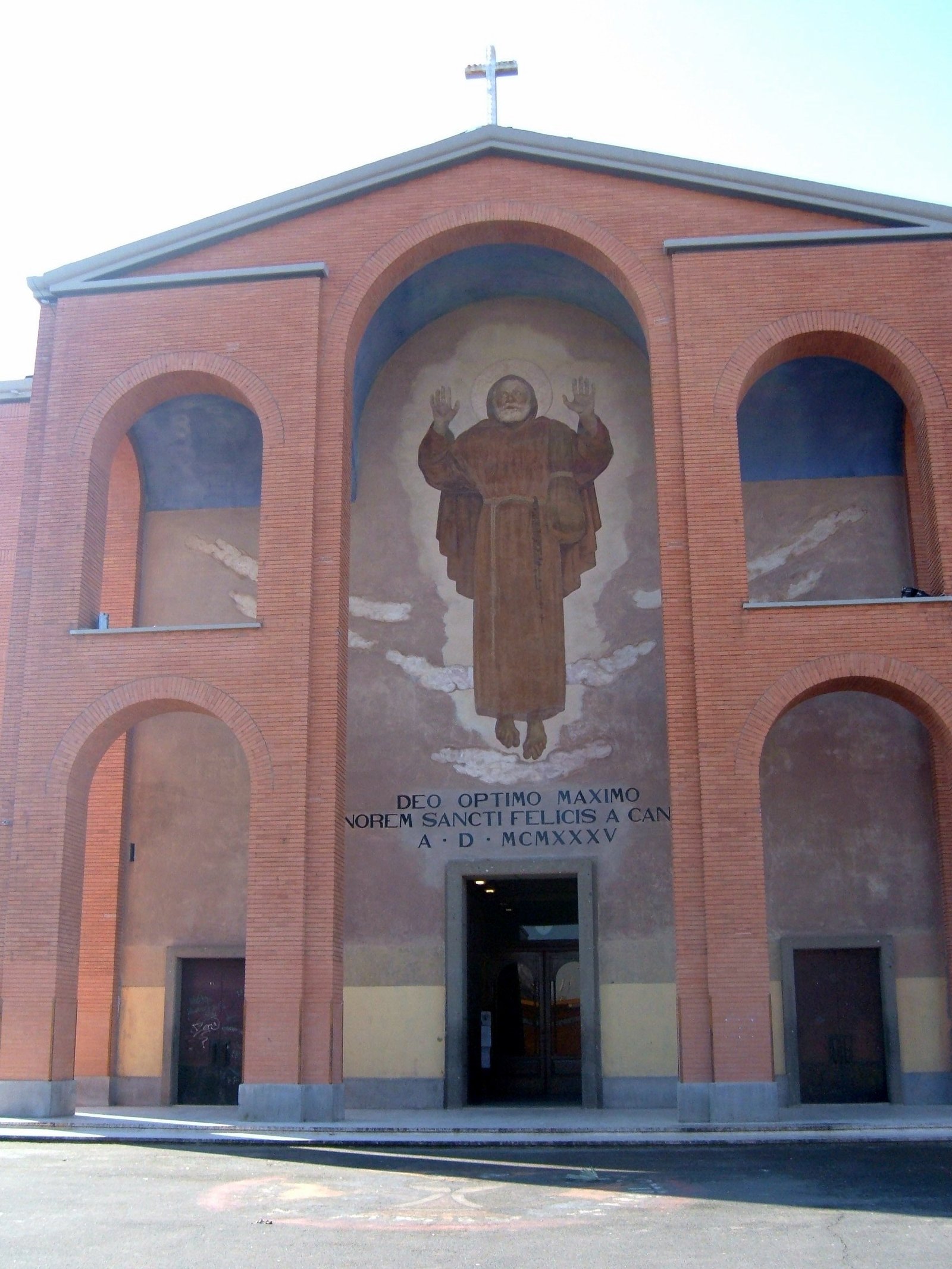
Itinerario narrativo diffuso, the church walks in Rome's outskirts run by the social promotion association Ottavo Colle, after the stops on Sunday, October 11, 2026, in Centocelle, at the church of San Felice da Cantalice in Piazza di San Felice da Cantalice 20, and on Sunday, October 18, in Corviale, at the church of San Paolo della Croce at Via Poggio Verde 319, continues on Sunday, November 22, in Arco di Travertino, at the church of San Gaspare del Bufalo at Via Borgo Velino 1, and on Sunday, November 29, in Primavalle, at the basilica of Santa Maria della Salute in Piazza Alfonso Capecelatro. All events run from 10:00 to 12:00, meeting in front of the church. For the project's stops the association indicates a free contribution, at a reduced cost compared to its regular events, and free participation for those under 18. Booking is mandatory using the form on Ottavo Colle's official website or at prenotazioniottavocolle@gmail.com, at least 48 hours before the start. To reach the individual churches by public transportation it's best to use the ATAC journey planner.
Language: performed in Italian. No English version or English surtitles are announced.
Itinerario narrativo diffuso: dates, times, meeting point and booking
Itinerario narrativo diffuso is a cycle of five walks, from September 27 to November 29, 2026, each devoted to a church on the outskirts and the neighborhood around it. The first three stops, in Casal Bruciato on September 27, in Centocelle on October 11 and in Corviale on October 18, have already taken place. The last two remain.
The calendar
Sunday, October 11, Centocelle, Municipio V: church of San Felice da Cantalice. Sunday, October 18, Corviale, Municipio XI: church of San Paolo della Croce. Sunday, November 22, Arco di Travertino, Municipio VII: church of San Gaspare del Bufalo. Sunday, November 29, Primavalle, Municipio XIV: basilica of Santa Maria della Salute.
Times
All events run from 10:00 to 12:00. For the Casal Bruciato stop the association gave a length of two hours and a route of about two kilometers on foot.
Meeting point
The association always meets in front of the individual church. From there you walk through the neighborhood hearing about its social and urban development. The starting address is confirmed in the booking confirmation email.
Booking and costs
Booking is mandatory and done with the membership request form on Ottavo Colle's website, at least 48 hours before the start. Sending the request doesn't guarantee a place: confirmation arrives by email. If the minimum of 15 participants isn't reached 48 hours beforehand, the event is canceled and the cancellation is communicated by email. For the project's stops the association's listing gives the contribution as free. Those under 18 take part for free.
The project: looking at the outskirts through their heritage
Itinerario narrativo diffuso, Passeggiate pedagogiche nelle chiese di periferia a Roma (Educational walks in the churches of Rome's outskirts), is a project by the social promotion association Ottavo Colle, carried out with the support of Roma Capitale, Zètema Progetto Cultura and Roma Capitale's Department for the Outskirts.
The idea
Rome's official tourism portal presents the project with a simple idea: Rome's outskirts hold places, architecture and stories that deserve to be known and told. The five walks invite you to look at the outskirts from the point of view of their architectural and cultural heritage too, and to rediscover the value of a heritage that's part of the neighborhoods' everyday life.
Why churches
Churches on the outskirts are often the most ambitious buildings in their neighborhoods, designed by leading architects and engineers: the stops on this itinerary feature Pier Luigi Nervi, Saverio Busiri Vici, Mario Paniconi and Giulio Pediconi. They're also the places where the social history of the neighborhoods can be read clearly: founding dates, decrees, papal visits, religious communities.
Walks, not visits
The format is Ottavo Colle's: not a guided tour of the church interior, but a walk that starts from the church and crosses the neighborhood, telling the story of its social and urban development. The church is the starting point, the neighborhood is the subject.
Public support
The support of the Department for the Outskirts explains the reduced cost of the stops compared to the association's regular events, and the project's goal: getting Romans to know neighborhoods of their own city they rarely pass through.
The four stops from October 11, one by one
The four walks from October 11 touch four different parts of the city, from the east to the southwest to the northwest, and four churches built between the 1930s and the 1980s.
October 11: Centocelle and San Felice da Cantalice
The church of San Felice da Cantalice, in Piazza di San Felice da Cantalice, in the Prenestino Centocelle district, was built between 1934 and 1935 to a design by architects Mario Paniconi and Giulio Pediconi and consecrated on October 2, 1941, by Cardinal Luigi Traglia. The parish was established on March 29, 1935, by the decree Sollicitudo omnium ecclesiarum and is entrusted to the Capuchin Friars Minor. Since April 29, 1969, it has held the cardinal's title of San Felice da Cantalice a Centocelle.
What San Felice da Cantalice is like
The Centocelle church has a gabled shape, with brick cladding on the outside. On the facade, inside a large arch supported by pillars, is Rodolfo Villani's painting of Saint Felix praying. Near the entrance an ancient column of cipollino marble, topped by a wrought iron cross, bears a 19th-century inscription dedicated to Jesus protector of the world. The interior has a nave and two aisles, the aisles very narrow and separated from the nave by cylindrical pillars decorated with mosaics. In the apse, lit by a large skylight, a shrine of two tall columns frames the mosaic with the Madonna and Child and Saint Felix.
October 18: Corviale and San Paolo della Croce
The church of San Paolo della Croce, on Via Poggio Verde, was built in 1983 to a design by architect Ennio Canino and inaugurated on April 16 of that year. The parish had been established on July 1, 1977, by the decree Il Sommo Pontefice of Cardinal Vicar Ugo Poletti. Since May 25, 1985, the church has held the cardinal's title of San Paolo della Croce a Corviale.
November 22: Arco di Travertino and San Gaspare del Bufalo
The church of San Gaspare del Bufalo was built between 1976 and 1981 to a design by engineer Pier Luigi Nervi and consecrated on October 24, 1981, by Cardinal Ugo Poletti. The parish, established on March 19, 1961, by the decree Cum in regione of Cardinal Luigi Traglia, is entrusted to the priests of the Congregation of the Missionaries of the Most Precious Blood, owners of the church, whose founder the church is named after.
November 29: Primavalle and Santa Maria della Salute
The basilica of Santa Maria della Salute, in Piazza Alfonso Capecelatro, was designed in 1949 and built between 1950 and 1958, in rationalist style, to a design by architect Giorgio Guidi. It was consecrated on March 18, 1960, by Cardinal Luigi Traglia. It's entrusted to the Franciscans of the Third Order Regular of Saint Francis.
The first stop: Casal Bruciato and Santa Maria della Visitazione
The cycle started on Sunday, September 27, 2026, from the church of Santa Maria della Visitazione, on Via dei Crispolti, in the Casal Bruciato district, Municipio IV. Even if you didn't take part you can find its meaning in the history of the church.
A tour de force of reinforced concrete
The church was built between 1965 and 1971 to a design by architect Saverio Busiri Vici and consecrated on October 22, 1971, by Monsignor Ugo Poletti. Quercioli called it a tour de force of reinforced concrete, with huge vertical curved ribs intersected by horizontal tiers, a kind of pagoda.
The bell tower and the interior
The bell tower is cylindrical, made of columns and projecting concrete elements. The interior is vast and almost undecorated. Worth noting is the sculptural group of the Visitation by South Tyrolean sculptor Vincenz Mussner.
The parish and the popes
The church had been a subsidiary chapel since 1959 and has been a parish seat since March 30, 1960, by the decree Qua celeritate of Cardinal Vicar Clemente Micara. It was visited by Pope Paul VI in the 1970s and by John Paul II on January 20, 1985.
A curious fact about the Itinerario narrativo diffuso to the churches of Rome's outskirts, October 11 to November 29, 2026
The Arco di Travertino stop leads to a church designed by engineer Pier Luigi Nervi. The church of San Gaspare del Bufalo, built between 1976 and 1981, is in exposed reinforced concrete, with a square plan, the main entrance at one of the corners and a pyramid-shaped copper roof, with shaped joints also in copper. The bell tower stands apart from the main body and is made of seven reinforced concrete pillars holding the bells.
The interior is built like a modern hall: the floor slopes slightly down toward the altar and the pews are arranged in a semicircle. At the high altar there's a bronze triptych by Raoul Vistoli with Jesus crucified, Mary and Gaspare del Bufalo, and behind it a stained glass window with the Eucharistic symbols of bread and wine.
Then there's a historical detail few people know. A plaque at the back of the church recalls that on December 6, 1981, a few months after the assassination attempt, the church was visited by John Paul II. A church on the outskirts designed by Nervi and visited by the pope a few months after the attempt on his life: that alone justifies a Sunday morning in Arco di Travertino. The advice is to arrive a few minutes before 10:00 and go in, if the church is open, before the walk begins.
Who organizes it: Ottavo Colle and Irene Ranaldi
Ottavo Colle is a social promotion association founded 11 years ago by urban sociologist Irene Ranaldi, which presents itself as a pioneer in Rome of the rediscovery of local tourism.
An urban sociologist
Irene Ranaldi, according to the association's presentation, comes from Franco Ferrarotti's school of sociology and for 25 years has been walking through the city's outskirts and writing about them. She's the one who guides the eye on the walks.
Polyphonic seminars
The association describes its events as small polyphonic seminars rather than fact-laden guided tours: the city is explored through all its voices, the social sciences, architecture, fiction, poetry, street art.
A critical eye on tourism
Ottavo Colle insists it isn't a cultural association that does tourism: if anything it highlights tourism's distortions, that is, gentrification and touristification. A clear position, which gives the walks a precise angle.
The regular terms
For its regular events in Rome the association asks for an annual membership card of 5 euros and a contribution of 15 euros. People with disabilities and a companion pay 10 euros including the card, and there are agreements with some categories. The stops of this project have a reduced cost, given as free in the event listings.
Something nobody tells you about the Itinerario narrativo diffuso to the churches of Rome's outskirts, October 11 to November 29, 2026
What nobody tells you is that the walks can be called off. The association states it clearly in its terms and conditions: if the minimum of 15 participants isn't reached within the 48 hours before the event, it's canceled, and the cancellation is communicated by email. So it's not enough to show up in front of the church on Sunday morning: you have to book beforehand, and wait for confirmation.
The second thing concerns that very confirmation. Sending the membership request doesn't guarantee a place: the booking is valid only when the association replies with the confirmation email, which also contains the starting address. If you sign up at the last moment, close to the 48-hour limit, you risk not getting the reply in time.
The third concerns the cost. The listings for the stops give the contribution as free, and speak of a reduced cost compared to the association's other events. For regular events, though, Ottavo Colle asks for an annual card and a contribution. If you want to take part, it's best to clarify when booking if the card is required for these stops. It's a practical detail, but it avoids surprises on Sunday morning. The advice is to book a week ahead and, if the group is small, spread the word.
My advice for the Itinerario narrativo diffuso to the churches of Rome's outskirts, October 11 to November 29, 2026
The advice is to take part in both remaining stops, to grasp the meaning of the project. Arco di Travertino, on November 22, leads to a reinforced concrete church from 1981, by Pier Luigi Nervi. Primavalle, on November 29, leads to a rationalist basilica built between 1950 and 1958, by Giorgio Guidi. The comparison between the two Sundays tells 30 years of Roman religious architecture.
If you can only choose one, in our view Arco di Travertino is the one, on November 22, for Pier Luigi Nervi's church. Or Primavalle, on November 29, for the story of the borgata born in 1937 to take in Romans displaced from the historic center. They're the two stops where architecture and social history can be read most powerfully.
Comfortable shoes, always: the walk lasts two hours and, judging by the first stop, covers about two kilometers. Bring water and, in November, an umbrella. And go in the right frame of mind: not a textbook visit, but an open-air seminar, where the questions count as much as the answers. Urban sociology is done on foot.
How to get to the churches of the Itinerario narrativo diffuso
The four stops are in four different parts of the city. For each one it's best to use the ATAC journey planner, entering the church's address as the destination.
Centocelle
Church of San Felice da Cantalice, Piazza di San Felice da Cantalice 20, Municipio V, Prenestino Centocelle district.
Corviale
Church of San Paolo della Croce, Via Poggio Verde 319, Municipio XI, Corviale.
Arco di Travertino
Church of San Gaspare del Bufalo, Via Borgo Velino 1, Municipio VII. The church is in the Tuscolano district, with an entrance also from Via Rocca di Papa.
Primavalle
Basilica of Santa Maria della Salute, Piazza Alfonso Capecelatro, Municipio XIV, Primavalle, at the end of Via Federico Borromeo.
By car
The churches are outside the limited traffic zone of the center, and on Sunday morning traffic is generally lighter. The meeting point is in front of the church: arrive a few minutes early to find parking.
Another well-known fact, yet rarely mentioned
Everyone knows that Rome's borgate were born partly to take in residents displaced by the demolitions in the historic center. It's less often remembered how much the history of these borgate can be read in their churches. Primavalle is the clearest example: the borgata grew up from 1937 to take in about 7,000 or 8,000 Romans who had had to leave their homes in the historic center following the demolitions ordered by the Fascist government.
The urban plan was entrusted to architect Giorgio Guidi, and it included a church at the end of the borgata's main artery, today's Via Federico Borromeo. The design came in 1949. The next year the convent of the Franciscans of the Third Order Regular opened, wanted by the minister general Giovanni Enrico Boccella, and on September 30, 1950, the parish was established. Construction lasted until 1958. In the 1960s and 1970s the church was enriched with paintings, mosaics and stained glass, largely donated by Canadian Catholics.
A borgata born from a displacement, a church built when temporary housing had become home, gifts arriving from across the ocean: it's exactly the kind of story the Itinerario narrativo diffuso wants to tell. The church as the neighborhood's archive.
The right photo to take on the Itinerario narrativo diffuso to the churches of Rome's outskirts, October 11 to November 29, 2026
The right photo of this itinerary is the church with the neighborhood around it: not the isolated architectural detail, but the building in its context, with the apartment blocks, the streets, the Sunday morning people. It's the very meaning of the project: the church as a starting point for reading a piece of the city.
The most photogenic stop is probably Arco di Travertino, on November 22. Pier Luigi Nervi's church, with a square plan, a pyramid-shaped copper roof and the freestanding bell tower of seven pillars, has a sharp geometry that photographs well, especially in the low light of late November. Frame the pyramid and the bell tower together: two essential forms, side by side.
In Centocelle, the October 11 stop, look for the gabled brick facade of the church of San Felice, with Rodolfo Villani's painting of the praying saint in the large arch, and the ancient cipollino marble column with the wrought iron cross near the entrance. In Primavalle, on November 29, the right perspective is along Via Federico Borromeo, with the church at the end of the axis, as the urban plan intended. During services, no photos inside.
The four neighborhoods of the itinerary
The four stops cross very different neighborhoods, in history and urban form, spread over four Municipi.
Centocelle, Municipio V
The Prenestino Centocelle district is in the eastern part of the city. The church of San Felice, from 1934 and 1935, has had its parish entrusted to the Capuchin Friars Minor since 1935. If you want to extend the day in the eastern part of the city you can reach the Mausoleum of Sant'Elena.
Corviale, Municipio XI
Corviale is in the southwest, in Municipio XI. The parish of San Paolo della Croce was established in 1977 and the church built in 1983. In summer Corviale hosts one of the free open-air cinemas of Vivi il cinema.
Arco di Travertino, Municipio VII
Arco di Travertino is in the southeast, in Municipio VII. Nervi's church is in the Tuscolano district. The same Municipio is home to the Quadraro and the Aqueducts Park.
Primavalle, Municipio XIV
Primavalle, in the northwest, is a borgata built from 1937 between what were then the Aurelio and Trionfale suburbs, to an urban plan by Giorgio Guidi.
Some important events that happened here in history
The history of the itinerary's churches covers half a century of Rome. It begins in 1934 and 1935, when in Centocelle Mario Paniconi and Giulio Pediconi built the church of San Felice da Cantalice. The parish was born on March 29, 1935, the consecration came on October 2, 1941. In 1937 the borgata of Primavalle began to rise, for the Romans displaced by the demolitions in the center.
The postwar period was the time of new parishes. On September 30, 1950, that of Santa Maria della Salute in Primavalle was born. The church, built until 1958, was consecrated on March 18, 1960, and two days later received a visit from Pope John XXIII. The same month, on March 30, 1960, the parish of Santa Maria della Visitazione in Casal Bruciato was established. On March 19, 1961, that of San Gaspare del Bufalo.
On April 29, 1969, Pope Paul VI created on the same day the cardinal's titles of Santa Maria della Salute a Primavalle and San Felice da Cantalice a Centocelle. In 1971 Saverio Busiri Vici's church in Casal Bruciato was consecrated. On July 1, 1977, the parish of San Paolo della Croce in Corviale was born.
The 1980s closed the circle: on October 24, 1981, Cardinal Ugo Poletti consecrated Pier Luigi Nervi's church of San Gaspare del Bufalo, visited on December 6 by John Paul II. On November 15 of the same year the pope had been to Primavalle. On April 16, 1983, San Paolo della Croce was inaugurated, and on May 25, 1985, the church received the cardinal's title of San Paolo della Croce a Corviale.
Who has passed through the Itinerario narrativo diffuso to the churches of Rome's outskirts, October 11 to November 29, 2026
Three popes have passed through the churches of this itinerary. John XXIII visited Santa Maria della Salute in Primavalle on March 20, 1960, two days after its consecration. Paul VI went to Santa Maria della Visitazione in Casal Bruciato in the 1970s, and on April 29, 1969, created the cardinal's titles of Primavalle and Centocelle. John Paul II visited the Primavalle parish on November 15, 1981, San Gaspare del Bufalo on December 6, 1981, a few months after the assassination attempt, as a plaque recalls, and Casal Bruciato on January 20, 1985.
Then the cardinals and bishops who shaped the life of the parishes: Luigi Traglia, who consecrated San Felice in 1941 and Santa Maria della Salute in 1960 and signed the decree for San Gaspare in 1961. Clemente Micara, Francesco Marchetti Selvaggiani, Ugo Poletti, who consecrated the Visitazione in 1971 and San Gaspare in 1981 and established the Corviale parish.
And the designers: Pier Luigi Nervi, Saverio Busiri Vici, Mario Paniconi and Giulio Pediconi, Giorgio Guidi, Ennio Canino. The artists: Rodolfo Villani, author of the praying Saint Felix on the Centocelle facade. Raoul Vistoli, with the bronze triptych at San Gaspare. Vincenz Mussner, with the Visitation in Casal Bruciato. Today, with Irene Ranaldi and Ottavo Colle, Romans curious about their own city also pass through these churches.
Accessibility and taking part with children
The walks take place outdoors, on the neighborhoods' streets, for about two hours. People with disabilities and a companion have discounted terms at the association's regular events. For specific needs it's best to write to Ottavo Colle when booking.
With children and teenagers
Those under 18 take part for free. For high school students an urban sociology walk in their own part of the city can be an open-air civics lesson. For younger children, two hours of walking and storytelling should be weighed.
The weather
November walks may meet rain: any changes are communicated by the association by email.
How to plan the Sunday
Each stop takes up a Sunday morning, from 10:00 to 12:00, and lends itself to being extended with lunch in the neighborhood.
Where to eat
Centocelle, Corviale, Arco di Travertino and Primavalle have neighborhood bars, bakeries, pizzerias and trattorias, frequented mostly by residents. At the end of the walk it's worth asking the guide or the residents met along the way for a recommendation.
October and November in Rome
The two October stops fell in a still mild period. The November ones call for heavier clothes. The low light of late November, though, is well suited to observing architecture in concrete and brick.
Ottavo Colle's other events
The association's autumn calendar also includes the walks of the Lungo la Linea C project, an urban foray toward the creation of an ecomuseum of industrial archaeology in the Testaccio Ostiense area and a special opening of Monte Testaccio. If you like reading the city through street art there's also our guide to street art in Rome.
Frequently asked questions about the Itinerario narrativo diffuso
When are the next walks in the churches of the outskirts?
The next walks of Ottavo Colle's Itinerario narrativo diffuso are on Sunday, November 22, in Arco di Travertino and Sunday, November 29, 2026, in Primavalle, always from 10:00 to 12:00. The Centocelle and Corviale stops took place on October 11 and 18.
How much does it cost to take part?
For the stops of the Itinerario narrativo diffuso, Ottavo Colle indicates a free contribution, at a reduced cost compared to its regular events, and free participation for those under 18. For regular events the association asks for an annual card of 5 euros and a contribution of 15 euros.
How do you book?
Booking for Ottavo Colle's walks is mandatory and done with the membership form on the association's website, at least 48 hours before the start. For information there's the address prenotazioniottavocolle@gmail.com. A place is guaranteed only after the confirmation email.
Where do you meet?
The meeting point of the Itinerario narrativo diffuso is always in front of the church of the stop: San Felice da Cantalice in Centocelle, San Paolo della Croce in Corviale, San Gaspare del Bufalo in Arco di Travertino, Santa Maria della Salute in Primavalle. The address is confirmed by email.
Can the walk be canceled?
Yes: if 15 participants haven't signed up 48 hours before the event, Ottavo Colle cancels the Itinerario narrativo diffuso walk and communicates it by email. So it's best to book ahead.
Who leads the walks?
The walks are organized by Ottavo Colle APS, an association founded by urban sociologist Irene Ranaldi, trained in Franco Ferrarotti's school, who for 25 years has been walking through and telling the story of Rome's outskirts.
Who supports the project?
The Itinerario narrativo diffuso is carried out by Ottavo Colle with the support of Roma Capitale, Zètema Progetto Cultura and Roma Capitale's Department for the Outskirts.
Final advice on the Itinerario narrativo diffuso
The advice is to book the Arco di Travertino stop on November 22 right away: a Pier Luigi Nervi church told by an urban sociologist is an opportunity you won't find in tourist guides. And if you're also free the following Sunday, it's worth completing it with Primavalle on November 29: it's a neighborhood many Romans know only by name, and two hours on foot with someone who knows how to read it change the way you look at it. All that matters is booking in time, at least 48 hours before the event.
Article written by the editorial team of Tour Leader Pro, contact them for Private/Corporate/V.I.P. Tours and Experiences.
Planning a trip to Rome? English guides for visiting the city are on ItalyPlanner.com.
Contact Information
Nearby
 Church of San Felice da Cantalice100 m
- Centocelle600 m
- B-Folk800 m
- Casa della Cultura di Villa De Sanctis1.3 km
- Circolo Sportivo Villa De Sanctis1.4 km
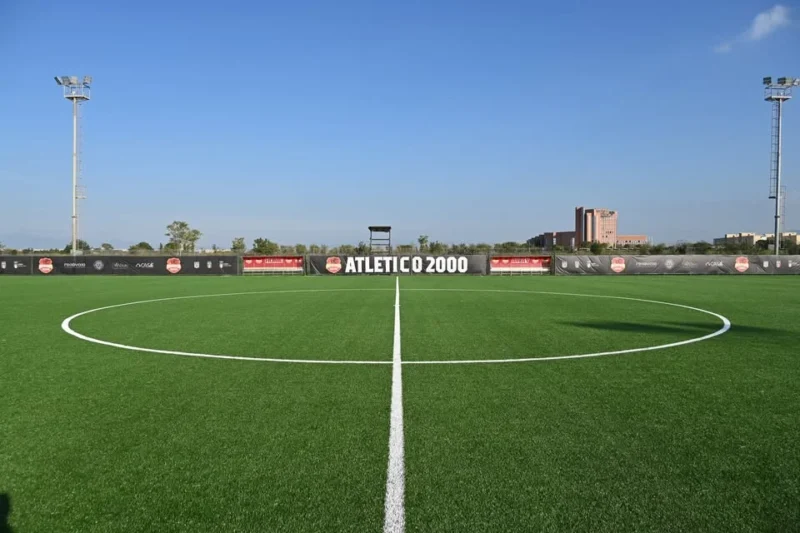
- Atletico 2000 Sports Center1.4 km
Upcoming events nearby
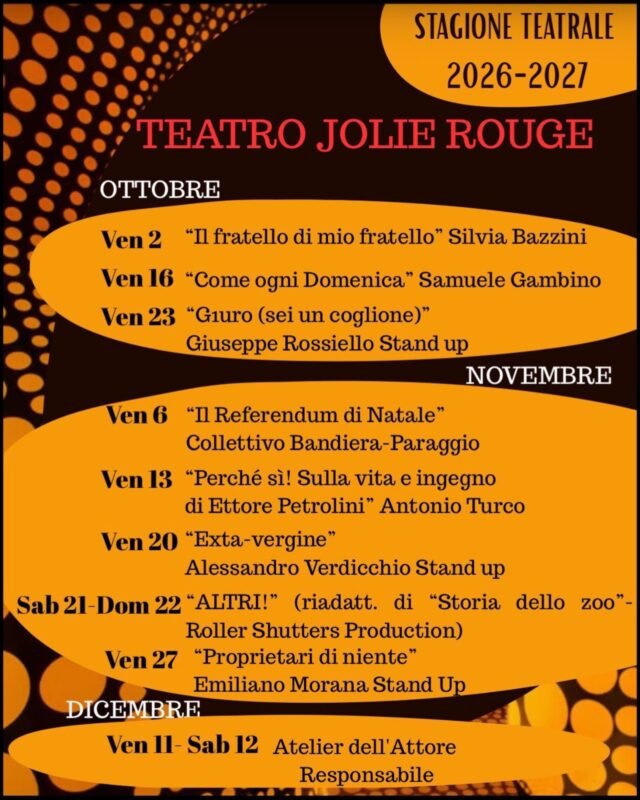
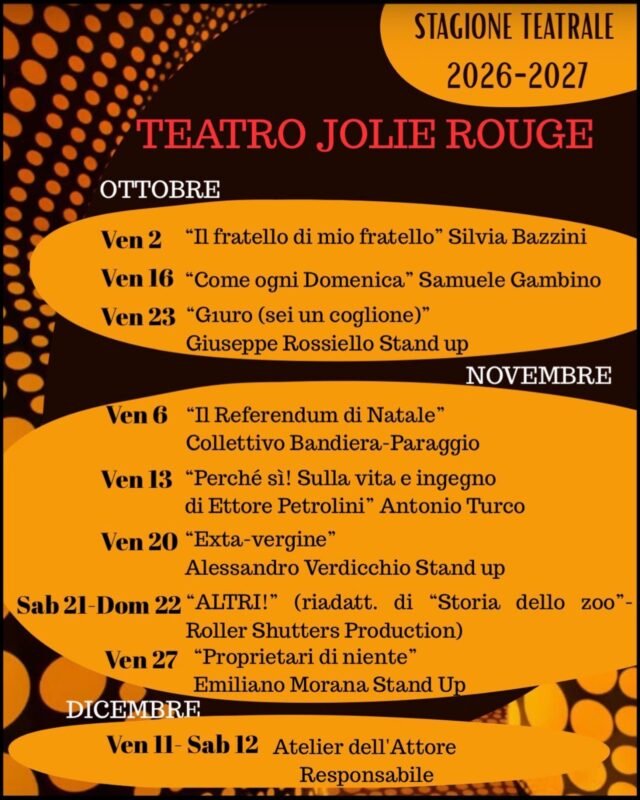
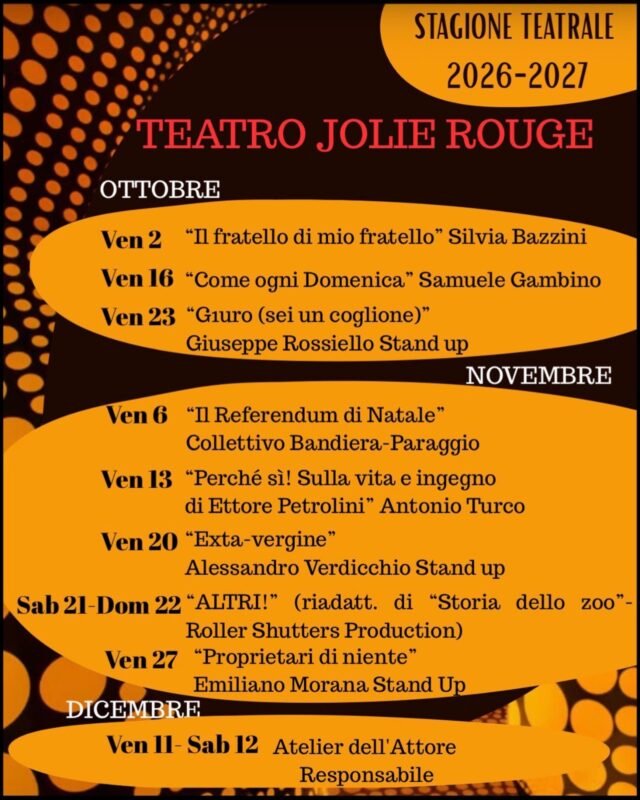
- Il Referendum di Natale, Collettivo Bandiera-Paraggio at Teatro Jolie Rouge, November 6, 2026200 m
- Perché sì! On the life and wit of Ettore Petrolini, by Antonio Turco at Teatro Jolie Rouge, November 13, 2026200 m
- Exta-vergine, stand up by Alessandro Verdicchio at Teatro Jolie Rouge, November 20, 2026200 m
- ALTRI! (a reworking of The Zoo Story), Roller Shutters Production at Teatro Jolie Rouge, November 21 and 22, 2026200 m

You might also like
- Il medico dei pazzi by Eduardo Scarpetta with Gianfelice Imparato at Teatro Tor Bella Monaca
- I cattivi pensieri at Teatro Elsa Morante, performances from October 24 to November 6, 2026
- Conigli by Salvo Di Paola at Hacienda Roma, November 30, 2026
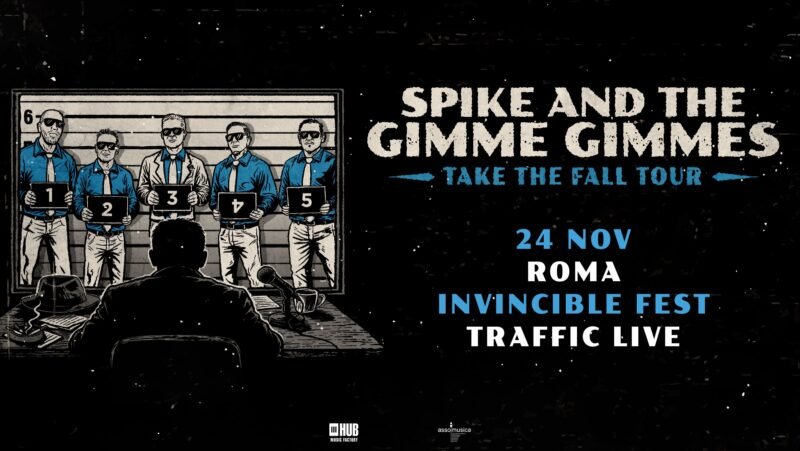
- Spike and the Gimme Gimmes at Traffic Club, November 24, 2026
- The Molotovs at Hacienda Roma, November 11, 2026
- Shiva at Palazzo dello Sport in Rome, November 28 and 29, 2026