Circolo Sportivo Villa De Sanctis
In short. The Villa De Sanctis Sports Club is a municipal sports center that lives inside a public park, and this double nature explains almost everything there is to understand.
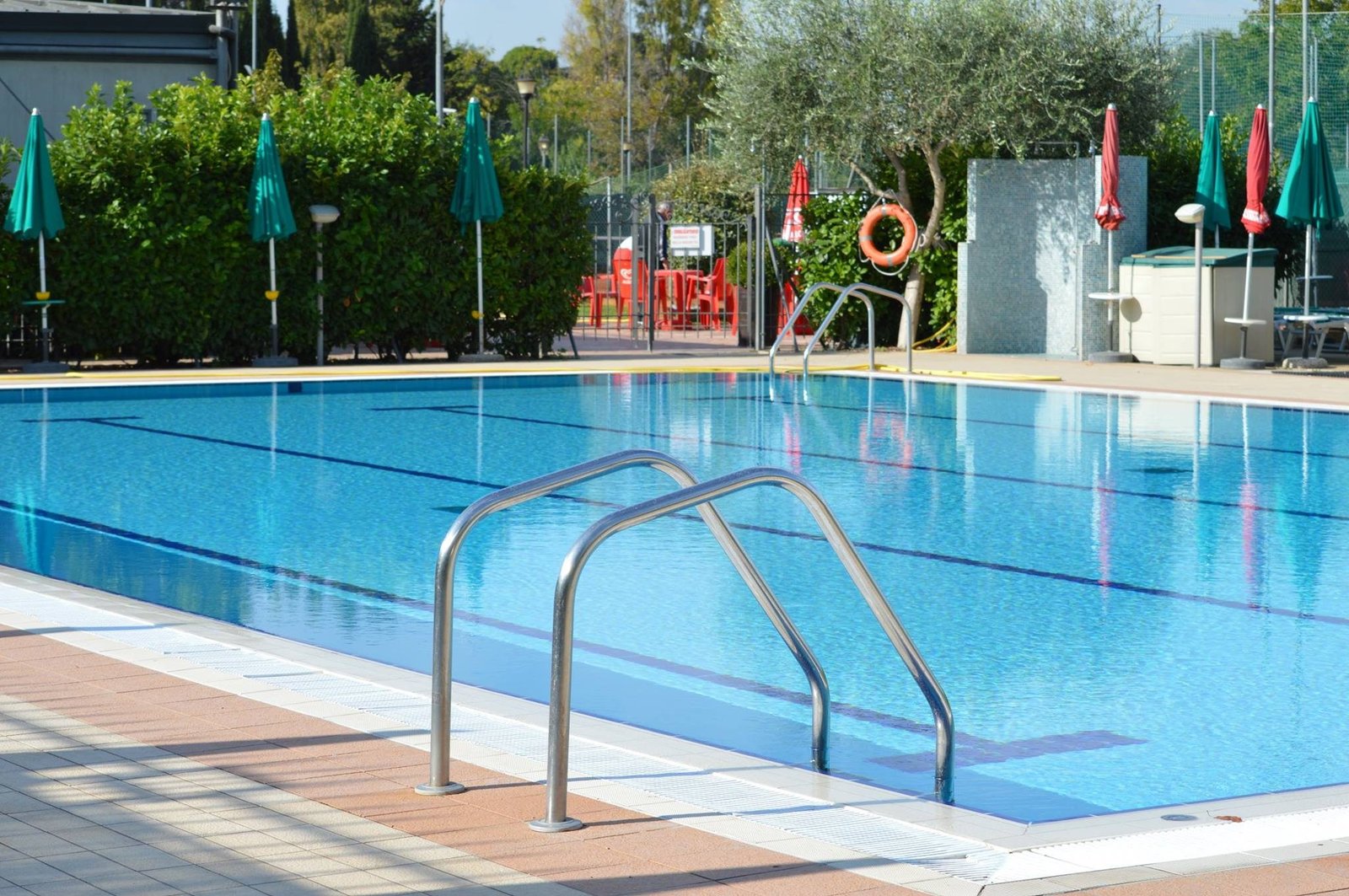
The Villa De Sanctis Sports Club is a municipal sports center that lives inside a public park, and this double nature explains almost everything there is to understand. The operating address is Via dei Gordiani 5, in Municipio V, but the door almost everyone knows faces the Casilina, because the Villa De Sanctis park has a gate right there, between Torpignattara and Centocelle, in one of the densest and most lived-in stretches of the city outside the walls. Inside there are clay tennis courts, five-a-side soccer fields, a soccer school, and above all the outdoor pool that in summer becomes the real reason why half the eastern quadrant knows this address.
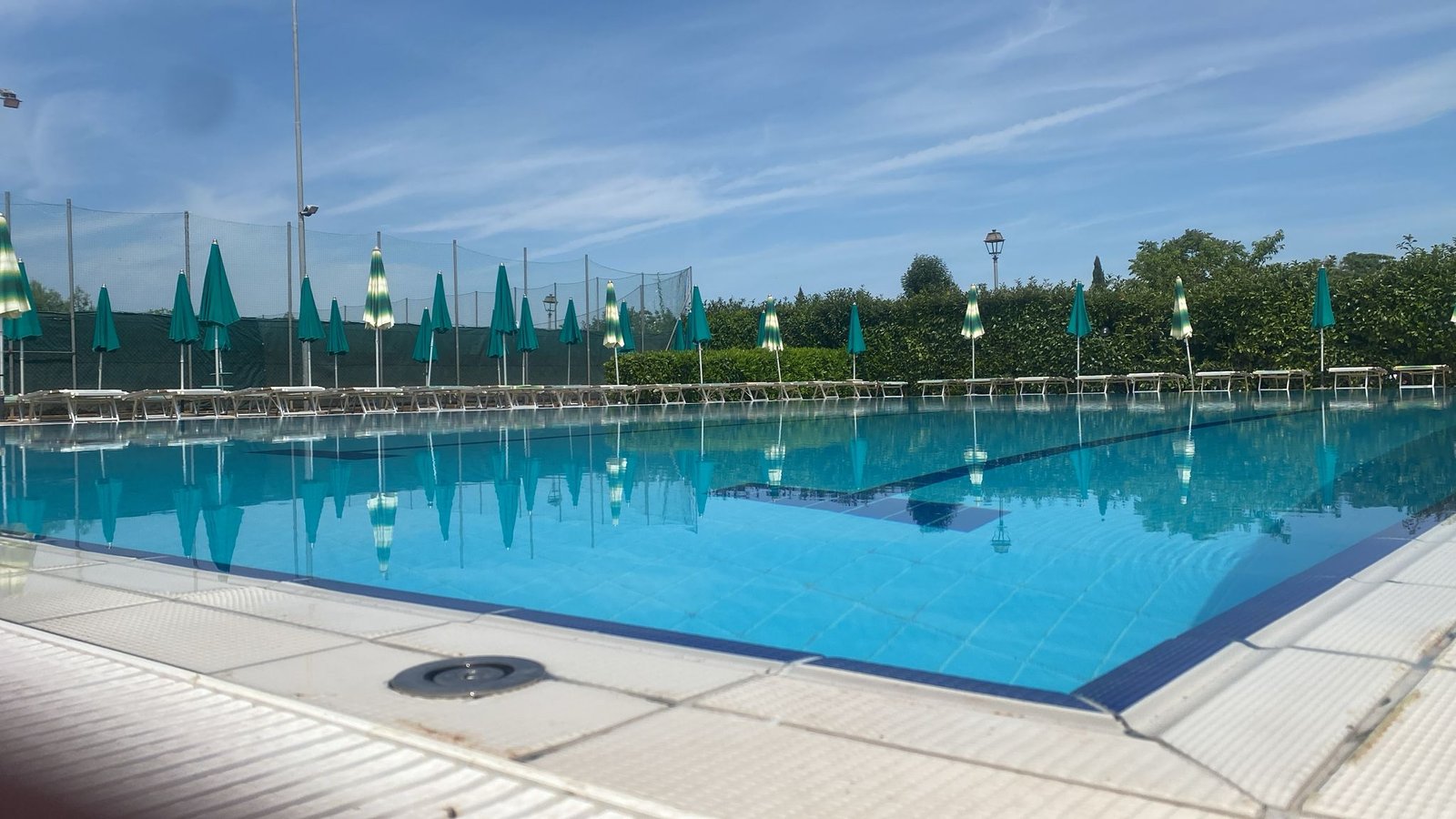
I often tell foreign visitors that Rome has two pool systems: those of the big clubs, which cost money and are found where the neighborhoods are wide and green, and the municipal ones inside parks, which cost much less, fill up with neighborhood families and appear in no guidebook. Villa De Sanctis belongs to the second category in exemplary fashion. It's not a spectacular facility, it has no Olympic pools, no slides. It has an outdoor pool, lawn around it, loungers and umbrellas, locker rooms with hot showers, a refreshment point, a picnic area, unguarded outdoor parking and the lifeguard. It's exactly what you need for a July day in Rome when at home it's 38 degrees Celsius and the sea is 40 minutes of traffic away.
The first thing I'd like to clarify concerns the calendar, because it's the point on which most confusion arises. The sports club works all year: tennis, five-a-side, courses, office, events, parties, the summer camp for kids. The outdoor pool instead has a season, like every open-air pool in this city. It opens when the heat makes it sensible and closes when the heat ends. At the moment I'm writing, in mid-September, the pool part of the sports association's site has already turned the page: the message that greets those looking for the ticket points to next summer. Anyone arriving now thinking of diving in will make a wasted trip. Anyone arriving for a tennis match or to enroll a child in the soccer school finds everything open as usual. The difference is clear and worth keeping in mind before setting out.
The rest of these lines serves to put together the two halves of the matter: on one side the club, how it works, how long the pool season lasts, how the shifts are organized, what to expect from a day inside. On the other the context, which here is extraordinary and almost nobody mentions it. Because the lawn on which you lay your towel is inside a park that borders one of the best-preserved imperial mausoleums of Rome, above a system of catacombs among the most important of ancient Christendom, in a piece of city that gave its name to an entire neighborhood starting from the terracotta amphorae walled into a vault in the fourth century.
Where the Villa De Sanctis Sports Club Really Is
Geographically we are on the south side of Via Casilina, around number 641 and surroundings, in that stretch where the consular road stops being center and becomes a compact working-class neighborhood. The Villa De Sanctis park occupies a green rectangle squeezed between the Casilina and Via dei Gordiani, and right on Via dei Gordiani, at number 5, is the entrance that the sports association indicates as its own. On one side Torpignattara, on the other Centocelle: two place names that tell two different historical layers of the same area and that are worth keeping separate, because the locals keep them very separate.
Anyone arriving by car finds unguarded outdoor parking, which in Roman language means you almost always find a spot but nobody answers for your car. Anyone arriving by metro has Line C, which runs along this very axis and serves the quadrant with local stops. From platform to gate you walk, not that much, but you walk, and in July that stretch of asphalt at two in the afternoon is felt. Anyone arriving by bus has the network of lines that goes up the Casilina and the Prenestina, plus the tram that cuts east from Porta Maggiore. The practical advice is always the same: whatever means you use, arrive early and go back late, because a Roman August noon on a consular road is not a pleasant walk.
The location inside a public park changes the perception of the facility. You don't enter through a lobby, there's no atrium with signs. You cross a garden, pass people walking dogs and kids playing ball on the open lawn, and then you reach the club's fence. This continuity is why many Romans of the neighborhood don't clearly distinguish between the park and the sports association: for them it's a single place, where one part is free and open and another part requires the ticket or the membership card.
The Villa De Sanctis Park, That Is the Container
The park is also officially called Parco Casilino Labicano, and the double name is a historical clue. Labicano comes from Via Labicana, the ancient Roman road that left Porta Maggiore toward Labicum, and which in modern times took the name Via Casilina in its extra-urban stretch. Walking here means walking next to a route that is more than 2,000 years old and has never stopped working: it's not a reconstructed archaeological road, it's a street on which buses run today.
From the Casilina gate starts a short avenue, with rock gardens and tuff seats in the shade of cypresses, and it's the only surviving testimony of the original layout of the 19th-century garden. At the end appears the farmhouse that gives its name to everything: a simple building, 16th-century in inspiration, built on two floors, with a terrace turret and an attached portico. The outer walls bear a sundial and marble fragments with inscriptions, which is a typical custom of suburban Roman villas: whatever the ground gave back when dug was walled into the facade. In an area like this, the ground gave back quite a lot.
Today that farmhouse hosts the Casa della Cultura di Villa De Sanctis, which is the civic piece of the park: spaces for meetings, readings, neighborhood activities, workshops. It's worth the small effort of looking at it even just from outside, because the contrast between the farmhouse with the sundial and the five-a-side fields 200 meters away tells how the Roman periphery works better than any essay. No break, no open-air museum: a historic villa, a cultural center, a municipal pool and a tennis court coexist in the same green enclosure and nobody finds anything strange in it.
The greenery is the typical kind of Roman parks of this type: stone pines, holm oaks, cypresses along the entrance avenue, lawns that in May are a carpet and in August turn to straw. There are play areas for children, benches, paths. It's not a postcard garden, it's a neighborhood park used intensively every day by thousands of people, and you can see it. Anyone looking for the perfect order of the historic gardens of the center won't find it here. Anyone looking for a living park will certainly find it.
Why That Name
The place name derives from the property: the villa bore the name of the family that owned it, and when the area passed to the Municipality the name stayed attached to the park, as happens with Villa Torlonia, Villa Ada, Villa Gordiani. It is an almost universal rule in Roman toponymy of public greenery: the name says who was there before, not what is there now. It's worth remembering because the closeness of Via dei Gordiani often generates a short circuit: the Villa Gordiani Park, with its imperial ruins, is another place, it's on the Prenestina, and shouldn't be confused with Villa De Sanctis even though the two quadrants look at each other.
The Outdoor Pool: How the Season Works
Let's talk about the pool, which is the reason most people look for information on this address. The Villa De Sanctis pool is a municipal outdoor pool, run by the sports association, and its season follows the calendar of Roman heat. I'm not giving opening and closing dates because they change from year to year and are communicated by the facility as the season approaches: the only sensible thing is to check the sports association's channels toward the end of spring. What I can say is how it is organized, because that structure is stable and knowing it in advance saves you time and nerves.
The Shifts
Access works in shifts, and it's not a bureaucratic detail: it's the way the facility manages crowding. There is a half-day shift in the morning, a half-day shift in the afternoon, and the full-day ticket that covers both. The logic is that of all municipal open-air pools: whoever wants to spend the whole day pays more and holds the spot from the first hours to closing, whoever just wants to escape the worst hours buys a half day and frees the spot for others. The precise times of the shifts are posted in the office and published by the facility at the start of the season, and it's best to verify them directly because they have been revised compared to the past.
The Rates
Here I go carefully, and I'll explain why. Lists of prices for this pool circulate online without indication of the year they refer to, and it's the best way to get someone to the ticket window with the wrong figure in their pocket. The structure of the price list, that yes, is stable. There is a full-day ticket and a half-day one. There is a difference between weekdays and Saturday with holidays, with holidays costlier on the full day. There is a reduced rate for children in a defined age band, which normally doesn't include the lounger. There is a reduction dedicated to people with disabilities. The lounger, in full-price tickets, is normally included in the price, and this is a detail that makes a difference compared to other facilities where you pay separately. The updated amounts are given by the facility, at the office or on its official channels, and they are the only source I advise you to use.
Booking
The poolside spot can be booked, even online, and it's a feature worth using on peak days. The facility recommends pre-purchasing the ticket at the office for the busiest days, which as you can easily imagine are holidays and weekends in high summer. Pre-purchase also lets you choose the position, subject to availability, up to a week in advance. One point to remember: booking is not done by phone. Anyone who calls hoping to reserve two loungers for Sunday gets the same answer as everyone, that is that you have to come by the office or use the online channel.
Refunds and Bad Weather
The rule declared by the facility is straightforward and worth knowing before, not after. Admissions purchased or pre-purchased are not refunded if the pool service is nonetheless guaranteed: translated, if you change your mind or your plans fall through, the ticket remains valid but the money does not come back. If instead the facility has to close for weather reasons or in any case causes not attributable to the organization, the admission is recovered on another date to be agreed with the staff. It's a reasonable formula, and in a city where in July and August afternoon thunderstorms arrive suddenly it's a concrete protection.
Services Around the Pool
The list is that of a good municipal pool, without frills and without serious gaps. There is the lifeguard, who is not an option but a legal obligation and also the reason you can relax. There are locker rooms with hot showers. There is a picnic area, which deserves a separate mention because it changes the economics of the day: you can bring your own food and are not forced to spend at the bar. There is in any case an internal refreshment point, for those who prefer not to load up the cooler bag. There is the outdoor, unguarded parking. And there is the lawn, which is the least cited service and the most important, because it lets a family settle in the shade of a tree instead of on a lounger in the sun.
Common-Sense Rules That Matter Here
In a municipal open-air pool, coexistence is everything. The swim cap, where required, must be worn. Sandals are needed. The shower before entering the water is not a formality but the reason the water stays treatable with fewer chemicals. The picnic zone is also the smoking zone, which means around the pool smoke is unwelcome. Children above a certain age enter with a full ticket, so don't count on a generic free admission for older kids. And then the simplest thing: umbrellas and loungers are assigned, they aren't moved at will, and the spot they gave you is yours. It sounds trivial, but in facilities like this the arguments start right there.
Tennis, Five-a-Side and the Rest of the Year
Off season the club doesn't close, it only changes its center of gravity. Tennis is the most solid vocation: clay courts, coaches, courses for adults and for kids, start-of-season open days announced at the office. Clay in Rome is not a whim, it's the surface on which a good part of Italian tennis was formed, and it's also the one that forgives the knees most of those who have passed 40. Anyone who plays knows that a well-kept clay court requires daily work, watering, dragging the net, and that a municipal club that maintains it well performs a service you don't see but feel underfoot.
Five-a-side soccer occupies two fields and a soccer school, which in the neighborhood means far more than it seems. The municipal sports centers of this band of the city are, very concretely, the place where kids spend their afternoons. It's not rhetoric about the periphery: it's a measurable social function, seen in the parents sitting at the edge of the field and the younger siblings waiting with their school backpack still on.
The sports association also organizes a summer camp for children and teens during the weeks when schools are closed, parties and private events in the club's spaces, and keeps a refreshment point open at set hours. Curiously, the office also works as a pickup and shipping point for parcels for several delivery networks, which is the kind of detail that perfectly describes how a neighborhood sports club becomes a service node for those living around it. It's not sport, it's not culture, it's simply the place you pass through anyway.
A Curiosity About the Villa De Sanctis Sports Club
The curiosity I prefer concerns the name of the neighborhood that surrounds you while you swim, and starts from a brick vault built in the fourth century a few hundred meters from the pool. The Mausoleum of Saint Helena, which Romans have always called Tor Pignattara, is an imposing circular building erected at the will of Constantine, and its roof was lightened with a technique that was normal then and seems ingenious to us now: rows of empty terracotta amphorae were embedded in the masonry of the dome, arranged to reduce weight without removing strength. Those amphorae, in Roman dialect, are the pignatte. From there, from the sight of those pignatte emerging in the vault of an ancient tower, the name Tor Pignattara was born, and from that name the name of the whole neighborhood.
I find it to be one of the most beautiful stories in Rome's toponymy, and its beauty is in the mechanism: not an emperor, not a saint, not a battle, but a construction detail observed from below by generations of farmers and then of borgata dwellers, who at a certain point christened the place with the thing they saw. An entire neighborhood of tens of thousands of inhabitants bears the name of a structural device of the fourth century. Anyone leaving the sports club with hair still wet and taking the Casilina toward the center passes exactly in front of the thing that gave its name to everything around them, and almost nobody knows it.
There is a second level, and it concerns the person for whom that mausoleum was built, or rather the person who ended up inside it because of a change of plans. The building was in all likelihood meant to receive Constantine himself: it was the dynastic mausoleum attached to the imperial property of this area. Then the emperor shifted the center of gravity of the empire toward the east and chose another burial, and the Roman mausoleum received instead his mother Helena, who died around 330. The red porphyry sarcophagus that held her, enormous, decorated with military scenes that have little to do with an elderly Christian woman and a great deal to do with a male imperial project, is no longer there: it was moved and today is in the Vatican Museums. That porphyry is one of the most impressive objects produced by Roman antiquity, and its story begins 200 meters from the edge of a municipal pool.
The third curiosity, for those who love short circuits, is that the red porphyry of that sarcophagus came from a single quarry in the world, in the eastern Egyptian desert, and that its use was reserved for the imperial family. It means that to build the funerary container of a woman buried here, on the Labicana, a logistical system was set in motion that started from the Red Sea. Then the system ended, the empire moved, the quarry was lost for centuries, and around the mausoleum first fields grew, then vineyards, then the houses of the borgata, then apartment blocks, then a public park with a pool inside where in summer the neighborhood's kids learn to float. I don't know a better summary of what Rome is.
Something Nobody Tells You About the Villa De Sanctis Sports Club
What nobody tells you is that the lawn on which you spread your towel rests on one of the largest underground cemeteries of the ancient world, and that this cemetery is not a local curiosity but a central piece of the history of Christianity and, in the last 20 years, of European paleopathology.
Beneath this area extend the catacombs of Saints Marcellinus and Peter, one of the most extensive and most richly frescoed hypogeum complexes in Rome. The kilometers of galleries dug in the tuff preserve painting cycles of the third and fourth centuries that are among the oldest figurative documents of the Christian faith: the Good Shepherd, the orant, the biblical scenes summed up with few strokes, the funeral banquets. Anyone with even a minimal familiarity with early Christian art knows that these frescoes appear in all the textbooks. Anyone spending a July Sunday poolside does not.
What makes this complex truly exceptional, though, came later. Starting from the late 1980s and with great intensity from 2000 onward, excavation campaigns conducted by teams of archaeologists and anthropologists have brought to light, inside the system, spaces that were not individual tombs but collective deposits: chambers filled with hundreds of bodies, buried at the same time, with an abundance of gypsum, precious fabrics, amber, gold. Not a mass grave of the destitute, then, but an emergency burial of people who had means. The cautious estimates speak of several thousand individuals deposited within a very short time.
What can kill so many people in so little time and force orderly and even decorous mass burials? The main hypothesis is an epidemic, and the historical candidates are not lacking: the Roman second and third centuries know pestilential episodes of enormous scale. The analyses conducted on the remains have tried to look for genetic traces of the pathogens, with disputed and inconclusive results. What is certain is that under this quadrant there exists a biological archive of the Roman urban population that is worth, for knowledge of ancient daily life, as much as an archive of documents.
There is yet another layer, and it concerns the soldiers. Before the area became a Christian cemetery, here was the cemetery of the equites singulares Augusti, the emperor's personal mounted guard, an elite corps recruited in the frontier provinces. When Constantine won at the Milvian Bridge in 312, that corps had fought on the wrong side: it was disbanded, its barracks was dismantled, its cemetery was obliterated and on top of it the emperor had built the great circiform basilica dedicated to the martyrs Marcellinus and Peter, with the mausoleum for his own family attached. It's a damnatio memoriae done in concrete and marble: you erase the cemetery of your enemies and build your dynastic monument on top of it.
All this, I repeat, is under and next to a municipal sports center where in summer you pay a ticket for a lounger. I don't say it to create a scenic effect, I say it because it's the reason I recommend to anyone coming here to devote half an hour to the surroundings. The Roman catacombs are not all the same, and this complex in particular is not part of the mass tourist circuit: those who enter find themselves in an environment where the pressure of organized groups is very low and where the guide has time to really explain. The conditions and visiting arrangements change over time and must be checked with whoever manages the site, but the attempt is worth far more than the small organizational effort it requires.
The Advice I Give You for Visiting the Villa De Sanctis Sports Club
The advice splits in two, because the season makes two different places.
If You Come for the Pool
First: buy the ticket in advance for the heavy days. Pre-purchase at the office is not a courtesy suggestion from the facility, it's how you guarantee getting in and choosing your spot on a July Sunday. It's worth spending a midweek afternoon, buying for the weekend and choosing a position in the shade. The phone, I repeat, is useless: booking is not done by phone.
Second: choose the shift with your head and not with your enthusiasm. The full day always seems the best choice when you buy it and almost always becomes too long when you live it, because the Roman sun of July between 13:00 and 16:00 is harsh and the pool in those hours is crowded. The morning shift, arriving at opening, gives you three hours in which the water is still cool, the kids haven't yet started chasing each other and the lawn is all yours. The afternoon shift, if you hold out until closing, offers the absolute best hour: the one when the light drops, the poolside empties and the temperature finally becomes reasonable.
Third: use the picnic area. It's the most underrated feature of the place. A cooler bag, bread and something to go with it, fruit, water frozen the night before, and the day costs half and lasts double. The internal refreshment point is handy for a coffee or an ice cream, but home cooking is perfectly legitimate here and the lawn under the pines is the right place to eat it.
Fourth: bring sandals, a swim cap and an extra towel. The showers are hot, which is a real kindness, but the spare towel is what saves you when the first is soaked by 11:00 in the morning.
Fifth: if there is a person with a disability in the group, ask at the office before buying, because the facility applies a dedicated reduction and it's worth having confirmation on the spot together with information on the accessibility of the route to the pool.
If You Come Off Season
Off season the advice changes nature: come for the park and the context, and treat the club for what it is in those months, that is a sports facility that works for those who play there. Enter by the Casilina gate to walk the cypress avenue, which is the only thing left of the historic garden. Look at the farmhouse with the sundial and the walled-in inscriptions. Stop by the Casa della Cultura di Villa De Sanctis to see what it is offering in that period. Then go out on the Casilina and walk to the round mass of the mausoleum: from outside it is always visible, and it's one of those buildings that on seeing them up close completely change scale compared to how you imagined them.
And a piece of advice valid in any month: don't come here thinking you'll find a tourist neighborhood, because it isn't, and its strength is precisely that. Torpignattara is one of the most mixed places in Rome, with a historic and substantial Bengali presence, shops that sell things you won't find in the center, bakeries and groceries worth a detour. Eating here after the pool costs little and is worth a lot. Anyone wanting to widen the loop eastward finds a short distance away the archaeological green of the Aqueducts Park, and anyone preferring to stay in the area can look at what the summer series of the quadrant offer, like the Casilino Urban Fest.
Another Well-Known Fact, and Yet Seldom Mentioned
The well-known fact is that Rome has a system of municipal pools, and that this system is one of the most effective and least talked-about tools of urban welfare in the city. Everyone who goes there knows it. Almost nobody says it when talking about Rome.
The reasoning is simple. Rome in summer is a city that empties for those who can afford it and becomes very hard for those who stay. The sea is near on paper and far in practice, because the railway to the coast in July is a circle of hell and the car means queues and paid parking. In this picture, an open-air pool inside a public park, reachable on foot or with two bus stops, with a half-day ticket within a family's reach, is not a luxury: it's social infrastructure. It concretely changes the summer of those with small children and no second home.
There is a technical aspect that reinforces the point and that is almost never said. An open-air pool costs relatively little to run precisely because it is uncovered: no winter heating, no dehumidification of a shed, a short season concentrated in the months when the sun does half the work. It's the reason why neighborhoods that have a municipal open-air pool hold on to it tightly, and why the closure of one of these facilities in any Italian city immediately makes local news.
The second little-cited element concerns learning to swim. In big Italian cities the share of kids who learn to swim well depends to a significant extent on the presence of accessible public facilities in their own quadrant. It's not a romantic data point, it's a safety matter: knowing how to swim reduces risk at sea and in lakes, where Italian summer accidents are concentrated. A municipal sports center that in summer puts a few thousand neighborhood people in the water, with a lifeguard at the edge, does part of that job without anyone giving it credit.
The third element is coexistence. In a quadrant with a social makeup as varied as this one, the neighborhood pool is one of the very few places where families of very different origins spend eight hours in the same space, with the same rules, paying the same ticket. It doesn't solve anything by itself and I'm not idealizing it. But it's something that happens there and doesn't happen elsewhere, and anyone who spends a Sunday there notices it without anyone needing to explain.
The Right Photo to Take at the Villa De Sanctis Sports Club
The right photo is not the one everyone takes, that is the blue pool seen from poolside with the umbrellas in a row. That one works, it's pretty, and it resembles every other pool in Italy. The photo that tells this place is another and requires two more minutes of patience.
The first is the contrast photo: frame the pool or the loungers in the foreground and look, in the background, for the stone pines of the park. The Roman pine has a shape that is confused with nothing in the world, an umbrella crown on a long trunk, and placed behind blue water it says two things at once immediately: that it's summer and that we're in Rome. If you manage to catch a slice of sky between two crowns, you have the photograph that any Roman recognizes as their own summer in the city.
The second is the photo of the cypress avenue at the entrance from the Casilina. Here equipment doesn't matter, the hour does. Mid-morning the sun cuts across the avenue and the rock gardens and tuff seats catch a side light that shows their grain. Get low, almost at the level of the tuff, and let the avenue run off toward the farmhouse in the background. An image comes out that seems shot in a 19th-century countryside villa and is instead 20 meters from a consular road with traffic.
The third, and for me the best, is the photo nobody thinks of taking: the sundial and the marble fragments with inscriptions walled into the farmhouse facade. It's a small detail, it must be done up close, and it tells an ancient practice of suburban Roman villas, that is the habit of incorporating into your own house the ancient pieces the ground gave back. A tight photo of those marbles, with the sundial above, works as a caption for the whole neighborhood.
The fourth, if you leave the park, is that of the Mausoleum of Saint Helena. Watch the framing: the round brick mass is big and squeezed by the urban context, and photographed head-on from close up it becomes a brick wall with no scale. The trick is to put something contemporary in the foreground, a parked scooter, a light pole, a person walking, because it's precisely the relationship between the fourth century and the 21st that makes the image. If you wait for late afternoon, the brick lights up orange and the result improves quite a bit.
Two practical warnings, and they are serious. The first concerns people: at a pool you photograph with judgment, you avoid framing recognizable bathers without their consent, and children who are not yours you don't photograph at all. Many facilities have explicit rules on camera use at poolside, and if someone from the staff asks you to stop, you stop and that's it. The second concerns equipment: a phone in a cloth bag left on a lounger while you are in the water is the very definition of distraction. Bring little, leave little unattended.
Some Important Events That Took Place Here in History
The sports club as such is a contemporary facility and its history is measured in decades. The piece of land it rests on, instead, has a chronology that deserves to be lined up, because few peripheral places in Rome have one so dense.
Second Imperial Period: The ad duas lauros Estate
This stretch of Via Labicana, at the second and third mile outside Porta Maggiore, is part of a vast imperial holding known in the sources as ad duas lauros, that is near the two laurels. It is land of the imperial house, and this explains everything that will come after: only on the emperor's land could one set up a barracks of bodyguards, a military cemetery, a basilica and a dynastic mausoleum.
Second and Third Centuries: The Equites Singulares
Here is placed the cemetery of the equites singulares Augusti, the emperor's escort cavalry, a corps recruited largely among Danubian and Germanic provincials. Their tombstones, found in great number, are a mine for the history of the Roman army: names, units, origins, years of service, dedications. They tell a piece of empire that usually stays silent, that of the provincial soldiers who came to Rome to serve the emperor.
Third and Fourth Centuries: The Christian Cemetery
In the same quadrant one of the most extensive Christian hypogeum cemeteries of Rome develops, the one that will take its name from the martyrs Marcellinus and Peter, an exorcist and a presbyter killed, according to tradition, during the persecution of Diocletian, in the early fourth century. The complex grows over kilometers of galleries on several levels, and fills with wall paintings that today we consider among the oldest figurative testimonies of Christianity.
After 312: The Damnatio and the Basilica
With Constantine's victory over Maxentius at the Milvian Bridge, in October 312, the equites singulares end up on the losing side. The corps is disbanded, the barracks in the center of Rome dismantled, and their suburban cemetery is covered over. On top rises a great ambulatory basilica, of the so-called circiform type for its elongated plan with curved apse, dedicated to the two martyrs. It is one of the very few buildings of this type that archaeology has been able to study in depth, and it belongs to a series of Constantinian foundations outside the city that also includes other Roman cemeteries.
Around 330: The Burial of Helena
Next to the basilica the circular mausoleum destined for the imperial family is erected. Flavia Julia Helena, mother of Constantine, is buried there, a decisive figure in the history of ancient Christianity and protagonist of the tradition on the finding of the cross in Jerusalem. The great red porphyry sarcophagus with battle scenes that held her would leave the mausoleum in the following centuries and end up, after complex events, in the Vatican collections, where it is still one of the most imposing pieces on display.
Middle Ages and Modern Era: The Countryside
With the end of the ancient world the area returns to countryside. The basilica shrinks, the mausoleum loses its covering and becomes in the landscape a tower, and precisely in that phase it acquires the popular name that will fix its toponymic destiny: the tower of the pignatte, for the amphorae visible in the masonry. Around it vineyards, farmsteads, ditches, the consular road continuing to carry carts toward the Castelli and toward the south. The land structure remains that of the great suburban estates until the 19th century.
19th Century: The Villa and the Garden
In this phase the layout arises of which traces remain today inside the park: the 16th-century-inspired farmhouse with the terrace turret and the portico, the sundial and the marbles walled into the facade, the entrance avenue from the consular road with rock gardens and tuff seats in the shade of cypresses. It is a suburban villa of modest size, not a monumental noble residence, and precisely for this reason it survives later changes.
20th Century: The Borgata and Then the Neighborhood
The 20th century changes everything. Around the mausoleum grows one of Rome's historic borgate, made of low houses often built by the residents themselves, populated by internal immigration from Lazio, Abruzzo, the South. The area knows Fascism, the war, the bombings on the railway quadrant and on the eastern areas of the city, the reconstruction, the boom, the transformation from borgata to consolidated neighborhood with six-story buildings and services. The residual green of the old estates progressively becomes public area: it is the path that leads the Villa De Sanctis garden to become a municipal park.
Late 20th Century and the 2000s: The Public Park and the Sports Center
The park comes into public availability and is equipped for neighborhood use: play areas, paths, lawns, and the portion devoted to sport with the fields and the pool. The farmhouse is recovered for a cultural function. It is the phase in which the place takes on its current look, that of a green container that holds together historical memory, social services and sports activity.
From 2000 to Today: The Archaeological Discoveries
The last chapter, and perhaps the most surprising, is scientific. The campaigns conducted in the catacombs of Saints Marcellinus and Peter bring to light the chambers with collective burials, with hundreds of individuals deposited together, and open an international line of research on epidemics, diet, mobility and living conditions of the imperial Roman population. Rome discovers, under one of its most densely inhabited neighborhoods, a first-rate biological archive. It is news that at the time made the rounds of scientific journals and that in the neighborhood, still today, most people don't know.
Who Passed Through the Villa De Sanctis Sports Club
I answer first honestly and then broadly, because the question deserves both answers.
Honestly: through a neighborhood municipal sports club pass mostly the people of the neighborhood. Passing through are the kids who in summer learn to float, the soccer school boys with sports bags bigger than they are, the adults who have played tennis twice a week for 20 years and know every irregularity of the clay, the families who on Sundays occupy their portion of lawn with the blanket and the cooler bag, the elderly people who come at first light because at that hour the water is calm. It is not a list of celebrities and I don't try to build one, because it would be invented. The popularity of this place is of another kind: ask around the area and you find people who have spent 30 years of summers here.
Broadly, though, the place has a list of passages that few Roman addresses can claim.
Helena passed through, mother of Constantine, empress, the woman to whom Christian tradition attributes the finding of the cross and who for centuries was one of the most depicted female figures in Europe. Here she was buried, in a mausoleum built on imperial land, inside a porphyry sarcophagus that today is in the Vatican Museums.
Constantine passed through, at least as patron: the complex of basilica and mausoleum belongs to his building program, the one that in a few years redrew the sacred topography of Rome and produced, among other things, the Lateran foundation from which the Basilica of Saint John Lateran comes.
The equites singulares Augusti passed through, that is thousands of provincial cavalrymen arrived in Rome from the Danube and Rhine frontiers, who buried their comrades here and left the inscriptions from which we reconstruct their careers. The very name of Centocelle, according to the most widespread reading, derives from the 100 cells, the quarters connected to that military corps: a modern neighborhood bearing the name of the barracks of an imperial guard disbanded 17 centuries ago.
In the following centuries the pilgrims passed through. The circuit of the martyrial cemeteries outside the walls was one of the reasons people came to Rome, and the early medieval itineraries for visitors to the tombs list precisely where to go and what to look for. Anyone walking along the Labicana toward the martyrs Marcellinus and Peter was taking, 1,300 years ago, the same road you take today to reach the park gate.
And in much closer times, generations of Romans from the borgata passed through, with everything that word meant in 20th-century Italian culture. This eastern quadrant, between Casilina, Prenestina and Pigneto, is the landscape in which an important part of postwar Italian cinema and literature looked for and found its material: low houses, fallow fields, boys, a periphery growing without a plan. I don't attribute to this specific address scenes or shoots that I can't document, but the cultural geography is that, and anyone who knows it recognizes it as soon as they leave the park and look at the street.
How to Get There and How to Organize the Day
The club gives as its own address Via dei Gordiani 5, and the park that contains it has its historic entrance on Via Casilina. They are two accesses to the same place and the practical difference concerns the means by which you arrive.
By Public Transport
The quadrant is served by the light metro that runs along this eastern axis and by the stations that dot the corridor between Torpignattara and Centocelle. From the stop to the gate you walk a few minutes along neighborhood streets, with no difficulty orienting but without shade in the most exposed stretches. At street level the Casilina is traveled by several urban bus lines that connect the quadrant with Porta Maggiore and with Termini station, and there is the tram link that from the Porta Maggiore node reaches the neighboring zones. Anyone coming from the historic center should allow a good half hour of travel, which in summer becomes 40 minutes. Check the schedules and operation of the lines on the Roman public transport channels before leaving, because the summer service has different frequencies from the winter one.
By Car and Scooter
There is the unguarded outdoor parking, which solves the problem of the spot but not that of security: nothing of value left in sight, no bags on the seat. The scooter, in this quadrant, remains the most efficient means by far, and not by chance it's the one most local people use. Just remember that the Casilina is a consular road with heavy traffic and frequent crossings: keep your attention high even for the final 500 meters.
By Bicycle
The route from the center eastward is not among the most restful, because you share the roadway with traffic on wide, fast roads. Those who know the area prefer to go up along the minor routes that accompany the rail axis and then cut through the interior neighborhood streets. Inside the park the bicycle is walked by hand in crowded areas, and in front of the club there are spaces where you can lean it. A good lock remains indispensable as everywhere in Rome.
The Typical Day I Recommend
In high summer, the sequence that works best is this. Arrival at the opening of the morning shift, with cooler bag and towels. Three or four hours between water and lawn, with the hottest part of the day already partly absorbed by the shade of the trees. Exit in early afternoon, stop on the Casilina for an ice cream or a coffee, and then, for those without exhausted small children in tow, half an hour devoted to the mausoleum and the neighborhood, which at that hour is empty and quiet. If you prefer the afternoon shift instead, the program flips: morning devoted to the historical context, when the air is still breathable, and afternoon in the water until closing, leaving with the low light that here is the most beautiful of the whole day.
Off season, the loop I recommend lasts a good two hours and requires no tickets: cypress avenue, farmhouse with sundial and inscriptions, stop at the Casa della Cultura, crossing of the park, exit toward the mausoleum, loop through the streets of Torpignattara with a stop at a bakery or pastry shop of the neighborhood. It's one of the Roman walks that give the most compared to what they cost, that is nothing.
What's Around and How to Widen the Loop
The strength of this address is its surroundings, and it's worth exploiting them.
The first ring is the neighborhood. Torpignattara and Centocelle are two of the most interesting places in Rome for those who want to understand how the city really lives. Real neighborhood markets, historic bakeries next to spice shops, Indian-subcontinent kitchens that have a consolidated presence here, breweries and venues born in the last 15 years from the cultural transformation of the area. It's not a scene built for visitors and that's precisely why it works.
The second ring is archaeological. The Mausoleum of Saint Helena and the system of the catacombs of Saints Marcellinus and Peter are within walking distance. A little farther, toward the city, the Porta Maggiore node gathers within a few hundred meters the monumental Claudian gate, the great aqueducts converging there, the tomb of the baker Eurysaces and, below street level, the Neopythagorean hypogeum which is one of the most enigmatic spaces of Roman antiquity. Toward the southeast, instead, the green opens into the Aqueducts Park, which from this part of the city is reached without too much complication and is the right place for a late afternoon.
The third ring is that of the urban margins, which in this quadrant are particularly evocative. The Mandrione, with houses leaning on the arches of the aqueduct, tells the Rome of the shanties and the postwar period as no museum can. Anyone wanting the less tamed greenery can look to the Castagneto Prenestino, a piece of urban woodland born from the care of those who live there.
The fourth ring is the summer one and changes every year. The eastern quadrant, from June to September, fills with arenas, series and neighborhood festivals: the Casilino Urban Fest and open-air screenings like Cinema sul tetto at Casilino Sky Park are typical examples of how the Roman summer works here, that is from below, with programs built by associations and committees. A day at the pool followed by an open-air film two kilometers away is a perfect summer program and costs as much as a movie ticket.
Anyone instead simply looking for another municipal pool in another quadrant can look at similar facilities in other parts of the city, like the Circolo Sportivo Tor Carbone on the Appia side, which works on the same logic of a sports center immersed in greenery.
Frequently Asked Questions
Is the pool open now
The pool is open-air and therefore works only in the warm months. In the second half of September the bathing season is closed or closing, and the facility's communication points to next summer. The club, instead, remains fully active for tennis, five-a-side, courses and the office. Before setting out to swim it's always best to check the sports association's official channels.
Do I need a membership card to enter the pool
For daily admission you buy a ticket, by shift or for the full day. Subscription and membership formulas concern rather the continuous sports activities, that is tennis courses, the soccer school and the other year-round activities. Ask at the office: it's the only place that gives you the answer valid for the current season.
Can I book by phone
No. The facility explicitly states that booking and pre-purchase are not done by phone. You go by the office or use the online booking channel for the poolside spot.
Is the lounger included
In full-price tickets the lounger is normally included. Reduced rates for children in the intended age band, instead, normally do not include the lounger. It's a distinction worth clarifying at the register, because it affects how the group is organized.
Can I bring food from home
Yes, and there is a picnic area designed for this. There is also an internal refreshment point for those who prefer not to bring anything. The picnic area is also the area where smoking is permitted, so keep that in mind if you travel with small children.
Are there concessions for people with disabilities
The facility provides a dedicated reduction on admission. For information on the accessibility of the routes, the locker rooms and the poolside, the advice is to contact the office directly before the visit, because these are elements that can change and that deserve a precise answer and not a generic one.
What age do children who pay reduced fare have to be
There is an age band for the reduced rate and, above a certain threshold, the ticket becomes full price. The threshold is indicated by the facility in the season's price list: verify it, because it's the point where most misunderstandings at the register arise.
Is it suitable for small children
The context is: lawn, trees, space, lifeguard, the possibility of having lunch without leaving. Supervision of children nonetheless remains the responsibility of those accompanying them, and on a crowded August day it's good to agree in advance on a meeting point, because among the umbrellas you get lost with surprising ease.
What do I do if it rains
If the facility is forced to close for weather reasons, the purchased admission is recovered on a date to be agreed with the staff. If instead the service remains guaranteed, the ticket is not refunded. A cloud is not enough: what counts are the conditions that require closure.
Final Advice
If I had to explain to someone arriving in Rome for the first time why to send them to a municipal pool on the Casilina instead of to the center, I would use a single argument. In the center you see the Rome the world knows. Here you see the Rome that works. A pool of water inside a public park, with a ticket a family can afford, in the middle of a multicultural neighborhood, 200 meters from an imperial mausoleum that gave its name to the district and above an underground cemetery that holds a piece of the history of Christianity and an internationally significant anthropological archive. There is no other place in the world where these elements coexist with such naturalness and such mutual indifference.
The practical advice, then, is not to choose between the two things. Take a day of high summer, buy the morning shift, bring your lunch, leave in early afternoon with wet hair and walk five minutes to the brick tower. Go into the neighborhood bar, drink something cold and look around. In an hour you will have crossed 1,600 years without taking any transport. And if you come off season, when the pool is closed and the park is full of people walking dogs, do the same route without a swimsuit: the cypress avenue, the farmhouse with the sundial, the Casa della Cultura, the mausoleum, the Casilina. It works just as well, and in autumn the light is even better.
Last recommendation, the most boring and the most useful: before leaving, for the hours and the amounts of the current season, contact the facility. A municipal sports center updates price lists and shifts from year to year, and no page written in advance, this one included, can replace the sheet posted in the office.
Article written by the editorial team of TourLeaderPro, contact them for Private, Corporate and V.I.P. Tours and Experiences in the eastern quadrant of Rome and throughout the city.
Planning a trip to Rome and need English-language guides to find your way among neighborhoods, seasons and itineraries? You'll find them on ItalyPlanner.com.
Contact Information
Via dei Gordiani, 5
Roma Roma Città, Roma Città