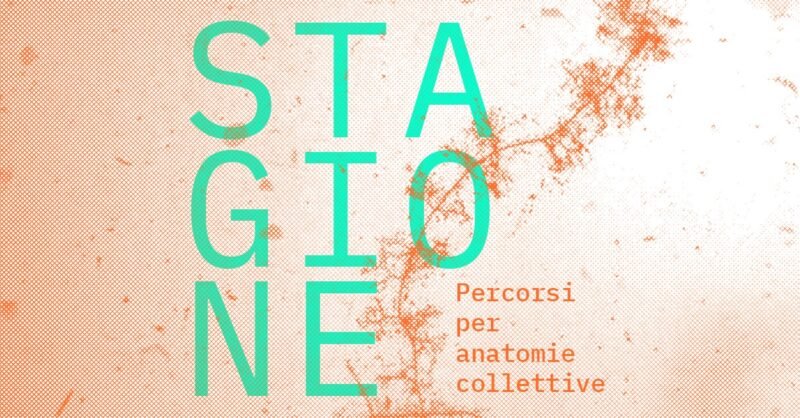
Fuori Centro, food in Rome’s neighborhoods, from October 1 to November 12, 2026
In short. Fuori Centro, La Pecora Nera's project that tells the story of five Rome neighborhoods through food, continues with four morning events from October 1 to November 12, 2026: Thursday, October 1, in Acilia, at the Mercato Coperto di Casal…
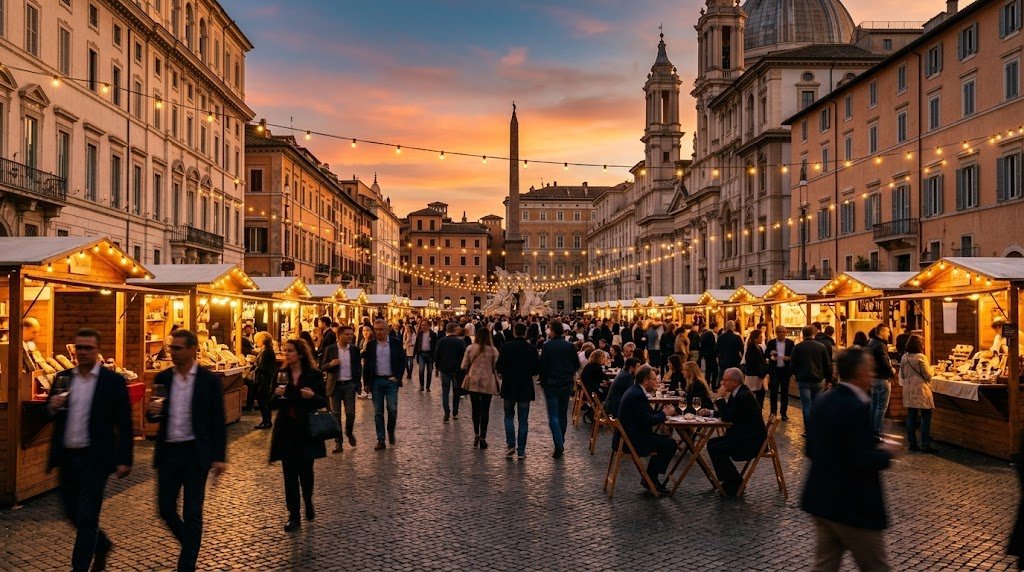
Fuori Centro, La Pecora Nera's project that tells the story of five Rome neighborhoods through food, continues with four morning events from October 1 to November 12, 2026: Thursday, October 1, in Acilia, at the Mercato Coperto di Casal Bernocchi, Via Guido Biagi 7, Saturday, October 17, in Tufello, Thursday, October 29, in Spinaceto, Thursday, November 12, in Primavalle, always from 9:30 to 12:30. The first event, in Torre Maura, was held on Sunday, September 20, and those in Acilia, Tufello and Spinaceto have also already taken place: Primavalle, on Thursday, November 12, is still to come. You get to Acilia on the Roma-Lido line train, which leaves from Porta San Paolo station next to the Piramide stop of metro line B, getting off at Casal Bernocchi-Centro Giano station. Tufello is served by the Jonio stop of metro line B1, Primavalle by the Battistini and Cornelia stops of line A, Spinaceto by the ATAC buses that connect it to EUR. The meeting point in Primavalle is announced by the organizers. The project is carried out with the support of Roma Capitale, Department for the Outskirts, and with the involvement of Zètema Progetto Cultura. For participation and details the reference is La Pecora Nera, which answers at 06 8607731 and at info@lapecoranera.net.
It's a simple and rare invitation: shifting your gaze from the Rome everyone knows toward neighborhoods that almost never make it onto food and tourist routes. Neighborhood markets, shops, artisan workshops, producers, local restaurants become the excuse to get to know people, stories and places. Put plainly: it's the best way to understand Rome, and almost nobody offers it.
What Fuori Centro is
Fuori Centro is the new project by La Pecora Nera Editore dedicated to discovering and promoting five Roman neighborhoods: Torre Maura, Acilia, Tufello, Spinaceto and Primavalle. Food is the starting point for telling the broader identity of these areas, connecting gastronomy, local commerce, culture, community associations, gathering spaces and daily life.
One event per neighborhood
Each event is built around the character of the area hosting it, with one common element: using food as a tool to get to know the neighborhood, create relationships between those who live there every day and those who come from other parts of the city, and offer new chances for discovery. It isn't a food festival or a traditional food and wine tour: it's a morning spent inside a neighborhood, with the people who live there.
Five videos and a local guide
The project is accompanied by five videos, one for each neighborhood, led by a local guide tied to the area. Through food and retail businesses, markets, murals, associations, gyms and cultural spaces, the videos tell the story of some of the most representative places and organizations of the neighborhoods involved. It's a smart choice: those who can't take part in the mornings can still do the tour, and those who take part can watch it again and go back on their own.
A printed guide to keep
The project continues beyond the events with a printed guide dedicated to the five neighborhoods. It will collect the work done and offer, for each area, a historical and narrative introduction, a selection of food places, local businesses and other useful addresses to keep exploring. For a publisher that has been publishing critical guides to Roman restaurants for more than 20 years, it's the natural next step.
The Fuori Centro calendar
Fuori Centro is made up of five events between September and November 2026, the last of which is still to come. All are held in the morning, from 9:30 to 12:30, except the first one in Torre Maura, which ran from 10:00 to 13:00.
The dates
Sunday, September 20, Torre Maura, already held. Thursday, October 1, Acilia, at the Mercato Coperto di Casal Bernocchi. Saturday, October 17, Tufello. Thursday, October 29, Spinaceto: these three events have also already taken place. Thursday, November 12, Primavalle. For Primavalle the organizers announce the meeting point at a later stage: the program, they warn, may change.
Why in the morning
The time isn't random. Morning is when neighborhood markets are full, shops open, workshops at work. At 12:30 the stalls start packing up and the neighborhood withdraws for lunch. If you want to see a Roman neighborhood while it's alive, and not while it's sleeping or emptying out, you have to go early.
La Pecora Nera, the publisher behind Fuori Centro
Since 2003 La Pecora Nera Editore has published critical guides to restaurants in Rome and Lazio, Milan and Turin, with reviews based on visits actually made, paying the bill like any customer. The motto the publisher has given itself is a voice outside the chorus. Its office is at Via Castelfranco Veneto 90, in Rome.
A verifiable method
The most unusual feature of La Pecora Nera is the system it uses to certify visits: photos of the dishes and payment receipts are recorded on a blockchain, immutably. The publisher claims to be the only guide in the world with data tracked this way. Inspectors visit places anonymously, and no listing comes from information gathered online or from outside tips.
The events
Alongside the guides, La Pecora Nera organizes events focused on different sectors of the food industry, with experts curating the selection of producers: UVA Fiera, devoted to wine, at MONK near Tiburtina station, EVOluzione, on extra virgin olive oil, at MACRO, Formaticum and Salum'È, on cheeses and cured meats, at the Pelanda in Testaccio. Fuori Centro takes the same critical eye out of the exhibition halls and into the neighborhoods.
Acilia, October 1: the Mercato Coperto di Casal Bernocchi
Fuori Centro's October 1 event was in Acilia, at the Mercato Coperto di Casal Bernocchi, Via Guido Biagi 7, in the Acilia Sud area, from 9:30 to 12:30. Acilia is an official borgata of Municipio X, which grew up along Via del Mare between EUR and Ostia.
A story that begins with Ficana
The territory of Acilia was already inhabited in prehistoric times. The first settlement on record is the Latin town of Ficana, on Monte Cugno, overlooking the Tiber, destroyed according to tradition by Ancus Marcius. The name comes from the Acilii Glabriones family, who had a villa and a farming estate here. Along the ancient Via Ostiense, recent excavations have brought to light a Roman port used as a market: the area's commercial vocation has long roots. In 1950, during farm work, the famous Acilia sarcophagus was found, now at Palazzo Massimo alle Terme.
The Pater houses
Modern Acilia was born between 1939 and 1940, to house large, poor families from Rome. The houses were built with Populit, a cheap material of pressed wood fiber and cement devised by Swiss engineer Dario Pater: single-story two-family houses, each with a plot of about 1,000 square meters meant as a vegetable garden. They were supposed to last a few years, and many still exist. On April 21, 1940, Mussolini came to inaugurate them, with the first 150 of the 286 houses planned.
How to get to Acilia
The simplest solution is the Roma-Lido railway: you leave from Porta San Paolo station, next to the Piramide stop of metro line B, and get off at Casal Bernocchi-Centro Giano, one of the line's three stations in the Acilia area along with Acilia and Acilia Sud-Dragona. By car you take Via del Mare or Via Ostiense.
Tufello, October 17: a borgata in the green of Monte Sacro
Fuori Centro's event on Saturday, October 17, was in Tufello, from 9:30 to 12:30. Tufello is urban zone 4I of Municipio III, on the northeastern outskirts of the city, inside the Monte Sacro district.
The name and the history
The name comes from tufillo, the tuff rock of the small hills on which the borgata was built. Tufello was born in 1939-1940 as an official borgata for Italians repatriated from abroad. The architecture is mixed: south of Via delle Isole Curzolane, early 20th-century buildings prevail, part of the Città Giardino Aniene project, while to the north there's public housing from the 1960s and 1970s, with large green spaces between the buildings.
The market and the mural
The heart of the neighborhood is the covered market in Piazza degli Euganei. On Via Tonale, at the corner of Via Capraia, street artist Lucamaleonte painted a 15-meter mural dedicated to Gigi Proietti. The rapper Rancore dedicated a song named after the neighborhood to Tufello. If you're looking for the working-class Rome told in songs, you'll find it here, between a fruit stall and a soccer field.
How to get to Tufello
Tufello can be reached from Jonio station, the end of the B1 branch of the metro. From Termini take line B toward Jonio, and from there you can explore the neighborhood on foot.
Spinaceto, October 29: the utopia of the 1970s
Fuori Centro's event on Thursday, October 29, was in Spinaceto, from 9:30 to 12:30. Spinaceto is urban zone 12G of Municipio IX, south of the Grande Raccordo Anulare, between Via di Mezzocammino and Via Pontina.
A planned neighborhood
The place name appears in 1536 to indicate an estate bordering that of Decima. The modern residential complex was born from law 167 of 1962 on low-cost public housing, with designs by architects Lucio Barbera, Fausto Bettinelli, Nicola Di Cagno, Dino Di Virgilio Francione and Piero Moroni, and was completed between 1970 and 1971. The idea came from the urban utopias of the time: houses along the two main streets, shops in the space between, long tree-lined avenues.
Towers, Roman villas and parks
Spinaceto preserves the medieval Torre Brunori, saved from modern building, and the remains of a Roman farm villa of more than 1,200 square meters, dating from the 1st century BC to the 4th century AD, between Via Alberto Cozzi and Viale degli Eroi di Cefalonia. It's a neighborhood rich in green space, from the Parco di Mezzocammino to the Parco Campagna di Spinaceto, and on the other side of the Pontina begins the Decima Malafede Nature Reserve. The streets bear the names of those who fell in the Resistance and the wars of the 20th century.
How to get to Spinaceto
The metro connection, planned in the 1968 master plan, was never built. Spinaceto is served by ATAC buses that connect it to nearby neighborhoods and to EUR, including the 705, 706 and 708: it's best to check the updated route on the ATAC website before setting off. By car you arrive from the Pontina or Via Cristoforo Colombo.
Primavalle, November 12: the borgata that became a city
Fuori Centro's last event, on Thursday, November 12, is in Primavalle, from 9:30 to 12:30, with the meeting point announced by the organizers. Primavalle is Rome's 27th quartiere, in the northwest, between Via di Boccea and Via Trionfale.
From estate to borgata
For centuries the area was countryside owned by the Chapter of St. Peter's. The place name Primavalle already appears on Eufrosino Della Volpaia's 1547 map of the Roman Campagna. In the 1930s one of the official borgate of Fascism was built here, to house about 5,000 people moved out of the center, largely from Via della Conciliazione area, where the spina di Borgo was being demolished. The borgata was inaugurated in 1939 along today's Via Federico Borromeo.
The reverse strikes
A peculiarity of Primavalle was the reverse strikes: faced with the inaction of the authorities, from the 1950s the residents built connecting roads such as Via del Forte Braschi and Via dei Monti di Primavalle at their own expense, working on holidays. It's a detail that says a lot about what a Roman outer neighborhood is: a place that built itself, often against everything.
How to get to Primavalle
Primavalle can be reached from the Battistini and Cornelia stations of metro line A. Battistini is the end of the line, about 20 minutes from Termini. The neighborhood also has the Parco del Pineto, and to the south the Tenuta di Acquafredda Nature Reserve, established in 1997 on 249 hectares.
A curious fact about Fuori Centro, food in Rome's neighborhoods, from October 1 to November 12, 2026
The nicest curiosity about Fuori Centro is that three of the four neighborhoods on the calendar after Torre Maura were born at the same moment, a few months apart, as official borgate created by the regime at the end of the 1930s. Acilia was inaugurated in April 1940, Tufello was born in 1939-1940 for repatriated Italians, Primavalle was officially inaugurated in 1939. Three different answers to the same problem: where to put poor families or those displaced by the demolitions in the center.
The fate of those borgate has been very different. Tufello merged with Monte Sacro and today, after the public housing was bought out by its residents, it's a sought-after residential neighborhood. Primavalle joined up with the rest of the city and lost its early isolation. Acilia has kept some of its wood fiber houses, which were supposed to last a few years and are still there, with their vegetable gardens and the additions made after the war.
Then there's a curiosity worthy of a novel. According to the most widespread account, engineer Dario Pater, inventor of Populit, couldn't follow the work in Acilia to the end because he was sent away from Rome in 1941: his closeness to Rachele Mussolini, to whom he passed on political and society gossip about her husband, is said to have irritated the Duce. The Acilia houses, then, bear the name of a man who fell from grace for gossiping too much. In a project about neighborhoods and relationships, the story carries weight.
Something nobody tells you about Fuori Centro, food in Rome's neighborhoods, from October 1 to November 12, 2026
What nobody tells you is that to take part in a project like Fuori Centro you have to plan as if for a small day trip. Acilia, Spinaceto and Primavalle are between 40 minutes and an hour from the historic center by public transit, and the meeting time is 9:30: anyone living in north Rome who wants to get to Spinaceto on time has to leave before half past eight. Those coming from outside the city would do well to choose the event most convenient for their arrival, rather than trying to follow them all.
The second thing concerns the meeting points. Only for Acilia was the place set in advance, the Mercato Coperto di Casal Bernocchi. For the other neighborhoods, and therefore for Primavalle too, the organizers announce it each time. Follow La Pecora Nera's channels, website and social media, in the days before. In outer neighborhoods a wrong address costs half an hour of walking, because the distances are those of a sprawling city, not of a historic district.
Third point, the most important: bring cash and a bag. At a neighborhood market many stalls now take cards, but not all. And anyone who goes to get to know a neighborhood through food inevitably ends up buying something. It's the most direct way to support the local shops the project wants to showcase, and it's also the best souvenir of the morning.
My advice for visiting Fuori Centro, food in Rome's neighborhoods, from October 1 to November 12, 2026
My advice for Fuori Centro is to choose the neighborhood farthest from your idea of Rome. If you live in north Rome, go to Spinaceto or Acilia. If you live in EUR or on the coast, go to Tufello or Primavalle. The project works if it really shifts your gaze, and your gaze shifts more when the neighborhood is unknown. The most honest reactions always come in places nobody thought of going.
Second piece of advice: watch the neighborhood video before you go. Fuori Centro's five videos, led by a local guide, tell the story of markets, murals, associations, gyms and cultural spaces. Arriving with a few names already in your head lets you ask the right questions of the people you meet.
Third: stay for lunch. The event ends at 12:30, just when a Roman neighborhood sits down to eat. Ask a market vendor where he eats: it's the most reliable review there is, and in the outskirts prices are still Roman prices. You'll go home with one more trattoria in your address book.
Another well-known fact, yet seldom mentioned
The well-known fact is that most Romans don't live in the historic center. Everyone knows it, yet it's rarely said when the city is described: Primavalle alone, as a quartiere, has more than 70,000 residents, Acilia about 76,000, more than many Italian provincial capitals. Tufello, with fewer than 14,000 residents on less than one square kilometer, has the density of a big metropolis. When we talk about Roman cooking, markets, neighborhood life, we're talking mainly about these places.
The second seldom cited fact is that Rome's outskirts often have very ancient roots. Acilia was the territory of the Latin town of Ficana and of the Acilii Glabriones. In Spinaceto a Roman farm villa has survived among the 1970s apartment buildings. Through Primavalle runs, partly underground, a stretch of the aqueduct built by Trajan in AD 109 and restored by Pope Paul V in the 17th century. Ancient Rome isn't just at the Forum: it's everywhere, even under a supermarket parking lot.
The third fact concerns cinema. Spinaceto was the set of Nanni Moretti's Caro diario and of films by Carlo Verdone and the D'Innocenzo brothers, Primavalle of Roberto Rossellini's Europa '51. Rome's outskirts have been told by the big screen much more than they have been visited by Romans from the center.
The right photo to take at Fuori Centro, food in Rome's neighborhoods, from October 1 to November 12, 2026
The right photo at Fuori Centro is a market stall with the hands of the people who work there. Fruit stacked in a pyramid, a freshly cut cheese, the gesture of someone wrapping: it's the image that tells the project's story better than any view. Always ask permission before photographing people. At neighborhood markets almost everyone gladly agrees, and often a photo becomes the start of a conversation.
In Tufello the photo to take home is Lucamaleonte's mural dedicated to Gigi Proietti, 15 meters high, on Via Tonale at the corner of Via Capraia: frame it from below, with a piece of street and a few passersby in the foreground, because the meaning of the mural lies in its relationship with the neighborhood. In Primavalle, look for the fountain in Piazza Clemente XI, inaugurated in 1953 with the branch of the Peschiera aqueduct: a fountain of uncertain origin, perhaps brought from Borgo, which on its own tells the story of the displaced.
In Acilia, if the route allows, photograph one of the surviving Pater houses, with the vegetable garden in front and the postwar additions. In Spinaceto, the tree-lined avenues between the neighborhood's two main axes, with the late October light: it's the image of an urban planning utopia that, in its greenery, partly worked.
Some important events that happened here
The first event linking the Fuori Centro neighborhoods is the opening of Via del Mare, on October 28, 1928: the second motorway in the world after the Milano-Laghi, which started at the Theater of Marcellus and symbolically joined the Capitol to the sea. It crosses and splits Acilia in two, parallel to the Roma-Ostia railway and Via Ostiense, and without it the 1940 borgata wouldn't have been built where it is.
The second is the season of the official borgate, between 1936 and 1940. In Primavalle the Fascist Public Housing Institute began work in 1936, to take in people displaced from Borgo, Porta Metronia, Monte Caprino and Via dei Fori Imperiali. Tufello was born for repatriated Italians, Acilia for large families. On April 21, 1940, for Rome's birthday, Mussolini inaugurated the first Acilia houses, accompanied by Ettore Muti. During the war the residents had to leave them for military reasons, and they could return only after the war, after lawsuits.
The third is January 31, 1953, when in Primavalle Mayor Salvatore Rebecchini and Cardinal Clemente Micara inaugurated the branch of the Peschiera aqueduct, with the fountain in the center of Piazza Clemente XI. For a borgata born without services, running water was an event. The fourth is law 167 of 1962, from which Spinaceto was born, completed in 1970-1971: the Italian Republic's response to the need for housing, with an idea of the city very different from that of the borgate.
Who has passed through Fuori Centro, food in Rome's neighborhoods, from October 1 to November 12, 2026
Over the centuries, figures nobody would expect have passed through the Fuori Centro neighborhoods. Along Via Ostiense, which crossed the territory of Acilia toward the ports of Ostia and Porto, traveled Cleopatra, Julius Caesar, Augustus, Nero. Tradition has it that St. Paul also passed this way, and the area of the Monti di San Paolo is said to preserve his memory. In 1940 Benito Mussolini and Ettore Muti came to Acilia for the inauguration of the houses.
Cinema has brought some of its biggest names to the Fuori Centro outskirts. Roberto Rossellini shot scenes of Europa '51 in Primavalle, with residents of the neighborhood as extras. Vittorio Gassman acted there in Il successo, and Franco and Ciccio shot ...Scusi, ma lei le paga le tasse? there. In Spinaceto, Nanni Moretti worked on Caro diario, Carlo Verdone on Gallo cedrone and Ma che colpa abbiamo noi, the D'Innocenzo brothers on Favolacce. The neighborhood also appears in the series Un medico in famiglia and Suburra.
In Tufello, instead, the most present face is Gigi Proietti's, painted by Lucamaleonte on the facade of a building on Via Tonale, and the voice is that of the rapper Rancore, who dedicated a song to the neighborhood. Now La Pecora Nera, its local guides and whoever chooses to go and see are passing through Fuori Centro.
How to plan the Fuori Centro morning
Fuori Centro takes a whole morning, plus travel time. It's an experience best enjoyed without rushing, with no commitments right after.
What to bring
Comfortable shoes, because outer neighborhoods are explored on foot and the distances are long, a shopping bag, cash, a light jacket, because in October and November mornings can be cool and covered markets aren't heated. In November, an umbrella is never wasted.
In a group
For a group, an association or a class, the advice is to contact La Pecora Nera in advance, to find out if the event format can take more people and how. Neighborhoods are places of daily life, not museums: a group of 30 people at a neighborhood market has to be handled tactfully.
With children
A neighborhood market is one of the most educational places for a city child: you see seasonal fruit and vegetables, you learn to ask, you taste. The Tufello event fell on a Saturday, October 17: it was the one best suited to families with school-age children.
What to see around the Fuori Centro neighborhoods
Each Fuori Centro neighborhood lends itself to being combined with another visit on the same day. In Acilia, the excavations of Ostia Antica are a few kilometers away, on the same railway line, and the Pineta di Castel Fusano offers an afternoon outdoors. In Spinaceto, besides Decima Malafede, EUR is a quarter of an hour away: our guide EUR, what to see helps you choose. From Tufello you can reach the Valle dell'Aniene Nature Reserve. If you get hooked on markets, our guide to Rome's markets suggests more addresses, neighborhood and historic ones.
Accessibility at Fuori Centro
Fuori Centro events take place in public spaces and neighborhood markets, with routes on foot. Anyone with mobility difficulties should contact La Pecora Nera before the event, to find out about the planned route and any steps or uneven stretches. The Jonio and Battistini metro stations are recently built or modernized. For the Roma-Lido line, it's best to check in advance the status of the elevators at the departure and arrival stations.
Frequently asked questions about Fuori Centro
What is La Pecora Nera's Fuori Centro?
Fuori Centro is a project by La Pecora Nera Editore that tells the story of five Rome neighborhoods through food: Torre Maura, Acilia, Tufello, Spinaceto and Primavalle. It's carried out with the support of Roma Capitale, Department for the Outskirts, and with Zètema Progetto Cultura, and it includes events, five videos and a printed guide.
When are the Fuori Centro events?
After Torre Maura (September 20), Fuori Centro visited Acilia on Thursday, October 1, Tufello on Saturday, October 17, and Spinaceto on Thursday, October 29. The last event on the program is on Thursday, November 12, in Primavalle, from 9:30 to 12:30.
Where did the Acilia event take place?
Fuori Centro's Acilia event took place on Thursday, October 1, at the Mercato Coperto di Casal Bernocchi, Via Guido Biagi 7, from 9:30 to 12:30. The nearest station is Casal Bernocchi-Centro Giano, on the Roma-Lido railway that leaves from Porta San Paolo, next to the Piramide stop of metro B.
Where is the meeting point in Primavalle?
For Primavalle the Fuori Centro meeting point is announced by the organizers at a later stage. It's best to follow La Pecora Nera's website and social media channels in the days before, or call 06 8607731.
How do you get to the Fuori Centro neighborhoods by public transit?
The Fuori Centro neighborhoods can be reached by public transit: Acilia with the Roma-Lido railway, Tufello with metro line B1 to Jonio, Primavalle with metro line A to Battistini or Cornelia, Spinaceto with the ATAC buses that connect it to EUR, because the neighborhood has no metro.
Who is La Pecora Nera?
La Pecora Nera is a Roman publisher that since 2003 has published critical guides to restaurants in Rome and Lazio, Milan and Turin, with anonymous visits and the bill paid. It certifies photos and receipts on a blockchain and organizes events such as UVA Fiera, EVOluzione and Formaticum/Salum'È.
Will there be a guide to the Fuori Centro neighborhoods?
Yes, the Fuori Centro project includes a printed guide dedicated to the five neighborhoods, with a historical and narrative introduction for each area, a selection of food places, local businesses and other useful addresses. There are also five videos, one per neighborhood, led by a local guide.
Final advice on Fuori Centro
Choose a neighborhood you've never seen, get there early, bring cash and stay for lunch. Fuori Centro is one of those initiatives that do the city more good than 10 inaugurations in the center: it will show you a Rome that works, shops, tells its own story, and that usually isn't in the guidebooks. At the end of the morning you'll have one more market, one more trattoria and one more story. It's the best haul a Roman can bring home.
Article written by the editorial team of Tour Leader Pro, contact them for Private/Corporate/V.I.P. Tours and Experiences.
Planning a trip to Rome? The English-language guides for visiting the city are on ItalyPlanner.com.
Contact Information
You might also like
 Shiva at Palazzo dello Sport in Rome, November 27, 28 and 29, 2026
- Tutti Satelliti – Ugo Borghetti | Podcast Live at Alcazar Live: Sunday, November 8, 2026
- Il bambino nella valigia at Teatro Ciak: Sunday, November 8, 2026
- Pornodrama by Guarino/Comuniello, meeting at Teatro del Lido: Tuesday, November 10, 2026
- Anghingò, il gioco diventa danza at Teatro di Villa Lazzaroni, November 7 and 8, 2026
- Poppe at Monk: Saturday, November 7, 2026