CSA La Torre
In short. CSA La Torre is a self-managed social center in the northwest quadrant of Rome, in the urban belt between Torrevecchia and Primavalle, one of the densest working-class districts of the capital, which grew between the 1950s and 1970s…
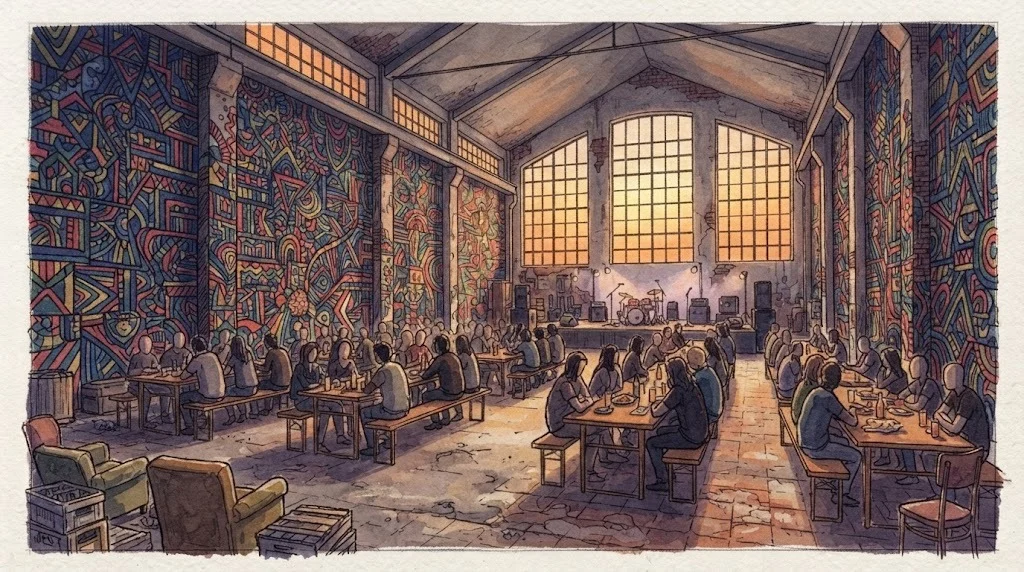
CSA La Torre is a self-managed social center in the northwest quadrant of Rome, in the urban belt between Torrevecchia and Primavalle, one of the densest working-class districts of the capital, which grew between the 1950s and 1970s alongside Via Trionfale and Via Boccea. Visitors from outside Rome find here a different city from the one of the forums and the neighborhoods of the historic center: public housing blocks, neighborhood markets, parish youth centers and, indeed, occupied and self-managed spaces created to fill gaps in services that the public administration never fully filled. For a first orientation on the quadrant, it's also worth reading the pages on the Monte Mario Reserve and the Insugherata Nature Reserve, the two large green lungs that bound the neighborhood to the north and west. If you are planning a wider itinerary in Rome, perhaps mixing working-class neighborhoods and natural areas on the outskirts, you will find useful planning tools at italyplanner.com.
About CSA La Torre and the context it belongs to, we can distinguish between verifiable information, such as the general geographic position, the transport network serving the neighborhood and the typical features of this kind of space in Rome, and more uncertain information, such as precise details on the history of the occupation or the calendar of past events, for which the public sources available remain fragmentary. This approach is necessary when writing about small neighborhood realities, which rarely get press coverage comparable to that of the great monuments or the better-known social centers of the city, but which remain an important piece for understanding how the Rome that lives outside the historic center works.
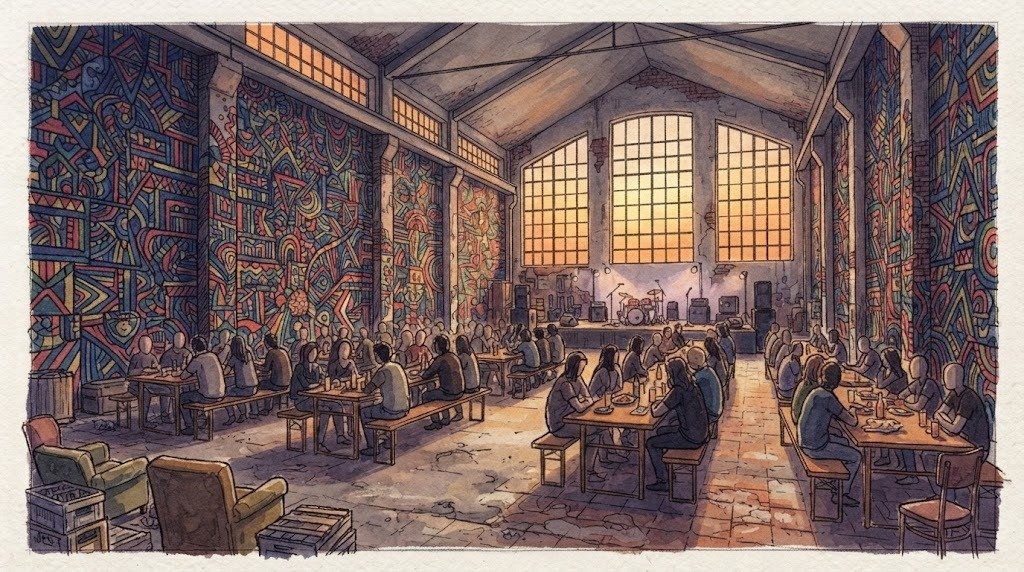
Where CSA La Torre is and how to get there
The sources that give the address of the center don't fully agree: some archives of Rome's social spaces record it on Via Bertero, while other movement catalogs place it near Via Bernardino Quaranta, which cuts across Torrevecchia from east to west and is one of the main axes of the neighborhood. Both indications lead to the same area anyway, the one between Torrevecchia, Primavalle and Montespaccato, served by the same public transport network. If you want to reach the center with certainty about the exact address, you'd do well to check the collective's social channels before leaving, because the neighborhood is large and the streets look alike.
By metro and bus
Metro line A is the most convenient way to arrive from outside the neighborhood: the Cornelia and Battistini stops, the latter the western terminus of the line, are the closest, and from both of them city bus lines run up toward Torrevecchia, Primavalle and Montespaccato. The walk from the metro stops is not short, because the neighborhood climbs up from the valley of Via Trionfale, and that's why it's always better to complete the trip by bus rather than try to walk it in the summer heat or with luggage.
If you are coming from other parts of Rome, you can also use the Roma San Pietro railway station, on the FL5 Roma Civitavecchia line and the FL3 Roma Viterbo line, which is a few kilometers from the neighborhood but is still connected by city bus lines. It's a useful option especially if you are arriving from the northern coast or from Viterbo and don't want to cross the whole center of Rome to change transport.
By car and by bicycle
By car the neighborhood is reached from the Grande Raccordo Anulare via Via Trionfale exit or Via Boccea exit, then following the local roads toward Torrevecchia. Parking on the residential streets of the neighborhood is generally free, but on event days in the evening hours you should allow a few extra minutes to find a space, because the streets are narrow and the housing density is high. By bicycle the connection with the rest of the city runs mainly along Via Trionfale and through Parco del Pineto, a green route that lets you reach the Della Vittoria neighborhood and the center without facing the traffic of the main arteries.
An alternative little known to people who don't live in the northwest quadrant is the direct bus connection with Termini station, served by a few suburban lines that cross Via Aurelia and Via Trionfale before climbing up toward Torrevecchia: a longer route than the metro, but useful for those already staying near the station who prefer to avoid a change. On weekends, when the frequency of city buses drops, you should in any case allow wider travel times than on weekdays, especially if the goal is to arrive on time for an event with a stated start time.
How far it is from the center of Rome
From the tourist heart of the city, Piazza Venezia area or the historic center, the road distance to Torrevecchia is about 10 kilometers, a trip that in normal traffic takes between 25 and 40 minutes by car and a similar time, if not longer, by public transport because of the changes required. It is therefore not a neighborhood you can reach on foot from a base in the center, and it should be counted as a real outing away from the main tourist circuit, to be planned with an adequate time margin, especially if you intend to return to the center in the evening.
What a CSA is and how La Torre works
The acronym CSA stands for centro sociale autogestito (self-managed social center), a formula born in Rome and other Italian cities starting in the 1980s: unused public or private buildings, often former warehouses, closed schools or industrial buildings, occupied by neighborhood collectives and turned into spaces of self-management, that is, run internally by the people who use them without relying on outside management, non-profit and with an organization based on the assembly. The model differs from a municipal cultural center or a traditional association precisely in this: decisions on programming, on the use of the spaces and on the activities to start typically go through meetings open to those who take part, not through a fixed organizational chart.
In Rome the phenomenon has produced over the years a fairly dense network of similar realities, spread across different neighborhoods and born at different times: among them, in the southeast of the city, are CSOA Spartaco in Quadraro, active since 1999, and Csoa La Strada in Garbatella, which dates back to 1994. Both have built over the years a close tie with the social fabric of their own neighborhood, from the people's gym to the bicycle workshop, and they offer a useful term of comparison for understanding how spaces of this kind work even when, as in the case of CSA La Torre, the publicly verifiable information is scarcer.
Self-management, not improvisation
A widespread misunderstanding about these spaces is to think that self-management means an absence of rules or organization: in practice the opposite almost always happens. Periodic assemblies set opening shifts, responsibilities for maintaining the spaces, criteria for the use of the rooms by outside groups and shared rules of behavior, often stricter than those of a commercial venue precisely because there is no professional management monitoring day to day what happens. People who attend these places regularly learn quickly that behind an apparent informality there is a precise organizational structure, built over time and adapted to the needs that emerge along the way.
The buildings that become social centers
Another recurring trait of these spaces concerns the type of building occupied: they are rarely constructions built for public or cultural use, and more often former industrial buildings, disused craft workshops, schools closed through mergers or residential buildings left vacant for a long time. Turning these spaces into social centers almost always involves interior renovation work done by the regulars themselves, with technical skills offered voluntarily by those in the collective who work in construction, electrical work or plant engineering, one more example of the principle of self-management applied not only to cultural programming but also to the physical upkeep of the space.
The relationship with local institutions
The relationship between self-managed social centers and Rome's city or district administrations is historically ambivalent and changes from case to case: some spaces have obtained over time forms of recognition or agreements with the Comune that regularize the use of the property. Others remain in an unformalized occupation, tolerated in practice but without a defined legal status, and others still have faced eviction orders, with different outcomes depending on the political and administrative context of the moment. Without a specific, up-to-date source on CSA La Torre, it isn't possible to place this space with certainty in one of the three categories, and it's a limit worth stating explicitly rather than ignoring.
A curiosity about CSA La Torre
The name chosen by the collective, La Torre (the Tower), recalls an element that recurs in the place names and imagination of many Roman outskirts occupied over the last two centuries by lookout towers, fortified farmhouses and the remains of older agricultural structures. It's not rare for Roman social centers to take their name from an architectural detail of the place they occupy, from a historical nickname of the area or from a tower visible from the surroundings, rather than from an explicit political reference. In the case of Torrevecchia, the very name of the neighborhood preserves the memory of an ancient tower that gave its name to the farming locality that existed before the postwar building expansion, and the name of the social center fits into this continuity of local memory, even if the sources don't agree on if the collective chose the name for this very reason or for independent reasons tied to the occupied building.
Another curious element is the recurring choice, in many Roman social centers, of adding to the acronym CSA or CSOA a simple, direct name, often a single word, rather than a more elaborate or explicitly political label: Spartaco, La Strada, Corto Circuito, La Torre. It's a tendency explained by the wish to make the name immediately recognizable in the neighborhood, more like a popular nickname than a slogan, and it's shared by spaces born in even very different periods and contexts.
The surrounding neighborhood: Torrevecchia, Primavalle and Montespaccato
To understand a social center you often have to understand the neighborhood that hosts it, because its programming and activities almost always arise in response to very concrete needs of the area. Torrevecchia and Primavalle are part of Municipio XIV of Rome, one of the areas of the city that grew fastest in the second postwar period, when building expansion had to absorb within a few years thousands of families who had arrived from the Lazio countryside and from southern Italy. Primavalle in particular was born in the 1930s as a public housing borgata meant for clearing shantytowns from the historic center, and still today keeps a recognizable urban layout, made of low apartment buildings, inner courtyards and a dense network of small neighborhood shops.
A neighborhood of working-class and movement history
This part of Rome has a long tradition of neighborhood activism, which grew together with the housing and employment difficulties that marked the Roman outskirts for decades: neighborhood committees, struggles for housing, mutual aid initiatives and, from the 1980s on, the first occupied social centers, often born from groups of young people from the neighborhood itself more than from collectives arriving from outside. It is in this context that the existence of CSA La Torre should be read: a space that, like many others on the Roman outskirts, presents itself as a point of reference for those who live in the neighborhood before being a tourist destination, and that for this reason often stays out of conventional travel guides.
Montespaccato and the green borders of the quadrant
To the west of Torrevecchia lies Montespaccato, a more recent, low-density neighborhood compared to Primavalle, which borders directly on the Insugherata Nature Reserve, a protected area of Mediterranean scrub and cork oak woods that is one of the rare green lungs still intact inside the Grande Raccordo Anulare. If you go to CSA La Torre and want to break up the visit with an outdoor walk, here you find one of the most interesting natural settings of the northwest of the city, with marked trails and a visitor center run by local associations.
The Torrevecchia market and neighborhood life
One of the elements that best conveys everyday life in Torrevecchia is the neighborhood market, a reference point for the grocery shopping of many local families and, at the same time, a place of informal socializing that predates by decades the arrival of large-scale retail in the area. Strolling among the stalls in the morning hours, when the market is busiest, remains one of the most direct ways to get a sense of the neighborhood before or after a visit to the social center, and it's an experience that rarely appears in tourist guides to Rome, which almost always focus on the historic center and the most photographed neighborhoods.
Around the market, over the years, a small network of long-established neighborhood businesses has also taken hold, from bakeries to family-run grocery shops, which tell of a commercial Rome that is increasingly rare in the central areas of the city, where high rents have pushed many historic businesses to close. In the northwest quadrant, helped by a tourist pressure still limited compared to the center, this kind of local commerce holds up better, and it's one more reason for those who travel out to Torrevecchia to set aside time for a simple stroll with no precise destination, in addition to the planned visit to the social center.
Public housing and recent changes
Like much of the Roman outskirts built after the war, Torrevecchia and Primavalle too have seen in recent decades redevelopment work on public spaces, alternating with periods of poor maintenance that have left visible marks on the urban fabric. It's a picture common to many Italian outskirts that grew quickly in the second postwar period, where the relationship between public housing, public services and grassroots initiatives like that of CSA La Torre has changed several times over time, following the political and administrative seasons of the city more than a linear and coherent development plan.
Something nobody tells you about CSA La Torre
People who arrive for the first time at a Roman social center expecting a venue with fixed hours and a schedule published well in advance are often thrown off: the programming of these spaces is typically built dynamically by the internal assemblies and communicated through the collective's social channels a few days before the events, not through a stable calendar published months ahead. This holds for CSA La Torre too: before planning a visit for a specific event you always need to check the collective's official channels in the last few days, because dates can change or be confirmed at the last minute, and it's an aspect of life in these spaces that is rarely explained to those who don't attend them regularly.
A second element that is rarely told concerns the internal economy of these spaces: the sustainability of a self-managed social center almost always comes through self-financing, that is, through the voluntary contributions collected at events, concerts and theme nights, more than through public funding or private sponsorship. This means the calendar of activities doesn't follow a commercial logic of maximizing the audience, but an internal balance between the economic sustainability of the space and consistency with the collective's goals, a balance that can lead to programming choices that are hard to understand for someone looking from the outside with the logic of a traditional venue.
The activities that characterize this kind of space
Like most Roman self-managed social centers, CSA La Torre too was born with the aim of offering the neighborhood services and activities that the local commercial and institutional fabric doesn't cover, or covers only in part. The model shared by spaces like this one, Spartaco in Quadraro or La Strada in Garbatella, generally includes a few recurring components, although the weight of each varies from center to center and from period to period.
People's gym and sports activities
The people's gym is one of the most widespread formulas in Roman social centers: courses in sports disciplines, often contact ones such as boxing, martial arts or rugby, offered at prices lower than commercial gyms and open to those in the neighborhood who couldn't afford a traditional membership. Even where it isn't possible to confirm the specific details of CSA La Torre's current program, this remains the most common scheme adopted by similar spaces on the Roman outskirts, and it's worth asking the collective directly which courses are active in a given period.
After-school help, help desks and mutual aid
Another typical component of these spaces is the people's after-school program, meant for children and teenagers from neighborhood families who can't afford the cost of private tutoring, together with orientation help desks on topics such as work, housing or immigration, run by volunteers with specific skills. Here too the model follows a logic of mutual aid more than of a paid professional service, and it's one of the elements that sets a social center apart from a traditional cultural association.
Urban gardens and shared spaces
Another widespread practice among social centers on the Roman outskirts, especially those with an outdoor space, is the shared urban garden: a plot cultivated collectively by those who attend the center, often open also to neighborhood residents who don't take part in the collective's other activities. Beyond the practical function of producing zero-mile vegetables, these spaces become occasions for meeting across generations, with older people from the neighborhood bringing farming skills often gained in a rural past and young people from the collective taking care of the logistical organization.
Film clubs, presentations and debates
Alongside music and sports, many Roman social centers keep alive a cultural program made of film clubs, book presentations and public debates on current issues, often with guests from outside the collective. It's an activity that requires fewer financial resources than a concert but still a significant organizational effort, and that helps build the cultural identity of the space over time, beyond its more immediately social function.
Concerts, cultural events and nights out
The music and cultural programming, often tied to genres such as punk, hip hop and indie music, is the most visible part of these spaces' activity from the outside, the one that reaches even those who don't usually go to the neighborhood. Concerts, book presentations, screenings and fundraising parties are the tools with which social centers financially support the other activities, the less visible ones but often more deeply rooted in the neighborhood.
Solidarity and neighborhood collections
A last strand of activities, less spectacular but often decisive for the daily life of the neighborhood, concerns the solidarity collections organized for local emergencies: food drives, collections of school supplies at the start of the year, solidarity campaigns for families in difficulty reported by the neighborhood itself. It's a kind of intervention that rarely makes the city news, but that often represents the most concrete and continuous part of a social center's work, the one by which its roots in the urban space that hosts it are truly measured.
My advice for visiting CSA La Torre
If you don't already know the neighborhood, the most useful advice is to arrive on a day when a public event, a concert or a fundraising night has been announced, rather than showing up unannounced on any day: Rome's social spaces are alive above all when there is active programming, and visiting them outside those moments risks leaving a partial impression of the place. Check the collective's social channels in the preceding days, and don't settle for a generic online search, because as already said the programming often changes at the last minute.
A second practical point concerns respect for the spaces: a self-managed social center is not a commercial venue, and the behavior expected from a visitor is different from that of a bar or a club. It's worth finding out in advance, perhaps by asking someone who attends the space, about unwritten rules such as respect for the common areas, taking part in any collections for self-financing and being careful not to photograph people without permission during assemblies or internal activities. If you organize groups or guided visits in Rome with an eye to the neighborhoods less touched by tourist flows, you can find qualified professionals at tourleaderpro.com, which is also useful for understanding how to move respectfully in neighborhood settings like this one.
One last piece of advice concerns the best way to combine the visit with the rest of the day: since the neighborhood doesn't offer the same density of restaurants and bars as the historic center, it's worth finding out in advance about a couple of neighborhood places to stop at before or after the event, or planning the day so that you head back toward more central areas for the meal, still using the nearby green areas of the northwest quadrant for an outdoor break in the middle of the day.
The public debate on self-managed social centers in Rome
To place CSA La Torre correctly in the city context, it helps to remember that the issue of occupied social centers remains in Rome a subject of public debate, with very different positions. On one side are the collectives and neighborhood groups that claim the social value of these spaces, stressing the services offered to segments of the population who would hardly find equivalent alternatives at affordable costs. On the other are institutional positions and part of public opinion that stress the unauthorized nature of the occupation of the buildings and the need for paths to regularization or, in some cases, eviction. It's a debate that has run through Rome's city politics for decades and that concerns the whole network of social centers, not just CSA La Torre in particular.
A phenomenon that concerns the whole city
It is not an isolated case in the northwest quadrant: the map of Rome's social centers covers practically all the districts of the city, from the historic center to the outskirts farthest from the Raccordo Anulare, with occupation histories running from the 1980s to more recent occupations. Every city administration, over the years, has dealt with the issue with different approaches, alternating phases of greater tolerance with phases of more forceful intervention, without ever arriving at a uniform line applied to all spaces in the same way. For this reason too, two apparently similar social centers, as CSA La Torre and one of the other spaces mentioned on this page might be, can have very different legal and administrative paths, which must be checked case by case and not generalized.
Why it matters not to generalize
Precisely because of this variety of situations, it isn't correct to apply to CSA La Torre conclusions that hold for other, better documented Roman social centers, in either direction. Every space has its own occupation history, its own relationship with the local administration and its own current condition, which can be reconstructed reliably only through direct, up-to-date sources, not by analogy with similar but distinct cases.
History of the occupation and recent events
On the specific history of the occupation of CSA La Torre, the sources available don't agree on details such as the exact year the building was first occupied, nor on any later events of eviction or regularization. This kind of uncertainty is not rare for small and medium-sized Roman social spaces, whose history is told mainly through the collective's internal channels and through the neighborhood's local press, sources that don't always stay accessible or up to date over time.
What can be said with greater confidence is the general context in which spaces like this were born: starting in the 1980s and through the 1990s and 2000s, Rome saw dozens of occupations of unused public and private buildings by neighborhood collectives, with very different outcomes from case to case, from immediate eviction to informal coexistence prolonged over time, up to, in some cases, regularization through agreements with the city administration. Without specific, verifiable sources on the particular path followed by CSA La Torre, it isn't correct to assign the center definitively to either of the two roads, and likewise it isn't possible to establish with certainty if the space is active today with the same continuity as in the past: anyone wanting up-to-date information must refer directly to the collective's channels.
Why precise news sources are missing
The scarcity of news articles devoted specifically to CSA La Torre is not in itself an anomaly: the Roman press, general-interest and local, tends to cover continuously only the larger social centers, those involved in significant city events or those with cultural programming on a metropolitan scale. Smaller spaces tied to a single neighborhood, as CSA La Torre seems to be, often remain outside this coverage, and their history is passed on mainly by word of mouth, among those who have lived in the neighborhood for several generations, or through local publications with small print runs that aren't always archived and available online in later years.
What can be said with reasonable certainty
Setting aside the uncertainties on specific details, a few elements remain reasonably solid: CSA La Torre belongs to the historic network of Rome's self-managed social centers, shares with similar spaces in the city an organizational structure based on self-management and the assembly, and is located in a neighborhood, Torrevecchia and Primavalle, with a long tradition of popular activism. These are the elements on which reliable information can be built, deliberately leaving open the points that the available sources don't allow us to close with confidence.
How to read online sources on this type of space
For those who want to dig deeper, a practical tip is to distinguish between different types of source when looking for information on a poorly documented social center like CSA La Torre: the collective's direct social channels remain the most reliable source for practical information, such as hours and programming. Local press archives and movement outlets such as Dinamopress can offer a broader historical context, even when they don't mention the specific space directly. The platforms that catalog places of independent culture, like those also used for other spaces mentioned on this page, help verify the basic existence and geographic position of a center, but don't always stay up to date over time. Cross-checking several types of source, instead of trusting a single reference, remains the most prudent way to build a correct picture of realities like this one.
Another well-known fact, yet rarely cited
An element often underestimated when talking about Roman social centers is the role these spaces have historically played as incubators of realities that later became independent: music groups, theater collectives, people's sports teams and even small work cooperatives were often born inside the walls of an occupied center, and then continued their path elsewhere, with an identity of their own and no formal tie to the space that hosted them at the start. It's a mechanism that holds in general for the network of Roman social centers, from Spartaco in Quadraro to the smaller realities of the northwest quadrant, and that makes it hard to trace precisely the cultural legacy of each space, because part of that legacy is deliberately scattered across independent projects that no longer carry the name of the place of origin.
It's also worth remembering that this incubation mechanism doesn't concern only music: social theater groups, screen-printing collectives, rugby or people's soccer teams and even small independent publishing ventures have been born, in the history of Roman social centers, inside spaces like those described on this page. It's a phenomenon that cuts across the different neighborhoods of the city, linking the northwest quadrant to the rest of the Roman network of self-managed spaces, and that makes each of these places something more than a simple container for events: a true laboratory of initiatives that then find independent life elsewhere.
There is also a less celebratory side to this mechanism: the scattering of projects born inside a social center makes it hard, for those writing about these places years later, to reconstruct precisely how much a given group or initiative really owes to the context that hosted it at the start. It's a limit worth keeping in mind every time you read a list of famous names linked to a social center: the common origin doesn't always correspond to a lasting tie or one recognized by the parties involved.
The right photo to take at CSA La Torre
Anyone looking for a representative image of this kind of space should aim not so much at the building itself, often anonymous from the outside like many postwar public housing blocks, but at the murals and writing that almost always cover the facades of Roman social centers: surfaces that tell in images the history of the collective, the neighborhood struggles and the cultural references of the group occupying the space, and that change over time following the seasons of the center's internal life. It's a visual heritage spread across the whole Roman outskirts, and photographing it respectfully, without including people who haven't consented to be portrayed, is the best way to convey the atmosphere of the place without intruding on a space that remains first of all a place of daily life for those who attend it.
A practical detail to keep in mind during evening events, when natural light is missing: the interior lighting of these spaces is often low and designed for atmosphere more than for photography, so anyone wanting to take good photos during a concert or a night out should allow for longer exposure times or the discreet use of a flash, always taking care not to disturb those watching the event and to ask permission before photographing artists or organizers up close.
Some important events that happened here in history
For smaller social spaces like CSA La Torre, unlike bigger and more media-exposed realities, there isn't always enough public documentation to reconstruct precisely a calendar of verifiable historical events, as happens instead for larger social centers that have hosted national music festivals over the years or moments of city news widely covered by the press. This doesn't mean the center has no history of events and initiatives relevant to the neighborhood, but that this history has to be reconstructed, when possible, directly through the collective's archive and the accounts of those who have attended it the longest, rather than through general-interest news sources that rarely deal with neighborhood realities of this size.
It's worth adding that this documentary difficulty concerns not only the chronicle of events but also aspects that seem simpler to pin down, such as the exact dates of seasonal opening, changes of internal management of the collective or any interruptions of activity due to work on the building. People who professionally document the history of Roman social movements often point out precisely this kind of gap for smaller spaces, and it's a structural limit of the way these realities communicate, more than a deliberate choice of privacy.
Who has passed through CSA La Torre
For the same reason, there is no reliable public documentation that would allow a verifiable list of artists, music groups or personalities who performed or took part in activities at CSA La Torre over the years. It's a limit common to many neighborhood social spaces, whose programming, as already said, is communicated mostly through the collective's social channels with a short time horizon and is rarely archived systematically and available to consult years later. Anyone looking for information on specific past events would do well to contact the collective directly or look through the space's social archives, more reliable in this case than a generic reconstruction.
That said, the lack of a verifiable list of names doesn't mean the center hasn't had, over the years, moments of visibility tied to individual artists or music groups of the Roman independent scene, who regularly play at this kind of space in different cities, away from the commercial circuits. It is simply a piece of information that, given the sources currently available, can't be reported with the precision it would deserve, and that is therefore better left to those who attend the space directly, rather than attempting a reconstruction that would risk being inaccurate.
The social centers of the northwest quadrant and how they differ
CSA La Torre is not the only space of this type in the western part of Rome, even though the densest network of historic social centers is traditionally found in the eastern and southeastern quadrants of the city. For a direct term of comparison it's worth looking at Csoa Corto Circuito, another self-managed Roman space with its own identity and its own neighborhood history, in addition to the already mentioned CSOA Spartaco and Csoa La Strada. Each of these spaces has built over time a specific relationship with its own neighborhood, with activities that resemble each other in general structure, people's gym, help desks, concerts, but differ deeply in concrete content, local collaborations and occupation history.
Comparing these spaces helps to understand a general feature of the network of Roman social centers: they are realities strongly rooted in their own local context, which rarely compete with each other for the same audience and in fact often collaborate on joint initiatives, from city festivals to solidarity campaigns, while each keeps an independent program tied to the specific needs of its own neighborhood.
Why knowing more than one social center helps to understand the phenomenon
Anyone approaching the world of Roman social centers for the first time, perhaps starting right from the CSA La Torre page, benefits from visiting or reading about other spaces in the network too, because each tells a different facet of the same phenomenon: Spartaco shows the more structured and long-lived side, with a quarter of a century of continuous activity behind it. La Strada tells of the punk scene and the grassroots solidarity of Garbatella. Corto Circuito offers one more point of view on how self-management adapts to different urban settings. Put together, these spaces give a fuller picture of Rome than a visit to just one of them could.
CSA La Torre and the summer season of Rome's social spaces
Like many Roman social centers, spaces of this kind also tend to intensify their programming in the warm months, when any courtyards or outdoor areas become usable for concerts, community dinners and open-air screenings, in a calendar that runs alongside, without directly overlapping, the broader season of cultural initiatives that animates Rome during the summer. Anyone who follows closely the calendar of events and concerts organized in the city in the summer months can find, next to the more institutional festivals in the big parks and historic arenas, the nights organized by neighborhood social centers too, a parallel circuit worth knowing about to have a complete picture of Rome's cultural offer in the warm season.
A different circuit from that of the big arenas
The main difference between the summer programming of a big city festival and that of a neighborhood social center concerns above all scale and organizational logic: where the former works with large audience numbers, paid tickets and schedules planned months ahead, the latter operates on a smaller scale, often with free entry or a voluntary contribution, with programming decided days rather than months in advance. They are two complementary models more than alternatives, and anyone who lives in Rome for an extended period, or visits it with some time to spare, often finds it interesting to alternate between the two during the same stay.
For those planning a summer stay in Rome designed specifically to tap into this parallel circuit, the most effective strategy remains to follow the social channels of the individual social centers of the northwest quadrant in the weeks right before the trip, cross-checking the dates against the rest of the visit program, perhaps built with the help of planning tools such as those available on italyplanner.com, so you can fit in one or more nights at these spaces without giving up the rest of the more traditional city itinerary.
What to see and do around CSA La Torre
Anyone who travels out to Torrevecchia to visit the social center can easily organize the day around a few natural and cultural destinations in the northwest quadrant, avoiding a one-way trip to a single address. The Insugherata Nature Reserve is the most immediate choice for a green break, with marked trails in a Mediterranean scrub setting that is surprisingly wild for being a few minutes from the Grande Raccordo Anulare. A little further east is the Pineto Regional Urban Park, which with its historic pine wood links Monte Mario to the Balduina neighborhood and offers bike and walking paths much used by residents.
For those who want to add a more scenic stop, the Monte Mario Nature Reserve also hosts the Monte Mario Astronomical Observatory, a historic observation point of the city and one of the highest viewpoints in Rome, reachable with a walk of medium difficulty from the Trionfale neighborhood. If you are planning a longer stay in Rome and want to combine stops like these with the rest of the city itinerary, you can rely on the planning tools available at italyplanner.com, useful for building a route that includes both the central neighborhoods and less-visited outskirts like this one.
St. Peter's Basilica and the Vatican
Another point of reference at a relatively short distance from the northwest quadrant is St. Peter's Basilica in the Vatican, reachable in a few minutes from the Trionfale neighborhood and connected to the rest of Vatican City: a useful combination for those who want to alternate, in the same day or the same stay, one of the most visited destinations in the world with a working-class neighborhood setting, like Torrevecchia, much further from the big tourist flows.
Plan the day without rushing
Given the distance from the historic center and the variety of destinations available in the quadrant, from the social center to the nature reserves to the Vatican, it's best to avoid squeezing everything into a single half day: better to choose two or three stops that fit together, perhaps pairing a nature walk in the morning with a visit to the neighborhood in the afternoon or evening, to coincide with an event at the social center. It's an approach that gives a more balanced experience than a rushed itinerary designed only to tick off the largest number of places in a short time.
Frequently asked questions about CSA La Torre
Is CSA La Torre open every day?
Like most Roman self-managed social centers, the public opening hours depend on the schedule of activities and events, and don't follow a fixed timetable comparable to that of a commercial venue. The most reliable source for knowing if an activity is going on on a given day remains the collective's social channels.
Do you pay an entrance ticket?
In Roman social centers entry is generally free or based on a voluntary contribution for the self-financing of activities, especially for concerts or special nights. The amounts, when there are any, are decided each time by the collective and shouldn't be considered fixed over time.
Is it a good place for someone visiting Rome for the first time?
It depends on what you're looking for. If you want to get to know a Rome different from that of the great monuments, made of working-class neighborhoods and self-management realities, a visit to CSA La Torre can offer a complementary point of view to the classic itineraries, as long as you arrive intending to respect the informal rules of this kind of space, as already indicated in the section on practical advice.
How do you find out about upcoming events?
The most reliable channel remains the collective's social page, updated a few days ahead of events. Information gathered from third-party sources, including general guides to Rome, should always be checked close to the date of the visit.
Is the surrounding neighborhood safe to visit?
Torrevecchia and Primavalle are working-class neighborhoods that are fully lived in, with the same daily life as any other Roman neighborhood: markets, schools, local shops. As in any other area of a big city, ordinary common-sense precautions apply, without this making the neighborhood different from the rest of the Roman outskirts in its everyday accessibility.
Can you take part in the activities even if you're not from the neighborhood?
Yes, most Roman self-managed social centers, including those mentioned on this page, open their activities to anyone who wants to take part, regardless of geographic origin. What is generally asked is respect for the shared rules of the space, more than a requirement of residence or belonging to the neighborhood.
Is it worth looking into the nearby social centers too?
Yes, especially if you are planning a visit to the northwest quadrant well in advance: cross-checking the programming of CSA La Torre with that of other Roman spaces, including those geographically farther away such as Spartaco or La Strada, helps build a richer visit calendar, especially in the periods of the year when a single center's programming can be thinner than at other times.
Is there an official website for CSA La Torre?
At the moment it isn't possible to point to an official website of the collective with certainty: as with many small social centers, communication happens mostly through social networks rather than through a dedicated, constantly updated website. Before planning a visit, it's best to look for the collective's most recent and active social profile, checking that the updates are actually recent.
Contact Information
Via Bertero, 13
Roma Roma Città, Roma Città