Under the Shade of a Coolabah Tree by Eline Vansteenkiste at Tim Van Laere Gallery, September 26 to November 7, 2026
In short. Under the Shade of a Coolabah Tree, the second solo show by Belgian painter Eline Vansteenkiste at Tim Van Laere Gallery, is open from September 26 to November 7, 2026 at the gallery's Rome space, TVLG Roma, in Palazzo Donarelli Ricci,…
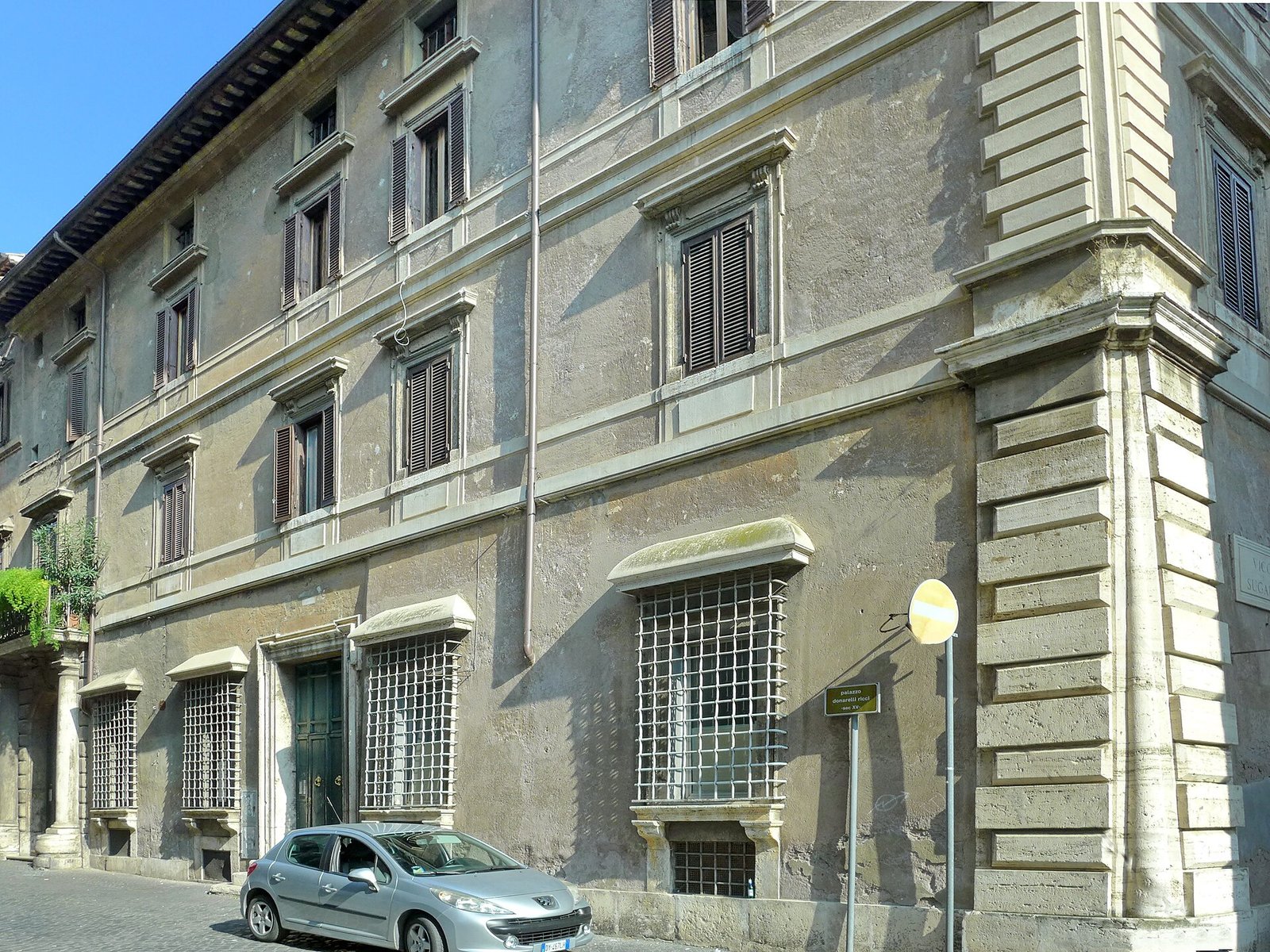
Under the Shade of a Coolabah Tree, the second solo show by Belgian painter Eline Vansteenkiste at Tim Van Laere Gallery, is open from September 26 to November 7, 2026 at the gallery's Rome space, TVLG Roma, in Palazzo Donarelli Ricci, Via Giulia 98, 00186 Rome. The gallery is open Tuesday to Saturday from 13:00 to 18:00, and closed on Sunday and Monday. Via Giulia runs parallel to the Tiber in the Rione Ponte. Bus lines 40, 46, 62, 64, 87, 280 and 916 pass along the Tiber embankment and Corso Vittorio Emanuele II, and from the stop it is a walk of a few minutes. For the exact route from your starting point, it's best to use the ATAC route planner. Visiting conditions and any changes in hours are communicated by the gallery on its official website and at info@timvanlaeregallery.com. The phone number of the Rome space is +39 06 97603423.
Eline Vansteenkiste at Tim Van Laere Gallery: Dates, Hours and Information
The Eline Vansteenkiste exhibition stays open for six weeks, from September 26 to November 7, 2026, in the spaces at Via Giulia 98. It is a solo show of painting on panel, small and medium format, to be looked at closely and slowly: the kind of exhibition you can get through well in an hour, but that rewards those who stop in front of the individual paintings.
The Dates
Opening Saturday, September 26, 2026, closing Saturday, November 7, 2026. The dates are those published by the gallery on the official page of the exhibition.
Hours of the Rome Space
TVLG Roma is open Tuesday to Saturday from 13:00 to 18:00. These are the same hours as the Antwerp space. The gallery is closed on Sunday and Monday: if you plan to visit on the weekend, you therefore need to aim for Saturday afternoon.
Contacts
For information the gallery gives the address info@timvanlaeregallery.com and, for the Rome space, the number +39 06 97603423. The official website publishes the critical text of the exhibition in English and Italian, images of the works and views of the installation.
Who Organizes It
The exhibition is produced by Tim Van Laere Gallery, a contemporary art gallery with two spaces: TVLG Antwerp, at Jos Smolderenstraat 50 in Antwerp, and TVLG Roma, at Via Giulia 98. Vansteenkiste is among the artists represented by the gallery.
Under the Shade of a Coolabah Tree: What You See
Under the Shade of a Coolabah Tree is a cycle of oil paintings on panel, all dated 2026, in which Eline Vansteenkiste takes the viewer into imaginary landscapes made of forests, thunderstorms, animals and figures on the move. The gallery presents the exhibition as the continuation of the previous solo show, in which the artist had built her own Mappa Mundi, a collection of landscapes belonging to an imaginary and composite world.
From the Landscape Seen to the Landscape Crossed
The difference from the previous cycle, the gallery's text explains, is in the position of the viewer. Before, the viewer seemed to glide past the landscapes, as from a high and distant point of view. Now Vansteenkiste goes deep into the spaces between the trees, into the dark forest, under the earth. In a work like Landscape with Holstein Cow the eye passes between the trunks and discovers different scenes that seem to continue beyond the edges of the panel. It is a change of direction even before it is a change of subject: the gaze enters, it doesn't fly over.
The Title and Waltzing Matilda
The title comes from Slim Dusty's rendition of Waltzing Matilda, and the gallery ties it to a sense of wandering that runs through all the paintings. From there the exhibition takes the idea of roaming: groups of women, solitary figures and animals move through vast, changing environments, and their destination often remains uncertain. The movement matters, the unexpected encounter along the way matters.
A Slow Method
Vansteenkiste does not start from a fixed composition or from a predetermined story. The paintings grow by degrees, often starting from prolonged work on the trees. Then images enter taken from art history, books, cinema, newspaper articles, family photographs, memories, chance encounters during a walk. The fragments are absorbed, transformed, recombined, until they become a personal language.
Artemis and a Nature That Is Not Idyllic
One presence returns insistently in this cycle: Artemis, the Greek goddess of the hunt, of animals and of wild nature. Nature, after all, is never an idyll here. Crossing a forest gives wonder and fear together: the trees become monumental presences, the clouds thicken, thunderstorms loom, unseen animals seem to inhabit the dark beyond the path. And alongside, moments of sudden beauty: a bird, the light filtering through the foliage, the color changing on the leaves. The paintings dwell exactly in this unstable zone.
Time, Weather, Light
In the new cycle, climate and the passing of time matter more than before. A gust of wind, the sky changing, the seasons following one another, the passage from day to night. The gallery points to a specific source for this dilation of time: the Très Riches Heures du Duc de Berry by the Limbourg brothers, the illuminated manuscript in which months, seasons, sky conditions and human labors are described in minute detail. Those who know those miniatures will recognize the idea of the painted calendar, of the landscape as a measure of time.
The Language of Cinema
The structure of the paintings, again according to the presentation of the exhibition, comes close to the language of cinema. Some panels are crowded with simultaneous events, others isolate a single figure or a single encounter. A Sudden Gust of Wind, in which a solitary figure continues through the landscape with his horse, is the most concentrated example. In Selva Oscura the artist resorts to tenebrism, the dramatic use of light and shadow associated with Caravaggio: parts of the scene emerge, the rest stays in the dark. It is the tension that holds the whole exhibition together, the feeling that every landscape contains something beyond what you see right away.
The Works by Eline Vansteenkiste on Show at Via Giulia
The gallery publishes the entries for seven paintings of the cycle, all oil on panel and all from 2026. The formats are small, some under 40 centimeters on a side: paintings to be looked at from half a meter away, not from the back of the room.
Frightened by Lightning
Oil on panel, 39.6 by 33.5 centimeters. It is the image that opens the series of works on the official page: an almost uniform night sky, a pale cloud torn by lightning, below a strip of sea and a green hill dotted with trees and small animals. The proportion between the dark emptiness and the tiny life below says a lot about the artist's way of working.
Farewell to the Mountains Covered with Snow
Oil on panel, 54.1 by 68.9 centimeters, one of the largest formats of the series. The title, like that of the twin painting Farewell to the Torrents and Loud Pouring Floods (44.3 by 40 centimeters), has the sound of a leave-taking, of a goodbye to a landscape left behind.
Clay Kickers and New Morning
Clay Kickers measures 61 by 57.8 centimeters, New Morning 44.3 by 32.2. Two very distant titles, the first tied to manual work underground, the second to the morning light: the exhibition moves continually from earth to sky, from dark to light.
A Sudden Gust of Wind and The Bloody Sun
A Sudden Gust of Wind is a narrow, vertical panel, 39.5 by 21 centimeters, with the figure and the horse pushed by the wind. The Bloody Sun, 24.5 by 33.7 centimeters, is the smallest format among those published: a blood-red sun, an omen.
Who Is Eline Vansteenkiste: The Biography
Eline Vansteenkiste is a Belgian painter born in Ghent in 1991. She lives and works in Kortrijk, in West Flanders. The artist's page of Tim Van Laere Gallery gives these essential facts, and the gallery represents her in its two spaces in Antwerp and Rome.
The First Solo Show with the Gallery
In presenting the artist's first solo show, the gallery had described her work as a meeting point between the building of worlds in a medieval vein, cartographic imagination, fantastic storytelling and cinematic landscape composition. That exhibition was built as a Mappa Mundi: a collection of landscapes of an imaginary and composite world, observed from afar.
The Visual Genealogy
The text of the Rome exhibition lists the references explicitly: Patinir and Henri met de Bles, Bruegel, Goya, Hokusai, Géricault, Caravaggio. And, among filmmakers, Andrei Tarkovsky and Werner Herzog. Greek mythology, history painting, manuscripts, sculpture, cinema, literature and personal experience live together in the same painterly universe.
Why It Matters to See Her in Rome
Vansteenkiste takes up that genealogy with today's tools and with the sensibility of film editing: the landscape is the true protagonist, the figures are small, the story reveals itself as you get closer. Seeing her on a Renaissance street like Via Giulia, in a palace renovated in the 1600s, adds a pleasant short circuit between today's painting and ancient architecture.
Tim Van Laere Gallery and the Palazzo Donarelli Ricci Space
Tim Van Laere Gallery has two spaces: in Antwerp, at Jos Smolderenstraat 50, and in Rome, in Palazzo Donarelli Ricci at Via Giulia 98. Both are open Tuesday to Saturday from 13:00 to 18:00, and the gallery does not accept unsolicited applications from artists.
Palazzo Ricci Donarelli
The palace that houses the Rome space is described by the encyclopedia entry on Via Giulia as a complex at numbers 99-105 of the street, opposite Palazzo Sacchetti. Originally it was a group of residential buildings that belonged first to the Ricci family and then to the Donarelli family. The complex was renovated in 1663, perhaps by Carlo Rainaldi. The gallery gives its own address as number 98.
Opposite Palazzo Sacchetti
Palazzo Sacchetti, at number 66, was built by Antonio da Sangallo the Younger. Whoever leaves the gallery finds it practically in front: it is one of the palaces that give Via Giulia its severe and aristocratic air.
A Contemporary Gallery on a Street from the 1500s
Via Giulia today hosts art galleries, and the presence of a Belgian contemporary art gallery in a palace from the 1600s is part of the street's rebirth that began in the mid-20th century. Whoever comes for the exhibition should allow at least half an hour more for the street itself.
A Curiosity About Under the Shade of a Coolabah Tree by Eline Vansteenkiste at Tim Van Laere Gallery, from September 26 to November 7, 2026
The title of a contemporary Belgian painting exhibition, in a Roman palace of the 1600s, comes from an Australian song. Eline Vansteenkiste chose Waltzing Matilda in the rendition of Slim Dusty, and the gallery states it openly in the presentation text: the title evokes a sense of wandering that runs through the entire cycle.
The choice has a deep logic of its own. The whole exhibition is about people and animals moving without a clear destination, about encounters that happen along the way, about the journey more than the arrival. The shade of a tree, evoked by the title, thus becomes the only fixed point in a territory that changes constantly.
There is also a subtle irony. Vansteenkiste's painting looks to Patinir, to Bruegel, to the Limbourg miniatures: a European tradition, Flemish and French, of dense and minute landscapes. The title instead takes it to the other side of the world. It is a way of saying that the artist's landscape is not a real place but an edit: a piece of Flanders, a piece of Greek myth, a line from an Australian song, a frame from Herzog. Whoever enters the gallery with this key reads the paintings differently, looking for the joints between one fragment and the other.
Via Giulia, Bramante's Street
Via Giulia is a street about 950 meters long, paved with sampietrini, running between the Regola and Ponte districts from Piazza San Vincenzo Pallotti to Piazza dell'Oro. It takes its name from Pope Julius II della Rovere, who in 1508 entrusted its design to Donato Bramante.
Three Aims, One Straight Line
The opening of the street answered three objectives: to create a through artery within a new system of streets laid over the maze of medieval alleys. To build a grand avenue lined with sumptuous buildings, bearing witness to the renewed greatness of the Church. To found a new administrative and banking center near the Vatican and far from the Campidoglio, dominated by the baronial families hostile to the papacy.
The Names of the Street
Before it was called Via Giulia the street was known as Via Magistrale. Another name, Via Recta, describes its most evident characteristic, the long straight line that still strikes whoever walks it for the first time.
Renaissance and Baroque
Despite the interruption of the project in 1511 and the death of the pope two years later, the street immediately became one of the centers of the Roman Renaissance. Palaces and churches were built by the greatest architects of the time, such as Raphael and Antonio da Sangallo the Younger, who often chose to live there. In the 1600s Francesco Borromini, Carlo Maderno and Pietro da Cortona worked here, and the street, the preferred address of the nobility, became the stage for tournaments, festivals and carnival parades.
Decline and Rebirth
From the mid-1700s the shift of the city center toward the Campo Marzio brought the end of building activity and the nobility's abandonment of the street, replaced by a population of artisans with their workshops. Via Giulia then took on the solitary and solemn look that it would keep for two centuries, before the rebirth that began in the mid-20th century.
One Thing Nobody Tells You About Under the Shade of a Coolabah Tree by Eline Vansteenkiste at Tim Van Laere Gallery, from September 26 to November 7, 2026
The thing nobody says is that these paintings are small. In online reproductions, enlarged on a phone screen, Eline Vansteenkiste's panels look like large museum landscapes. In reality many are under 40 centimeters. A Sudden Gust of Wind measures 39.5 by 21 centimeters, The Bloody Sun 24.5 by 33.7, Frightened by Lightning 39.6 by 33.5. The largest among those published, Farewell to the Mountains Covered with Snow and Clay Kickers, don't reach 70 centimeters on a side.
This completely changes the way you visit the exhibition. Painting this minute, full of tiny figures, animals, trees painted one by one, asks you to move closer, to bend down, to step back and then forward again. It is an experience similar to the one you have in front of the masters the artist cites among her references: from far away you see the landscape, up close you discover that inside there are dozens of stories. Whoever enters the gallery in a hurry and looks at the paintings from the middle of the room loses half the exhibition.
There is a second aspect, less obvious. The panels often have irregular, rounded edges, not perfectly rectangular, as you can see in the reproduction of Frightened by Lightning. The support itself has something ancient about it, like a found object, and the shape of the panel takes part in the landscape. It is a detail that is easily lost in photographs and that jumps out in person. My advice is to give at least a full minute to each painting and to look at the edges too.
The Advice I Give You for Visiting Under the Shade of a Coolabah Tree by Eline Vansteenkiste at Tim Van Laere Gallery, from September 26 to November 7, 2026
The advice is simple: arrive at Via Giulia on foot, from the far end of the street, and treat the gallery as half of the walk, not as the only destination. The exhibition can be seen well in three quarters of an hour. Via Giulia deserves at least as much. Start from Piazza dell'Oro, where the basilica of San Giovanni dei Fiorentini stands, and go down the straight stretch looking at the palaces on the right and on the left. Palazzo Sacchetti, by Antonio da Sangallo the Younger, is the sign that you have arrived: the gallery is opposite.
Choose the right moment. The gallery opens at 13:00 and closes at 18:00, Tuesday to Saturday. Early afternoon is the quietest time, with the light still entering the street at an angle. Saturday is the most convenient day for those who work but also the day when Via Giulia is busiest. Avoid Monday and Sunday, when the gallery is closed.
Bring a museum eye, not a shop-window one. The paintings are small and dense, and each panel contains more than one scene. If you have time, before going in look up an image of the Très Riches Heures du Duc de Berry by the Limbourg brothers, which the gallery names as an important source of the cycle: it will help you read the landscapes as calendars, with the sky, the season and human labor changing together. And if you're in a group, go in two or three at a time: in a private gallery the space is intimate, and Vansteenkiste's painting asks for silence.
How to Get to Tim Van Laere Gallery on Via Giulia
Tim Van Laere Gallery is at Via Giulia 98, in the Rione Ponte, a few steps from the Tiber and from the basilica of San Giovanni dei Fiorentini. The simplest way to get there is the bus to the Tiber embankment or to Corso Vittorio Emanuele II, then on foot.
By Bus
In the area of San Giovanni dei Fiorentini, at the start of Via Giulia, lines 40, 46, 62, 64, 87, 280 and 916 pass, with stops on the Tiber embankment and on Corso Vittorio Emanuele II. From the stop you reach the gallery on foot along Via Giulia. Updated schedules and routes are on the ATAC route planner.
On Foot from the Center
From Campo de' Fiori you arrive in a few minutes via the streets that go down toward the river. From Piazza Navona you cross Corso Vittorio Emanuele II and take one of the side streets that lead to Via Giulia. It is the best way to arrive, because the street reveals itself as you walk.
By Car
The area is close to the limited traffic zone of the historic center and parking is scarce, mostly on the Tiber embankment. It's better to leave the car elsewhere and continue by public transport or taxi.
From Castel Sant'Angelo and the Vatican
If you're coming from the Vatican side, you can cross the river and walk down the Tiber embankment to San Giovanni dei Fiorentini, where Via Giulia begins: a walk that links a visit to Castel Sant'Angelo well with the exhibition.
Another Well-Known Fact, Yet Rarely Mentioned
Everyone knows that Via Giulia is a Renaissance street wanted by Julius II. It is less often remembered that it was also designed as a business district: the papacy's new administrative and banking center, near the Vatican and far from the Campidoglio of the baronial families. Bramante's project provided along the street for the great Palazzo dei Tribunali, and the church of San Biagio degli Armeni, which stands on the street, was to be absorbed into that building. The palace was never completed, and the project came to a halt in 1511.
The mercantile vocation of the area remained, however. A few steps further on, Via dei Banchi Vecchi owes its name to the credit banks, and for a short period, in the first half of the 1400s, it also housed the Mint. It is a district born for money and bureaucracy, even before art.
The link with the exhibition is less forced than it seems. A contemporary art gallery is, among other things, a place of the market, and on Via Giulia today the galleries occupy spaces in palaces built for noble families and prelates. The circle closes: the street of papal money has become a street of the art market. Looking at Vansteenkiste's paintings, full of aimless wayfarers, you can't help thinking that the contrast with Bramante's orderly intentions could not be sharper.
The Right Photo to Take at Under the Shade of a Coolabah Tree by Eline Vansteenkiste at Tim Van Laere Gallery, from September 26 to November 7, 2026
The right photo is not inside the gallery. In a private gallery it's best to ask before photographing the works, and in any case Vansteenkiste's paintings, small and dark, don't come out well with a phone. The photo to take home is the one of Via Giulia seen in perspective, the long straight stretch that gives the street the name Via Recta.
The best spot is in the middle of the street, at a moment with no cars, with the lens pointed along the axis. On one side and the other the facades of the palaces flow by, and at the far end, toward Piazza dell'Oro, the mass of San Giovanni dei Fiorentini with its dome. It is a framing almost like a Renaissance perspective painting, and it is exactly the effect Bramante wanted to achieve.
In early afternoon, at the gallery's opening time, the light falls across the facades and the sampietrini stand out in relief. In autumn, around 17:00, the sun is already low and the street fills with long shadows: it is the right light for a black-and-white photo, severe like the street itself. If you want a link with the exhibition, photograph the gallery entrance with the plaque of Palazzo Donarelli Ricci and, behind you, the facade of Palazzo Sacchetti. Two centuries of Roman architecture and a contemporary gallery sign in the same shot.
Around Via Giulia: What to See Before and After the Exhibition
The gallery on Via Giulia is a few minutes' walk from some of the most beautiful places in the historic center. A visit to the exhibition combines easily with a walk through the Rione Ponte and the Regola.
San Giovanni dei Fiorentini
The basilica of San Giovanni dei Fiorentini closes Via Giulia toward the Vatican. The project passed through the hands of Sansovino, Antonio da Sangallo the Younger, Michelangelo and Giacomo Della Porta. The dome is by Carlo Maderno, the apse by Borromini, the facade by Alessandro Galilei, built between 1734 and 1738.
Campo de' Fiori and Piazza Navona
A few minutes away are Campo de' Fiori, with its morning market, and Piazza Navona. If you arrive after 13:00, you can do the loop in reverse: lunch in the area, the exhibition in early afternoon, a stroll at Navona at sunset.
Castel Sant'Angelo
On the other side of the river, Castel Sant'Angelo is reached on foot in a quarter of an hour. It is a natural pairing for a day devoted to the Rione Ponte and the Vatican bank.
Trastevere and the Farnesina
Going down toward the far end of Via Giulia and crossing Ponte Sisto, you enter Trastevere. A short distance away is Villa Farnesina, the Renaissance villa frescoed by Raphael and his workshop.
Some Important Events That Took Place Here in History
Via Giulia is born with a precise date: 1508, when Julius II della Rovere entrusts Donato Bramante with the design of a new straight street, conceived as the axis of a new administrative and banking district near the Vatican. The building site stops in 1511, and two years later the pope dies. But the street has already become a coveted address, and in the following decades the greatest architects of the Renaissance build there.
The 1500s also bring the churches of the nations. Foreign communities and the Italian city-states choose to build their own churches along the street or nearby. The largest is San Giovanni dei Fiorentini, whose building site, entrusted to Jacopo Sansovino after a competition, begins in the second decade of the century. The apse of the church stands in the bed of the Tiber, and the difficult substructures will be solved by Antonio da Sangallo the Younger.
In 1663 the complex of houses of the Ricci and Donarelli families, where the gallery is now located, is renovated, perhaps by Carlo Rainaldi. In the 1600s Via Giulia is the preferred street of the Roman nobility and hosts tournaments, festivals and carnival parades. Between 1734 and 1738 Alessandro Galilei completes the facade of San Giovanni dei Fiorentini.
Then the long silence: from the mid-1700s the center of the city shifts toward the Campo Marzio, the nobility abandons the street, artisans and workshops arrive. Via Giulia remains solitary and solemn for two centuries. The rebirth begins in the mid-20th century, and today the street is once again one of the most elegant addresses in Rome, with art galleries. On May 7, 2013, San Giovanni dei Fiorentini hosted the funeral of Giulio Andreotti.
Who Has Passed Through Under the Shade of a Coolabah Tree by Eline Vansteenkiste at Tim Van Laere Gallery, from September 26 to November 7, 2026
Via Giulia is one of the streets of Rome with the highest density of great names per square meter. Donato Bramante drew its layout for Julius II. Raphael and Antonio da Sangallo the Younger, among the architects who built palaces and churches there, often chose to live there. Sangallo designed Palazzo Sacchetti, which today looks straight onto the gallery's entrance.
In the 1600s Francesco Borromini, Carlo Maderno and Pietro da Cortona arrived. Maderno and Borromini also have a more intimate link with the street: both are buried in San Giovanni dei Fiorentini, the church that closes Via Giulia toward the Vatican. In the same church Saint Philip Neri was rector, and he founded the Congregation of the Oratory there. According to tradition, Cesare Baronio, his disciple, left the inscription Caesar Baronius cocuus perpetuus on the fireplace of the adjoining hospital, demolished in the 1940s. The archive of the Arciconfraternita dei Fiorentini even keeps the record of the expulsion of Leonardo da Vinci, who had not paid the entrance fee.
More recently, in 2013, the same basilica saw the funeral of Giulio Andreotti. And every autumn the street fills with visitors to the galleries, among them enthusiasts who come to see the artists of Tim Van Laere Gallery. Eline Vansteenkiste, a painter from Ghent who works in Kortrijk, is the latest arrival in this long line: a painter of imaginary landscapes on a street designed by Bramante.
Accessibility and Visiting with Children
Tim Van Laere Gallery in Rome occupies the ground floor of a historic palace. For information on access with a wheelchair or stroller, it's best to write to the gallery beforehand at info@timvanlaeregallery.com. Via Giulia is paved with sampietrini, rather uneven in some stretches: with baby carriages and strollers, proceed with care.
With Children
Vansteenkiste's paintings, full of animals, thunderstorms, trees and small figures, lend themselves to a simple game with children: finding in each panel the horse, the cow, the bird, the lightning. A private gallery is not a family museum, but a short, focused visit works even with the youngest.
Length of the Visit
For the exhibition 30 or 40 minutes is enough. With the walk on Via Giulia and a stop at San Giovanni dei Fiorentini you easily reach two hours.
How to Organize Your Visit to the Eline Vansteenkiste Exhibition
A visit to the exhibition on Via Giulia is easily organized on a weekday afternoon or on Saturday, making use of the gallery's opening from 13:00 to 18:00.
Where to Eat
The Rione Ponte and the Regola offer Roman trattorias, wine bars and bakeries, especially on the streets between Via Giulia, Via dei Banchi Vecchi and Campo de' Fiori. For a lunch before the gallery opens, the Campo de' Fiori area is the most convenient. For an aperitivo after closing, the streets around Piazza Navona and Via dei Banchi Vecchi.
October in Rome
The exhibition spans the whole Roman autumn, from the end of September to the first days of November. The days are still mild, but the sun sets early: if you want to combine the gallery with a walk along the Tiber, you do well to leave the exhibition before sunset, which comes early in autumn.
A Contemporary Art Route
Via Giulia and the nearby streets host other galleries. If you love contemporary art, you can build a small itinerary among the district's shows, keeping in mind that private galleries have different hours and often close on Sunday and Monday.
In a Group
For organized groups it's best to write to the gallery before the visit: the spaces are intimate and an arranged visit lets you enjoy the paintings without crowding.
Frequently Asked Questions About Eline Vansteenkiste at Tim Van Laere Gallery
When is the Eline Vansteenkiste exhibition open in Rome?
The Eline Vansteenkiste exhibition at Tim Van Laere Gallery is open from September 26 to November 7, 2026. The gallery at Via Giulia 98 receives the public Tuesday to Saturday from 13:00 to 18:00. It is closed on Sunday and Monday, so Saturday afternoon is the only window on the weekend.
Where is Tim Van Laere Gallery in Rome?
Tim Van Laere Gallery in Rome is in Palazzo Donarelli Ricci, at Via Giulia 98, 00186 Rome, in the Rione Ponte, opposite Palazzo Sacchetti and a few steps from San Giovanni dei Fiorentini. The gallery has a second space in Antwerp, Belgium.
What can you see in Under the Shade of a Coolabah Tree?
Under the Shade of a Coolabah Tree presents oil paintings on panel from 2026 by Eline Vansteenkiste: imaginary landscapes with forests, thunderstorms, animals and figures on the move. Among the works published by the gallery are Frightened by Lightning, A Sudden Gust of Wind, Clay Kickers and The Bloody Sun.
Who is Eline Vansteenkiste?
Eline Vansteenkiste is a Belgian painter born in Ghent in 1991, who lives and works in Kortrijk. Tim Van Laere Gallery represents her and with this exhibition devotes her second solo show. Her references range from Patinir, Bruegel and Caravaggio to Hokusai and the films of Tarkovsky and Herzog.
Where does the title of the exhibition come from?
The title of the Eline Vansteenkiste exhibition comes from Waltzing Matilda in the rendition of Slim Dusty, the Australian song of the wanderer who rests in the shade of a coolabah tree. The idea of roaming, without a clear destination, runs through all the paintings of the cycle.
How do you get to Via Giulia by public transport?
To get to Tim Van Laere Gallery on Via Giulia you take buses 40, 46, 62, 64, 87, 280 and 916, which pass along the Tiber embankment and Corso Vittorio Emanuele II near San Giovanni dei Fiorentini. From the stop you continue on foot. For the exact route you need the ATAC planner.
How much time do you need to see the exhibition?
The Eline Vansteenkiste exhibition can be seen in 30 or 40 minutes, because the paintings are few and small in format. It's best, though, to look at them closely and slowly, and to add at least half an hour for the walk on Via Giulia.
The Final Advice on Eline Vansteenkiste at Tim Van Laere Gallery
It's best to go on a weekday afternoon, entering Via Giulia from the San Giovanni dei Fiorentini side and walking its whole length. An exhibition of imaginary landscapes, painted by an artist who looks to Patinir and Bruegel, finds in this street the most fitting frame: outside Bramante's orderly straight line, inside forests, thunderstorms and wayfarers who have lost their way. It is a contrast worth the visit by itself. And look at the paintings up close: Vansteenkiste's painting is understood at half a meter, not from far away.
Article written by the editorial team of Tour Leader Pro, contact them for Private/Corporate/V.I.P. Tours and Experiences.
Planning a trip to Rome? The English guides for visiting the city are on ItalyPlanner.com.