Di notte, notte e dì at Gallery Morphè, from October 15 to November 15, 2026
In short. Di notte, notte e dì, a two-person show by Leonardo Crudi and Elia Novecento curated by Giovanni Argan, is open at Gallery Morphè from October 15 to November 15, 2026.
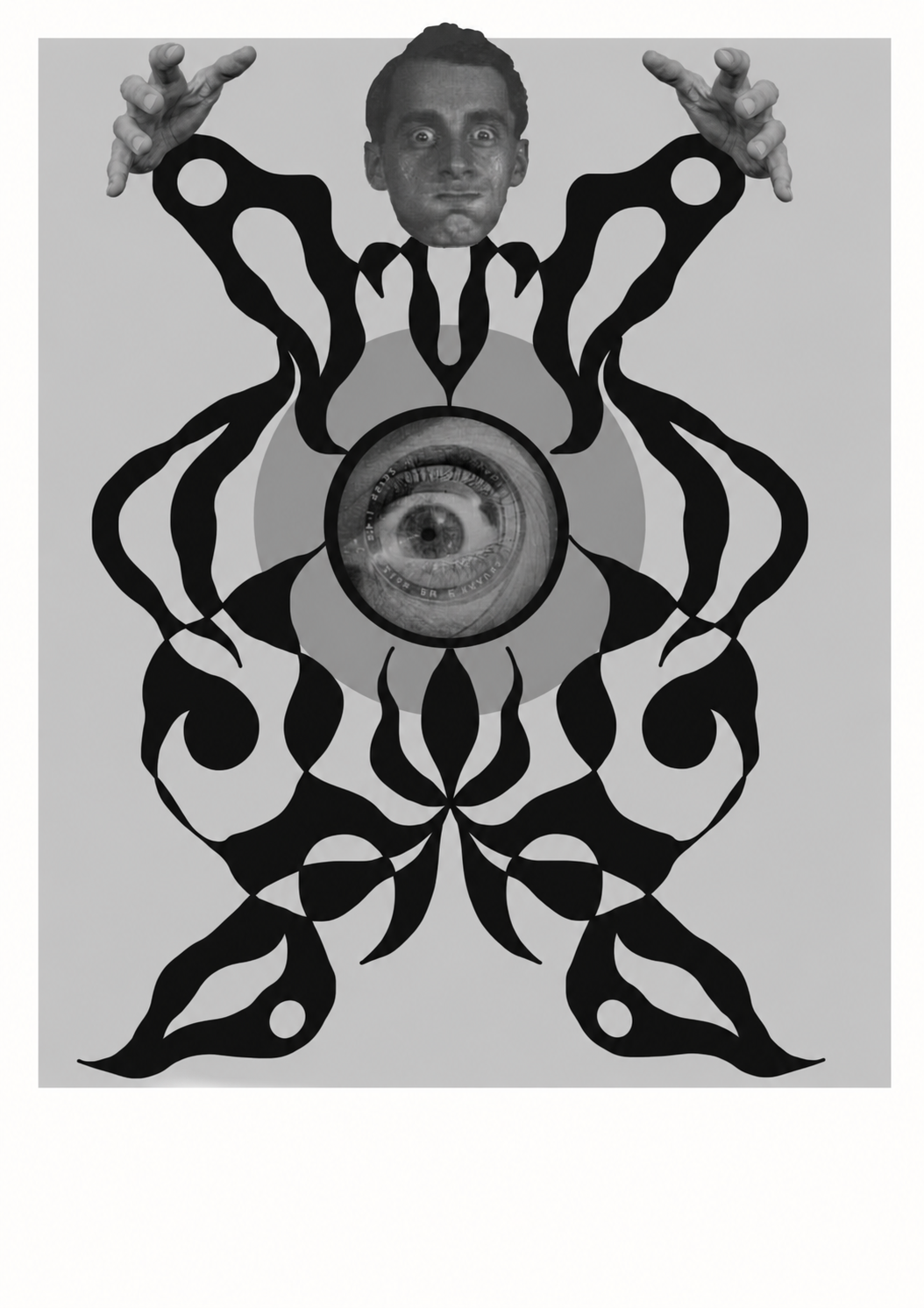
Di notte, notte e dì, a two-person show by Leonardo Crudi and Elia Novecento curated by Giovanni Argan, is open at Gallery Morphè from October 15 to November 15, 2026. The gallery is in the ground-floor room at Via Giuseppe Dalla Vedova 14, 00177 Rome, in the Marranella area of Pigneto, about two minutes on foot from the Malatesta station on Metro C. The exhibition can be visited Thursday to Saturday from 12:00 to 18:00, other days by reservation, and admission is free. The vernissage is Thursday, October 15 from 18:00 to 21:30, with an experimental electroacoustic live set by Giacomo Falciani. The exhibition is promoted by the Associazione Culturale ALETIS and is part of the Rome Art Week 2026 program. The program, the official sources specify, may be subject to changes.
Di notte, notte e dì: The Exhibition
Di notte, notte e dì is an exhibition of unpublished works by Leonardo Crudi and Elia Novecento, born from a shared reflection on the everyday of day and night, shown at Gallery Morphè for exactly one month, from October 15 to November 15, 2026.
The question the exhibition starts from is simple and beautiful: what if the passing of time were nothing but the repetition of apparently insignificant gestures and forgotten dreams? The two artists split the field. To Leonardo Crudi falls the day, to Elia Novecento the night.
The Day: Leonardo Crudi's Hands
For the daytime dimension Crudi chooses a precise subject: hands. They are the protagonists of minimal, invisible gestures that mark everyone's days, the ones done without thinking and that no one looks at anymore. The choice is a happy one, because the hand is at once the most banal and the most loaded of subjects in the history of art: gesture, work, prayer, writing.
The Night: Elia Novecento's Abstract Forms
Elia Novecento explores the nocturnal flip side. In his works lived experiences lose their outlines and resurface in abstract forms, as happens in dreams and memories. The passage from figure to abstraction, from one wall to the next, is the real story of the exhibition.
A Single Cycle
The curatorial text insists on the inseparability of the two moments: what we live turns into what we imagine, what we dream influences lived experience. The exhibition invites visitors to recognize themselves in this common experience and to bring their attention back to what habit has made us stop observing. It's an invitation modest in form and ambitious in substance, and it's the best reason to go.
The Title
Di notte, notte e dì is a title that sounds like a popular formula, a nursery rhyme. It repeats night twice and day once: a small imbalance that already says where the exhibition leans, toward dream and memory.
Collettivo 900: Who Leonardo Crudi and Elia Novecento Are
Leonardo Crudi and Elia Novecento are the two founding artists of Collettivo 900, born in Rome in 2016 from their meeting with the art historian and curator Giovanni Argan, who also curates Di notte, notte e dì.
Collettivo 900 joins artistic practice and curatorial practice in a path that moves among painting, poetry, installations and interventions in public space. It's a cross-disciplinary research that doesn't separate the work to hang from the one to paste on a wall of the city.
From Writing to Painting
The two artists share a background in writing, an interest in the stories and cultures that are called minor and a passion for poetry. These are three roots you recognize in their work: the street as first exhibition venue, attention to what official history leaves at the margins, the word as visual material.
Cultural Agitation Propaganda
Alongside individual research, Collettivo 900 carries forward a shared urban practice it calls cultural agitation propaganda. These are hand-painted posters pasted on the walls of Rome, with which the collective invites people to rediscover forgotten figures and to engage with visual languages that rework the legacy of the avant-gardes and the suggestions of Asian decorative traditions. Those who walk through certain Roman neighborhoods may already have run into them without knowing who signed them.
Giovanni Argan, the Curator
Giovanni Argan is the art historian and curator who since 2016 has shared the path of Collettivo 900 with Crudi and Novecento. In Di notte, notte e dì he curates the exhibition: he is the one who builds the dialogue between the two parallel researches.
Leonardo Crudi
Leonardo Crudi is a Roman artist, cofounder of Collettivo 900, whose painting combines graphic realism and geometric abstraction.
The Sources
The declared references of his research are broad and precise: constructivism, futurism, Roman pop art, the imagery of Italian underground cinema and poetry. It's a very Roman genealogy, if you think how much the pop art of Piazza del Popolo and the experimental cinema of the 1960s marked the city.
The Hands on Show
In Di notte, notte e dì Crudi brings his graphic language to an everyday subject: hands and their minimal gestures. Graphic realism serves to make visible what we usually don't look at, geometric abstraction to turn it into a sign.
Elia Novecento
Elia Novecento is a Roman artist, cofounder of Collettivo 900, who develops a biomorphic abstract painting.
Rorschach and Batik
In his painting, according to the gallery's text, the suggestions of Rorschach inkblots and post-graffiti intertwine with the decorative motifs of Asian carpets and batiks. It's an unexpected meeting among psychology, the street and textile craft, which produces organic, symmetrical, ambiguous forms.
The Night on Show
For this exhibition Novecento works on the night, where experiences lose their outlines and become abstract forms. Rorschach blots, which by definition ask the viewer to project something of themselves onto them, are the ideal tool to tell the dream.
The October 15 Vernissage and Giacomo Falciani's Live Set
The vernissage of Di notte, notte e dì is Thursday, October 15, 2026 from 18:00 to 21:30, with free admission, at Gallery Morphè on Via Giuseppe Dalla Vedova 14.
The inauguration is accompanied by an experimental electroacoustic live set by Giacomo Falciani, who takes part in the exhibition project. It's an idea consistent with the theme: an exhibition on the passage from day to night that opens precisely in the hours of sunset, with music that accompanies the change of light.
When to Go
On October 15 in Rome the sun sets around 18:30. Whoever arrives at the opening, at 18:00, sees the exhibition in the last light of day and leaves it after dark: the title, for one evening, becomes experience.
A Thursday in Pigneto
Thursday evening is one of the liveliest evenings in Pigneto. The vernissage can become the first half of an evening in the neighborhood, with Metro C a short walk away for the trip home.
Gallery Morphè
Gallery Morphè is a contemporary art gallery and cultural production platform based in the ground-floor room at Via Giuseppe Dalla Vedova 14, in Rome.
The Gallery's Line
The gallery presents itself as an independent curatorial infrastructure of production and research, working on the transformations of perception and experience generated by the interaction among body, algorithm and infrastructure. It defines itself as a symbolic laboratory, in which the exhibition becomes a tool for critical analysis of the structures that govern vision, memory and presence in contemporary media systems.
Production, Research, Collaboration
The gallery's work is organized in three declared directions: the production of new works commissioned from artists, critical research on contemporary media systems, a network of international collaborations among artists, curators and researchers. The gallery also runs an open call for artists.
Why This Show Here
At first sight the painting of Collettivo 900, with its roots in writing and the historical avant-gardes, seems far from a gallery that talks about algorithms and media systems. The point of contact is perception: an exhibition that asks us to see again what habit has made invisible works exactly on the ground the gallery has chosen.
Hours and Contacts
During the exhibition the gallery is open Thursday to Saturday from 12:00 to 18:00. On other days it can be visited by reservation. Admission is free. To book an off-hours visit the gallery gives its email address, gallerymorphe@gmail.com, and its Instagram profile.
Di notte, notte e dì and Rome Art Week 2026
Di notte, notte e dì is part of the Rome Art Week 2026 program, the event devoted to contemporary art that networks the city's exhibition spaces.
The exhibition is registered in the program with its own event code, BQDEMD, useful for finding it in the event's official calendar. For those following Rome Art Week, Gallery Morphè is a different kind of stop: away from the routes of the center, in a neighborhood that in recent years has become one of the city's liveliest laboratories.
The Associazione Culturale ALETIS
The exhibition is promoted by the Associazione Culturale ALETIS, which presents it in the spaces of Gallery Morphè. This is the typical model of Roman independent spaces: cultural associations that produce exhibitions in small galleries, with free admission and hours compatible with people who work.
La Marranella and Pigneto, the Gallery's Neighborhood
Via Giuseppe Dalla Vedova is in the Marranella, the part of Pigneto at the corner of Via Casilina and Via di Acqua Bullicante, in Municipio V.
A Water Name
The Marranella takes its name from a small watercourse, the fosso della Marranella, a tributary of the Aniene. It rises in the Colli Albani under the name Marrana and, once in the urban area, becomes Marranella to distinguish itself from the other marrane of the Roman countryside. The name derives from the fundus maranus that the stream skirted. Until 1934 it ran in the open air. Today in the city it is hidden in an underground collector.
The Waters That Boiled
At the height of Via di Acqua Bullicante the ditch received the waters of the bullicame springs, so called for the sulfurous gas emissions that made them bubble and that gave the name to an estate still existing in the 19th century. Archaeological excavations in the area have documented an ancient rural village dating back at least to the 2nd century BC, which some scholars propose to identify with the ancient city of Caenina.
The Borgata
The borgata Marranella took its name from the ditch. After 1870, together with Prenestino, Torrione, borgata Galliano, Acqua Bullicante and Casilino, it formed the neighborhood we now call Pigneto, whose name derives from a row of pines planted by the Caballini family along the wall of Villa Serventi.
The Neighborhood Today
In recent years Pigneto has become one of the centers of Roman cultural and evening life, also thanks to the pedestrianization of Via del Pigneto in 2015 and the arrival of Metro C. It's a neighborhood of independent spaces, bookstores, small galleries and venues: the right context for a collective born from writing.
How to Get to Gallery Morphè for Di notte, notte e dì
The easiest way to reach Gallery Morphè is Metro C, Malatesta stop, in Piazza Roberto Malatesta: from there Via Giuseppe Dalla Vedova is a couple of minutes on foot.
By Subway
From the center take Metro A to San Giovanni, change to line C and get off at Malatesta, the stop after Pigneto. From the eastern neighborhoods, Centocelle and beyond, line C goes straight to Malatesta with no changes.
On the Casilina
The gallery is a short distance from Via Casilina. Those coming from the Termini area can use the Termini Centocelle railway, which runs along the Casilina with stops like Ponte Casilino and Sant'Elena.
By Bike and on Foot
From pedestrian Pigneto the gallery is a few minutes on foot, passing through the streets of the Marranella. It's the best way to combine the exhibition with a walk in the neighborhood.
By Car
The streets of the Marranella are narrow and densely populated: finding parking, especially on the vernissage evening, is not easy. With the metro two minutes away it's best to leave the car at home.
A Curiosity About Di notte, notte e dì at Gallery Morphè, from October 15 to November 15, 2026
The nicest curiosity concerns the place. The gallery is in the Marranella, a neighborhood named after a ditch that until 1934 ran in the open and that is now hidden under the streets. A watercourse that has become invisible but is still present: it's almost an illustration of the exhibition's theme, which speaks of what habit has made us stop seeing.
The second curiosity concerns the names. The collective is called 900, and one of its founders signs as Elia Novecento: the century of the avant-gardes becomes signature and program. Collettivo 900 in fact declares that it reworks the legacy of the historical avant-gardes, from constructivism to futurism, with the tools of the street.
The third concerns the Rorschach blots, cited as a source of Novecento's painting. Born as a psychological test in the early 20th century, they ask the viewer to see something that isn't there, or that is there only for them. In an exhibition on night and dream, they are the most direct way to involve the visitor: everyone leaves with their own interpretation.
Something Nobody Tells You About Di notte, notte e dì at Gallery Morphè, from October 15 to November 15, 2026
What nobody says is that the exhibition is open only three days a week. Thursday, Friday and Saturday from 12:00 to 18:00: on Sunday, the day many Romans go to exhibitions, the gallery is closed, except by reservation. If Sunday is your only free day, write to the gallery a few days ahead.
The second thing concerns the closing time. 18:00 is early: in an exhibition about day and night, with works that speak of light and dark, the afternoon visit is the only possible one on ordinary days. The only chance to see the works in the dark, and with music, is the vernissage evening.
The third concerns the address. The gallery is a ground-floor room on a residential street, not a window on a through street. If you arrive from the metro and don't know the neighborhood, note the street number, 14, and walk carefully: there are no illuminated signs announcing it.
The Advice I Give You for Visiting Di notte, notte e dì at Gallery Morphè, from October 15 to November 15, 2026
It's better to go twice, if you can. The first time at the October 15 vernissage, for Giacomo Falciani's music, for the crowd and for the chance to talk with the artists and the curator. The second on a Thursday or Friday afternoon, alone, to look at the works at leisure. An exhibition that invites us to observe what we usually don't see deserves the silence of a second visit.
Second piece of advice: read the works in pairs. Crudi's hands and Novecento's nocturnal forms are meant to talk to each other: look at a work of the day and right after one of the night, and look for the points where one seems to continue into the other.
Third piece of advice: make the show a stop on a walk in the eastern quadrant, between Pigneto and the Casilina, where Collettivo 900 also pastes up its painted posters. For groups, schools or associations that want a tailor-made route among urban art, independent galleries and the archaeology of the Casilina, an itinerary can be organized with Tour Leader Pro.
Another Well-Known Fact, Yet Rarely Mentioned
It is well known that Pigneto is a film neighborhood: here Pier Paolo Pasolini shot Accattone in 1961, and before him Roberto Rossellini had set scenes of Roma città aperta in these streets. It is far less often cited that the neighborhood was born from the union of different borgate, and that one of them, the Marranella, bears the name of a ditch of water that is invisible today.
A second fact, about the territory: the archaeological excavations on Via di Acqua Bullicante documented a rural village of the 2nd century BC, perhaps the ancient Caenina along the via Labicana, today's Casilina. Under the 20th-century public housing blocks there is another Rome, older than imperial Rome.
A third fact, about art: the hand-painted poster pasted in the street, which Collettivo 900 uses as an instrument of cultural agitation propaganda, has a long history in the avant-gardes of the 20th century, from Russian constructivism to futurist posters. Seeing it return to the walls of Rome, painted by artists who grew up with writing, closes a circle of a century.
The Right Photo to Take at Di notte, notte e dì at Gallery Morphè, from October 15 to November 15, 2026
The right photo is taken on the vernissage evening, on the gallery's threshold, when inside the room is lit and outside it's already dark: the passage between light and night, which is the theme of the show, becomes a frame. In mid-October the sun sets around 18:30, in the middle of the vernissage.
The second photo is a detail: a hand painted by Crudi next to yours, or a Novecento form in which everyone sees their own figure. Before photographing the works, ask the gallery: in a show of unpublished works it's a courtesy, as well as a good rule.
The third photo is taken outside, in the street. If during your walk in the neighborhood you come across a hand-painted poster by Collettivo 900 on a wall, photograph it: it is the other half of their work, the one that doesn't fit in a gallery and that the rain will wash away.
Some Important Events That Happened Here in History
The history of the Marranella begins long before Rome as capital. The excavations on Via di Acqua Bullicante document a rural village of the 2nd century BC, perhaps the ancient Caenina, along the via Labicana. For centuries the area remains countryside, crossed by the fosso della Marranella and marked by the sulfurous springs of the bullicame, which give their name to an estate still existing in the 19th century.
After 1870 the countryside changes: the borgata Marranella, Prenestino, Torrione, borgata Galliano, Acqua Bullicante and Casilino together form Pigneto, a working-class neighborhood that grew between the Prenestina, the Casilina and the railway. In 1934 the ditch disappears from view, channeled underground. In 1961 Pasolini shoots Accattone in the neighborhood. In 1977, with the establishment of the urban planning zones, the Marranella enters the Pigneto zone.
More recently come the pedestrianization of Via del Pigneto, in 2015, and Metro C with the Pigneto and Malatesta stations. In 2016 Collettivo 900 is born in Rome. On October 15, 2026 Gallery Morphè opens the exhibition Di notte, notte e dì on Via Giuseppe Dalla Vedova.
Who Has Passed Through Di notte, notte e dì at Gallery Morphè, from October 15 to November 15, 2026
The greats of Italian cinema have passed through the streets of Pigneto. Pier Paolo Pasolini shot Accattone here. Roberto Rossellini set scenes of Roma città aperta here, on Via Montecuccoli. Films like Bellissima, Il ferroviere, Una vita difficile, Un borghese piccolo piccolo and one of the Fantozzi adventures were shot here. The neighborhood has offered generations of directors the working-class face of Rome.
Through Gallery Morphè pass the artists, curators and researchers of the international network the gallery builds with its productions and its open call. Before Di notte, notte e dì the room hosted the exhibition Entra il vuoto.
From October 15 to November 15, 2026 Leonardo Crudi and Elia Novecento pass through the gallery, with the curator Giovanni Argan: the three founders of Collettivo 900. On the vernissage evening Giacomo Falciani also passes through, with his electroacoustic live set.
What to See Around Gallery Morphè
Gallery Morphè is in the eastern quadrant of Rome, between Pigneto and the Casilina, a few minutes from archaeological and urban places that many Romans don't know.
Porta Maggiore
At the apex of the Pigneto triangle is Porta Maggiore, built on the arches of the Claudian and Anio Novus aqueducts. Not far away, the underground basilica of Porta Maggiore can be visited only on dates and in ways set by the Soprintendenza.
The Mausoleum of Sant'Elena
Along the Casilina, further east, the Mausoleum of Sant'Elena with the catacombs of Santi Marcellino e Pietro is the archaeological heart of the Ecomuseo Casilino ad Duas Lauros, which treats the whole quadrant as a museum spread across the territory.
The Former Snia and the Lake
Toward the Prenestina, the area of the former Snia Viscosa hosts the ex Snia lake, an artificial lake that, according to the reconstruction of the ditch's course, is fed by the same Marranella that gives its name to the gallery's neighborhood. After the lake the ditch follows the Pescara railway and flows into the Aniene along Via di Pietralata, in some stretches still in the open.
Cultural Pigneto
In Pigneto, at Via del Pigneto 22, is the Biblioteca Goffredo Mameli, home of Officina Pigneto's Thursday meetings. For the life of the neighborhood, the page on the Pigneto Comedy Fest tells of the festival spread across the area in early October. Further south, the Aqueducts Park is the great walk among the ancient arches.
Where to Eat Near Gallery Morphè
Around the Marranella and Pigneto the offering is wide: Roman trattorias, pizzerias, bakeries and world cuisines, in one of the most multiethnic quadrants of the city.
After the Vernissage
The vernissage ends at 21:30, the right time for dinner. Via del Pigneto and the streets around are full of places. On Thursday evenings they're crowded, and for a group it's best to book.
World Cuisines
Between Pigneto, Marranella and Casilina you find Asian, African and Middle Eastern cuisines, next to neighborhood osterie. For a show that lists Asian carpets and batiks among its sources, it's a consistent pairing.
A Midday Break
If you visit the show at lunchtime, since the gallery opens at 12:00, you find bakeries and pizza-by-the-slice places a few steps away: a pizza bianca before going in is the simplest solution.
Accessibility, Children and Practical Information
Gallery Morphè is a ground-floor room with free admission, open Thursday to Saturday from 12:00 to 18:00 and on other days by reservation.
People with Disabilities
That the gallery is on the ground floor is a good starting point for wheelchair users. To check the exact entrance conditions it's best to write to the gallery first. For arriving by metro, the status of the elevators at Malatesta station can be checked on the ATAC website.
With Children
A painting show in a small gallery takes little time to visit, and the theme, the hands of the day and the forms of dreams, lends itself to a game with children: asking them what they see in Novecento's forms is a way to make them really look.
For Students and Enthusiasts
For those studying contemporary art, the show is an opportunity to see in person the passage between urban art and gallery painting, and to engage with a collective that has joined artists and curator since its founding.
Rome Between October and November
Between mid-October and mid-November Rome lives one of its best seasons for contemporary art: galleries reopen with the autumn shows, Rome Art Week brings the public into independent spaces, the afternoons are still bright.
It's also the season when the day shortens week by week, and daylight saving time ends at the end of October. A show about day and night, open for a month just as the light goes earlier and earlier, takes on an extra meaning: whoever visits in mid-October and whoever returns in mid-November walks out into two different cities.
Frequently Asked Questions About Di notte, notte e dì
When Is the Exhibition Di notte, notte e dì Open?
The exhibition Di notte, notte e dì is open at Gallery Morphè from October 15 to November 15, 2026, Thursday to Saturday from 12:00 to 18:00. On other days the gallery can be visited by reservation. The vernissage is Thursday, October 15 from 18:00 to 21:30.
Where Is Gallery Morphè?
Gallery Morphè is in the ground-floor room at Via Giuseppe Dalla Vedova 14, in Rome, in the Marranella area of Pigneto. The nearest metro stop is Malatesta, on line C, about two minutes on foot.
How Much Does Admission to Di notte, notte e dì Cost?
Admission to the exhibition Di notte, notte e dì is free, both during the October 15 vernissage and on the regular opening days. For visits outside regular hours Gallery Morphè asks that you reserve.
Who Exhibits in Di notte, notte e dì?
Leonardo Crudi and Elia Novecento, founders of Collettivo 900, exhibit in Di notte, notte e dì, with a core of unpublished works. Crudi tells the day through hands and everyday gestures, Novecento the night with biomorphic abstract forms. The curator is Giovanni Argan.
What Is Collettivo 900?
Collettivo 900 is a group born in Rome in 2016 from the meeting of the artists Leonardo Crudi and Elia Novecento and the art historian Giovanni Argan. It works among painting, poetry, installations and urban interventions, with hand-painted posters pasted on the walls of Rome.
What Happens at the Di notte, notte e dì Vernissage?
The vernissage of Di notte, notte e dì, Thursday, October 15, 2026 from 18:00 to 21:30, is free and accompanied by an experimental electroacoustic live set by Giacomo Falciani. It is the only chance to see the exhibition in the evening.
Is the Exhibition Part of Rome Art Week?
Yes, Di notte, notte e dì at Gallery Morphè is part of the Rome Art Week 2026 program, with the event code BQDEMD. The exhibition is promoted by the Associazione Culturale ALETIS.
Our Verdict
Di notte, notte e dì is the right show for anyone who wants to leave the routes of the center and see where part of today's Roman art is born: from the street, from the walls, from the neighborhoods. The clear advice is to go to the October 15 vernissage, arrive at 18:00 with the last light and stay until night, and then come back alone on an afternoon. And walking toward the metro, look at the walls: Collettivo 900 works there too.
Article written by the editorial team of Tour Leader Pro, contact them for Private/Corporate/V.I.P. Tours and Experiences.
Planning a trip to Rome? The English guides for visiting the city are on ItalyPlanner.com.