Published on · updated on
Some links on this page are affiliate links: if you book through them, Estate Romana receives a small commission, at no extra cost to you.
Some words carry a piece of a city with them. “Fornicate” is one of them: inside it there is a Roman arch, once made of brick, a dark room along a crowded street. To understand it you have to go back to when, under the arches of Rome, also around the Circus Maximus, women who sold their bodies waited for clients. And you also have to debunk a story you often hear: the word “porn” doesn’t come from there.
Data checked on October 17, 2026 against the Treccani and Etimo.it dictionaries, the Lewis & Short Latin dictionary, the Online Etymology Dictionary, the Latin texts of Juvenal, Horace, Livy, Suetonius, Tacitus and Isidore of Seville, and the Turismo Roma and Sovrintendenza Capitolina pages for the Circus Maximus. Where the sources disagree, we say so.
Fornicate in brief
- Where it comes from: from the Latin fornix, “arch, vault.” By extension, the vaulted room where prostitution took place, and so the brothel.
- The verb: fornicari was born in the Latin of the Christians, with Tertullian and the Vulgate, and from there it passes into Italian as “fornicare,” the word of the sixth commandment.
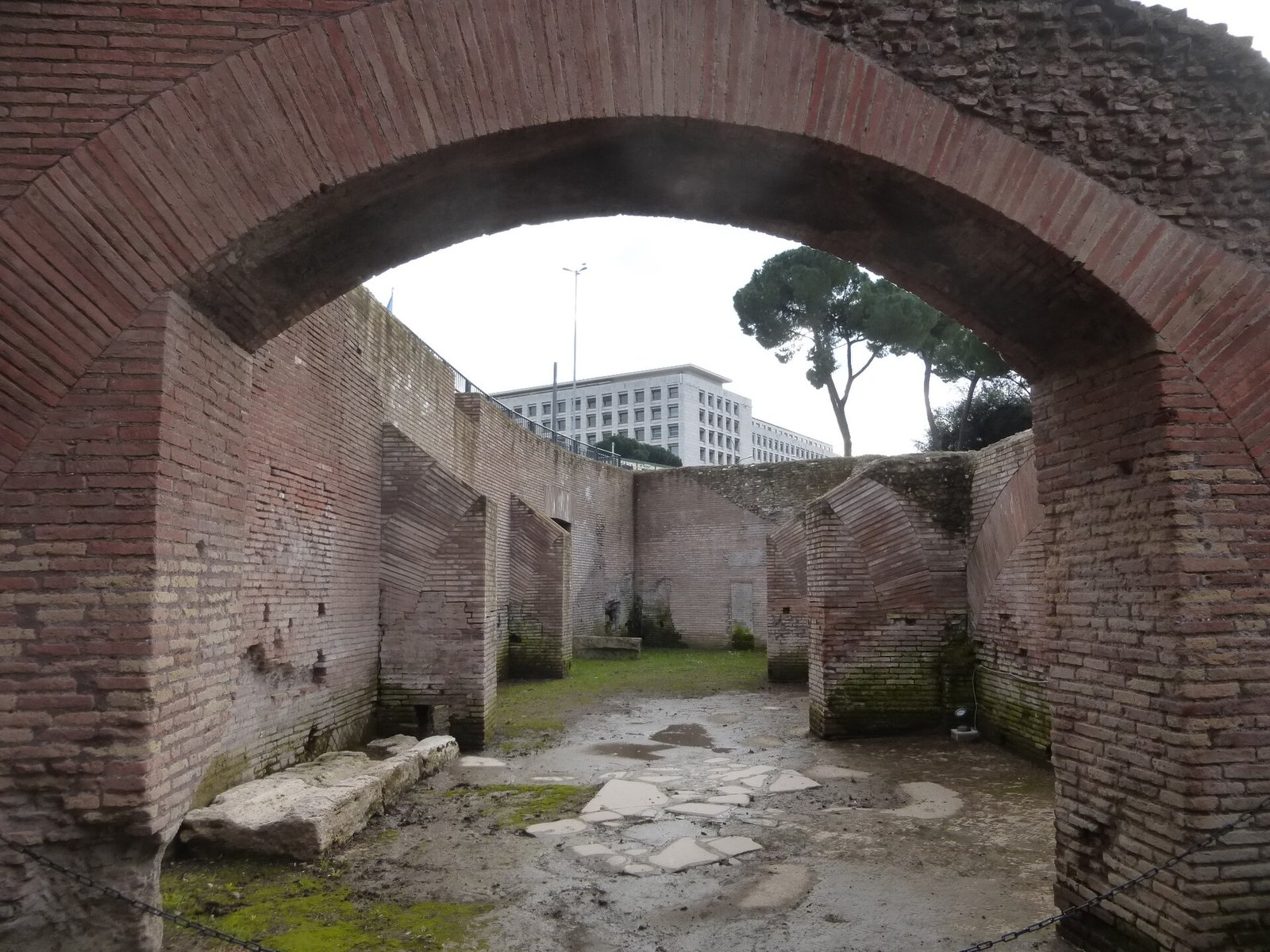
- The Circus Maximus: the poet Juvenal recalls the girls forced into prostitution “near the Circus.” Under the outer arches there were shops and rooms rented to them too.
- And “porn”? It has nothing to do with it: it comes from the Greek pórnē, “prostitute,” linked to a verb meaning “to sell.”
- Where to see it today: the archaeological area of the Circus Maximus, with the ambulatories and the shops of the hemicycle, and the Circo Maximo Experience in augmented reality.
What does fornix mean?
In Latin fornix is first of all an architect’s thing: an arch, a vault. That’s what the arches of aqueducts were called, and even a triumphal arch, the Fornix Fabianus, which stood on Via Sacra in the Roman Forum and which Cicero names several times. Poets used the same word for the vault of the sky.
Then the word goes down to the street. The vaulted rooms on the ground floor, open onto the road, dark and cheap, were also the place of the poorest prostitution. Horace, in the Satires, speaks of a woman who “stands in a stinking fornix.” Juvenal uses fornix to mean brothel. In the 7th century Isidore of Seville explains it in the clearest way: the prostitutes stood under the arches, and those places were called fornices. From there, he says, comes the name of those who worked in them.
When was the verb fornicate born?
Pagan Romans didn’t say “fornicate.” The verb fornicari appears with Christian authors: Tertullian uses it at the beginning of the 3rd century, and so does the Vulgate, the Latin Bible, to translate the passages that condemn relations outside marriage. That’s how a word born to describe an arch ends up in the catechism. The Treccani dictionary confirms it: the Italian “fornicare” comes from the late Latin fornicare, derived from fornix, “arch, vault,” then “brothel.”
What does the Circus Maximus have to do with it?
The Circus Maximus was Rome’s largest venue for spectacles, and around the track ran a ring of multi-story arcades. The Greek historian Dionysius of Halicarnassus tells that on the outside there was a portico with shops and, above them, homes. All sorts of people mixed in those spaces: food sellers, astrologers, moneychangers for the bets, and prostitutes. Juvenal, in the third satire, complains about the girls who came from the East and were “forced into prostitution near the Circus.” And the Historia Augusta, a late and not very reliable source, tells that the emperor Elagabalus gathered the prostitutes of the Circus, the theater and the stadium.
One thing has to be said honestly: no ancient text we know uses the word fornix specifically for the arches of the Circus Maximus. The link “fornices of the Circus, therefore fornicate” is a modern reconstruction, plausible and much told by guides, because it puts together the meaning of fornix and the evidence for prostitution around the Circus. The word comes from arches in general. The Circus is the place where that image becomes easiest to see.
So where does “porn” come from?
From somewhere else entirely, and from another language. “Porn” is short for “pornography,” which came into Italian from the French pornographie and, before that, from Greek: pórnē means “prostitute” and is linked, according to linguists, to a verb meaning “to sell.” Pornográphos
, “one who writes about prostitutes,” already exists in ancient Greek. In 1769 the French writer Restif de la Bretonne titled Le Pornographe a project to regulate brothels: it was not an obscene book but a treatise on prostitution. The sense of obscene images and texts arrives only in the 1800s, and the short form “porn” dates from the 1900s.
So “fornicate” and “porn” talk about the same thing, but they are not relatives: the first comes from a Roman arch, the second from a Greek market.
Which other words for paid sex come from Rome?
- Lupa and lupanare: lupa in Latin also meant the prostitute, and the brothel was the lupanar. Livy reports that, according to some, Acca Larentia, the wife of the shepherd who raised Romulus and Remus, was called “lupa” by the shepherds for exactly this reason, and that the legend of the she-wolf supposedly came from there. Livy presents it as someone else’s opinion, not as a fact.
- Meretrice: from merere, “to earn”: literally, the woman who earns.
- Prostituta: from pro-statuere, “to place in front, to put on display”: the one who stands on show.
- Scortum: originally it meant “skin,” as Varro explains. Later it came to mean the prostitute.
The trade in Rome was legal and regulated. Tacitus tells that in 19 AD a woman of a senatorial family, Vistilia, had herself registered with the aediles as a prostitute to escape the adultery laws, and the Senate sent her into exile. Suetonius writes that Caligula put a tax on prostitutes equal to the earnings of one service, and even went as far as opening a brothel on the Palatine. The Subura, the working-class district between the Forum and the Esquiline, today more or less the Monti neighborhood, was famous for its girls of doubtful reputation: Martial says so.
Where to see the places of this story today
The archaeological area of the Circus Maximus is visited from the hemicycle side, toward Porta Capena and the Torre della Moletta: you see the ambulatories that led to the stands, a paved road, latrines and the remains of the shops for spectators, along with the bases of the Arch of Titus. According to Turismo Roma it is open Tuesday to Sunday, with winter hours from the last Sunday of October (9:30 to 16:00, last entry at 15:00). It’s best to book through the Musei in Comune circuit or by calling 060608.
To see the Circus as it was, the Circo Maximo Experience is running throughout 2026: a visit of about 40 minutes in augmented and virtual reality, with entrance from Viale Aventino, closed on Mondays and also when it rains, because the headsets aren’t used in the rain. The full-price ticket costs €12 according to the Sovrintendenza Capitolina. If you prefer a guide in flesh and blood, you’ll find the guided visit of the Baths of Caracalla and the Circus Maximus on Tiqets or the small-group tour on Viator. The Baths of Caracalla are a 10-minute walk away: a way to see, the same afternoon, how the Romans spent their free time.
To round out the loop, the Roman Forum, where the Fornix Fabianus stood, is visited with the ticket of the Colosseum Archaeological Park, for example with the Forum Pass with audio guide on Tiqets. The most famous brothel of the Roman world, with its masonry beds and the paintings in the corridor, is instead in Pompeii: a day trip from Rome. Before leaving, check on the Archaeological Park’s site that it’s open.
Frequently asked questions
Does fornicate really come from the Circus Maximus?
It comes from fornix, the arch or vault of the rooms where prostitution took place in Rome. The Circus Maximus, with its arches and the evidence from Juvenal, is the most famous example, but no ancient text uses fornix specifically for the Circus: the direct connection is a modern reconstruction.
Do porn and fornicate have the same origin?
No. “Fornicate” comes from the Latin fornix. “Porn” comes from the Greek pórnē, “prostitute,” through the French pornographie. They talk about the same thing, but they are not relatives.
Why is a brothel called a lupanare?
Because lupa, in Latin, also meant the prostitute. From there comes lupanar
, the brothel. Livy reports the hypothesis that the she-wolf of Romulus and Remus was in fact Acca Larentia, called that by the shepherds.
Was prostitution legal in ancient Rome?
Yes, it was tolerated and regulated: prostitutes registered with the aediles, and under Caligula they paid a tax. It was, however, a shameful trade, one that took away rights from those who practiced it.
Can you see the arches of the Circus Maximus?
You can see the remains of the hemicycle, on the side toward Porta Capena: ambulatories, shops, an ancient road. The rest of the structure is buried under the lawn we know.
Who wrote this and from what sources
The text comes from the editorial team of Tour Leader Pro, the Rome-based outfit that designs itineraries, visits and cultural events across Rome and Lazio. The main sources are the Treccani and Etimo.it dictionaries, the Lewis & Short Latin dictionary, the Online Etymology Dictionary, the texts of Juvenal (Satires 3), Horace (Satires 1,2), Livy (1,4), Suetonius (Caligula 40-41), Tacitus (Annals 2,85), Isidore of Seville (Etymologies 10) and Dionysius of Halicarnassus (3,68), as well as the Turismo Roma and Sovrintendenza Capitolina pages on the Circus Maximus, all consulted on October 17, 2026. Where the sources disagree, we say so in the text. Let us know what you find changed.
If you’re putting together a few days in Rome around these stories, you can add the places to your trip plan and see them day by day on the map. For a multi-day itinerary across Rome and the rest of Italy, a useful resource is Italy Planner.