Spazio 900
In short. Spazio 900 is at Piazza Guglielmo Marconi 26, in the heart of the EUR district, a few steps from the obelisk dedicated to Guglielmo Marconi and from the monumental axes designed for the 1942 Universal Exposition.
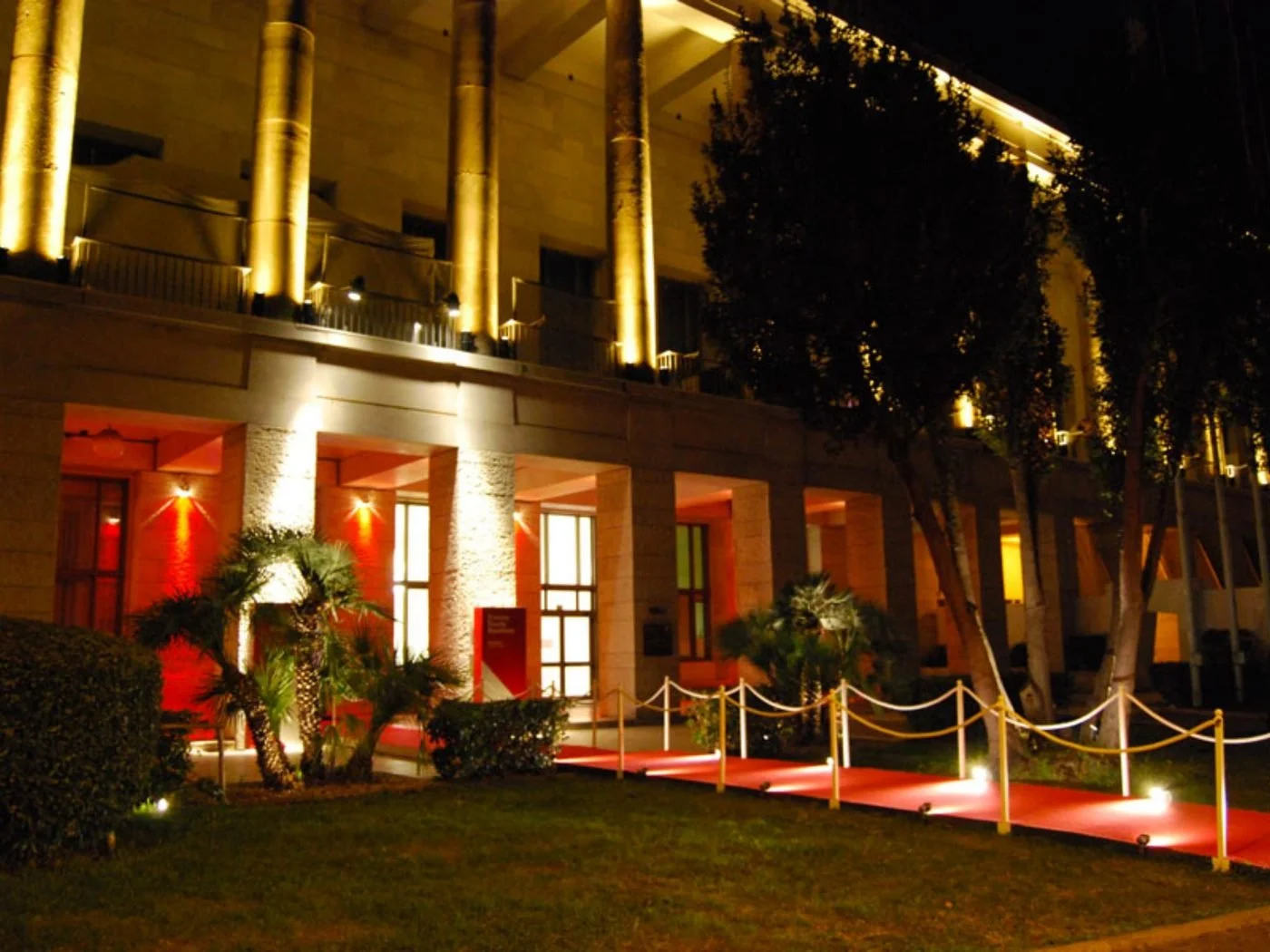
Spazio 900 is at Piazza Guglielmo Marconi 26, in the heart of the EUR district, a few steps from the obelisk dedicated to Guglielmo Marconi and from the monumental axes designed for the 1942 Universal Exposition. The venue occupies a historic building of the district, known as the Palazzo dell'Arte Antica, converted into an event space, nightclub and congress hall. It is not a theater or a museum open every day: it is a multipurpose location that over the year hosts dance nights, private parties, corporate presentations, fashion shows and gala dinners, with a calendar that changes season by season and must always be checked before organizing an evening. Anyone coming from outside the area can compare the offer with that of the other EUR venues covered on Eur Social Park and on EUR, Esposizione Universale Roma, two useful stops for understanding how the district built over the decades an entertainment offer of its own alongside the institutional vocation of its origins.
Where Spazio 900 is and how to get there
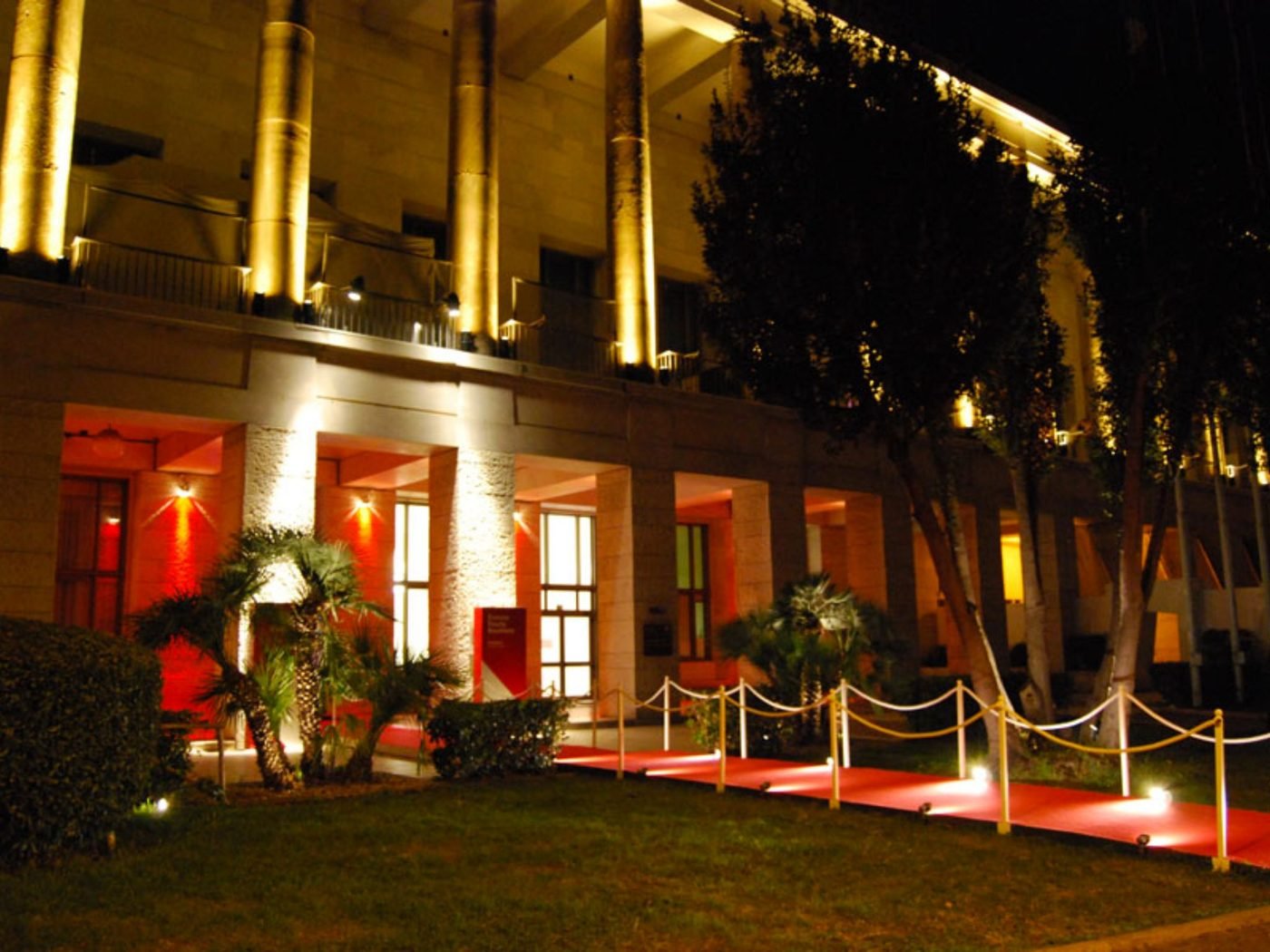
The square that gives the address its name is one of the visual hubs of the EUR: a large open space surrounded by buildings in travertine and brick, with the tall, narrow obelisk dedicated to Marconi marking the geometric center of the district and which, in the evening, with its dedicated lighting, becomes a landmark visible from all the avenues that flow into the square. Spazio 900 occupies one of the buildings on the perimeter of the square, with a colonnade on the facade that echoes the rationalist architectural language of the whole area, and with an entrance recognizable by the marble staircase that leads into the main hall.
By metro to Spazio 900
Metro line B serves the EUR with three consecutive stops, EUR Magliana, EUR Palasport and EUR Fermi, all within walking distance of Piazza Marconi: which is most convenient depends on the point where you enter the district, but in any case the walk does not exceed 15 minutes. Anyone arriving from Termini or the historic center generally takes about 20 minutes of metro plus the walk, a reasonable time even for those moving in a group or in evening dress. Keep in mind that the metro service has an evening closing time, later on weekends than on weekdays: anyone staying late at a dance night has to plan on a taxi or a private transport service for the return.
By bus
Several urban bus lines connect the EUR to the rest of the city and stop along the avenues that converge on the square, useful above all in the evening when the metro frequency drops or when arriving from neighborhoods not directly served by line B, such as Garbatella or the historic Magliana. For anyone who doesn't know the routes well, an up-to-date public transport app remains the most reliable tool, because evening and holiday schedules differ from weekday daytime ones.
By car and taxi
Those arriving by car reach the EUR from the Grande Raccordo Anulare via the Laurentina exit or from Via Cristoforo Colombo, the axis that connects the center of Rome to the Ostia coast passing right in front of the district. Piazza Marconi is served by paid street parking and by a few attended parking lots in the nearby streets, but on event nights demand rises quickly: anyone who cares about punctuality allows a time margin to find a spot or considers a taxi to the entrance, a convenient option especially for those attending a reception or a gala dinner who don't want to arrive with a wrinkled outfit after a long hunt for parking.
From an airport to Spazio 900
Anyone arriving in Rome at Fiumicino airport finds in the EUR one of the relatively most convenient areas of the city to reach, thanks to the connection with the Grande Raccordo Anulare that avoids crossing the historic center: the trip by car or taxi takes about half an hour in normal traffic conditions. From Ciampino the road connection is just as direct, while those who prefer the train can use the regional railway lines to the stations closest to the center and complete the trip with metro line B.
Where it makes sense to start from
The EUR is reached with relative ease from all the southern neighborhoods of Rome, from Garbatella to Ostiense to Magliana, and remains one of the best-connected areas of the city thanks to the combination of metro, Via Cristoforo Colombo and the Grande Raccordo Anulare. Anyone arriving instead from the historic center or the northern neighborhoods has to allow for a longer travel time, especially by car in the Friday evening rush hours.
What Spazio 900 really is: a historic building turned multifunctional venue
The name recalls the century, the Novecento, and not a street number or a capacity: it is a way of tying the venue to the era in which the whole EUR district was designed, that of Italian rationalism between the two wars and of its reinterpretation in the following years. Inside, the building spreads over about 1,000 square meters divided among a main hall with dance floor and table area, outdoor terraces usable in the warm months and ancillary rooms for the coat check and services, plus a marble staircase that leads to the floors of the structure. It is not a club born to stay the same over the years, but a space that has gone through several phases of use, adapting to the needs of an ever-different public.
The rooms and the technical equipment
The central hall is designed to host both the audience of dance nights and more formal crowds, with a professional-level audio and lighting system and a video wall system used both for the music side and for corporate events. The terraces let you extend the use of the venue outdoors too, a feature that in the EUR, a district built on wide squares and avenues, goes well with the surrounding landscape of long perspectives and symmetrical facades.
A venue that changes function by the calendar
In the same month, Spazio 900 can host a dance music night on Friday and a corporate congress the following Tuesday: it is the logic of an event venue, different from that of a club with fixed programming. Anyone organizing private parties, receptions or presentations finds in the structure a modular setup, while anyone looking for a dance night must always check the updated calendar before heading out, because dates change constantly and an announced night can be replaced by a closed-door private event.
Who uses the space
The audience is not uniform: it changes according to the type of event on the calendar. Dance nights attract mostly a young and adult public interested in house and dance music, private parties gather families and groups of friends tied to a specific occasion, while corporate events bring to the structure a professional public that often doesn't associate that same building with weekend nightlife.
The colonnade and the staircase as a landmark
For those arriving on foot from the metro or the parking lot, the colonnade that marks the entrance of Spazio 900 remains the easiest landmark to spot, especially in the evening when the dedicated lighting sets it apart from the other buildings of the square. The marble staircase that precedes the actual entrance helps give the venue a theatrical character from the very first steps, a detail that many smaller nightclubs cannot offer.
Finding your way around the square
Piazza Marconi does not have a single main front, but is built as a symmetrical space on which several buildings of similar size face: for this reason, anyone who doesn't know the area may have some difficulty spotting the entrance of Spazio 900 right away among the colonnades that surround the square. A useful landmark remains the obelisk in the center, from which you can orient yourself toward the correct side by following the venue's illuminated signs on event nights.
A curiosity about Spazio 900
Few casual visitors connect the building's name, Palazzo dell'Arte Antica, with its current function as nightclub and event hall: the historic name remains tied to the original EUR project, conceived in the 1940s as a permanent museum and exhibition hub, and survives in the place names of the district's buildings even when the real use has changed completely. The same fate befalls other EUR buildings, which keep names tied to disciplines or collections never fully realized according to the original plan: walking through the district you often read plaques and names that tell of a project different from the one actually in use today, a layering that makes the EUR a district to be read carefully, not just crossed.
The EUR: from Universal Exposition project to business district
To understand a place like Spazio 900 you need to frame the history of the district that hosts it. The EUR was born from the project for the Universal Exposition planned for 1942, conceived as a monumental showcase of the regime of the time, with an urban layout made of straight axes, regular squares and travertine buildings built according to the language of Italian rationalism. The war stopped the works before the exposition opened, leaving some buildings unfinished and others already ready but without their original function.
The completion after the war
In the second postwar period the district was resumed and completed with a destination different from the one originally conceived: from a temporary exhibition hub to a stable business and residential district, with public offices, company headquarters and ministries that gradually settled into the buildings built or completed in those years. The Rome Olympics of 1960 gave a further boost to the area, with the construction of sports facilities that still characterize the area today.
A district that keeps transforming
In more recent years the EUR has added new contemporary pieces, from the congress center designed by Massimiliano Fuksas to the office towers that have redrawn the area's skyline, without however damaging the original urban layout of regular squares and long perspectives. In this context, the transformation of a historic building like the Palazzo dell'Arte Antica into an event venue and nightclub is only one of the many changes of function the district has gone through over the decades.
The institutional seats and the big companies
After the war the EUR gradually became the seat of ministries, public bodies and large Italian companies, which chose the district precisely for its orderly structure and for the availability of large buildings originally conceived for public and representative use. This business vocation still coexists today with the presence of museums, parks and, as in the case of Spazio 900, venues dedicated to entertainment, in a mix of functions that makes the EUR a district hard to label with a single word.
A district built to be looked at from above
Anyone looking at the plan of the EUR immediately notices an almost geometric regularity, with rectangular blocks, aligned squares and a main axis that crosses the district from north to south. Piazza Marconi, with its obelisk and its symmetrical buildings, is one of the clearest examples of this layout, conceived in the 1940s to be admired as much from street level as from a wider, more perspective view, consistent with the monumental ambition of the original project.
The EUR in cinema and in the collective imagination
The rationalist architecture and empty perspectives of the EUR have attracted over the decades many Italian and international directors, who used the district as a setting to tell of urban alienation and the modernity of the second postwar period: Michelangelo Antonioni is among the most cited names for having shot scenes set right among the squares and buildings of the EUR, exploiting its monumental scale and clean lines as a visual counterpoint to the stories told. This cinematic vocation has helped make the district recognizable even to those who have never visited it in person, and partly explains why so many visitors are surprised to find, behind such austere architecture, a lively venue like Spazio 900.
A photogenic district by day too
Beyond cinema, the EUR remains one of the most photographed areas of Rome by architecture enthusiasts, thanks to the wealth of geometric lines, colonnades and travertine surfaces that change appearance depending on the daylight. Piazza Marconi, with the obelisk and the buildings around it, is among the most sought-after spots for those visiting the district with the specific aim of photographing its architecture, regardless of the evening events held there.
The Palazzo dell'Arte Antica: architecture and materials
The building that houses Spazio 900 follows the typical canons of the EUR's rationalist architecture: symmetry, order, travertine and brick surfaces, colonnades that mark the facade and squared volumes free of superfluous decoration. It is architecture designed to communicate stability and monumentality, not domestic warmth, and that is why many of the district's buildings lend themselves well to reuse as venues for large-format events: the interior spaces are wide, the ceilings generous, the entrances theatrical.
From museum function to entertainment function
The shift from museum function to entertainment function did not require a radical transformation of the outer shell: the marble staircase, the colonnade and the symmetrical facade remain the same elements that characterized the original project, while the interior has been adapted with audio, lighting and video wall systems designed for nightlife and for contemporary events.
Materials and details to look at
Travertine remains the dominant material, used to clad the exterior surfaces and to define the profiles of the openings, while brick appears in the lower volumes and in the details less visible from the square. The columns of the portico do not have a purely decorative function, but mark the rhythm of the facade on a regular grid, typical of all the main EUR buildings built in the same period. Anyone who stops to observe these details before going in finds in the building a lesson in 20th-century architecture that is rarely told by the portals dedicated to nightlife.
One thing nobody tells you about Spazio 900
The square the venue faces is not a simple urban widening: it is one of the least exploited viewpoints of the EUR, because most visitors heading to Spazio 900 arrive in the evening, with the light already gone, and never stop to look at the alignment between Marconi's obelisk and the buildings around it. Anyone who arrives with some time to spare before opening has the chance to see the square still in daylight, with a view of the rationalist scenography that at night, among artificial lights and the line at the entrance, is almost entirely lost. Even those who have been going to the venue for years for dance nights rarely associate it with its daytime function as a seat for congresses and corporate presentations, a use that remains more discreet and less told online than the nighttime one.
My advice for visiting Spazio 900
Before heading to Piazza Marconi, it's always worth checking the type of night on the calendar on the venue's official channels or on the industry portals that publish its events, because the same location can host in consecutive weeks a dance night open to the public and a private event by invitation. Anyone organizing a party, a birthday or a corporate event does well to book well in advance, since spaces of this kind in the EUR are requested months ahead, especially in the reception season and in the end-of-year holiday period. For those looking only for the dance night, arriving before midnight remains the simplest way to avoid the line that forms under the entrance colonnade on the most requested dates, and it's always worth finding out in advance about any online presale, a format now common for nights with headline DJs.
A building designed for several seasons
The combination of air-conditionable interior rooms and outdoor terraces makes Spazio 900 usable continuously throughout the year, a feature that isn't a given among the capital's event venues, often tied to a single room or a marked seasonality. In winter the main hall, heated and soundproofed, concentrates most of the activities, while the terraces remain an additional resource for breaks during parties and receptions. In summer the balance shifts toward the outdoor spaces, without however ruling out use of the hall for the best-attended dance nights, which stay indoors even in the warm months to guarantee control of acoustics and lighting.
A common choice among the big Roman venues
This double nature, indoor and outdoor, links Spazio 900 to other large-format event venues in Rome, designed to answer both the demand for dance parties and that, often less told online, for receptions and dinners that require more formal and quieter rooms than a dance floor.
The programming: nights, private parties and corporate events
The calendar of Spazio 900 alternates three types of events with a different weight depending on the season. The public-entry nights, often with DJ sets of dance, tech house and techno music, are the most visible on the Roman nightlife portals and tend to concentrate on the weekend. Private parties, from 18th birthdays to wedding receptions, take up a good part of Saturdays and Sunday afternoons, exploiting the flexibility of the indoor and outdoor spaces. Corporate events, among gala dinners, product presentations and congresses, concentrate on weekdays and make the most of the technical equipment of the main hall, designed from the start for use that is not only nocturnal.
A mixed audience, not just clubbing
Precisely because of this variety of use, anyone searching for Spazio 900 online finds very different results: websites of Roman nightclubs, portals for organizing 18th-birthday parties, corporate event agencies and ticketing platforms for electronic music tell the same venue from different angles. Neither reading is wrong: it is the very nature of the space, designed for several audiences in the same month, that generates this variety of accounts online.
New Year's Eve and special occasions
Among the appointments most cited by the industry portals are the New Year's Eve nights, for which Spazio 900 is listed among the EUR venues with a gala dinner, show and dance night in a single package: a format common to several venues of this size in Rome, designed for a public that wants to spend the most important night of the year without having to move between a restaurant and a club.
The New Year's Eve package
The occasions that recur most regularly in the calendar of Spazio 900 remain those tied to fixed dates of the Roman nightlife calendar, in particular December 31, when several nightclubs in the EUR and the rest of the city offer combined formats of dinner, show and dance night. Here too the general rule applies: prices, menus and hours tied to a single edition of the night do not remain valid in later years and must always be checked on the official channels before booking.
Another well-known fact, yet rarely cited
The EUR was not born as a district of Roman nightlife, but as an institutional and museum hub tied to the Universal Exposition that was never fully realized in 1942 because of the war. That one of its historic buildings today hosts electronic music nights with international DJs tells well how the district has changed its skin over the decades, turning functions designed for institutional representation into entertainment spaces, without ever completely losing the original urban and architectural layout, which remains visible in every glimpse of the area, from the travertine buildings to the wide avenues designed for official parades and not for daily traffic.
The right photo to take at Spazio 900
The most successful shot is not taken inside the venue, where the low lights and the movement of the dance floor make any clean framing difficult, but outside, in Piazza Marconi, with the entrance colonnade and the obelisk in the background: the pairing of daytime rationalist architecture with the evening illuminated signs gives an image that tells in a single frame the two souls of the district, the monumental one and that of nightlife. For those who instead want to document the interior, the best moment remains walking into the hall, when the lighting system and the video wall are still set for opening and not for the peak of the night, with the marble staircase still clearly visible before it fills with people.
Some important events that happened here in history
The recent history of Spazio 900 is intertwined with that of the international dance and house music brought to Rome: over the years the venue has hosted nights with DJs of international stature, able to draw a public even from outside the region, as well as fashion events and presentations that exploited the scenography of the hall and the terraces. On a more strictly urban level, the opening of a venue of this scale in a historic building of the EUR has helped bring to the district a public that would otherwise have visited it only by day, for work or for its architecture, extending the life of the area until late at night on the best-attended nights. The calendar of large corporate events too, with congresses and presentations that chose Spazio 900 as their location, has helped consolidate the district's role as a hub for representative events, alongside the better-known one as an institutional and business seat.
The music productions and the local scene
Alongside the big international names, the calendar of Spazio 900 has over the years also hosted collectives and promoters of the Roman scene, often tied to themed nights that alternate house, tech house and more commercial sounds to reach a wide audience. This alternation between large international productions and nights more rooted in the area is a feature common to many Italian nightclubs of this size, which have to balance the draw of an international name with the loyalty of a local public that goes to the venue more regularly.
Who has passed through Spazio 900
Among the names tied to the venue's music programming are international DJs of the house and dance scene, among whom Bob Sinclar, Carl Cox and David Guetta are cited according to industry reports that followed the nights of past years: names that give the measure of how Spazio 900 managed to fit into the circuit of large electronic music events organized in Rome, alternating international productions with nights more tied to the local scene and to collectives that regularly animate the weekend calendar. Alongside the names at the decks, organizers of fashion shows, gala dinners and corporate presentations have also passed through the stage of Spazio 900, choosing the venue precisely for its ability to adapt to formats very different from each other in the same month.
When to go to Spazio 900 and when to avoid it
Dance nights have a precise seasonality, with a denser calendar in the autumn and winter months, when the outdoor terraces remain usable anyway thanks to heating and coverings, and a natural slowdown in summer, when a good part of Roman nightlife moves toward the coast and open-air venues. Private parties and corporate events instead follow their own calendars, often independent of the season, tied more to the needs of those who book than to the weather.
Weekends and presales
On weekends with headline DJ sets, the line at the entrance can grow considerably between midnight and 1:00: anyone who wants to avoid the longest wait arrives earlier or checks whether an online presale is offered, a format now common for the most anticipated nights in venues of this size.
Corporate parties and receptions
For those organizing a corporate event or a reception, the months with the least demand for public nights, generally late spring and early summer, offer more room to negotiate on dates, while the months around the Christmas holidays remain traditionally the most requested for gala dinners and end-of-year corporate parties.
Accessibility and services
Anyone with mobility difficulties or special needs does well to contact the venue first to check the accessibility of the rooms, since entry through the marble staircase can be an obstacle not always overcome by alternative routes immediately visible from outside.
Marconi's obelisk and the monumental square
The obelisk that gives the square its name is dedicated to Guglielmo Marconi, the Italian scientist famous for his research on radio transmission, and is part of the program of commemorative monuments planned for the 1942 Universal Exposition. Its slender form, without figurative decoration, follows the same essential language as the buildings around it, and is designed to be visible along all the perspective axes that converge on the square. By day the obelisk blends into the monumental scale of the surrounding buildings, while at night, with its dedicated lighting, it becomes the most recognizable point of light in the square, visible even to those approaching Spazio 900 from the side avenues.
A square designed for great occasions
Like most of the squares of the EUR, Piazza Marconi too was born to host mass events and public ceremonies, not the daily life of a neighborhood: its ample dimensions, designed to welcome large crowds at the never fully realized exposition, today lend themselves well also to the flow of people that forms on the best-attended nights at Spazio 900, when the line at the entrance extends along the colonnade without ever creating the space problems typical of the narrower streets of the historic center.
EUR nightlife compared with the historic center
Anyone who knows Rome mostly for the nightlife of the historic center, among Trastevere, Testaccio and the San Lorenzo district, finds in the EUR a very different offer: fewer venues concentrated in a few narrow streets, more large-format locations designed for a public that moves by car or public transport and plans the evening in advance, without the idea of strolling from one place to another. Spazio 900 reflects this logic well: it is not designed for a passing public, but for those who choose a night, a party or an event in this specific location in a targeted way.
Safety and atmosphere of the area
The EUR is a predominantly business and residential district, with wide, well-lit streets, very different in urban structure from the neighborhoods of more central nightlife. In the evening, in the areas far from venues with events under way, foot traffic drops noticeably: anyone moving on foot after midnight away from the main axes finds a rather quiet district, consistent with its vocation as an area of offices and residences more than a district of widespread nightlife.
The other nightclubs and venues of the EUR: where Spazio 900 fits
Over the year the EUR district hosts several evening entertainment initiatives, from the summer programs of the Eur Social Park to the nights at Parco Rosati covered on the page dedicated to Fiesta al Parco Rosati. Compared with these realities more tied to the summer season and the district's green spaces, Spazio 900 stands out for its indoor format, usable all year thanks to the closed, heatable rooms, and for the double vocation between nightclub and event hall, which makes it a reference point even outside the summer months.
Restaurants, bars and services nearby
Being a business district, the EUR concentrates its food offer mostly around the main axes and the busiest squares, with venues that on weekdays serve the office clientele and on the weekend open to a more varied public, including those heading to the evening venues of the area. Anyone organizing a night at Spazio 900 can easily plan a dinner nearby before the event, choosing among the several options available along the avenues around Piazza Marconi, without needing to go too far from the district.
Bars and aperitivo spots
In the late afternoon and early evening, several bars in the area offer aperitivo formats designed for those who work in the EUR offices and for those preparing for a longer night: a convenient starting point for anyone who wants to arrive at Spazio 900 already in the right mood, without having to look for an open place at the last minute.
How to organize an event at Spazio 900
Anyone considering the venue for a private party, a reception or a corporate event generally follows a path similar to the one required by any large event venue in Rome: a first contact to check the availability of the date, a site visit to assess the spaces in relation to the expected number of guests, and a phase of defining the setup, which may include the choice between the indoor hall, the terraces or a combination of the two. For corporate events there is often an added technical check of the audio, lighting and video wall system, elements the structure provides but which must always be configured according to the type of presentation or show planned.
The first contact with the venue
For those who have never organized an event in a structure of this size, the most useful advice remains to arrive at the first appointment with clear requests: approximate number of guests, type of event and preferred time slot, elements that let the venue propose the most suitable setup among the hall, the terraces or a combination of the two spaces, avoiding repeated site visits and dead time in the organization phase.
Recommended timing
For the most requested dates, in particular weekends in the autumn and winter months and the end-of-year holiday period, booking well in advance remains the most reliable rule, since venues of this size in the EUR are contended by event organization agencies, companies and private individuals with very different needs. For midweek corporate events, instead, availability tends to be wider, and the room to negotiate on dates more generous.
What to weigh before booking
Besides capacity and the layout of the rooms, anyone organizing an event does well to ask for updated information on parking, accessibility and ancillary services, since these elements can change over time and are not always described in detail by the industry portals, which limit themselves to describing the venue from the point of view of the dance night alone.
The role of Spazio 900 in the Roman house and dance scene
Rome has never had an electronic music scene comparable in size to that of other European capitals, but over the years it has built a circuit of its own of venues able to host international productions, and Spazio 900 appears among the recurring names of this circuit thanks to the structure's ability to take in professional-level technical systems and a large audience. The location in the EUR, far from the smaller venues of the historic center, has allowed the venue to develop an identity of its own, less tied to neighborhood nightlife and closer to the model of the big urban nightclub, designed for event nights more than for the everyday weekend outing.
The role of the big urban nightclub
Compared with the small clubs spread through the central neighborhoods, a nightclub of the scale of Spazio 900 serves a different function in the city's nightlife offer: it allows hosting productions with international DJs, complex stage setups and an attendance that smaller venues could not sustain, while offering at the same time a programming able to reach a cross-section of the public, not tied to a single music genre or a single age bracket.
An audience that also comes from outside Rome
Nights with internationally known DJs often attract a public that also comes from the municipalities bordering the capital, helped by the position of the EUR not far from the Grande Raccordo Anulare and therefore easily reached by car by those who don't live in the center of Rome. This aspect sets Spazio 900 apart from many venues in the historic center, designed more for a city public that moves on foot or by public transport.
What's around Spazio 900
The EUR is a district designed to be visited on foot, with short distances between its main points of interest. A few minutes from Piazza Marconi is the Palazzo della Civiltà Italiana, the symbol building of Roman rationalist architecture, also known as the Square Colosseum. Nearby are also the Laghetto dell'Eur, a landmark for those looking for a green break among the buildings of the district, the basilica of Saints Peter and Paul, which with its dome dominates the EUR skyline, and Fuksas's Nuvola, the new congress center that added a contemporary piece to the historic layout of the district. For sports and outdoor life, the Piscina delle Rose remains a summer reference of the EUR, while the Museum of Civilizations gathers ethnographic and archaeological collections in one of the largest historic buildings of the district, direct evidence of the museum project that also gave rise to the name of the Palazzo dell'Arte Antica. Anyone with time for a longer walk can head up to the Palazzo dei Congressi, another of the symbol buildings of Roman rationalism, or push toward the tree-lined avenues that connect the EUR to the neighboring residential districts, a route that lets you appreciate the variety of scales and functions gathered in a relatively compact urban space.
Frequently asked questions about Spazio 900
Where is Spazio 900?
Spazio 900 is at Piazza Guglielmo Marconi 26, in the EUR district of Rome, inside a historic building known as the Palazzo dell'Arte Antica, facing one of the main visual hubs of the district, with the obelisk dedicated to Marconi in the middle of the square.
What kind of venue is Spazio 900?
Spazio 900 is a multifunctional venue that hosts a nightclub, private parties, corporate events, congresses and presentations, with indoor and outdoor spaces that can be configured according to the type of event. The building covers about 1,000 square meters divided between a main hall with dance floor and table area and outdoor terraces.
What was the building that houses Spazio 900 before it became a nightclub?
The building that houses Spazio 900 is called the Palazzo dell'Arte Antica, a name tied to the original EUR project conceived in the 1940s as a permanent museum and exhibition hub for the 1942 Universal Exposition, which was then never realized because of the war and survives in the place names even though the real use has changed.
What music do you hear at Spazio 900?
The public-entry nights at Spazio 900 often offer DJ sets of dance, tech house and techno music, and tend to concentrate on the weekend. Over the years the venue has also hosted international productions able to draw a public from outside the region.
Can you book Spazio 900 for a private event?
Yes, besides the public-entry dance nights, Spazio 900 hosts private parties, from 18th birthdays to wedding receptions, and corporate events. Anyone considering the venue generally follows a first contact to check the availability of the date, a site visit and the definition of the setup between the main hall and the terraces.
Is Spazio 900 open all year?
Yes, the combination of air-conditionable indoor rooms and outdoor terraces makes Spazio 900 usable continuously throughout the year. The public dance nights have a denser calendar in the autumn and winter months, while private parties and corporate events follow their own calendars.
Which DJs have played at Spazio 900?
Among the names tied to the music programming of Spazio 900 are international DJs of the house and dance scene, among whom Bob Sinclar, Carl Cox and David Guetta are cited according to industry reports that followed the venue's nights in past years.
Anyone planning a stay in Rome built partly around the EUR and its nightlife can rely on tools designed for trip planning, such as the guides of Italy Planner, useful for building an itinerary that alternates historic neighborhoods and more contemporary areas of the city, from the Baroque center to the architecture of Rome's 20th century. Anyone instead organizing groups, excursions or guided tours that include the EUR and its historic buildings finds a professional reference in Tour Leader Pro, a platform dedicated to those who work in tourist accompaniment and look for useful tools to build itineraries off the beaten track of the historic center.
Practical tips for the night
Anyone going to a night at Spazio 900 for the first time does well to consider a few practical aspects common to all big nightclubs of this scale: the waiting times at the entrance on the most requested dates, the need to bring a valid ID for any check at the door, and the advisability of arranging the way home in advance, considering the reduced public transport hours in the later hours of the night. For large groups, contacting the venue in advance to check how table reservations work remains the simplest solution to avoid surprises on arrival.
What to bring and what to avoid
As in most venues of this size, it's best to travel light, with the bare minimum of personal items, and leave coats and bulky bags at the coat check. The specific rules on dress and any restrictions can vary from one night to another depending on the type of event, public or private, and should always be checked in advance when not clearly stated in the official communication for the night.
Getting home at the end of the night
After midnight, the frequency of public transport in the EUR area gradually drops, and metro line B closes earlier than during peak hours: anyone without their own car does well to arrange in advance a private transport service or a taxi, especially on Friday to Saturday nights when demand for rides rises across the whole city.
Quick questions about Spazio 900
Where exactly is Spazio 900?
It is at Piazza Guglielmo Marconi 26, in the EUR district of Rome, inside a historic building known as the Palazzo dell'Arte Antica.
What kind of venue is Spazio 900?
It is a multifunctional venue that hosts a nightclub, private parties, corporate events, congresses and presentations, with indoor and outdoor spaces that can be configured according to the type of event.
How do you get to Spazio 900 by metro?
The stops of line B EUR Magliana, EUR Palasport and EUR Fermi are all within walking distance of Piazza Marconi, generally within 15 minutes on foot.
Is there parking near Spazio 900?
In the area there is paid street parking and a few attended parking lots in the nearby streets, but on event nights the demand for parking spaces rises significantly.
Does Spazio 900 only host dance nights?
No: the calendar alternates dance and house music nights with private parties, receptions, gala dinners and corporate events, with a use of the structure that changes from week to week.
Which DJs have played at Spazio 900?
Among the names tied to the music programming of past years are international artists of the house and dance scene, as reported by industry coverage dedicated to the big Roman events.
What is the Palazzo dell'Arte Antica?
It is the historic name of the EUR building that today houses Spazio 900, tied to the museum and exhibition project conceived for the district in the 1940s.
Is Spazio 900 suitable for birthday parties and 18th birthdays?
Yes, the structure is used regularly for private parties of this kind, thanks to the flexibility of the spaces and the technical equipment of the main hall.
Are there outdoor terraces at Spazio 900?
Yes, the venue has terraces that let you use the outdoor spaces both in the summer months and, with suitable setups, in the colder seasons.
How big is Spazio 900?
The total surface of the structure is around 1,000 square meters, divided between the main hall, terraces and ancillary rooms.
What is the period with the most public events at Spazio 900?
Dance nights open to the public tend to concentrate in the autumn and winter months, while in summer a good part of Roman nightlife moves toward the coast.
Do you need to book in advance for a private event?
Yes, spaces for parties and corporate events of this size in the EUR are requested well in advance, especially in the reception season and the end-of-year holidays.
What is there to see around Spazio 900?
Within a few minutes on foot are the Palazzo della Civiltà Italiana, the basilica of Saints Peter and Paul, the Laghetto dell'Eur, Fuksas's Nuvola and the Museo delle Civiltà, as well as many other historic buildings of the district.
Can you walk to Spazio 900 from the center of Rome?
No, the EUR is a peripheral district relative to the historic center: it is conveniently reached by metro line B or by car via the Grande Raccordo Anulare or Via Cristoforo Colombo.
Does the venue also organize daytime events?
Yes, congresses, corporate presentations and some receptions take place during the day, making use of the technical equipment designed also for a non-nighttime use of the structure.
Why is the district called EUR?
The acronym comes from Esposizione Universale Roma, the big event planned for 1942 that was supposed to celebrate the 20th anniversary of the regime of the time and for which the entire urban layout of the district was designed, later completed with different functions after the war.
Does Spazio 900 organize New Year's Eve events?
The venue is listed among the EUR locations with New Year's Eve nights, with formats that combine dinner, show and dance night: details and dates should always be checked on the official channels for the current year.
Is there a coat check at Spazio 900?
The structure has rooms dedicated to the coat check and services, in line with what is expected of a venue designed also for formal events such as gala dinners and receptions.
What is the difference between Spazio 900 and the other summer initiatives of the EUR?
Unlike the seasonal programs tied to the parks and green spaces of the district, Spazio 900 is an indoor structure usable all year, with a program that doesn't depend on the weather or the beach season.
Does the name Spazio 900 refer to a specific date?
No, the name recalls the Novecento as a century, not a year or a specific founding date: it is a way of linking the venue to the era in which the entire EUR district was designed, without indicating a particular event in its history.
Can Spazio 900 be rented for weddings?
Yes, among the formats offered by the venue are also wedding receptions, which use both the main hall and the outdoor terraces for the reception and party part.
Is there an age limit for dance nights?
The minimum-age access policies can change from one night to another: anyone who is not yet of age or is right at the limit does well to check the specific conditions of the event before organizing the night.
Does Spazio 900 have an official website or social channels for events?
Like most venues of this size, the updated program is spread through the venue's official channels and the industry portals dedicated to Roman nightlife, the most reliable tools for knowing the actual dates of the nights.
What is the difference between Spazio 900 and the Palazzo della Civiltà Italiana?
They are two different buildings in the same district: the Palazzo della Civiltà Italiana, known as the Square Colosseum, is a monument open to visits and a seat of offices and cultural events, while Spazio 900 is the event venue housed in the Palazzo dell'Arte Antica, a few minutes away.
Can you visit Piazza Marconi without attending an event at Spazio 900?
Yes, the square is a public space freely accessible at any time of day, regardless of the events scheduled in the venue.
How long does a dance night at Spazio 900 usually last?
As in most big Roman nightclubs, nights continue until the early hours of the morning, with a peak of attendance between midnight and 2:00, but the precise opening and closing times should always be checked for the individual date on the calendar.
Is Spazio 900 connected to other venues with the same name in Italy?
The name Spazio followed by a number is a formula common among event venues in several Italian cities: it does not indicate membership in a single group, but reflects a common trend in how large multipurpose spaces converted from historic or industrial buildings are named.
Is it possible to do a site visit before booking an event?
For private parties and corporate events, a preliminary site visit is the most common practice among venues of this size, useful for assessing the layout of the spaces according to the number of guests and the type of setup required.
Are there other historic EUR buildings converted like Spazio 900?
Yes, several buildings in the district, born with institutional or museum functions tied to the original project of the Universal Exposition, have changed use over the decades, today hosting offices, private company headquarters or event venues.
Contact Information
Piazza G. Marconi, 26
Roma Roma Città, Roma Città