RCCB Init
In short. There are places in Rome that can't be told through architecture, and RCCB Init belongs to that family.
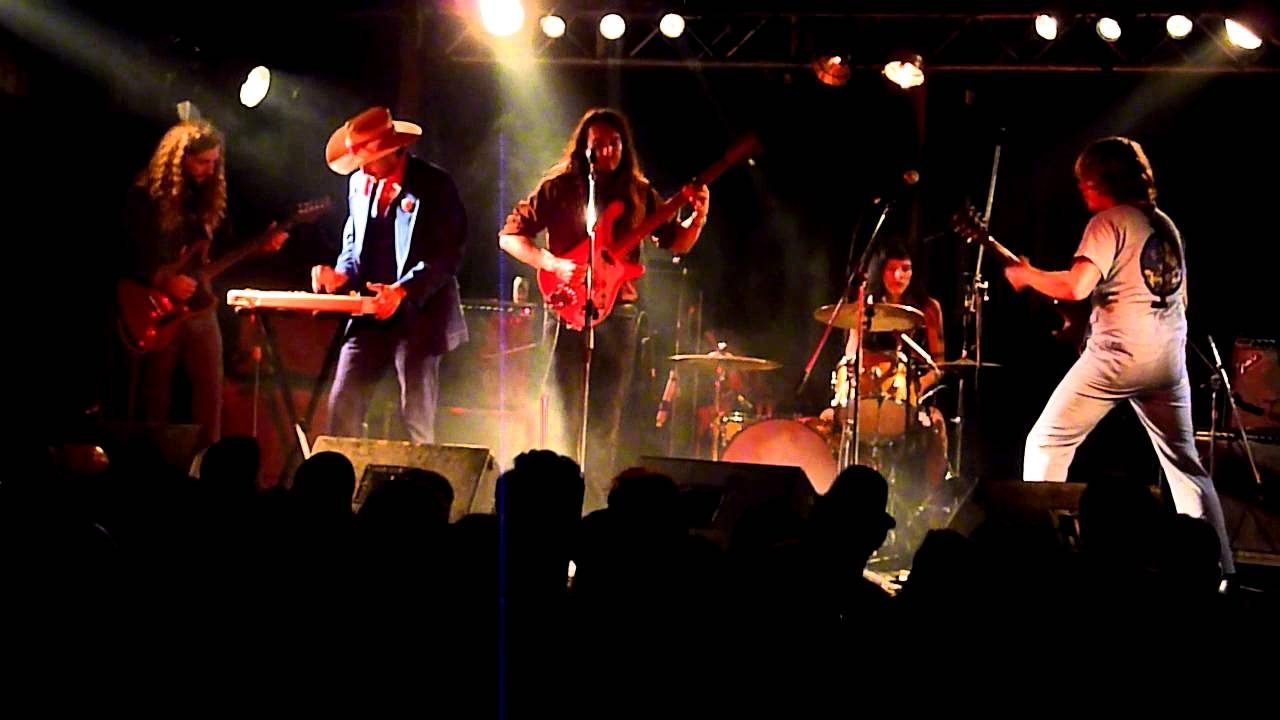
There are places in Rome that can't be told through architecture, and RCCB Init belongs to that family. It has no facade to photograph from the opposite sidewalk, it doesn't appear in the three-day itineraries of the city, it has no custodian tearing tickets in front of a Baroque portal. And yet, among the places that have kept Rome's live music alive over the last 20 years, the name Init comes up within the first 30 seconds of conversation. Then would come the talk about social centers, about clubs, about rehearsal rooms carved out inside warehouses, about the evenings that ended at three with someone taking down the drums while the audience was still leaning on the bar. Init belongs to that world, and that's why it's worth speaking well of it.
Today the full name is RCCB Init, and the formula with which the specialized press recorded the change is simple: a historic place for Roman music is reborn, Init becomes RCCB Init, with a new venue and a new name but with the same spirit as before. The address that appears in the listings is Via Domenico Chiucchiari 28, in Rome. The postal code associated with that address is 00159, and that is a piece of data that says something to those who know the geography of the city: we are in the eastern quadrant, around the Tiburtino area, far from the historic center and its flows, in a zone that changes register completely in the evening compared to the day.
An honest premise is needed, because it's the best way to respect the reader. A live music venue is not a monument: it has no opening hours guaranteed by decree, it has no ticket office that works the same way all year, and above all it lives by seasons. There are full months and empty months, summer closures, reopenings in October, changes of management, moves. Init has gone through quite a few. So everything you read here concerns the identity of the place, its history, the right way to approach it and the things to know so as not to arrive unprepared. For the actual calendar, for the hours and for the prices of the individual evenings, the channel to consult remains always the venue's official one and the announcement of the specific concert.
What Init was for Roman music
To understand RCCB Init you have to understand Init. And it's easier than it seems, because the trace it left is documented: there's no need to trust legends from the bar, the biographies of the bands that passed through are enough.
Init was a club, in the most precise sense of the term: a place with a stage, a sound system, a bar and a capacity that allowed a band to play in front of a real audience without having to fill an arena. It is the hardest size to maintain in a city like Rome, where rents eat the margins and where big events absorb attention. The middle tier, that of 200 or 300 paying people, is the real engine of a music scene: it is there that a band builds itself, it is there that it learns to be on stage, it is there that audiences are formed. Without clubs of that size, a city has only two poles, the stadiums and the cellars, and the passage between the two becomes impossible.
The historic location of Init, according to the encyclopedic sources that record its activity, is in the Pigneto. Anyone who knows Rome knows what that means: the Pigneto is the neighborhood that between the 2000s and the 2010s changed its skin more quickly than any other, going from a working-class area to the epicenter of alternative nightlife, with a density of venues, bookshops, bars and hybrid spaces that had no precedent in that part of the city. Init was not an accessory to that process: it was one of its engines.
Retracing the documented traces, the variety is striking. It was not a single-genre club, it was not the hall for hard rock or for singer-songwriters. Different things passed through, and they passed through in the same span of years. It is the characteristic that distinguishes a reference club from a venue that hosts concerts: the first has an editorial line wide enough to surprise its own audience, the second rents out the stage.
A curiosity about RCCB Init
The curiosity I prefer concerns the name, and it also concerns the way live music venues survive themselves.
Init is not a speaking name. It doesn't say where you are, it doesn't say what music you listen to there, it evokes neither a neighborhood nor a founder. It is a short word, four letters, that looks like a computer command and that is written the same in all languages. This neutrality, which seems a weakness in marketing terms, has proved to be its strength: a name like that transfers. You can move it from one address to another without it losing meaning, because it was never tied to an address. The brand came off the wall.
And that is exactly what happened. The change to RCCB Init is a move with the name preserved: the venue changes, the acronym placed before it changes, but the word Init stays there, at the end, like a signature. Those who frequented the place before recognize the signature and understand that the continuity is deliberate. Those who arrive now, perhaps knowing nothing of the earlier history, simply read a short name and don't pose the problem.
On the meaning of the acronym RCCB I prefer not to improvise. Interpretations and reconstructions circulate, but there is no direct source that resolves it reliably, and an invented acronym is worse than an acronym left unsaid. What I can say with certainty is that the structure of the name follows a recurring logic in Roman clubs: an acronym identifies the body or association that runs the space, the proper name identifies the artistic project that lives inside it. They are two different levels, and the audience usually knows only the second.
I'll add a small note that counts as a curiosity within the curiosity. If you search for Init on maps or search engines, the word will take you elsewhere too: it is a technical term, it appears in dozens of computing contexts, and this makes the search noisier than you'd like. The practical advice is always to search for the full name together with the city, or to start directly from the venue's listing on an events magazine. You'll save yourself 10 minutes of useless results.
How to get there, and why geography matters more than usual
The postal code given by the source, 00159, places the address in the eastern quadrant of Rome, in the area that gravitates around the Tiburtina axis. It's not the center, it's not even the far periphery: it's that middle band of the city built between the 1930s and the 1960s, made of small apartment buildings, converted workshops, warehouses, inner courtyards and streets that by day serve through traffic and in the evening empty out.
A practical warning about the name of the street, because it's one of those that waste time. Domenico Chiucchiari is spelled with an i after the ch, and it's a spelling that almost everyone gets wrong on the first try, writing Chucchiari or Chiuchiari. It's not a pedant's detail: GPS navigators, faced with a rare surname typed badly, don't stop to admit the problem, they propose the phonetically most similar street they know and maybe place it in another region. The safe way to proceed is to copy the exact address from the concert announcement, paste it into the maps app before leaving home, and check that the resulting point really falls in the eastern quadrant of Rome and not hundreds of kilometers away. 30 seconds of advance checking, and the evening starts without incident.
That said, the principles of movement in that quadrant are stable and hold in any case. The transport backbone of the area is subway line B with the Tiburtina stop, which is also a railway interchange station: regional trains, national connections and long-distance buses arrive there. From there several surface lines leave toward the interior of the neighborhood. If the venue is at a reasonable walking distance, the combination of subway plus walking is by far the most sensible: it avoids the parking problem, avoids the limited traffic zones and above all avoids having to drive on the way back.
On the way back I want to be explicit, because it's the point that stories of Roman evenings always forget. The Roman subway doesn't run all night: on weekdays the last useful run is in the middle-to-late evening, on Friday and Saturday the schedule is extended but still doesn't cover the end of a concert that finishes late. This means that the plan for getting home has to be decided before going out, not at two in the morning in front of a dark stop. The options are three: the night surface lines, which exist and cover the main routes but have long intervals. The taxi, for which it's best to have an app already installed and a payment method set up. Or a prior agreement with someone in the group who doesn't drink and drives. Whatever the choice, making it beforehand turns the end of the evening from a problem into a non-event.
Something nobody tells you about RCCB Init
What nobody tells you is that a live music club is judged by Monday, not by Saturday.
On Saturday night any place with a decent sound system and a name on the bill draws numbers. People go out, look for something to do, settle. It's the evening when everyone seems good. The truth about a venue emerges on the evenings in between, when the bill has a band that almost nobody has heard of, when there are 40 people in the room instead of 300, when the takings at the bar don't even cover the audio rental. What does the venue do that evening? Does it keep the same sound system on? Does it put on the same sound engineer? Does it still do the soundcheck properly? Does it still pay the band?
The places that stay in a city's memory are those that answer yes to the question. And the reason isn't romantic, it's structural: the band playing in front of 40 people tonight is the same one that in three years will fill a hall of 1,000, and it will remember forever who treated it well when it was nobody. Init built its reputation exactly on that ground. The biographies of the bands that mention it don't mention it as a stop on a triumphant tour: they mention it as the place where they presented an album, where they debuted a new project, where they recorded. Those are verbs of a workplace, not of a place of consumption.
The second thing nobody tells you concerns the real hours. On a flyer you read a start time, and almost always that time indicates the doors opening, not the moment the band you came to see goes on stage. In Roman clubs the gap between the two can be an hour and a half, sometimes more, especially when there is an opening act. Whoever arrives punctually at the flyer's time spends that time leaning on the wall. Whoever arrives very late misses the opening act, which is often the most interesting part of the evening. The compromise that works is to arrive about 40 minutes after the stated opening: you find the place alive, you take up position calmly, and you enjoy the opening set too.
Third thing, and perhaps the most useful: the bar of a club is not the bar of a cafe. In many Roman clubs you need the membership card, which is made at the entrance, costs little and is valid for the season. It's not a rip-off and it's the legal structure with which these spaces exist. Bring an ID, because it's needed for the card, and bring cash even though almost everywhere now you pay by card: on full nights, with the connection saturated, the terminal is the first thing to stop working.
How an evening really works, from the entrance to the last encore
I'll describe the general mechanism of a Roman club of this size, because knowing it completely changes the quality of the evening. It isn't a rulebook and it doesn't hold word for word in every place: it's the shared grammar.
It begins in the afternoon, when the audience isn't there yet. The band arrives, unloads, sets up. The house sound engineer takes the signals one by one, adjusts the levels, fights with a monitor that whistles. The soundcheck is the moment in which it's decided if the concert will sound good or bad, and none of those who will pay for the ticket will ever see it. If one evening you come in early and still hear someone trying out a snare drum, know that you have arrived inside the secret part of the evening.
Then there is the opening of the doors. At the entrance, in clubs, you make the membership card if you don't have it and pay the contribution for the concert. Here you need patience: if 100 people arrive together and every card requires filling out a form, the line grows fast. Whoever arrives 15 minutes before the stated time gets in in two minutes, whoever arrives at the peak waits 20.
Inside, the room fills by zones. The bar attracts the first wave, the stage stays empty much longer than you'd think. Whoever wants to stand in front generally has all the time to take their spot without pushing: the front row in Roman clubs forms late, often only when the main band starts. If instead you're the listening type and not the sweating type, the best position isn't in front: it's midway through the room, slightly off the axis of the speakers, where the sound comes together and a single frequency doesn't hit you.
The opening act, when there is one, plays for 25 to 40 minutes. It's the part of the evening that people underestimate and it's the part that interests me the most: it's the moment when you might see for the first time someone everyone will be talking about in two years. It costs nothing extra and it's already included in the price.
Then the stage changeover, which always lasts longer than planned. 20 minutes in which the room empties toward the bar and toward the outside. It's the moment when people talk, introduce themselves, exchange a few words with those who have just played, who nine times out of 10 is leaning somewhere with a little bottle of water in hand. In clubs of this size the distance between those who play and those who listen is practically nil, and this is the thing that makes them different from any arena.
The main set lasts between 70 and 90 minutes. An encore almost always, one or two songs. Then the lights come on, and here begins the phase I recommend not skipping: the 10 minutes after. People leave slowly, someone buys a record or a T-shirt at the merch table, the band packs up. If you liked an evening, telling the people who played it is worth more than any review, and for a band loading a van at two in the morning it makes a concrete difference.
A note on the bar, said without preaching. In a place like this people drink, and it's as much a part of the culture of the place as the stage. It's worth remembering, though, that the last stretch of the evening is the one in which you have to get home, and that the city at that hour offers fewer footholds. Alternating water with what you're drinking, eating something before going out and deciding in advance what means of transport you'll use to get back are three banal measures that change the memory you'll keep of the concert. Nobody has ever regretted getting home clear-headed.
The advice I give you for visiting RCCB Init
The advice is only one and I put it directly: don't go for a name, go for a random evening.
I know it sounds counterintuitive. The normal logic is to wait for a band you like to come through, buy the ticket, go. That's a perfect logic for an arena and a terrible one for a club. In a club, you'll see the band you like anyway, maybe in a bigger hall with a more polished sound. What a club offers you, and what no other format can give you, is the unplanned encounter: walking in without knowing what you'll find, staying two hours, walking out with a new name in your head. It's an experience that costs as much as a pizza and that in a city like Rome has become rare, because everyone now chooses in advance, filters, optimizes.
How to do it in practice. You look at the venue's calendar, you pick a date when the lineup includes a name you don't know, preferably a weeknight. You go with no expectations. If the music doesn't grab you, you've still discovered a space, you've seen how it works, and you leave early with no regrets. If it does grab you, you've found something no algorithm would ever have suggested. The ratio of risk to possible gain is lopsided in your favor.
I'll add three practical corollaries that make the advice workable.
The first: go in twos or threes, not in a group of 10. Big groups in a club behave badly in spite of themselves, because they end up talking among themselves and staying at the back of the room. Two or three people adapt to the space, stand where the sound is best and actually listen.
The second: dress comfortable and light, and carry the bare minimum. Rooms of this size get hot very fast once they fill up, and there isn't always a coat check. A heavy jacket in your hand for three hours ruins the evening more than any acoustic flaw.
The third: wear earplugs. I'm not joking, and this isn't advice from an old person. Concert earplugs, the ones with a filter that lowers the volume without altering the frequencies too much, cost very little and fit in a pocket. In a small room with a powerful sound system the sound pressure levels are high, and the difference between leaving with ringing ears and leaving rested is an item that costs a few euros. People who go to concerts often already know this, and people who go twice a year find out too late.
The neighborhood around it, and how to build your evening before the concert
The eastern quadrant of Rome doesn't have the immediate beauty of the center, but it has a quality the center lost a long time ago: it's still lived in by the people who live there. The streets around the Tiburtina corridor tell the industrial and railway history of the city, with warehouses, freight yards, public housing from the 1950s and recent conversions. Anyone who arrives from outside expecting domes and fountains is thrown off. Anyone who arrives with the idea of seeing a living city finds quite a lot to look at.
The rule I always apply in these areas is to arrive an hour early and use it. A concert that starts late leaves room for a real dinner, and eating beforehand instead of filling up at the bar during the evening is the choice that improves everything else. The area around Tiburtina station and the neighboring districts have a popular, honest food scene, from pizza by the slice places to neighborhood trattorias, and prices are far from those in the center. You don't need any fancy reservations: you need to walk into a place full of locals and order what they order.
If instead you're coming from the center and want to build an afternoon before the show, Metro line B gives you a convenient backbone. Along the same line, toward the center, you'll find some of the areas where the city's outdoor programming concentrates in summer. To get a sense of what's going on in the weeks you're visiting, you can look at the listings for Rome's big summer events: the Jazz Image series at the Baths of Caracalla, the program of Villa Ada Roma Incontra il Mondo, or the outdoor season of Roma Summer Fest at the Cavea of the Auditorium. They're different formats from a club, outdoors and with larger capacities, but in the central weeks of summer that's often where the international names play.
If you're interested instead in the indoor club circuit, the best-known Roman reference for medium capacity remains the Atlantico Live, which works on a different scale and hosts national tours. Comparing the two formats is instructive: in the same month you can see the same musical genre in two opposite conditions, and understand how much the room changes the music.
Another well-known fact, yet rarely mentioned
The well-known fact is that in Rome, live music venues keep moving around. Everyone knows it, nobody draws the consequences.
Try a mental exercise: list the Roman clubs where you've seen a concert in the past 15 years. How many are still open at the same address? For most people, the answer is a minority. Some have closed, some have changed their name, others have moved while keeping the sign. The case of Init, which becomes RCCB Init by changing location and keeping the name, is a textbook example of this dynamic, not an exception.
The reasons are known to anyone who has worked inside the scene, and they're worth listing without drama. First, the cost of real estate: a space with high ceilings, soundproofing, safety exits and the possibility of making noise late is a difficult property, and when the surrounding area gets redeveloped the rent becomes unsustainable precisely thanks to the success the venue itself helped create. Second, the question of noise: as soon as the neighborhood fills with new residents, the noise complaints arrive, and a club that opened in an area of warehouses finds itself, 10 years later, surrounded by apartments. Third, the bureaucracy of public entertainment licenses, which in Italy is complicated and expensive and weighs disproportionately on small venues. Fourth, the economics of the concert: the costs of sound services and performers' fees have grown, while the price the public is willing to pay for a club ticket has stayed substantially flat for years.
The practical consequence, the one almost nobody draws, is this: the calendar beats the address. When you plan an evening of live music in Rome, the right question isn't where the venue is, but what's on the program and whether that program is confirmed. The address has to be checked every time, even if you were there six months ago, because in the meantime the place may have moved three kilometers. Anyone who treats clubs the way they treat museums, as fixed coordinates, sooner or later ends up standing in front of a rolled-down shutter.
There's also a second consequence, less practical and more emotional. Since the walls change, the identity of these places ends up living elsewhere: in the people who run them, in the artistic direction, in the audience that follows them. It's a form of continuity that's more fragile and at the same time more resilient. A building is lost in a day, a community of listeners is not. When I read that a historic venue is reborn under a new name in a new location, what I'm reading is that the people decided to start over, and in the history of Roman music that decision has been repeated dozens of times.
The sound, the stage, the audience
It's worth spending a few lines on what a room of this size means in terms of listening, because people who mostly go to big events arrive with the wrong expectations in both directions.
First point: in a small club the sound that reaches your ears isn't just the sound system. It's the sum of the system and the direct acoustic sound from the stage, meaning the real drums, the real guitar amp, the voice that also comes out of the monitors. That sum is exactly what makes small-room concerts more physical and more unpredictable. In big venues everything goes through the sound system and the sound engineer controls every parameter. Here that's not the case. Here the room takes part.
Second point: position matters enormously and changes the experience more than the ticket price does. Under the stage you mostly hear the stage, meaning drums and amps, and you hear little of the voice. In the middle of the room you hear the mix the way the sound engineer designed it. At the back, near the mixing desk, you technically hear the best version, because the desk is placed where the sound engineer has to be able to judge. If you care about the music more than the adrenaline, stand near the desk. It's the trick every musician knows and almost nobody in the audience does.
Third point: the audience in Roman clubs is on average competent and on average tolerant. Nobody looks at you funny if you dance, nobody looks at you funny if you stand still with your arms crossed. The only two things that really annoy people are talking loudly during slow songs and filming the whole concert with your phone held up in front of the face of the person behind you. At a stadium show those two behaviors get lost in the crowd. In a room of 200 people they ruin the experience for 20.
Fourth point, which concerns your wallet: merchandise in clubs is almost always sold directly by the band, and the margin goes almost entirely to them. If an evening won you over and you want to support the people who played, buying a record at the table is worth far more than a thousand streams. It's the most direct way there is to bring that band back to the city.
The right photo to take at RCCB Init
Here I have to go against the grain, because the right photo in a club isn't the one everybody takes.
The photo everybody takes is the stage, shot from the middle of the room, with the singer backlit and the audience's hands at the bottom. It almost always comes out badly: concert lights are strong, colored and moving, and a phone sensor in low light produces a muddy, red, blurry image. The result is a photograph that means nothing to anyone who wasn't there and adds nothing even for those who were.
The right photo is the changeover. The moment between one band and the next, when the house lights are on, the stage is lit flat and on it three people are moving speakers, coiling cables and sticking tape to the floor. That scene has everything a club really is: the work, the orderly mess, the keepers of the instruments, the audience blurred in the background with drinks in hand. It's a photograph that reads, that tells about a trade, and that technically comes out well because the light is steady and sufficient.
The second photo I recommend is the detail of the floor in front of the stage at the end of the night, with the bits of colored tape still stuck on, the marks of fallen picks, the overturned cup. It's a kind of image that works beautifully in black and white and has the merit of not needing any recognizable person in the frame.
Third option, the best if you have time: the outside. Music venues in semi-industrial areas often have anonymous entrances, a metal door, a small sign, a wall. Photographing that door with people in line or with someone smoking leaning on the doorframe produces the most recognizable image of all. It's the photo that tells where you were better than any close-up of the singer.
Two rules of behavior, because photography in a club has a precise etiquette. No flash, ever, for any reason: it blinds the performers, bothers the people watching and makes your photo worse anyway. And the phone should be held low, at chest height, not above your head: the difference for your image is minimal, for the people behind you it's enormous. And if there's a sign on the stage or an explicit request not to film, the request wins, end of story.
One last technical note, for those who want to try seriously. If your phone allows it, manually lock the exposure time at around one hundredth of a second and raise the sensitivity instead of leaving it to the automatic setting: digital noise can be fixed, blur can't. And shoot during slow songs, when the lights change less and the performers move less.
Accessibility, welcome and small precautions
A paragraph that guides almost always lack and that many people need more than any description of the stage.
Spaces carved out of warehouses, storage buildings and industrial premises have recurring features. The entrance is often at street level, which is good news for anyone who uses a wheelchair or has trouble moving around. Just as often, though, the restrooms were put wherever there was room and aren't always accessible, and the internal routes can be narrow on full nights. There's no rule that holds for every venue, and the only serious way to know is to write to the venue before going, explaining your specific need. The response from Roman venues of this kind to questions like this is quick and honest, much more so than from the big facilities.
For those bringing children or teenagers: club concerts often have age limits tied to the serving of alcohol and to the membership nature of the space, and the late hours make them unsuitable for the youngest anyway. For an accompanied 15-year-old, on the other hand, a club concert is probably the best musical education there is, far more formative than an event in an arena. Here too, checking ahead on the individual event is a must.
For those with hearing problems or who use hearing aids: ask where the mixing desk is and stand in that area, and use protection with a filter. Small rooms have high sound pressure levels and heavy reverb, and protection doesn't reduce the pleasure of listening, it preserves it.
For those who come alone: clubs are among the few nightlife places where going alone isn't strange. Nobody will ask you anything, and finding someone to talk about the concert with during the changeover is the most natural thing in the world. If, though, it's your first time in an area you don't know, at night, choose a lit route to get to public transport and keep your phone charged. These are mundane precautions that hold in any city in the world.
One last detail about cold and heat. In winter, rooms like this are heated by bodies, and on the way out you go from 25 degrees to 5 in two seconds, sweaty. It's the most efficient known way to catch a cold. Bring something to put on top and put it on before you step out, not after. In summer, on the other hand, the problem is water: drink plenty, because three hours in a full room dehydrate you more than it seems.
Some important events that took place here over the years
Here we stick strictly to what encyclopedic sources and band biographies record about the Roman Init. They're specific, dated, verifiable episodes, and lined up they tell you what kind of place it was better than any description.
Summer 2009, a record made inside the concert hall. The San Cadoco project records on magnetic tape, in the summer of that year, inside the concert hall of Init Club in Rome. The work is then completed the following year elsewhere. It's an episode that says more than 10 reviews: it means the space wasn't used only as an evening showcase but also as a recording environment, that is, as an instrument. A club that lends its room to a band to record is a club that has a relationship of trust with musicians, not an hourly rental arrangement.
June 6, 2009, the 25th anniversary of Fleurs du Mal. In the same year, Init Club hosts the concert for the 25th anniversary of Fleurs du Mal, with an expanded lineup of nine members and a presentation interview. An anniversary like that isn't celebrated just anywhere: you choose the place you consider your own home, or at least the place your audience recognizes as such. The fact that a band with a quarter century of history behind it chose a club for its anniversary says exactly what Init's role was in the Roman scene.
February 2013, the debut of an audiovisual project. At Init in Rome, Sound and Vision debuts, a project that crosses the music of the Cagliari band Dorian Gray with drawing and storytelling through images, involving big names from comics. It's an episode that signals one precise thing: the venue didn't host only concerts in the strict sense, but accepted hybrid formats, more complicated to stage and riskier to propose. Anyone who programs shows knows how much easier it is to put four rock bands on the bill than a single evening with projections, synchronized timing and two disciplines to get talking to each other.
March 14, 2015, the Roman presentation of a Giovanni Truppi record. The third studio album by the Neapolitan singer-songwriter came out on January 23, 2015 and was presented in Rome on the following March 14 at Init itself. From that date and throughout the tour, the singer-songwriter relied on the musical performances of Luciano Turella on drums and Francesco Motta on electric guitar, piano and backing vocals. It's worth lingering on this: in March 2015, on the stage of a Roman club, the supporting lineup included a musician who in the following years would have a leading solo career. It's exactly the reason I said earlier to go to concerts by bands you know nothing about.
The concert reports. Among the traces that remain are also the live reports from the specialized music press: the magazine OndaRock, for example, published the report of a date by the band Lento at Init in Rome. Reviews of club concerts are a rare and precious genre, because they document evenings that would otherwise leave no written trace. When a national magazine sends someone to cover a date in a venue of a few hundred seats, it means that venue is considered a place where things happen that deserve to be reported.
I'll add the most recent note, which is the reason the name appears today in the listings with the acronym in front: the change from Init to RCCB Init, recorded by the trade press as the rebirth of a historic Roman music venue, with a new location and a new name but with the same spirit as ever. It's the latest chapter of a story that has been going on for quite a few years, and it's also the chapter that makes the place interesting now and not just as a memory.
There are dozens of other evenings that would deserve to be mentioned and that belong to the oral memory of the people who frequented the place, but oral memory isn't a source and I don't want to fill a listing with anecdotes that can't be confirmed. I prefer five solid episodes to 50 rumors.
Who has played at RCCB Init
This is the most frequent question about historic venues, and the person asking it usually hopes for a very long list of famous names. I prefer to give a short, reliable one, with a warning worth repeating: the names that follow are the ones documented in connection with the Roman Init, the venue whose legacy RCCB Init carries on.
Giovanni Truppi. The Neapolitan singer-songwriter, who moved to Rome at 23, chose Init for the Roman presentation of his third studio album, on March 14, 2015. He's the kind of artist the club circuit raised for years before the wider public noticed, and his presence on this list is significant precisely for that reason.
Francesco Motta and Luciano Turella. Both were part of the lineup that accompanied Truppi from that date and throughout the tour: Motta on electric guitar, piano and backing vocals, Turella on drums. Reading the names of the people who play, and not just of the one who sings, on a club bill is an exercise I recommend to everyone: careers can be read there.
Fleurs du Mal. The band celebrated its 25 years of activity at Init Club on June 6, 2009, with a lineup brought up to nine members. It's one of those names the wider public knows less and that nonetheless left a deep mark on the Italian scene of reference.
Dorian Gray. The band from Cagliari debuted the Sound and Vision project at Init in February 2013, combining live music and drawn storytelling. A debut is always an act of trust toward the space that hosts it.
Lento. The instrumental band played at Init on a date for which a report survives in a national music magazine. It's the kind of name you'll never find on a stadium poster and that perfectly represents the type of programming a club of this size can afford.
San Cadoco. The project used Init's concert hall as a recording environment in the summer of 2009. It's not a stage appearance, it's a lab appearance, and in the history of a place it counts at least as much as a concert.
If the list seems short compared to the venue's 20 years of history, that's because it is: written sources about a club always cover a tiny fraction of what really happened there. Hundreds of bands have played on that stage without leaving a single line anywhere, and that's normal and in a way even right. A concert is an event that happens once in front of the people present, and much of its value stays in their heads.
If you know of other important evenings that took place there, the most useful thing you can do is write about them publicly somewhere. That's how the memory of these places gets built.
How to fit an evening at RCCB Init into the rest of a Roman summer
People who read these pages usually aren't organizing a single evening, they're organizing a few days in the city. So it makes sense to think about how a club concert fits with everything else.
The first consideration is about rhythm. Rome in summer has very dense outdoor programming, and the temptation is to fill every evening. That's a mistake: three consecutive nights that end at 1:00 make the following mornings unusable, and mornings in Rome are the best part of the day, the only time you can walk comfortably and get into museums without crowds. The best pattern is to alternate: a full evening, a light evening, a full evening.
The second is about formats. An evening in an enclosed club and an evening outdoors under the stars aren't interchangeable, and putting them in the same week makes you appreciate both. On one side, controlled sound, the sweat, the closeness to the stage. On the other, the air, the ruins, the audience that shows up with a beach towel. If you're looking for the second format, the listings to check are those of Testaccio Estate at the Città dell'Altra Economia, of Ninfeo Village in EUR, of MoV at Villa Lais and of the Aniene Festival at Parco Nomentano, the latter especially convenient for those moving around the eastern quadrant.
The third is about scale. In the same week you see an unknown band in a club, you can see an international name at the Auditorium Parco della Musica. They're two opposite experiences and neither replaces the other. In fact, the best way to understand how much the room matters is to run exactly this experiment: two concerts four days apart, in two venues at opposite ends of the spectrum.
The fourth and last is about budget. A club concert generally costs a fraction of a ticket to a big event. Anyone on a limited budget who still wants to fill a week with music should build it the opposite way from how everyone does: three or four evenings in clubs and music circles, and a single big event as the exception. You spend less, you see a lot more, and you go home with names to look up instead of a T-shirt.
Frequently asked questions
Is RCCB Init the same venue as the Init of the past?
It's its continuation. The name Init stays, the location has changed and the acronym RCCB has appeared in front. The wording with which the change was recorded speaks of the rebirth of a historic place for Roman music, with a new location and a new name but with the same spirit. So it's not an identical reopening and it's not a different venue that bought a brand either: it's a move with declared continuity.
What does the acronym RCCB stand for?
I prefer not to commit on this, because there's no reliable public source that spells it out unambiguously, and a wrong acronym travels fast. In Roman music circles, an acronym in front of the name usually indicates the organization or association that runs the space, while the proper name identifies the artistic project. For a definite answer, the right channel is the venue itself.
Where exactly is it?
The address given in the listings is Via Domenico Chiucchiari 28, Rome, postal code 00159, which corresponds to the eastern quadrant of the city, in the area that gravitates around the Tiburtina corridor. Copy the street from the event announcement and check the spot on the map before leaving, because the surname is rare and navigation apps tend to correct it creatively.
How do I get there by public transportation?
The reference for the area is Metro line B with the Tiburtina stop, which is also a railway hub and the terminus of several surface lines. From there you continue on foot or by bus toward the inside of the neighborhood. Always check the exact route for the exact address, because the useful stops change a lot even over a few hundred meters.
And getting home after the concert?
It has to be decided before you leave. The metro closes before an evening concert ends on weekdays, and even on nights with extended hours the margin is tight. What's left are the night surface lines, with long intervals, and the taxi, for which it's worth having the app ready. If someone in the group is driving, make it the person who hasn't been drinking: it's the simplest and most useful rule of all.
How much does it cost to get in?
It depends entirely on the evening, and I don't want to give you an invented figure. In Roman music circles the most common model includes an annual membership card of modest cost, which you get at the entrance with an ID, plus a fee for the individual concert. You'll find the actual figures in the announcement for the event you're interested in.
Do I need to book or buy a ticket in advance?
For evenings with known names, yes, it's worth it, because a club's capacity sells out much sooner than you'd imagine. For ordinary evenings you can usually get in at the door with no problem. The practical rule: if you know the name on the bill, a thousand other people know it too, so better to move early.
What time does the concert really start?
Almost never at the time printed on the poster, which is normally the time the doors open. Between doors and the first band there's generally about an hour, and between the first band and the main act another good half hour. Arriving 40 minutes after the stated opening is the compromise that works best.
Can I bring a camera?
The rules change from evening to evening and often depend on the band playing, not on the venue. With a phone there are generally no problems. With professional equipment and interchangeable lenses you almost always need advance accreditation. In any case, no flash and keep the phone low.
Is it suitable for someone who doesn't know the music on the program?
It's the ideal audience, I'd say. A club exists precisely so that someone can walk in without knowing what they'll find. If the evening doesn't grab you, you leave early and you've still seen how one of the places that keep the city's music scene alive works.
Can you go alone?
Absolutely. It's one of the few nighttime settings where being on your own doesn't seem strange to anyone, and the changeover is the natural moment to exchange a few words with whoever is next to you.
Is it suitable for children?
In general no, because of the hours and the nature of the place. For an accompanied teenager, on the other hand, it can be a remarkably formative experience, as long as you check the age limits for the individual evening.
What's the difference compared with an outdoor concert in the Roman summer?
An enormous difference, and it's worth trying both. Outdoors, the setting, the air and the scale win. In a club, closeness, direct sound and the chance to discover something you didn't know you were looking for win. In the same week, they're two complementary evenings.
Is the venue active right now?
A club's programming changes from season to season and goes through pause periods, typically in the central months of summer. The only serious way to know is to look at the venue's updated calendar in the week you want to go, and check that the specific event is confirmed.
To wrap up
I'll leave you with the thing that really matters, which holds for RCCB Init as for any other space of the same kind. A city isn't measured by the monuments it owns, because those stay standing anyway, even when nobody takes care of them anymore. It's measured by the places that someone has to keep open every night, and that close at the exact moment people stop going. Live music clubs belong to this second category: they're the fragile part of the heritage, the part with no heritage authority to protect it.
Init lasted a long time, changed neighborhoods, changed names, kept its own. In its years it hosted record presentations, anniversaries, debuts of hybrid projects, recordings, reports on evenings that someone judged worthy of being told in a national magazine. That's not little for a space that, seen from outside, is probably just a metal door on a street where nobody passes at night.
The final suggestion is the same as at the beginning, because it's the only one that counts: pick any evening, look at who's playing, and if the name means nothing to you, go anyway. Wear earplugs, stand in the middle of the room, stay for the opening band too, buy the record if you liked the night, and plan your ride home before you leave the house. Then, in a few years, when you see that same band on a big stage, you'll have the slightly obnoxious satisfaction of being able to say you saw them when there were 40 people watching. That's the reason these places exist, and it's the reason it's worth keeping them alive.
Frequently asked questions about RCCB Init
Where is RCCB Init?
RCCB Init is in the eastern quadrant of Rome, in postal code 00159, in the area that gravitates around the Tiburtina corridor, a band of the city built between the 1930s and 1960s and made up of small apartment buildings, converted workshops and warehouses.
Is RCCB Init the same venue as the Init of the past?
RCCB Init is the continuation of Init, a historic Roman live music club: the name Init stays, but the location has changed and the acronym RCCB has appeared in front. It's not an identical reopening in the same place, but it's not a different venue that bought a brand either: it's presented as the rebirth of a historic place for Roman music, with a new location and the same spirit.
What kind of venue is RCCB Init?
RCCB Init is a club with a stage, a sound system and a bar, with a capacity that lets a band play in front of a real audience without having to fill an arena. It's a space designed for live music in an intimate format.
Who has played at the Roman Init over its history?
Among the documented names tied to the Roman Init, the legacy that RCCB Init carries on, is Giovanni Truppi, the Neapolitan singer-songwriter who moved to Rome. In the summer of 2009, moreover, the San Cadoco project recorded an album on magnetic tape inside Init's concert hall.
Is RCCB Init accessible for wheelchair users?
Spaces carved out of warehouses and industrial premises like RCCB Init's often have a street-level entrance, which is good news for anyone who uses a wheelchair or has trouble moving around, while the restrooms may be placed in tighter spaces: it's best to ask beforehand.
When is the best time to go to RCCB Init?
The advice is not to pick the evening based on a name on the bill, but to go on any evening: in a club like RCCB Init you'll see the band you like anyway, maybe in a bigger hall, while the in-between nights, with lesser-known bands, truly reveal the quality of the venue.
Article written by the editorial team of TourLeaderPro, contact them for Private/Corporate/V.I.P. Tours and Experiences.
Planning a trip to Rome? The English guides to visiting the city are on ItalyPlanner.com.
Source of the original listing: Zero.