Costellazione Boario at the Mattatoio, October 24, 2026
In short. Costellazione Boario, the long evening of installations and performances by the Accademia di Belle Arti di Roma included in the Romaeuropa Festival 2026, takes place on Saturday, October 24, 2026 from 21:00 at the Mattatoio di…
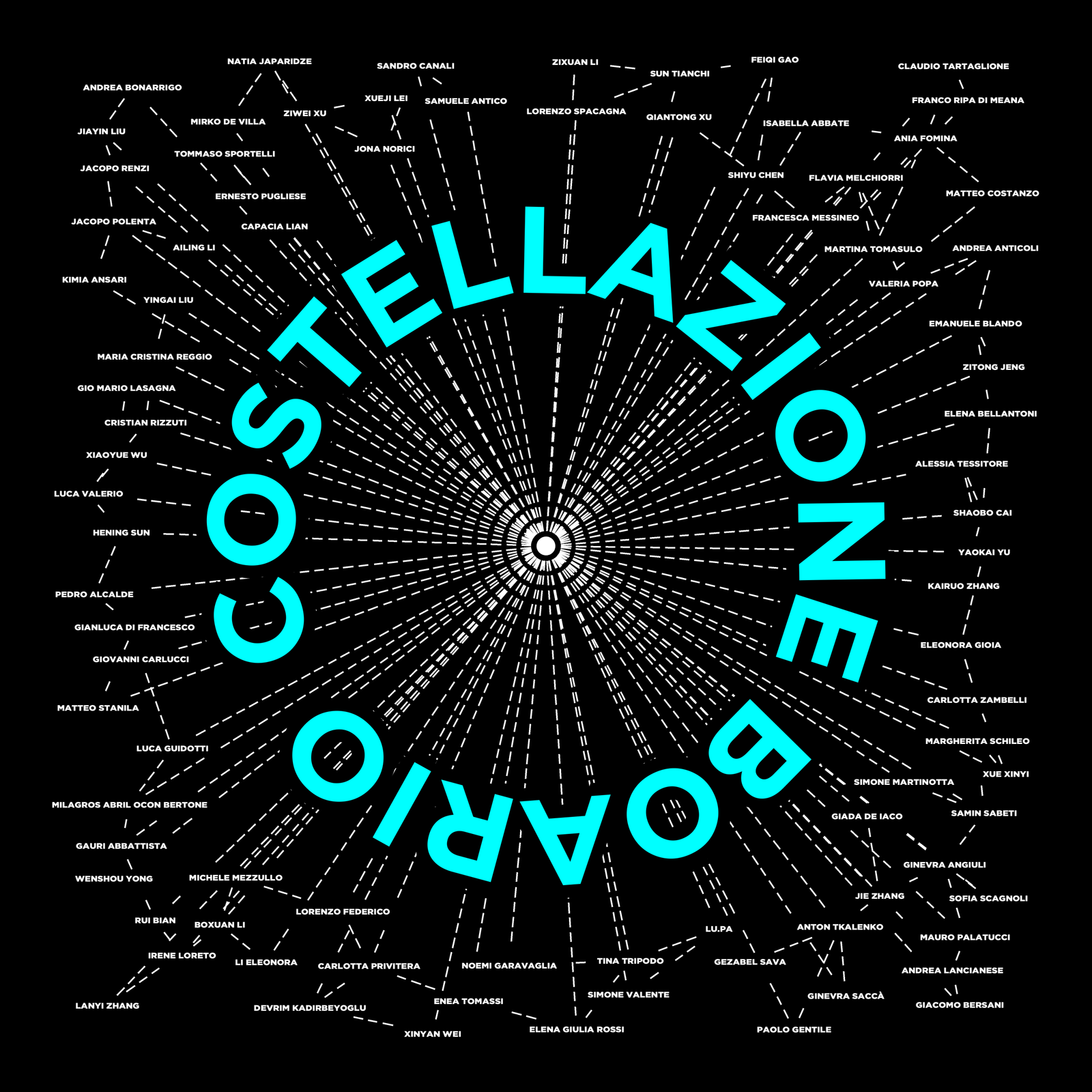
Costellazione Boario, the long evening of installations and performances by the Accademia di Belle Arti di Roma included in the Romaeuropa Festival 2026, takes place on Saturday, October 24, 2026 from 21:00 at the Mattatoio di Testaccio, with a route that starts at the Pelanda and arrives at the Academy's venue at Campo Boario, in the ex Fienili. The festival gives a duration of about three hours. The main entrance of the Mattatoio is at Piazza Orazio Giustiniani 4. You get there by metro line B to Piramide, by tram 3 to Marmorata/Galvani, by bus 719 to Galvani/Zabaglia and by buses 170 and 781 to Largo Marzi. Access conditions and any prices are published on the official website of the Romaeuropa Festival, which sells the program's tickets together with the festival box office, reachable at 06 4555 3050.
Costellazione Boario in Brief: Date, Time, Duration and Venues
Costellazione Boario is a one-night event, Saturday, October 24, 2026 from 21:00, lasting about three hours, which the Romaeuropa Festival places between the Pelanda and the venue of the Accademia di Belle Arti di Roma at Campo Boario, ex Fienili, inside the Mattatoio complex.
One night only
There are no repeat performances: it's an event conceived as a single night, with installations and performances that switch on together and switch off at the end. Whoever wants to see it must mark the Saturday and organize the evening around it.
Three hours to move through
Three hours is not a show to follow seated from beginning to end. It's a time to travel through: you go in, you look, you pass from one space to another, you go back. Whoever arrives at 21:00 and whoever arrives at 22:00 will see different evenings, and this is part of the project.
Tickets and information
The box office of the Romaeuropa Festival answers at 06 4555 3050 and on WhatsApp, on Monday from 14:00 to 18:00 and from Tuesday to Sunday from 10:00 to 13:00 and from 14:00 to 18:00. The festival's operational base, the Opificio Romaeuropa, is at Via dei Magazzini Generali 20/a, a few minutes on foot from the Mattatoio.
Inside the program
The festival page associates Costellazione Boario with the section RE41F, the Mattatoio, the ultra club and the ABA, the acronym of the Accademia di Belle Arti. For the full picture of the edition there is the listing on the Romaeuropa Festival 2026.
What You Will See at Costellazione Boario
Costellazione Boario brings together different artistic, performative and installation practices, organized in several operational dimensions that coexist and dialogue, each keeping its own formal and conceptual autonomy.
A constellation, not an exhibition
The title already says the method. A constellation is a set of separate points that the eye connects into a figure. In the same way the sections of the evening stay autonomous, each with its own language, and the overall design is composed by the spectator while walking. Those looking for a linear route, with a beginning and an end, risk feeling disoriented. Those who accept moving freely find the sense of the operation.
The place as material
The festival text insists on the venue: the ex Fienili of Campo Boario are an area of the former Mattatoio nourished by its historical richness, a place of work, of exchange, of passage, of display of animal and human bodies, today a cultural, artistic and urban area. The works are born there and speak of that space. It's a choice that has particular weight at the Mattatoio: few places in Rome have such a strong physical memory.
The performance in CrossinGallery
Among the sections, the festival points out a performance in CrossinGallery curated by the duo LU.PA, which contributes to the project alongside the Academy's faculty. It's one of the nodes of the evening, to look for on the map of the spaces when you enter.
Multimedia arts, photography, video, fashion
The sections come from the courses in Multimedia Arts, in Photography and Video and in Fashion Techniques and Technologies. So expect different languages in the same route: video installations, images, sound, bodies in movement, fashion objects used as performative devices. The variety is the strength of the evening and also its risk: not everything will speak to everyone, and that's as it should be.
Who Is Behind Costellazione Boario: Faculty, Students and Curators
Costellazione Boario is a project of the Scuola di Nuove Tecnologie dell'Arte of the Accademia di Belle Arti di Roma, designed and realized with the students. Each section is curated by an artist who teaches at the Academy: Pedro Alcalde, Elena Bellantoni, Mauro Palatucci, Franco Ripa di Meana, Cristian Rizzuti and Luca Valerio.
Students as authors
The festival stresses that the students collaborated in the design and realization of the project. They are not executors of other people's works: they take part in the conception. For an academy this means taking the workshop out of the classroom and putting it in front of a real audience, that of a major international festival.
Six curators, six sections
Pedro Alcalde, Elena Bellantoni, Mauro Palatucci, Franco Ripa di Meana, Cristian Rizzuti and Luca Valerio each sign one section. They are artists who teach in the courses of Multimedia Arts, Photography and Video, Fashion Techniques and Technologies: the structure of the evening mirrors that of the school, with each teacher bringing their own outlook and their own students.
The duo LU.PA
The duo LU.PA curated the performance in CrossinGallery. The presence of a duo from outside the faculty is an interesting detail: it introduces a different point of view inside a project born at the Academy.
The Scuola di Nuove Tecnologie dell'Arte
The Scuola di Nuove Tecnologie dell'Arte gathers the courses that work with digital, audiovisual and performative languages. It's the sector of the Academy closest to the territory of the Romaeuropa Festival, which for years has devoted part of its program to the digital arts and the new generations.
The Accademia di Belle Arti di Roma: The History of the Institution Behind Costellazione Boario
The Accademia di Belle Arti di Roma, founded in 1593, is one of the oldest academies of fine arts in Italy and the first legally recognized by the Ministry of Education. Since 2010 it has also had a venue at Campo Boario, in the ex Fienili of the Mattatoio.
Muziano, Zuccari and San Luca
At the end of the 1500s Girolamo Muziano and Federico Zuccari promoted in Rome an academy that would bring together painting, sculpture and architecture, tied by drawing as the primary expressive tool. The institution was at first called di San Luca and, thanks to the presence of leading Italian and foreign artists, became a model for the academies that arose all over Europe in the 1600s and 1700s.
The Scuola libera del nudo
The Enlightenment need for more concrete teaching led to the birth of the Scuola libera del nudo, dedicated to copying the human body from life, which still exists today alongside the Academy. It's curious to find, four centuries later, the body at the center of an evening that the festival describes as a display of animal and human bodies.
An institution that watched over the city
The Academy was entrusted with control over what was done in the artistic field in Rome: examples include the reconstruction of the Basilica of San Paolo fuori le mura after the fire and the restoration of the Pantheon. The institute was assigned the camera palace on Via di Ripetta, recognizable by its horseshoe shape, built in the 1840s.
The directors
Among the Academy's directors are Filippo Prosperi, from 1874 to 1901, the sculptor Ettore Ferrari, from 1908 to 1924, Pietro Canonica, from 1924 to 1930, Mino Maccari in the 1960s and Toti Scialoja from 1982 to 1985. Names that tell a century of Italian art.
Today
With the reform of law 508 of 1999 the Academy entered the sector of Alta formazione artistica e musicale, with full teaching and administrative autonomy. The Campo Boario venue, opened in 2010, brought part of the school inside the Mattatoio, next to the Pelanda, the MACRO and the university.
The Mattatoio di Testaccio: The Venue of Costellazione Boario
The Mattatoio di Testaccio was built between 1888 and 1891 to a design by the architect Gioacchino Ersoch, was closed in 1975 and today is one of the city's great cultural hubs: about 25,000 square meters at the foot of the Monte dei Cocci, between Via Beniamino Franklin, the Lungotevere Testaccio, Via Aldo Manuzio and Viale del Campo Boario.
Ersoch's project
Ersoch had already worked on the old slaughterhouse behind Piazza del Popolo. For Rome as capital, larger spaces and new hygiene standards were needed, and the choice fell on Testaccio, an area that since 1872 had been earmarked for workers' housing and industry. The engineer Filippo Laccetti studied the system to dispose of waste toward the Tiber.
The pavilions
The architectural language is repetitive by choice: rectangular brick pavilions, gabled roofs, arches at regular intervals, iron interior structures. A small rational city, which can still be read while walking among the buildings, and which at night, lit up for an event like Costellazione Boario, changes its face completely.
After 1975
When the slaughterhouse moved to the new facility on Viale Palmiro Togliatti, the complex began a long series of reuses: the classrooms of the Faculty of Architecture of Roma Tre from 2000, the MACRO from 2002, the Città dell'altra economia from September 29, 2007. In 2010 the Accademia di Belle Arti venue at Campo Boario was added.
The Pelanda
On February 18, 2010, after a construction site opened in 2006, La Pelanda was inaugurated, in the pavilions where pigs were once processed: about 5,000 square meters now dedicated to shows, performances and exhibitions. It's the starting point of Costellazione Boario.
Management
Until 2017 the Mattatoio was managed by Musei in Comune, and from 2018 by the Azienda Speciale Palaexpo. Today it is under the Fondazione Mattatoio di Roma, Città delle arti. The official website is mattatoioroma.it. The listing on the complex is Ex Mattatoio di Testaccio.
How to Get to the Mattatoio for Costellazione Boario
The Mattatoio, Piazza Orazio Giustiniani 4, can be reached by metro line B to Piramide, by tram 3 to Marmorata/Galvani, by bus 719 to Galvani/Zabaglia and by buses 170 and 781 to Largo Marzi.
Metro and train
The Piramide stop on line B is the simplest arrival point from Termini and from the Colosseum. Next to it is the Roma Ostiense station, useful for those arriving by train. From Piramide you take Via Marmorata toward the Tiber: about 10 minutes on foot.
Tram and bus
Tram 3 stops at Marmorata/Galvani, a few steps from the complex. The 719 stops at Galvani/Zabaglia, and the 170 and 781 at Largo Marzi, on the lungotevere. For those coming from Trastevere, crossing Ponte Sublicio on foot is the most pleasant alternative.
The entrances
Besides the main entrance at Piazza Orazio Giustiniani, the complex has access points on Via Beniamino Franklin, on the Lungotevere Testaccio and on Largo Dino Frisullo. For Costellazione Boario the starting point is the Pelanda. The Academy's venue is on the Campo Boario side.
Getting back late at night
An evening that starts at 21:00 and lasts three hours ends around midnight. It's best to check in advance the time of the last metro line B run and of the night buses, or to count on a taxi. By car, parking on Saturday night in Testaccio is difficult: the neighborhood is full of Romans out to dinner.
Testaccio and the Area Around the Mattatoio
The Mattatoio stands at the foot of the Monte dei Cocci, the artificial hill formed by the fragments of the amphorae of the ancient river port, in a neighborhood born as a working-class district around the slaughterhouse.
The Monte dei Cocci
The Monte dei Cocci gives the neighborhood its name, from the Latin testae, the shards. At its foot open venues and cellars dug into the hill. For a picture of the neighborhood there is the guide Testaccio: What to See.
Piramide and the Non-Catholic Cemetery
10 minutes away on foot are the Pyramid of Cestius, Porta San Paolo and the Non-Catholic Cemetery. Those who arrive in the afternoon can do this loop before dinner and show up at the Pelanda at 21:00.
The market
The Nuovo Mercato Testaccio is the neighborhood's daytime food heart. Saturday morning is the right time to understand the neighborhood before coming back in the evening.
Where to Eat Before Costellazione Boario in Testaccio
With a 21:00 start, dinner comes earlier, and Testaccio is one of the Roman neighborhoods where traditional cooking is strongest, with the dishes of the quinto quarto born right around the slaughterhouse.
An early dinner
The neighborhood's trattorias serve coda alla vaccinara, tripe, rigatoni with pajata: the cooking that the Mattatoio generated. A dinner at 19:30 leaves time to arrive unhurried. On Saturday it's best to book.
Pizza and fast food
Between Via Marmorata and Piazza Testaccio there are pizzerias by the slice and by the plate, bakeries, supplì. For those who want to eat quickly and devote all their time to the evening, it's the best solution.
After midnight
The venues at the foot of the Monte dei Cocci stay open late on Saturday: whoever leaves Costellazione Boario wanting to talk about what they saw finds tables a few steps away.
Accessibility and Practical Tips for Costellazione Boario
The Mattatoio is a converted industrial complex, largely on a single level, with wide internal avenues. For the accessibility of the spaces specific to the evening, the reference is the box office of the Romaeuropa Festival, at 06 4555 3050.
Comfortable shoes
Three hours of route between the Pelanda and the ex Fienili means a lot of walking, often standing in front of the installations. Comfortable shoes and little to carry: no bulky backpacks.
A jacket
At the end of October Roman evenings cool down, and the passage from one pavilion to another happens outdoors. A light jacket is enough, but don't forget it.
Animals
The Mattatoio states a ban on animals in the halls and theaters: better to leave the dog at home.
A Curiosity About Costellazione Boario at the Mattatoio, October 24, 2026
The first curiosity is in the name. Campo Boario is not to be confused with the Forum Boarium, the ancient cattle market of republican Rome, near the Bocca della Verità. The name is the same, boario, tied to oxen, but in Testaccio it indicates the area of the 1800s Mattatoio where animals were gathered awaiting slaughter. Two places a couple of kilometers and almost two millennia apart, joined by the same function: the meat that fed the city.
The second curiosity concerns the ex Fienili, today home to the Academy. They were the hay warehouses for the animals that arrived at the slaughterhouse: service buildings, designed for logistics and not for the eye. That today they host the classrooms where multimedia arts, photography and fashion are taught is one of the most radical transformations of the complex.
The third is a historical short circuit. The Academy was born in 1593 around drawing and the Scuola del nudo, that is, around the study of the human body. Costellazione Boario is presented in a place that the festival describes as a space for the display of animal and human bodies. 400 years later, the body is still at the center.
Something Nobody Tells You About Costellazione Boario at the Mattatoio, October 24, 2026
What nobody says is that a three-hour evening across several spaces is not to be watched all in a row. Whoever enters at 21:00 and follows the flow risks spending a lot of time in the first space and arriving tired at the last. It's best to first make a quick round of all the sections, from the Pelanda to the ex Fienili, and then go back unhurried to what struck you most.
The second thing is that performances are not installations. An installation stays there all evening, a performance has a beginning and an end. When you enter, it's best to ask if there are times for the live actions, including the one in CrossinGallery by the duo LU.PA, so as not to miss them while looking at something else.
The third concerns the audience. An Academy evening inside Romaeuropa brings together students, students' families, artists, festival regulars and the curious on a Saturday night in Testaccio. It's a mixed, lively audience, very different from that of a theater premiere: part of the pleasure of the evening is precisely watching it.
The Advice I Give You for Visiting Costellazione Boario at the Mattatoio, October 24, 2026
My advice is to make Costellazione Boario the second part of a Saturday in Testaccio. Arrive in the afternoon, do the loop of the Pyramid and the Non-Catholic Cemetery, have an early dinner in one of the neighborhood's trattorias and show up at the Pelanda at 21:00, when the evening switches on.
Inside, set aside the idea of seeing everything. Three hours and six sections are a lot: choose two or three nodes and give them real time. The students' work deserves an attentive look, not a distracted pass with the phone in hand.
Talk to the people who look after the works. On an evening like this, behind an installation there is often the student who built it. Asking how it came about is the best way to understand what you are looking at, and for a young artist the dialogue with the public is worth as much as the exhibition. Then step out onto the Mattatoio's avenue and look at the lit pavilions: the evening ends there.
Another Well-Known Fact, Yet Rarely Cited
It's well known that the Mattatoio di Testaccio has become a cultural hub. Less often remembered is how long and layered its reuse has been: after the closure in 1975 the pavilions also housed offices of the Roma Capitale police, then the classrooms of Architecture of Roma Tre from 2000, the MACRO from 2002, the Città dell'altra economia from 2007, the Pelanda and the Academy from 2010.
Equally rarely cited is the Mattatoio's role in Roman nightlife. The Villaggio Globale, a social center born in the spaces of the former slaughterhouse, and the birth of Muccassassina, the night run by the Circolo Mario Mieli, belong to this same history. Here too took place the first three editions of the Gay Village from 2002, as part of the Estate romana.
A night evening of art and performance like Costellazione Boario fits into this tradition: for decades the Mattatoio has been a place where Rome experiments at night with what finds no room by day.
The Right Photo to Take at Costellazione Boario at the Mattatoio, October 24, 2026
The right photo is taken outdoors, on the Mattatoio's inner avenue, when the brick pavilions are lit by the evening and people move from one space to another. It's the image that best tells the sense of Costellazione Boario: separate points of light, connected by the movement of the public.
The second photo is in front of the ex Fienili of Campo Boario: a service building of the 1800s turned into an academy, with the students' works inside. Frame the historic structure and the light of the installations together.
During the live performances, respect: no flash, and if the artists ask not to film, no phone. The installations, on the other hand, are often designed to be photographed as well. When in doubt, ask the people who look after them.
Some Important Events That Happened Here in History
In 1872 the city plan earmarked the Testaccio area for workers' housing and industry. In 1888 Gioacchino Ersoch signed the project for the new Mattatoio, built until 1891, with the engineer Filippo Laccetti. For almost 90 years the complex slaughtered and distributed the capital's meat, and around it grew the working-class neighborhood.
In 1975 the slaughterhouse moved to Viale Palmiro Togliatti and the Testaccio complex was closed. In 2000 the Faculty of Architecture of Roma Tre arrived, in 2002 the MACRO, on September 29, 2007 the Città dell'altra economia. On February 18, 2010 the Pelanda was inaugurated. In the same year the Accademia di Belle Arti opened its Campo Boario venue in the ex Fienili.
Since 2002 the complex has hosted the first three editions of the Gay Village inside the Estate romana. Since 2018 its management has passed to the Azienda Speciale Palaexpo, today to the Fondazione Mattatoio di Roma. On October 24, 2026 the Pelanda and Campo Boario join in a single evening for Costellazione Boario.
Who Has Passed Through Costellazione Boario at the Mattatoio, October 24, 2026
Through the Mattatoio have passed, first of all, the slaughterhouse workers: generations of laborers who gave Testaccio its identity and Roman cooking the dishes of the quinto quarto. The architects Gioacchino Ersoch and Filippo Laccetti passed through, who designed it, and then the Architecture students of Roma Tre, the artists of the MACRO and the protagonists of the Roman night, from the Villaggio Globale to Muccassassina.
In recent years the Pelanda and the spaces of the Mattatoio have become one of the hubs of the Romaeuropa Festival: in this same edition, a few weeks earlier, the French choreographer Boris Charmatz passed through with his solo, told in the listing on Muette by Boris Charmatz at the Mattatoio.
On October 24 there pass through the faculty of the Accademia di Belle Arti di Roma, Pedro Alcalde, Elena Bellantoni, Mauro Palatucci, Franco Ripa di Meana, Cristian Rizzuti and Luca Valerio, the duo LU.PA and above all the students of the Scuola di Nuove Tecnologie dell'Arte, heirs of an institution born with Muziano and Zuccari in 1593.
Costellazione Boario Inside the Romaeuropa Festival 2026
Costellazione Boario is on the program of the Romaeuropa Festival 2026, which uses the spaces of Testaccio as one of its hubs: the Opificio Romaeuropa, the festival's operational base, is at Via dei Magazzini Generali 20/a, a few hundred meters from the Mattatoio.
A festival that looks to the young
Bringing an Academy evening inside an international festival means putting the students' work next to that of established artists, in the same program and in front of the same audience. It's a brave choice, and in our opinion the right one: Italian academies need real stages, not end-of-year recitals.
Late October in Rome
Late October is the period when the festival enters its final part and the city returns fully to cultural life after the summer. A Saturday evening in Testaccio, between dinner and contemporary art, is one of the best ways to live it. A few steps away, the MACRO completes the picture of contemporary art in the city.
How to Organize the Evening of Costellazione Boario
Costellazione Boario starts at 21:00 and lasts about three hours: the best evening involves arriving in Testaccio in the late afternoon, an early dinner in the neighborhood and entering the Pelanda at the start time.
The ideal program
At 17:00 a walk among the Pyramid, Porta San Paolo and the Non-Catholic Cemetery. At 19:30 dinner in a trattoria of the neighborhood. At 21:00 entrance to the Pelanda. Around 22:30 the move to the ex Fienili of Campo Boario. After midnight a glass under the Monte dei Cocci or the trip home. It's a simple schedule, but it avoids the two most common mistakes: arriving in a rush after dinner and leaving before the best part.
Who to go with
It's an evening suited to adults curious about contemporary art, to students and to those who want to understand what is taught today in an academy. With teenagers interested in art or video it can be a valuable chance to find their bearings. With small children, the time and the duration make it impractical.
After Costellazione Boario
Those who want to go deeper find in the neighborhood other Romaeuropa Festival events in the same weeks, and the MACRO with its contemporary art program. The Mattatoio, by day, hosts exhibitions in the pavilions: coming back in the light, in the following days, lets you see with different eyes the spaces crossed at night.
Frequently Asked Questions About Costellazione Boario
When does Costellazione Boario take place?
Costellazione Boario takes place on Saturday, October 24, 2026 from 21:00, for about three hours, inside the Romaeuropa Festival 2026. It's a one-night event, with no announced repeat performances.
Where does Costellazione Boario take place?
Costellazione Boario takes place at the Mattatoio di Testaccio, with a route that starts at the Pelanda and arrives at the venue of the Accademia di Belle Arti di Roma at Campo Boario, in the ex Fienili. The main entrance of the Mattatoio is at Piazza Orazio Giustiniani 4.
What can you see at Costellazione Boario?
Costellazione Boario brings together installations and performances born in the courses of Multimedia Arts, Photography and Video and Fashion Techniques and Technologies of the Accademia di Belle Arti di Roma, in autonomous sections curated by six faculty members, with a performance by the duo LU.PA in CrossinGallery.
Who organizes Costellazione Boario?
Costellazione Boario is a project of the Scuola di Nuove Tecnologie dell'Arte of the Accademia di Belle Arti di Roma, realized with the students and curated by Pedro Alcalde, Elena Bellantoni, Mauro Palatucci, Franco Ripa di Meana, Cristian Rizzuti and Luca Valerio, in the program of the Romaeuropa Festival.
How do you get to Costellazione Boario?
The Mattatoio, home of Costellazione Boario, can be reached by metro line B to Piramide, by tram 3 to Marmorata/Galvani, by bus 719 to Galvani/Zabaglia and by buses 170 and 781 to Largo Marzi.
How do you get information on Costellazione Boario tickets?
Information on access and tickets for Costellazione Boario is published on the official website of the Romaeuropa Festival. The festival box office answers at 06 4555 3050 and on WhatsApp, on Monday from 14:00 to 18:00 and from Tuesday to Sunday from 10:00 to 13:00 and from 14:00 to 18:00.
How long does Costellazione Boario last?
Costellazione Boario lasts about three hours according to the Romaeuropa Festival: it starts at 21:00 and ends around midnight. It's an evening to move through freely, passing from one space to another.
The Final Tip on Costellazione Boario
Go with the curiosity of someone entering a workshop, not with the expectations of someone entering a museum. Costellazione Boario is the work of a school, and its value lies precisely there: seeing what those who will make tomorrow's art imagine today, inside one of the places most loaded with history in Rome. Have an early dinner in Testaccio, arrive at the Pelanda at 21:00, choose your stars and follow them to Campo Boario.
Article written by the editorial team of Tour Leader Pro, contact them for Private/Corporate/V.I.P. Tours and Experiences.
Planning a trip to Rome? The English guides for visiting the city are on ItalyPlanner.com.