Balagan
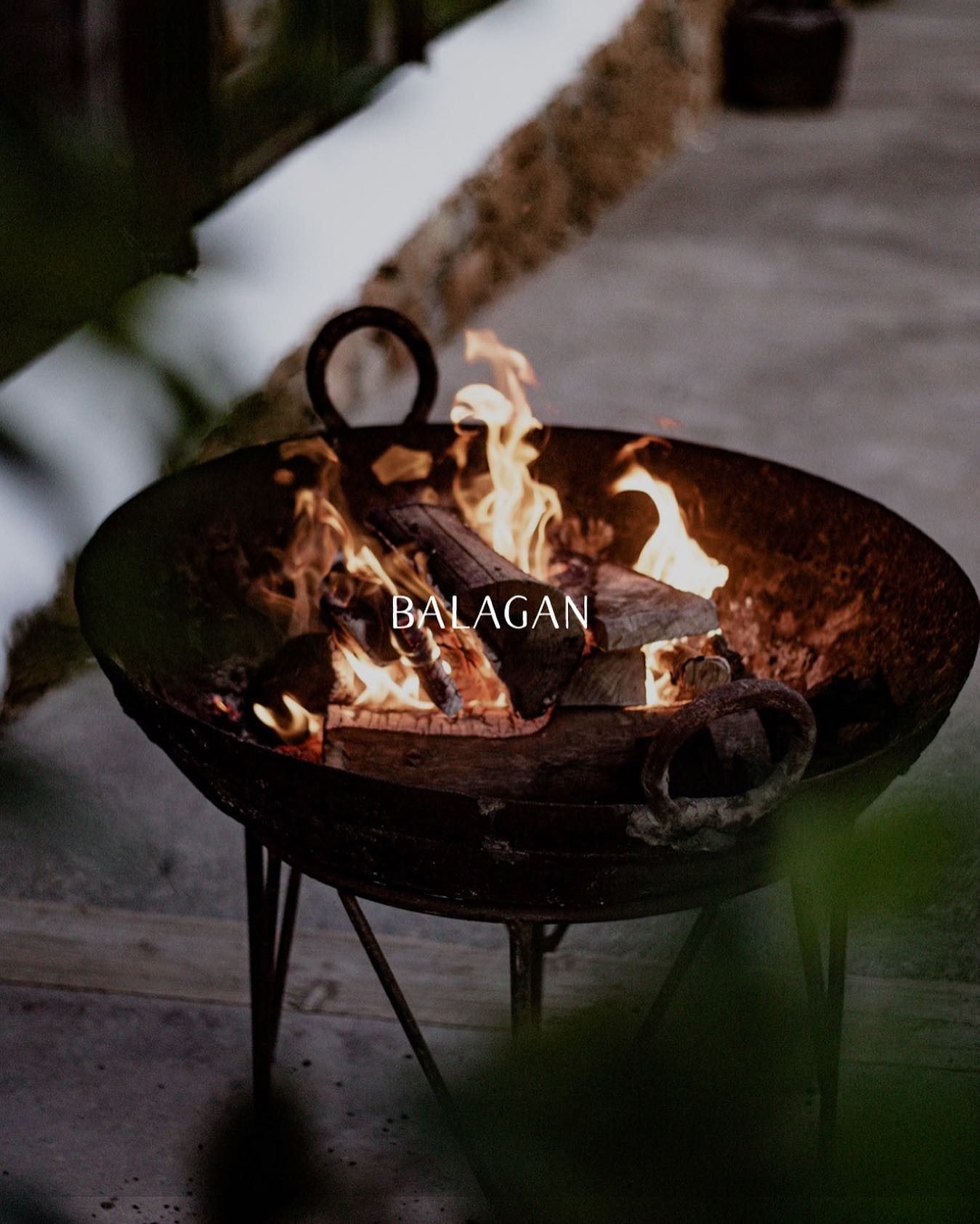
The venue. Balagan is a venue with a kitchen, DJ sets and small live shows that occupies the stretch of the city between the eastern edge of Villa Ada and the Parioli district, in the northern quadrant of Rome. The declared line is that of Mediterranean and tropical atmospheres, with attention to the kitchen more serious than you'd expect from a place that then, late at night, turns on the speakers.
Via della Torre Salaria, 5
Rome
A new venue between Villa Ada and Parioli that focuses on Mediterranean/tropical atmospheres, great attention to the kitchen and with space for DJ sets and small live shows.
This sentence, which is the description with which the place introduced itself to the city, actually contains three different promises placed side by side, and the interesting thing is that in Rome these three promises usually fight each other. A place that cares for its kitchen rarely cares for its music selection too. A place that programs DJ sets and little concerts rarely feels like working the stoves beyond the bare minimum. And a place that bets on a precise aesthetic, tropical or Mediterranean, often uses that aesthetic as a shortcut to avoid dealing with either of the other two things. Holding the three levels together is a matter of daily balance, and figuring out whether the balance holds is exactly the reason it's worth talking about at greater length.
I'll tell you right away the thing that matters most, if you've never been: the value of a place like this doesn't depend on the single dish or the single record. It depends on the area where it was born. We are in a piece of Rome where nightlife, historically, barely exists at all. The quadrant between the Salaria and the Parioli is residential, quiet, protected, expensive, and for decades has sent its inhabitants to have fun elsewhere: to the center, to Trastevere, to Pigneto, to San Lorenzo, to Ostiense. Opening here a venue that wants to be kitchen and music at once means betting that part of that flow can be reversed. It's an urban planning bet before a gastronomic one, and that is why it deserves to be told well.
Where Balagan Is and How to Get There
The address given is Via della Torre Salaria 5. It is a short street that branches off Via Salaria in the stretch just outside the modern walls of the consolidated city, at that point where the urban fabric starts to fray and the consular road resumes its ancient job, which was to carry people out of Rome. The name of the street is not accidental and is worth pausing on: the tower it alludes to is one of the guard buildings that dotted the Roman countryside along the exit routes, medieval and late medieval outposts that served to control the traffic of goods and people on an artery that, even in the 15th century, was traveled by carts and herds.
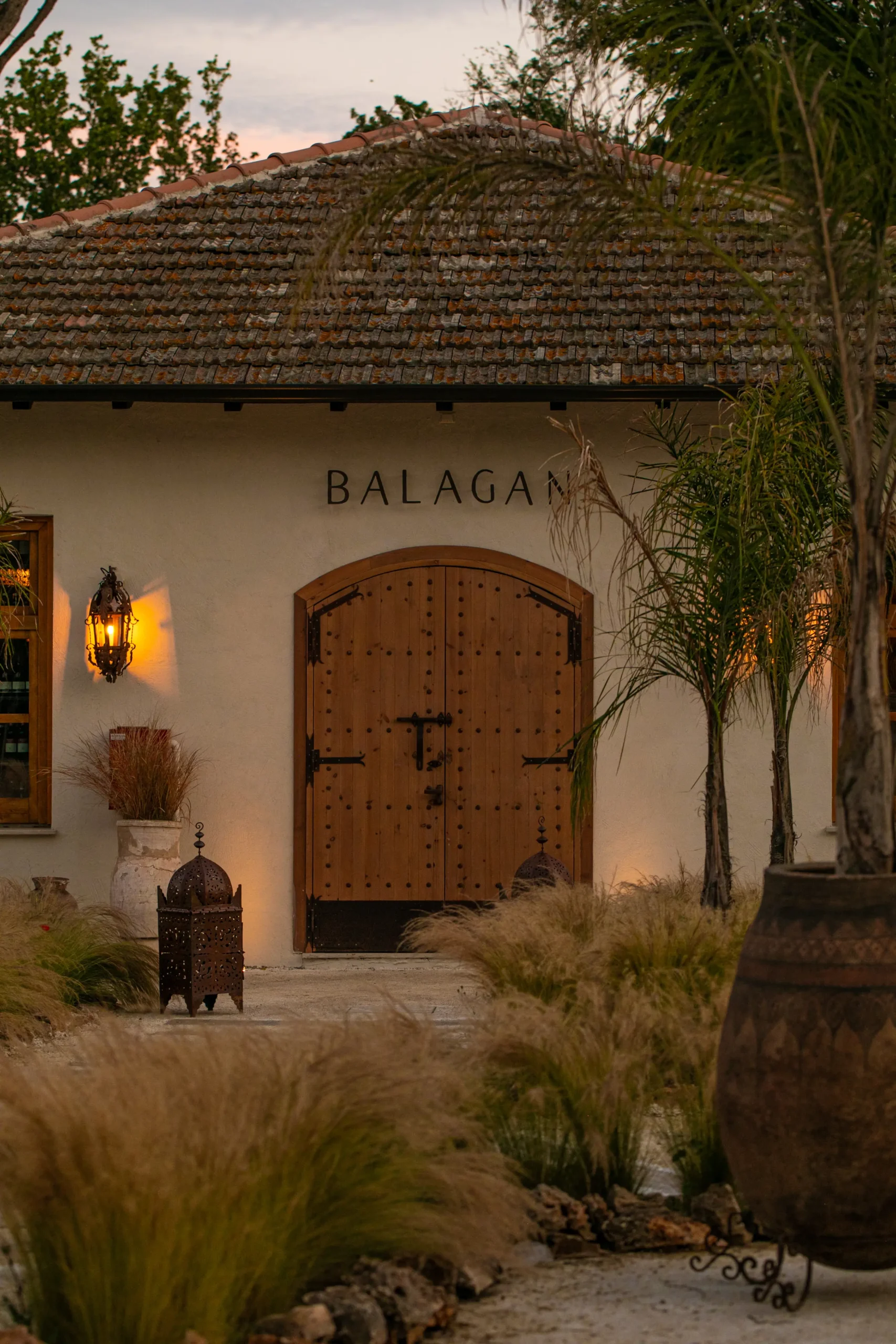
When you arrive in the area the first feeling is of being at a hinge point. Behind you is the compact city, the Umbertine and 20th-century buildings, the pharmacies and the doorways with the doorman. In front, across the roadway, the great green begins: the north flank of Villa Ada, which is the second public park of Rome by size, a body of about 160 hectares of woods, meadows, hills and paths that runs from the Salaria to the Nomentana and the Parioli. This proximity is the most important fact of the whole story. It's not a side detail: it's the reason an evening here has a different flavor from an identical evening spent in the center.
On how to get there, the area has a feature worth knowing before you set out: the metro doesn't go there. Line B has its nearest stops quite far away, toward Sant'Agnese Annibaliano on the Nomentana side, and line A serves the Flaminio area and the lower Parioli only in passing. Which means that those traveling by public transport depend on the surface lines along the Salaria, which are many and frequent in the daytime but thin out after midnight, and on the night network, which exists in this quadrant but requires patience. The directions, plainly, are these: either you come by taxi or with an on-demand service, or you allow for a walk of 10 or 15 minutes from the point where the vehicle drops you off. It isn't a problem, but it's better to know before than after.
Those arriving by car find a typical situation for Roman residential quadrants: parking possible but not guaranteed, blue lines in stretches, and considerable competition with residents in the evening hours, when everybody comes home. The practical advice is to branch out into the inner side streets rather than insist on the consular road, where parking is almost always forbidden and where the traffic, even in the evening, never really stops. The Salaria remains a through artery: those who travel it at night aren't doing it for a stroll, they use it to enter or leave the city, and you can hear it in the noise and the speed of the cars.
There is also an aspect concerning the return. An evening that ends late in a quadrant poorly served by public transport requires a minimum of organization: deciding beforehand how you'll get home avoids finding yourself at two in the morning on a sidewalk of the Salaria staring at your phone. It isn't pessimism, it's the geography of the place. The flip side is that, precisely because the area isn't trampled by nightlife, you won't find the lines, the crush and the confusion that in Trastevere or at Ponte Milvio are by now the weekend norm.
What the Word Balagan Really Means
The name isn't invented and isn't a phonetic game. Balagan is a real word, alive, widely used, and has a linguistic history that crosses half a continent. It's worth telling in full, because it's one of those chains of loanwords that says a lot about how words move when people move.
The starting point is Persian. The original form is that of a compound that means, literally, high room or balcony: a raised part of the house, an elevated space. From there the word enters Russian, where balagan takes on a very concrete and very visual meaning: it indicates the wooden shack, the temporary construction that was put up in the squares of cities on the occasion of fairs and big festivals, and inside which popular theatrical shows, farces, circus acts and sideshow performances were staged. In 19th-century Russia the balagan were a mass phenomenon: ephemeral structures put up for Shrovetide week or for holy days, taken down right afterward, with wandering actors, puppets, clowns, fair freaks and all the paraphernalia of street entertainment inside. There is a Russian painting from 1873, signed by Andrei Popov, that portrays precisely the balagan set up in Tula during Holy Week, and it is the perfect photograph of what they were: wood, canvas, crowd, cold and racket.
From that theatrical meaning, by extension, all the rest derives. If a balagan is a shack full of people shouting, of improvised acts and of wobbling scenery, then balagan quickly becomes the word for confusion, chaos, noisy disorder, mess. In Russian the term is also used in a derogatory sense for something loud and badly organized. Polish takes it in the form balagan with the clear meaning of disorder, and from Polish it passes to Yiddish. From Yiddish it finally arrives in modern Hebrew, where it becomes one of the most popular and most used words of the spoken language: in Israeli Hebrew balagan means exactly a mess, a shambles, confusion, a situation out of control. You hear it everywhere, from the street to the parliament, and it's one of those words that people learning the language absorb in the first weeks because it's needed practically every day.
So the name of the venue, literally, promises a cheerful disorder. And it's a smart positioning choice, because it covers itself in advance: I'm not selling you a stiff restaurant with a maître in a jacket, I'm telling you that here people eat, drink, talk loudly, the music starts and things get mixed up. The word contains both the fairground shack, that is, the popular show, and the festive chaos. For a place that wants to be kitchen, DJ sets and small live shows all at once, it would have been hard to find better.
A curious note: the chain of the loanword, Persian, Russian, Polish, Yiddish, Hebrew, is a map in miniature of the migrations of Eastern Europe. A word that was born to indicate the upper floor of a Persian house ends up indicating chaos in the speech of Tel Aviv, after passing through the wooden shacks of Russian fairs. Eating in a place that carries that name, in northern Rome, on the road along which salt passed 2,600 years ago, has a notable geographic irony of its own.
A Curiosity About Balagan
The real curiosity, the one almost nobody connects, concerns the combination of the name and the place. Balagan, in its original Russian meaning, indicates a temporary structure put up in a public space to put on a show: a shack of boards that appears for a festival and then vanishes. Now, the piece of Rome where the venue sits is perhaps the only one in the city to have a documented tradition of exactly this kind, and for a reason that has nothing to do with music.
Via Salaria, in all its suburban part, was for centuries a road of transit, not of residence. Transit roads, before the 19th-century urbanization, generated a service economy made of temporary structures: seasonal taverns, post stations for horses, livestock fairs, markets that were set up and taken down with the agricultural calendar. The countryside north of Rome, until the end of the 19th century, worked that way. The difference between a post tavern on the Salaria and a wooden balagan in a Russian square is enormous on the cultural level, but the economic principle is the same: where people pass, something temporary is built that entertains them, feeds them and sells them something, then it's taken down.
The venue, in this sense, is the stable and contemporary version of a very ancient function of this road. It stands where the urban fabric ends and the consular road starts again, which is exactly the position in which, for centuries, people stopped before leaving or right after arriving. I don't believe this was a conscious choice of the owners, and I don't want to attribute to them intentions they haven't declared. But the coincidence is there, and it's the kind of thing that makes an evening a little more interesting if you think about it while waiting to order.
Second curiosity, a lighter one. The pair Mediterranean and tropical, which in the presentation of the place is taken for granted, is actually a geographic oxymoron. The Mediterranean isn't tropical: it's a band with a warm temperate climate, with dry summers and rainy winters, whose symbol plants are the olive, the pine, the holm oak, the fig and the vine. The tropics are something else: high humidity, broad-leaved vegetation, palms, bananas, monsoons. Putting the two words together isn't a mistake, it's a precise aesthetic choice that describes well a trend of recent years: the imaginary south, made of warm light, big leaves, saturated colors and cocktails with fruit, which corresponds to no real place but works wonderfully as an atmosphere. Rome, with its umbrella pines that have nothing tropical about them but that in the evening backlit look like palms, lends itself to this joke better than almost any other European city.
The Mediterranean and Tropical Atmospheres, Translated Into Practice
When a Roman venue declares a Mediterranean tropical line, it is generally talking about four things together, and it's worth knowing how to recognize them to understand whether you'll like the result or not.
The first is light. The imaginary south lives on warm, low, indirect light: pendant lamps with natural-fiber shades, spotlights kept dimmed, candles or lanterns on the tables, and a color temperature somewhere around 2,700 kelvin. Whoever sets up the light this way does it because skin looks better, food looks more inviting and conversations drop in tone. It's a choice that almost always works, and has only one flaw: if the kitchen isn't up to par, the dimness protects it a little too much.
The second is green. Big leaves, tall potted plants, maybe a pergola or a plant structure covering the outdoor space. In Rome, where the outdoor seating area is the real currency of summer dining, this part makes the difference between a place you return to and one you pass through only once. Real green, the cared-for kind, costs effort and maintenance. Fake green is recognizable at the second glance and cools the atmosphere instead of warming it.
The third is material. Light wood, rattan, wicker, terracotta, rough fabrics, glazed ceramics. It's a vocabulary that comes in a direct line from southern vacation homes, and that in recent years has colonized the urban furnishing of half of Europe. It has the advantage of aging well: a slightly worn wicker chair looks lived in, a worn plastic chair looks broken.
The fourth is sound. And this is where the discussion connects to the DJ sets. The music of a Mediterranean tropical place, at dinner, tends to be rhythmic but not intrusive: soft percussion, slow grooves, a lot of material drawn from West Africa, from Brazil, from the Caribbean and from the eastern Mediterranean basin. It's music built to sit beneath conversation. Then, at a certain hour, the volume rises, the selection tightens and the place changes its trade. The moment when the passage happens is the signature of a venue: those who do it well do it gradually, those who do it badly do it all at once and find you still with dessert in front of you.
Something Nobody Tells You About Balagan
The thing nobody tells you concerns the heaviest constraint that weighs on a place like this, and it isn't the kitchen: it's noise.
The quadrant between the Salaria and the Parioli is one of the densest and most closely watched residential areas of Rome. Apartment buildings, condominiums with administrators, stable residents, many of whom have lived here for decades. A venue that programs DJ sets and small live shows in such a context lives constantly inside a negotiation with the neighborhood, and that negotiation determines practically everything: at what time the volume goes up, until what time you play, whether you play inside or outside, how long you can stay outdoors on summer nights, when the glass doors close. People who go out rarely think about it, but it's the variable that decides the shape of the evening.
This explains some things that, from the outside, seem incoherent. It explains why a place that presents itself as a music venue can have, in fact, restaurant hours on weekdays. It explains why the most intense part of the evening is almost always concentrated between Friday and Saturday. It explains why, in the warm months, the outdoor space can be full until a certain hour and then empty rapidly toward the inside. And it explains why the musical programming of these venues is often more cautious than the owners would like: it isn't lack of courage, it's the consequence of a balance that, if it breaks, costs dearly.
The second thing almost nobody says concerns seasonality. Northern Rome, in August, empties out dramatically. The Parioli and Salaria quadrant is historically the one that loses the highest share of residents in the central weeks of summer, because the reference population is the one that has a second home and uses it. A local venue that depends on the catchment of proximity must therefore build its year on a very irregular curve: full spring, good June and July thanks to the outdoor seating, difficult August, strong restart in September, solid autumn, winter dependent on the weather because without outdoor space the capacity collapses. When you read that a venue in this area changes its formula over the course of the year, it isn't inconsistency: it's survival.
Third thing, and it has to be said for honesty. In an area without established nightlife, a new venue has no competitors but no allies either. In neighborhoods where the places are many, people go out and then decide: you start in one spot, you end up in another, and the flow gets distributed. Not here. Here whoever comes, comes on purpose, has chosen beforehand, and if the evening doesn't work has no plan B 200 meters away. This puts an enormous responsibility on the shoulders of the single venue: it has to be, by itself, the whole evening. It's a condition that generates very carefully run places or places that close quickly, rarely anything in between.
The Kitchen, the DJ Sets and the Small Live Shows: How They Coexist
The declared formula puts together three things that have different timings. The kitchen has its own hours and rhythms: it opens, fills, serves, clears. The DJ sets have a slow curve, which starts in the background and rises. The small live shows instead have a rigid structure, with a start time, a duration of 40 or 60 minutes and an audience that, for those minutes, watches and listens instead of talking.
The way a venue fits these three timings together is its real identity, much more than the menu or the musical selection. The possible combinations, in Roman practice, are essentially three.
The first is the pure sequence: first you have dinner, then a few tables are moved, then music is played. It's the most honest formula and also the most tiring, because it requires the room to physically change configuration within half an hour, with the staff taking down and setting up again while the first guests of the second phase are already arriving. It works very well when the transition is managed by experienced people, and becomes a disaster when someone who had dinner at 21:30 finds themselves swallowed up in a party they hadn't anticipated.
The second is the overlap: you eat and play together, with the volume calibrated so that the two things don't kill each other. It's the formula that gives the best results with DJ sets and the worst with live shows, because a band playing live has a dynamic that doesn't lower at will: either you listen to it or you talk over it, and in both cases someone stays unhappy.
The third is the separation of spaces: one area for those who eat, one area for those who drink and listen. It requires square meters, and it's the reason almost nobody does it in the center, while in the outer quadrants, where spaces are more generous, it appears with some frequency. In the band between the Salaria and the Parioli the venues that try it usually have a wide floor plan and a usable outdoor area, and this opens possibilities that don't exist inside the walls.
I don't claim which of the three formulas is applied here on any given evening, because it changes constantly and changes with the season: anyone who tells you a venue of this type always works the same way either has never been there, or has been just once. What I can tell you is that knowing three different models exist puts you in a position to read the evening while you're living it, and above all to choose the right time according to what you're looking for.
On the kitchen front, the Mediterranean formula with a tropical inclination has its own recognizable grammar, and it can be described by categories, without attributing dishes that aren't confirmed: vegetables treated with care and often the protagonists, cooking on the grill or the griddle, oily fish and raw preparations, citrus-based sauces, fresh herbs in quantity, spices used to perfume more than to sting, fruit used in savory ways too. It's a cuisine that lends itself to sharing, with portions designed to sit in the middle of the table, and this pairs well with a context in which people arrive in a group and stay a long time.
On the music side, the small live set in a restaurant-bar has its own particular dignity, which Rome underrated for years. It's not a concert and doesn't pretend to be: it's a short set, often acoustic or semi-acoustic, in which even very good musicians test themselves in front of 50 or 100 people two meters away. For the people playing it's a tough training ground, because you don't have the darkness of the hall to protect you and you don't have a sound system that forgives. For the people listening it's one of the best musical experiences the city offers, and it costs as much as a dinner.
My advice for visiting Balagan
There is only one piece of advice and it's about timing: arrive early, much earlier than would feel natural, and treat the park as part of the evening.
The difference between this place and an identical venue opened in another part of Rome is that here, 200 meters away, a 160-hectare woodland begins. If you arrive at 10 at night, all you have in front of you is the venue. If you arrive at half past six or seven, in spring or summer, you have an hour and a half inside Villa Ada with the light going down, the pines turning black against the sky, the little lake, the packed-earth paths, people running and children heading home. Then you leave the park, cross the road, and sit down. That walk costs nothing and completely changes the value of the evening.
The second part of the advice is about the day of the week. If your goal is to eat well and talk, pick a weeknight: the dining room is calmer, the service has time, the volume stays low all evening and the people cooking aren't working under pressure. If instead you're after the evening with loud music and a full room, the weekend is the only time that kind of energy really switches on in this part of town. They are two different experiences of the same address, and the most common disappointment, in places like this, comes from going on the wrong day for what you were looking for.
Third part: book, and when you book, ask. Ask whether there's a live set that night and what time it starts, ask whether the table is inside or outside, ask how late the kitchen stays open. They are three 30-second questions that solve 90 percent of misunderstandings. In venues that also do music, the same evening can have two faces an hour apart, and the staff on the phone know it perfectly well: you just have to ask.
Fourth, and I say it because in this area it matters more than elsewhere: decide beforehand how you're getting back. This part of town has no subway, the surface lines thin out late at night and you can't hail a taxi in the street as easily as in the center. If you organize the return before going out, you enjoy the evening to the end. If you don't, you spend the last half hour staring at an app.
Fifth, a note on the weather. In the in-between months, April, May, September and October, this area has a particular microclimate: the nearby park and the slightly higher elevation compared with the center mean the temperature drops faster in the evening. If you plan to sit outside, bring something to put on even when the afternoon was warm. It's the kind of detail nobody ever writes down and it decides whether you stay out chatting or go back in after 20 minutes.
The neighborhood around: Villa Ada, Monte Antenne and the Parioli
To understand where you are, it helps to look at the map with a historical eye, because this piece of the city is much older than the buildings suggest.
Villa Ada, formally called Villa Ada Savoia, is the city's second-largest public park, after Villa Doria Pamphili. The core of the estate began as a noble property and changed hands several times between the 1800s and the 1900s. The royal family bought it in the second half of the 1800s, then sold it, and in 1904 Victor Emmanuel III took it back and made it the private residence of the Savoy family in Rome, distinct from the Quirinale, which was the official residence. The name Ada, which stuck and which everyone uses today, comes from the wife of the count who owned the estate in the intervening period. A substantial part of the property still belongs to the Egyptian diplomatic mission, which has its seat there: that's why, walking in the park, at some point you come across gates and fences you wouldn't expect in a public garden.
Inside the park, on the side facing the Aniene, rises Monte Antenne. It's a modest hill, about 60 meters, but its position is one of the most strategic in all of Roman geography: it overlooks the exact point where the Aniene flows into the Tiber. Whoever controlled that hill controlled the river access to the plain and the passage of the road coming down from the Sabina. It's no coincidence that Antemnae stood there, one of the oldest Latin and Sabine settlements in the area, recorded by the ancient sources among the communities involved in the episode of the Rape of the Sabine Women and among the first to be absorbed by early Rome. The name itself, according to the interpretation handed down by ancient authors, alludes to its position in front of the river.
On the same hill, many centuries later, united Italy built Forte Antenne, one of the 15 forts of the entrenched camp built around Rome in the 1880s to defend the new capital. It's the smallest of the 15 and had the curious fate of becoming, over time, a forgotten place inside a public park, reopened in recent years thanks to the work of associations that organize screenings, tours and cultural activities there. Anyone who spends time in the area in summer knows the program held there: the open-air cinema inside the fort is by now one of the fixed appointments of the Roman season.
Also inside Villa Ada, every summer, the music festival that made the park familiar to whole generations of Romans takes place: Roma incontra il mondo, the festival that since the 1990s has brought African, Caribbean, Middle Eastern, electronic and Italian music to the stage by the lake. It's the reason why, if you say Villa Ada to a Roman between 30 and 60, the first thing that comes to mind isn't the park but a summer concert with mosquitoes.
On the opposite side are the Parioli. The neighborhood was born in the 1900s, with the urbanization of the hills north of the city foreseen by the master plans of the early century, and takes its name from the word for those very modest tuff rises. It quickly became the bourgeois neighborhood par excellence of the capital, with a social identity so marked that it produced an adjective in common use all over Italy. Its urban structure, with curving streets that follow the contour lines and buildings set in condominium gardens, is very different from the grid of the Umbertine neighborhoods, and you recognize it at first glance.
A little farther east, between the Salaria and the Nomentana, is one of the most extravagant places in Rome: the Coppedè district, the block designed by Gino Coppedè between 1913 and 1927, where Liberty style mixes with medieval, baroque and a fairy-tale imagery that looks like nothing else in the city. If you come to dinner in the area with some time to spare and feel like walking, it's at a reasonable distance and worth the time you spend.
Via Salaria, salt and the reason this road exists
The road you're standing on is one of the oldest in Italy, and its history begins before Rome. Via Salaria owes its name to salt, and not in a metaphorical sense: it was the route along which the salt produced in the salt pans at the mouth of the Tiber went up toward the interior, toward the Sabina and the Apennines, to be traded for mountain products. The Sabines came down to get salt and went back up: the route comes from that movement repeated over generations, long before anyone paved it and gave it an official name.
Salt, in the ancient world, wasn't a seasoning: it was the only preservation technology available on a large scale. Without salt you can't preserve meat, you can't make salted fish, you can't keep cheeses, you can't keep livestock healthy. Controlling a salt road meant controlling the food survival of a territory. The salt pans at the mouth of the Tiber were one of the first strategic objectives of Roman expansion toward the sea, and the road leading from those salt pans to the interior was consequently one of the first arteries to be garrisoned and organized.
The Salaria, in Roman times, left the city through the Porta Salaria opened in the Aurelian Walls, went north touching Fidenae, Eretum and Reate, crossed the Apennines and descended to the Adriatic toward Ascoli and the Picene coast. It was therefore a transverse road, one of the few that connected the two seas by crossing the mountain ridge: a function it kept for centuries and that, in a modern form, it still keeps today.
This explains something that otherwise seems strange, namely why a remarkable number of funerary monuments and underground cemeteries are concentrated along this route. The consular roads, outside the walls, were the place of burial: Roman law forbade burying inside the city, and so the tombs lined up along the roads leading out, where people passed and where the memory of the deceased could be seen by those going by. The great Christian catacombs arise from this same logic, taking advantage of land already used for burial and the ease of digging the tuff.
Walking on the Salaria today, between the car dealerships and the office buildings, you wouldn't guess. But under your feet, in the stretch from where you are to a few kilometers farther north, lies one of the most extensive and oldest underground systems of Roman Christianity. It's worth knowing before you sit down to dinner, if only because it changes the mental scale with which you look at a road that, at first sight, seems merely busy.
Another well-known fact, yet rarely mentioned
The well-known fact is that Villa Ada was the private residence of the Savoy family in Rome. Many people know it, it's written everywhere, and the official name of the park states it openly. What is mentioned much less often is the concrete consequence of that fact: inside this park, a few hundred meters from where people now eat dinner and listen to music, the turning point of 20th-century Italian history was decided.
On July 25, 1943, in the royal villa inside the estate, Victor Emmanuel III received Benito Mussolini after the night session of the Grand Council of Fascism that had voted the Grandi motion. The meeting lasted a few minutes. At the end, on his way out, Mussolini was stopped by the carabinieri and taken away in an ambulance. The arrest happened physically here, on the exit drive of the estate, in a park that today thousands of people cross every day with a dog on a leash and headphones in their ears.
I find this the most striking thing in the whole area, and at the same time the least noticed. There is almost nothing to remind you of it as you walk. The park is a park: lawns, pines, benches, the little lake, joggers, kiosks. Yet the point where Italian fascism ceased to govern is inside those fences, and it is so little signposted that most Romans who visit Villa Ada every week couldn't point to it on a map.
There's a second layer under the same fact. The same estate holds an air-raid bunker built by the royal family at the end of the 1930s, dug under the hill, with armored doors and an air filtration system. Rome, in those years, filled up with shelters: the Savoy one at Villa Ada and Mussolini's at Villa Torlonia are the two best-known examples, and both tell the same thing, that those governing the country were privately preparing for a bombing while publicly denying the possibility. On July 19, 1943, six days before that meeting, the San Lorenzo neighborhood was bombed with hundreds of dead.
So here it is: all of this lies within a radius of 2 kilometers of the table where you sit. I'm not writing it to weigh down an evening, I'm writing it because the difference between going out to dinner and going out to dinner in Rome is exactly this, and whoever ignores it misses half the reason it's worth living in this city.
The Priscilla catacombs, a few minutes from here
Going up the Salaria toward the north, a little past the venue, you find the Priscilla catacombs, which tradition calls the queen of the catacombs. It's one of the oldest and most important underground burial complexes of Roman Christianity, dug starting in the second century in a pozzolana quarry and then extended for kilometers over several levels.
The name comes from Priscilla, the woman of the senatorial family who made the land available for burials. Inside the complex are some of the oldest Christian paintings known: the so-called Cubiculum of the Velata, with the female figure with open arms in prayer, and above all the scene, in the Greek Chapel, in which a female figure holding a child is considered by many scholars the oldest known depiction of Mary. Not all scholars agree on the interpretation, and the discussion has been open for decades, but the chronological fact remains extraordinary: we're talking about images painted when Christianity was still a minority without public recognition.
The complex is now in the care of a community of Benedictine nuns and is visited with a guide, in groups, with hours and closing days that change over the course of the year: before going it's always best to check the schedule on the official channels. The temperature underground stays low and constant all year, which makes the visit particularly pleasant in midsummer and rather cool in winter.
For anyone building a day in the area, the pairing works very well: catacombs in the afternoon, a walk inside Villa Ada at sunset, dinner and music in the evening. They are three completely different experiences packed into a ridiculously small radius, and they cover 2,000 years of the history of the same road.
The right photo to take at Balagan
I'll give you the uncomfortable answer: the right photo isn't taken inside the venue.
Inside, the light is warm and low, which is exactly the condition in which phone sensors work worst. The result is yellow, noisy images, with smeared faces and distorted colors on the plates. You can fix it in post, you can lift the shadows, but the physical limit remains. A photo inside a venue lit by lamps and candles only works if you accept the darkness instead of fighting it: frame tight, get close, let the background vanish into black, use a candle flame or the lamp as the only source and put it to the side of the subject, never in front. A hand, a glass, a plate lit from the side: that's the possible photo. The whole table seen from above with the flash is the photo you'll delete tomorrow.
The real photo, though, you take an hour earlier and 200 meters away. Enter Villa Ada through the nearest gate in the 40 minutes before sunset, when the sun is still above the horizon but the light has already turned low and orange. Look for a spot where the umbrella pines stand out against the sky: their umbrella shape is the visual signature of Rome, and backlit it becomes a perfect black silhouette. If you have time, climb toward the hill of Monte Antenne, where the ground rises and the view opens up. If you have little time, the little lake gives a reflection that multiplies the light and yields photos that look taken far from the city.
Three technical tips that change the result more than any filter. First: tap the screen on the sky and then lower the exposure by one or two steps, so the sky keeps its color instead of blowing out to white. Second: put the human subject facing away or in profile, because in backlight a face seen head-on becomes a dark, shapeless blotch. Third: get low. A phone held 50 centimeters off the ground, pointed upward, turns an ordinary lawn into a close-up of lit grass with the pines above: it's the simplest and most effective trick there is in a park.
For anyone who wants the night photo, on the other hand, the only one that really works in this part of town is the one of the road: the Salaria at night, with long car trails and the empty sidewalk, resting the phone on something steady and using a long exposure. It's an image that tells the true nature of the place, a venue born on the edge of a road that leads out of the city, far better than any close-up of a cocktail.
Some important events that took place here in history
The venue is recent, and it would be ridiculous to attribute to it a history it doesn't have. But the patch of land it stands on has a density of events that few other spots in Rome can claim, and it's best to read them in chronological order, because the leap in scale, read all together, makes quite an impression.
Before Rome. On the hill of Monte Antenne, inside today's Villa Ada, stood Antemnae, a Latin-Sabine community settled at the confluence of the Aniene and the Tiber. The ancient sources place it among the first cities involved in the conflict with early Rome, in the episode that tradition hands down as the Rape of the Sabine Women, and among the first to be absorbed. We're talking about a chronological horizon that precedes historical Rome: the hill was inhabited when the plain below was still marshy.
The salt and the road. The route of the Salaria comes from the trade in salt between the Tyrrhenian coast and the Apennine interior. It is one of the oldest routes on the peninsula, earlier than its Roman organization, and for centuries it determined the economic geography of the whole northern area.
The Christian burials. Starting in the second century, along this stretch of consular road, the Priscilla catacombs were dug, among the oldest and largest Christian underground complexes in Rome, with paintings of exceptional early date and the burial of several popes of the first centuries.
The Middle Ages of the towers. The very name of the street the venue stands on preserves the memory of the watchtowers that, between the Middle Ages and the early modern period, controlled the traffic along the consular road in a depopulated and unsafe territory. The Roman countryside, for nearly a thousand years, was a landscape of pastures, fortified farmhouses and dangerous roads.
The royal estate. Between the 1800s and the early 1900s the large property we now call Villa Ada changed owners several times between the royal family and private individuals, and in 1904 Victor Emmanuel III bought it back and made it the private residence of the Savoy family in Rome. The name Ada comes from the wife of the owner who held it in the intervening period.
The entrenched camp. In the 1880s, to defend the new capital of the Kingdom, the army built 15 forts around Rome. On the hill of Antemnae stands Forte Antenne, the smallest of the series, which then remained for decades an inaccessible military zone inside what would become a public park.
The 1900s of the neighborhoods. With the master plans of the early 1900s the Parioli were born and, not far away, the fairy-tale block designed by Gino Coppedè between 1913 and 1927. In a single generation, a landscape of vineyards and farmhouses became the bourgeois neighborhood par excellence of the capital.
July 25, 1943. In the royal villa inside the estate, the king receives the head of government and orders his replacement. On leaving the meeting Mussolini is arrested by the carabinieri. It is the exact point at which the fascist regime stops governing Italy, and it is inside this park.
The postwar period and the opening to the public. With the end of the monarchy the estate gradually passes into public hands and becomes the park we know, with the significant exception of the portion that houses the Egyptian diplomatic mission. Since then Villa Ada has been one of the city's great green lungs and one of its main informal sports spaces.
The 1990s and music. The summer festival that has since brought music from all over the world to the stage every year begins inside the park, helping transform Villa Ada from a neighborhood park into a symbolic place of the Roman summer. It's the most direct precedent, in this part of town, for any talk about live music and evening life.
Recent years. The recovery of the 19th-century fort by community associations, with screenings, tours and cultural activities, gives back to the city a piece of the park that had stayed off its radar for more than a century. In the same period the strip between the Salaria and the Parioli begins, very slowly, to host venues with an evening identity of their own instead of limiting themselves to neighborhood dining.
Who has been to Balagan
Here I have to be precise, because this is the point where people usually make things up. There are no celebrity names on record and no public statements from famous guests, and a list of illustrious visitors with nothing to back it up would be the easiest thing to write and the least useful to read.
What I can tell you is who comes to a place like this, and in this area the answer is much more defined than elsewhere. The natural catchment is made up of residents of the area, people from the Parioli, Salario, Trieste and Montesacro, who for the first time in years have the chance to spend a whole evening out without going down to the center. It's a mostly adult crowd, which eats early by Roman standards, knows the places and comes back when it's had a good time.
Then there's the music crowd, which works on a completely different logic: people who follow a DJ or a band travel for that, and come even from the other side of the city without making much of it. This crowd is younger, more mobile, and in a neighborhood like this it has a visible effect: on nights with music the makeup of the room changes sharply compared with an ordinary evening, and so does the hour at which the room fills up.
Finally there's a third category, which in north Rome counts for more than you'd think: the passing crowd tied to the area's big cultural venues. People coming out of a concert at the Auditorium Parco della Musica or an exhibition at MAXXI are a few minutes by car from here, and in the area between Flaminio, Parioli and Salaria the alternatives for a late dinner after a show remain surprisingly few. The same goes for people who go to the summer evenings inside the park.
On the historical side, the documented visitors concern the road and the estate, not the venue, and they carry a completely different weight. Along this stretch of the Salaria have passed the salt merchants going up toward the Sabina, pilgrims heading north, armies coming down from the Apennines, transhumance shepherds, carters bringing wine and provisions to the city. Inside the estate we now call Villa Ada the kings of Italy lived, and on its exit drive one of the most important arrests in 20th-century European history took place. A few hundred meters away, underground, rest Christians of the early centuries and some of the first bishops of Rome.
Putting these two lists on the same level would be absurd, and I don't do it. But the fact that they coexist within a few minutes' walk is precisely what makes a dinner in this spot of the city different from a dinner in the same kind of venue in any other European capital.
When to go, and what to really expect
Here is, in practical terms, what's been said so far, so that it's useful while you decide.
From April to June is the best time by far. The evenings are long, the park stays open late, the temperature lets you stay outside without suffering and the city hasn't yet emptied out for vacations. It's the window in which the walk-plus-dinner pairing delivers the most.
July works but changes register: it's hot even at night, people eat later, and the crowd concentrates in the hours when the air has dropped a few degrees. August, in this area, needs checking beforehand: it's the month when north Rome empties out and many businesses cut back or close for a few weeks.
September is the month of the restart and is perhaps the nicest of all. The city fills up again within 10 days, the evenings stay mild, the park is still enjoyable for a long time and the cultural programming restarts everywhere. The ideal period for discovering a venue like this is the last two weeks of September and the first of October.
From November to March the game is played entirely indoors. The outdoor space loses almost all its use, capacity shrinks, and the weight of the kitchen and the dining room grows in proportion. It's also the period when a venue shows its true quality: in summer a terrace with lights and plants saves almost anyone, in winter all that's left is what's on the plate, how they treat you and what comes out of the speakers.
One last recommendation, always valid and especially for an address like this. The practical information of Roman venues changes constantly: closing days, hours, evening formats, music calendar. Before heading out, a check on the venue's official channels and a phone call settle everything. It counts double if you're traveling in a group or coming from far away, because in this area you don't have an alternative around the corner if you find it closed.
How to fit the evening into a Roman day
To finish, three itineraries that really work, built with places you reach on foot or with a few minutes of travel.
The historical itinerary. Afternoon at the Priscilla catacombs, with the guided visit that lasts roughly an hour. Then back up toward the park, entering Villa Ada, climbing to Forte Antenne to see the spot where Antemnae stood and to look out over the confluence of the two rivers. Down at sunset and dinner. It's a day that covers 2,000 years in 3 kilometers.
The architectural itinerary. Start from the Coppedè district, with its arch, the Fountain of the Frogs and the buildings that look like they came out of an illustrated book. Then cross the Salario and the Parioli on foot, watching how the language of the buildings changes decade after decade: Liberty, rationalism, small apartment buildings of the 1950s and 1960s. Arrive on the Salaria for dinner. It's a lesson in the history of housing that costs nothing.
The cultural itinerary. An exhibition at MAXXI or a concert at the Auditorium Parco della Musica in the afternoon, a walk toward the Foro Italico or along the Tiber to Milvian Bridge, and then back up toward the Salaria for the evening. In this case it's worth calculating the timing carefully, because the trip is longer than it looks on the map.
In all three cases the principle is the same: in this part of Rome the venue isn't the center of the evening, it's the point where the evening comes to rest. Those who understand that take home a memory, while those who arrive at 10 at night by car and leave at midnight take home a dinner, which is already something but is much less than the place could have given them.
Frequently asked questions about Balagan
Where is Balagan and what is the street called?
Balagan is at via della Torre Salaria 5, in Rome, a short street that branches off Via Salaria just outside the modern walls of the consolidated city, at the point where the urban fabric starts to thin out.
What does the name Balagan mean?
Balagan is a real word, of Persian origin, passed through several languages down to Russian, where it means a temporary structure set up in a public space for shows, a shack of planks that appears for a festival and then disappears. The name therefore evokes the idea of a temporary place devoted to celebration.
What kind of food does Balagan serve?
Balagan declares a tropical Mediterranean line, a formula that in Rome usually combines warm, low light, a carefully designed atmosphere and a kitchen meant to accompany DJ sets and small live concerts, with different hours and rhythms coexisting in the same evening.
Is Balagan a noisy venue, given the residential area?
The area between the Salaria and the Parioli, where Balagan is located, is one of the densest and most closely watched residential areas of Rome, so noise is the heaviest constraint for a venue that programs DJ sets and small live shows in a setting inhabited by permanent residents.
When is the best time to go to Balagan?
The best period to go to Balagan is from April to June, when the evenings are long, the nearby park of Villa Ada stays open late and the temperature lets you sit outside without suffering.
What is near Balagan?
A few steps from Balagan is Villa Ada, the second-largest public park in Rome, and a little farther north, going up Via Salaria, the Priscilla catacombs, one of the oldest underground burial complexes of Roman Christianity.
Is it worth arriving early at Balagan?
Yes: the advice is to arrive early, much earlier than would feel natural, and to treat the nearby park of Villa Ada as part of the evening. Arriving at half past six or seven you still have time to walk in the park before sitting down at the venue.
Before you head out
If you're putting together a trip to Rome, or a whole day and not just an evening, our work continues beyond these pages. On ItalyPlanner you'll find day-by-day itineraries, the real travel times and advice on how to fit museums, neighborhoods and breaks together without rushing: it's the right tool if you need to decide how many days you need and in what order to put things. If instead you're organizing a trip for a group, a school class or a party of friends, and you need someone who knows the city from the inside, the network of tour leaders and guides at TourLeaderPro is designed for exactly that: professionals who work in Rome every day and know when a place is crowded, when it's closed and when it's worth the detour.
And then, simply, come early. The light of Rome between seven and eight in the evening, filtered through the pines of Villa Ada, is free and no interior design can beat it.
Contact Information
Via della Torre Salaria, 5
Roma Roma Città, Roma Città