Published on
Some links on this page are affiliate links: if you buy through them, Estate Romana receives a small commission, at no extra cost to you. As an Amazon Associate, Estate Romana earns from qualifying purchases.
Which games did ancient Rome really know, and which can you bring home today without ending up with a plastic souvenir? The short answer: the Romans played dice, knucklebones, tic-tac-toe and strategy games on boards carved into stone, and some of those boards can still be seen on the steps of the Basilica Julia, in the Roman Forum. Here you’ll find the history, the place to see them and a selection of board games, puzzles and kits for the evening at the hotel or for travel.
The idea is simple. A themed game works if it tells you something true: a board that copies the ones in the Forum, a Colosseum puzzle to put together after seeing it, a deck of cards that opens up on a train tray table. The rest, meaning ancient Rome games designed only as gadgets with a gladiator printed on top, in our opinion can be left on the shelf.
Data checked on October 3, 2026 against the educational page of the Colosseum Archaeological Park on the tabulae lusoriae of the Basilica Julia, the Park’s tickets page, the Latin text of Suetonius’s Lives of the Caesars and Ovid’s Ars amatoria. Hours and entry rules change: check the official site before heading out.
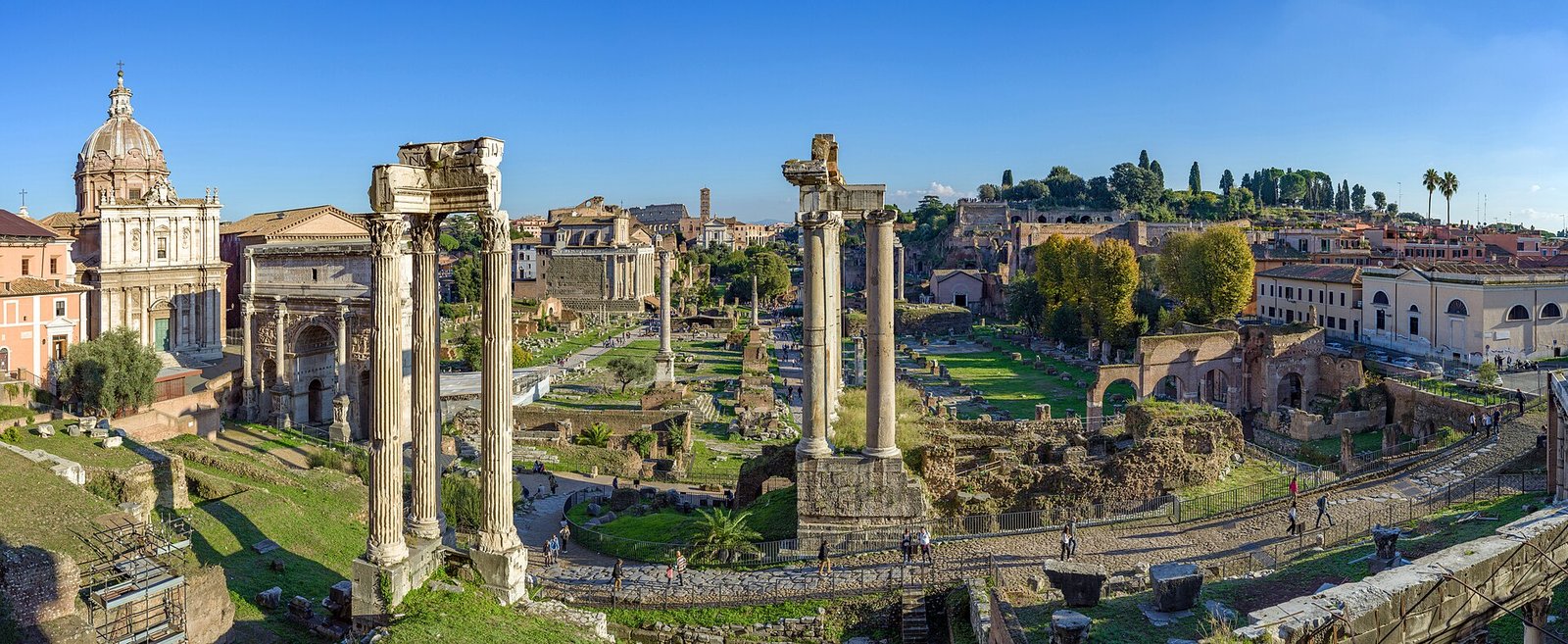
Ancient Rome games at a glance
- What: ancient Rome’s games included dice (tesserae), knucklebones (tali), alignment games like tic-tac-toe and strategy games like the ludus latrunculorum and the duodecim scripta.
- Where to see them: in the area of the Basilica Julia, in the Roman Forum, the Colosseum Archaeological Park has recorded about 60 tabulae lusoriae, the boards carved on steps and floors.
- How to get in: the Roman Forum is included in the Colosseum, Roman Forum, Palatine ticket and in the Forum Pass SUPER, which you buy on the official ticketing.colosseo.it site with a named ticket.
- When it’s free: according to the Colosseum Archaeological Park, entry is free on the first Sunday of the month and on April 25, June 2 and November 4.
- The ancient sources: Suetonius tells that Augustus lost 20,000 sesterces at dice during the Quinquatria and that Claudius wrote a book on the art of dice playing.
- Good to know: the Romans didn’t play chess, which reached Europe many centuries later. The grid boards of the Forum served other games.
- What to buy: for home and travel, the best are board games that rebuild the ancient rules, Colosseum and Forum puzzles and compact card decks.
What did the Romans really play?
A lot more than you’d think, and in much more public places. The Colosseum Archaeological Park’s page explains that in the area of the Basilica Julia about 60 tabulae lusoriae have been found: games of hollows, circle diagrams with spokes, tic-tac-toe, ludus latrunculorum, duodecim scripta and other patterns of uncertain attribution. They were carved with a chisel directly into the marble, on the steps and on the floors of the aisles, by people passing the time in the Forum waiting for a trial, a client, a master.
The game of hollows is the easiest to picture: rows of small holes dug into the stone, sometimes eight, sometimes 12, sometimes arranged in a circle. The same page notes the large number of hollows and links it to the presence of children and teenagers. The exact rules aren’t known. They’re presumed to have been close to those of nine men’s morris, with pebbles or small stones to line up. It’s one of the ancient Rome games you can rebuild at home with a sheet of paper and a few buttons.
The ludus latrunculorum, the “game of little soldiers” or of “bandits”, was a strategy game on a grid. Ovid, in the third book of the Ars amatoria, advises girls to know how to play carefully the “battles of the latrones”, where a piece dies when it’s caught between two enemies (“unus cum gemino calculus hoste perit”). It’s the most useful detail we have: you captured by surrounding. The rest of the modern rules is a reconstruction by scholars, and the versions on the market aren’t all the same.
The duodecim scripta, the “12 lines”, were played with pieces and dice on a board of rows of squares, and it’s the ancient game that most resembles modern backgammon. On the number of dice and the exact design of the board the sources don’t agree. The same goes for a passage of Ovid describing a tablet with as many lines as there are months in the year and three pieces per side: some read a variant of tic-tac-toe in it, some a different game.
Then there were the real gambling games: the tesserae, six-sided dice like ours, and the tali, the knucklebones, little bones with four useful faces. According to the Park’s page gambling was considered lawful only during the Saturnalia in December, the festival when the social order was turned upside down for a few days. In practice people played all the time, and the sources tell it without much shame, starting with the emperors.
Emperors and dice: what do the sources tell us?
Suetonius, in the life of Augustus, reports a letter from the emperor to his future successor Tiberius. During the Quinquatria, Minerva’s festival in March, Augustus writes that he played every day and “warmed up the gamblers’ table” (“forumque aleatorum calfecimus”). He adds that he lost 20,000 sesterces, but only because he’d been generous, as usual, leaving the winnings to his friends. It’s one of the liveliest testimonies of games in ancient Rome, and it comes from the first emperor.
Claudius went further. Suetonius writes that he played dice with great passion and even published a book on the art of the game (“de cuius arte librum quoque emisit”), now lost. He also played while traveling, with the board and the dice cup fixed to the carriage so the game wouldn’t get scrambled. For anyone looking for a travel game today it’s an illustrious precedent: the compact box that fits in a backpack has 2,000 years of history.
These pages of Suetonius have to be read for what they are: biographies written a century later, with an evident taste for anecdote. But the picture they give matches the archaeological one. The Forum’s boards are carved by anonymous hands, almost certainly servants, slaves, freedmen and clients, as the Park’s page recalls. The emperors’ dice are in the biographies. In between was a whole city playing, in the piazza and at home.
The common mistake: did the Romans play chess?
No, and it’s worth saying because the legend circulates even in souvenir shops. The grids carved on the steps of the Basilica Julia are often called “chessboards”, and some descriptions compare them to modern chess. But chess was born in Asia centuries after the end of the Western empire and arrived in Europe only in the Middle Ages. A “Roman” chess set, with pieces shaped like legionaries and centurions, is a nice ornament: it isn’t an ancient game.
The same goes for many “original rules” printed on the boxes. Of the ludus latrunculorum we know that you captured by surrounding, thanks to Ovid, and little else for sure. The versions on the market pick one reconstruction among several possible ones. That’s not a flaw, as long as the booklet says so. In our opinion this is exactly the criterion for choosing: be wary of ancient Rome games that present themselves as “the ones Caesar played” without citing a source.
Where to see the games of ancient Rome today in Rome
There’s only one place and it’s worth the visit: the Basilica Julia in the Roman Forum
. Of the basilica, wanted by Caesar and completed by Augustus, what remains is mostly the plan and the steps toward the Forum square. It’s there, and on the floors of the side aisles, that you look for the boards: circles divided by spokes, rows of hollows, worn grids. There are no signs at each carving, so it’s best to arrive knowing what to look for.
To get in you need one of the Archaeological Park tickets that include the Roman Forum: the Colosseum, Roman Forum, Palatine ticket, valid 24 hours with a single entry to each site, or the Forum Pass SUPER, which includes the Forum, the Palatine and the Imperial Forums but not the Colosseum. Tickets are named, you buy them on ticketing.colosseo.it and sales open 30 days before. The fares are on the official site.
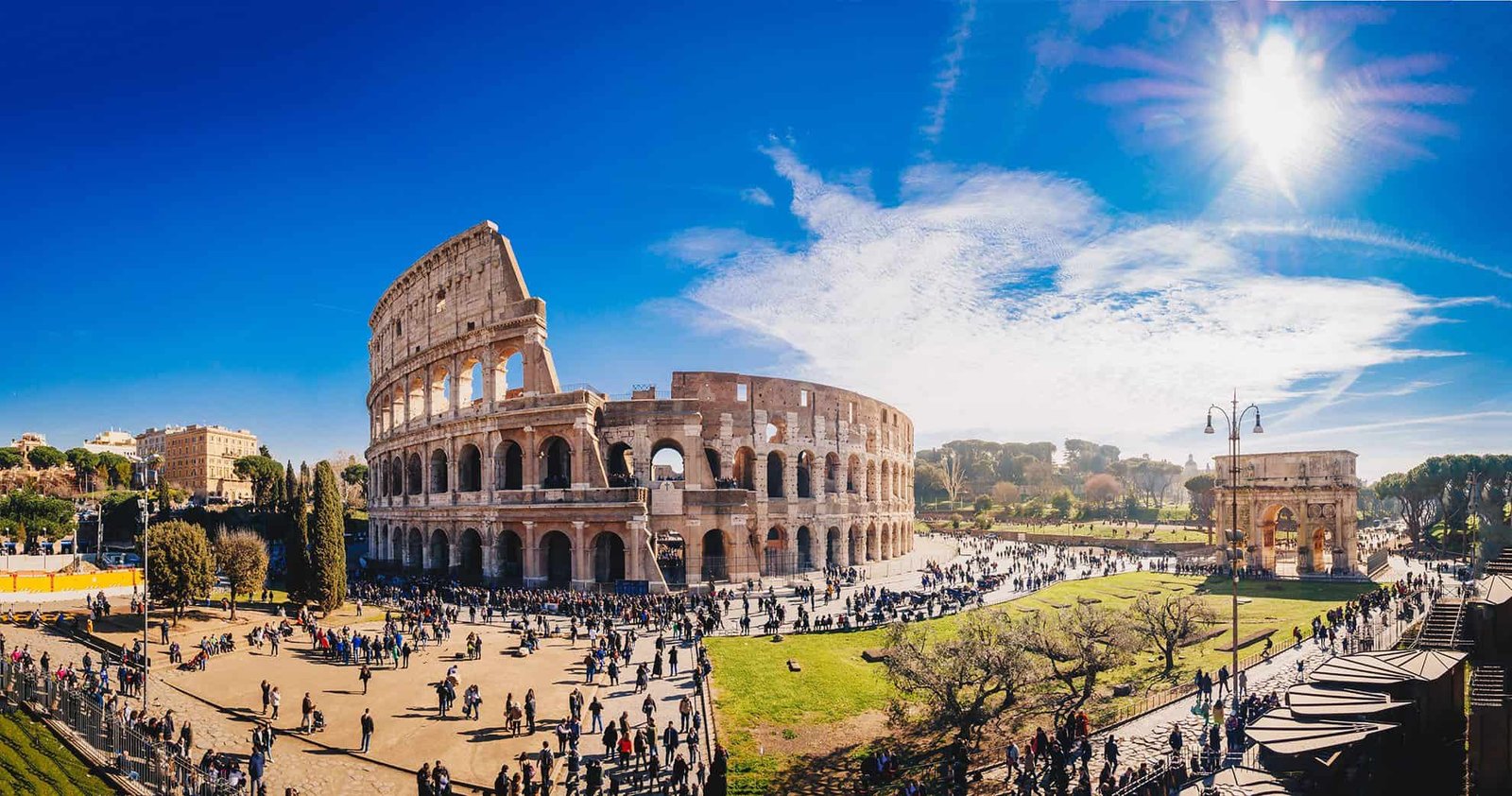

Our advice is to devote half an hour to the games, no more, within a broader visit. With kids it works like a treasure hunt: who finds a circular board first, who counts the hollows. If you want someone to tell you about the Forum, on the market there are Roman Forum visits on GetYourGuide, to choose by reading carefully what they include.
If you want to widen the tour you can add the Trajan’s Markets, a few minutes’ walk away, where you get a sense of how the city’s daily trade worked. For more ideas on things to see there’s the collection of tourist attractions in Rome from Estate Romana, with place-by-place pages, and the museums section for indoor days.
Which ancient Rome games to choose for home and travel?
It depends on who’s playing and where. For home, at leisure, the best choice is a board game that rebuilds a real ancient game, with the rules explained and a note on the sources. A latrunculi or duodecim scripta board can be learned in 10 minutes and holds up for many games. Modern board games set in Rome, with legions and provinces to conquer, are something else: fun, but what’s Roman about them is the setting, not the game.
For travel, weight matters. An illustrated deck of cards, a set of dice, a pocket tic-tac-toe or a folding board fit in a backpack and come out on the train, at the hotel, at a café table while you wait for the rain to stop. Puzzles, on the other hand, are a home game: you buy them before or after the trip, put them together at leisure and they become a memory to hang. The Lego Colosseum set is a special case, more for collecting than for playing.
With small kids, knucklebones and hollows work, which are hand and counting games. From nine or 10 years old you move on to strategy games. Among adults, a couple traveling has fun with duodecim scripta, which have the same tension as backgammon. A group of friends in a vacation house needs something for four or more players instead: there, modern board games set in ancient Rome come in handy.
When to order and how to get them delivered?
If the game is for the trip, order it now and have it delivered home before leaving: that way you check that all the pieces are there and learn the rules at leisure. For delivery times, what counts is the estimated delivery date at the time of the order, which changes from product to product and seller to seller. With the end-of-year holidays coming, for gifts it’s best not to wait until the last days.
If you’re already in Rome, you can have it delivered to the hotel, but only after asking the reception if it accepts packages for guests and in whose name to address them. Many places do, some don’t, and guesthouses without a front desk often can’t. An alternative is to buy the puzzles and books after the trip, at home, when you’ve seen the Forum and the Colosseum in person and know which image you really want to put together.
What to do if it rains or the kids are tired?
The Roman Forum is outdoors and hard to see in the rain, also because the carved boards get slippery and fill with water. On a bad-weather day it’s best to move the visit and play indoors: a deck of cards at the hotel, a board of hollows drawn on a napkin at the restaurant. For the hours when you need a roof, the Estate Romana museum pages help you pick a nearby alternative.
With tired kids the opposite rule to the grown-ups’ applies: fewer sites, more play. An hour at the Forum looking for the boards stays in their minds more than three hours of explanations. Then a long break, water from the nasoni, and in the evening a puzzle or a round of a reconstructed ancient game. To pick a place to eat without wandering around, there’s the Estate Romana restaurant map.
Games, puzzles and kits: the selection for home and travel
Each group has several alternatives, because themed products often sell out and the boxes change from one year to the next. The links open a search: choose by reading the description, recommended age and reviews, and trust the notes on sources more than the box artwork.
Board and card games
- Board games on ancient Rome: from reconstructions of historic games to strategy titles set in the empire, for home and for evenings with friends.
- Ludus latrunculorum: the “little soldiers” strategy game, best in the versions that explain which reconstruction of the rules they follow.
- Illustrated playing cards about Rome: the lightest game to put in your suitcase, also good as a gift to bring home.
- Game knucklebones: the bones of the tali, today in resin or metal, for a hand game that suits kids too.
- Travel backgammon: the closest modern relative of the duodecim scripta, compact and easy to find.
Puzzles and building sets
- Rome puzzles: views of the city and ancient maps, to put together after the trip with the photos still in mind.
- Lego Colosseum: a collector’s set for enthusiastic adults, to build at leisure at home.
- 3D Colosseum puzzle: the simpler alternative to the bricks, suitable for teens too.
- Roman Forum puzzle: for those who’ve seen the Basilica Julia and want to find it again piece by piece.
To read
- Rome guidebooks: an up-to-date paper guide is still useful for finding your way around the Forum without using up the battery.
- Books on the games of ancient Rome: to understand how scholars reconstruct the rules and where certainty ends.
- Daily life in ancient Rome: the wide picture in which the games sit alongside markets, baths and festivals.
- Suetonius, Lives of the Caesars: the pages on Augustus and Claudius as dice players, read in the original with translation.
For the day at the Forums
- Anti-theft city backpack: hidden zippers and inner pockets, useful in the crowded areas around the Colosseum.
- 10,000 mAh power bank: named tickets and maps are on your phone, and the phone has to last until evening.
- Insulated water bottle: to fill at the nasoni, because there’s little shade in the Forum.
- Comfortable city shoes: the Forum’s paving stones and the sampietrini are unforgiving on thin soles.
- Foldable hat: it takes up little space in your backpack and is useful in autumn too, on sunny days.
Tickets and experiences
- Roman Forum tickets on Tiqets: useful for comparing the options with access to the Forum and the Palatine.
- Colosseum tickets on Tiqets: for those who want to combine the arena and the Forum on the same day.
- Rome attractions on Tiqets: museums and sites to round out the trip, including on rainy days.
- Experiences in Rome on GetYourGuide: visits, workshops for families and ancient-themed activities, with reviews from participants.
- Turbopass Roma: the combined pass for those who plan to see many attractions and use public transport in a few days. Do the math first.
Frequently asked questions
What were the most common games in ancient Rome?
The most common were dice, knucklebones and board games. Among the latter, the sources and archaeology mention the ludus latrunculorum, a strategy game with capture by surrounding, the duodecim scripta, similar to backgammon, tic-tac-toe and the game of hollows. In the area of the Basilica Julia the Colosseum Archaeological Park has recorded about 60 carved boards.
Where can you see the boards carved by the Romans?
The easiest spot is the Basilica Julia, in the Roman Forum. The boards are carved on the steps toward the square and on the floors of the side aisles: circles with spokes, grids and rows of hollows. To get in you need a ticket from the Archaeological Park that includes the Roman Forum, to buy on the official site.
Is it true that the emperors played dice?
Yes, according to Suetonius. Augustus, in a letter to Tiberius, tells of playing every day during the Quinquatria and of losing 20,000 sesterces. Claudius played with passion, had the board fixed to his carriage to play while traveling, and wrote a book on the art of dice, which hasn’t come down to us.
Did the Romans know chess?
No. Chess was born in Asia centuries after the end of the Western Roman Empire and arrived in Europe in the Middle Ages. The grids carved in the Forum, sometimes called “chessboards”, served other games, like the ludus latrunculorum. Chess sets with legionaries and centurions are decorative objects, not historical reconstructions.
Which ancient game is best for kids?
For the youngest, knucklebones and the game of hollows work well, based on hand skill and counting and learned in a few minutes. From nine or 10 years old you can move on to ancient tic-tac-toe and then the ludus latrunculorum, which takes a bit of strategy. The Roman Forum becomes a treasure hunt if you look for the boards together.
Can you play for free at the Roman Forum?
Looking at the boards is free only on free-entry days. According to the Colosseum Archaeological Park, you get in free on the first Sunday of the month and on April 25, June 2 and November 4. On other days you need a ticket. Sitting down to play on the carvings is not okay: they’re archaeological finds and must be respected.
When should you order a game for the trip?
Before leaving, so it arrives at home and you have time to check the pieces and read the rules. What counts for timing is the estimated delivery date at the time of the order. If you’re already in Rome you can have it delivered to the hotel, but only after asking the reception if it accepts packages for guests.
Who wrote this and from what sources
The text comes from the editorial team of Tour Leader Pro, the Rome-based company that designs itineraries, visits and cultural events in Rome and Lazio. The data come from the Colosseum Archaeological Park’s educational page on the tabulae lusoriae, the Park’s tickets page, Suetonius’s Lives of the Caesars and Ovid’s Ars amatoria, consulted as of the date shown at the top. Let us know if you find anything changed.
A day at the Forum with a round of an ancient game in the evening is easy to organize on your own. With a group of friends or a class you need named tickets for everyone, coordinated entry times and someone to keep the thread: a useful resource for anyone organizing group trips is Tour Leader Pro. If the trip then widens to Ostia Antica, Tivoli or the Castelli, a useful resource for putting together a multi-day itinerary is Italy Planner.