Published on · updated on
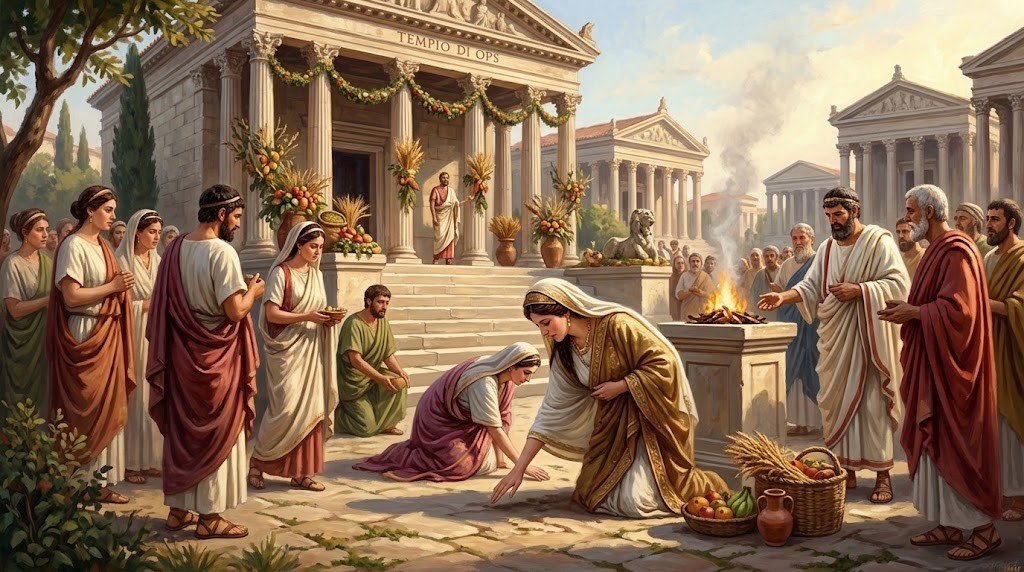
On December 19, in the thick of the Saturnalia, the Romans celebrated the Opalia, the festival of Ops, goddess of abundance and harvest. Whoever prayed to the goddess, the sources say, did so seated and touching the ground.
- Date: December 19
- Deity: Ops, personification of abundance
- Rite: prayer while seated, with a hand on the ground
- Link: wife of Saturn in the Roman tradition

Who Was Ops
Ops means “abundance, wealth” and stands for the earth that bears fruit. The ancients considered her the wife of Saturn and linked her to Terra and Ceres. Another festival dedicated to her, the Opiconsivia, fell in August.
Praying While Seated
Macrobius reports, citing Verrius Flaccus, that whoever worshiped Ops did so seated and touching the ground with a hand, because the goddess dwells in the soil. It is a rare gesture in Roman religion, where people usually prayed standing.
The Saturnalia
The Opalia fell during the days of the Saturnalia, the December festival when gifts were exchanged and roles between masters and slaves were reversed. On the exact order of the dates, the ancient texts don’t fully agree.
The Capitoline Hill
Ancient sources mention a sanctuary of Ops on the Capitoline Hill. See the Capitoline Hill page. For the solstice festivities, also read Christmas in Rome.
Frequently Asked Questions
Who was Ops?
The Roman goddess of abundance, wife of Saturn.
Why did people sit on the ground?
According to Macrobius, because Ops is the goddess of the earth and contact with the soil was part of the rite.
When is the Opalia?
December 19, during the Saturnalia.
This festival is part of the calendar of ancient Roman festivals and the mos maiorum, where you can find all the other observances.
Sources
- Macrobius, Saturnalia I 10
- Varro, De lingua latina VI 22
- Festus, De verborum significatu
The illustrations are AI-generated for evocative purposes.