Published on · updated on
Some links on this page are affiliate links: if you buy through them, Estate Romana receives a small commission, at no extra cost to you. As an Amazon Associate, Estate Romana earns from qualifying purchases.
The most requested party costumes in Rome are four: the toga, the 1920s dress, the Renaissance outfit and the gladiator armor. The reason is simple: the city lived through all of them and offers the right backdrop for each. Here you’ll find what those clothes really were, where to see them for real, how to pick believable costumes without spending an afternoon in a shop and what to order online, with alternatives for every category.
The question to start from isn’t “what do I wear,” but “what kind of party is it.” A birthday themed on ancient Rome in a villa in the Castelli, a Gatsby-style dinner in a venue in the center, a Carnival evening or a bachelor party with foam swords call for different costumes, different fabrics and different lead times.
Data checked on October 3, 2026 on Suetonius (Life of Augustus, 40), on the website of the Tirelli Costumi tailoring house, on the Museo di Roma in Trastevere for the Roman Carnival and on the Turismo Roma pages dedicated to the Natale di Roma and the Gruppo Storico Romano.

Party costumes in Rome at a glance
- What: the most chosen costumes for themed parties in Rome are the Roman toga, the 1920s dress, the Renaissance outfit and the gladiator costume, often completed by masks and wigs.
- When: demand for costumes in Rome rises at Carnival, at Halloween, at New Year’s and around the Natale di Roma on April 21, when the Gruppo Storico Romano parades with hundreds of reenactors.
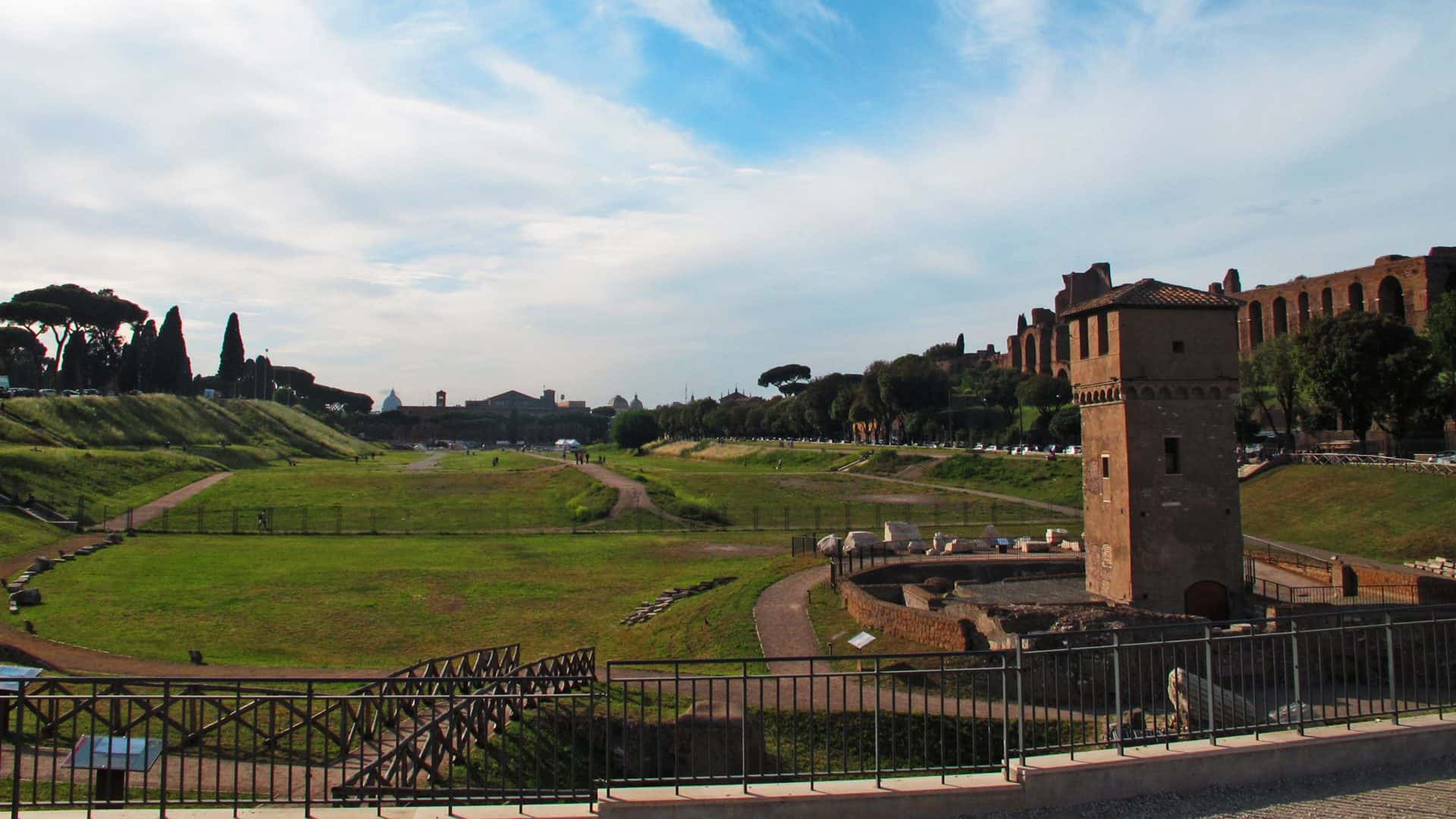
- Where: real togas and armor can be seen in Rome’s archaeological museums, like Palazzo Massimo, while the historical parade of the Natale di Roma starts from the Circus Maximus and runs along Via dei Fori Imperiali.
- Getting there: Circo Massimo and the Fori Imperiali are served by metro line B (Circo Massimo and Colosseum stops). For transit schedules the Atac website is the authority.
- Today: party costumes are bought online or rented from theatrical tailoring houses. In Rome, the Tirelli tailoring house, founded by Umberto Tirelli in 1964, holds one of the largest collections of stage costumes in the world.
- Good to know: the real Roman toga was a large semicircle of white wool, not a bedsheet, and Romans didn’t wear it at dinner: they used a lighter garment called the synthesis.
Why does Rome love costume parties so much?
Rome has a long familiarity with disguise. For centuries the Roman Carnival was one of the most famous in Europe: in 1466 Pope Paul II moved the horse races from Testaccio to Via Lata, which has been called Via del Corso ever since. The barberi, riderless horses, ran from Piazza del Popolo to today’s Piazza Venezia between two walls of masked crowd.
Goethe lived through the Carnival of 1788 and told it in his Italian Journey: the two most awaited moments were the race of the barberi and the festival of the moccoletti, on the last evening, when thousands of people tried to keep their own candle lit and to blow out everyone else’s. After a fatal accident in 1874 the race was abolished and the Roman Carnival lost its center. The Museo di Roma in Trastevere preserves its memory in its collections.
Today costumes in Rome come back in private parties, in venues that organize themed evenings, in historical reenactments and, more and more, in bachelor and bachelorette parties. Anyone coming from out of town for a costume party has an advantage: all you have to do is step out of the house dressed as a senator to find yourself in front of an authentic backdrop.
The Roman toga: what was it really like and how to wear it at a party?
The toga was the everyday dress of the male Roman citizen. It was made of white wool, cut in a semicircle and very wide: reconstructions suggest a length of about three times the height of the person wearing it. It was draped over the tunic, passing over the left shoulder and under the right arm, and it often needed someone’s help to be arranged properly.
Augustus cared about it so much that he made it a matter of public order. Suetonius tells us that, seeing an assembly of people dressed in dark clothes, he exclaimed with disdain: “Behold the Romans, masters of the world, the people in the toga!” Then he ordered the aediles never again to allow anyone to stay in the Forum or near the Circus without taking off the cloak, the lacerna, that covered the toga. The line “gentemque togatam” is from Virgil, in the Aeneid.
Here is the common mistake, in our judgment the most widespread of all party costumes: the toga made from a double bedsheet knotted on one shoulder. It works for one evening, but it looks more like a Greek chiton than a Roman garment. And there’s a detail that surprises people: at dinner the Romans did not wear the toga. For banquets they used the synthesis, a more comfortable garment, because the toga was too cumbersome for reclining on the triclinium and eating with your hands.
So our advice is to choose toga costumes with a lot of fabric, preferably in heavy cotton or a wool blend, and a tunic underneath. For women the equivalent is the stola over the tunic, with the palla, a cloak, to drape. The toga with the purple band, the praetexta, belonged to magistrates and boys. If you want to play the senator, that is the consistent choice.
To see how a real toga fell, a visit to the National Roman Museum at Palazzo Massimo is worth it, where the Augustus of Via Labicana is on display, portrayed as pontifex maximus with his head covered by a fold of the toga. The statues of togati in the Capitoline Museums show well the bulge on the chest, the so-called sinus, which no cheap costume reproduces.

Gladiators and legionaries: why are gladiator costumes almost always wrong?
Our contrarian position is about gladiators. Most of the costumes sold as “gladiator” are actually legionary costumes: plate armor, crested helmet, red cloak. Gladiators, on the other hand, fought almost naked from the waist up, with protection only on one arm and on the legs, and each type had its own armor: the retiarius with net and trident, the murmillo with the big helmet, the Thracian with the small shield.
The pollice verso is also more legend than history. The gesture owes its fame mostly to the painting Pollice Verso by Jean-Léon Gérôme, from 1872, and then to the movies. Ancient sources speak of a turned thumb, but they don’t make clear in which direction. Scholars don’t agree on the exact meaning.
If you want to see “real” gladiators, meaning reconstructed with historical criteria, you have two chances in Rome. The first is the Natale di Roma, around April 21, when the Gruppo Storico Romano brings hundreds of reenactors into the street, among legions, priests, matrons and senators, with the parade starting from the Circus Maximus and crossing Via dei Fori Imperiali. The second is the Scuola Gladiatori Roma, founded in 1999 inside the same group, based at Via Appia Antica 18: it has a small museum of replica weapons and armor and offers lessons, including for children.
The 1920s and the Renaissance: two parties, two logics
The 1920s party is the easiest to pull off. For her, all you need is a straight dress with fringe or sequins, a headband with a feather, a long necklace of fake pearls and a cigarette holder without the cigarette. For him, high-waisted trousers, suspenders, a vest, a bow tie and a hat.
The Renaissance is more demanding, and off-the-rack Renaissance costumes are often too shiny and too short. The visual reference, in Rome, is a few steps away: Raphael’s frescoes in the Villa Farnesina and in the Vatican Rooms show detachable sleeves, bodices, soft caps, heavy fabrics. Our advice is to choose a dark, deep color, wine red, forest green or midnight blue, and add a white shirt with a ruffled collar.
The Venetian mask is a hybrid you see a lot in Rome, especially at Carnival parties. It isn’t a Roman tradition, but it’s the accessory that saves any Renaissance or eighteenth-century outfit, and it’s the quickest way to turn an evening dress into a costume. With a well-chosen wig the result changes completely.
Where to see historical costumes in Rome before the party?
Looking at real clothes and statues before choosing your costumes helps you avoid the most obvious mistakes. For ancient Rome the starting point is Palazzo Massimo and the Capitoline Museums, with the statues of togati and the portraits of matrons. For women’s hairstyles, which the Romans changed with fashion, the busts of the Capitoline Museums are a complete catalog.
For theater and film the name is Tirelli Costumi. Umberto Tirelli opened the tailoring workshop in Rome in November 1964, with two sewing machines and five seamstresses. Today the archive holds, according to the workshop, over 300,000 pieces and has dressed many award-winning films. It is not a shop open to the public for parties. The exhibitions dedicated to its costumes, when there are any, should be followed on the official channels.
For an overview of all the things to see in the city and to choose the right museum, check out our collection of the tourist attractions of Rome. If you want to combine several museums in a few days, the Turbopass of Rome and the tickets for Rome attractions on Tiqets let you book in advance. Admission prices and updated hours are on the museums’ websites.
When should you order costumes for a party in Rome?
Costume parties happen all year round, and the rule always applies: costumes should be ordered as soon as you know the theme, not the week before. Close to Carnival and Halloween the most common sizes disappear fast, and a costume that arrives the day after the party is no use to anyone.
We don’t give numbers on shipping times. What counts is the estimated delivery date at the time of the order, which changes with the seller and the period. If you’re traveling, you can have the package sent to your hotel. It’s a good idea to tell the reception desk and write the guest’s name and the arrival date on the address. For group parties it helps to order a spare size and try everything on at least a couple of days before.
Costumes for parties in Rome: options for families, couples and groups
With kids, the ancient Rome theme works. Gladiator and legionary costumes are the most loved, and a lesson at the Scuola Gladiatori Roma, which you can also book with the gladiator experiences on GetYourGuide, turns the party into a real memory. Our advice is to choose soft swords and light shields. By the third hour of play, the weight matters.
For couples, the 1920s and Renaissance themes are the most photogenic. A charleston dress and a pinstripe suit, or a matching bodice and doublet, look good even in a single photo in front of a fountain. If the party is outdoors in autumn or winter, choose costumes that allow a coat over them.
For groups of friends, bachelor and bachelorette parties, the toga remains unbeatable. It takes little effort, it’s identical for everyone and it leaves room for a different role for each person: the emperor with the laurel crown, the senator with the purple band, the vestal, the gladiator. If you want to add a walk in costume, you can book one of the tours of Rome on GetYourGuide, checking first the rules on costumes at the sites you visit.
Pay attention to exactly this point. At many archaeological sites and in churches there are rules on clothing and permitted objects: swords and spears, even fake ones, can be stopped at the checks, and basilicas ask for shoulders and knees to be covered. Before going out in costume, check the rules of the place on the operator’s website.
If it rains and how much time you need
A costume party in Rome in the rain is a real problem: cotton togas get soaked, wigs go limp and stage shoes slip on the sampietrini. Our advice is to have a covered plan, a dark waterproof cloak that doesn’t ruin the character and a pair of comfortable shoes to change into. Museums and galleries remain the best alternative for photos.
As for time, count on at least an hour to get dressed if the costume is historical, especially the toga, which takes practice and pins. The 1920s outfits are ready in half an hour, makeup included. For a group party, plan a dress rehearsal a few days before: discovering then that the tunic is see-through or the armor is tight avoids surprises.
Costumes and accessories to order for parties in Rome
We’ve collected searches that are already filtered, with several alternatives for each category, so if an item is sold out you can find a substitute right away. Prices change often: you see them on the site when you order.
Historical costumes
- Roman toga: the basis for any ancient Rome theme party, preferably with a lot of fabric.
- Roman senator costume: with the purple band, the most consistent choice for anyone who wants a public role.
- Gladiator costume: for adults and kids, remembering that it is often a legionary.
- Renaissance costume: dresses, bodices and doublets for Raphael-style parties.
- 1920s costume: fringed dresses and pinstripe suits for Gatsby nights.
Accessories that change the character
- Venetian mask: turns an evening dress into a Carnival costume in a moment.
- Wig: 1920s bob, matron curls or long Renaissance hair.
- Laurel crown: the detail that turns a toga into an emperor.
- 1920s headband with feather: the most recognizable accessory of the charleston theme.
To read
- Guidebooks to Rome: to choose the museums to see before or after the party.
- Suetonius, Lives of the Caesars: the source of the anecdote about Augustus and the toga.
- Goethe, Italian Journey: the account of the Roman Carnival of 1788.
For getting around in costume
- Anti-theft city backpack: for your regular clothes and documents, since togas have no pockets.
- 10000 power bank: an evening of photos drains the phone more than expected.
- Insulated water bottle: useful if the party starts with a walk among the monuments.
- Comfortable city shoes: to keep in your backpack instead of the stage sandals on the sampietrini.
- Folding hat: for the sun at outdoor parties, and it fits in your pocket.
Themed experiences
- Gladiator lessons on GetYourGuide: for kids and groups, with training swords.
- Colosseum visits on GetYourGuide: to see the arena where the gladiators fought.
- Colosseum tickets on Tiqets: an alternative for booking admission.
- Capitoline Museums on Tiqets: for the statues of togati and the matrons’ hairstyles.
- Turbopass Rome: for those who combine the party with several days of museums.
Frequently asked questions
What are the best costumes for a theme party in Rome?
The best costumes are the Roman toga, the gladiator costume, the 1920s dress and the Renaissance one. The toga is the simplest choice for groups, because it’s the same for everyone and can be personalized with accessories like the laurel crown. The 1920s work in clubs in the center, the Renaissance in historic villas and at Carnival parties.
How do you wear a Roman toga without looking wrapped in a bedsheet?
You need a lot of fabric and a tunic underneath. The real toga was a semicircle of white wool, about three times the height of the wearer, draped over the left shoulder and under the right arm. Use hidden safety pins, create the bulge on the chest and get help: even the Romans often needed someone to arrange it.
Did gladiators really wear the armor of the costumes on sale?
No, almost never. Most gladiator costumes reproduce the equipment of legionaries, with breastplate and crested helmet. Gladiators fought with the torso often bare and protection on one arm and on the legs, different for each type: retiarius, murmillo, Thracian. At a party it works just fine anyway, but it’s good to know.
When should you order costumes for a party?
It’s best to order as soon as you know the theme of the party. Close to Carnival and Halloween the most common sizes sell out and delivery times get longer. What counts is the date estimated at the time of the order. Order the basic costume first, then the accessories, and do a full try-on a few days before.
Where can you see the historical costumes of ancient Rome live?
The best moment is the Natale di Roma, around April 21, when the Gruppo Storico Romano parades with hundreds of reenactors from the Circus Maximus along Via dei Fori Imperiali. All year round, the statues of togati and matrons can be seen at Palazzo Massimo and at the Capitoline Museums, and the Scuola Gladiatori Roma on Via Appia Antica has a small museum of replicas.
Can you walk around Rome in costume?
Yes, but with some care. At archaeological sites and museums swords and spears, even fake ones, can be blocked at the checks, and in churches shoulders and knees must be covered. Before going out, check the rules of the place on the operator’s website and bring a backpack with regular clothes and comfortable shoes.
Who wrote this and what sources it uses
The text comes from the editorial team of Tour Leader Pro, the Rome-based team that designs itineraries, visits and cultural events across Rome and Lazio. We used Suetonius in the Life of Augustus, the website of Tirelli Costumi, the Museo di Roma in Trastevere and Turismo Roma, as of the date given at the top. Let us know what you find has changed.
Organizing a costume party, for yourself or for a group of friends, means coordinating sizes, deliveries, location and site rules, and often adding a visit or a themed experience. A useful resource for anyone organizing group trips is Tour Leader Pro. If the party becomes the occasion for a few days between Rome, the Castelli Romani and the Tuscia, a useful resource for putting together a multi-day itinerary is Italy Planner.