Published on · updated on
Some links on this page are affiliate links: if you buy through them, Estate Romana receives a small commission, at no extra cost to you. As an Amazon Associate, Estate Romana earns from qualifying purchases.
The TheFork discount code to use is 7D6E11E3. It’s the author’s personal invite code. You enter it in the TheFork app from a new account and, if the invite program is active, it gives you a welcome bonus in the loyalty program after your first honored booking. TheFork sets the value of the bonus and the conditions, and they change over time, so check them in the app when you sign up. If you prefer, you can open the invite page with the code 7D6E11E3 directly.
That said, the code is not the biggest discount TheFork offers. The real advantage is the deals from individual restaurants: percentage reductions on the à la carte menu, valid on certain days and at certain times, listed on each restaurant’s page. The code adds to those, it doesn’t replace them. Below we explain how to combine them in Rome without letting the discount be your only guide.
Data checked on October 9, 2026 on the TheFork Italia pages reached through the affiliate program and on the conditions shown in the app. Deal percentages, point values and code rules change often: the app at the moment you book is what counts.
TheFork discount code at a glance
- The code: 7D6E11E3 is the author’s personal TheFork invite code, to enter in the app from a newly created account.
- What it gives: a welcome bonus in the loyalty program after your first completed booking. Check the value and conditions in the app.
- Who it’s for: people who have never had a TheFork account. Existing accounts usually can’t use an invite code.
- The real discount: the restaurant deals, as a percentage off the à la carte menu, with days, times and exclusions written on the restaurant’s page.
- How you pay: the deal is applied to the bill, which you pay directly to the restaurant at the end of the meal. Booking on TheFork costs nothing.
- Good to know: at restaurants with a deal in Rome, it’s best to book a few days ahead for Friday and Saturday, when tables go fast.
How do you use the TheFork discount code step by step?
The first step is creating the account. You download the TheFork app or open the website, choose to sign up and, on the screen where it asks, enter the code 7D6E11E3. An easier way is to start from the TheFork invite page, which carries the code already attached. If the app accepts it, the pending bonus appears in your profile, with a description of when it becomes usable.
The second step is the first booking. The welcome bonus, according to the conditions the invite program has shown so far (check them in the app), unlocks after the restaurant has confirmed that you showed up. A booking that was canceled or not honored doesn’t count. The third step is using the points you’ve collected on a later booking, at restaurants that accept them, according to the thresholds shown in the app.
If the code is rejected, there are almost always two causes: an account created in the past with the same email or the same phone number, or an invite program suspended at that time. In the second case no code works until it reopens. Everything else is still there, though: the restaurant deals don’t require any code.
How do restaurant deals work on TheFork?
Many restaurants that use TheFork offer a percentage reduction on the à la carte menu to fill tables on the days and at the times that are less busy. The percentage appears on the restaurant’s page and in the search results. The conditions matter and you should always read them: drinks are often excluded, some dishes or set menus aren’t included, and on Friday evening or Sunday lunch the deal may not apply.
The deal is tied to the booking: if you walk in without having booked on TheFork, you don’t get it. You book by giving the day, the time and the number of people, and the restaurant confirms, sometimes automatically. At the end of the meal you pay the already discounted bill directly to the restaurant. You don’t pay anything in advance, except when the restaurant asks for a card guarantee for large tables or special evenings.
To search in Rome, you start from the TheFork page for restaurants in Rome, filter by area, type of cuisine and deal, and read the most recent reviews, not just the average rating. At some times of the year TheFork runs campaigns with broader deals: you find out the dates in the app.
Is the TheFork discount code enough to eat well in Rome?
Here is the editorial team’s contrarian position: no, and choosing a restaurant only for the percentage off is the most common mistake. A big reduction on a menu with inflated prices is not a bargain. In the most touristy areas, around the big monuments, you find flashy deals and mediocre cooking. The place comes first, then the discount. If the restaurant you’re interested in also has a deal, all the better.
To choose the place, Estate Romana collects its addresses in the Estate Romana restaurant map on Google Maps, updated over time. We don’t name restaurants in this text: kitchens change management and quality faster than any article. The areas, on the other hand, stay. The Eating in Rome section of the Estate Romana blog is the starting point for getting your bearings.
One practical tip: look at the times. In Rome people have lunch between 1 and 3 and dinner from 8 on. Many deals apply exactly at the early times, half past seven in the evening or at noon. If you have kids or you’re traveling on a tight schedule, that’s a double advantage.
Which areas of Rome are best to search in?
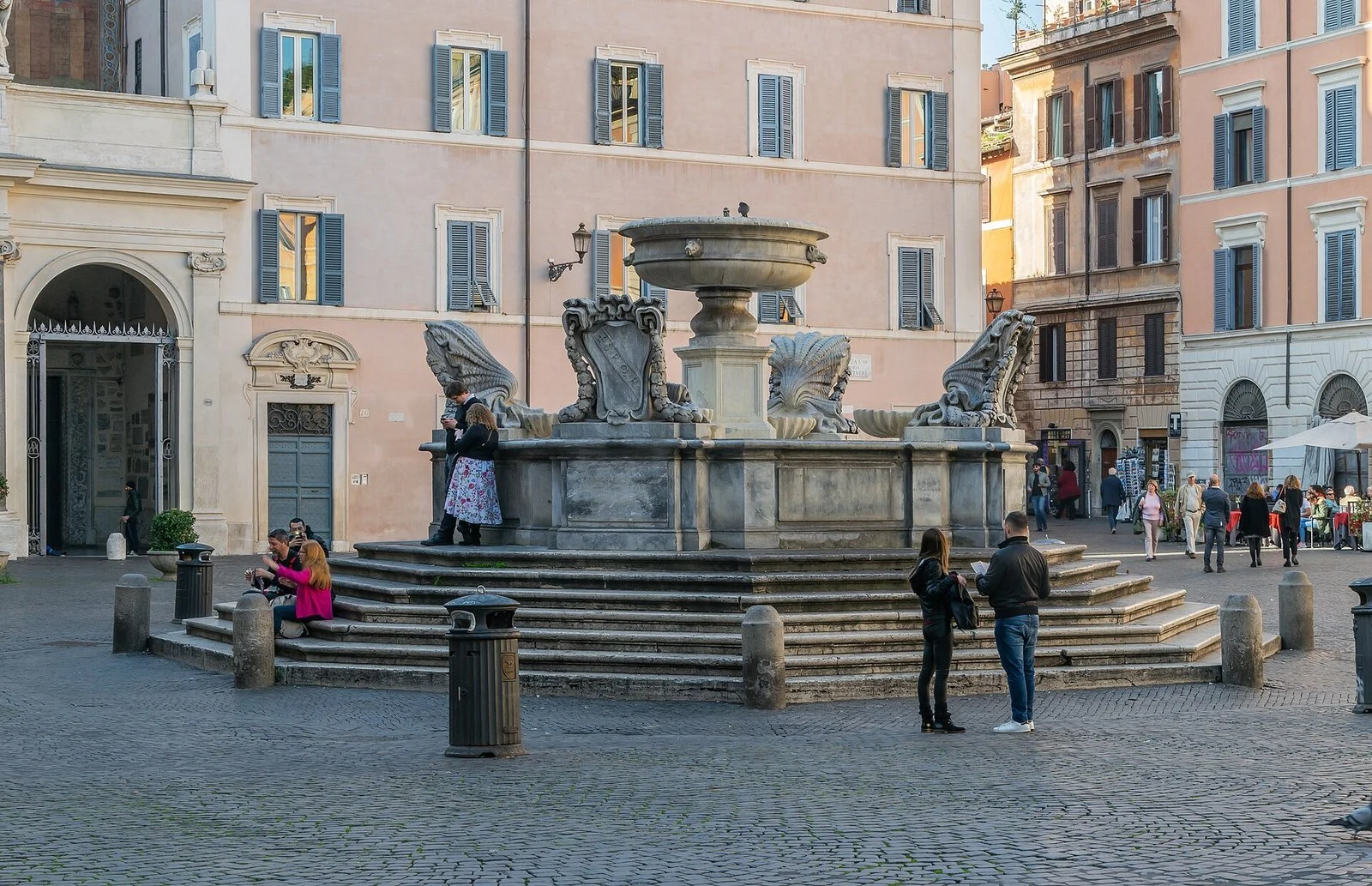
Trastevere is the area people search for most and also the most varied. Next to the historic trattorias there are places made only for tourists, so read the reviews carefully. Across the river, Testaccio is the neighborhood of traditional Roman cooking, the kind of the quinto quarto. The Nuovo Mercato Testaccio is useful for a quick lunch.
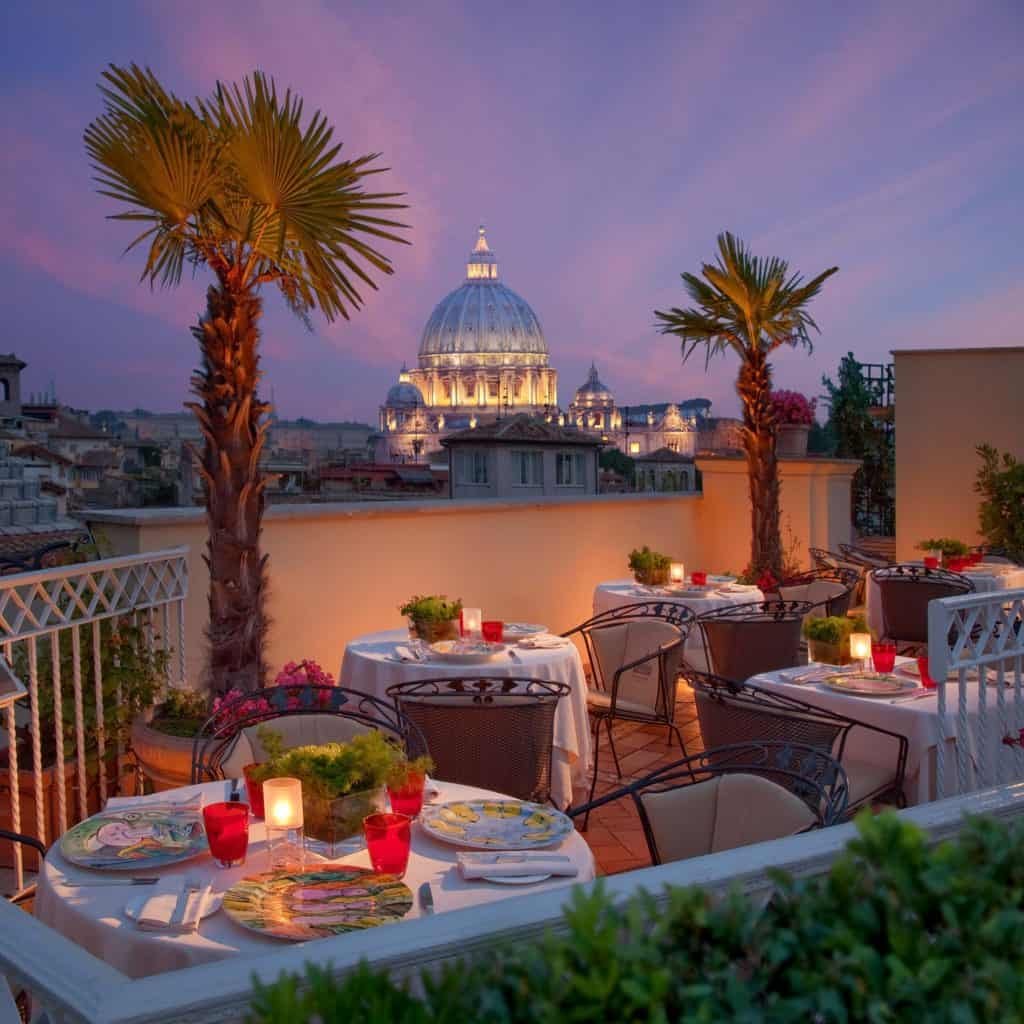
Pigneto and San Lorenzo have lower prices and a crowd of residents and students. Monti, between the Colosseum and Santa Maria Maggiore, combines a central location with a few serious addresses. The Mercato Monti is an idea for the weekend. Around Campo de’ Fiori and Piazza Navona you eat well only if you choose with care. For a dinner with a view, you head up toward the Janiculum or look for the terraces, which you should book in advance.
What should you order in a Roman trattoria?
Roman cooking rests on a few dishes, and knowing them helps you read a menu and tell if a place is serious. The four first courses are carbonara, with guanciale, eggs, pecorino and pepper. Amatriciana, with guanciale, tomato and pecorino. Cacio e pepe, just pecorino, pepper and pasta water. And gricia, which is an amatriciana without tomato. If cream shows up in any of these, you’re in the wrong place.
Among the second courses, there are saltimbocca alla romana, abbacchio a scottadito or roasted in the oven and, for those who love the quinto quarto, coda alla vaccinara and trippa alla romana with mentuccia. The side dishes follow the seasons: carciofi alla romana or alla giudia in spring and winter, puntarelle with anchovy sauce in winter, cicoria ripassata all year round. Among the fried things, supplì and zucchini flowers with mozzarella and anchovies.
One rule about seasons is worth more than any review: a restaurant that offers artichokes in August or puntarelle in June doesn’t cook with the market. In Roman tradition, Thursday is gnocchi, Friday is baccalà, Saturday is tripe. Today few trattorias follow this calendar, but when you find one it’s a good sign.
How do you book a table for a big group or with kids?
For a long table of 8 or 10 people, the app lets you enter the number of seats. Above a certain threshold the restaurant may ask you to contact them directly, and the deals sometimes don’t apply. It’s best to book at least a week ahead, choosing an early time, and to write needs like high chairs, allergies or an outdoor table in the notes. In small places in the center, big groups are often split across two tables close together.
With kids, early times help: at half past seven many restaurants are still half empty and service is faster. Pizza by the slice places and bakeries are the alternative for lunch, when a long meal would break up the day of sightseeing. For a quiet dinner, avoid the busiest streets on Saturday night, where the wait gets longer even with a booking.
What changes between summer and winter?
In summer the outdoor tables are the most requested, and they are almost always the first to go. On a TheFork booking you can’t always choose the spot: if it matters to you, add it in the notes or call the restaurant after booking. In August some historic trattorias close for vacation. The restaurant’s page says so, but the booking confirmation is the surest proof.
In winter the rhythm changes: people eat dinner earlier, the terraces close or get covered, and weekday deals are more frequent. It’s the season of artichokes and puntarelle, and of the long dishes of the tradition. For anyone visiting Rome between November and February, lunch deals are often the best way to try a restaurant that would be full in the evening.

What food experiences can you book in Rome?
If you want to get to know Roman cooking beyond the restaurant, there are a few organized options you can book on GetYourGuide: a food tour between Trastevere and Campo de’ Fiori, a fresh pasta and tiramisù class, a pizza and pasta course with wine and tiramisù and a gelato and ravioli course near Piazza Navona. These are group activities with fixed times: read the length, the meeting point and the menu carefully before booking.
If you want to take the recipes home, books are a good souvenir of the trip. The links below lead to Amazon searches in the books category:
To read and to cook from
- Roman cooking recipe books: carbonara, amatriciana, cacio e pepe, coda alla vaccinara.
- Books on Roman Jewish cooking: the tradition of the Ghetto, from artichokes to sweets.
- Food guides to Rome: for those who want to pick the areas and markets themselves.
One last note on reviews. On TheFork only the opinions of people who booked and showed up appear, so they are generally more reliable than open reviews. Read the most recent ones, see if they mention specific dishes and if the restaurant answers criticism: a restaurant that answers politely even to negative reviews usually cares about its cooking. Customer photos say more than the official ones.
Two warnings on payment. The first: the discount shows up on the bill only if the restaurant registered the booking made with the app. If it isn’t mentioned at the table, politely ask before paying, not after. The second: the cover charge and the service charge, when they apply, are listed on the menu and usually aren’t included in the deal. Reading the menu at the entrance avoids arguments at the end of the evening and makes it clearer how much you really saved.
Mistakes to avoid with TheFork
- Showing up without a booking: the deal is valid only if the table was booked in the app.
- Not reading the conditions: drinks, set menus and some evenings are often excluded from the discount.
- Not canceling: a skipped booking without cancellation can lead to limits on your account.
- Expecting the bonus right away: the code’s bonus unlocks after the first honored booking, not at sign-up.
- Choosing only for the discount: the restaurant first, then the deal.
Frequently asked questions
Is the TheFork discount code 7D6E11E3 still valid?
The code 7D6E11E3 is the author’s personal invite code and stays usable as long as TheFork keeps the invite program active. The value of the bonus, the crediting times and the rules of use are the ones shown in the app when you sign up, and they can change. If it isn’t accepted, check that you don’t already have an account with the same email.
Do the code and the restaurant deal add up?
They are two different things. The restaurant deal is a reduction on the bill that you get by booking on TheFork, with the conditions on the restaurant’s page. The invite code gives a bonus in the loyalty program, to use on a later booking at restaurants that accept it. The exact rules for combining them are in the app’s conditions.
Do you pay anything to book on TheFork?
No, booking is free for the person making it. You pay the bill at the restaurant at the end of the meal, already discounted if there’s a deal. In some cases, for big groups or special evenings, the restaurant may ask for a card as a guarantee. The request appears before confirmation, together with the cancellation conditions.
Do the deals also apply to drinks?
It depends on the restaurant. In many deals drinks are excluded and the discount applies only to the dishes on the à la carte menu, but there are exceptions. The conditions are written on the restaurant’s page, under the percentage: read them before booking, so you don’t get surprises when the bill comes.
What are TheFork’s Yums?
They are the points of TheFork’s loyalty program. You collect them with honored bookings at participating restaurants and, once you reach a threshold, they convert into a reduction on a later booking. Thresholds, value and participating restaurants are shown in the app. The invite code bonus is credited in this form.
Does TheFork also work outside Rome?
Yes, the service covers many Italian and European cities and the same account works everywhere. The invite code is used only once, at sign-up, regardless of the city. The deals, on the other hand, are decided by each restaurant and vary a lot from one city to another.
More useful pages for eating and getting around Rome
For those who prefer to have food brought to their home or hotel, the page on the Glovo promo code explains how the service works in Rome, while the one on the Uber Eats discount code clarifies what has changed in Italy. For a day of museums before dinner, the MIC card Roma is for people who live or study in the city. To get to the restaurant, the app of
TheFork shows the restaurant’s map: in Rome, in the evening, public transport and a stretch on foot almost always beat the car.
Who wrote this and on what sources
The text comes from the editorial team of Tour Leader Pro, the best tour operators and boutique agencies in Rome. The information on how bookings, deals and the loyalty program work comes from TheFork Italia and from the conditions shown in the app, on the date given at the top. Tell us what you find has changed.
Booking a dinner in Rome for yourself or for a group of friends means finding a table for everyone at the same time, in the right area, with a menu that works for people with different needs: a useful resource for anyone organizing group trips is Tour Leader Pro. If the Roman table is just one stop on a trip through Lazio, Tuscany and Campania, a useful resource for putting together a multi-day itinerary is Italy Planner.