TAKK. con-vivere at MAXXI: through February 14, 2027
In short. TAKK. con-vivere, the second edition of ENTRATE, the MAXXI program that turns the museum's entrance into a space dedicated to design, is open in the hall of the National Museum of 21st Century Arts from March 20, 2026 to February 14,…
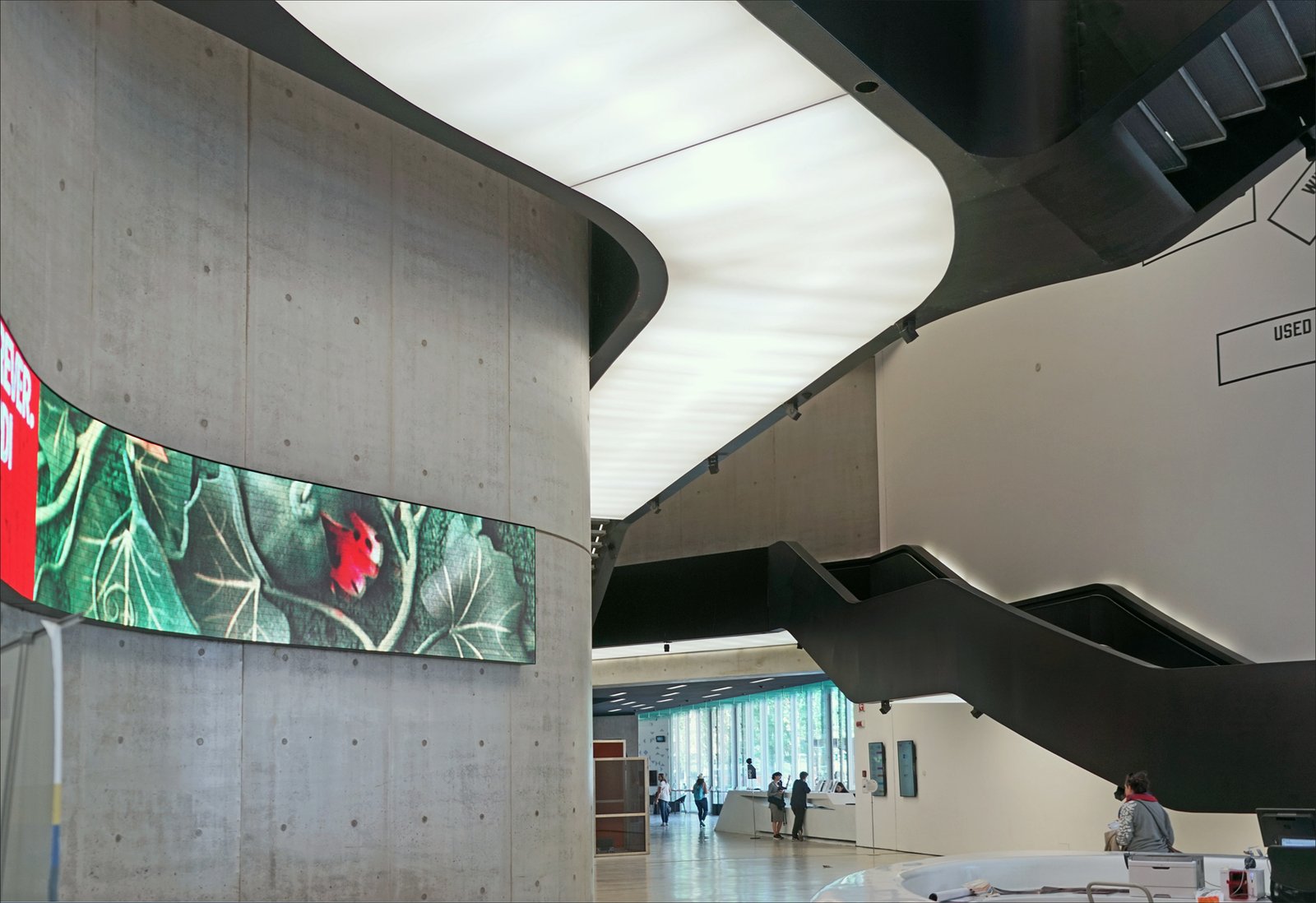
TAKK. con-vivere, the second edition of ENTRATE, the MAXXI program that turns the museum's entrance into a space dedicated to design, is open in the hall of the National Museum of 21st Century Arts from March 20, 2026 to February 14, 2027, curated by Martina Muzi. Admission is free. The MAXXI is at Via Guido Reni 4/A, 00196 Rome, in the Flaminio neighborhood, and is open Tuesday through Sunday from 11:00 to 19:00. On Monday it is closed, and the museum's ticket office closes an hour before closing time. You get there by metro line A to Flaminio and then tram 2 toward Piazza Mancini, or by buses 53, 910, 168 and 982. On Via Guido Reni, a short distance from the entrance, there is an ATAC stop that carries the museum's name. The installation in the hall needs no ticket. The exhibitions in the museum's galleries, on the other hand, do have a ticket, with prices published on the official MAXXI website. For information the museum answers at 06 3201954.
Six movable elements, some artificial and others alive, built with low-impact materials and light structures, under lights inspired by agricultural greenhouses: con-vivere is a landscape to walk through as you enter the museum, even before you get to the galleries. And it's free. Below: what you see, who Mireia Luzárraga and Alejandro Muiño are, what Zaha Hadid's MAXXI is like, how to get there and how to plan the visit.
TAKK at MAXXI: dates, hours and admission
TAKK. con-vivere can be seen in the MAXXI hall through February 14, 2027, Tuesday through Sunday from 11:00 to 19:00, with free admission. On Monday the museum is closed.
The hours
On the installation's page, the MAXXI publishes a simple schedule: Tuesday through Sunday from 11:00 to 19:00, closed Monday. The museum's ticket office stays open until an hour before closing, but for con-vivere, which is in the hall, you don't need a ticket.
Free admission
The installation is free because it occupies the hall, that is, the museum's reception space. It is a choice consistent with the spirit of ENTRATE: making the entrance a public place for sharing contemporary creativity, open also to those who don't go into the galleries.
The dates
The project was presented in March 2026: a workshop with TAKK Studio on March 15 at 15:00, an author conversation between Mireia Luzárraga and the curator Martina Muzi on March 19 at 18:00 and a public opening, together with Lapili, the same day at 19:00. The installation can be seen from March 20 and stays until February 14, 2027.
What you see in con-vivere: six elements for living together
Con-vivere is a landscape of six movable installations, both artificial and organic, designed to experiment with new forms of living together in the MAXXI hall. The museum describes the result as a heterogeneous landscape, built with low-carbon-impact materials and light structural systems.
Rigid elements and sinuous forms
In the hall, according to the official presentation, rigid elements and sinuous forms live together. The light structures allow the elements to be movable: they are not fixed furnishings but objects that can change position and configuration. The landscape of the hall, then, is not a motionless installation.
The living components
Alongside the built elements there are living components: plants, which grow inside the installation. It is the detail that gives meaning to the title. Con-vivere means living together, and here people, objects and plant organisms live together, in the same space of passage.
The light of the greenhouses
The lighting system is inspired by agricultural greenhouses. It serves to support the growth of the plants and, according to the museum, also contributes to the sensory well-being of people. The hall of a museum becomes, for a few months, a kind of inhabited greenhouse.
Color as therapy
Color, in the MAXXI's presentation, becomes a tool of stimulation and therapy. It is an idea that comes more from the world of care than from that of design, and in our view it is the most original part of the project: the hall is not just beautiful to look at, it is designed to make people who walk through it feel good.
ENTRATE: the MAXXI program dedicated to design
ENTRATE is a multi-year program dedicated to design that rethinks the MAXXI hall as a place for promoting and sharing contemporary creativity. TAKK's Con-vivere is the second edition.
The entrance as a project
The idea of ENTRATE is simple and radical: the entrance of the museum is not a neutral space to cross to reach the exhibitions, but is itself an exhibition space. Each edition entrusts the hall to a designer, who transforms it.
The second edition
For the second edition the MAXXI chose the architecture and design studio TAKK, with offices in Barcelona and New York. The curator is Martina Muzi, who also followed the presentation events with Mireia Luzárraga.
Why it matters
A national museum that dedicates its hall, that is, the first space every visitor sees, to an experimental design project is taking a position. Anyone who enters the MAXXI, for any exhibition, passes through con-vivere: it is the most-seen work in the museum in these months, even by those who don't know it.
Who TAKK are: Mireia Luzárraga and Alejandro Muiño
TAKK is an architecture and design studio with offices in Barcelona and New York, founded in 2008 by Mireia Luzárraga and Alejandro Muiño. The studio's work integrates ecological questions into architectural discourse and into the production of space, with the aim of developing new material and political imaginaries for the built environment.
The name
Takk, in Icelandic, means thank you. It is the name the two founders chose for the studio, and it says something about their approach: an architecture that gives thanks, that takes care, that recognizes the contribution of others, human and non-human.
Mireia Luzárraga
Mireia Luzárraga was born in Madrid in 1981. She is Assistant Professor and coordinator of the first year of design at the Graduate School of Architecture, Planning and Preservation of Columbia University in New York. Previously she was Dean's Visiting Professor at the same school in 2023, Kengo Kuma Visiting Professor at the University of Tokyo in 2024 and Master Tutor at the Institute for Advanced Architecture of Catalonia in Barcelona from 2018 to 2022.
Alejandro Muiño
Alejandro Muiño is co-founder of the studio with Mireia Luzárraga and also teaches, among other places in the MAIA master's program at HEAD in Geneva. With Luzárraga he was a visiting professor at the University of Tokyo.
Unusual materials
From the start TAKK has experimented with materials not commonly used in architecture, such as textiles, flowers and plastics, to address political and social questions. Part of the studio's work is in the collection of the FRAC Centre, the French architecture center.
A curiosity about TAKK. con-vivere at MAXXI: through February 14, 2027
The funniest curiosity about con-vivere concerns the name of the studio. Takk, in Icelandic, means thank you: two Spanish architects, with offices in Barcelona and New York, chose to call themselves by an Icelandic word of courtesy. Inside a Roman museum designed by an Anglo-Iraqi woman architect, the result is a small example of how much contemporary design is by now a language without borders.
Then there is a second detail, more substantial. The elements of the installation are movable. In press presentations of TAKK's work the idea recurs that their works move in space. At the MAXXI this mobility is joined to low-carbon-impact materials and light structures: a temporary installation designed to weigh as little as possible.
The third detail concerns light. Agricultural greenhouses are productive places, not aesthetic ones. Bringing their lighting system into the hall of a national museum, where light usually serves only to let you see the works, means giving light a biological function: making plants grow. Anyone who enters the MAXXI in these months walks, literally, through a light designed for living organisms.
Finally, the hyphen in the title. Con-vivere, written like this, separates the prefix from the verb and forces you to read both: con, that is together, and vivere. It is a simple wordplay, but it sums up the whole project.
Zaha Hadid's MAXXI, the home of the installation
The MAXXI, National Museum of 21st Century Arts, was inaugurated in 2010 as the first Italian national museum dedicated to contemporary arts and architecture. The design is by Zaha Hadid, who won the international competition announced in 1998.
The barracks and the competition
The museum stands on the site of the former Caserma Montello, a complex of disused military workshops and pavilions that in 1997 the Ministry of Cultural Heritage obtained from the Ministry of Defense. For the competition of the following year 273 entries arrived from all over the world. The brief asked for a museum for architecture and one for 21st century arts, spaces for experimental productions, a library, an auditorium, spaces for live events and for education.
The square and the building
The project extends over 29,000 square meters around a large open square, today named after Alighiero Boetti, which is an integral part of the museum and hosts works. On the occasion of the museum's events the square stays open free of charge even outside regular hours.
The works always on view
The collections are displayed on rotation, but three installations always remain on view: those by Anish Kapoor, Sol LeWitt and Maurizio Mochetti. Anyone who comes for con-vivere, which is free, has in the same building a small permanent core that is worth a stop.
A museum of art and architecture
The MAXXI produces and hosts art and architecture exhibitions, design projects, photography, fashion, film series and theater and dance performances. ENTRATE fits into this multidisciplinary vocation, bringing design into the hall.
Something nobody tells you about TAKK. con-vivere at MAXXI: through February 14, 2027
Almost nobody says it, but con-vivere can be seen for free, without a ticket, simply by walking into the MAXXI during opening hours. Many visitors walk through it believing it is the ticket office's setup or a waiting area, and don't realize they are inside an artwork. Those who know what they are looking at, on the other hand, stop.
The second little-known thing concerns time. The installation lasts almost a year, from March 20, 2026 to February 14, 2027, and contains live plants. That means it is not the same from one month to the next: the living components grow, change, respond to the light of the greenhouses. Anyone who saw it in spring and comes back in autumn or winter sees a different landscape. It is one of the rare cases in which it makes sense to visit the same work twice.
Third thing: con-vivere is also designed for sitting and staying. The museum speaks of the sensory well-being of people and of color as therapy. It is not an installation to look at in a hurry between one gallery and the next: it is a place to stop. Anyone who arrives at the MAXXI a little early for a visit or an appointment has in the hall a space designed precisely for waiting.
Finally, a practical detail: on Monday the MAXXI is closed, and so is the hall. Anyone passing through Flaminio on a Monday, perhaps for a concert at the Auditorium, finds the doors shut.
How to get to the MAXXI
You reach the MAXXI from the center by metro line A to Flaminio and then tram 2 toward Piazza Mancini. Alternatively there are buses 53, 910, 168 and 982.
Metro A and tram 2
From the Flaminio station of metro line A, in Piazzale Flaminio, tram 2 departs. Its other terminus is at Piazza Mancini and it crosses the museum's neighborhood. It is the simplest route for anyone coming from Termini, from Spagna or from the Vatican.
The buses
The lines serving the area are the 910, from Termini to Piazza Mancini, the 53, from Piazza Mancini to Largo Chigi, the 168 and the 982. The 910 is convenient from Termini with no changes. The 53 from Largo Chigi, a stone's throw from Via del Corso.
The MAXXI stop
On Via Guido Reni there is an ATAC stop that carries the museum's name, a short distance from the entrance, marked as wheelchair accessible. The lines that stop there may change: it's best to check the ATAC journey planner.
On foot from the Ponte della Musica
The Ponte della Musica, for pedestrians and bikes, connects Flaminio to Lungotevere Cadorna at the height of the Foro Italico. From there you reach the MAXXI on foot along the axis of Via Guido Reni.
By car
Street parking in Flaminio is difficult, especially on evenings with events at the Auditorium or matches at the Stadio Olimpico. The Auditorium Parco della Musica has two paid parking lots, about 10 minutes on foot from the museum.
The advice I give you for visiting TAKK. con-vivere at MAXXI: through February 14, 2027
My advice is not to cross the hall in a rush. Once at the MAXXI, before going up to the galleries, it's worth stopping for 10 minutes inside con-vivere: look at the six installations, look for the plants, notice the light of the greenhouses, sit down if you can. It is a work you understand by staying, not by passing through.
Second point: combine. Con-vivere is free, but the MAXXI is a museum with paid exhibitions and permanent installations by Anish Kapoor, Sol LeWitt and Maurizio Mochetti. The ideal is to use the hall as first and last stop: on arrival to get into the museum's mood, on the way out to rest your eyes after the galleries.
Third point: come back. An installation with living components changes over time. Anyone who lives in Rome or passes through several times a year can see con-vivere in two different seasons and compare. In our view it is the most interesting way to experience it.
Fourth point: look at the materials. The museum's presentation insists on low-carbon-impact materials and light structures. Getting close to the elements, observing how they are built and how they hold up, helps to understand what TAKK means by new material imaginaries.
Fifth point: choose the day well. The MAXXI is closed on Monday. On weekends the hall is more crowded and the installation is experienced less. A weekday afternoon is the best choice.
Another well-known fact, yet rarely cited
That the MAXXI is a work by Zaha Hadid is a well-known fact. Much less cited is the ground it stands on: the area of the former Caserma Montello, a complex of disused military workshops and pavilions, transferred in 1997 from the Ministry of Defense to the Ministry of Cultural Heritage.
The detail explains a lot. The MAXXI was not born in a monumental area but in a residential neighborhood, on land that was available because it was military state property. The same happened, a few hundred meters away, with the Auditorium Parco della Musica, built in an area that its own managers describe as run-down, between the Olympic Village and the Flaminio stadium. In a little more than a decade Flaminio received two of the most debated contemporary architectural works in Rome.
For con-vivere the fact has a particular value. An installation that speaks of coexistence between artificial and living elements, of low-impact materials and of reuse, is located in a museum born from the reuse of an abandoned military area. The history of the place and TAKK's project speak to each other.
A second rarely cited fact: the tourist portal of Roma Capitale recalls that Flaminio is historically the first neighborhood of the Capital. Visiting an experimental design installation in the first neighborhood of modern Rome is a way of understanding that the contemporary city is not elsewhere, but here.
The right photo to take at TAKK. con-vivere at MAXXI: through February 14, 2027
The right photo of con-vivere is taken with a step back, just past the entrance, taking in the hall as a whole: from there the six installations read as a landscape, with the sinuous forms, the rigid elements and the green of the plants under the light of the greenhouses.
The second photo is taken inside, at eye level, looking for a detail: a plant growing next to a built structure. It is the image that sums up the title, the living together of natural and artificial. The rules on photographs are set by the museum, and they must be respected.
The third photo, the most classic, is taken outside, on Piazza Alighiero Boetti, with Zaha Hadid's building behind you. In the late afternoon the light slides over the surfaces of the building, and a small human figure on the square gives the scale of the architecture.
For those who love color: the museum's presentation speaks of color as a tool of stimulation and therapy. A photo that isolates a field of color of the installation, without context, may be the most successful.
The credit for the official image of the installation, published by the MAXXI, goes to the photographer Vincenzo Labellarte: anyone who wants a reference for the framing finds it on the museum's page.
Around the MAXXI: Flaminio
The MAXXI is in Flaminio, between Via Flaminia, the Tiber and the Parioli hill. In a few minutes on foot you reach the Auditorium Parco della Musica, the Ponte della Musica and, across the river, the Foro Italico and the Stadio Olimpico.
The Auditorium Parco della Musica
Designed by Renzo Piano, the Auditorium was inaugurated in 2002 and has been named after Ennio Morricone since 2020. In the foyer runs a path of 20 neon installations by Maurizio Nannucci. In the gardens there are two sculptures by Keith Haring from 1989.
The Ponte della Musica
The Ponte della Musica, 190 meters long, designed by the studio Buro Happold with Carlo Lotti e Associati, has also carried the name of Armando Trovajoli since 2013. It can only be crossed on foot or by bike.
Villa Borghese and Valle Giulia
Farther south, along Via Flaminia, you come to Piazzale Flaminio and Villa Borghese, with the National Gallery of Modern and Contemporary Art and the Etruscan Museum of Villa Giulia.
Milvian Bridge
Going up the Tiber toward the north you come to Milvian Bridge, on the Tiber in the northern quadrant of the city.
Some important events that happened here in history
The history of the place where you now walk through con-vivere goes from a military area to a national museum in a little more than a decade.
1997: the transfer
The Ministry of Cultural Heritage obtains from the Ministry of Defense the area of the former Caserma Montello. A piece of the city closed to the public becomes destined for culture.
1998: the competition
The international competition for the new hub of contemporary arts is announced: 273 entries. Zaha Hadid wins, with a project chosen for its ability to fit into the urban fabric and to offer the city a sequence of public spaces.
2010: the opening
The MAXXI opens to the public as the first Italian national museum for contemporary arts and architecture.
2026: ENTRATE, second edition
In March 2026 the museum's hall is entrusted to TAKK for the second edition of ENTRATE. On March 19 Mireia Luzárraga presents the project in a conversation with the curator Martina Muzi.
Who passed through TAKK. con-vivere at MAXXI: through February 14, 2027
Through the hall of the MAXXI pass, in these months, all the museum's visitors: those who come for the art and architecture exhibitions, those for the talks and screenings, those for the events on the square. Con-vivere is the work everyone sees, and it is signed by Mireia Luzárraga and Alejandro Muiño, curated by Martina Muzi.
The MAXXI is the home of important names in architecture and art. Zaha Hadid, first of all, who designed the building. Then the artists whose works are always on view: Anish Kapoor, Sol LeWitt, Maurizio Mochetti. The square carries the name of Alighiero Boetti. Over the years the museum has hosted exhibitions and projects by dozens of international artists and architects.
With TAKK two designers with an international career arrive in Rome: Luzárraga, born in Madrid, teaches at Columbia University in New York and was Kengo Kuma Visiting Professor in Tokyo. Part of the studio's work is in the collection of the FRAC Centre in France. Lapili also took part in the March opening, protagonist of the open opening on March 19.
Widening the view to the neighborhood, Flaminio has seen Renzo Piano, who designed the Auditorium. Maurizio Nannucci and Keith Haring, with their works at the Auditorium. Armando Trovajoli, who gives his name to the pedestrian bridge over the Tiber. It is a neighborhood where architecture and contemporary art meet at every block.
MAXXI accessibility
The MAXXI is indicated by the tourist portal of Roma Capitale as a museum accessible to people with disabilities, with dedicated restrooms. The ATAC stop on Via Guido Reni is marked as wheelchair accessible.
The hall
Con-vivere is in the hall, the first space you meet on entering. For the conditions of access to the galleries on the upper floors, the reference is the museum, at 06 3201954.
Services
The MAXXI offers a coat check, a café, a bar and a restaurant, audio guides and guided tours run by the museum, educational activities for schools and workshops.
Con-vivere with children
Con-vivere is one of the MAXXI installations best suited to children: it is free, it is at entrance level, it has real plants, colors, forms to observe.
A game of observation
With the little ones the visit can be turned into a game: find the plants, count the six elements, tell what is built from what is alive. The theme of living together explains itself.
The museum's activities
The MAXXI organizes workshops and educational activities, including the workshop with TAKK Studio that opened the project in March. The updated calendar is on the official website.
Con-vivere between autumn and winter: the time of year in Rome
Con-vivere stays in the MAXXI hall through February 14, 2027, and so goes through the Roman autumn and winter, the season when museums fill up again.
Autumn
In October and November Flaminio is lively with events at the Auditorium and the museum. It is the time when a pause in the hall, among the plants and the light of the greenhouses, is most appreciated.
Winter
In the cold months the installation becomes a small indoor garden. The last weeks, until mid-February, are those in which the work will have had almost a year to grow.
Where to eat near the MAXXI
The MAXXI has a café, a bar and a restaurant inside. For those who come to see con-vivere and maybe an exhibition in the galleries, it is the most practical solution, because it allows a break without leaving the museum.
The Auditorium
About 10 minutes on foot, the Auditorium Parco della Musica also has a bar and a restaurant, with the green of the gardens around. It is a good base for a long break between the museum and a walk in the neighborhood.
The neighborhood
Flaminio is a residential neighborhood, and the dining around the museum is designed mainly for those who live and work there. For dinner after the visit, the Parioli, which the tourist portal of Roma Capitale describes as an area of cocktail bars and fashionable restaurants, and Ponte Milvio can be reached in a few minutes by taxi.
How to plan the MAXXI visit with con-vivere
Con-vivere can be seen in a quarter of an hour, but a MAXXI visit built around the installation easily takes half a day.
A short visit
Those with little time can limit themselves to the hall and the square: con-vivere, Zaha Hadid's building seen from outside, the works displayed outdoors. It is a free visit of barely an hour, ideal before or after a concert at the Auditorium.
A full visit
Those with half a day should add the museum's galleries, with a ticket, and the permanent installations by Anish Kapoor, Sol LeWitt and Maurizio Mochetti. With transport from the center it comes to four or five hours.
Frequently asked questions about TAKK at MAXXI
Until when can you see TAKK's con-vivere at the MAXXI?
TAKK. con-vivere can be seen in the MAXXI hall through February 14, 2027. The installation was presented in March 2026 as the second edition of ENTRATE, the museum's program dedicated to design.
How much does it cost to see con-vivere at the MAXXI?
TAKK's con-vivere at the MAXXI has free admission: it is in the museum's hall and requires no ticket. The exhibitions in the MAXXI galleries, on the other hand, have a ticket, with prices published on the museum's official website.
What are the MAXXI's hours?
The MAXXI is open Tuesday through Sunday from 11:00 to 19:00. On Monday it is closed. The ticket office stays open until an hour before the museum closes.
Who are TAKK?
TAKK is an architecture and design studio with offices in Barcelona and New York, founded in 2008 by Mireia Luzárraga and Alejandro Muiño. Their work integrates ecology into architecture and experiments with unusual materials such as textiles, flowers and plastics.
How do you get to the MAXXI?
The MAXXI, at Via Guido Reni 4/A, can be reached by metro line A to Flaminio and then tram 2 toward Piazza Mancini, or by buses 53, 910, 168 and 982. On Via Guido Reni there is a stop that carries the museum's name.
What is ENTRATE?
ENTRATE is the MAXXI's multi-year program dedicated to design, which rethinks the museum's hall as a place for promoting and sharing contemporary creativity. TAKK's Con-vivere is the second edition, curated by Martina Muzi.
Final advice on TAKK at MAXXI
Con-vivere is one of those works you risk not seeing even while walking right through it. The advice is the opposite: enter the MAXXI and stop in the hall, even before going to the exhibitions. Look at the plants under the light of the greenhouses, the movable elements, the colors. It's free, it lasts until February, and with its live plants it changes with the seasons: if you can, see it twice.
Then, if there is time, go up to the galleries and look for Kapoor, LeWitt and Mochetti, or go out on the square and walk to the Ponte della Musica. For the museum's listing the starting point is the page of the MAXXI. The official information on the installation is on the MAXXI website.
Article written by the editorial team of Tour Leader Pro, contact them for Private/Corporate/V.I.P. Tours and Experiences.
Planning a trip to Rome? The English-language guides for visiting the city are on ItalyPlanner.com.