Io sono verticale by Francesca Astrei at Teatro del Lido di Ostia, November 14, 2026
In short. Io sono verticale, the monologue written and performed by Francesca Astrei, is on stage on Saturday, November 14, 2026 at 19:00 at Teatro del Lido di Ostia, Via delle Sirene 22 (00121 Rome), one of the venues of Teatri in Comune, the…
Io sono verticale, the monologue written and performed by Francesca Astrei, is on stage on Saturday, November 14, 2026 at 19:00 at Teatro del Lido di Ostia, Via delle Sirene 22 (00121 Rome), one of the venues of Teatri in Comune, the network of Roma Capitale's public theaters in the municipi. The show is produced by Pallaksch and, through the Gospel figure of Lazarus, brings to the stage the experience of depression and the effort of coming back to life, in a register that alternates reflection and irony. The performer won the 2025 Ubu Award for best actress or performer under 35. From Rome you get there on the Roma-Lido railway, which leaves from Porta San Paolo next to the Piramide stop on metro B, to Lido Centro station, and from there you walk about one kilometer toward the seafront. Prices are published on Teatri in Comune's official website, which gives access to the presale network authorized by the theater. For bookings, Teatro del Lido answers at 06 5646962 and at promozione@teatrodellido.it.
Language: performed in Italian. No English version or English surtitles are announced.
Io sono verticale at Teatro del Lido at a glance
Io sono verticale is a monologue of about an hour, by and with Francesca Astrei, on stage for one night only, Saturday, November 14, 2026 at 19:00, at Teatro del Lido di Ostia.
When
A single date, Saturday, November 14, 2026, starting at 19:00. It's the time given on the show's official page on Teatri in Comune and confirmed by the presale network and by Roma Capitale's tourism portal. An early evening start is a custom at Teatro del Lido and, for those coming from central Rome, it means getting home at a reasonable hour.
Running time
Teatro Elfo Puccini in Milan, which hosts the same show from November 24 to 29, 2026, lists a running time of 55 minutes. It's the length of a compact monologue, with no intermission: it's best to be in your seat a few minutes before the start.
Who made it
Text, direction and performance are by Francesca Astrei. The production is by Pallaksch. The official credits include thanks to Carrozzerie n.o.t., Fondazione Teatro di Roma and NidOramai, organizations that supported the work's development.
The show's awards
The monologue won the Jury Prize and the YartsProject International Prize at the Direction Under30 festival of Teatro Sociale di Gualtieri. The Teatri in Comune page refers to the 11th edition, while Teatro Sociale's website presents the show as selected for the 12th: the sources disagree on the edition number, not on the prize.
Io sono verticale: what the show is about
Io sono verticale tells with delicacy, irony and depth the experience of depression, the pain that isolates, the bond with those who remain outside and the fragile possibility of getting back up.
Pain as a home
The official presentation starts from a precise image: deep pain can become a refuge, a silent home where you shut yourself in to protect yourself from a world that seems too tiring. That isolation, however, generates more suffering, including in those who live alongside. The show explores precisely this difficult dialogue between those immersed in pain and those who, from outside, try to make contact: two worlds that brush past each other without touching, and yet want to understand each other.
Finding the words
The heart of the monologue is the effort of finding the words to communicate your own suffering in the middle of a crisis. The text describes the withdrawal into yourself that makes opening up harder and harder, up to the paradox of feeling almost safe inside your own pain. Outside, meanwhile, the world becomes something even heavier.
No easy solution
The show's presentation is clear: there's no solution. Over time you learn to recognize some signals, to understand what can be supportive, and you get used to accepting your own emptiness. Every path is different and unpredictable. It's an honest position, far from consoling stories, and it gives the monologue its adult tone.
Lightness and irony
The subject is serious, the register isn't, or at least not only. The director's notes point to lightness and irony as the basis for a deeper analysis, through different points of view. After its first runs the work was reviewed by theater publications such as Krapp's Last Post and Sipario.
Lazarus and Sylvia Plath: the two keys to the monologue
Io sono verticale takes its title from a line by Sylvia Plath and builds its metaphor on the figure of Lazarus, the man called back to life from the tomb in the Christian tradition.
The title
The title comes from the Sylvia Plath poem known in English as I Am Vertical. Here the line becomes a statement that is both minimal and enormous: standing up, being vertical, is already an achievement when the body would rather stay lying down. The reference to the American poet is noted both in the official profile and in the Krapp's Last Post review.
Why Lazarus
In the director's notes Francesca Astrei recalls Andrew Solomon's essay The Noonday Demon, according to which depression can only be described with metaphors and allegories. The metaphor chosen is Lazarus in the tomb, called out with the invitation to get up and walk: basic instructions that would allow the body to come out of paralysis. People going through a crisis, the notes explain, say they feel neither alive nor dead.
The character's questions
The monologue asks uncomfortable questions. Will Lazarus have the strength to come back to life? What does living mean, for him? And what if getting up and walking were a sentence rather than a salvation? His family waits only for the relief of seeing him come out. Staying in the tomb would mean inflicting more pain on them, coming out means facing the effort of starting over.
Not a monologue about the Gospel
The notes specify that the show isn't a monologue about the Gospel: the Christian tradition only provides a clear imagery, the tomb that is also a cradle, to tell the distance between those shut inside and those who, from outside, see the most obvious solution. No religious familiarity is needed to follow the story.
Francesca Astrei: biography of the actress and author
Francesca Astrei, who graduated in 2018 from the Accademia Nazionale d'Arte Drammatica Silvio d'Amico, won the 2025 Ubu Award for best actress or performer under 35.
Her Roman training
Francesca Astrei's training went through the Accademia Silvio d'Amico in Rome, the school that has produced a sizable part of Italian theater. She graduated in 2018, and from there began a path alternating the stage with major directors and her own writing.
The directors
Her official biography lists, among others, Paolo Rossi, Armando Punzo, Giorgio Barberio Corsetti, Roberto Rustioni, Fabio Condemi, Alessandro Businaro and Tommaso Capodanno. It's a list that spans different generations and aesthetics: from Rossi's auteur comic theater to Punzo's work, to Barberio Corsetti's productions, up to the younger directors.
Integrated theater
Since 2020 she has worked with the Compagnia di Teatro Integrato Piero Gabrielli, taking part in shows and school projects with actors with and without disabilities. It's a detail of her biography that helps read the monologue: a theater attentive to those who struggle to find space and words.
Contemporary playwriting
She also takes part in contemporary playwriting projects with Federico Malvaldi, Giulia Bartolini, Andrea Dante Benazzo and Consuelo Bartolucci. Work with authors of her generation goes alongside her work as a performer in larger productions.
Mi manca Van Gogh and FringeMi
In 2023 she won FringeMi with Mi manca Van Gogh, a monologue she wrote, directed and performed. It's her first entirely personal work, and it anticipates the method of Io sono verticale: a personal theme, a single actress on stage, writing that looks for irony inside fragility.
Nominations and the Ubu
In 2024 she was nominated as best emerging actress at the Le Maschere Awards for Il cavaliere inesistente, directed by Tommaso Capodanno. In 2025 she was nominated for the Virginia Reiter award and her second monologue won Direction Under30. The same year came the Ubu Award for best actress or performer under 35, one of the best-known awards in Italian theater.
The Io sono verticale tour between Rome, Milan and Bologna
The Ostia date is part of a tour that in the 2026-2027 season also includes Teatro Elfo Puccini in Milan and Teatro Basilica in Rome.
After Gualtieri
The journey started from the win at Direction Under30 at Teatro Sociale di Gualtieri. In February 2026 the show was at ITC Teatro in San Lazzaro di Savena, in the Teatro dell'Argine circuit, and in May Rai Radio 3 featured it in the series Il Teatro di Radio3 FuturoPresente.
Milan at the end of November
After Ostia the monologue goes to Teatro Elfo Puccini in Milan, in Sala Bausch, from November 24 to 29, 2026. For those with friends or family in the North it's useful information: the same show in two cities within 10 days.
Back in Rome in 2027
Teatro Basilica in Rome announces it from March 18 to 20, 2027. Those who can't make it to Ostia in November therefore have a second chance in the city, in another venue in town.
A curious fact about Francesca Astrei's Io sono verticale in Ostia, November 14, 2026
The most interesting curious fact concerns how the monologue came about. Francesca Astrei didn't come to Io sono verticale as a newcomer: it's her second text written, directed and performed alone, after Mi manca Van Gogh, which won FringeMi in 2023. Two monologues, two awards: the first at the Milan independent theater festival, the second at the Direction Under30 festival of Teatro Sociale di Gualtieri, with the Jury Prize and the YartsProject International Prize. In the same year, 2025, the author also received the Ubu Award as a performer under 35, a double recognition, as author and as actress, that rarely happens.
The second curious fact concerns the monologue's path before reaching Ostia. Io sono verticale also went through radio: on May 7, 2026 Rai Radio 3 broadcast it in the series Il Teatro di Radio3 FuturoPresente. A monologue built on the search for words lends itself well to listening, and those who heard the radio version will find in the theater the body that was missing: the gesture of getting up, of staying on your feet, of lying back down.
A third curious fact: on the same night Teatro del Lido hosts an artist awarded as Italy's best performer under 35 in a 202-seat public theater on the outskirts, born from an occupation. That's the point of the Teatri in Comune network: bringing the most awarded voices of the new scene out of the center, at neighborhood theater prices.
Teatro del Lido di Ostia: the venue
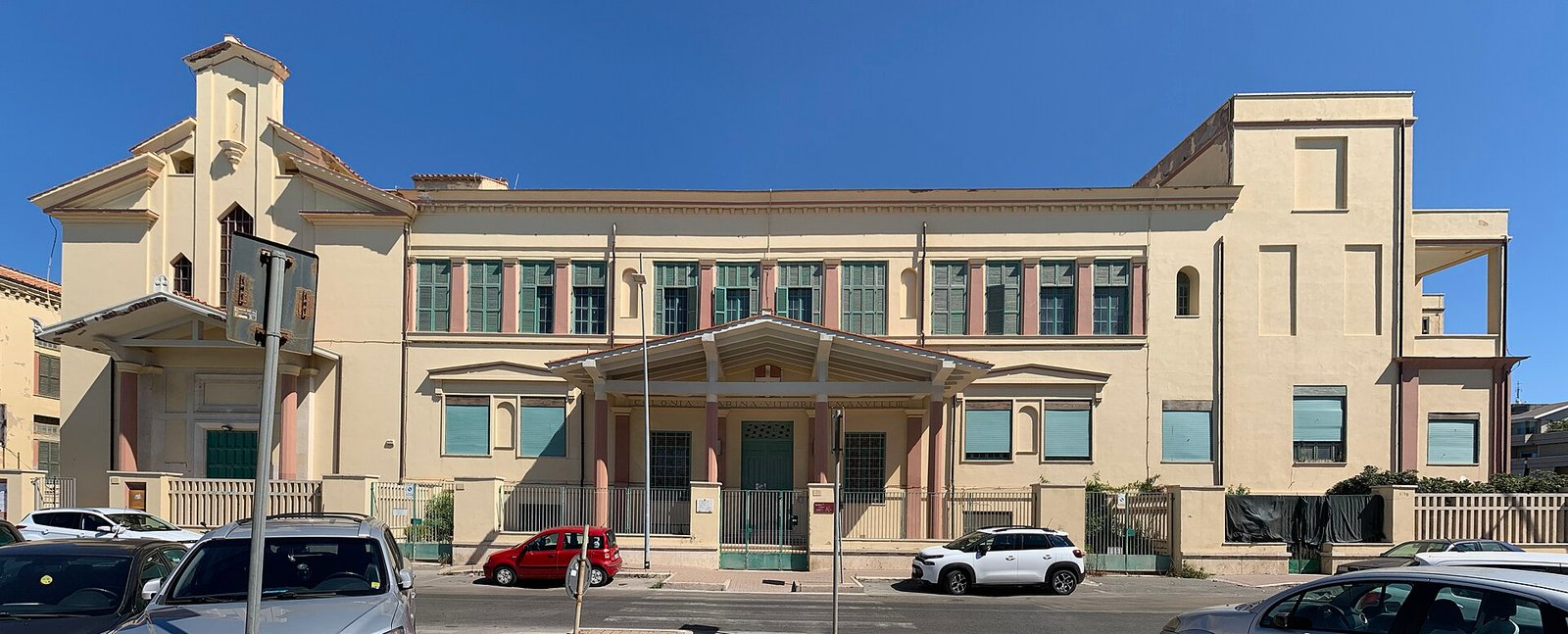
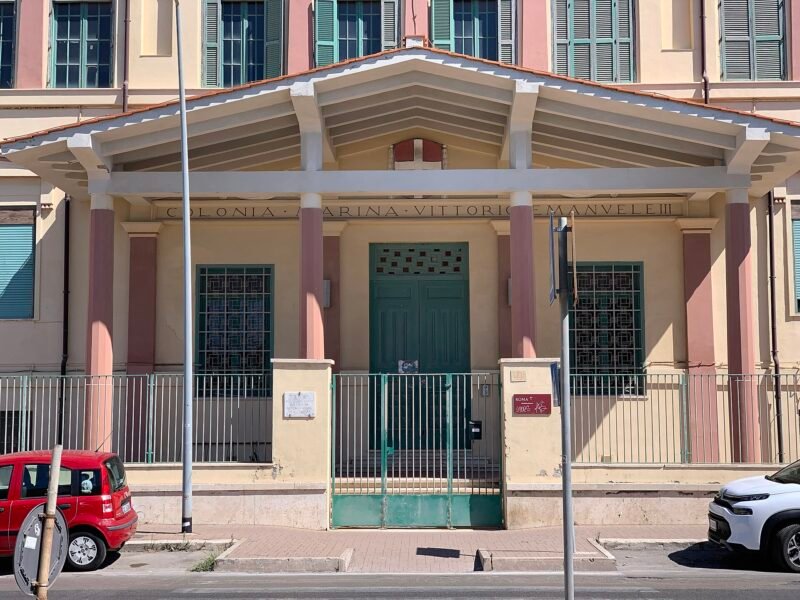
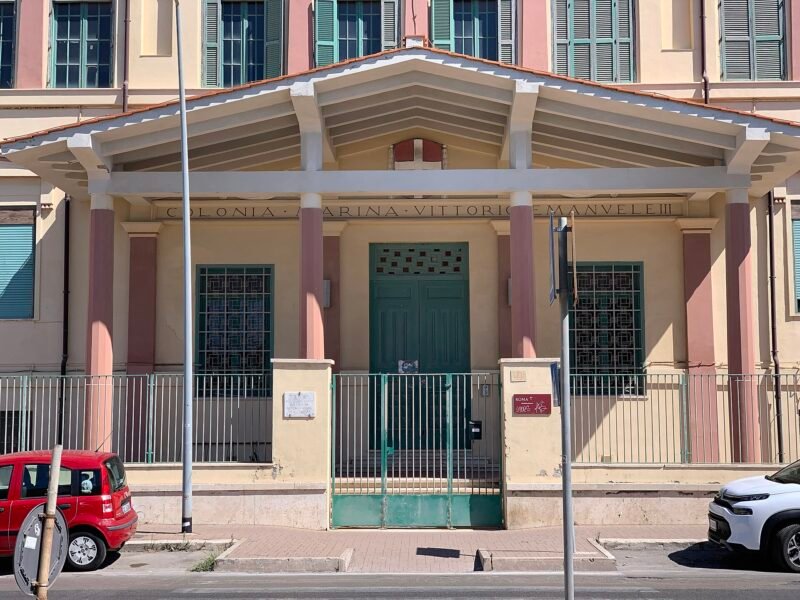
Teatro del Lido di Ostia occupies part of the former Vittorio Emanuele III seaside colony, at Via delle Sirene 22, and opened in February 2003 as Rome's first teatro di cintura, a public and participatory theater on the city's outer ring.
A building born for children
The complex that houses the theater was born as a seaside colony, a facility for children's stays by the sea, typical of the early 20th century. Today the same building also houses the Elsa Morante municipal library and the Almayer bookshop, as well as social support services.
Years of abandonment
After several uses, the spaces remained unused for more than 25 years. In 1997 a group of local artists and young people occupied them and started theater and workshop activities there, demanding a public theater for Ostia.
The birth of the theater
The City of Rome renovated the building between 1999 and 2003, with a consortium of associations involved in the programming. The theater opened in February 2003. In 2005 Lazio regional law number 16 regulated the network of teatri di cintura, designed to bring performances and training to the outskirts.
The hall
The hall is rectangular, with orchestra seating and rising tiers, for 202 seats. For a monologue it's an ideal size: the voice carries without excessive amplification, expressions can be read even from the back rows, and the audience shares the same breath as the actress.
Teatri in Comune
Today Teatro del Lido is part of Teatri in Comune, the system of Roma Capitale's public theaters in the municipi together with Teatro Biblioteca Quarticciolo, Teatro Tor Bella Monaca and Teatro Villa Pamphilj. The program is multidisciplinary: drama, music, dance, children's theater and workshops, such as the family series Teatri d'Arrembaggio.
Something nobody tells you about Francesca Astrei's Io sono verticale in Ostia, November 14, 2026
What's rarely said is that Teatro del Lido exists because someone demanded it, twice. The first time in 1997, when artists and young people from Ostia occupied the abandoned spaces of the colony. The second on February 26, 2010, when, after its closure in June 2008, a committee of artists, students, residents and former workers occupied it again. Three years of mobilization followed, until an agreement restored its function and started bringing it up to code.
This story speaks surprisingly well with the show. Io sono verticale tells of a body shut in a tomb that has to decide if it will get back up. Teatro del Lido is a building that was closed and abandoned, and that twice a community put back on its feet. It's not a parallel anyone has stated, but those who enter the hall knowing the venue's history feel it.
And there's a practical detail that the official listings don't mention. Ostia is Rome, administratively, but it's more than 20 kilometers from the center, and many Romans only come here in summer. In mid-November the seafront is quiet and the light fades early: arriving in the late afternoon, before an intimate show like this one, changes the way you listen to it.
How to get to Teatro del Lido for Io sono verticale
From central Rome, Teatro del Lido can be reached on the Roma-Lido railway to Lido Centro station, from where you walk about one kilometer west to Via delle Sirene 22.
The Roma-Lido railway
The Roma-Lido leaves from Porta San Paolo station, next to the Piramide stop on metro B and the Pyramid of Cestius. The most convenient stop is Lido Centro. From there you head toward the sea for about one kilometer, a quarter of an hour on foot. For times and connections, the reference is the route planner of ATAC and of the line operator.
By car
From Rome you reach Ostia via Via del Mare, Via Ostiense or Via Cristoforo Colombo. In November parking near the theater is much less complicated than in summer. For those living in the southern parts of the city, the car remains the most practical choice.
From Ostia and the coast
For those living in Ostia, Acilia, Casal Palocco or Infernetto, the theater is a neighborhood event. Surface lines change often: to choose the right bus it's best to check ATAC's route planner.
Getting back
With a 19:00 start and a running time of under an hour, the show ends early. Those going back by train should still check the time of the last trains to Porta San Paolo, especially if they plan to stay for dinner.
My advice for Io sono verticale by Francesca Astrei at Teatro del Lido di Ostia, November 14, 2026
My advice is to arrive in Ostia at least an hour early and treat yourself to a walk on the seafront before going into the theater. In mid-November the sun sets over the Tyrrhenian well before 19:00. The off-season sea, gray or bright as it may be, prepares you to listen to a monologue that asks for attention and silence. Walking into the theater straight from traffic isn't the same thing.
The second piece of advice concerns the seat. In a 202-seat hall with orchestra seating and rising tiers, the first rows of the tiers offer the best balance: you see the actress's whole body, and in a show called Io sono verticale the position of the body in space matters. Those who prefer to be close to her face should choose the central orchestra seats.
Third piece of advice: come as a couple, or in a small group, and stay afterward to talk about it. The monologue doesn't offer solutions, it opens questions about the relationship between those who suffer and those close to them, and they're questions that unravel better at a table than on a train. For those who experience these situations up close, it can be a night of recognition. It's still worth knowing in advance that the subject is depression.
Last piece of advice, a practical one: book. A small hall, a performer fresh from an Ubu Award, a single date: the seats may run out sooner than expected.
Another well-known fact, yet not often mentioned
It's well known that Ostia is Rome's sea, and that in summer its seafront fills with beach clubs and Romans escaping the heat. Less often mentioned is that Ostia is also a place of culture all year round, and that one of its liveliest outposts is Teatro del Lido, Rome's first teatro di cintura, born from an occupation and later recognized by the institutions.
Another well-known fact is that the Ubu Award is one of the best-known awards in Italian theater. Less often remembered is that among its categories there's one dedicated to performers under 35, which flags new voices before they become known to the general public. Seeing an actress awarded in that category, a few months later, in a 200-seat public theater, is exactly the opportunity the award aims to create.
And a third fact, almost never mentioned: the network of teatri di cintura, of which Teatro del Lido was the first, is regulated by a 2005 regional law. Behind a night of theater in Ostia there's therefore a precise idea of cultural policy, that of not leaving the contemporary stage only to the central neighborhoods. In our view it's one of the best ideas Rome has had for its theater in recent decades.
Ostia and the area around Teatro del Lido
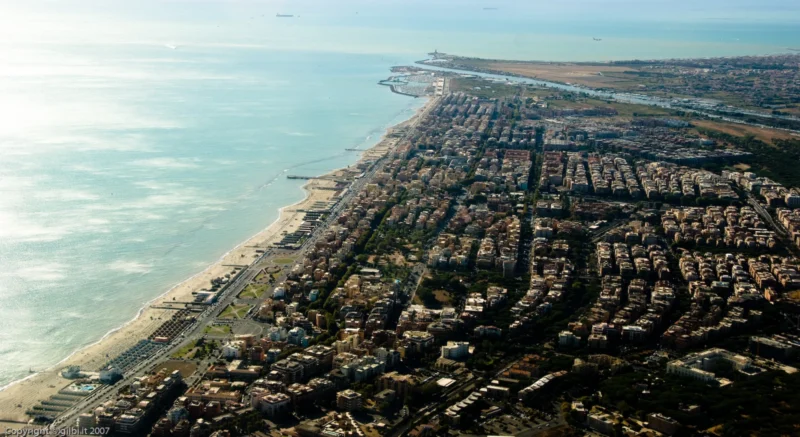
Teatro del Lido is in Ostia, in Municipio X, a few steps from Lungomare Paolo Toscanelli: a seaside neighborhood with its own history, a short distance from the excavations of Ostia Antica and the Castel Fusano pine forest.
The seafront in November
In mid-November the beach clubs are mostly closed and the seafront becomes a quiet promenade, with the public beach and the rhythm of an off-season seaside town. Before the show it's the best way to reach the theater.
Ostia Antica
A few kilometers away is the archaeological site of Ostia Antica. Those with a free day can spend the morning at the excavations and the afternoon on the seafront, reaching the Lido in time for the show.
The pine forest
To the south stretches the Castel Fusano pine forest, one of the large green spaces of the coast, good for a walk in daylight hours.
The same theater, other nights
During the season Teatro del Lido also hosts concerts such as I Magnifici Anni '80 and music shows such as Cumma Marie, storie di donne: a neighborhood theater in the full sense.
Where to eat in Ostia before or after the show
Ostia is the right place for a seafood dinner after a show that ends before 20:00, with trattorias and seafood restaurants on the seafront and in the streets of central Lido.
The cooking of the coast
The cooking of the Roman coast is simple and direct: fried seafood, pasta with shellfish, grilled fish. Many places on the seafront are open all year. On Saturday night, even in November, booking is wise.
Something quick
Those in a rush will find bars, bakeries and pizza-by-the-slice shops in central Lido, toward Lido Centro station. A slice of pizza before 19:00 is enough to get to the end of the show without hurrying.
After the theater
The monologue lasts less than an hour: a table booked for 20:15 lets you leave the hall calmly and carry on the evening talking about what you've seen.
The right photo to take at Io sono verticale by Francesca Astrei at Teatro del Lido di Ostia, November 14, 2026
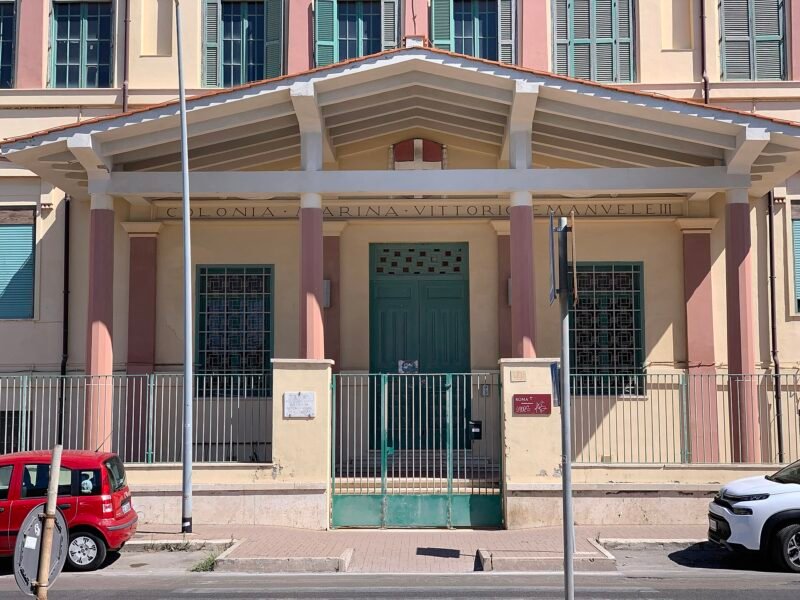
The right photo of this night is taken outside, before the show. The facade of the former Vittorio Emanuele III seaside colony, with the entrance portico and the lettering at the top, is a building that tells a century of Ostia's social history: the children's colonies, the abandonment, the occupations, the public theater. In mid-November, at 18:30, the light is already the blue after sunset and the lit street lamps give depth to the image.
The second photo is on the seafront, a few steps from Via delle Sirene. A figure standing on the empty beach, back to the sea, is almost an unintended quote of the show's title: being vertical in front of the horizontal horizon. It's a simple image anyone can take with a phone.
The third photo, inside, is taken only before the start or during the applause. In a 202-seat hall, lit screens during a monologue can be seen from the stage and bother the actress and those nearby. In a show that works on silence and concentration, the phone stays in your pocket. During the applause, on the other hand, a photo of the performer standing in front of the audience nicely closes the story of the night.
A last idea: the Teatri in Comune season poster at the entrance, with Francesca Astrei's name, is the simplest souvenir of a night in Ostia.
Accessibility, age and practical information
Teatro del Lido has a hall with orchestra seating and rising tiers for 202 seats. For accessibility needs, contact the theater at 06 5646962 or promozione@teatrodellido.it.
Orchestra and tiers
The tiers improve visibility but involve steps: those with walking difficulties should ask for an orchestra seat when booking.
Audience age
The show's subject is depression, handled with irony but without simplifications. The theater doesn't list age limits. In our view it's a work suited to an adult audience and to high school students, ideally accompanied by an adult to talk it over with afterward.
Punctuality
In a 55-minute monologue with no intermission, walking in after the start means interrupting the actress. It's best to be in the hall a quarter of an hour early.
Some important events that happened here in history
The history of Teatro del Lido begins with the Vittorio Emanuele III seaside colony, built in Ostia for children's stays by the sea, at a time when colonies were one of the most widespread social institutions in the country. Sources disagree on the construction date: some sources give 1916 and a design attributed to Marcello Piacentini, while Rome's tourism portal speaks of the 1920s. After several uses, the spaces remained abandoned for more than a quarter of a century.
In 1997 local artists and young people occupied the premises on Via delle Sirene and started theater and workshop activities there. Between 1999 and 2003 the City of Rome renovated the building, and a consortium of associations was formed to take part in the programming. In February 2003 the theater was inaugurated as Rome's first teatro di cintura, public and participatory.
For five years the management involved the Department of Cultural Policies and the Culture Department, Municipio Roma XIII, then responsible for Ostia, and the Associazione di Associazioni Le Sirene. On September 15, 2005 Lazio regional law number 16 regulated the teatri di cintura. In June 2008 the theater closed.
On February 26, 2010 a committee of artists, students, residents and former workers occupied it again. After three years of mobilization an agreement restored its function and started bringing it up to code. Today the theater is part of Teatri in Comune, in Municipio X.
Who has passed through Io sono verticale by Francesca Astrei at Teatro del Lido di Ostia, November 14, 2026
The history of Teatro del Lido is made more of communities than of famous names, and that's its most recognizable trait. The first to pass through these buildings were the children of the seaside colonies, brought to Ostia for decades to breathe the sea air. Then, from 1997, the local artists and young people who occupied the abandoned spaces and invented a theater where there wasn't one.
After the 2003 opening, the associations of the Le Sirene consortium, the companies of the new scene and the schools of the coast passed through here. In 2010 the occupiers returned: artists, students, residents and former workers of the building, who for three years kept the hall open with shows and training activities.
In the 2026 season the hall hosts music, storytelling theater and family theater, from the theater's FanfarOne Orchestra conducted by Pino Cangialosi to the voices of folk song. On November 14 it's Francesca Astrei's turn, trained at the Accademia Silvio d'Amico, directed by Paolo Rossi, Armando Punzo and Giorgio Barberio Corsetti, and awarded the 2025 Ubu. It's a moment that says a lot about the theater's role: one of the most acclaimed performers of her generation, in a public theater on the outskirts, in front of 200 people.
Ostia in mid-November: the time of the show
In mid-November Ostia is a seaside town in full off-season, with a quiet seafront, short days and the first cool evenings.
The weather
Evenings on the coast in November are damp and windy: a heavy jacket and something for the rain are wise, especially for those walking from the station to the theater.
A different Saturday
November 14 is a Saturday: those coming from the center can turn the show into half a day at the sea, between excavations, pine forest and seafront, with the theater as the last stop before dinner.
Frequently asked questions about Io sono verticale at Teatro del Lido
When is Io sono verticale on at Teatro del Lido di Ostia?
Io sono verticale is on at Teatro del Lido di Ostia on Saturday, November 14, 2026 at 19:00, for one date only. The show, by and with Francesca Astrei and produced by Pallaksch, is part of the season of Teatri in Comune, the network of Roma Capitale's public theaters.
What is Io sono verticale about?
Io sono verticale tells the experience of depression through the figure of Lazarus, the man called back to life from the tomb. The monologue explores the pain that isolates, the relationship with those who remain outside and the effort of getting back up, alternating reflection and ironic moments. The title comes from a line by Sylvia Plath.
Who is Francesca Astrei?
Francesca Astrei is an actress and author who graduated in 2018 from the Accademia Silvio d'Amico, winner of the 2025 Ubu Award for best actress or performer under 35. She has worked with Paolo Rossi, Armando Punzo and Giorgio Barberio Corsetti. In 2023 she won FringeMi with the monologue Mi manca Van Gogh.
How long is the show?
Io sono verticale lasts about 55 minutes, according to the listing of Teatro Elfo Puccini in Milan, which hosts the same monologue at the end of November. It's a show with no intermission: at Teatro del Lido it's best to arrive at least a quarter of an hour before 19:00.
How do you buy tickets for Teatro del Lido?
Tickets for Io sono verticale at Teatro del Lido are bought from Teatri in Comune's official website, which links to the authorized presale network. For bookings and information the theater answers at 06 5646962 and at promozione@teatrodellido.it. Prices are shown at the time of purchase.
How do you get to Teatro del Lido di Ostia by public transport?
Teatro del Lido di Ostia can be reached on the Roma-Lido railway from Porta San Paolo, next to metro B Piramide, to Lido Centro station. From there you walk about one kilometer to Via delle Sirene 22. For local bus lines it's best to use ATAC's route planner.
Is the show suitable for teenagers?
Io sono verticale deals with depression with delicacy and irony, without explicit scenes. Teatro del Lido doesn't list age limits. In our view it's suitable for adults and high school students, with awareness of the subject and, for the youngest, an adult to talk it over with afterward.
Are there other dates of Io sono verticale in Rome?
Besides the Ostia date, Io sono verticale is announced in Rome at Teatro Basilica from March 18 to 20, 2027. At the end of November 2026 the show is instead in Milan, at Teatro Elfo Puccini, from November 24 to 29.
My final advice on Io sono verticale at Teatro del Lido
A one-hour monologue, a performer just awarded the Ubu, a subject that many live with in silence and that rarely finds words on stage, in a public theater born twice from the will of its residents. My advice is to book right away, take the Roma-Lido in the early afternoon, walk along the winter seafront and arrive at the theater without hurrying. It's the kind of night you find in Rome only a few times a season.
Article written by the editorial team of Tour Leader Pro, contact them for Private/Corporate/V.I.P. Tours and Experiences.
Planning a trip to Rome? English guides for visiting the city are on ItalyPlanner.com.
Contact Information
Nearby
Upcoming events nearby
 Composizioni 2026 by Teatri di Vetro at Teatro del Lido di Ostia, September 22 to December 6, 2026100 m
- Ialsax Quartet: Jazz, Classical and More at Teatro del Lido di Ostia, November 29, 2026100 m
- Pietro Giannini, La costanza della mia vita at Teatro del Lido di Ostia, November 20, 2026100 m
- A Spoken Word Selecta, DJ set by Isidoro Concas at Teatro del Lido di Ostia, November 7, 2026100 m
You might also like
- Conigli by Salvo Di Paola at Hacienda Roma, November 30, 2026
- Il medico dei pazzi by Eduardo Scarpetta with Gianfelice Imparato at Teatro Tor Bella Monaca
- Teatro Marconi 2026-2027 Season, September 28 to December 31, 2026
- I cattivi pensieri at Teatro Elsa Morante, performances from October 24 to November 6, 2026
- Uno scherzo del genere with Emanuela Grimalda and Gianluca Ramazzotti at Teatro Nino Manfredi, March 11 to 21, 2027
- Martina Catuzzi, UOMA at Hacienda Roma, April 19, 2027