Forvm Sport Center
In short. Forvm Sport Center is a multi-purpose sports center in Rome, located at Via Cornelia 493, in the northwest quadrant of the city, between the Boccea and Aurelio neighborhoods, a few hundred meters from the Cornelia stop on Metro line A…
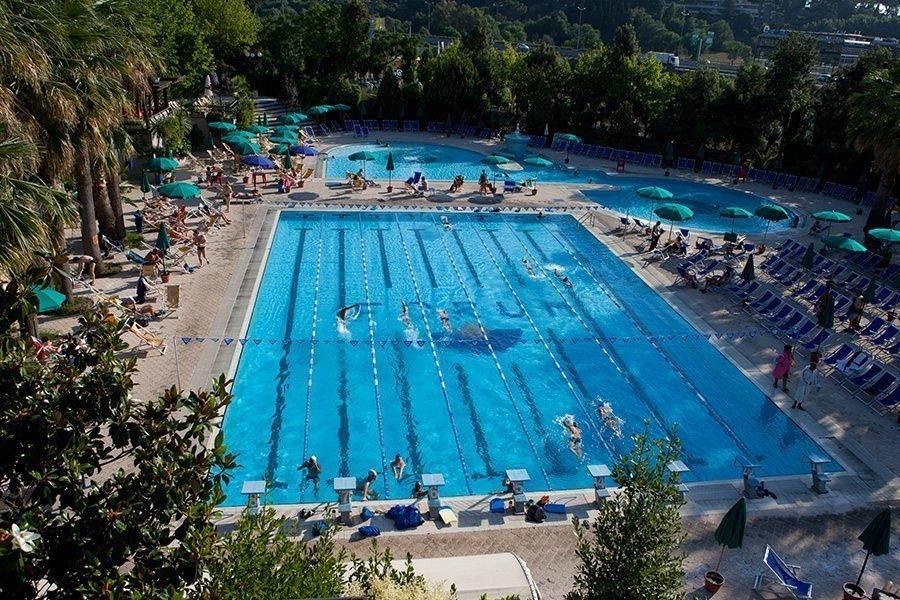
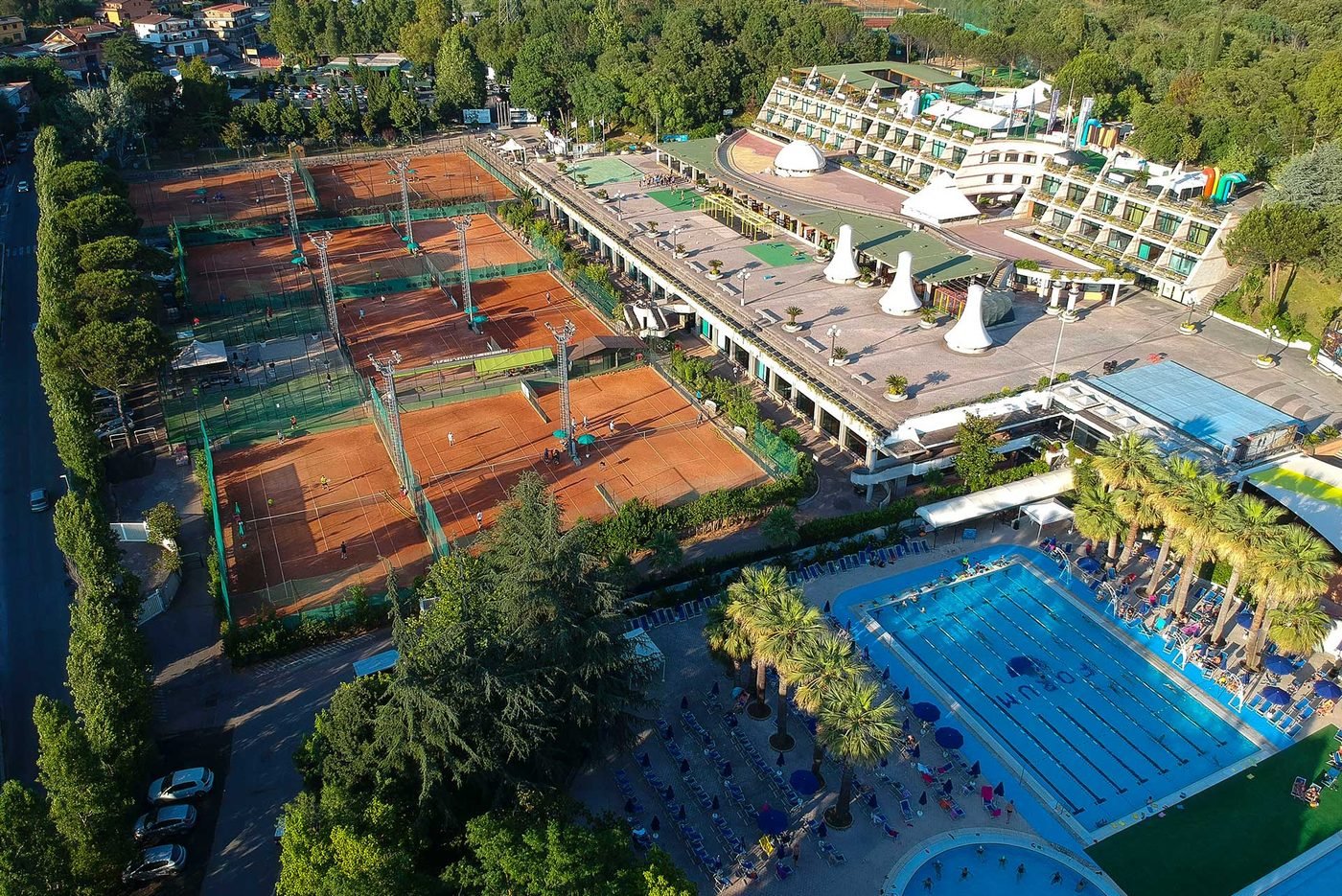
Forvm Sport Center is a multi-purpose sports center in Rome, located at Via Cornelia 493, in the northwest quadrant of the city, between the Boccea and Aurelio neighborhoods, a few hundred meters from the Cornelia stop on Metro line A and from the intersection of Via Boccea and the Circonvallazione Cornelia. The complex covers an area of about 110,000 square meters and brings together, under a single brand written with a Latin V in place of the U, swimming pools, red clay tennis courts, padel courts, fitness gyms, a five-a-side soccer area and a relaxation area with a wellness circuit. The facility has operated since 1994 and is today one of the historic reference points of Rome's private sports sector, with one of the most awarded tennis schools in the city and a track and field youth program affiliated with the Italian Athletics Federation. For anyone planning a stay in the western part of the capital, between the Vatican, Monte Mario and Villa Doria Pamphilj, it is also worth reading the pages dedicated to Vatican City, Villa Doria Pamphilj and the Monte Mario Reserve.
Where Forvm Sport Center is and how to get there
The center is at Via Cornelia 493, postal code 00166, in a part of Rome that Romans know well but that occasional visitors tend to skip, caught between the pull of the historic center and that of the coast. That is a mistake, because this quadrant, between Boccea, Aurelio and Primavalle, is dense with public green space, quick connections to the center and a residential fabric that over the last 30 years has found in facilities like this one a daily reference point more than a tourist one.
By metro: the Cornelia stop on line A
The simplest way to reach the area without thinking about traffic is Metro line A, which connects Anagnina to Battistini passing through the historic center and Termini station. The Cornelia stop is a few minutes' walk or a very short bus ride from the center's entrance, and is convenient for those staying near any station on the line, from Ottaviano to San Giovanni. From Termini the metro travel time, changes excluded, is around 20 minutes. For those staying near a line A stop, this remains the most predictable way to arrive, because it eliminates the traffic variable that at rush hour heavily affects road times in this quadrant.
By car: Aurelia, Boccea and the Circonvallazione Cornelia
Those arriving by car have two main roads available: Via Aurelia, which runs a little to the south, and Via di Boccea, which cuts through the quadrant from east to west toward the outskirts and the Grande Raccordo Anulare. The Circonvallazione Cornelia connects the two arteries directly and leads in a few minutes to the entrance on Via Cornelia. From the Grande Raccordo Anulare, Aurelia exit or Boccea exit, the travel time in normal conditions stays under 20 minutes. At morning and late-afternoon rush hours, when the area fills with commuter traffic toward the center, it's best to allow a few extra minutes.
Parking and useful distances
The center has a parking area reserved for members and visitors, whose capacity and access rules should be checked with the front desk in the busiest periods, typically summer weekends when the open-air pool is open. Useful distances to keep in mind: about 20 kilometers from Leonardo da Vinci Airport in Fiumicino, a little over 10 kilometers from the historic center and from Saint Peter's Square, and a handful of kilometers from Villa Doria Pamphilj, the largest public park in Rome, which you reach in a few minutes heading down toward the Aurelia or the Trionfale.
The name of the road: from the ancient Via Cornelia to today's neighborhood
The center's address is not a neutral detail. Via Cornelia takes its name from one of the lesser-known but oldest consular roads of Rome, a route that according to historical sources left the walls through the so-called Porta Cornelia, near the Pons Aelius, and ran west along the northern wall of Nero's circus, on a path that today corresponds in large part to Via della Conciliazione, crossed the Vatican hill and continued, following roughly today's Via di Boccea, toward the territory of ancient Caere, present-day Cerveteri. Some scholars trace the name to a magistrate of the gens Cornelia, others consider it a variant of the name of Via Aurelia, with which the Cornelia shared part of the initial route and the same gate out of the walls, so much so that ancient sources also call Porta Cornelia Porta Aurelia, creating over the centuries no little confusion between the two roads.
With the construction of Saint Peter's Basilica the initial stretch of the road was partly absorbed into the Vatican area, and the name survived over time by applying to the quadrant that developed farther west, along the axis that today leads toward Boccea and the northwestern outskirts of the city. The modern road that gives its name to the sports center, and the metro station that bears the same name, are thus the place-name legacy of a road axis that 2,000 years ago connected Rome to the Etruscan world, long before the quadrant became one of the residential neighborhoods of 20th-century Rome.
Boccea, Aurelio and the neighborhood's growth in the 1900s
The urban fabric that now surrounds Via Cornelia formed mainly in the second half of the 1900s, with a building expansion that turned a largely agricultural area into one of the most populous residential quadrants of northwestern Rome. It is in this context, in the 1990s, that the decision to build a large private sports center on a free area along the road fits: an entrepreneurial bet consistent with the demographic growth of the area, which within a few years turned Forvm Sport Center into one of the sports reference points of the quadrant, much like what happened in other parts of the Roman outskirts with other large private centers born in the same period.
What Forvm Sport Center is: a facility of over 100,000 square meters
A premise is needed here, because the name can be misleading: Forvm Sport Center is not a single neighborhood gym, but a multi-purpose sports facility built on an area of about 110,000 square meters, with several buildings dedicated to different disciplines and an offer that holds together competitive sport, everyday fitness and activities for children. The logic is that of the large private Roman centers born between the 1980s and 1990s: a single gate, a single membership card, dozens of different facilities under the same corporate roof.
The tennis courts and the tennis school
The tennis section is probably the most recognizable from the outside: a bank of red clay courts, partly covered for winter use, plus a court with a synthetic surface dedicated to the more modern forms of the game. Around the courts revolves a tennis school structured on several levels, from courses for children starting at age six to the competitive section, with small working groups to guarantee a close relationship between coach and student and with national-level instructors for the most advanced groups. The center also organizes internal tournaments, team championships, friendly matches with other clubs in the area and summer camps dedicated to tennis, as well as technical clinics for those who want to work on specific aspects of the game.
The pools
The aquatic offer includes several pools, among indoor facilities usable all year and an open-air pool that opens in the warm months and that represents, for many Romans in the area, the simplest way to spend a sunny day without leaving the city. Free swimming coexists with water fitness classes and with the swim school activity for the little ones. The summer pool, in particular, has a tradition of opening to the public, including non-members, with day access that over the years has had a price list separate from the annual membership: the indicative hours run from morning until evening, with weekend access more regulated than on weekdays. Those who want updated details on rates, seasonal hours and rules for non-members should contact the center's front desk directly, because this kind of information changes with the season and is not something to take for granted from reading a web page.
Gyms, fitness rooms and classes
The fitness section is organized across several rooms, among a cardio and weights area, group class rooms and spaces dedicated to specific disciplines. The weekly schedule covers a wide range of activities, from classic cardiovascular classes to functional disciplines, with a number of class hours over the week that reaches figures of a large club. It is the kind of offer designed for those looking for continuity all year round, not for an isolated tourist visit: the card, the memberships and the daily access for guests follow rules that the front desk communicates case by case.
The numbers of Forvm Sport Center
To give a concrete idea of the scale of the facility, it is worth lining up a few numbers published by the center itself: about 110,000 square meters of total area, around 15 rooms dedicated to fitness among cardio, weights and group classes, a bank of tennis courts that exceeds 10 units between outdoor and indoor, plus padel courts and several pools between the indoor ones and the summer open-air one, for a weekly total of fitness class hours that reaches 200. These are figures of a large sports club rather than a neighborhood gym, and they explain why the teaching offer manages to cover in parallel very different disciplines, from infant swimming to competitive tennis for teenagers.
It should be said, with the caution that all numbers published by a private facility for promotional purposes deserve, that the exact figures for courts, pools and rooms may vary slightly over the years because of renovations, expansions or reorganizations of the spaces: anyone who needs a precise figure, for example to know how many covered tennis courts are available at a given time of year, does well to ask the front desk directly.
A useful comparison, for those unfamiliar with the typical sizes of these facilities, is with a small sports village: a center with over 100,000 square meters of area and this number of courts, pools and rooms is closer, in scale, to a sports resort than to a city gym, even though the pattern of attendance remains that of the neighborhood club, with members who return every week for years rather than occasional visitors passing through.
The relaxation area and the wellness circuit
Beside the sports facilities proper, the center has an area designed for recovery and relaxation, with whirlpool tubs and a wellness circuit that completes the main physical activity. It is not a stand-alone spa in the sense the term is understood today in the urban wellness sector, with a catalog of beauty treatments and massages bookable separately, but a complementary service designed for those who already attend the center for sport. Those looking specifically for a wellness package with dedicated treatments do well to ask the front desk what the current offer is, because this kind of ancillary service tends to be the one most subject to change over time.
Padel and five-a-side soccer
Alongside the center's historic sports, padel courts have been added in recent years, a discipline that in Rome as in the rest of Italy has seen very rapid growth, and a five-a-side soccer section for those who organize games among friends or follow youth courses. Both activities share with tennis and the pools the same booking logic through the front desk or a dedicated app, with hours that get crowded especially in the weekday evening slot.
Five-a-side soccer, in particular, keeps here a function that is more recreational than competitive compared with tennis or track and field: it is the sport of games among work colleagues, among groups of neighborhood friends, of the small internal leagues organized by the center itself, besides of course the courses for the youngest included in the schedule of activities for children and teens. It is a piece that completes the offer more than it characterizes it, but one that in recent decades has become one of the most widely played amateur team sports across Italy, and a center of this size could not be without it.
The price list and access for non-members
As in almost all the large private Roman sports centers, the commercial architecture of Forvm Sport Center rests on two levels: the annual or seasonal membership, reserved for those who use the gym, classes and courts continuously, and a daily access designed mainly for the summer pool, which historically has been the tool through which the center opened up also to those who are not regular members. The day-entry formulas, when available, usually include use of the open-air pool and, depending on the period, a lounge chair service. Weekend access has in the past been more restrictive, tied to the presence of a member accompanying the guest.
Here a rule applies that is worth repeating every time sports price lists come up: the prices and hours of a private center change from season to season, sometimes even mid-season, and posting online a past figure as if it were today's is the fastest way to create a misunderstanding for whoever shows up at the gate. The structure of the price list, with a daily entry designed for the summer pool and a broader membership for use of all the facilities, is a constant of the model. The exact amount, any discounts for children and the weekend access rules must always be confirmed with the center's front desk before organizing the visit.
One element to keep in mind, for those comparing the costs of a center like this with those of a municipal pool or a beach club, is that the membership at a multi-purpose center of this scale buys not just access to one facility, but a package of services that includes, depending on the formula chosen, the use of several sports, group classes, equipped locker rooms and, for families, the chance to have several children attend at total costs often lower than enrolling separately in several different facilities around the city. It is a calculation to be done case by case, with the real numbers supplied by the front desk, but it is the underlying economic reason why this kind of membership remains popular among Roman families even though the initial cost can seem higher than a single isolated course.
A curiosity about Forvm Sport Center
The detail that jumps out even before you pass through the gate is the spelling of the name: Forvm, with the V in place of the U, following the Latin epigraphic usage in which the U did not exist as a separate letter and the sound was rendered precisely with the V. It is a graphic choice common in Italian marketing when you want to evoke Roman classicism without writing a name in correct Latin, and here it works on two levels: on one hand it evokes the Roman forum, the public square par excellence and meeting place of the ancient city, on the other it turns the sports center into a sort of contemporary square, a place to meet up for sport instead of for politics or commerce. Those searching for the center online, however, should keep it in mind: typing Forum instead of Forvm still leads to the right results, because the official website and the social channels use both spellings depending on the context, but the registered trademark and the sign are written with the V.
A second curiosity concerns the size: 110,000 square meters is an area comparable to 15 regulation soccer fields side by side, all taken up by courts, pools, gyms and service green space in a stretch of city that to those driving past on the Circonvallazione Cornelia looks like an ordinary residential block. It is one of those cases where the real scale of a place can only be grasped by going in.
The history of Forvm Sport Center from 1994 to today
The center's history begins in 1990, when two partners, Giampaolo Duregon and Walter Casenghi, share the idea of building a sports center that would become a reference point for the city, not a simple neighborhood facility. The project takes shape with the collaboration of the architect Giovanni Brandizzi, a figure tied to CONI and therefore with direct experience in designing sports facilities on a large scale, and officially opens in 1994. Since then the facility has remained operational without significant interruptions, consolidating over time the initial offer with the addition of disciplines that 30 years ago did not yet exist in the mass sports landscape, such as padel. It is no small matter in a sector, that of Italian private sports centers, where business mortality in the medium term is high: many facilities opened in the same years did not withstand the generational change between founders and successors, or did not know how to update the offer in step with sporting tastes that changed over time.
The founders and the CONI architect
The choice to entrust the design to an architect tied to CONI is not a marginal detail: it means that from the start the facility was conceived with the technical criteria of a certified sports structure, not as an adaptation of already existing spaces. It is a difference that can still be seen today in the layout of the spaces, with distinct buildings for each discipline and internal circulation designed to let thousands of people coexist on the busiest days without the flows of the different activities getting in each other's way.
The 2008 recognition and the following years
In 2008 the center receives a recognition from CONI as one of the best Italian sports facilities, an award that in the sector has the same symbolic weight that a food guide has for a restaurant: it certifies in the eyes of insiders a quality of management that the general public perceives with more difficulty. In the following years the center continued to expand its offer, adding padel when the discipline began to spread nationally and strengthening the competitive tennis section, which today is described by the company itself as one of the most titled schools in the city. In 2019 the center celebrated its first 25 years of activity, a milestone that for a Roman private sports facility, in a market where many facilities open and close within about 10 years, is by no means a given.
The recent expansion: from tennis to padel
In the first years of its history the center built its identity mainly on tennis, swimming and fitness, with track and field joining as a structured competitive section in the following years thanks to the federation affiliation. Padel is the most recent addition: a discipline that in Italy stayed a niche until the early 2010s and then exploded in just a few years, pushing tennis clubs and multi-purpose centers across the peninsula to convert spaces or build new courts just to keep up with demand. The addition of padel to an offer already established for three decades says a lot about the center's ability to update itself without disowning its own history, a balance that is not a given for a facility of this size, where every expansion requires space, investment and a reorganization of the internal logistics.
Something nobody tells you about Forvm Sport Center
What is rarely told is that a center of this scale is not designed for an isolated visit: it is designed for habitual attendance, and this completely changes the experience of anyone who arrives without being a member. Anyone who shows up on a random afternoon hoping to book a tennis court or an hour of padel at the last minute risks finding everything taken, because the weekday evening slot, between 18:00 and 21:00, is the one where demand converges from people who work and train after office hours. Courts booked days ahead by regular members leave very little free space for those who call the same morning.
The second thing few people take into account concerns the open-air pool: being a seasonal facility tied to the warm months, its opening and its access rules for non-members are decided year by year by management, and it is not rare for conditions to change over the years, with periods when daily entry is open to anyone and periods when it is tied to the presence of a member accompanying the guest. Anyone who plans a pool day thinking of the center as just another public pool risks disappointment: here the logic remains that of the private club, even when the gate opens to those without a card.
Third point, more practical: since it is a facility aimed mainly at residents of the area, free parking on the surrounding streets fills up quickly in the busiest time slots, particularly late afternoon on weekdays and summer weekends with the pool open. Arriving with a good margin of time, more than a generic recommendation, is here a very concrete piece of advice.
One last little-told aspect concerns the seasonality of the course offer: as in all large Italian sports centers, the schedule follows the school year, with courses for children and teens starting in September and running until June, while summer is devoted mainly to the open-air pool and to lighter formats like summer camps. Anyone who shows up in July hoping to enroll a child in a structured gymnastics or judo course, expecting the same offer as on a Tuesday in November, risks finding a calendar very different from the one imagined: finding out about the specific seasonality, even before the prices, avoids the most common disappointment among those approaching a center of this size for the first time.
My advice for visiting Forvm Sport Center
The most useful advice for those who don't yet know the center is to treat it for what it is, a structured sports club, not an attraction to see once: before heading out, it's best to phone or write to the front desk to find out which access formula is most suitable for the period in which you want to go, whether it's a trial for a course, a day entry for the summer pool or the booking of a tennis or padel court. Showing up without having first checked hours and availability is the easiest way to stay outside the gate or to find the facility you want already fully booked.
For those traveling with children, it's worth finding out about the seasonal courses without hurry, because the programming of children's sports in a center of this size is rich but also spread across several disciplines in parallel, and it's best to understand in advance which hours are compatible with the other commitments of the day. For those who only want a sunny day at the pool, the advice is to arrive in the morning, when attendance is lower and the availability of lounge chairs, where provided, is greater: early afternoon on peak days is the moment when the facility, like any large Roman summer facility, fills up the most.
The model of the large private sports centers in late-1900s Rome
To really understand what Forvm Sport Center is, it helps to widen the view to the context in which it was born. Between the late 1980s and the mid-1990s, while the neighborhoods of the Roman outskirts were growing faster than the network of municipal sports facilities, a generation of private entrepreneurs bet on building large multi-purpose structures able to offer, in a single place, everything that before was scattered among small neighborhood gyms, historic tennis clubs in the center and often overcrowded municipal pools. The model, borrowed partly from Anglo-Saxon country clubs and partly from the sports tradition of Italian company recreation clubs, provided for a single facility, an annual card and a range of disciplines able to accompany a family from early childhood to adulthood.
Forvm Sport Center, opened in 1994, fits exactly into this season, and is one of the few Roman examples of that model to have lasted three decades without major interruptions. Many facilities of the same age, built in the same period in other parts of the city, had a shorter life: closures, changes of management, partial conversions of the spaces toward less sporting activities. The continuity of this center, together with the recognition received from CONI in 2008, makes it a non-trivial case study for anyone interested in how private sport has accompanied, and in part replaced, the growth of public facilities in Rome over the last 30 years.
The courses for children and teens at Forvm Sport Center
One of the distinctive traits of the center, compared with many urban gyms designed exclusively for an adult public, is the breadth of the offer devoted to the youngest. The schedule includes, depending on the sports season, courses in artistic gymnastics, karate, judo, track and field, dance and of course tennis school and soccer school, as well as the swim school in the indoor pools. It is a model that follows that of the large Italian multi-sport centers born between the 1980s and 1990s: a single facility able to cover, over the course of a week, most of the physical activities a child may want to try before choosing a sport to specialize in.
The track and field section, in particular, is organized through an amateur sports association affiliated with the Italian Athletics Federation, which means the most motivated kids can move from the simple recreational course to taking part in official competitions within the Lazio federal circuit. The same applies, with its own paths, to the competitive tennis section, which the center presents as one of the most titled in the city: a team of national-level instructors follows the most advanced athletes with a technical, strategic and mental training program designed for competition, not only for amateur activity.
For families living in the Boccea, Aurelio, Primavalle quadrant, the possibility of concentrating in a single place several disciplines for children of different ages is probably the strongest practical reason why a center like this, born over 30 years ago, keeps attracting new members every season, in a Roman sports market where competition among private centers is very high.
Another well-known fact, yet rarely cited
That Rome has a long tradition of large private sports centers is known to everyone who has lived in the city for a few years: there are dozens of facilities born between the 1960s and the early 2000s that accompanied the growth of the capital's residential neighborhoods, offering gyms, pools and tennis courts to a population in strong demographic expansion. What tends to be forgotten is the urban-planning role these centers have had, and continue to have, in outlying or semi-outlying neighborhoods like the one that hosts Forvm Sport Center: in areas where equipped public green space is limited and municipal sports facilities are often overcrowded or lacking maintenance, a large private center ends up performing an almost public function, becoming the neighborhood's main place of sports socializing, especially for children and teenagers.
A second little-told element concerns the management model: structures like this one, born from a private entrepreneurial initiative in the 1990s and surviving for over three decades without changes of use or prolonged closures, are the exception rather than the rule in the Roman sports landscape, where many private facilities opened in the same period have closed, changed ownership several times or ended up abandoned. Management continuity, more than the size itself, is probably the most interesting fact when looking at the recent history of the private sports center in Rome.
The right photo to take at Forvm Sport Center
It is not a place designed for photographic tourism, and for that very reason the image that best tells the place is not a postcard shot but a frame that shows the variety of the facilities: the row of red clay tennis courts, with the nets aligned and the white lines freshly drawn, seen from the top of a grandstand or from a raised point, is the kind of image that conveys the scale of the center better than any description. The best moment for this shot is early morning, when the court has just been prepared and the raking light brings out the red of the clay without the hard shadows of midday.
Those who use the open-air pool in the summer months can instead look for the most classic frame of the genre, with the water in the foreground and the lounge chairs lined up in the background, maybe in the first hours of the morning when attendance is still low and the surface of the water is still. For those who bring children to the courses, though, the most authentic photo remains the one least sought: the moment of leaving a group lesson, with the little students still in sports gear, is the image that best conveys the real function of this place, a place designed for the daily life of a neighborhood more than for the eye of the occasional visitor.
Some important events that took place here in history
The first event that marks the center's history is naturally the opening, in 1994, after about four years of design following the idea conceived in 1990 by the two founders Giampaolo Duregon and Walter Casenghi together with the architect Giovanni Brandizzi. It is the moment when a private entrepreneurial project turns into a physical facility on an area of over 110,000 square meters, in a quadrant of Rome that in the 1990s was still in a phase of urban consolidation.
The second relevant moment is 2008, the year in which the center receives a recognition from CONI as one of the best Italian sports facilities: an award that marks the facility's move from a private neighborhood reality to a reference point recognized also at the federal level, with direct effects on the credibility of the competitive section, in particular tennis.
The third event, more recent and more symbolic than technical, is the anniversary of 2019, when the center celebrated its first 25 years of activity: a milestone that, for a private sports facility born in the 1990s and still fully operational after three decades, marks the endurance of an entrepreneurial model that in many other Roman cases did not survive the generational change or the difficulties of the sports real estate market.
A fourth element, less precisely datable but still relevant, is the gradual introduction of padel among the disciplines offered: an expansion that follows in step the national growth of this sport, born as a niche activity and become in a few years one of the most played in Italy, and that bears witness to the structure's ability to update the offer without damaging the historic approach based on tennis, pools and gyms.
Who has passed through Forvm Sport Center
It must be said with the utmost honesty: the center does not publish an official list of illustrious guests, and unlike other places in the capital tied to documented events and precise historical figures, the relevant attendance here is above all that, less spectacular but more concrete, of generations of Romans from the Boccea, Aurelio and Primavalle quadrant who learned to swim, play tennis or do track and field inside these gates from 1994 to today. It is a story made of continuity more than of single anecdotes, and it is probably the most authentic trait of a private sports center that has never bet on media fame as much as on the loyalty of its members.
On the sporting front, the competitive tennis section has over time trained players who continued their path in the youth circuit and in that of the Lazio federal clubs, while the track and field association affiliated with the Federation regularly brings its athletes to compete in the region's youth and open competitions. There are no names of international champions, given the public sources available, to associate with certainty with this facility: anyone looking for a pedigree made of records and international medals should look elsewhere, while anyone looking for a place where sport has been, for three decades, a daily fact more than an event, finds here its most coherent story.
One last note should be added, useful for those looking for precise information on specific attendance: as with many Italian private sports centers, the public sources available online do not report a detailed historical archive of all the guests, visiting athletes or promotional events hosted over the decades. Anyone with a specific interest, for example a local sports historian or a former member who wants to reconstruct a particular episode, does well to contact the center's management directly, which has an internal archive richer than what emerges from a simple online search.
When to go and how to organize the visit
For non-members who mainly want the open-air pool, the useful period is necessarily limited to the warm months, roughly from June to September, with July weekends and the first half of August as moments of peak attendance and therefore less suited to those seeking quiet. For those interested in a course, a tennis or padel trial, or enrolling a child in one of the children's sports, the best time to contact the front desk is the start of the sports season, between September and October, when the groups form and there are more places available than when the year has already started.
There is then a third category of visitor, less frequent but not rare: those staying in Rome for work or an extended vacation who look for a place to keep up a minimum of regular training without having to rent equipment or look for a generic gym. For this guest profile, the advice is to ask the front desk in advance whether temporary access formulas exist for short stays, because a center born for a clientele of stable residents does not always structure its offer with the passing visitor in mind, and knowing the real limits of the formula in advance avoids organizing a week of workouts that then proves impossible to carry out.
Forvm Sport Center with children
For families the center is designed almost made to measure: the course offer covers a very wide range of ages, from first approaches in the water to the competitive tennis and track and field sections for the most motivated teenagers, and the simultaneous presence of several disciplines in the same complex lets the same child try different sports without changing facility. The limit, if it can be called that, is that it is not a playground or an entertainment venue in the common sense of the term: it is a structured sports center, with hours and attendance rules to be agreed with the front desk, not a place to drop in without a plan hoping to find something to do for the little ones.
Accessibility
Specific information on barrier-free routes, equipped locker rooms and services for people with disabilities is not listed systematically in the public sources available online: anyone with particular accessibility needs does well to contact the center's front desk directly before organizing the visit, to get precise information on internal routes, locker rooms and pool assistance.
What's around Forvm Sport Center
The quadrant where the center is located is one of the greenest in northwest Rome. A few minutes away by car or public transit you reach Villa Doria Pamphilj, the largest public park in the capital, perfect for a walk or a run after training. Going north you meet the Monte Mario Nature Reserve, with its woods and its lookouts over the city, and not far away the Monte Mario Astronomical Observatory, one of the lesser-known but most interesting destinations for those traveling with kids curious about science.
Toward the historic center, going down along the Aurelia or the Trionfale, you reach in a few minutes Vatican City and Saint Peter's, while those looking for big sports or music events find not far away the Stadio Olimpico, reachable by going around Monte Mario along Val Melaina or heading down toward the Foro Italico. It is a quadrant that lends itself well to a mixed day, with sport in the morning at the center and culture or green space in the afternoon, without having to cross the whole city.
Those with time to widen the radius can head down toward the historic center and the neighborhoods of Trastevere and the Vatican, where museums, basilicas and the medieval urban fabric offer a cultural counterpoint to the sporting day, or go back up along Via Aurelia toward the Roman countryside, where the first stretches of farmland begin a short distance from the Grande Raccordo Anulare. For those staying several days in the capital who want to alternate sport, culture and relaxation without moving around too much, the quadrant around Forvm Sport Center offers exactly this kind of balance, rare to find in other parts of Rome where mass tourism makes daily life more complicated.
Quick questions about Forvm Sport Center
Where is Forvm Sport Center?
At Via Cornelia 493, in Rome, postal code 00166, in the quadrant between the Boccea and Aurelio neighborhoods, a short distance from the Cornelia stop on Metro line A.
What does Forvm Sport Center offer?
Red clay tennis courts, several indoor and outdoor pools, gyms and fitness rooms, padel courts, a five-a-side soccer section and a relaxation area with a wellness circuit, as well as courses for children in several disciplines.
When was it founded?
The center has operated since 1994, after a project developed starting in 1990 among the founders Giampaolo Duregon and Walter Casenghi and the CONI architect Giovanni Brandizzi.
Can you get in without being a member?
Historically yes, especially for the open-air pool in the summer months, with a day entry separate from the membership. The precise access rules for non-members, including any weekend limitations, should however be checked with the front desk, because they change from season to season.
How much does the daily entry cost?
The price list changes periodically and should not be taken as settled from outdated sources: the exact amount, any discounts and the included services should be asked directly at the center's front desk.
How do you get there by metro?
On line A, Cornelia stop, a few minutes' walk or a short bus ride from the center's entrance.
How do you get there by car?
From the Grande Raccordo Anulare, Aurelia or Boccea exits, then following the Circonvallazione Cornelia to Via Cornelia. In normal traffic conditions the trip takes less than 20 minutes.
Are there courses for children?
Yes, a wide offer that includes, depending on the season, artistic gymnastics, karate, judo, track and field, dance, soccer school, tennis school and swim school.
Does the center do competitive sports?
Yes, in particular in tennis, with a youth and competitive section that the company defines as among the most titled in the city, and in track and field, through an amateur sports association affiliated with the Italian Athletics Federation.
Is there padel?
Yes, the center has padel courts, a discipline added to the historic offer in the years of its rapid spread in Italy.
Why is the name spelled Forvm and not Forum?
It is a graphic choice that recalls Latin epigraphic usage, in which the sound of the U was rendered with the letter V. In everyday use and on digital channels both spellings, Forvm and Forum, appear anyway.
Is there parking?
The center has a parking area for members and visitors. At peak times, particularly late afternoon on weekdays and summer weekends with the pool open, it's best to arrive early.
What is the best time to use the open-air pool?
The warm months, roughly from June to September, avoiding if possible July weekends and the first half of August, when attendance is highest.
Is Forvm Sport Center suitable for those looking for a beauty center or a real spa?
The center includes a relaxation area with a wellness circuit designed as a complement to sports activity, not as a stand-alone spa. Those looking for specific treatments should ask the front desk what offer is actually available in the period of interest.
Why is the center on Via Cornelia?
The name follows that of an ancient Roman consular road that connected Rome to Caere, present-day Cerveteri, passing through the Vatican area. The modern quadrant along today's Via Cornelia developed mainly in the second half of the 1900s, and the sports center joined it in 1994.
What is the center's strongest discipline?
The tennis school is the one with the most defined competitive profile, described by the company itself as one of the most titled in the city. The track and field section, affiliated with the Italian Athletics Federation, also has a structured competitive path.
Can you book tennis or padel courts without being a member?
The booking arrangements for non-members, when available, depend on availability at the moment and on the policies in force in that period: the front desk is the right reference for finding out whether and how a court can be booked without a card.
Does the center organize summer camps for children?
The seasonal offer includes summer activities tied in particular to tennis, as well as the usual swimming courses in the pool during the warm months. The specific calendar of the summer camps must be requested from the front desk year by year, because the programming changes based on enrollments and the availability of instructors.
What is the difference between Forvm Sport Center and a traditional tennis club?
A traditional tennis club is almost always single-discipline or little more, while Forvm Sport Center is a multi-purpose facility that adds to tennis pools, gyms, padel, five-a-side soccer and a vast offer of courses for children: the scale and variety of the offer are the main difference.
The overall picture that emerges from over 30 years of activity is that of a sports center born with a solid technical project, grown without upending its own identity and remaining a stable reference point for those who live in the Boccea, Aurelio and Primavalle quadrant. It is not a place designed for the passing tourist, but for those looking for a facility where to bring their children to grow up among tennis, swimming and track and field, or for those who want a pool day without leaving the city. In both cases, the best way to avoid disappointment remains the same: ask the front desk first about hours, availability and access rules, because on these details a private center of this size changes its approach from season to season.
Frequently asked questions about Forvm Sport Center
Where exactly is Forvm Sport Center?
Forvm Sport Center is at Via Cornelia 493, in Rome, postal code 00166, in the quadrant between the Boccea and Aurelio neighborhoods, a short distance from the Cornelia stop on Metro line A. It is an area that Romans know well but that occasional visitors tend to skip, caught between the historic center and the coast.
What does Forvm Sport Center offer?
Forvm Sport Center offers red clay tennis courts, several indoor and outdoor pools, gyms and fitness rooms, padel courts, a five-a-side soccer section and a relaxation area with a wellness circuit. It is a multi-purpose sports facility built on an area of about 110,000 square meters, not a single neighborhood gym.
Does Forvm Sport Center have courses for children?
Yes, Forvm Sport Center devotes a wide offer to the youngest, unlike many urban gyms designed only for an adult public: the schedule includes, depending on the season, courses in artistic gymnastics, karate, judo, track and field, dance and of course tennis school, soccer school and swim school in the indoor pools.
Does Forvm Sport Center have a pool?
Yes, Forvm Sport Center has several indoor and outdoor pools. For non-members who mainly want the open-air pool, the useful period is necessarily limited to the warm months, roughly from June to September, with July weekends and the first half of August as moments of peak attendance.
How do you get into Forvm Sport Center without being a member?
The commercial architecture of Forvm Sport Center rests on two levels: the annual or seasonal membership, reserved for those who use the gym, classes and courts continuously, and a daily access designed mainly for the summer pool, historically the tool through which the center opened up also to those who are not regular members.
Since when has Forvm Sport Center existed?
Forvm Sport Center was born from a 1990 idea of two partners, Giampaolo Duregon and Walter Casenghi, with the collaboration of the architect Giovanni Brandizzi, a figure tied to CONI. The project became a physical facility after about four years of design, with the opening in 1994.
How do you get to Forvm Sport Center?
Forvm Sport Center is easily reached by metro, thanks to its closeness to the Cornelia stop on line A, in the quadrant between the Boccea, Aurelio and Primavalle neighborhoods in northwest Rome. The area is dense with public green space and well connected to the city center.
Article written by the TourLeaderPro staff, contact them for Private/Corporate/V.I.P. Tours and Experiences. For a day organized in Rome with a licensed tour guide, start from the TourLeaderPro contact page. Tour operators building itineraries in the capital will instead find the consulting service in the section dedicated to tour operators.
Planning a trip to Rome? The English-language guides for visiting the city are on ItalyPlanner.com. For those thinking in terms of days out of town there is the guide to the best day trips from Rome, while those who want to understand how Italy's free beaches really work, concessions included, will find the explanation in the guide to free beaches in Italy.
Contact Information
Via Cornelia, 493
Roma Roma Città, Roma Città