Terrazza Aurora
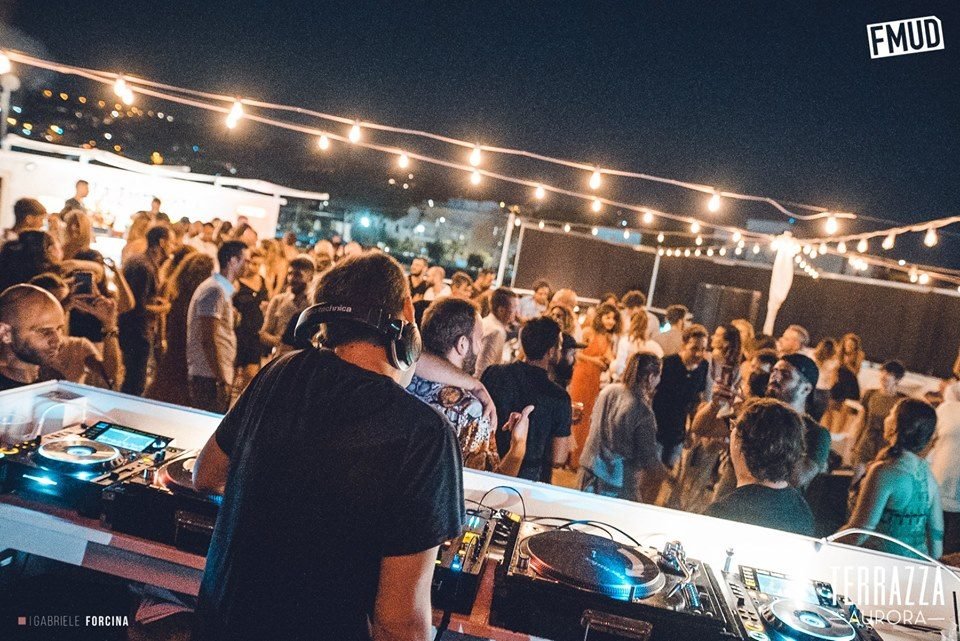
Terrazza Aurora is in Gaeta, in the province of Latina, at Via Marina di Serapo 11, right in the middle of Serapo beach, the city's main shoreline. It started as a beach establishment, the Stabilimento Aurora, active since 1930, and over time it has become a three-sided address: beach service with its orange umbrellas recognizable from afar, a seafront restaurant, pizzeria and grill, and, when evening comes, a terrace for aperitifs, cocktails and live music. As with most beach clubs on this stretch of coast, the business follows the seasonality of the beach calendar, with the beach plus restaurant formula concentrated in the warm months and the evening side picking up from May to September: before planning an evening it's always best to check the venue's social channels or call 0771 466470, because hours, event calendar and price list change from season to season. Those looking for other spots on the Gaeta coast will find in the same municipality the Sant’Agostino Beach and the Beach of the 300 Steps, as well as, of course, the general page on Gaeta. Gaeta is one of the seaside destinations most loved by Romans in southern Lazio, set between two gulfs and dominated by the promontory of Monte Orlando, with a historic center that faces directly onto the port and a tourist economy built largely around the bathing season. In this context Terrazza Aurora is one of the most recognizable and long-standing addresses on the waterfront, to the point of becoming over the years a reference point not only for those looking for the sea, but also for those who want to experience the city's evening life.
Where Terrazza Aurora is and how to get there
Serapo beach occupies the eastern coastal strip of the Montesecco isthmus, squeezed between the promontory of Monte Orlando to the south and the city center of Gaeta to the north, about a kilometer from the heart of the old town. It is the city's main beach, the largest and the best equipped, and Terrazza Aurora sits in an almost central position on this stretch of seafront, which makes it an easy reference point to spot even for first-time visitors: just follow the Serapo waterfront and look for the orange umbrellas.
By car: the road to Gaeta and Serapo
From Rome the distance is about 130 kilometers and the trip in normal traffic takes roughly a good hour and a half. There are two roads Romans use most often. The first is the highway: take the A1 Autostrada del Sole toward Naples to the Cassino exit, continue on Strada Regionale 630 Ausonia toward Formia and from there reach Gaeta following the coastal signs. The second, slower but far more scenic, follows Via Pontina to Terracina and then Strada Statale 213 Via Flacca, the coastal road that runs right above the sea, passing through Sperlonga before dropping down to Gaeta: it's the road I recommend to anyone with time, because the stretch between Terracina and Sperlonga is one of the most evocative on the Lazio coast, but avoid it at rush hour on summer weekends, when beachgoer traffic slows it down quite a bit. Once in town, Via Marina di Serapo is reached by following the signs for Serapo beach. In the summer months parking along the shoreline is regulated and often paid, and you should allow a few extra minutes to find a spot on high-season days.
Useful distances: airports and the port of Formia
For those arriving from outside the region, a few distances help in organizing the day. From Fiumicino airport, Gaeta is about 150 kilometers away, covered in about two hours in normal traffic. From Ciampino the distance drops to a little over 130 kilometers, with similar travel times. Those arriving by cruise ship at the port of Formia, a minor port but active especially for the Pontine Islands, find Gaeta and Serapo beach about 10 kilometers away, reachable in a few minutes by car or taxi: a convenient option for those with a short stop before resuming their trip. It is also worth mentioning the sea connection to the Pontine Islands, in particular Ventotene, another seaside destination on the southern Lazio coast, for which the site has a page on Cala Nave Beach, reachable precisely from the port of Formia by ferries and hydrofoils in the summer season.
By train and bus: Formia-Gaeta station
Gaeta has no railway station of its own. The reference station is Formia-Gaeta, on the Rome-Naples line via Formia, reachable from Roma Termini by regional and intercity trains in about an hour and a half, with some variation depending on the train category and the seasonal timetables, which should always be checked on the Trenitalia website on the day of departure. From Formia, the connection to Gaeta and to Serapo beach continues with local buses, which terminate near the historic center, or with a taxi: the stretch between the station and Serapo takes a good quarter of an hour. Don't expect urban-area frequency: especially off-season it's best to check the bus times in advance, because between one bus and the next as much as 40 minutes or more can pass. In the summer months, when demand for public transport to the beaches rises, some local lines step up service with additional runs dedicated precisely to the connection between the station and the shoreline: a detail that changes from season to season and that is best verified on the official channels of the local public transport operator before relying on the bus alone for your whole stay.
On foot and by bike from Gaeta's historic center
Those staying in the old town or in the Lungomare Caboto area can reach Terrazza Aurora easily on foot or by bike: the historic center and Serapo are linked by a coastal promenade of about a kilometer that runs along the port and then the waterfront, a flat route that in about 10 minutes by bike, or 20 minutes on foot at an easy pace, takes you straight to the orange umbrellas. It is the most convenient solution on midsummer weekends, when parking near the beach takes patience. Those arriving instead from the opposite side of the city, that is from the Elena area or the upper part of Gaeta, still find a workable connection by heading down toward the sea along the streets that lead to the Serapo waterfront, although the change in elevation makes the route more demanding than the flat walk from the port.
What Terrazza Aurora really is: beach club, restaurant and evening terrace
The point to understand right away, because it causes misunderstandings for those who arrive expecting a single service, is that Terrazza Aurora is not one thing. It is a beach establishment with full beach service, it is a restaurant, pizzeria and grill with seafood and meat cooking, and it is, when sunset arrives, a terrace for aperitifs, cocktails and live music. The three souls live together in the same space and under the same name, but they answer different needs and different hours: those who want only a swim and a lounger find what they are looking for in the morning and early afternoon, those who want to dine with a sea view find the restaurant offering, those who want an aperitif or an evening with music find the terrace that gives the venue its name.
Beach service and the orange umbrellas
The orange color of the umbrellas has become over the years the trademark of the place along the whole Serapo shoreline, to the point that longtime regulars speak of the Aurora umbrellas as an orientation point on the beach. The beach service includes the classic equipment of an organized beach club: umbrellas, loungers and deck chairs, access to the water's edge and to the club's facilities. As with any beach club in the area, rates, types of spot and booking arrangements change from season to season and should be checked directly with the manager before planning the day, as should the opening conditions at the start and end of summer, which follow the beach calendar and are not fixed from year to year.
Restaurant, pizzeria and grill
The restaurant side offers a cuisine that combines sea and charcoal: fish, seafood first courses, oven-baked pizza and grilled dishes, with a positioning that several online reviews place in the mid-price range for the Gaeta coast. The kitchen works with a view of the beach and the open sea, an element that weighs quite a lot in the overall experience especially around sunset, when the low light on the gulf of Gaeta becomes part of the dinner. As with any venue that lives on seasonality and variable crowds, the perceived quality in reviews is not always uniform, with more than positive opinions in periods of lower pressure and a few critical comments at the August peaks, when the service is under the greatest strain: it's a phenomenon common to many beach clubs on the Lazio coast on high-season weekends, not a feature exclusive to this venue.
Those looking for a quick beachside lunch usually also find a lighter offering, designed for those who don't want to leave the umbrella for a full meal: sandwiches, big salads and quick dishes, typical of beach club dining along the whole Lazio coast. It's a different formula from the evening one, designed to accompany the day at the beach without interrupting it for long, and it coexists with the more structured dinner offering, which instead focuses on more carefully done table service.
Music & Drink: cocktail bar and terrace evenings
As the sun goes down, the vocation of the place changes register. The terrace becomes a cocktail bar with a drinks menu and themed evenings, often accompanied by live music or DJ sets, in an extended aperitif formula that carries on until late in the evening in the busiest months. It is the part of the venue most tied to the summer season in the strict sense and the one whose calendar changes most often: before planning a specific evening, it's always best to check the venue's official social channels, where events are announced week by week.
The drinks menu follows the typical pattern of Italian beach cocktail bars, with a list of international classics alongside a few signature drinks tied to citrus and to the flavors of the Lazio coast, often presented by regulars as the strong point of the menu. In this time slot the service becomes more like that of a trendy venue than that of a simple beach club bar, with particular attention to the setup of the terrace and the lighting, designed to accompany the passage from sunset to evening.
Gaeta: the city around Terrazza Aurora
To understand an address like Terrazza Aurora fully, a few lines must be spent on the city that hosts it, because Gaeta is not just any seaside town on the Lazio coast. It is a town with a maritime and military history that goes back to before Roman times, grown around a limestone promontory that sharply divides two gulfs, with a natural harbor that for centuries made it a strategic port between Rome and Naples.
The historic center and the Angevin-Aragonese Castle
The old town of Gaeta climbs the promontory that closes the gulf to the west, with a tangle of medieval alleys that descends to the port and the military base. The most imposing monument is the Angevin-Aragonese Castle, a fortified complex layered over several eras, from the medieval Angevin core to the Aragonese and Bourbon expansions, today partly open to visitors and used for events. Not far away is the Cathedral of Gaeta, dedicated to Santa Maria Assunta and Sant’Erasmo, recognizable by its Romanesque bell tower, shaped like organ pipes, with colored majolica inserts, one of the most photographed architectural elements in the city. Strolling among these streets in the late afternoon, before or after a stop at Terrazza Aurora, is the most natural way to understand why Gaeta is often called one of the pearls of southern Lazio.
The naval base and the port of Gaeta
An aspect less known to occasional tourists, but part of the city's recent history, concerns the military presence. Since the period after World War II Gaeta has hosted a support base of the Italian Navy and NATO, and for a long time it was a support site for units of the US Navy's Sixth Fleet. The port has therefore lived for decades with a vocation that is at once military, commercial and tourist, an uncommon combination for a city of this size. For those visiting Serapo beach this simply translates into more varied maritime traffic than you would expect from a seaside resort, with military and merchant ships alternating with pleasure boats in the gulf, without interfering with the bathing use of the shoreline. The commercial port and the tourist port in fact remain physically separate from the stretch of coast set aside for swimmers, so that anyone spending the day at Serapo, between a swim and a stop at Terrazza Aurora, is unlikely to notice the military presence unless looking toward the historic center on the clearest days.
A forgotten maritime duchy
Few visitors know that Gaeta, between the 9th and 12th centuries, was an autonomous duchy with its own fleet, able to contest control of the southern Tyrrhenian Sea with far larger powers and to maintain direct relations with Byzantium: a political and maritime experience that places it, by historical extension if not by fame, alongside the most celebrated Italian maritime republics. In recent years the city has pursued a process, not yet concluded, to obtain official recognition as the fifth maritime republic alongside Venice, Genoa, Pisa and Amalfi: an identity battle that shows how alive the memory of its maritime past remains for those who run the city today, regardless of the formal outcome of the process.
A curiosity about Terrazza Aurora
Few people know that the name and identity of the place have roots in an era much more distant than the rooftop bar trend we now associate with certain panoramic terraces. The Stabilimento Aurora was in fact founded in 1930, when organized bathing at Serapo was still in its infancy: the beach had been officially opened only a few years earlier, in 1926, after the closing of the stretch of shoreline on the northern side of the Montesecco isthmus. Aurora is therefore one of the historic names of the Gaeta riviera, not a sign born with the boom of panoramic venues of recent decades, and it carries with it almost a century of beach seasons.
The second curiosity concerns the very terrace that gives the venue its name. Already in the 1960s, according to the venue's own longtime management, parties and gala evenings were held on the Aurora's panoramic terrace, at a time when Italian beach tourism was living its first great season of growth and Gaeta was beginning to establish itself as a destination for Roman holidays. In the 1970s and 1980s the same terrace changed audience and function, becoming the hangout of young people who gathered there to listen to music from the jukebox: two eras very different in style and soundtrack, but the same terrace on the sea as the backdrop.
A third curiosity concerns the way the name has come down to today. In the venue's most recent communications two wordings live side by side, Lido Aurora and Terrazza Aurora, used almost as synonyms depending on whether the beach side or the evening side is being discussed: a detail that shows well how the identity of the place has been built over time through successive layers, rather than with a single rebranding dropped from above. Those looking for the venue online, whether on social media or in reviews, may find it listed under both names, and it is the same historic sign that carries them forward together.
Something nobody tells you about Terrazza Aurora
The brochures don't say it: the best part of the day here is not midday, when Serapo beach is full and the light is flat, but the two hours before sunset. The gulf of Gaeta faces west, and in the late afternoon the low light lights up the promontory of Monte Orlando behind the beach and colors the sea in tones that simply don't exist at midday. Anyone who arrives at 16:00, settles under an orange umbrella and stays until aperitif time gets a very different experience from someone who stops by for just an hour in the middle of the day.
The second thing few people consider is parking logistics. Serapo is the most popular beach in Gaeta and, on July and August weekends, the demand for parking along the shoreline far exceeds the supply of spaces during the middle hours of the day. Anyone arriving after 10 a.m. on a midsummer Saturday or Sunday must allow time to find parking, while anyone who arrives early, before 9 a.m., still finds room easily and, as a bonus, an almost empty beach and a morning light that is worth the early wake-up on its own.
The third thing few people factor in is the wind. The gulf of Gaeta is exposed mainly to the west and the southwest, and on days when these winds strengthen in the afternoon the sea in front of Serapo can become noticeably choppier compared with the calm of the morning. It's not a reason to skip swimming, but it changes the experience quite a bit for those looking for flat water for a quiet dip: those sensitive to this would do well to concentrate their swim in the first hours of the day, leaving the windy afternoon to the more sheltered part of the terrace for the aperitif.
The advice I give you for visiting Terrazza Aurora
The practical advice is simple and applies especially in high season: don't treat the visit as a single stop, but as two separate moments in the same day. The first is the beach one, to be enjoyed early in the morning, when the light is better for photos and the heat hasn't yet reached its peak: a couple of hours of sea and umbrella are enough to enjoy Serapo without the crowd of early afternoon. The second moment is the evening one, to be reserved for the aperitif or dinner, when the terrace shows its best side with the sunset over the gulf and the atmosphere changes compared with the daytime hours.
A second piece of advice, just as concrete: if you plan a dinner or an evening with live music on July and August weekends, book ahead by phoning the venue, because the terrace's capacity is limited and in peak periods the tables sell out fast. For a beach club of this kind it's always worth calling first rather than showing up unannounced hoping for a free table.
A third piece of advice, less obvious: combine the visit with a walk on the promontory of Monte Orlando, just behind the beach. It's a few minutes on foot from the Serapo waterfront, and climbing up to the Sanctuary of the Montagna Spaccata before heading back down to your umbrella lets you experience in a single afternoon both the beach and the historical and scenic sides of the city, with no need to move the car or plan a separate day.
Serapo beach and the coast around Terrazza Aurora
Serapo is the main beach of Gaeta, a beach of very fine sand about a kilometer and a half long that runs between the promontory of Monte Orlando to the south and the Catena hill toward the city center. Its beach history officially begins in 1926, when it was opened to the public after the closing of the northern stretch of the Montesecco isthmus. Originally the area was largely a dune, and huge quantities of sand were extracted to supply a glassworks active in the area since 1911, a removal that over time has noticeably reduced the natural width of the shoreline. Despite this history of exploitation, the beach has won the Blue Flag several times over the years, the European recognition for the quality of bathing waters and coastal services, confirmed for four consecutive years up to 2023: a fact that should nonetheless always be checked against the updated FEE list before considering it valid for the current season. Much of the shoreline is now under concession to private beach clubs such as Terrazza Aurora, with stretches of free beach interspersed that must be found by asking on site, because the map of concessions changes from year to year.
Monte Orlando, the promontory that closes Serapo to the south
Behind the beach rises the promontory of Monte Orlando, now an urban park, which holds some of the most interesting monuments in Gaeta. At the top is the Mausoleum of Lucius Munatius Plancus, a Roman consul of the 1st century BC and founder of Lyon, one of the best-preserved monumental tombs on the Tyrrhenian coast. On the side facing the open sea is the Sanctuary of the Montagna Spaccata, tied to the legend that the rock split at the moment of Christ's death, with the evocative Turk's Cave opening between the divided walls. The park also hosts a small prehistory museum dedicated to finds from the area. Those with a free hour after the beach can climb on foot along the promontory's trails: the view over Serapo and the gulf of Gaeta from above is one of the most photographed panoramas in the city, and on this same slope the site has a page on Monte Orlando Park.
The other beaches of the gulf of Gaeta
Serapo is not the only beach in the municipality. Toward the promontory, on the side opposite the historic center, there are smaller coves and beaches reachable only on foot or by boat, with characteristics very different from the broad sandy beach in front of Terrazza Aurora. Among these, the site points out the Sant’Agostino Beach, more secluded and less crowded at peak season, and the Beach of the 300 Steps, known for the access marked by a long staircase that naturally limits the crowds compared with Serapo. For those staying several days in Gaeta, alternating Serapo, with its full services and beach clubs like Terrazza Aurora, with these wilder coves is the best way to see the coastline in its entirety, from the organized sea to the sea still close to the natural condition of the coast.
Another well-known fact, yet rarely mentioned
That Gaeta is a seaside city with a long beach tradition everyone knows. What is taken for granted, and is instead worth telling, is how Serapo became the city's main beach starting from a condition that was anything but favorable: a stretch of coast eroded by sand quarries for the glass industry, officially opened to the public only in 1926 after the closing of another stretch of shoreline. In a few decades, from a service area for an industrial activity, Serapo becomes the heart of the city's beach life, with historic beach clubs like the Aurora opening already in the early 1930s and enduring, living through practically a century of seasons.
An aspect tied to this history, and just as little told, concerns the very landscape that now seems so natural to beachgoers: the width of the Serapo shoreline is not a fixed fact over time. The extraction of sand for the glassworks active in the area since 1911 permanently affected the morphology of the beach, reducing its width compared with the original dune. It is a useful reminder for anyone who thinks of beaches as an unchanging landscape: even a beloved destination like Serapo bears the marks of industrial choices made more than a century ago.
The second little-cited thing concerns the religious geography surrounding the beach. On the side opposite Monte Orlando, toward the promontory of Fontania, stands the Sanctuary of San Nilo, built starting in 1965 to a design by the engineer Riccardo Morandi, the same designer who in those same years signed some of the great Italian infrastructure works, and raised to the rank of sanctuary in 2014. Not far away, along the same coastal strip, is the rock formation known as the Nave di Serapo, a rock that from the sea takes on the silhouette of a ship: two elements that few beach visitors notice, taken up as they are with the umbrella and the swim, but that show how rich in layers this stretch of coast is.
A third element, even less known, concerns the double nature of the gulf of Gaeta: on one side one of the busiest beaches in southern Lazio, on the other a port with a military history that has its roots in the period after World War II. They are two Gaetas that live side by side a few hundred meters apart, that of the bathers under the orange umbrellas of Terrazza Aurora and that of the naval installations glimpsed when looking toward the historic center: a coexistence that is hard to find described in the more general tourist guides, but that anyone who spends a few days in the city ends up noticing.
The right photo to take at Terrazza Aurora
The photograph that best captures this place is not the head-on shot of the umbrella, but the one taken from the water's edge looking toward the terrace in the hour before sunset, when the orange umbrellas light up in the low light and in the background, behind the venue, the dark silhouette of Monte Orlando stands out. It's a framing that holds together in a single frame the color that has identified the place for almost a century and the geography that encloses it.
Technically it's best to work in the last hour of light, when the sun sets over the gulf of Gaeta and the sea changes color minute by minute: a normal focal length, without overly wide angles, better captures the relationship between the terrace in the foreground and the promontory in the background. Those who prefer a more vertical image can climb a few dozen meters up the Monte Orlando trails and photograph from above the whole curve of Serapo beach, with the orange patch of the Aurora umbrellas clearly recognizable in the middle of the shoreline: it is the shot that best conveys the venue's central position on this stretch of coast.
Those who stay until evening have a third possibility, different from the first two: the night photo of the lit terrace, with the cocktail bar tables in the foreground and the lights of Gaeta's old town reflected on the water in the background. It's a harder image to get right, because it requires managing the contrast between the venue's artificial lights and the darkness of the sea, but it captures the evening soul of the place in a way no daytime photo can replicate.
Some important events that happened here in history
The first event worth recalling is the very birth of organized bathing at Serapo, in 1926, when the beach was officially opened to the public after the closing of the northern stretch of the Montesecco isthmus: a step that transforms an area marked by industrial sand extraction into what would become the city's most important beach.
The second is the founding of the Stabilimento Aurora in 1930, just four years after the beach officially opened: one of the first organized beach clubs at Serapo, which right away begins to build an identity of its own tied to the color of its umbrellas.
The third event concerns the panoramic terrace, in the 1960s the setting for the parties and gala evenings that accompanied the growth of Italian beach tourism in the postwar period, in a decade in which Gaeta consolidated its reputation as a destination for Roman holidays. The fourth, in the 1970s and 1980s, is the change of audience on the same terrace, which became a meeting point for younger people around the jukebox, in a generational shift that goes along with the decades of the jukebox boom and of Italian pop music in beach venues across the peninsula.
The fifth event, more recent, concerns the recognition of the beach's environmental quality: the awarding of the Blue Flag to Serapo, obtained for several consecutive years, confirmed up to 2023 according to the available sources, an award that certifies not only the quality of the waters but also the organization of services along the shoreline where Terrazza Aurora also stands.
The sixth event, the most recent, is the venue's move to digital communication, with the opening of dedicated social pages and of its own website, a tool that now sits alongside the word of mouth on which the place built its reputation for much of the 1900s. It's an apparently small change, but one that marks how an establishment born in the 1930s has kept renewing itself while staying faithful to its identity, from the orange umbrellas to the very name of the terrace.
Who has been to Terrazza Aurora
The most solid memory this place holds is not made of a single famous name, but of whole generations of beachgoers and regulars of Gaeta's nightlife who, as the venue's own longtime management tells it, lived unforgettable seasons under its orange umbrellas, with friendships and loves born right on this terrace. It is the two souls that have followed one another over time, the glamorous one of the parties and gala evenings of the 1960s and the more informal one of the kids with the jukebox in the 1970s and 1980s, that define the character of the place more than any single name.
More generally, Gaeta and its Serapo beach have a long tradition as a destination for Roman holidays, visited over the decades by generations of families from the capital who chose this stretch of coast for its closeness to Rome and for the appeal of the historic center overlooking the gulf. In a context like this, where elegant parties and youth hangouts have alternated for almost a century, it's natural that the clientele of a historic address like this one has always blended with that of the whole city: more than a list of names, what remains is the continuity of a place that has lived through almost 100 years of Italian summer holidays without ever ceasing to be a gathering point.
It's worth adding that Gaeta, because of its strategic position and the presence of the naval base, has also seen over the years military and institutional international delegations connected to the port and the Navy's activities pass through, an aspect of city life that intertwines with the history of beach tourism without overlapping it: two worlds that share the same stretch of coast, that of the bathers under the orange umbrellas and that, more discreet, of the activities tied to the port.
When to go to Terrazza Aurora and how much it costs
The best months to enjoy both the beach side and the evening side are June and September: the sea is already warm or still is, Serapo beach is less crowded than at the peaks of July and August, and the terrace offers the same evenings with music but without the crush of the fullest high season. August, especially on weekends, remains the period of greatest pressure on the whole Gaeta shoreline, with hard parking and beach clubs full: those without calendar constraints would do well to prefer the second half of June or the first half of September.
On costs, whether for beach service, the restaurant menu or any entry to the evenings with music, rates follow a seasonal price list that changes from year to year and that, by definition, makes no sense to report as a fixed figure on a page that stays online for several seasons: prices and hours without a precise date next to them risk being misleading within a few months. The right way to get reliable information remains direct contact with the venue, by phone at 0771 466470 or through its official social channels, where umbrella and lounger rates, menu prices and the event calendar are updated season by season.
A word on the climate is also worthwhile, because it shapes the choice of period more than rates do. The gulf of Gaeta enjoys a mild Mediterranean climate, with hot, dry summers and winters that are relatively mild compared with inland Lazio, thanks to the moderating effect of the sea. Water temperatures reach their most pleasant values between July and September, and September in particular, with the sea still warm and the city less crowded, remains one of the most recommended periods for those who want to enjoy both the beach and the evening terrace without the pressure of full summer.
Terrazza Aurora with kids
The beach side of the venue is well suited to a family day: Serapo beach is wide, the seabed in front of the beach club slopes gradually like most sandy beaches on this stretch of coast, and the central position on the waterfront makes it easy to reach services and shops without moving the car. The restaurant side, with its offering of pizza and seafood dishes, works well for a dinner with children in the hours before sunset, before the terrace changes rhythm with the music of the later evenings.
For an evening out with live music or DJ sets the situation changes: as in many beach venues that combine dining and nightlife, the atmosphere becomes gradually less suitable for the little ones as the evening goes on, and it's best to find out in advance about the type of event scheduled before bringing small children past aperitif time. For accessibility to the beach areas, as with any beach club, the provision of walkways and dedicated services should be checked directly with the management, because it varies from season to season.
For those traveling with a stroller, the flat promenade that links Gaeta's historic center to Serapo beach along the waterfront is comfortable and free of significant obstacles, a not-to-be-taken-for-granted advantage on a shoreline where other beaches in the municipality, such as the one of the 300 Steps, require instead a long descent on foot that makes them impractical with very young children or strollers. For this reason too, Serapo, and a central address like Terrazza Aurora, remain among the simplest choices for a family arriving in Gaeta without wanting to face demanding routes from the first day.
Where to eat near Terrazza Aurora and what to see in Gaeta
Those who don't stay for dinner right here will find along the whole Serapo beach other beach clubs with an attached restaurant, following the typical Lazio coast formula that combines beach service and seafood cooking at the same address. Heading toward Gaeta's historic center, about a kilometer away on foot along the waterfront, the offering widens to trattorias, pizzerias and venues in the old town, where the local food tradition offers fish-based dishes and the famous tiella, the stuffed savory pie that is one of the symbols of Gaeta cuisine.
For those who want to round out the day with something other than the sea, Gaeta's historic center offers the complex of the Angevin-Aragonese Castle, the Cathedral with its bell tower, and the promontory of Monte Orlando with the Mausoleum of Lucius Munatius Plancus and the Sanctuary of the Montagna Spaccata, reachable in a few minutes from the beach. Those with more time can widen the itinerary toward the other beaches of the shoreline, from the Sant’Agostino Beach to the Beach of the 300 Steps, both part of the same municipality, for a comparison among the different souls of the Gaeta sea. An extra half day, devoted exclusively to the historic center, also lets you discover the fishing port, where early in the morning you can still watch the fish being unloaded, and the alleys that climb toward the Angevin-Aragonese Castle, a route that shows a side of the city very different from the beach side of Serapo.
For those arriving from Rome who want to build a longer weekend, the coast north of Gaeta offers further stops of interest along Via Flacca: the already mentioned Sperlonga, with its beaches enclosed between white promontories, and farther north Terracina, with its waterfront and historic center overlooking the Circeo. These are destinations that, together with Gaeta, make up one of the stretches of coast most dense with landscape and history on the whole Lazio shoreline, which can be covered over several days or chosen as single stops depending on the time available.
Reviews of Terrazza Aurora: what visitors say
As with most beach venues that combine beach, restaurant and evening life, online reviews of Terrazza Aurora give an overall positive but uneven picture, with opinions that swing depending on the day, the season and even the time slot in which the venue is visited. Those who write in periods of lower turnout tend to stress the quality of the location, the courtesy of the staff and the pleasantness of the terrace at sunset. Those who instead leave a comment after an August evening in the middle of a weekend, when the service is under pressure, more often point out waiting times or inconsistency in the kitchen.
One point on which reviews converge most consistently is the quality of the view and the atmosphere: the position of the terrace, right above Serapo beach and with the promontory of Monte Orlando in the background, is frequently cited as the element that sets the venue apart from other, less scenic addresses on the shoreline. Before booking, as with any venue that lives on seasonality, the most useful thing remains to read the most recent reviews available at the time, because the management of the service can change from one season to the next more than the location or the view does.
Quick questions about Terrazza Aurora
Where exactly is Terrazza Aurora?
In Gaeta, in the province of Latina, at Via Marina di Serapo 11, in the middle of Serapo beach, the city's main shoreline.
Is Terrazza Aurora only a beach club?
No. It's a beach club that started in 1930, but it also includes a restaurant, pizzeria and grill and, in the evening, a terrace with a cocktail bar and live music.
How do you get to Terrazza Aurora from Rome by car?
The distance is about 130 kilometers. You can take the A1 to the Cassino exit and then Strada Regionale 630 toward Formia, or Via Pontina to Terracina and Strada Statale 213 Via Flacca along the coast, passing through Sperlonga.
How do you get to Terrazza Aurora from Rome by train?
There is no station in Gaeta: you get off at Formia-Gaeta, on the Rome-Naples line via Formia, and continue with local buses or a taxi to Serapo.
How much do umbrellas and loungers cost at Terrazza Aurora?
Rates follow a seasonal price list that changes from year to year and should be asked for directly at the venue, by phone or on its official social channels.
Is Terrazza Aurora open all year?
Like most beach clubs at Serapo, the business follows a seasonality tied to the beach calendar, with the full formula concentrated in the warm months. For the exact opening periods it's always best to check with the venue before planning your visit.
What kind of cuisine does the restaurant offer?
Seafood and grill cooking, with oven-baked pizza, fish dishes and grilled items, in a mid-price range for the Gaeta shoreline according to the reviews available online.
Are there evenings with live music or DJ sets?
Yes, in the summer months the terrace hosts evenings with live music and DJ sets, with a calendar that changes week by week and should be checked on the venue's social channels.
Is Terrazza Aurora suitable for families with children?
For the beach side and for dinner in the early evening hours, yes. For the later evenings with music, the atmosphere becomes progressively less suitable for the little ones.
Why are the umbrellas orange?
It's the beach club's historic color, which over the years became such a strong trademark that it is still the simplest way today to spot the venue along Serapo beach.
Can you book a table for dinner?
Yes, through the venue's phone number, 0771 466470. It's advisable especially on July and August weekends, when the terrace's capacity runs out quickly.
What can you visit near Terrazza Aurora?
The promontory of Monte Orlando with the Mausoleum of Lucius Munatius Plancus and the Sanctuary of the Montagna Spaccata, Gaeta's historic center with the Angevin-Aragonese Castle and the Cathedral, and the other beaches of the Gaeta shoreline.
Since when has the Stabilimento Aurora existed?
Since 1930, just four years after Serapo beach was officially opened to the public in 1926.
Why is Serapo beach narrower than you would expect?
Because part of the original sand was extracted starting in 1911 to supply a glassworks active in the area, a removal that over time reduced the natural width of the shoreline compared with the original dune.
Does Terrazza Aurora have a website or official social pages?
Yes, the venue has its own website and official social pages, where updates on hours, events and the calendar of evenings are published season by season.
What is the difference between Terrazza Aurora and the other beaches of Gaeta?
Serapo, where Terrazza Aurora is located, is the city's main beach, wide and organized with several beach clubs. The other beaches in the municipality, such as Sant’Agostino or the 300 Steps, are smaller coves with more demanding access, often chosen by those looking for a less crowded sea.
Can you reach Terrazza Aurora on foot from Gaeta's historic center too?
Yes, the walk along the waterfront that links the port and the historic center to Serapo beach is flat and free of significant obstacles, and can be done in about 20 minutes at an easy pace.
Did Gaeta really have a history as a maritime republic?
Gaeta was an autonomous duchy with its own fleet between the 9th and 12th centuries, and in recent years the city has been pursuing, without a definitive outcome, a process for recognition as the fifth maritime republic alongside Venice, Genoa, Pisa and Amalfi.
How long is Serapo beach?
About a kilometer and a half, and it is the main beach of the city of Gaeta, with Terrazza Aurora located in an almost central area of the shoreline.
Are there military installations near the beach in Gaeta?
Since the period after World War II the port of Gaeta has hosted a support base of the Italian Navy and NATO, but this presence does not interfere with the bathing use of Serapo beach, which remains fully devoted to swimmers.
The verdict, after reconstructing almost a century of history of this corner of Serapo, is that Terrazza Aurora works precisely because it has never stopped being three things at once: a beach club faithful to its color since 1930, a restaurant with a view of the gulf of Gaeta, and a terrace that from the 1960s to today has changed music and audience while remaining the same place where Gaeta has always gathered in the evening. Those looking only for a swim will find a well-organized beach. Those who stay until sunset and beyond find the most characteristic side of the place.
Frequently asked questions about Terrazza Aurora
Where is Terrazza Aurora?
Terrazza Aurora is on Serapo beach in Gaeta, in an almost central position on the city's main shoreline, the largest and best equipped, squeezed between the promontory of Monte Orlando to the south and the city center to the north, about a kilometer from the heart of the old town.
What is Terrazza Aurora really?
Terrazza Aurora is not one thing: it is a beach club with full beach service, it is a restaurant, pizzeria and grill with seafood and meat cooking, and it is, when sunset arrives, a terrace for aperitifs, cocktails and live music. The three souls live together in the same space under the same name.
Since when has Terrazza Aurora existed?
Terrazza Aurora has its roots in the Stabilimento Aurora, founded in 1930, when organized bathing at Serapo was still in its infancy: the beach had been officially opened only a few years earlier, in 1926, after the closing of the stretch of shoreline on the opposite side of the city.
When is the best time to go to Terrazza Aurora?
The two hours before sunset are the best time at Terrazza Aurora, much more than midday when Serapo beach is full and the light is flat. The gulf of Gaeta faces west, and in the late afternoon the low light lights up the promontory of Monte Orlando and colors the sea in tones different from those of midday.
Can you have dinner at Terrazza Aurora as well as swim?
Yes, Terrazza Aurora also works as a restaurant, pizzeria and grill with seafood and meat cooking, and when evening arrives it turns into a terrace for aperitifs, cocktails and live music, keeping the same space and the same name for all three functions.
In which city is Terrazza Aurora?
Terrazza Aurora is in Gaeta, a town with a maritime and military history that goes back to before Roman times, grown around a limestone promontory that sharply divides two gulfs, with a natural harbor that for centuries made it an important port along the Lazio coast.
Article written by the editorial team of TourLeaderPro, contact them for Private/Corporate/V.I.P. Tours and Experiences. For a day organized on the coast south of Rome, with a licensed tour leader, start from the TourLeaderPro contact page. Tour operators building itineraries on the Lazio coast will instead find the consulting service in the section dedicated to tour operators.
Planning a trip to Rome? The English-language guides for visiting the city are on ItalyPlanner.com. For those thinking in terms of days out of the city there is the guide to the best day trips from Rome, while those who want to understand how Italy's free beaches really work, concessions included, will find the explanation in the guide to free beaches in Italy.
Contact Information
Via Marina di Serapo, 11
Gaeta Gaeta (LT), Mare vicino Roma, Vicino Roma