White Rabbit Red Rabbit at Teatro della Cometa, December 1 to 6, 2026
https://www.estateromana.com/en/rome/trip-planner/white-rabbit-red-rabbit-at-teatro-della-cometa-december-1-to-6-2026/
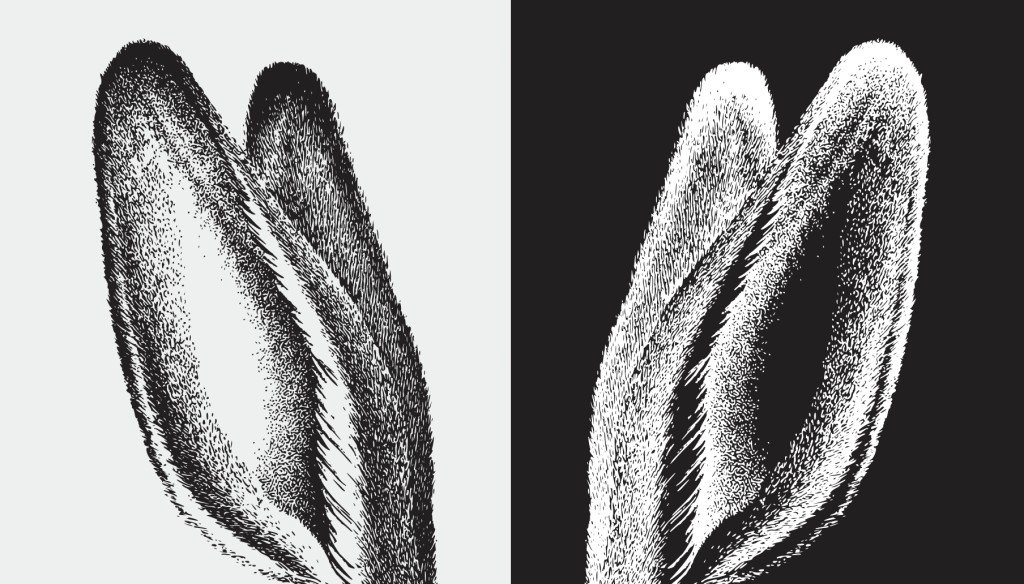
White Rabbit Red Rabbit, the text by Iranian playwright Nassim Soleimanpour that the performer reads on stage for the first time without ever having seen it, is at Teatro della Cometa from Tuesday, December 1 to Sunday, December 6, 2026: from Tuesday the 1st to Friday the 4th at 21:00, Saturday the 5th at 19:00, Sunday the 6th at 17:00. The theater is at Via del Teatro di Marcello 4, 00186 Rome, between Piazza Venezia and the Capitoline Hill. The stop the theater gives is Via del Teatro di Marcello, served by buses 30, 4, 118, 160 and 170, while the nearest metro is Colosseo, on line B, about five minutes' walk away. Seats are numbered and the full-price ticket costs 44 euros in the stalls, 34 in the parterre, 29 in the first gallery and 24 in the second gallery, according to the theater's official box office. You buy it on the official Teatro della Cometa website, which links to the venue's online box office.
Language: performed in Italian. No English version or English surtitles are announced.
White Rabbit Red Rabbit at Teatro della Cometa at a glance
White Rabbit Red Rabbit has six performances at Teatro della Cometa, from December 1 to 6, 2026, in the evening on weekdays and in the afternoon on Sunday.
Dates and times
Tuesday, December 1, Wednesday, December 2, Thursday, December 3 and Friday, December 4 at 21:00, Saturday, December 5 at 19:00, Sunday, December 6 at 17:00. These are the times published by the theater and its box office. The running time isn't given.
Prices by section
The official Cometa box office lists four sections, all with numbered seats: stalls at 44 euros, parterre at 34, gallery I at 29, gallery II at 24. These are full prices. Any reductions don't appear on the show's page and should be asked about at the theater.
Who's on stage
The page credits the text to Nassim Soleimanpour and doesn't publish the names of the performers for the Rome dates. That's consistent with the nature of the text: the actor who takes it on must not have read or seen it before, and the surprise extends to the audience too.
The genre
The box office classifies the show as drama. In reality it's something more unusual: a theatrical experiment, as the theater calls it, built entirely on the here and now, in which author, actor and audience discover the text at the same moment.
How White Rabbit Red Rabbit works
White Rabbit Red Rabbit rests on one rule: the performer takes on the text only once, without having read or seen it before, and discovers it in front of the audience.
A sealed envelope
According to Cometa's presentation, when the performer walks on stage they find a sealed envelope and a few props: a chair, a table, two glasses. Inside the envelope is the script. From that moment the actor reads, carries out, reacts, and the audience watches a first time that will never be repeated.
Author, actor and audience together
Cometa describes a device in which author, actor and audience share the same discovery. The author isn't in the hall but speaks through the text, the actor doesn't know what will happen, and the spectators are drawn in. The result, for the theater, is a radical form of theatrical relationship that turns the impossibility of direct contact into stage material.
Ironic and political
The theater presents the show as ironic, unpredictable and deeply political: a game against censorship and against every geographical and cultural distance. The political dimension isn't a speech but a condition: the text comes from an author who couldn't travel and who entrusted his voice to anyone, anywhere, who agreed to read it.
A theater without a director
White Rabbit Red Rabbit has no direction in the traditional sense, and no rehearsals: the theater's page lists only Soleimanpour's text. Everything that happens is written in the script and entrusted to the performer's reading. It's a reversal of theatrical habits, in which an actor usually reaches opening night after weeks of rehearsals: here opening night and the only performance coincide.
Why it's best not to find out too much
The actor's rule applies, in a way, to the spectator too. The show works better if you don't know how it unfolds. That's why the official presentations stop at the envelope, the chair, the table and the two glasses: the rest is to be discovered in the hall.
Nassim Soleimanpour, the author
Nassim Soleimanpour is an Iranian playwright born in Tehran on December 10, 1981. White Rabbit Red Rabbit, written in 2010, is the work that made him known around the world.
His training in Tehran
Soleimanpour is the son of a novelist. He studied set design at the University of Tehran and taught a course in computer-aided set design there, while continuing to write poems, stories and plays.
An author who couldn't leave
Teatro della Cometa recalls that Soleimanpour wrote the text at 29, when he was unable to leave his country. The reason: he had refused compulsory military service and couldn't leave Iran until 2013, when he got his passport. The text traveled, the author didn't.
The first time as a spectator
Soleimanpour saw his own show for the first time in 2013, at Brisbane Powerhouse, in Australia, during the World Theatre Festival. Until then White Rabbit Red Rabbit had been staged in many countries without its author being able to attend.
His other works
After White Rabbit Red Rabbit, Soleimanpour wrote Blind Hamlet, presented at the Edinburgh Fringe in 2014, and Nassim, in which actor and audience have to speak Farsi, which premiered in Edinburgh in 2017 and then went to Arts Centre Melbourne and, in December 2018, to New York City Center.
Awards
Among the awards are the prize for best new performance at the Dublin Fringe Festival in 2012, the Summerworks Outstanding New Performance Text Award in 2011 and The Arches Brick Award at the Edinburgh Fringe in 2011.
The story of White Rabbit Red Rabbit around the world
White Rabbit Red Rabbit premiered in 2011 and has been performed thousands of times, according to Teatro della Cometa, with performers ranging from Hollywood stars to actors from British theater.
The 2011 premiere
The first presentation took place in 2011 at the Edinburgh Fringe and at the Summerworks festival. Since then the text has traveled the world without needing a company: all it takes is an actor willing to walk on stage without knowing what awaits.
How many languages
The text has been translated into more than 20 languages, more than 30 according to Teatro della Cometa: it's one of the most translated contemporary plays.
New York and London
In 2016 the show ran at the Westside Theatre in New York for 42 weeks, with performers such as F. Murray Abraham, Bobby Cannavale, Whoopi Goldberg, Nathan Lane and Cynthia Nixon. In October 2024 it reached London's West End, at the @sohoplace theater, with a lineup of actors that included Jonathan Pryce, Michael Sheen and Jason Isaacs, and the run was extended several times.
Famous performers
Cometa recalls that John Hurt, Whoopi Goldberg, Nathan Lane, Stephen Rea, Sinead Cusack, Marcus Brigstocke and Dominic West took up the challenge, as did the director Ken Loach. It's a list that says a lot: the text attracts established performers precisely because it puts them in the position of a beginner.
Teatro della Cometa, home of White Rabbit Red Rabbit
Teatro della Cometa is a small historic hall at Via del Teatro di Marcello 4, created by Mimì Pecci Blunt in a small palazzo next to her residence on Piazza d'Aracoeli and inaugurated on November 17, 1958.
A little court theater
Mimì Pecci Blunt, niece of Pope Leo XIII and the moving spirit of one of the liveliest cultural salons between Paris and Rome, imagined a small theater inspired by the old court theaters. The hall has stalls, a parterre and two galleries, the same sections as the White Rabbit Red Rabbit box office, with chandeliers shaped like stars and comets that give the theater its name.
The facade and the interiors
In 1937 the Pecci Blunts bought the small palazzo and decided to keep its facade, transforming only the interiors. The work, entrusted to the engineer Stefano Gentiloni Silverj, stopped with the war. From 1956 the project passed to the architect Tomaso Buzzi.
The restoration and reopening
From 2020 the theater was restored to a design by Fabio Tudisco and Andrea Panzini: the brass doors, the chandeliers and the stage machinery by Buzzi and Virgilio Marchi came back, and the revolving stage started working again. Cometa reopened on May 25, 2025, with a visual identity by Studio Sonnoli and a documentation center on the historic archive.
The season
In the 2026/2027 season Cometa alternates theater, music and dance: after White Rabbit Red Rabbit the program includes, among others, Delay the Sadness by Sharon Eyal in April, the pianist Giorgi Gigashvili on April 18 and the recital by Rosa Feola and Vincenzo Rana on May 16, 2027.
How to get to Teatro della Cometa
Teatro della Cometa is at Via del Teatro di Marcello 4, between Piazza Venezia, the Capitoline Hill and the Theater of Marcellus, and the theater says it can be reached by bus, by metro and on foot.
By bus
The stop the theater gives is Via del Teatro di Marcello, served by lines 30, 4, 118, 160 and 170. For the trip back after the evening performance, check the times with ATAC's journey planner.
By metro
The nearest station the theater gives is Colosseo, on line B. From there you continue on foot for about five minutes toward Piazza Venezia.
By car
The theater is inside the Centro Storico ZTL, active Monday to Friday from 6:30 to 18:00 and Saturday from 14:00 to 18:00, while on public holidays access is free. There's no reserved parking: the theater recommends the paid parking in nearby streets or the parking areas toward Piazza Venezia and Via Petroselli.
On foot
From the historic center, Cometa is a few minutes from Piazza Venezia or the Capitoline Hill. If you're staying between the Pantheon and Campo de' Fiori, it's the simplest option.
Tickets for White Rabbit Red Rabbit
Tickets for White Rabbit Red Rabbit at Teatro della Cometa cost from 24 to 44 euros depending on the section, all with numbered seats, according to the theater's official box office.
Which section to choose
The show plays a lot on the relationship between the performer and the hall: the stalls and the parterre let you catch the actor's reactions as they discover the text. The galleries offer an overall view of the audience, which in this show is part of the stage.
Where to buy them
From the show's page on the Cometa website you reach the theater's online box office, where you choose date, section and seat. It's the official channel given by the venue.
Going back a second time
Since the show's rule requires a performer who doesn't know the text, if you go back a second evening you might see a different actor react in a different way. The names of the Rome performers aren't published: if you're interested, ask the theater.
How to plan your White Rabbit Red Rabbit evening
Cometa's location, between the Capitoline Hill and the Ghetto, lets you combine the show with a walk in the oldest part of the center and dinner in the streets around Portico d'Ottavia.
On weekdays
With the 21:00 start, dinner comes before, around 19:30, or after, looking for a place that serves late. A walk on the lit-up Capitoline Hill before the show is the best way to reach the hall.
Saturday, December 5
The 19:00 performance leaves the evening free. When you come out you're a few steps from the Ghetto and, across the river, from Trastevere: on weekends it's best to book dinner.
Sunday, December 6
With the 17:00 start, Sunday lends itself to a visit to the Capitoline Museums in the early afternoon, a few steps from the theater, and an early dinner after the show. On public holidays the ZTL isn't active.
The area around Teatro della Cometa
Teatro della Cometa is in one of the most history-packed spots in central Rome: everything is a few minutes away on foot.
The Capitoline Hill and the Aracoeli
Above the theater is the Capitoline Hill, with the square designed by Michelangelo and the Capitoline Cordonata. Next to it, the staircase leads to Santa Maria in Aracoeli, on Piazza d'Aracoeli, where the Pecci Blunt palazzo stands.
The Theater of Marcellus and the Ghetto
A few steps away is the Theater of Marcellus, and right after it Portico d'Ottavia, the gateway to the Jewish Ghetto of Rome.
Piazza Venezia and the Vittoriano
To the north, in two minutes, you reach Piazza Venezia, with the Vittoriano and Palazzo Venezia. It's the simplest landmark if you arrive on foot from Via del Corso or the Quirinale, and the square many bus lines leave from for the trip back after the show.
Toward the river
Heading down toward the Tiber you reach Tiber Island and, along Via Petroselli, the Mouth of Truth.
Where to eat before or after the show
Around Portico d'Ottavia and in the streets of the Ghetto there are trattorias and restaurants serving Roman and Roman Jewish cooking, a few minutes from Cometa.
On Friday
On Friday evening some kosher restaurants in the Ghetto close for Shabbat: if you choose the Friday, December 4 performance, check beforehand.
On the weekend
On Saturday and Sunday the options multiply toward Campo de' Fiori and, across the river, Trastevere. It's best to book, especially on Saturday evening.
Accessibility and practical tips
The restoration completed in 2025 improved accessibility at Teatro della Cometa, according to the theater, and the contact form on its website has an option dedicated to assistance for people with disabilities.
Before you buy
For specific needs, it's best to write to the theater before buying your ticket, to arrange seat and access. The galleries, by their nature, are less comfortable for people with limited mobility.
Recommended age
The theater doesn't give a minimum age. The text is ironic and political, built on a game with the audience: kids from middle school up follow it without difficulty, and for anyone studying theater it's a rare experience.
A curious fact about White Rabbit Red Rabbit at Teatro della Cometa, December 1 to 6, 2026
The most surprising curious fact concerns the author. Nassim Soleimanpour wrote White Rabbit Red Rabbit in 2010, when he couldn't leave Iran because he had refused compulsory military service, and the text began traveling the world without him: Edinburgh in 2011, then dozens of cities. Soleimanpour was able to see his own work for the first time only in 2013, at Brisbane Powerhouse in Australia, during the World Theatre Festival, after getting his passport. So for years the author was the only one who couldn't attend his own show, while actors in half the world read it in front of full houses. It's a situation the text itself seems to foresee: the author's voice reaches the hall through another person, and absence becomes the engine of the stage. The second curious fact is practical. The actor finds a chair, a table and two glasses on stage, and nothing else: it's one of the cheapest shows to stage in contemporary theater, and perhaps for that reason one of the most performed. The third concerns the hall. Cometa, with its two galleries and its chandeliers shaped like stars and comets, is a little court theater created for the refined repertoire of the Pecci Blunt salon: hosting such a bare device here creates a contrast that is worth the evening on its own.
Something nobody tells you about White Rabbit Red Rabbit at Teatro della Cometa, December 1 to 6, 2026
Nobody says it openly, but at White Rabbit Red Rabbit the audience isn't just watching. Cometa's presentation talks about a device in which author, actor and audience share the same discovery: whoever sits in the hall should expect to be drawn in, one way or another, by the unfolding of the text. No preparation is needed and there's nothing to fear, but if you'd rather stay invisible you can choose a gallery. The second thing concerns the performers. The theater doesn't publish the names of the actors for the Rome performances, and the reason lies in the show's own rule: the performer must not know the text before walking on stage. So whoever buys a ticket chooses the experience more than the star, and that changes the way you go to the theater. The third concerns word of mouth. People who have seen the show usually avoid describing it, so as not to spoil the surprise for others: it's a rare form of complicity, and worth respecting. When you come out, then, it's best to talk about how the actor felt, not about what happens in the envelope.
My advice for visiting White Rabbit Red Rabbit at Teatro della Cometa, December 1 to 6, 2026
The advice is to come to White Rabbit Red Rabbit without having read anything beyond the official presentation, and to choose a seat in the stalls or the parterre, where you can clearly see the performer's reactions as they open the envelope and discover the text. The whole point of the show is there: in the face of a person who doesn't know what they'll be saying a minute from now. As for the date, in our view the best is the Sunday, December 6 performance at 17:00, to combine with a visit to the Capitoline Museums or a walk on the Capitoline Hill and the Aracoeli terrace in the early afternoon: the ZTL isn't active on public holidays and the center is easier to reach. Alternatively, the weekday evenings at 21:00 are the most intimate. It's best to go into the hall a few minutes early and look at the chandeliers shaped like stars and comets, recovered in the restoration: the contrast between that little court theater and the bare stage with a chair, a table and two glasses is a good preparation for the show. And if you go with others, make a pact before you go in: at the end of the evening nobody tells the ending to anyone who wasn't there.
Another well-known fact, yet rarely mentioned
It's well known that White Rabbit Red Rabbit has had famous performers: Cometa itself mentions John Hurt, Whoopi Goldberg, Nathan Lane, Stephen Rea, Sinead Cusack, Marcus Brigstocke and Dominic West, as well as the director Ken Loach. It's less often mentioned how long and crowded the New York run was: the show stayed at the Westside Theatre for 42 weeks in 2016, with a different actor at every performance, including F. Murray Abraham, Bobby Cannavale, Darren Criss, Brian Dennehy, the opera singer Joyce DiDonato and Cynthia Nixon. And in 2024 the text reached London's West End for the first time, with Jonathan Pryce, Michael Sheen, Jason Isaacs and many others, and a run extended several times because it was sold out. Another rarely remembered fact concerns the Rome venue. Teatro della Cometa comes from the same family that in the 1930s had opened the Galleria della Cometa, founded in 1935 by Mimì Pecci Blunt with the poet Libero De Libero and closed in 1938, with the racial laws and the pressure of the Fascist press. A show born against censorship finds a home in a place whose history bears the mark of censorship: a coincidence that gives the evening extra weight.
The right photo to take at White Rabbit Red Rabbit at Teatro della Cometa, December 1 to 6, 2026
No photos during the show, and in this case the rule has an extra reason: the whole evening rests on discovery in real time, and a lit screen breaks the tension for everyone. The right photo is taken before, in the hall, when the lights are still on: the chandeliers shaped like stars and comets, recovered in the 2025 restoration, are the theater's most recognizable subject. Frame them from below, from the center of the stalls, with the gallery in the background, without flash and asking the staff first if it's allowed. If the stage is already set, a chair, a table and two glasses under the stage light make an image that tells the story of the show without giving it away. The second photo is outside. The facade of the small palazzo, which the Pecci Blunts wanted to keep, faces Via del Teatro di Marcello: crossing the street you can capture it with the Capitoline Hill behind it. The third, if you're coming out of the Sunday performance, is the Theater of Marcellus lit up, a few steps away, with its ancient arches and the palazzo built on top: an image that sums up Rome better than many others.
Some important events that happened here in history
The history of Teatro della Cometa begins before the theater. In 1935 Mimì Pecci Blunt founded the Galleria della Cometa with Libero De Libero, opened with an exhibition of drawings by Corrado Cagli, and in 1937 it opened a branch in New York. In 1938, with the racial laws and the pressure of the Fascist press, the gallery closed. Also in 1937 the Pecci Blunts bought the small palazzo where the theater would stand, but the war halted the work. In 1956 Mimì entrusted the project to Tomaso Buzzi, and on November 17, 1958 the theater opened with Musset's I capricci di Marianna, with Linda Chittaro as artistic director. From November 1959 the management passed to Remigio Paone, founder of Teatro Nuovo in Milan. In the 1960s, with Diego Fabbri, Cometa hosted Beckett, Ionesco and Stravinsky, with productions directed by Giorgio Strehler. On October 18, 1968, a short circuit near the stage started a fire that destroyed the hall. Mimì died in 1971, and the theater stayed closed for about 17 years. In 1986 her daughter Viviana reopened it with the engineer Giorgio Barattolo, who would run it for more than 30 years, with the reconstruction by the architect Alberto Filippi. In 2020 the restoration began, and on May 25, 2025 Cometa reopened with an international program of which White Rabbit Red Rabbit is one of the titles.
Who has passed through White Rabbit Red Rabbit at Teatro della Cometa, December 1 to 6, 2026
Cometa's history is full of names. In the 1930s, Corrado Cagli, Libero De Libero and many leading figures of Roman culture passed through Mimì Pecci Blunt's salon and gallery, and her Paris home on Rue de Babylone hosted Salvador Dalí, Paul Valéry and Jean Cocteau. Composers such as Goffredo Petrassi, Vittorio Rieti and Alessandro Labroca worked on her Concerti di Primavera, from 1933. The theater's stage saw the company of the opening night with Musset, the seasons of the impresario Remigio Paone and, in the Diego Fabbri years, the works of Beckett, Ionesco and Stravinsky and the productions of Giorgio Strehler. Behind the scenes worked the architects Tomaso Buzzi and Virgilio Marchi, then Alberto Filippi, Fabio Tudisco and Andrea Panzini. In the 2026/2027 season, among others, Metaphora Ensemble, Giorgi Gigashvili, Rosa Feola and Vincenzo Rana and Sharon Eyal's company have come or will come through here. From December 1 to 6, in spirit, a long line of performers who have opened the White Rabbit Red Rabbit envelope around the world also passes through, from Whoopi Goldberg to John Hurt, and with them Nassim Soleimanpour, the author who for years couldn't see his own text.
Frequently asked questions about White Rabbit Red Rabbit
When is White Rabbit Red Rabbit on in Rome?
White Rabbit Red Rabbit is on at Teatro della Cometa from December 1 to 6, 2026: from Tuesday the 1st to Friday the 4th at 21:00, Saturday the 5th at 19:00, Sunday the 6th at 17:00. There are six performances, according to the theater's website and official box office.
How much are tickets for White Rabbit Red Rabbit?
At Teatro della Cometa, full-price tickets for White Rabbit Red Rabbit cost 44 euros in the stalls, 34 in the parterre, 29 in gallery I and 24 in gallery II, all with numbered seats. You buy them from the online box office linked on the theater website.
Who is the actor in White Rabbit Red Rabbit at Cometa?
Teatro della Cometa doesn't publish the names of the performers for the Rome performances of White Rabbit Red Rabbit. The show's rule requires that the actor has never read or seen the text before walking on stage, and finds the script in a sealed envelope.
Who wrote White Rabbit Red Rabbit?
White Rabbit Red Rabbit was written in 2010 by the Iranian playwright Nassim Soleimanpour, born in Tehran in 1981. At the time he couldn't leave his country. The text premiered in 2011 and has been performed thousands of times around the world.
Does the audience take part in White Rabbit Red Rabbit?
White Rabbit Red Rabbit is built on the here and now: according to Teatro della Cometa, author, actor and audience share the same discovery. Involving the hall is part of the device, with no need for any preparation by the spectators.
How do you get to Teatro della Cometa?
Teatro della Cometa is at Via del Teatro di Marcello 4. The theater gives Via del Teatro di Marcello stop, served by buses 30, 4, 118, 160 and 170, and Metro B Colosseo, about five minutes' walk away. It has no reserved parking.
What language is the show in?
Teatro della Cometa's page doesn't say what language the Rome performances of White Rabbit Red Rabbit are in. The text has been translated into many languages, more than 30 according to the theater: to find out which language it will be read in, ask the venue's box office.
Final advice on White Rabbit Red Rabbit
White Rabbit Red Rabbit at Teatro della Cometa is, in our view, one of the most unusual evenings of Rome's December theater season: a text born from an author who couldn't travel, read for the first time by a performer who doesn't know what awaits, in a little court theater that has just been restored. The advice is to choose the stalls or the parterre, arrive without spoilers and let the sealed envelope carry you along. And, on your way out, keep the ending to yourself.
Article written by the editorial team of Tour Leader Pro, contact them for Private/Corporate/V.I.P. Tours and Experiences.
Planning a trip to Rome? The English guides for visiting the city are on ItalyPlanner.com.