Vite da strada at Teatro Belli, from November 5 to 8, 2026
https://www.estateromana.com/en/rome/trip-planner/vite-da-strada-at-teatro-belli-from-november-5-to-8-2026/
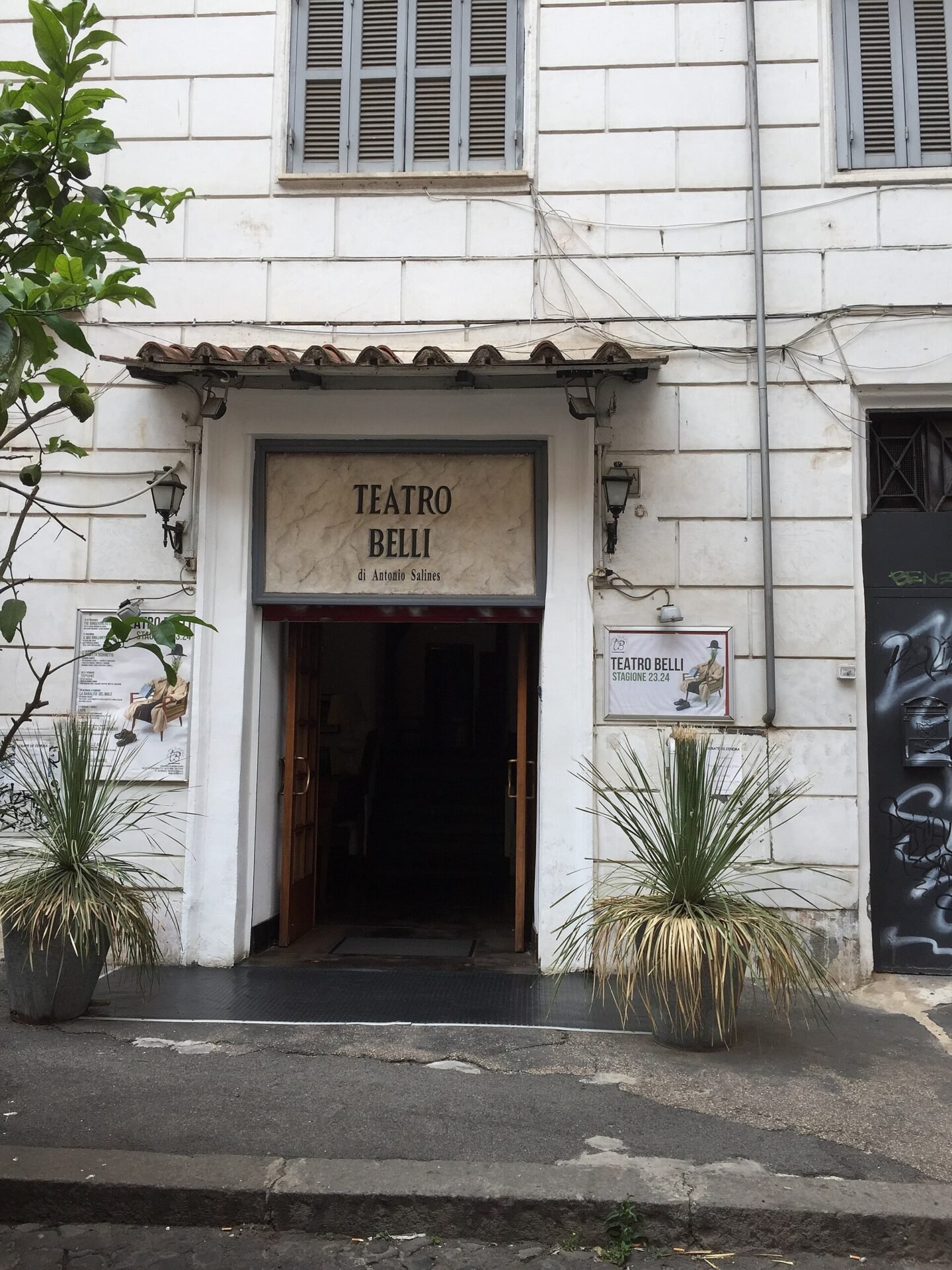
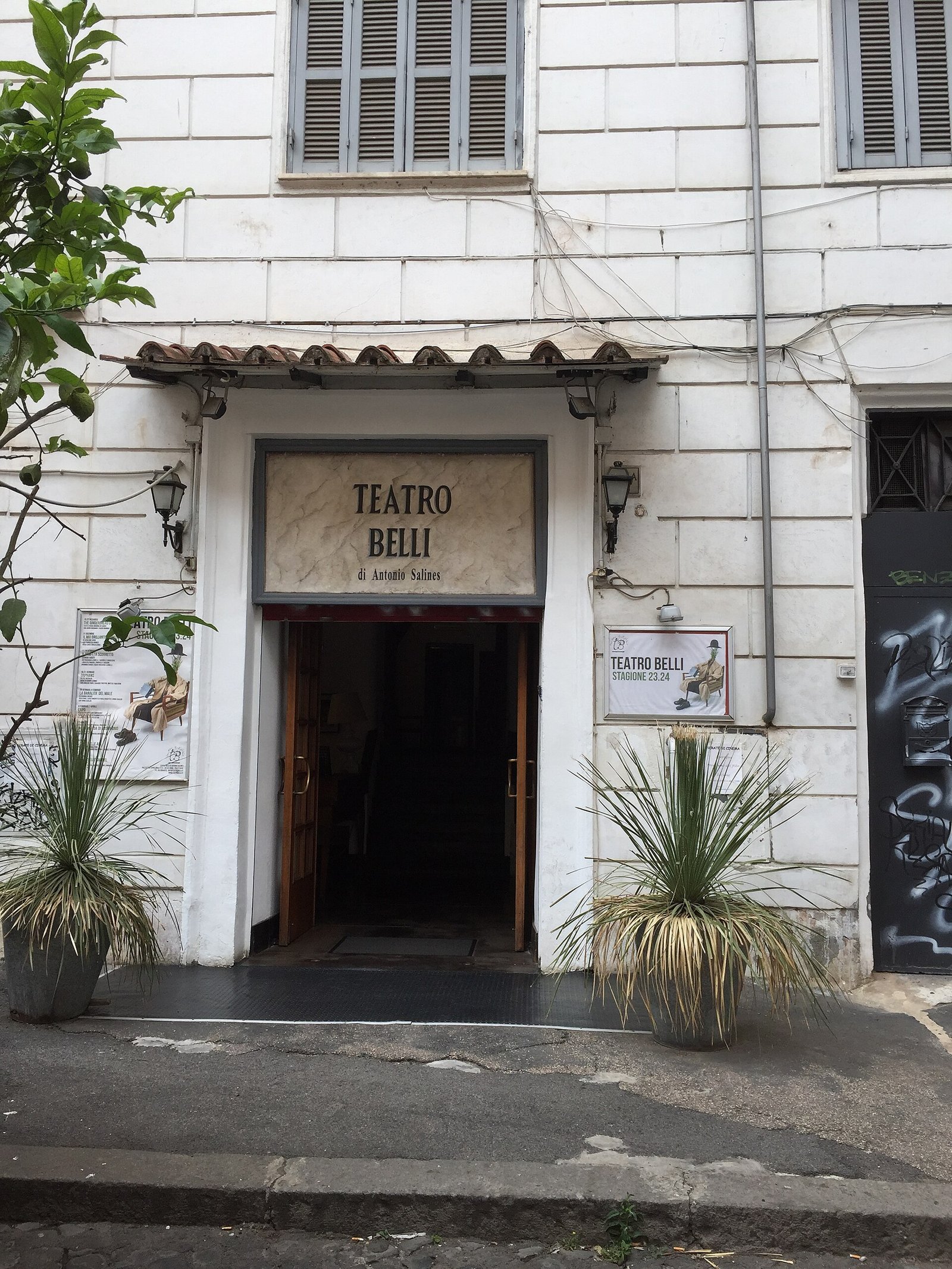
Vite da strada, a play by Tommaso Agnese with Moisé Curia, Manuela Zero and Francesco Della Torre, and with Paolo Maras, is on stage at Teatro Belli in Trastevere, at Piazza Sant'Apollonia 11/a, from Thursday, November 5, to Sunday, November 8, 2026: Thursday and Friday at 21:00, Saturday at 19:00, Sunday at 17:30. The official ticket costs 20 euros full price and 15 euros reduced, according to the page published by the theater, and is sold at the box office in Piazza Sant'Apollonia (phone 06 5894875, open Tuesday to Sunday before performances) or through the authorized presale network listed on the venue's official website. The Belli is in the lanes of Trastevere, a few steps from Piazza di Santa Maria in Trastevere, and the public transport route from your starting point can be calculated with the ATAC service. The production is by 4012 Libertine ST and Lizambri SRLS.
Language: performed in Italian. No English version or English surtitles are announced.
Four nights, four actors, a nightclub on the outskirts and three people on the margins looking for a way out. Vite da strada is a contemporary play that finds the right scale at the Belli: a hall where the audience sits almost in contact with the stage, and where a story of exposed bodies and humiliated dreams is watched up close, without filters. Below: the show, the leads, the history of the hall and directions for the evening.
Vite da strada at Teatro Belli in brief
Vite da strada runs at Teatro Belli for four performances, from November 5 to 8, 2026, and is one of the short-run titles of the 2026/27 season of the hall in Piazza Sant'Apollonia.
Dates and times of the four performances
On Thursday 5 and Friday November 6 the curtain rises at 21:00. On Saturday, November 7, at 19:00, a time that leaves room for dinner afterward in Trastevere. On Sunday, November 8, at 17:30, the most convenient performance for those coming from outside Rome or who prefer to get home early.
Prices published by the theater
The official page gives two rates: 20 euros for the full ticket, 15 euros reduced. The conditions for the reduced ticket are not detailed: ask the box office, by phone or when buying.
Who made the show
The play is by Tommaso Agnese. On stage are Moisé Curia, Manuela Zero, Francesco Della Torre and, with them, Paolo Maras. The production is by 4012 Libertine ST, whose name also appears under the title on the theater's page, and Lizambri SRLS.
The plot of Vite da strada
Vite da strada tells the encounter between three souls on the margins, Crisalide, Gaetano and Alfredo, in a nightclub on the outskirts where, according to the description, everything is bought and nothing is really listened to.
Crisalide
Crisalide is a 40-year-old stripper who dreams of singing. Her name already says a lot: a chrysalis is the creature at the moment of passage, closed in its cocoon waiting to become something else. Her whole path in the show is the search for that transformation.
Gaetano
Gaetano is described as a very handsome man, who has come to Rome looking for redemption. Beauty, in a place where bodies are merchandise, is both a resource and a trap: it's what makes him useful to the system and what risks consuming him.
Alfredo
Alfredo is a failed agent, trapped in debt and addiction. He's the figure of someone who, in that world, should have had a role of mediation and power, and is instead crushed as much as the others.
The nightclub
The space where their destinies intertwine is a nightclub on the outskirts, among neon-lit stages, exposed bodies and humiliated dreams. The three look for a way out of a system that, in the words of the description, looks at them only as long as they pay off.
The turning point
The fragile balance breaks when Crisalide decides to rebel and get on stage to sing, no longer to strip. It's the gesture the show turns on: using the same stage for another purpose, her own voice instead of her own body.
The themes
The theater's description speaks of a raw and poetic story about dignity, the price of desire and the possibility, even late, of choosing who you really want to be. Desire, exploitation, love and despair are the four words the text lines up to describe the characters' journey.
The title and the imagery of Vite da strada
The title Vite da strada, street lives, immediately points to the characters' condition: people who live by their wits, outside the structures that protect, in a place of passage.
The stage within the stage
A nightclub has a stage, lights, an audience. Bringing it into a theater means staging another show within the show, and asking the audience to ask itself what difference there is between the gaze of those sitting in the hall and the gaze of the club's customers. It's an old theatrical mechanism, and at the Belli, with the seats a few meters from the actors, it becomes particularly direct.
Song as redemption
Crisalide's dream is to sing. In contemporary theater a song is often the moment when a character says what they can't say with words: here it's even the gesture that breaks the order of things. Those who go to see the show can expect music to carry weight in the story.
Rome as a destination
Gaetano comes to Rome looking for redemption. The city, in the play, is therefore the place of promises and also that of the outskirts where promises are used up. Seeing the show in a Trastevere hall, a working-class district that has become a destination for visitors from all over the world, adds an echo to this double image.
The cast of Vite da strada
The cast of Vite da strada at Teatro Belli includes Moisé Curia, Manuela Zero and Francesco Della Torre, with the participation of Paolo Maras, and the casting of the roles is not given on the theater's page.
Four performers for three main characters
The characters described in the presentation are three, the performers four. Paolo Maras, credited with the formula «and with», probably has a role different from the three leads, but the detail is not published: the only certainty is that all four are on stage.
An independent production
4012 Libertine ST and Lizambri SRLS are the two companies producing the show. It's the typical formula of the independent companies that pass through the Belli: lean productions, designed for halls of this size, with small casts and contemporary scripts.
Moisé Curia: biography
Moisé Curia is an Italian actor born in Rossano, in Calabria, on January 1, 1991, known to the general public for the role of Ruggero in the TV series Braccialetti rossi.
His training
He got into acting as a child and began going on stage at around 14. After finishing school, at 18 he moved to Rome to study at the Accademia di arte drammatica Eutheca and then attended the Centro sperimentale di cinematografia. In those years he acted in Hamlet, Macbeth, Novecento and The Divine Comedy.
Theater
His stage résumé is long: Pinocchio and Futurismoritifù directed by Imma Guarasci, The Bacchae, Trilogia della villeggiatura, Tom Stoppard's Rosencrantz and Guildenstern Are Dead directed by Ian Sutton, Chekhov's A Marriage Proposal, The Tempest, Saint Joan, and a work with the Odin Teatret. He also directed Novecento in 2014 and Anche gli angeli hanno le ali in 2016.
His debut and Braccialetti rossi
In 2014 he made his TV debut with the miniseries Non è mai troppo tardi by Giacomo Campiotti and his film debut with La buca by Daniele Ciprì, alongside Sergio Castellitto and Rocco Papaleo. That same year fame came with Braccialetti rossi, also by Campiotti, in which he played Ruggero for 15 episodes until 2016.
From the Tavianis to Il paradiso delle signore
In 2015 the Taviani brothers cast him as Panfilo in Wondrous Boccaccio. In 2016 he starred with Stefania Rocca in Abbraccialo per me by Vittorio Sindoni, and in 2018 he was among the main characters of Uno di famiglia by Alessio Maria Federici. From 2021 to 2023 he played Marco Di Sant'Erasmo in the Rai 1 soap Il paradiso delle signore.
Recent series
His most recent productions include Adorazione by Stefano Mordini in 2024, the second season of Maria Corleone by Mauro Mancini and the Spanish production También esto pasará by Maria Ripol, both in 2025. On film he also acted in Ora tocca a noi, storia di Pio La Torre by Walter Veltroni.
Awards
In 2012 he received the critics' award at the Festival del monologo in Rogliano, in 2015 a Kinèo Giovani Rivelazioni special mention at the Venice Film Festival and the RdC Awards prize as breakthrough actor, and in 2016 the Guglielmo Biraghi award of the Nastri d'argento and the Vittorio De Sica award for Abbraccialo per me.
Teatro Belli: the hall in Piazza Sant'Apollonia
Teatro Belli is one of the historic halls of Roman experimental theater, at Piazza Sant'Apollonia 11/a, in Trastevere, and its official name today is Teatro Belli di Antonio Salines.
A church turned theater
According to the history published by the theater, the hall occupies what was once the church of the monastery of Sant'Apollonia, which gives the square its name, and it was already active as a theater in the second half of the 19th century. In the 1910s it became a movie theater called AMOR.
The nightclub years
In the 1950s and early 1960s the hall housed nightclubs, and the last one closed after a violent incident at the entrance. It's a detail that, for a show set in a nightclub, takes on a particular meaning.
Antonio Salines
In 1969 Antonio Salines took over the Belli, reduced to rubble, when there was talk of turning it into a restaurant. He restored it and reopened it in January 1972, remaining its artistic director for more than 40 years.
What the hall is like
The technical sheet describes a stage 9.25 meters wide and 5 deep, with a usable space of 8 by 4.54 meters, a proscenium of 6 by 4.30 meters, a manual curtain and a grid at 6.80 meters. The website stresses that every seat is in close contact with the stage.
A curious fact about Vite da strada at Teatro Belli, from November 5 to 8, 2026
The most surprising curious fact concerns the place. Vite da strada is set in a nightclub on the outskirts, among neon lights and exposed bodies, and it's staged in a hall that really was a nightclub in the 1950s and early 1960s. The history published by Teatro Belli says that the building in Piazza Sant'Apollonia, after being a monastery church, a 19th-century theater and a movie theater with the sign AMOR, housed a series of nightclubs, the last of which closed after a violent incident at the entrance. Then came abandonment, rubble, the idea of a restaurant, and finally in 1969 Antonio Salines, who restored the hall and reopened it as a theater in January 1972. Those sitting in the seats for Vite da strada are therefore in a space that, in another era, knew the same kind of night that Tommaso Agnese's play tells: the stage as a shop window, the audience watching, someone who would like to sing. No set could build an echo like that. Then there's a second level: the name of the 1910s movie theater, AMOR, is one of the four words with which the description sums up the show, desire, exploitation, love and despair. Coincidences that explain nothing, but that make the evening at the Belli different from the same story told elsewhere.
Something nobody tells you about Vite da strada at Teatro Belli, from November 5 to 8, 2026
What nobody says is that in small halls the choice of seat changes the show. At the Belli the front rows are very close to the stage: for a play set in a nightclub, with exposed bodies and a stage within the stage, sitting there means being almost in the position of the club's customers. For some it's the very reason to go to the theater, for others it can be uncomfortable. If you prefer a more detached overall view, choose the center of the orchestra. A second point concerns the time. Saturday at 19:00 is the most convenient performance for combining theater and dinner, and it's usually the one that fills up first, while Sunday at 17:30 is the best for those coming from outside Rome. Thursday and Friday at 21:00 are the most intimate evenings. Third: the ticket at 20 euros full price and 15 reduced is a modest price for Roman drama, and there are only four performances. Independent companies bring colleagues, friends and students to the hall, and the first nights can sell out quickly: a call to the box office at 06 5894875 avoids surprises. Finally, a practical tip: the first time, the lanes around Piazza Sant'Apollonia are confusing. The easiest landmark is Piazza di Santa Maria in Trastevere, and from there the theater's little square is a few steps away.
My advice for seeing Vite da strada at Teatro Belli, from November 5 to 8, 2026
The advice is to go knowing that it's a hard story, told however with a gaze that the description calls poetic. Vite da strada talks about exploitation, addiction, bodies treated as merchandise: it's not a comedy, but not a news report either. The emotional center is the dream of Crisalide, a 40-year-old woman who wants to sing, and the moment she decides to do it. Those who love theater that stands with the last will find a play in that tradition. Second tip: for those who know Moisé Curia only from television, from Braccialetti rossi or Il paradiso delle signore, it's the chance to see him where he started, on stage, with a stage résumé that begins at 14 and passes through Stoppard, Chekhov and the Odin Teatret. In a hall like the Belli acting has nowhere to hide. Third: arrive a quarter of an hour early and take the long way, passing through the basilica's square. Fourth: at the end of the performance, linger a few minutes in the square. In halls of this size the actors often come out to say hello, and exchanging a few words with those who have just performed is part of the pleasure of independent theater. Finally, in our view it's best not to read too much beforehand: the plot is simple and the strength of the show lies in the way it's acted.
Trastevere around Teatro Belli
Piazza Sant'Apollonia is a small open space among the lanes of Trastevere, a stone's throw from Piazza di Santa Maria in Trastevere, the square of the basilica and the fountain.
Santa Maria in Trastevere
The basilica of Santa Maria in Trastevere is the most natural stop before the show: the facade with its lit mosaics is the backdrop of the district.
Toward the Tiber
Heading down toward the river you come across Santa Cecilia in Trastevere, San Crisogono and, beyond the embankment, Tiber Island. To the north, Ponte Sisto connects the district to Via Giulia and Campo de' Fiori.
Museums and hills
The Museo di Roma in Trastevere is a few minutes' walk away. For those with Sunday free before the 17:30 performance, the climb to the Janiculum by way of San Pietro in Montorio is the most beautiful walk in the area.
How to get to Teatro Belli
Teatro Belli is at Piazza Sant'Apollonia 11/a, a few steps from Piazza di Santa Maria in Trastevere, and the route by bus, tram and metro from your starting point can be calculated on the ATAC service.
By public transport
The metro doesn't reach into Trastevere: those coming from far away usually combine metro and surface lines, or a regional train to Trastevere station. ATAC's route planner gives the best solution for the trip home in the evening too, when some lines run less often.
On foot from the center
From Campo de' Fiori you cross Ponte Sisto and in about 10 minutes you reach Piazza di Santa Maria in Trastevere, and from there Piazza Sant'Apollonia is a step away. It's often the fastest solution, because evening traffic can be heavy.
By car and taxi
Trastevere has large limited traffic zones and parking in the lanes is almost impossible. Leave the car outside the district and finish on foot, and by taxi ask to be dropped as close as possible to Piazza di Santa Maria in Trastevere.
Another well-known fact, yet seldom mentioned
Enthusiasts know it, but it's rarely said: Teatro Belli survived by a whisker. In 1969, when Antonio Salines took it over, the hall had been closed for some time, reduced to rubble, and there was talk of turning it into a restaurant. Salines, an actor and director, restored it and reopened it in January 1972, remaining its artistic director for more than 40 years and making it a historic hall of Italian experimental theater. That's why its official name today is Teatro Belli di Antonio Salines. It's a story typical of Rome in those years, when cellars and abandoned halls in the historic center became the places of new theater: small spaces, carved out of buildings born for other purposes, where people experimented with few resources. Many of those halls no longer exist, while the Belli has crossed the decades staying true to its function, and its program is still made up almost entirely of independent productions, contemporary scripts and companies seeking their audience. Vite da strada, produced by two small companies with a new play by Tommaso Agnese, belongs exactly to this line. A second seldom mentioned fact: the hall has a projector and a six by four meter screen at the back of the stage, and its technical sheet, however basic, lets companies work with lighting and video. In a show set among neon and lit stages, light is as much a storytelling tool as words.
The right photo to take at Vite da strada at Teatro Belli, from November 5 to 8, 2026
No photos during the show: in such a small hall the glow of a phone can be seen from the stage and breaks the performers' concentration. The right photo is taken outside, and there are three options. The first is the theater entrance in Piazza Sant'Apollonia at nightfall, with the sign and the Vite da strada poster: the little square is intimate, the streetlamp light falls low across the facades, and the shot conveys the idea of a neighborhood theater better than any promotional image. Shoot horizontally, including a stretch of paving. The second is the facade of Santa Maria in Trastevere seen from the fountain, a few steps away: the mosaics lit in the dark are one of the most recognizable images of Rome. In early November the sun sets early and by around 17:30 the square is already in evening light. The third, for those going to the Sunday performance, is the view from the Janiculum in the early afternoon, with the expanse of the center's rooftops in front of you. If you want a photo more tied to the show you can wait for the end of the performance: a photo with the actors in the square or the foyer, with their consent, is a common gesture and well received in independent halls.
Some important events that happened here
The history of Teatro Belli can be read in layers, like that of Trastevere. The first layer is religious: the hall occupies what was once the church of the monastery of Sant'Apollonia, which also gave the square its name. It's an origin the theater recalls in its official history, and it explains the intimate shape of the space. The second layer is 19th-century: in the second half of the century the building was already an active theater, and some of the great names of the Italian stage passed across it. The third layer is film: in the 1910s the hall became a movie theater with the sign AMOR. The fourth layer is nocturnal: in the 1950s and early 1960s nightclubs followed one another there, until the last one closed after a violent incident at the entrance. Abandonment followed. The fifth layer begins in 1969, when Antonio Salines took over the ruined building, destined to become a restaurant, and restored it, and the reopening in January 1972 made the Belli one of the halls of Roman experimental theater. Since then the theater has hosted companies, authors and directors for decades. The 2026/27 program, with short runs of a few days each, continues that vocation: after Vite da strada come Je te donnerai une voix by the Théâtre Français de Rome, Il calamaro, Danscirque by Blucinque, Sarfatti, Re_Mare, Luci rotte and the December fairy tales in English.
Who has passed through Vite da strada at Teatro Belli, from November 5 to 8, 2026
The stage in Piazza Sant'Apollonia has seen, between the 19th and early 20th centuries, some of the greatest names of Italian theater. The history published by the theater mentions Gustavo Modena, the great actor of the Risorgimento era, Ermete Novelli, one of the leading stage stars at the turn of the century, Leopoldo Fregoli, the inventor of quick-change performance, Lina Cavalieri, soprano and diva of the Belle Époque, and Ettore Petrolini, the Roman comedian who left his mark on 20th-century variety. After the 1972 rebirth, for more than 40 years the hall hosted actors, directors and authors of Italian experimental theater under the direction of Antonio Salines. The name of Lina Cavalieri, a singer celebrated for her voice and her beauty, has a curious echo with the story of Crisalide, who in a nightclub would like to be listened to for her voice and not looked at for her body. From November 5 to 8 the Belli stage welcomes Moisé Curia, a Calabrian actor trained in Rome between the Accademia Eutheca and the Centro sperimentale, the face of Braccialetti rossi and Il paradiso delle signore, already chosen by the Taviani brothers and awarded the Biraghi prize of the Nastri d'argento, Manuela Zero, Francesco Della Torre and Paolo Maras. The play is by Tommaso Agnese. In the following weeks the same hall will see Hélène Sandoval with the Théâtre Français de Rome and the companies of Il calamaro, Sarfatti and Re_Mare.
Planning the evening in Trastevere
The running time of Vite da strada is not given on the theater's page, and a production with four performers in a hall of this size still leaves time before or after for dinner or an aperitivo.
Thursday and Friday at 21:00
With a 21:00 start it's best to have an early dinner or go for an aperitivo and leave dinner for later. Trastevere stays lively until late and after 23:00 you can find a table in many places.
Saturday at 19:00
The Saturday time is the most convenient: you come out just in time for dinner, when the neighborhood is at its best. On Saturday night Trastevere is very crowded, and booking dinner is wise.
Sunday at 17:30
The Sunday performance lends itself to a full day: a walk on the Janiculum or a visit to a museum in the district, the show, then an early dinner.
Tickets for Vite da strada
Tickets for Vite da strada cost 20 euros full price and 15 euros reduced, according to Teatro Belli's official rates, and are sold at the box office in Piazza Sant'Apollonia or through the authorized presale network the theater lists on the show page.
The box office
The Belli box office is open Tuesday to Sunday before the performances start, the number is 06 5894875 and the email address botteghino@teatrobelli.it. For a hall of this size, a phone call is still the fastest way to find out how many seats are left.
Seats and visibility
In an intimate hall like this almost every seat has good visibility. The front rows are very close to the actors, and those who prefer an overall view should choose the central rows.
Where to eat before or after the show
Trastevere is one of the areas of Rome with the highest density of trattorias, pizzerias and osterias, and around Piazza Sant'Apollonia you'll find them on every corner: the hard part is choosing the ones Romans go to as well.
Trattorias and pizzerias
Moving a few streets away from the main square you find places with more honest prices. A slice of pizza or a supplì before the 21:00 performance is the quickest solution.
After the theater
After the evening performances the lanes between Piazza Trilussa and Santa Maria in Trastevere stay lively until late: for a drink and to talk about the show, it's the right area.
Accessibility and practical information
Teatro Belli is a historic hall carved out of an old building among the lanes of Trastevere: if you have reduced mobility, call the box office before buying to arrange access.
The district's paving
Trastevere's cobblestones are uneven and slippery after rain. In early November rain is frequent: comfortable shoes and a folding umbrella are the most practical advice.
With teenagers
Vite da strada deals with exploitation, stripping, debt and addiction: it's a show meant for an adult audience. Older teenagers used to the theater can follow it, but whoever brings them should know the themes beforehand.
The Teatro Belli program after Vite da strada
Teatro Belli's 2026/27 season continues with a series of short-run titles, each on stage for a few days, following the hall's typical formula.
November
From November 10 to 15, Je te donnerai une voix with the Théâtre Français de Rome, with performances in Italian and French. From November 17 to 19, Il calamaro. On November 21 and 22, Danscirque by Blucinque. From November 24 to 29, Sarfatti, produced by Golden Art.
December
From December 1 to 6, Re_Mare, from December 8 to 11, Luci rotte and, from December 17 to 20, the fairy tales in English by Extrateatro.
FAQ about Vite da strada
When is Vite da strada on stage at Teatro Belli?
Vite da strada is on stage at Teatro Belli from Thursday, November 5, to Sunday, November 8, 2026. On Thursday and Friday the curtain rises at 21:00, on Saturday at 19:00 and on Sunday at 17:30, according to the page published by the theater.
How much are tickets for Vite da strada?
Tickets for Vite da strada at Teatro Belli cost 20 euros full price and 15 euros reduced. They are sold at the box office in Piazza Sant'Apollonia, phone 06 5894875, or through the authorized presale network listed by the theater.
What is Vite da strada about?
Vite da strada tells the story of Crisalide, a 40-year-old stripper who dreams of singing, Gaetano, who came to Rome looking for redemption, and Alfredo, a failed agent deep in debt, whose destinies intertwine in a nightclub on the outskirts.
Who are the actors in Vite da strada?
The cast of Vite da strada at Teatro Belli includes Moisé Curia, Manuela Zero and Francesco Della Torre, with Paolo Maras. The play is by Tommaso Agnese, the production by 4012 Libertine ST and Lizambri SRLS.
Where is Teatro Belli?
Teatro Belli is at Piazza Sant'Apollonia 11/a, 00153 Rome, in Trastevere, a few steps from Piazza di Santa Maria in Trastevere. The public transport route can be calculated on the ATAC service.
Is Vite da strada suitable for teenagers?
Vite da strada at Teatro Belli is meant for an adult audience, because it deals with exploitation, addiction and exposed bodies in a nightclub. Older teenagers used to the theater can follow it, knowing the themes beforehand.
Who is Moisé Curia?
Moisé Curia, lead actor of Vite da strada, is an actor born in Rossano in 1991, trained at the Accademia Eutheca and the Centro sperimentale di cinematografia, known for Braccialetti rossi and Il paradiso delle signore and awarded the Biraghi prize of the Nastri d'argento in 2016.
The final word on Vite da strada
The advice is to book by calling the box office, to choose Saturday at 19:00 to combine theater and dinner or a weekday evening for a more intimate show, to arrive from Piazza di Santa Maria in Trastevere and to sit in the center of the orchestra if you want to watch the story with a little distance. In our view Vite da strada is a good opportunity to see contemporary independent theater with a lead known to TV audiences, in a hall that has been a church, a movie theater, a nightclub and a ruin before becoming a stage again. For more ideas on the district, the page on Teatro Belli and the one on what to see in Trastevere are the starting point.
Article written by the editorial team of Tour Leader Pro, contact them for Private/Corporate/V.I.P. Tours and Experiences.
Planning a trip to Rome? The English-language guides for visiting the city are on ItalyPlanner.com.