VII Muestra de Cine Mexicano at Casa del Cinema, from November 6 to 8, 2026
https://www.estateromana.com/en/rome/trip-planner/vii-muestra-de-cine-mexicano-at-casa-del-cinema-from-november-6-to-8-2026/
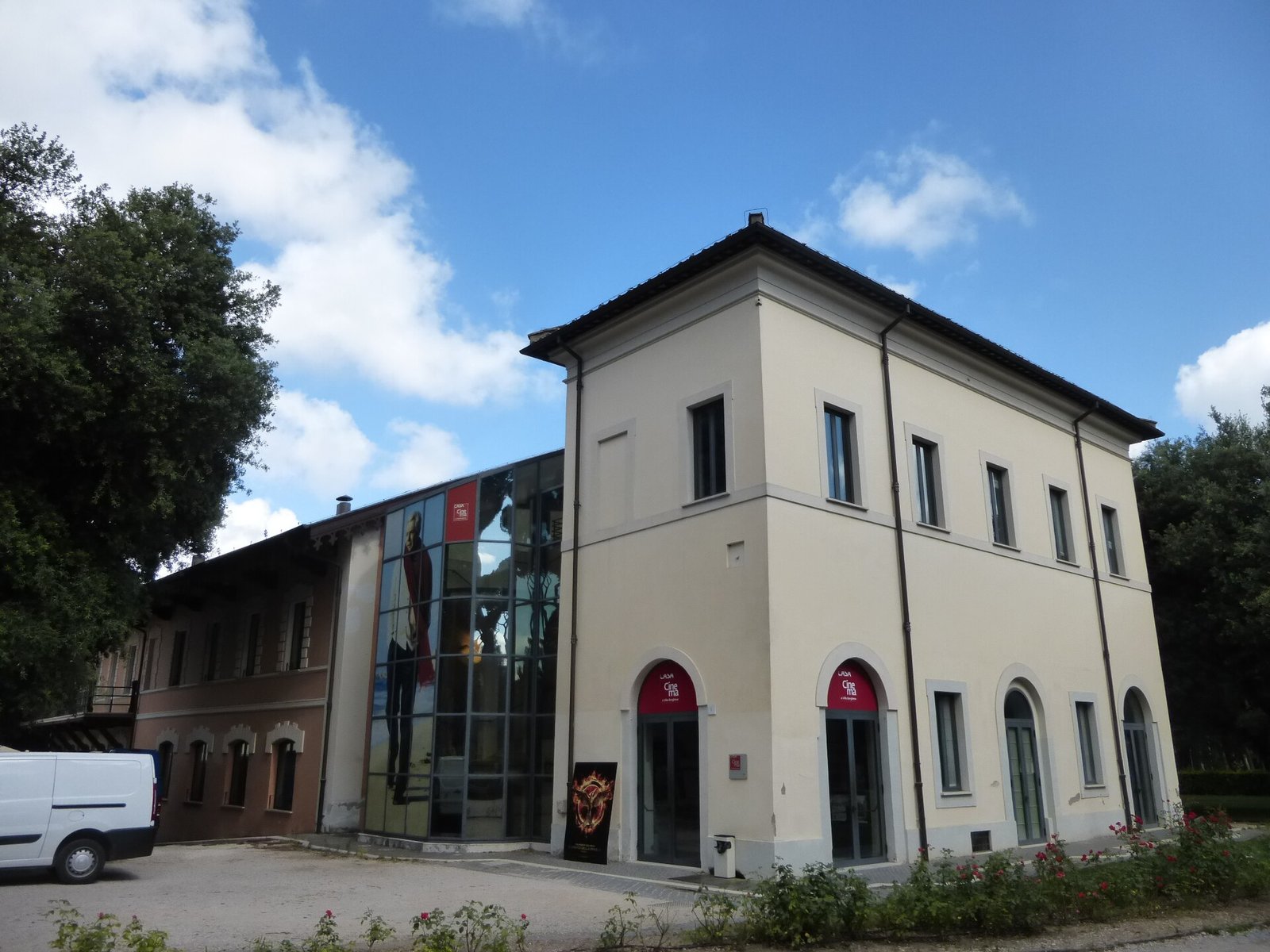
The VII Muestra de Cine Mexicano runs from Friday, November 6, to Sunday, November 8, 2026, at Casa del Cinema in Villa Borghese, at Largo Marcello Mastroianni 1 (00197 Rome), in Sala Cinecittà and Sala Fellini, with free entry while seats last. The title of this seventh edition is «Un cinema dal volto di donna», a cinema with a woman's face: the festival, produced by Ars Luminaria and organized by its founder, director and curator Cecilia Romo Pelayo, pays tribute to Mónica Lozano, associate producer of Alejandro González Iñárritu's Amores perros. At Casa del Cinema, free events require collecting a coupon starting 30 minutes before the start. The pedestrian entrance is from Piazzale del Brasile, Metro A stops at Spagna, Barberini and Flaminio, and buses 61, 89, 160, 490, 495, 590 and C3 serve the area. Titles and times are published on the official Casa del Cinema website and on the Muestra's channels.
Language: performed in Italian. No English version or English surtitles are announced.
A November weekend devoted to Mexican cinema and, in particular, to the women who have made it and make it. The Muestra de Cine Mexicano reaches its seventh edition with a precise choice, putting women's contribution to Mexico's cinema at the center, and with a guest of honor who has spanned a quarter of a century of that cinema: the producer Mónica Lozano, from Iñárritu's first film to the biggest box office hit in the history of Mexican cinema. In our view it's one of the most focused film series of Casa del Cinema's autumn.
The VII Muestra de Cine Mexicano in brief
The VII Muestra de Cine Mexicano lasts three days, from November 6 to 8, 2026, uses the 118-seat Sala Cinecittà and the 64-seat Sala Fellini, and has cinema made by women as its common thread.
A cinema with a woman's face
The official description gives the theme of the seventh edition: the focus on women's contribution to cinema. Directors, producers, screenwriters, actresses: the Muestra looks at all the female figures who have shaped Mexican cinema, in a festival that has a woman at its very top, the curator Cecilia Romo Pelayo.
Who makes it
The Muestra is produced by Ars Luminaria and organized by Cecilia Romo Pelayo, its founder, director and curator. Seven editions are a milestone for a national film series: they mean a loyal audience and constant selection work.
Free entry
Entry is free while seats last. Casa del Cinema's rules for free events require collecting a coupon at the box office from 30 minutes before the start, and entry to the hall is not allowed once the screening has begun.
The program
The titles in the program and the times of the individual screenings are published by Casa del Cinema on the event page and by the Muestra on its social media channels. Check them in the days before, because film series often complete their calendar close to the dates.
Mónica Lozano, the producer honored by the Muestra
Mónica Lozano Serrano is a Mexican producer: she started as associate producer of Amores perros in 2000 and since then has produced or co-produced more than 50 films and series, including No se aceptan devoluciones, considered the highest-grossing Mexican film in history.
The beginnings
Before film, from 1989 to 1994, Mónica Lozano worked in the Secretariat for Social and Cultural Development of the Mexico City government. She then joined the production company Altavista Films and founded Alebrije Cine y Video, known as Alebrije Producciones, with which she made her most recent films in Spanish and English.
Amores perros
Her first film as associate producer was Alejandro González Iñárritu's Amores perros, released in 2000 and winner of several Ariel awards. It's the film that, according to many scholars, opened the season of new Mexican cinema able to attract audiences beyond the country's borders.
No se aceptan devoluciones
In 2013 she produced Eugenio Derbez's No se aceptan devoluciones, considered the most-watched Mexican film ever at the box office. Her filmography also includes Arráncame la vida by Roberto Sneider, El violín by Francisco Vargas, Voces inocentes by Luis Mandoki, Las oscuras primaveras by Ernesto Contreras and three films by Arturo Ripstein.
The institutions
Mónica Lozano has chaired the Asociación Mexicana de Productores Independientes and, from 2019 to 2021, the Academia de Artes y Ciencias Cinematográficas. In those years she forged alliances such as the one with the Festival de Cine Iberoamericano de Huelva and signed an agreement to train film technicians in the crafts of costumes, props, set design, construction and lighting.
Mónica Lozano and women's cinema
The theme of the VII Muestra de Cine Mexicano, women's contribution to cinema, finds a concrete example in Mónica Lozano: the producer has worked to give visibility to other women authors and to narrow the gender gap in the Spanish-language film industry.
A platform for women authors
Mónica Lozano is one of the women who created a platform to promote other women creators, directors and screenwriters, supporting their work off the set too. It's one of the reasons the Muestra chose to honor her precisely in the edition devoted to women's cinema.
International co-productions
She has co-produced national and international films with directors such as Carlos Saura, with Buñuel y la mesa del rey Salomón, and her filmography also includes El mural, from 2010, and Icíar Bollaín's También la lluvia. In 2017 she got Antonio Chavarrías's El elegido premiered on Netflix.
National cinema on screens
For 20 years Mónica Lozano has fought for Mexican cinema to have room in its own country's movie theaters, both as president of the independent producers' association and in the No somos Hollywood forums. It's an issue that Italian audiences, used to distribution dominated by big titles, can understand well.
Amores perros, the film that changed Mexican cinema
Amores perros is the 2000 film directed by Alejandro González Iñárritu, first chapter of the so-called Trilogy of Death with 21 Grams and Babel, nominated for the Oscar for best foreign language film and winner of more than 50 awards.
Three stories in Mexico City
The story is made up of three tales set in Mexico City that, starting from a car accident, intertwine and determine the characters' fate. The constant presence of dogs works as a metaphor for the dual nature of humans, alter egos of the protagonists.
The title
In Spanish perros means dogs, but used as an adjective it means, roughly, bad: Amores perros are therefore bad loves, dog loves. The title already contains the tone of the film.
The start of a season
Amores perros has become an object of study from a technical and historical point of view, because it is believed to have marked the beginning of new Mexican cinema, a cinema able to be seen beyond its own borders. The Muestra's tribute to the associate producer of that film is a way of going back to the origin of a quarter century of cinema.
How to choose films at the Muestra
The VII Muestra de Cine Mexicano packs into three days a program built around a theme, women's cinema, and a tribute, to Mónica Lozano: two useful keys for choosing what to see.
Follow the tribute
Those who want to grasp the meaning of the festival should start from the titles linked to Mónica Lozano. Her filmography ranges from Arturo Ripstein's auteur cinema, with El evangelio de las maravillas from 1998 and La calle de la amargura from 2015, to Eugenio Derbez's popular comedy: any title chosen by the Muestra will tell a different piece of the same career.
Follow the women authors
Those who prefer the general theme should choose works directed or written by women. The program shows who directed and wrote each title: just scroll through it to find the works by women authors, whom the festival puts at the center of this edition.
One film a day
With three days and two halls, the most balanced formula is one film a day: Friday after work, Saturday in the afternoon, Sunday combined with a walk in the park. That way you see a significant part of the festival without turning the weekend into a marathon.
Casa del Cinema, home of the Muestra
Casa del Cinema is the City of Rome's space devoted to film inside Villa Borghese, at Largo Marcello Mastroianni 1, opened on September 18, 2004, in the restored building of the Casina delle Rose. Our page on Casa del Cinema in Villa Borghese describes its activity.
Halls and spaces
The Casa covers 2,500 square meters with three halls: the 118-seat Sala Cinecittà, the 64-seat Sala Fellini and the 46-seat Sala Gian Maria Volonté. In summer there is also the Teatro Ettore Scola, a 300-seat arena. The complex is completed by the Sergio Amidei and Cesare Zavattini exhibition spaces, the Salotto Suso, the Terrazza Anna Magnani, a study room and the bar restaurant.
Who runs it
Since 2023 it has been run by Fondazione Cinema per Roma, the body behind the Rome Film Fest, with artistic director Paola Malanga. Previously the Casa was run by Azienda Speciale Palaexpo and, from February 2011, by Zètema Progetto Cultura.
The directors
The idea of a Casa del Cinema in Rome came from the journalist and cultural manager Felice Laudadio, who directed it until 2011. After him came Caterina D'Amico, from 2011 to 2014, and Giorgio Gosetti, from 2014 to 2022.
A home for international film series
In autumn 2026 Casa del Cinema hosts a sequence of series devoted to foreign cinemas: the Ukrainian-Polish film festival at the end of October, the Euro Balkan Film Festival from October 31 to November 7, the Muestra de Cine Mexicano from November 6 to 8. The Muestra therefore overlaps with the last days of the Balkan festival.
The history of the building: a villa, a dairy, a dance hall
The Casa del Cinema building was Villa Manfroni Bernini, right by the Aurelian Walls near Porta Pinciana, bought by the Borghese princes in 1833.
Canina and the restaurant
At the time the building had an older part, opening onto a loggia, and a lower rustic structure. The architect Luigi Canina restored it and the Borghese turned it into a restaurant.
From the 1849 battle to the dairy
Damaged in 1849 during the battle between the defenders of the Roman Republic and the French troops, the building became a cowshed and a shop selling milk and cheese. The dairy survived the villa's transfer to the city in 1903.
Casina delle Rose and La Lucciola
In the 1930s it was a luxury restaurant, the Casina delle Rose, as a 1932 postcard shows, and in the Dolce Vita years the dance hall La Lucciola. From 1976 unauthorized works brought everything to a halt, and the building fell into ruin amid lightning and vandals, until the recovery that began in 2001.
A curious fact about the VII Muestra de Cine Mexicano at Casa del Cinema, from November 6 to 8, 2026
The tastiest curious fact concerns the title of the film where Mónica Lozano's career began. Amores perros plays on a double meaning: perros in Spanish means dogs, but as an adjective it means more or less bad. The loves in the title are therefore bad loves, dog loves, and dogs really do run through the whole film as alter egos of the characters. A festival honoring that film's associate producer is held, by coincidence, in a venue with a special relationship with animals: since March 2024 Casa del Cinema has organized some screenings you can attend with your dog, with a dedicated row and a mat in front of the seats.
The second curious fact concerns the building. In 1849, after the battle between the Roman Republic and the French, the villa that now houses the halls became a cowshed, and the dairy stayed open for decades. From cowshed to movie theater: a path that a Mexican director might perhaps have found worthy of a film. The third is in the numbers: No se aceptan devoluciones, produced by Mónica Lozano in 2013, is considered the most-watched Mexican film ever. The producer honored by the Muestra therefore made both the auteur film that opened new Mexican cinema and the biggest popular success in its history.
Something nobody tells you about the VII Muestra de Cine Mexicano at Casa del Cinema, from November 6 to 8, 2026
What almost nobody says is that the Muestra falls on the same days as the final part of the Euro Balkan Film Festival, also hosted at Casa del Cinema until November 7. For two days, Friday 6 and Saturday 7, the same venue hosts two free series, and the two main halls will be in high demand. The advice is to check carefully which hall is showing your chosen title and to be at the box office when coupon distribution opens, 30 minutes before the start. On Sunday, November 8, with only the Muestra on the program, things should be calmer.
Second little-known thing: Casa del Cinema shows films in the original language with subtitles, unless otherwise announced. For a Mexican series that means films in Spanish, subtitled: an excellent opportunity for those studying the language. Third thing: the pedestrian entrance is from Piazzale del Brasile, near Porta Pinciana, and not from the Pincio side. If you arrive from Piazza del Popolo you have to cross the park, and in November, at 18:00, it's already dark.
My advice for visiting the VII Muestra de Cine Mexicano at Casa del Cinema, from November 6 to 8, 2026
The advice is to choose at least one screening linked to the tribute to Mónica Lozano. The producer has spanned 25 years of Mexican cinema, from the auteur cinema of Iñárritu and Ripstein to the popular comedy of Eugenio Derbez, and one of her films explains better than any introduction how that cinema has changed. If the program includes a meeting with her or with the curator Cecilia Romo Pelayo, that's the event to put first: the chance to hear from those who produce cinema, that is, those who decide which stories reach the screen.
Second tip: make Sunday, November 8, a full day in Villa Borghese. In the morning a museum in the park, the Museo Pietro Canonica or the Museo Carlo Bilotti, in the early afternoon a walk to the Pincio, then the Muestra. After the screening, the Casa del Cinema Cine Bistrot gives a 20% discount on the aperitivo every day from 18:30 to 21:30 to those showing a screening ticket: ask at the counter if the festival coupon counts the same way. In our view it's the most pleasant way to end the weekend.
How to get to Casa del Cinema
Casa del Cinema can be reached with Metro A at the Spagna, Barberini and Flaminio stations and with buses 61, 89, 160, 490, 495, 590 and C3, and the pedestrian entrance is from Piazzale del Brasile.
By metro
Spagna station is the most convenient: from the exit toward Villa Borghese you walk up to Porta Pinciana. From Barberini you go up Via Veneto. From Flaminio you enter from Piazzale Flaminio and cross the park.
By bus
The lines listed by Casa del Cinema are 61, 89, 160, 490, 495, 590 and C3, and on Sunday, November 8, a holiday, the 120F and 150F also run. For the trip home at night there are the night buses N1 and N25. ATAC's route planner gives the fastest route.
On foot
From Piazza del Popolo you climb to the Pincio and cross Villa Borghese, and from Via Veneto you pass Porta Pinciana and arrive in a few minutes.
By car
Parking near Villa Borghese is scarce, especially on weekends. Public transport or a taxi is better.
Entry, coupons and house rules
The VII Muestra de Cine Mexicano has free entry while seats last, and the coupon is collected at the Casa del Cinema box office, open every day from 10:00 to 22:00, starting 30 minutes before each screening.
The box office
The box office and info point is at Largo Marcello Mastroianni 1. Casa del Cinema answers at 06 40401604, from 12:00 to 22:00, and at casadelcinema@romacinemafest.org.
In the hall
No entry once the screening has started, suitcases and bulky bags are not allowed, phones must be switched off and filming is forbidden. Any screenings restricted to adults are flagged in the program.
Paid programming
If you want to add a film from the regular program, a Casa del Cinema ticket costs 5 euros, with a 20% discount for students, under-25s, over-65s and MIC Card holders, and university students in film and media courses pay 3 euros until December 31, 2026.
Villa Borghese around the Muestra
Casa del Cinema is inside Villa Borghese, an 80-hectare public park bought by the State in 1901 and opened by the city in 1903. The whole park is described in the page on Villa Borghese.
Museums a few steps away
Galleria Borghese requires a reservation, while the Museo Pietro Canonica and the Museo Carlo Bilotti are easier to fit into an afternoon.
With children
The Bioparco and the Casina di Raffaello are a few minutes away: a morning in the park with the kids and a film in the afternoon, if suitable for their age, make a full Sunday.
Where to eat
At Casa del Cinema there's the Bar Ristorante Cast, Cine Bistrot, run by Food Service: from 18:30 to 21:30 a screening ticket gives you a 20% discount on the aperitivo.
Inside Casa del Cinema
The bistro has renovated rooms and a new menu. With a university ID card the discount on food and drinks is 20%, with the MIC Card 10%.
Outside the park
Beyond Porta Pinciana, toward Via Veneto and Ludovisi, there are bars and restaurants of every kind. On the other side, heading down toward Piazza del Popolo and Via di Ripetta, the choice is just as wide, but the walk through the park is long.
Accessibility
Casa del Cinema states that it guarantees accessibility for people with disabilities, and for paid screenings tickets for people with disabilities are sold only at the box office with Law 104 certification.
Concessions
For paid programming there is a free ticket for those assisting a person with a disability who cannot walk and a 20% reduced ticket for the person with a disability. For the Muestra, which is free, the coupon is always collected at the box office.
Information
For specific needs, contact Casa del Cinema before the screening, at 06 40401604.
Another well-known fact, yet seldom mentioned
It's known that Amores perros introduced Alejandro González Iñárritu to the world. It's much less often remembered that behind that film there was also an associate producer, Mónica Lozano, in her first job in that role, and that the same producer would later make No se aceptan devoluciones, considered the most-watched Mexican film ever. Directors tell the story of cinema, but producers make it possible: by dedicating its tribute to a producer, the Muestra reverses the habit of celebrating only those who direct.
There's a second fact well known in the industry and seldom mentioned outside it. From 2019 to 2021 Mónica Lozano chaired the Academia de Artes y Ciencias Cinematográficas, the main academy of Mexican cinema, after leading the association of independent producers. In those years she signed an agreement to train technicians in the crafts of film, from costumes to set construction, and worked for more room for national cinema in Mexican movie theaters. It's a career that combines production and cultural policy, two worlds that rarely meet in one person. Third fact: Amores perros is considered the first chapter of Iñárritu's Trilogy of Death, completed by 21 Grams and Babel.
The right photo to take at the VII Muestra de Cine Mexicano at Casa del Cinema, from November 6 to 8, 2026
The right photo is the facade of Casa del Cinema with the Muestra poster, taken in the early afternoon when the November light is still high enough to light up the pale plaster of the old Casina delle Rose. With the sign of Largo Marcello Mastroianni in the frame, the image brings together the Mexico of the festival and the Italian cinema that gives the place its name. If the tribute to Mónica Lozano includes a meeting, a photo of the guest with the audience, before or after the screening, is the most precious keepsake.
No photos in the hall during the film: the rules forbid any filming and anti-piracy checks are active. The second image, for those with time, is on the way to Casa del Cinema: the avenues of Villa Borghese in November, with fallen leaves and the low light of late afternoon. The third is at the Pincio, the terrace over Piazza del Popolo, at sunset: from there you can see the dome of St. Peter's, and Sunday, November 8, is the best day to go up before the screening.
Some important events that happened here
The history of Casa del Cinema begins with the Borghese. In 1833 the princes bought Villa Manfroni Bernini, near Porta Pinciana, which Luigi Canina restored and turned into a restaurant. In 1849, during the battle between the defenders of the Roman Republic and the French troops, the building was damaged and became a cowshed and dairy. In 1901 the State bought Villa Borghese, and in 1903 it handed it over to the city, which opened it to Romans, while the dairy stayed open. In the 1930s came the luxury restaurant Casina delle Rose, in the Dolce Vita years the dance hall La Lucciola.
In 1976 unauthorized works brought the building to a halt, and it stayed abandoned for 25 years. In 2001 the recovery began, and on September 18, 2004, Mayor Walter Veltroni inaugurated Casa del Cinema, championed by Felice Laudadio. In 2011 management passed to Zètema, and in 2023 to Fondazione Cinema per Roma, which renovated the facade and halls. For Mexican cinema the key year is 2000, when Amores perros came out, and in 2013 came No se aceptan devoluciones. From November 6 to 8, 2026, Casa del Cinema hosts the seventh edition of the Muestra, with the tribute to the producer of those two films.
Who has passed through the VII Muestra de Cine Mexicano at Casa del Cinema, from November 6 to 8, 2026
First of all, Casa del Cinema has seen those who built it: Felice Laudadio, who had the idea and directed it until 2011, Walter Veltroni, who inaugurated it, Caterina D'Amico and Giorgio Gosetti, directors until 2022, and today the artistic director Paola Malanga. In the 19th century the architect Luigi Canina worked on the building for the Borghese. The spaces of the Casa honor Federico Fellini, Gian Maria Volonté, Ettore Scola, Sergio Amidei, Cesare Zavattini and Anna Magnani, and the square in front of the entrance Marcello Mastroianni.
In autumn 2026 its halls host the Rom-E conference, the Ukrainian-Polish film festival, the Euro Balkan Film Festival and the Muestra. With the seventh edition come Cecilia Romo Pelayo, founder and curator of the festival, the production company Ars Luminaria and, through the tribute, the work of Mónica Lozano, the producer who has worked with Alejandro González Iñárritu, Arturo Ripstein, Carlos Saura, Icíar Bollaín, Luis Mandoki and Eugenio Derbez. It's hard to imagine a broader portrait of Mexican cinema of the last 25 years.
November in Rome: the Muestra weekend
The VII Muestra de Cine Mexicano takes up the first full weekend of November, from Friday 6 to Sunday 8: a quiet period for the city, after the All Saints' long weekend.
The weather
In November Rome alternates clear days and rain. To walk to Casa del Cinema through the park, bring an umbrella and comfortable shoes.
Short days
In November darkness comes early and the park, after sunset, has few people around. When leaving the evening screenings, the route toward Porta Pinciana and Via Veneto is the best lit.
The nearby film series
On the same days the Euro Balkan Film Festival closes, and the following week, on November 14 and 15, Casa del Cinema hosts the As Film Festival.
FAQ about the Muestra de Cine Mexicano
When does the Muestra de Cine Mexicano 2026 take place in Rome?
The VII Muestra de Cine Mexicano runs from Friday, November 6, to Sunday, November 8, 2026, at Casa del Cinema in Villa Borghese, in Sala Cinecittà and Sala Fellini. Titles and times are published by Casa del Cinema on the event page.
Is entry to the Muestra de Cine Mexicano free?
Yes, entry to the VII Muestra de Cine Mexicano is free while seats last. At Casa del Cinema the coupon for free events is collected at the box office starting 30 minutes before each screening.
Who is Mónica Lozano?
Mónica Lozano, honored by the VII Muestra de Cine Mexicano, is a Mexican producer: associate producer of Amores perros in 2000, she has produced or co-produced more than 50 films and series, including No se aceptan devoluciones, and chaired the Academia de Artes y Ciencias Cinematográficas from 2019 to 2021.
What is the theme of the seventh edition?
The VII Muestra de Cine Mexicano is titled «Un cinema dal volto di donna» and focuses on women's contribution to cinema. The festival is produced by Ars Luminaria and organized by its founder and curator Cecilia Romo Pelayo.
Are the films in Spanish?
Casa del Cinema normally shows films in the original language with subtitles, unless otherwise announced. For the Muestra de Cine Mexicano the subtitle language of each title is given in the program.
How do you get to Casa del Cinema?
Casa del Cinema, home of the Muestra de Cine Mexicano, is at Largo Marcello Mastroianni 1, inside Villa Borghese. You get there with Metro A to Spagna, Barberini or Flaminio and with buses 61, 89, 160, 490, 495, 590 and C3, and the pedestrian entrance is from Piazzale del Brasile.
The final word on the Muestra de Cine Mexicano
The VII Muestra de Cine Mexicano is a short, free festival with a clear theme, cinema made by women, embodied by a producer who has shaped a quarter of a century of Mexican cinema. The advice is to choose a screening from the tribute to Mónica Lozano, arrive early for the coupon and make Sunday, November 8, a day in Villa Borghese. In our view, for those who love Latin American cinema, it's an event worth the trip to Porta Pinciana.
Article written by the editorial team of Tour Leader Pro, contact them for Private/Corporate/V.I.P. Tours and Experiences.
Planning a trip to Rome? The English-language guides for visiting the city are on ItalyPlanner.com.