Vasco Rossi, Residency Show at Stadio Olimpico in Rome, June 2027
https://www.estateromana.com/en/rome/trip-planner/vasco-rossi-residency-show-at-stadio-olimpico-in-rome-june-2027/
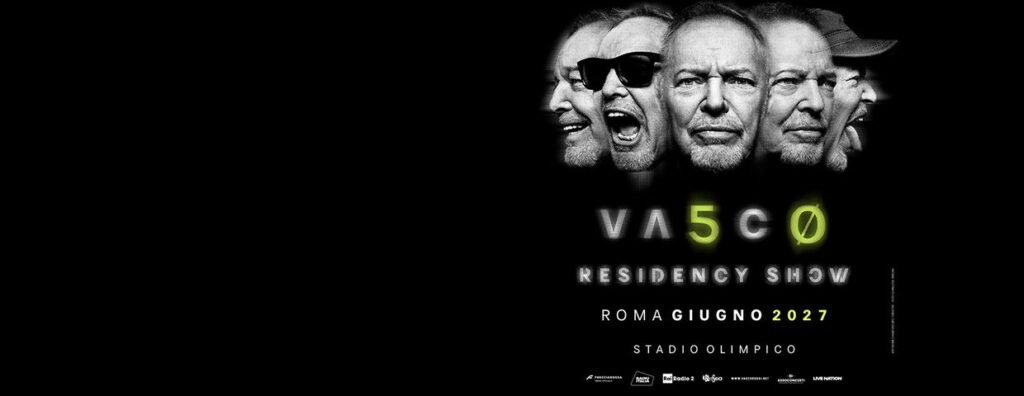
Vasco Rossi: 10 nights at Olimpico. From June 6 to 25, 2027, on June 6, 7, 10, 11, 15, 16, 19, 20, 24 and 25, Vasco Rossi celebrates 50 years of career with the longest residency ever staged in an Italian stadium. 10 concerts in the same venue, in the same month, with the same stage set up only once and left there for three weeks: it isn't a tour passing through Rome, it's Rome becoming for 20 days the sole venue of a national event. Ticket holders come from all over Italy, and the city knows it.
The most honest thing to say right away is this: a series of 10 consecutive dates in the same stadium changes how you should approach the evening. It isn't the single June concert when the city grinds to a halt for one night and then forgets. It's a month in which the neighborhood around Foro Italico lives in big-event mode, with barriers left up, fenced-off lawns, traffic rerouted on and off and a number of people moving around that, added up over the 10 nights, comfortably tops half a million. Reports on the opening of presales spoke of over 550,000 tickets sold out in a few hours: it's the figure that has circulated since, and it's consistent with 10 nights in a venue that for concerts runs above 60,000 paying spectators.
Who he is. Born in Zocca, in the province of Modena, on February 7, 1952, Vasco Rossi is the figure who more than anyone else has held together half a century of Italian popular music without ever becoming reassuring. 18 studio albums, from his 1978 debut to Siamo qui in 2021, more than 850 concerts in his career and an audience that press estimates put at over 14 million spectators in total. For eight years he held the world record for paying spectators at a solo concert, with the more than 225,000 people at Modena Park on July 1, 2017. He has 24, actually 25 albums that reached number one, a record that in 2025 let him overtake Mina. These are numbers usually quoted to close an argument. I use them to open one, because they explain why 10 dates at Olimpico aren't a commercial gamble but an arithmetic observation.
The venue. Stadio Olimpico, inside the Foro Italico complex, at the foot of Monte Mario, is the biggest sports venue in Rome and the historic home of big-event concerts in the city. You get there by tram 2 from the Mancini stop, on foot from Ponte Duca d'Aosta, by bus from the Prati and Piazzale Clodio area, or by car along the Lungotevere, with all the warnings you'll find further on. The approved capacity for soccer is around 70,000 seats. For concerts the setup changes, because the field is opened and part of the stands behind the stage is sacrificed.
10 nights, not 10 concerts: what really changes
The difference between a tour and a residency isn't a subtlety for insiders. On a normal tour, the stage is set up, used once or twice and taken down quickly because it has to be loaded onto trucks and taken to the next city. This imposes strict limits: the structure must be modular, light, repeatable, and every set element has to be designed thinking about how many hours it'll take to put up and take down. A residency turns the reasoning around. If the stage stays up for three weeks, you can afford a bigger, heavier, more complicated structure, because the setup cost is spread over 10 nights instead of one.
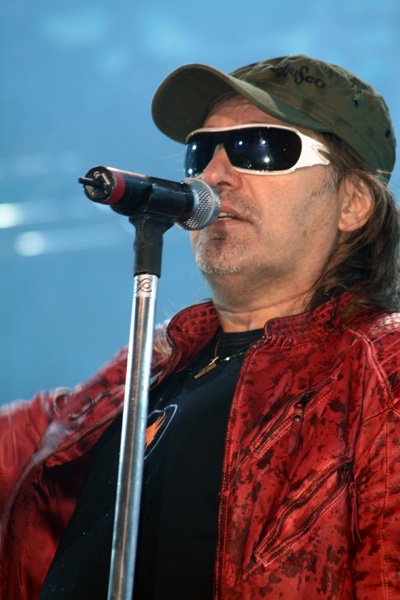
This translates into things the spectator notices even without knowing anything about production: bigger screens, a more elaborate lighting rig, sound tuned to that specific stadium and not to an average of 10 different stadiums. Anyone working in live music knows that the second or third concert in a venue always sounds better than the first, because the technicians have had time to correct reflections off surfaces, adjust the delays between the speaker towers, and understand how the wind coming in through the opening above the Curva Sud behaves. With 10 dates, that margin for fine-tuning becomes huge.
Then there's a less technical and more human effect. In a residency, the audience on the first nights and on the last ones isn't the same audience. The opening dates draw the diehards, the ones who bought tickets in the first minutes of presale and know by heart even the songs never played live. The final dates, historically, gather those who decided later, those who organized in groups, those who bought from someone who could no longer come. It's not a value judgment, it's an observation: if you can choose, know that the emotional temperature of an opening night and that of a closing night are different. Both are worth it, but in different ways.
The 10 dates, one by one, and how to choose
The dates are grouped in pairs: June 6 and 7, 10 and 11, 15 and 16, 19 and 20, 24 and 25, 2027. It's a classic pattern in residencies and it isn't random. The pair makes it possible to use the stage already set up and tested for two nights in a row, then leave two or three days off to rest the artist, the crew and the turf, which suffers despite the protective platforms. The days off also serve the city: they give neighborhood residents a few normal evenings and give the cleaning services time to tidy up the outdoor areas.
If you ask me, the first date of each pair has one advantage and one disadvantage. The advantage is the tension: the first night after a break always has a slightly more nervous energy, both on stage and in the crowd. The disadvantage is that the sound setup gets refined during the evening, and in the most difficult positions in the stadium, typically at the far sides of the curve, the result can be less balanced. The second date of each pair is the one I recommend if you're coming from out of town and have only one chance: it sounds better, the staff have already oiled the entry and exit mechanisms, and the special transportation machine runs more smoothly.
Then there's the question of the day of the week. In 2027, June 6 falls on a Sunday and June 25 on a Friday. Weekday evenings have a more local audience on average and a faster outflow. Weekend ones draw people from outside Rome and stay more congested until late at night. If your goal is to see the concert and get back to sleep without an odyssey, go for a date in the middle of the week. If instead you want the full evening, with the line stretching from the afternoon and the neighborhood turning into one big gathering, then the first and last nights are for you.
One last observation on the two ends. June 6 is the very first night: it's the evening when everything happens for the first time, with the load of surprises that brings and the charge of people who have been waiting for months. June 25 is the close of a residency that by then will already have written its story, and the final nights of big cycles have an established tradition of surprises, guests and extended sets. I'm not promising you anything, because nobody can promise you anything a year ahead, but I know how to read the habits of the people who organize these events.
A curious fact about Vasco Rossi, Residency Show at Stadio Olimpico in Rome, June 2027
The curious fact almost nobody links to this event concerns radio. In 1975, in Zocca, a village of a few thousand souls in the Modena Apennines, Vasco Rossi founded with his childhood friend Marco Gherardi one of the first independent radio stations in Italy, Punto Radio. It's not a decorative biographical detail: it's the moment a 23-year-old discovers that a voice can go into a microphone and come out of a thousand sets at once. That discovery, the multiplication of the voice, is exactly what 10 nights at Olimpico take to the extreme.
The link between that village radio and a 70,000-seat stadium is tighter than it seems. Independent radio in 1975 was born from a court ruling that had cracked the national broadcasting monopoly, and its point was to occupy a space that had been forbidden before. Foro Italico, for its part, was built for an idea of organized, disciplined masses, and for decades hosted nothing but sport and ceremonies. Rock concerts arrived there late, only after the 1990 rebuild, and occupied a space that hadn't been theirs. There's a curious symmetry between the boy who takes a piece of the airwaves and the singer who takes 10 nights in a stadium built for something else entirely.
I'll add a second layer to this curious fact, because it conveys the idea better. On the radio Vasco worked as a disc jockey and talked a lot, and his way of talking, poised between familiarity and provocation, has remained the backbone of his relationship with the audience. When, in the middle of a full stadium, he stops and starts talking instead of singing, he isn't improvising: he's using a craft learned in front of a village microphone 50 years earlier. Watch those moments carefully, because they're the part of the show that can't be replicated in a studio or reproduced on a live record.
And there's a third thing, small but telling. In 2023 the Gazzetta Ufficiale announced the minting of a €5 coin dedicated to Albachiara, issued in June 2024 and then voted coin of the year in a poll by Istituto Poligrafico e Zecca dello Stato. A song written at the end of the 1970s by a small-town boy has become a State object, complete with face value. It's hard to find a more precise indicator of how far he has come.
50 years of career, told without the usual hagiography
His recording debut came in 1978 with an album with a very long and deliberately anti-rhetorical title. In quick succession came the records that built the character: Non siamo mica gli americani! in 1979, Colpa d'Alfredo in 1980, Siamo solo noi in 1981, Vado al massimo in 1982, Bollicine in 1983. In six years, a singer-songwriter from Emilia went from local curiosity to national phenomenon, and he did it while the Italian record industry was still set up around categories he didn't respect: he isn't a politically committed songwriter, he isn't an anglophile rocker, he isn't a melodic singer.
Then came the hard years, the ones sanitized biographies tiptoe through: trouble with the law, hospital stays, the long recording break between C'è chi dice no in 1987 and Liberi liberi in 1989, and the even longer one between Liberi liberi and Gli spari sopra in 1993. Those who have followed him since then know that decade left marks on the repertoire, and that the Vasco of the 1990s is musically different from the one of the 1980s: leaner, more constructed, with a production that looks to international rock instead of chasing it.
The 2000s were the years of his consecration in stadiums. Stupido hotel in 2001, Buoni o cattivi in 2004, Il mondo che vorrei in 2008, Vivere o niente in 2011, Sono innocente in 2014, and finally Siamo qui in 2021, the 18th studio album. In parallel, a series of tours that progressively raised the bar of what's considered possible in Italy: the attendance record registered by industry data for the 18 dates of a 2008 tour, the 600,000 spectators of the 2015 cycle, the 700,000 of 2022, the 450,000 over 11 dates in 2023, the 600,000 of 2024 with seven consecutive nights at the Milan stadium, the 610,000 of 2025.
The 2026 tour, which started on May 30 in Rimini and ended a month later in Udine, brought the total tickets sold in the Vasco Live cycle to over 3 million. That's the immediate context for the 2027 Rome residency: not a comeback after an absence, but the next step in a progression that has never stopped. If you expect a nostalgic event, with the artist waving and saying thank you, you're probably misreading it.
A clarification that counts double here. The count of 50 years starts from 1977, the year of the first single, not from 1978 and the debut album. It's the same criterion used in 2017 to celebrate 40 years of career at Modena Park. If someone tells you the math doesn't add up, it does: only the chosen starting point changes.
Something nobody tells you about Vasco Rossi, Residency Show at Stadio Olimpico in Rome, June 2027
Nobody tells you that the real problem of an evening at Olimpico isn't getting in, it's getting out. Entry is spread over several hours, because the gates open in the late afternoon and people arrive in waves, some at 16:00 to be under the stage and some at 21:00 because they had a numbered seat. The exit, on the other hand, happens all at once: 70,000 people moving in the same quarter hour toward four or five possible directions, in an area that has one main bridge, a couple of alternative bridges and only one reference tram line.
The result is that the time you spend inside the stadium after the last note matters more than you'd think. If you dash for the exit during the encore, you end up exactly at the point of maximum compression, because you get there with everyone else who had the same idea. If instead you stay seated for 20 minutes, let the first wave go and then get up calmly, you leave in completely different conditions. The difference between the two choices is 20 minutes of waiting against 50 of crush.
The second thing nobody mentions is the choice of exit direction. Instinct sends everyone toward Ponte Duca d'Aosta, because it's the natural exit, the one in line with the main entrance, the one everyone used to arrive. But on the other side of the complex there's the option of heading north to Milvian Bridge, which is further but infinitely less crowded, and which on summer evenings has a life of its own, with bars open until late and a square where you can wait for the city to deflate over a drink. From Ponte Milvio, then, the transportation options are different and less saturated.
Third thing, and only regulars know this: on concert nights, the tram stop closest to the stadium is the one you should avoid on the way back. It's where everyone wanting to go back toward the center gathers, and it's where lines form that would discourage anyone. Walking three stops in the opposite direction from the flow, and boarding there, often means getting a seat and leaving before those still waiting at the improvised terminus.
Fourth and last: the residency creates a memory effect in the neighborhood. By the third or fourth night, the managers of the bars and restaurants around Foro Italico have already figured out the rhythms and organize accordingly, with extended hours and simplified menus. The opening nights are the ones with the most disorganization and the longest lines. The middle and final nights are the ones when the neighborhood works like a well-oiled machine. If you can choose, choose accordingly.
How to get to Olimpico, and how to get back
Foro Italico occupies the right bank of the Tiber, at the foot of Monte Mario, in a position that looks peripheral on paper and is actually a handful of kilometers from Piazza del Popolo. The problem isn't the distance, it's that the area is served by a transportation network designed for the daily flow of a residential neighborhood, not for moving tens of thousands of people in two hours.
The main connection is still tram 2, which leaves from Piazzale Flaminio, right next to the Flaminio stop on metro line A, and runs up Via Flaminia to the Mancini stop. From Mancini to the stadium it's about 10 minutes on foot, crossing Ponte Duca d'Aosta and turning onto the mosaic avenue. It's the route taken by the vast majority of the audience, and it's also the most scenic, because it takes you into Foro Italico through the monumental entrance.
The second option, less used and therefore more comfortable, goes through Piazzale Clodio. You get there on several buses from the Prati area and from the Lepanto metro station, and from there you continue on foot for about 20 minutes up and down, or on the lines heading up toward the Foro. On concert nights the service is usually reinforced, but the operational details are announced in the days just before and it's best to check them then.
Third option, the one I recommend if you're arriving by train from outside Rome: the regional railway linking Piazzale Flaminio to Prima Porta, with stops at Monte Antenne and Due Ponti. It doesn't drop you in front of the stadium, but it lets you avoid the jammed Via Flaminia completely and approach from the north side, where pedestrian flow is thinner.
On cars I'll be blunt: on the 10 nights of June 2027, driving to the stadium is a terrible idea. The Lungotevere is closed in stretches, official parking is scarce and reserved, illegally parked cars are towed with a diligence not seen the rest of the year. If you really have to drive, leave the car very far away, for example in the Ponte Milvio area or near the tennis stadium, and cover the last stretch on foot. It costs 20 minutes of walking and saves you two hours of maneuvering.
On taxis and car services, a practical recommendation: don't expect to find one at the exit. On big event nights, the area in front of the stadium is closed to private traffic and pickup points are moved even several hundred meters away. If you need a ride, arrange it in advance and set a meeting point far from the perimeter, preferably on a street other than the one leading straight to the main bridge.
My tip for Vasco Rossi, Residency Show at Stadio Olimpico in Rome, June 2027
There's only one tip and I ask you to take it seriously: arrive early and use the extra time to be at Foro Italico, not in line. They're two different things and most people confuse them.
Arriving early, for almost everyone, means lining up in front of the gate at 16:00 and staying there until it opens, baking in the June sun in the hope of gaining three meters under the stage. If you're a diehard of the field under the stage, that's fine, it's a legitimate choice and I know that for many the line is part of the experience. But if you have a numbered seat in the stands or the curva, that line gives you absolutely nothing: your seat is yours, it's waiting for you, nobody is taking it away.
What you should do, then, is arrive in the area around 17:00 or 18:00 and spend two hours inside Foro Italico, one of the most impressive and least visited places in Rome. The black and white mosaic avenue, the Carrara marble obelisk almost 18 meters tall, Stadio dei Marmi with its 60 statues donated by the Italian provinces, the swimming complex, Luigi Moretti's Palazzina della Scherma: it's an open-air museum of 20th-century architecture, and on summer evenings the light falling on it around 19:00 is the best of the year.
The second part of the tip is about water and food. Inside the stadium the food stands on concert nights work under pressure and the lines eat up precious time. Eat before, outside, calmly. Drink plenty of water in the preceding hours, because June in Rome is hot even after sunset and a full stadium raises the perceived temperature by several degrees. Bring an empty container and fill it at the water points, keeping in mind that the rules on what you can bring in are published by the organizers in the preceding days and change from event to event.
Third element: shoes. It seems trivial and yet it's the thing that ruins the most evenings. Between the walk there, the hours standing during the concert and the return, on an evening at Olimpico you easily walk seven or eight kilometers on asphalt, concrete and stone. The new sandals bought for the occasion are the fastest way to remember this evening for the wrong reasons.
Fourth: if you're in a group, decide in advance on a meeting point for afterward, and pick one far away. Cell phones, in a full stadium and in the minutes of the outflow, work badly or not at all: the network is saturated and calls drop. A physical meeting point, agreed beforehand, a few hundred meters from the perimeter, solves a problem that every year leaves dozens of people wandering around aimlessly for an hour.
Where to eat, where to drink and where to wait
The area right around Foro Italico isn't a restaurant district: it's a sports complex surrounded by fast-moving roads and residential buildings. This means that on concert nights the few businesses there get stormed and it's worth widening your radius.
The best direction, for food and atmosphere, is north, along the Tiber, to the Ponte Milvio area. It's just over a kilometer and a half from the stadium, a good 20 minutes on foot, and offers a density of bars and restaurants Foro Italico doesn't have. On summer evenings the square in front of the bridge is a natural meeting point, and the practical advantage is that you get there walking against the main flow.
The second useful direction is the Della Vittoria district, toward Piazzale Clodio and Viale Angelico. It's the residential Rome of the 1930s, orderly and not very touristy, with neighborhood trattorias that do their job without pretension and with prices unaffected by the proximity of an event. From there to the stadium it's a 25-minute walk, or you can take a bus.
The third direction, if you want to pair the evening with something more, is the Flaminio district, home to MAXXI and Auditorium Parco della Musica. In June both have summer programs, and tram 2 links them directly to the Mancini stop. If you come to Rome for the concert and want to fill the afternoon without going too far, that's the most convenient solution.
A warning about prices. On big event nights, some businesses right next to the stadium use price lists different from the usual ones, and the mobile kiosks that pop up along the approach routes aren't exactly cheap. It isn't illegal and it isn't even surprising, but it's worth knowing before you find yourself paying for a bottle of water what you'd pay for a coffee sitting down in the center.
Another well-known fact, yet one that's rarely mentioned
The fact is this: Stadio Olimpico, as we know it, is less than 40 years old, and before 1990 it wasn't considered a suitable place for concerts.
The history of the venue starts much earlier, in 1928, when Enrico Del Debbio began building what would be inaugurated in 1932 as Stadio dei Cipressi, a bowl made with terracing and earth fill, designed for 100,000 spectators and built in a much more modest version. Between 1933 and 1937 Luigi Moretti revisited the project, turning it into a stage backdrop for the regime's events. The real recovery came between 1949 and 1953, with Cesare Valle, Carlo Roccatelli and Annibale Vitellozzi, who made it Stadio dei Centomila. The current name came after Rome was awarded the 1960 Olympic Games.
For its whole first life, though, Olimpico was an open stadium, with only the stand facing Monte Mario protected by a roof. In that configuration, the acoustics for a concert were terrible: the sound scattered upward and sideways, and the reflections were unpredictable. It was only with the almost complete rebuild of 1990, for the soccer World Cup, that the venue got the Teflon roof that overturned its design and that, as an unplanned side effect, finally made it usable for live music.
The first concert came in July 1991: a joint event with Miles Davis and Pat Metheny, on a stage set up in front of the Curva Sud, in front of about 20,000 people. The first Italian to take that stage was Zucchero, in June 1993, during the Urlo tour, with 10,000 spectators. Numbers that make people smile today and that say everything about how quickly the scale of events has grown in 30 years.
The most significant fact, and one almost never mentioned when talking about concerts at Olimpico, is precisely this jump: it went from 20,000 people in the curva in 1991 to whole stadiums open to the public in just over a decade, and this happened because stage technology changed, not because the audience changed. Modern self-supporting structures make it possible to put speaker towers and screens in positions that were unthinkable in 1991, and as a result to sell tickets in sections that before wouldn't have seen or heard anything.
The field, the platforms and why stadium concerts are a battle
There's a permanent tension, in every stadium in the world, between those who organize concerts and those who have to deliver a playing field in decent condition. At Olimpico this tension is especially sharp because the venue is publicly owned, is managed by the national Olympic committee, and hosts the home matches of the city's two soccer teams as well as international rugby fixtures.
The technical compromise involves laying rigid platforms over the turf, which spread the weight and allow vehicles to pass and the audience to stand. The problem is time: a field covered for more than a few consecutive days suffers from lack of light and air, and in June, with high temperatures, the damage speeds up. That's why long residencies are almost always scheduled at the end of the sports season, when the field can be completely replaced right afterward.
It's the same logic that in 1998 allowed the most crowded concert ever recorded in Italy. Claudio Baglioni, on June 6 of that year, filled Olimpico with 82,000 tickets sold, plus about 8,000 complimentary entries, for a total of about 90,000 attendees. That record was possible because the president of the Olympic committee exceptionally authorized a huge star-shaped stage 112 meters long and 72 wide, set up inside the stadium, and he authorized it precisely because the field was going to be replaced that summer. With that setup the audience wasn't limited to the Curva Sud, as at previous concerts, but filled the whole venue.
I'm telling you this because it explains something that also applies to June 2027: the setup of a stadium concert isn't a purely artistic decision. It's the result of a negotiation between the production, the venue manager, the public security authorities and the sports calendar. When you read that a date has been added or moved, behind it there's almost always one of these factors, not a whim.
The right photo to take at Vasco Rossi, Residency Show at Stadio Olimpico in Rome, June 2027
First, which photo not to take: the one of the stage seen from your seat, with the lights burning out the sensor and 500 raised phones in the foreground. You take it because everyone does, you look at it once the next day and never open it again. It's not your fault, it's that a phone can't compete with a stadium lighting rig and the distance flattens everything.
The right photo is a different one and is taken before you go in. Viale del Foro Italico, the black and white mosaic avenue that leads from the obelisk toward the stadium, fills on concert nights with people walking in the same direction. If you stand at the side, level with the obelisk, and wait for the moment the low June sun cuts the avenue diagonally, you get a photograph that tells the event much better than any shot of the stage: a crowd moving inside monumental architecture, with the mosaic tiles drawing the perspective and the obelisk as a vertical reference. It's a photo that works in black and white and in color, and nobody else in your group will have it.
The second photo worth looking for is from above, and you take it without going into the stadium. Going up toward Monte Mario, for example from the area overlooking the complex, you see the whole lit bowl inside the green of the hill. It's not an official spot and I won't give you precise directions because traffic arrangements change on those evenings, but anyone who knows Rome knows that the Monte Mario side offers views of the stadium from several points. That's the photograph that explains why a 10-night residency can be seen from half the city.
Third option, if you want to stay inside: photograph the audience, not the stage. Turn toward the opposite curva when one of the songs everyone sings starts, and capture the raised arms and lit phones drawing a constellation inside the bowl. It's an image the phone can handle, because the light sources are diffuse rather than pinpoint, and it conveys the scale of the event without trying to compete with the accredited photographers under the stage.
A short technical note. If you really want to try photographing the stage, turn off the flash, which at that distance only lights up the back of the head of the person in front of you, and lock the exposure on a lit area before shooting, otherwise the phone tries to brighten the dark and gives you a washed-out image. And record short videos instead of long ones: 10 seconds of a chorus are worth more than four minutes of a whole song you'll never rewatch.
Some important events that happened here in history
Foro Italico and Stadio Olimpico have a layering of events few places in Italy can match, and it's worth knowing before you go in for a concert, because it changes the way you look at the architecture around you.
The starting point is the Games of the XVII Olympiad in 1960, for which the stadium took the name it still bears. They were the Olympics that put Rome on the world's TV screens, and at Foro Italico they saw the opening and closing ceremonies as well as the athletics events. They're also the Olympics in which the marathon finished at the Arch of Constantine with Abebe Bikila's barefoot win, an episode that didn't happen at the stadium but belongs to the same week and the same city.
In 1968 Foro Italico hosted the European soccer championship, in 1974 the European Athletics Championships, in 1975 the 8th Universiade, in 1980 the European soccer championship again, in 1983 the European Aquatics Championships and in 1987 the World Athletics Championships. Each of these events left traces in the venue, in the form of renovations, additions and changes.
1990 is the watershed year. For the soccer World Cup the stadium was in effect almost entirely rebuilt, brought to about 85,000 covered seats by raising the Tevere and Monte Mario stands by six meters and rebuilding the curve, and fitted with the Teflon roof that changed its appearance forever. It was handed over a few weeks behind schedule, and hosted the tournament's final. The following year, in 1991, it hosted the second leg of the UEFA Cup final.
In the following years Foro Italico kept accumulating big events: the World Aquatics Championships in 1994 and again in 2009, the first Military World Games in 1995, the Beach Volleyball World Championships in 2011, a group and a quarterfinal of the European soccer championship played in 2021, the European Aquatics Championships in 2022. It should also be remembered that the venue has hosted more than one European Cup final, and that the complex includes the Centrale tennis court, home every May of the Rome international tournament.
On the music side, the story starts late but grew dense quickly. After the inaugural concert by Miles Davis and Pat Metheny in July 1991 and Zucchero's Italian debut in June 1993, came the years of the Live Rock Festival, which in 1996 brought David Bowie and Tina Turner to Olimpico. The 1998 attendance record with Claudio Baglioni remains the absolute benchmark for a concert in Italy. From 2005 on the stadium became a regular stop on big international tours, and some artists return with the regularity of season ticket holders.
Who has passed through Vasco Rossi, Residency Show at Stadio Olimpico in Rome, June 2027
The question has two answers, and they should be kept separate. The first concerns who has passed through this stadium before this residency, and helps you understand what lineage it belongs to. The second concerns Vasco Rossi's specific relationship with Olimpico, which is a long story full of numbers.
Let's start with the lineage. Among foreign artists, the most regular visitors to the venue are Depeche Mode, with five appearances between 2006 and 2023, most recently with the Global Spirit and Memento Mori tours. Right behind, with four shows, are U2, the first in 2005 and the most recent in 2017 with the Joshua Tree Tour. Even earlier, in 1996, the Live Rock Festival had brought David Bowie and Tina Turner. Among Italians, the record for appearances belongs to Luciano Ligabue, with 13 concerts between 1996 and 2023, while the all-time attendance record for a single night remains Claudio Baglioni's in June 1998.
Now to Vasco. His relationship with Olimpico started early and became systematic. In June 2007 he played two dates there, on the 27th and 28th, from which a live record was taken that carries the stadium's name in its title. In June 2014 that year's tour started right in Rome, on June 25, and on that occasion the singer announced a harder turn in the show's sound. In 2015, to make up for Rome's absence from the main calendar, two dates were set at Olimpico on June 22 and 23, later brought to four with the addition of the 26th and 27th: a series that was a record for the venue and that earned him, in the newspapers of the time, the title of box office king. It was during the promotion of those Rome dates that the Modena Park mega-concert was announced. He returned to Olimpico in 2023 and again in 2025, with nights announced as sold out.
Then there's a Roman chapter that doesn't concern the stadium but is worth mentioning, because it completes the picture: the 2022 concert at the Circus Maximus, from which a documentary film was made that came out in theaters in November of that year. Rome, for Vasco, isn't just any stop: it's a city he has come back to in different setups for two decades, building a relationship with the local audience that the 2027 residency brings to its logical conclusion.
It's also worth remembering who shares the stadium's calendar with him that season. In 2027 Olimpico hosts a packed music program, with Laura Pausini, Pinguini Tattici Nucleari, Olly and Achille Lauro. Anyone who lives in Rome knows what that means: a summer in which Foro Italico neighborhood works at full capacity for months, and in which coexistence between events and ordinary life becomes an exercise in collective patience.
What to expect from the show, without making anything up
It's September 2026 and the concert is nine months away: anyone telling you the final set list is guessing. What can be said honestly concerns the structure, not the content, because the structure of a show of this size follows logic that repeats itself.
The first element is the length. Vasco's stadium shows have settled for years on a substantial length, well over two hours, with a number of songs that lets him cover every decade of his career. It's not a concert that's over in an hour and 20 minutes: factor that in when you plan your return.
The second element is the opening. At big stadium events in Italy it's customary to have an opening phase entrusted to a DJ or a guest artist, starting well before the headliner takes the stage. If you arrive early and have a seat, you can use that phase to settle in calmly. If you arrive at the last minute, you risk getting in when the stadium is already full and the aisles are impassable.
The third element is the central spoken section. As I said earlier, the moments when Vasco stops and talks to the audience aren't technical breaks: they're part of the show, and for many longtime fans they're the part they remember most. They're also the moments when the stadium falls silent, and when you hear the venue's acoustics for what they are.
The fourth element is the closing. In a residency, the final night statistically has a higher chance of including variations from the standard: rediscovered songs, guests, extended sets. It's not a promise and I don't want it to become one, but if you're choosing between two dates and one of them is June 25, this is something you can put on the scales.
On the repertoire, a general observation applies: 50 years of career and 18 studio albums mean that any set list, however long, will leave out a song someone cares about deeply. It's the structural price of such a vast discography. If you go to a concert of this size hoping for one specific song, you risk disappointment. If you go for the overall flow of an evening of 20 or 25 songs, you never leave empty-handed.
The most common questions
Is it worth buying for two different dates? Many diehards do it and they have their reasons: in long residencies there have been variations from one night to the next, and those who have followed the artist for decades pick up on them. If you're coming from outside Rome, though, the math changes: two tickets mean two more nights and a total cost that doubles. If your budget is limited, one well-organized concert beats two rushed evenings.
Field or stands? The field puts you inside the crowd and gives you the physical experience of the concert, with everything that comes with it: no assigned spot, hours standing, visibility that depends on who ends up in front of you, heat. The stands give you a seat of your own, an overall view and generally more balanced acoustics, because the speaker towers are tuned for those sections too. If you're past a certain age, or don't like crowds, the stands aren't a fallback: they're the right choice.
What happens if it rains? June in Rome is statistically dry, but afternoon thunderstorms happen. The stadium has the Teflon roof over the stands, so people seated are covered. The field isn't. Bring a light rain poncho if you have a field ticket, and keep in mind that umbrellas at big events are normally banned for safety and visibility reasons.
Can I bring a camera? The rules vary from event to event and are announced by the organizers before the dates. The general line at Italian stadiums is that phones and compact cameras are allowed, while DSLRs with interchangeable lenses and professional equipment aren't. Check the official guidelines in the preceding days, because it's the classic thing people argue about at the gate.
How does it work for people with accessibility needs? Stadio Olimpico has sections dedicated to spectators with disabilities and their companions, with reserved entrances. Booking those places follows a specific procedure, different from regular sales, and should be started well in advance because availability is limited. If you have this need, you'd do well to act long before the date, not in the final weeks.
What time does it end? At big events at Olimpico there are time limits linked to coexistence with the surrounding residential neighborhood, and the end usually comes by midnight or shortly after. Keep in mind that between the end of the concert and the moment you're actually out of the perimeter at least 30 or 40 minutes go by, and plan your trains, night buses and any connection you need accordingly.
Is it worth arriving in Rome a few days early? If you're coming from far away, yes, and not for the concert: for Rome. June is the month the city gets into the full swing of its summer season, with open-air festivals, cinema in the parks, museums with extended hours and an evening life that starts late and ends very late. Treating the residency as the excuse for three days in the city, instead of a hit-and-run trip, is the best way to spend that journey.
The neighborhood, the residents and coexistence
Something people from out of town rarely consider: people live around Foro Italico. It's not an isolated exhibition area, it's a piece of the city with apartment buildings, schools, stores and elderly people who'd like to sleep at 23:00. 10 concert nights in 20 days, with tens of thousands of people crossing the same streets, are a considerable load.
Over the years a balance has been built, made of time limits, set routes and an extra cleaning service that kicks in overnight. It works as long as the behavior of the people passing through works. What residents complain about isn't the noise of the concert, which ends at a set time, but what happens afterward: groups that stay singing in courtyards, bottles left on sidewalks, cars parked in front of driveways.
No moralizing: the difference between a city that gladly welcomes 10 concert nights and one that endures them lies entirely there. And in a residency, where the same streets are crossed 10 times in 20 days, that difference adds up.
There's also a practical aspect that concerns you directly. On event nights temporary limited traffic zones and no-parking zones with towing are activated over a wide perimeter. Residents have permits. You don't. If you leave your car where it shouldn't be, you won't find it where you left it, and getting it back at night in Rome is an experience I advise against with all my heart.
Why a residency and why now
To close, a thought about the industry, because it helps you understand what you're looking at. The residency model, a long series of concerts in the same place instead of a tour across the country, took hold abroad for precise economic reasons: it cuts transportation and setup costs, allows more ambitious productions, and shifts the burden of travel onto the audience.
In Italy this model has so far had partial applications, with series of four, five, seven consecutive dates in the same stadium. Seven nights in a row in Milan in 2024 were already a record. 10 at Olimpico in 2027 are a jump in scale that, if it works, will be copied by others, because in live music everything that works gets copied.
The real question, for those who look at cities, is what it means for Rome to host an event that for 20 days concentrates over half a million people in a single spot. It means full hotels, full restaurants, transportation under pressure and an economic spillover spread over time instead of exploding in a single night. From this point of view, paradoxically, 10 nights spread out are easier to manage than 10 different concerts on 10 different weekends: the machine is set up once and stays warm.
And it also means, for those who live here, a June in which Foro Italico becomes the city's center of gravity. It doesn't happen often. Concert Rome has other hubs, from the Circus Maximus to big summer festivals like Rock in Roma, and each has its own character. But a 10-night residency in the city's biggest stadium is unprecedented, and it's worth being there if only to be able to say you saw what it was like.
Tickets and practical information
Tickets for the 10 dates were put on sale through the official sales channels and demand, in the hours right after presales opened, was such that much of the availability sold out quickly. I'm not giving prices, because they vary by section and can change: check directly on the purchase channel.
Two warnings that count more than usual here. The first: for events of this size, resale offers at inflated prices circulate and, in the worst cases, invalid tickets. A ticket bought outside authorized channels is a ticket you risk not being able to use, and at the gate there's no room for negotiation. The second: many high-demand events use named tickets, with the buyer's name printed on the ticket and checked at the entrance along with ID. If you're buying for other people, find out about name-change procedures and take care of them in good time, not the week before.
BUY YOUR TICKET HERE
Frequently asked questions about Vasco Rossi, Residency Show at Stadio Olimpico in Rome, June 2027
When are the Vasco Rossi residency concerts?
Vasco Rossi's residency at Stadio Olimpico in Rome runs over 10 dates grouped in pairs: June 6 and 7, 10 and 11, 15 and 16, 19 and 20, 24 and 25, 2027. The pairs of dates make it possible to use the stage already set up for two nights in a row, with days off between one block and the next to rest the artist, the crew and the turf.
Where is the residency held?
The residency is held at Stadio Olimpico in Rome, inside Foro Italico, on the right bank of the Tiber at the foot of Monte Mario: a position that looks peripheral but is a few kilometers from Piazza del Popolo. It's the first time in Rome that an Italian artist plays 10 concerts in the same stadium instead of a classic tour.
Are tickets still available?
Tickets for the 10 dates of Vasco Rossi's residency were put on sale through the official channels, and demand was such that much of the availability sold out quickly in the hours right after presales opened. There are no confirmed prices to report, because they vary by section: check them on the purchase channel.
Why is it called a residency and not just a concert?
It's called a residency because the stage at Stadio Olimpico is set up only once and used for 10 nights, instead of being taken down and loaded back onto trucks after each date as on a normal tour. This allows more ambitious productions and cuts transportation and setup costs, shifting the burden of traveling to Rome onto the audience.
How do I get to Foro Italico for the concerts?
The metro doesn't reach Foro Italico, and the area is served by a transportation network designed for the daily flow of a residential neighborhood, not for tens of thousands of people in a few hours. The most used connection is a combination of public transportation to the stadium area, with travel times that grow a lot on concert nights.
Is it worth buying tickets for more than one date?
Many Vasco Rossi diehards buy tickets for two different dates, because in long residencies there are variations from one night to the next that those who have followed the artist for years can pick up on. If you're coming from outside Rome, though, two tickets mean two more nights and a total cost that doubles: on a limited budget, one well-organized concert can be enough.
If this evening is the center of a longer trip
There's still the part people from out of town always ask about, those who come to Rome once in a while. A concert of this size is almost always the excuse for a trip, not the trip itself, and organizing everything around it makes the difference between three days well spent and three days spent in line.
If you're building an Italian itinerary around these dates, and maybe want to fit Rome together with another stop or two on the free days between one pair of concerts and the next, on italyplanner.com you'll find the kind of planning you really need: how many days to give a city, how to fit in the transfers, what's worth it and what isn't. It's the right tool if you come to Italy with a specific goal and want to build the rest around it without improvising.
If instead you're on the other side of the counter, that is, you lead groups, organize trips or work with people traveling to big events, the place to start is tourleaderpro.com, designed for people who handle group logistics for a living and need operational solutions, not inspiration. For a 10-date residency, with flows repeating in waves for three weeks, having the right tools to manage arrivals, accommodation and transfers is worth more than any generic advice.
For the rest, we'll see you at Foro Italico. June 10 nights, a city that fills up and empties 10 times, and a stadium that over almost a century has changed name, shape, roof and purpose, and that for 20 days will go back to being what it has always been: the place where Rome gets together all at once.