Underdog’s
https://www.estateromana.com/en/rome/trip-planner/underdogs-rome/
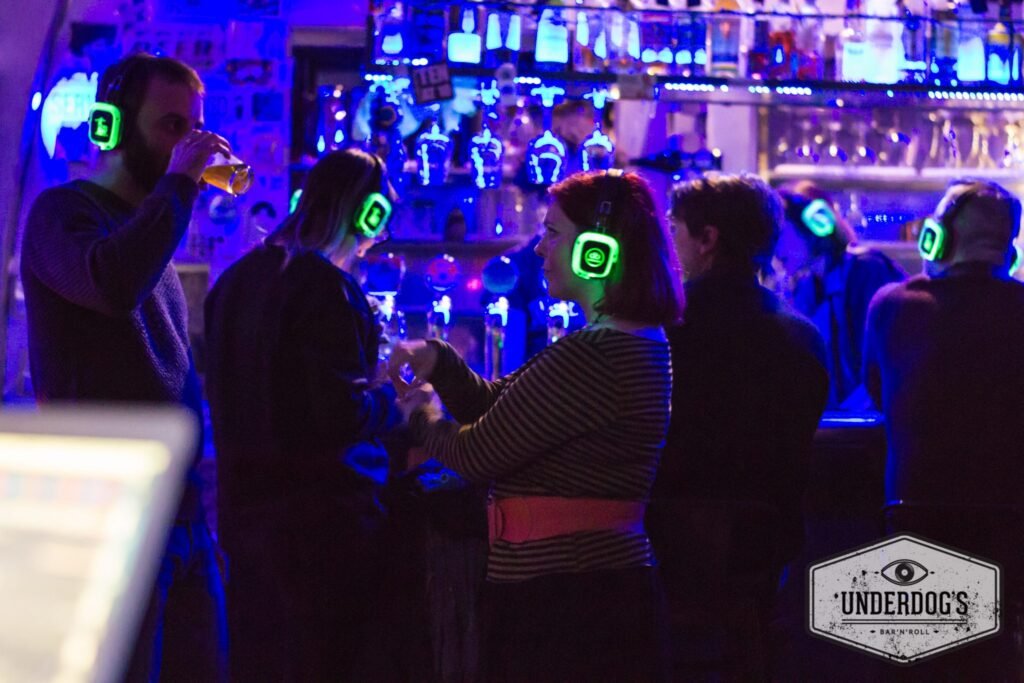 Underdog’s
Frequently asked questions about Underdog's
Where is Underdog's?
Underdog's is on Via dei Sabelli, in the part of the San Lorenzo neighborhood closest to Termini station and the university, inside the grid of streets named after peoples of ancient Italy that characterizes the area.
How do you get to Underdog's by public transport?
Underdog's is easy to reach both on foot and by public transport: from Termini the walk takes about 15 or 20 minutes, crossing Via dei Ramni and the dense web of San Lorenzo streets that leads to Via dei Sabelli.
What exactly is Underdog's?
Underdog's is a hybrid venue that combines in a single space a vinyl shop and a craft beer counter, a format with roots in the British and American tradition of record store bars, where flipping through records with a pint in hand is an established ritual.
When is it best to go to Underdog's?
Underdog's has an evening and night-time vocation, with the reference time slot starting in the late afternoon and extending until late at night. Friday and Saturday are the busiest days, with the beer counter full and the vinyl room harder to enjoy in peace.
How do you pay at Underdog's?
As with the great majority of Roman venues of similar size, at Underdog's it's reasonable to expect to be able to pay both in cash and by card, although for buying a rare vinyl or a collector's edition it can be useful to have a small amount of cash with you anyway.
Is it worth checking social channels before going to Underdog's?
Yes. Since it's a niche address with a program that changes often, setting out with a fresh confirmation on Underdog's official social channels avoids unpleasant surprises and lets you find out in advance if a themed night is planned.
Underdog's is at Via dei Sabelli 17, in the heart of San Lorenzo, the university and working-class neighborhood that stretches between the Sapienza, the railway yard and the Verano. It's an address that carries an unusual label in the area: pub, craft beer bar, vinyl shop and a room designed for so-called silent concerts, concerts listened to on headphones with wireless devices. Whoever comes the first time struggles to understand where to begin, at the taps counter, the record shelves or the headphone room, and it's precisely in this overlap of functions that the point of the place lies: not a venue with a single vocation, but a space that over time has accumulated different uses without ever shrinking to just one. San Lorenzo, after all, is one of the few Roman neighborhoods where such a layering of functions can coexist without seeming artificial, because the density of students, artists and longtime residents creates an audience varied enough to sustain out-of-the-ordinary offerings. Before slotting Underdog's into a broader evening in San Lorenzo, it's worth reading calmly what to expect, how to get there, when it's best to go and what to know about prices and organization. Anyone building a more structured Roman stay, perhaps with several stops between central neighborhoods and outskirts less beaten by mass tourism, can rely on tools like italyplanner.com to line up the movements around San Lorenzo and the neighboring districts without wasting time in the evening recalculating routes and connections.
Underdog's: what to know before you go
The name itself, underdog, in Anglo-Saxon slang indicates someone who starts at a disadvantage, the outsider who moves on the margins of the dominant system: a choice that tells the identity of the venue well, born in a neighborhood that has always claimed a nonconformist stance toward the tourist historic center. On a practical level, Underdog's combines in a single space four functions that elsewhere in Rome remain separate. There is the pub proper, with a counter dedicated to craft beers and a rotation of taps that favors independent Italian breweries over large-scale industrial brands. There is the vinyl shop, with shelves that take up a considerable part of the room and physically coexist with the drinking tables, so that flipping through records and ordering a pint become almost overlapping gestures, with no separate paths between the retail area and the consumption area. There is the silent concert room, designed for listening to live music or sets on headphones without the volume spreading outside, a solution that in San Lorenzo, a neighborhood where relations with residents on the subject of nightlife have for years been a sensitive topic discussed in neighborhood assemblies, has a practical value as well as an aesthetic one. And finally there is the dimension of the generic hangout, that of the neighborhood pub where you stop even just for a beer without touching either the records or the headphones, perhaps after a day of study in the library or a lecture at the university.
The sources consulted, including the venue's listing on Zero and a dedicated article in the trade magazine Stazioni di Birra, consistently describe this formula as a hybrid between bar'n'roll and vinyl shop, an expression that conveys well the idea of a place built around played music, not just listened to in streaming through a smartphone. The term bar'n'roll deliberately recalls rock and roll, underlining how the musical selection and sonic identity of the venue are not an accessory detail but an integral part of the commercial offer, on a par with the quality of the draft beer. On the question of current availability, the fact is not confirmed unambiguously by the sources consulted: the venue's official website, at the time of checking, shows a page under construction, while other trade platforms continue to list the address as active and to describe its offering in detail. Anyone planning an evening in San Lorenzo around this stop does well to check the venue's official social channels in the days immediately before, so as to have direct confirmation of hours and opening before setting out, avoiding relying exclusively on information read on aggregators that aren't always updated as frequently as the social profiles run directly by the operators. This applies in particular to a niche venue like this one, where the target audience is more used to getting information through word of mouth and social networks than through the large general review platforms, often calibrated for a tourist audience with different needs from those of someone looking for an alternative address tied to the neighborhood's independent music scene.
It should also be said that a venue with this structure works differently from a traditional pub in managing its interior space: the available surface has to be divided between the serving area, shelving for the vinyl, seating for those drinking and the environment dedicated to the headphone room, a balance that in small-footprint venues like the typical ones of San Lorenzo requires precise choices, often at the expense of maximum capacity compared with a more traditional pub without additional functions. Whoever arrives at weekend peak hours must therefore take into account that places to sit comfortably may be limited, while those who prefer quieter hours generally find more room to move both at the counter and among the record shelves.
What exactly is Underdog's: a hybrid venue of music and vinyl
It's worth dwelling on what it means, in practice, to have a vinyl shop that coexists with a beer hall counter. It isn't a record newsstand with a few chairs around, but an environment in which the musical selection seems designed for those who spend hours choosing, listening, comparing covers and editions, with craft beer as a natural accompaniment more than as the main attraction of the afternoon or evening. The vinyl offering, from what the trade sources say, favors genres tied to rock, indie and the alternative scene, consistent with the underdog spirit recalled in the name, but there are forays into other strands as well: soul, electronic, soundtracks, collector's editions next to more accessible reissues meant for those approaching the format for the first time. Anyone who regularly frequents independent record stores knows that the curated selection, more than the quantity of titles available, is what distinguishes a specialized shop from a mere music department of a general chain, and the formula chosen by Underdog's seems to move in just this direction.
The silent concert room is the most distinctive element and the least common on the Roman scene: through wireless headphones, spectators can follow a DJ set or a live performance while remaining in perfect silence as perceived from outside, a technology that in other European cities has already found application in festivals and large clubs, where it allows several sound stages to be set up in the same physical space with no acoustic overlap between one stage and another, but which in Rome remains an exception rather than a rule, especially in a small venue like this one. The result is a venue that doesn't let itself be labeled easily: there are those who go to drink a craft beer with friends without knowing anything about the headphone room, those who come on purpose to buy a record impossible to find elsewhere after searching in vain in other shops in the city, and those who follow the calendar of silent concert events as a fixed, almost weekly appointment. This variety of audience is probably the reason the venue is often cited, in guides to the capital's alternative pubs, as one of the least obvious addresses in the neighborhood, able to attract very different profiles under the same roof.
On the commercial side, keeping a beer hall and a record shop together also involves management choices that are far from trivial: the opening hours have to cover both aperitivo time and the later part of the evening, while the vinyl sales side requires care in cataloging and rotating the stock that goes beyond simply managing a stock of bottles and kegs. It's a model that finds similar applications in other cities, I'm thinking of certain Scandinavian or northern European places where the concept of the third place, that is, a space that is neither home nor work but a social environment of its own, is more rooted in urban culture. In Rome it remains a relatively isolated experiment, made even more marked by the presence of the silent concert room, which adds a third functional layer to an equation that is already complex in itself.
San Lorenzo, the neighborhood that explains Underdog's
Understanding Underdog's means in part understanding San Lorenzo, because the venue is not a foreign body dropped from above into any random area, but the natural product of a neighborhood that built its identity around precise social categories: first the workers and railwaymen who populated it in the late 1800s, then the students who came with the expansion of the nearby Sapienza starting in the 1900s, and finally artists, musicians and small cultural entrepreneurs who in recent decades have turned many craft workshops into venues, studios and hybrid spaces. The streets of the neighborhood still bear the names of the peoples of ancient Italy, from the Sabelli to the Equi, from the Marsi to the Volsci, a street naming scheme decided in the late 1800s that today coexists with murals, temporary galleries and venues that have slotted into an urban grid designed over a century ago for a completely different kind of daily life.
This layering explains why San Lorenzo manages to sustain at the same time traditional pubs, self-managed social spaces, vinyl shops, independent art galleries and historic trattorias at prices that are still popular: they are different layers of the same urban history, which coexist without necessarily overlapping completely. Underdog's fits into this fabric as one of the most recent attempts to hold several souls together at a single address, and it is precisely this capacity for synthesis, more than any single specific function, that makes it a case of some interest for those watching the evolution of Roman venues in recent years.
In this account, the role of the Sapienza as the economic and social engine of the whole area must not be forgotten: with tens of thousands of students enrolled each year, the university generates a constant flow of young people who live the neighborhood not only by day for lectures, but also in the evening for leisure, creating the market conditions that make niche venues like this one sustainable. It's enough to look at the peak hours of some venues in the neighborhood, concentrated on weeknight evenings as well as on the weekend, to understand how much the academic calendar, made of lectures, exam sessions and teaching breaks, ends up directly shaping the nightlife of this part of Rome, in a way that has no direct equivalent in other neighborhoods of the city less tied to a single university institution of this size. Without that base of university audience, a vinyl shop with an attached craft beer bar and a headphone listening room would hardly find the same economic balance in a different neighborhood, less dense with young residents and less used to extended evening hours.
How to get to Underdog's
Via dei Sabelli is in the part of San Lorenzo closest to Termini station and the university, a position that makes the venue easy to reach both on foot and by public transport. From Termini, the walk takes about 15 or 20 minutes, crossing Via dei Ramni and the dense web of streets named after peoples of ancient Italy that gives its name to much of the neighborhood's street naming: Sabelli, Marsi, Equi, Volsci. It's a route that many choose to walk even in the evening, helped by the lighting of the main streets and the closeness between Termini and San Lorenzo, but as in any neighborhood of a big city it's best to move with the normal attention given to any central area that is busy at night.
Those who prefer public transport can count on tram 3, which connects San Lorenzo to Trastevere on one side and to the northeastern quadrant of the city on the other, with stops a few minutes on foot from Via dei Sabelli, plus several city bus lines that cross the neighborhood along Via Tiburtina and Via dei Volsci, useful above all for those arriving from parts of the city not directly served by the tram. The Roma Tiburtina railway station, a hub for regional and high-speed trains, is at an acceptable walking distance and remains a convenient reference point for those arriving from outside Rome or who have to leave right after an evening in the area, perhaps with an evening train to another city. By car the area is less convenient: San Lorenzo has narrow streets, often one-way, and a density of residential parking that shrinks further in the evening hours because of the neighborhood's nightlife. Those arriving in their own vehicle must allow extra time to find a spot or consider a paid car park in the nearby streets, perhaps closer to Via Tiburtina where parking is slightly easier to find. For those planning trips over several days between San Lorenzo and other parts of the city, a tool like tourleaderpro.com helps organize itineraries and transfers without having to recalculate times and routes between one neighborhood and another by hand each time, no small help when a stay touches both the historic center and more outlying areas like this one.
In the latest hours of the night, when daytime bus and tram lines drastically cut their runs, San Lorenzo is still served by some night lines that connect the neighborhood to Termini and other central hubs of the city, although with much lower frequencies than the daytime service. Those planning to stay out until late at night do well to find out in advance about the time of the last useful run, or to consider a taxi or a private transport service for the return, an option fairly common among those who frequent the San Lorenzo nightlife in the later hours of the night.
Those who prefer to move on two wheels can count on the bike sharing services available in much of the wider center of Rome, with several stations near Via Tiburtina and the main streets of the neighborhood, a convenient solution for those who want to combine several evening stops without depending on the schedules of night public transport, less frequent than the daytime service. Shared scooter services also normally cover the area, although with the speed and parking limits set by municipal regulations for areas of greater pedestrian density, which include a good part of San Lorenzo in the evening hours of the weekend.
When to go to Underdog's
Being a venue with an evening and night-time vocation, the reference time slot starts in the late afternoon and extends until late at night, in line with the generality of the neighborhood's pubs. Weekend days, in particular Friday and Saturday, tend to be the busiest, with the beer counter full and the vinyl room becoming harder to enjoy in peace, while on weekdays the atmosphere lends itself better to those who want to flip through records calmly or chat with whoever works behind the counter without having to raise their voice above the background noise of a full room.
Events tied to the silent concert room generally follow a separate calendar, with dedicated evenings that don't necessarily coincide with the weekend: those interested in this specific aspect of the venue do well to check the program in advance on the official social channels, because the dates change frequently and aren't always republished on general review platforms, which tend to update late compared with the social profiles run directly by the venue's operators. San Lorenzo, it must be said, is a neighborhood where the academic year clearly marks the rhythms of nightlife: in the months when the Sapienza is in full activity, between October and May, the venues in the area see noticeably higher attendance than in the summer months, when many out-of-town students return to their home cities and the neighborhood partly empties, while still being frequented by those who stay in Rome for work or by personal choice. Those looking for a more intimate atmosphere can therefore aim precisely at the summer months or at the early weeknight evenings, when the venue is more comfortable to enjoy in peace.
The wider city calendar also indirectly affects attendance: when there are major events bringing visitors to Rome, or music festivals held in other parts of the city in the same period, San Lorenzo tends to benefit from a more international audience, curious to leave the more beaten tourist paths to discover neighborhoods with a more authentic identity. It isn't rare, in these time windows, to run into foreign visitors at the Underdog's counter who came precisely thanks to word of mouth about the capital's alternative pubs, next to the usual regulars.
A curiosity about Underdog's
The combination of a record shop and a drinking venue is not a recent invention: it has its roots in the tradition of record store bars widespread above all in the United Kingdom and the United States, where flipping through vinyl with a pint in hand is a ritual established for decades and has given rise to a real subculture of collectors, enthusiasts and cult venues. In Rome, a city where independent record shops have seen a slow but steady recovery in recent years thanks to the return of interest in vinyl as an object and not only as a sound medium, a venue that explicitly joins the two souls remains nonetheless an uncommon case, closer in approach to certain places in London or Berlin than to the classic tradition of the Roman pub.
Adding a further level of originality is the silent concert room, which brings to the university neighborhood of San Lorenzo a technology more often associated with large open-air festivals, where wireless headphones allow several sound stages to be set up in the same physical space with no acoustic overlap. Seeing this same solution applied to a small venue, set among the narrow streets of a working-class neighborhood, is probably the aspect that most surprises those who walk in not knowing what to expect, and it remains one of the elements most often cited by those who describe the venue to people who don't yet know it.
A recurring anecdote among those who frequent this type of format concerns precisely the first encounter with wireless headphones: those who have never taken part in a silent concert tend to approach with a mix of curiosity and skepticism, only to discover that the listening experience, isolated from ambient noise and individually adjustable in volume, often turns out to be more engaging than a traditional concert in a crowded venue, where the quality of listening depends a lot on the position occupied in the room relative to the speakers.
Something nobody tells you about Underdog's
Those who pass by from outside without ever having gone in tend to mistake Underdog's for an ordinary neighborhood pub, helped by a sign that from the street gives no hint of the vinyl shelves or of the headphone room, which often occupies a more interior space and is less visible from the main entrance. This surprise effect, if on one hand it makes it less immediate to understand what the venue really offers for those walking by for the first time perhaps headed elsewhere, on the other rewards those who stop out of curiosity and discover the full offer only once inside, with an effect of gradual discovery that many regulars describe as part of the charm of the place.
Another little-told aspect concerns precisely the coexistence of the two souls of the place: buying a record while drinking a craft beer requires a minimum of care, because vinyl doesn't like the moisture of glasses set down nearby, and whoever works behind the counter is generally willing to hold purchases aside until you leave, precisely to avoid accidents between counter and shelves. A practical detail that is rarely put in writing, but that anyone who has bought a record in a venue with a bar counter nearby quickly learns to manage with a little more attention than in a traditional record shop with no food and drink service.
Another little-publicized element concerns the turnover of the record catalog: in independent shops of this kind, unlike the big chains, arrivals of new material don't follow a fixed, public calendar, but depend on buying opportunities and the operators' direct contacts with distributors, independent labels and private collectors who periodically get rid of entire collections. Anyone looking for a specific title will do well to ask directly at the counter rather than trusting only what is visible on the shelves at a given moment, because part of the most interesting catalog often circulates without an online window updated in real time.
My advice for visiting Underdog's
The most useful suggestion, even before the one about timing, concerns directly checking the venue's situation in the days immediately before the visit, through the official social channels: being a niche address, with a program that changes often, setting out with fresh confirmation avoids unpleasant surprises and also lets you find out in advance if a themed night linked to the silent concert room is planned. For the rest, those who want to enjoy the experience calmly should avoid the evenings of peak attendance if the main goal is to browse the vinyl carefully, while those looking for the livelier pub atmosphere can safely aim for the weekend without worrying too much about the crowd.
It's worth, before or after the stop on Via dei Sabelli, devoting half an hour to walking around San Lorenzo with no precise destination: it's one of the Roman neighborhoods with the greatest concentration of street art and open-air murals, an informal heritage that has layered up over the years precisely thanks to the social and cultural liveliness that characterizes the area around the Sapienza. Bringing a roomy bag or backpack, if you plan to buy a record, is a practical precaution that avoids having to carry the purchase by hand for the rest of the evening between one venue and another in the neighborhood.
One last suggestion concerns the best way to experience the silent concert room for those who have never tried it: arriving a few minutes before the start of the set lets you get familiar with the headphones, adjust the volume to your preferences and find a comfortable position in the room, instead of having to handle these technical details just when the music begins. It's a small precaution, but it makes a noticeable difference to the overall quality of the experience, especially for those approaching this shared listening format for the first time.
Another well-known fact, yet rarely cited
San Lorenzo was not born as a nightlife neighborhood: its original identity is that of a working-class rione, grown up in the late 1800s right next to Termini station and the railway yard to house families of railwaymen, craftsmen and workers employed in activities tied to the nearby freight yard. On July 19, 1943 the neighborhood was hit hard by an Allied bombing that caused hundreds of victims, an episode that still today remains a fundamental part of the local collective memory and that can be retraced by visiting the nearby Basilica of San Lorenzo fuori le mura, damaged precisely on that occasion and then restored in the following years.
It is from this layering, between working-class memory, the university presence that came with the closeness to the Sapienza and the more recent creative and nocturnal vocation, that venues like Underdog's are born: spaces that fit into a fabric already dense with social history, without erasing it, but adding a further layer made of music, sociability and independent culture. Walking among the streets of the neighborhood it isn't rare to come across plaques and memorials dedicated precisely to the victims of the bombing, a silent counterpoint to the evening liveliness that today characterizes the same streets.
A less cited fact also concerns the role of San Lorenzo in the years of postwar reconstruction: the neighborhood, badly wounded by the bombing, became in the following years a testing ground for Roman public housing, with urban planning interventions that consolidated its identity as a residential and working-class rione even before the expansion of the Sapienza progressively changed its social makeup starting from the second half of the 1900s. This double soul, working-class and then university, is still readable today in the coexistence of old craft workshops, public housing buildings and more recently opened venues like Underdog's.
How much Underdog's costs
On prices, the venue's structure follows the typical one of mid-range Roman craft pubs: a glass or pint of draft beer costs in line with the other independent beer bars in the city, with variations tied to the type of beer and the brewery in rotation at that moment, since the offering changes periodically depending on producers' availability. For vinyl the matter is more complex, because prices depend on the rarity of the piece, the condition of the sleeve and of the record, and the edition, and can range from modest sums for recent reissues up to more significant amounts for collector's or out-of-print pieces, as happens in any shop specializing in used or rare records.
Any admission to the silent concert room, when planned for evenings with a specific program, generally follows logic tied to the single event more than a fixed price list, with formulas that may include free entry with a mandatory purchase or a dedicated ticket depending on the artist or DJ involved. Precisely because prices and price lists of this kind change over time and make no sense fixed on a static page meant to stay online for a long time, the most sensible choice remains to check the updated situation directly on site or through the venue's official social channels, avoiding relying on figures read elsewhere that may no longer correspond to reality at the moment you organize the visit.
For those who want a rough idea before setting out, a general criterion valid for most of the capital's craft pubs still applies: Italian independent draft beer is usually in a slightly higher price range than the most widespread industrial brands, a difference that reflects production costs that are lower in terms of volumes but higher for the quality of the raw materials and the craft care of the production process. It's a rough criterion, not a price list, but it helps set an approximate budget before leaving the house.
The right photo to take at Underdog's
Anyone looking for the most representative shot of the venue has more than one option to choose from. The wall of displayed vinyl, with the sleeves facing outward composing a mosaic of colors and varied graphics, is probably the most immediately recognizable image and the most effective for telling in a single frame the double nature of the place, pub on one side and record shop on the other. Those who happen to be there on a silent concert evening can instead try photographing the audience with headphones on, an image that communicates well the originality of the offer, although it requires the attention and permission of those taking part, since they are people concentrating on the listening and not always willing to be photographed during a private moment.
Outside, the sign and the facade on Via dei Sabelli, often surrounded by other signs of similar venues and by a bit of street art on the adjacent walls, conveys well the atmosphere of the neighborhood in which the venue sits, well beyond the boundaries of the single address. A shot from the opposite sidewalk, perhaps at dusk when the lights inside begin to come on while it's still light outside, often manages to tell better than any description the double daytime and nighttime life of this part of San Lorenzo.
Even the detail of the sleeves of the vinyl for sale, photographed up close in the right light, can become interesting material for those who keep a visual travel diary or run a social profile dedicated to music: the graphics of certain collector's editions, often more refined than mass reissues, offer photographic subjects that go beyond the simple record of the visit and become almost a small separate story about the visual culture tied to the world of records.
Some important events that took place here in history
More than a single precisely datable event, the recent history of Underdog's is tied to the broader phenomenon of the revival of vinyl as a listening format, a movement that starting in the 2010s pushed many European and Italian venues to rediscover the commercial and cultural value of physical record shops, after years in which streaming seemed to have made them marginal in the eyes of new generations of listeners. San Lorenzo, a university neighborhood by definition, absorbed this trend before many other areas of the city, helped by a young population attentive to the independent music scene, always looking for alternative addresses compared with the big commercial circuits of the center.
In this context, the opening of a venue that explicitly joins pub, record shop and a room for headphone concerts fits in as one of the most coherent attempts, on the Roman scene, to give a physical and shared form to a way of living music that elsewhere remains confined to personal screens and individual headphones used alone, perhaps on public transport or in one's own room. Bringing this experience into a collective space, where strangers share the same listening while remaining silent toward one another from the acoustic point of view, is in itself a small social experiment as well as a musical one.
It should also be remembered that the independent vinyl shop scene in Rome, after a long period of contraction that coincided with the spread of digital players and then streaming, has experienced a partial revival tied above all to a younger audience than you would expect, made up of students and 20-somethings who rediscover the physical format not out of nostalgia, but for the tactile and ritual experience of listening, very different from that offered by a digital playlist. Underdog's, fitting into this trend with an offer that also adds the component of the beer bar and the headphone room, presents itself as a case particularly consistent with this kind of audience.
Underdog's with children
It must be said clearly: Underdog's was born as an evening and night-time venue centered on craft beer, music and adult sociability, and is not designed for a family audience with small children in tow. The typically evening opening hours, the attention devoted to serving craft beers and the very nature of the silent concert room, designed for individual and concentrated listening, make the venue poorly suited to a visit with small children, both because of hours and because of the type of experience offered.
Those in San Lorenzo with the family will do better to reserve the stop on Via dei Sabelli for a moment without the children, perhaps while the little ones stay with another adult, and to head during daytime hours toward other offerings in the neighborhood better suited, such as a walk among the open-air murals or a stop in one of the green spaces of the area. For those looking instead for an evening alternative that still involves several generations, the advice is to inquire case by case about the daytime or afternoon initiatives organized periodically by some social spaces in the neighborhood, distinct in nature and audience from the offer of Underdog's, which remains designed for an adult audience.
For a family day in San Lorenzo, the neighborhood still offers valid alternatives without having to leave its boundaries: the inner streets, less trafficked than the main arteries, lend themselves to a quiet walk, while the Verano square, with the basilica and the wide space in front of it, allows an outdoor stop in a setting better suited to the little ones than the inside of a pub. It's a way to enjoy the atmosphere of the neighborhood anyway without forcing the hand on a venue that, by its very nature, doesn't hide its adult vocation.
Who has passed through Underdog's
For a venue of this size and this vocation, the clientele is made less of famous names than of neighborhood regulars: Sapienza students, vinyl enthusiasts who systematically go around the few independent shops left in Rome, musicians and DJs who frequent the city's indie and alternative scene looking for less conventional stages than the big clubs. According to what local sources dealing with the Roman music scene report, the venue has become over the years an informal reference point for those who organize or follow small-scale live music events, closer to the underground spirit than to the circuit of big clubs, consistent with the name chosen from the opening.
This type of clientele, made more of recurring faces than of exceptional guests, is probably the trait most consistent with the very identity of the venue: a place designed for those who live the neighborhood daily, not to intercept a passing audience looking for the most celebrated address of the moment. It's the same spirit found in many other independent spaces in San Lorenzo, where the loyalty of a small community often counts more than visibility on a large scale.
Emerging musicians of the Roman scene also find in venues like this a useful testing ground before facing bigger stages: playing or offering a DJ set in an intimate and attentive environment like a silent concert room lets them build a direct relationship with a small but engaged audience, a step that many independent artists consider formative before measuring themselves against broader contexts that are less controllable from the point of view of listening.
It should be added that the San Lorenzo music scene, of which Underdog's is part, has for years been intertwined with that of other spaces in the neighborhood dedicated to live music and independent culture, in an informal ecosystem made of occasional collaborations, DJs who move from one venue to another on the same evening and organizing collectives that rotate among different addresses depending on the availability of dates and spaces. Those who follow this kind of scene continuously end up recognizing the same faces at different events, a trait typical of small local music scenes, where the relatively small number of available spaces favors a tighter network of relationships than what happens in the larger and more commercial circuits of the city.
Where to eat near Underdog's
San Lorenzo is one of the Roman neighborhoods with the highest concentration of venues dedicated to street food, pizza by the slice and historic trattorias at prices that are still affordable, a legacy of its working-class and university identity that has resisted, at least in part, the gradual gentrification that in recent years has also involved this area of the city. It's no accident that several food guides to Rome point to San Lorenzo as one of the neighborhoods where the ratio of quality to price remains more favorable than in the historic center, helped by a regular clientele, made above all of students on limited budgets, which over the years has pushed many operators to keep an accessible positioning without giving up the quality of the raw materials, in particular as regards bread, pizza and baked goods, sectors in which the neighborhood can point to a fairly well-rooted craft tradition. Around Via dei Sabelli there are historic bakeries that sell white and red pizza by weight, pizzerias with long lines on Saturday evening, and trattorias that maintain a menu of traditional Roman cooking designed more for the regular clientele than for passing tourism. The neighborhood's covered market remains a reference point for daily shopping and for those looking for a quick meal during the day, before devoting the evening to the venues of the area.
On the same streets there are also other addresses tied to the neighborhood's evening social life: Container San Lorenzo, a few steps further on Via degli Etruschi, offers an outdoor courtyard and indoor spaces with music and drinks, a useful alternative for those who want to continue the evening after the stop at Underdog's. Communia, a social space active since 2013 on Viale dello Scalo di San Lorenzo, organizes workshops and independent cultural initiatives open to the neighborhood. And for those who want to get a little away from the heart of the neighborhood, Ex Snia offers a natural oasis born from a peculiar urban planning story, a few kilometers away toward Pigneto, much appreciated by those looking for a daytime pause before plunging back into the area's nightlife. Those looking instead for a more recollected moment can stop at the nearby Basilica of San Lorenzo fuori le mura, facing the Verano square next to the Verano Cemetery, two places that tell the oldest history of the neighborhood before it became the university and night-time hub it is today, and that offer a silent counterpoint to the liveliness of the streets dedicated to venues.
Those who want to widen the radius of the evening further can also consider comparing San Lorenzo with other Roman neighborhoods of similar vocation, such as Pigneto or Trastevere: compared with the first, San Lorenzo maintains a more direct tie to university life and a lower presence of venues explicitly oriented to tourism, while compared with Trastevere, for years now a fixed destination for international tourist flows, it remains a neighborhood lived more continuously by longtime residents and by the student population, with generally lower prices both for food and for drinks at the counter. This difference of scale and audience is probably one of the reasons why venues like Underdog's, with a niche offering hard to sustain in a purely tourist context, find in San Lorenzo precisely the most favorable ground.
A curiosity about Underdog's
One last detail worth telling concerns the choice of the name. In Anglo-Saxon culture, calling a venue underdog means declaring from the sign a precise stance: that of someone who doesn't aim to compete with the city's big commercial circuits, but claims an off-center position, almost one of cultural resistance, as a distinctive identity more than as a limit to hide. Applied to a place that holds together a craft pub, a vinyl shop and a room for headphone concerts, in a historically working-class neighborhood like San Lorenzo, the name ends up telling well both the venue and the spirit of the neighborhood that hosts it: peripheral with respect to Rome's tourist center, yet dense with cultural offerings that elsewhere in the city remain rarer.
There is also a second level of reading, less immediate but just as consistent: in the age of unlimited music streaming, keeping a physical record shop open is in itself a countercurrent choice, almost an underdog one with respect to the dominant logic of the contemporary music industry. The same holds, on a broader level, for the choice to open a craft pub in a neighborhood where competition among evening venues is high and where standing out requires a precise identity rather than a generic offering: in this sense too, staying faithful to a niche offering instead of chasing the widest possible audience is consistent with the spirit that the venue's very name evokes from the first glance at the sign. In the same way, dedicating a physical space to shared listening on headphones, at a historical moment when music is consumed mostly alone through personal devices, represents an attempt to bring the collective dimension back into an experience that would otherwise risk remaining purely individual: a small counterpoint, to stay on the musical theme, to the most widespread listening habits.
Practical questions about Underdog's
Among the most frequent questions from those organizing a visit is the one about accepted payment methods: as with the great majority of Roman venues of similar size, it's reasonable to expect to be able to pay both in cash and by card, but for a significant purchase in the shop, I'm thinking of a rare vinyl or a collector's edition, it can be useful to have a small amount of cash with you anyway as an alternative, in case technical problems arise with the payment terminals, an eventuality that is not frequent but not impossible in any commercial business. Another recurring question concerns the accessibility of the venue for those who move with mobility difficulties: being a building set in the historic fabric of San Lorenzo, with entrances that often have steps or interior spaces that aren't always wide, those with specific needs in this regard do well to contact the venue in advance through the official social channels to get precise information on the layout of the spaces before organizing the visit.
On reservations, being more a pub with an attached shop than a structured restaurant, it's generally not necessary to book to drink a beer or flip through the vinyl, while for evenings with a specific program tied to the silent concert room it can be useful to check in advance if a waiting list or a maximum number of participants is planned, information that is normally communicated together with the rest of the program on the venue's social profiles in the days before the event. For those arriving from outside Rome and organizing a stay that includes several similar stops among niche venues, outlying neighborhoods and less beaten attractions, it can be useful to rely from the start on planning tools like italyplanner.com, so as to have an overall picture before moving from one address to another in the city.
Contact Information
Via dei Sabelli, 17
Roma Roma Città, Roma Città