Tosca in “Feminae” in Rome, December 7, 2026
https://www.estateromana.com/en/rome/trip-planner/tosca-in-feminae-in-rome-december-7-2026/
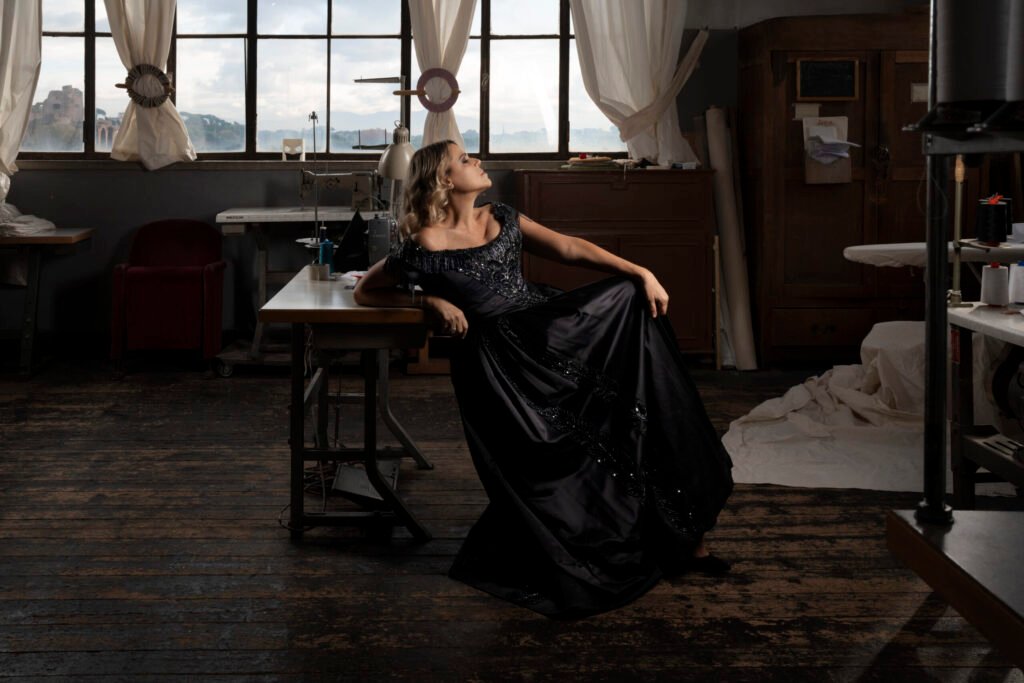
On December 7, 2026, Tosca brings "Feminae" to Sala Sinopoli at Auditorium Parco della Musica Ennio Morricone, Viale Pietro de Coubertin 30, in the Flaminio district. This is the date going around and this is the hall given: before setting out, though, take a look at the official program on auditorium.com, because between the announcement of a concert and the actual evening, inside Renzo Piano's complex, changes of hall and time are routine. December 7, 2026 falls on a Monday, and the following week Rome enters the Christmas traffic: two details that weigh more than they seem on how the evening goes, and I come back to both further on.
"Feminae" is Tosca's new album, the first after years of live projects and compilations. The release was announced on February 10, 2026, and the physical release was set for April 24 of the same year. So the concert comes months after the album, when the songs have already been around, have already been played across Italy and have found their stage form, which almost never matches the recorded one. It's the best condition for hearing them: not the first time, not the last, but the one when the musicians have stopped reading and started playing.
The show, as it's presented, weaves together songs and female voices from different countries and languages, with Tosca accompanied by her musicians. If you've followed her for a while, you know this isn't a sudden turn but a point of arrival, and in what follows I try to explain why: the career of Tiziana Donati, known as Tosca, is made of 30 years of borrowed languages, of repertoires not her own held together by her voice, and of women who at some point rewrote her songs in another language and gave them back to her. "Feminae" is the logical consequence of all this.
On the practical side: Sala Sinopoli is the Auditorium's middle-sized hall, 1,133 seats, indoors, with a gallery that runs along three of its four sides. It isn't the 2,756-seat Sala Santa Cecilia and it isn't the 3,000-seat open-air cavea, which for obvious reasons isn't used in December. It's the hall the complex usually assigns to singer-songwriter concerts with a medium-sized ensemble, and for a vocal repertoire it's the right choice. Tickets are bought on the Auditorium's official channels. The physical box office is in the foyer, and on the evening of the show it opens ahead of the start time.
If you're building your day around the concert, keep in mind that you're in one of the few corners of Rome where three or four big things are within walking distance of each other: Auditorium Parco della Musica itself, MAXXI an eight-minute walk away, the Ponte della Musica that takes you across the Tiber in three minutes, and Teatro Olimpico a little farther on. A full afternoon and an evening: Flaminio handles this format very well.
What "Feminae" is and why it's coming out now
It's best to clear up the most likely misunderstanding right away, namely that "Feminae" is a concept album built at a desk. If you know Tosca's path, you know the theme was already there, scattered, for at least 20 years: what changes now is that it's declared in the title. Latin, plural, feminine. Not "Femina", which would have been a manifesto, but "Feminae", which is a list. The whole difference lies there, and it tells this singer's method better than any press release: Tosca doesn't make albums about herself, she makes albums about a group of people she invites into her own voice.
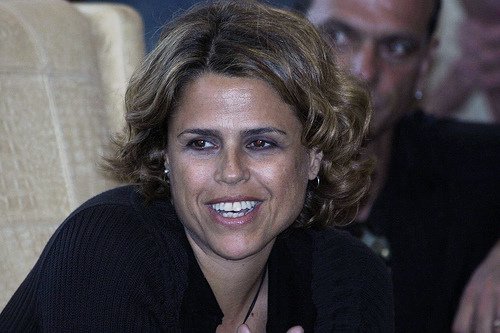
The verifiable timeline is short. On February 10, 2026 the album's release was announced. The physical release was given as April 24, 2026. In the same year a duet with Carmen Consoli came out, another female voice who has built a whole career on singing in other languages and in dialect. Before that, in October 2025, Tosca had received the Premio Tenco for her career, and also in 2025 the Premio Lunezia Antologia, with a citation that spoke of her way of bringing out the musical and literary qualities of the songs she performs. On October 4, 2025 the label BMG Italy had announced she was joining its roster. A career award, a new contract and a new album within a few months: this isn't the downward arc of someone collecting honors, it's the opposite.
Why the title is plural
Because the women in this project are many and they're not decorative. Take the most telling case, which is documented and which almost nobody connects to "Feminae". In 2020 Tosca brought "Ho amato tutto", a song written by Pietro Cantarelli, to Sanremo, and won the press room prize for the best musical composition awarded by the orchestra and the Nilla Pizzi prize for the best performance. Two years later, on April 27, 2022, she launched the international versions of the same song: "Lo he amado todo" adapted into Spanish by Silvia Pérez Cruz, "Amado tudo" adapted into Portuguese by Adriana Calcanhotto, "J'ai tout aimé" adapted into French by Awa Ly. Three women, three languages, a single song. That operation is the exact prototype of "Feminae", four years ahead of time.
A repertoire built by taking away, not adding
There's another reason why this album is coming out now, and it's a technical one. Over the last 15 years Tosca has gradually slimmed down her lineups. In 2023 she staged "Tosca Quintet", a project designed for cello, guitar, percussion and voices: four colors and nothing else. In a hall like Sinopoli, with a setup like that, you hear the breath between one phrase and the next, and the voice doesn't have to fight. If the December 7, 2026 concert follows that line, and everything suggests it will, what you'll hear will be much closer to a recital than to a pop concert. Adjust your expectations accordingly: here nobody sings over the crowd, they sing in front of it.
Sala Sinopoli, and why it isn't just any hall
Auditorium Parco della Musica is a multipurpose complex designed by Renzo Piano on an area of about 55,000 square meters between Villa Glori, the Villaggio Olimpico, the Corso di Francia viaduct and Viale Maresciallo Pilsudski. The main volumes are three concert halls housed in three separate buildings, with a shape that recalls a beetle, covered with lead sheets and arranged in a fan around an open-air theater, the cavea, which holds about 3,000 spectators. Around the whole runs a large walkable terrace: what Romans simply call the piazzale, which is in fact a raised public square open to anyone, even without a ticket.
The three halls have names that are already a statement of intent. Sala Santa Cecilia, in honor of the patron saint of music, has 2,756 seats. Sala Sinopoli, named after the conductor Giuseppe Sinopoli, has 1,133. Sala Petrassi, which at the opening was generically called Sala Settecento after its number of seats and was later named after the composer Goffredo Petrassi following his death in 2003, has 673. To these are added the 3,000-seat cavea, named after Luciano Berio, and the 308-seat Teatro Studio, named after Gianni Borgna.
What sets Sinopoli apart from the other two
The distinctive feature of the middle hall is the adaptability of its interior space according to the number of performers and the acoustic behavior the event requires. In plain terms: Sinopoli can be made smaller or larger. The interior is aesthetically more sober than the other two halls, with perpendicular walls and ceiling, and a gallery runs along three of the four sides. You won't find the American cherry wood shells that make the vault of Santa Cecilia famous, and you won't find the orchestra pit and movable walls of Petrassi, designed for theater and opera. You'll find a sober, adjustable box, built to carry a voice to the back.
On this point, an opinion that applies to all three halls. Santa Cecilia is magnificent and demanding: it's the acoustically most difficult hall in the complex to handle, and when you put a song concert inside it the risk of dispersion is real. Petrassi is perfect for theater but short of breath for music. Sinopoli, with its 1,133 seats, is the hall where a singer with a band of five or six sounds exactly as they should. For a repertoire like that of "Feminae", made of low dynamics and different languages where catching every syllable matters, it's the smartest choice that could have been made.
The people who built the acoustics
Renzo Piano won the 1993 invited competition and worked closely with Jürgen Reinhold of the Müller-BBM studio in Munich, who was in charge of giving the three halls optimal acoustics, and with the landscape architect Franco Zagari, who handled the urban planning advice and the outdoor spaces. They're three names that in the popular story of the Auditorium almost always disappear in favor of Piano alone, and yet the quality of the sound in Sala Sinopoli is the work of a German acoustics firm, and the reason the piazzale works as a meeting place even in winter is the work of a landscape architect.
How to get to the Auditorium without mistakes, and how to get home
The address is Viale Pietro de Coubertin 30. The critical point, I'll say it right away, isn't getting there: it's leaving. The Auditorium was built in an area that already in the 1990s wasn't considered ideal by everyone, and one of the reasons was precisely its distance from the metro and the main public transportation routes. The nearest metro station is Flaminio, in Piazzale Flaminio, and it isn't just around the corner. Whoever forgets this ends up, when the concert is over, in line for a taxi with a thousand other people.
Metro and tram, the combination that works
The most reliable option is still Metro A to Flaminio station, exiting onto Piazzale Flaminio, and then tram 2, which runs up Via Flaminia toward Piazza Mancini. You get off in the upper part of the route and reach the Auditorium on foot in a few minutes. Tram 2 is a short, frequent line, and the route crosses historic Flaminio, with its rationalist apartment buildings and the facades of the Villaggio Olimpico: in December, with the lights on at five in the afternoon, it's one of the most beautiful rides on the city network, and it costs the same as an ordinary ticket.
For the trip back, one precaution that seems trivial actually saves the evening. If the concert ends around 11, not all lines are still running at full frequency. Check the last run before going into the hall, not after: inside the hall your phone is off, outside the hall there are 2,000 people all looking for the same ride. If you're two or three, you can solve everything by sharing a car ride to Piazzale Flaminio or Piazza del Popolo, and from there the city opens up again.
By car and taxi: why it's worth thinking ahead
Parking is the Auditorium's historic, unsolved problem. The lots inside are few and the public considers them expensive, which discourages their use, and the result is that cars parked for concerts invade the Villaggio Olimpico neighborhood. If you arrive by car on a December evening with three halls full at the same time, you'll lose 20 minutes circling around. The advice is clear: if you're two, take public transportation there and consider a ride-hailing car for the trip back. If you're in a group and need a car, arrive a good hour early and park farther away, toward Viale Tiziano or toward the Lungotevere, walking the last five minutes.
A traffic detail that explains a lot: Viale De Coubertin was closed to car traffic during construction. When archaeological finds forced a radical change to the project, two of the three beetles were shifted westward, almost touching the Corso Francia viaduct that cuts the Villaggio Olimpico in two, and this required a series of adjustments to traffic. The Auditorium you see today has the plan it has because underneath there was something that couldn't be moved, and the traffic around it still bears the consequences.
On foot from the center, if you have time
From Piazza del Popolo to the Auditorium it's a walk of just over half an hour up Via Flaminia, and it's not a waste of time at all: you pass Zaha Hadid's MAXXI, skirt Via Guido Reni area and reach the piazzale from below, which is the best way to see the three lead shells emerge one at a time. In winter you need a serious jacket, because the last stretch is open and windy. If you arrive this way, though, you go into the hall with the building already in your eyes, and the concert starts better.
A curious fact about Tosca in “Feminae” in Rome, December 7, 2026
There's a misunderstanding that has followed this singer all her life, and that at some point she decided to face head-on instead of putting up with it. Her stage name is Tosca. On her birth certificate she's Tiziana Tosca Donati, so the name really is hers, not a cover invention. But for an Italian audience "Tosca" is first of all Giacomo Puccini's opera, that is, Floria Tosca, a Roman singer, jealous, tragic, who in the third act throws herself from Castel Sant'Angelo. Living with that name, while working as a singer in Rome, means carrying a cumbersome ghost around for 30 years.
The real curious fact is how she resolved it, and it's a gesture I find rarely refined. On February 14, 2021 she released, in a limited edition, the compilation "D'Altro Canto", which contains the covers performed on her radio show, and it came out with the video for the track "Vissi d'arte". "Vissi d'arte" is the second-act aria from Puccini's "Tosca", the most famous in the opera. The video was shot at Teatro dell'Opera di Roma. And Teatro dell'Opera di Roma is exactly the place where, in January 1900, Puccini's "Tosca" had its world premiere.
Stop for a moment on the construction, because it's perfect. A singer whose name is Tosca, who doesn't sing opera for a living, and who to settle accounts with her namesake goes to sing the most famous aria of that opera in the very hall where that opera was born, 121 years later. It isn't an appropriation and it isn't a parody: it's a courtesy visit. As if to say, my name is this, your name is this, let's meet once and sort the matter out.
This anecdote counts double in view of December 7, 2026, and I'll explain why. "Vissi d'arte" is, literally, the lament of a woman who has devoted her life to art and asks for an account of the price she is being made to pay. An album titled "Feminae" that comes five years after that video isn't a coincidence: the line connecting the two is declared. If during the concert you hear a Puccini quotation, even just an instrumental hint, you'll know where it comes from. And if you don't hear it, know that it's there anyway, under the title.
One last clarification, because ambiguity is easy here and I don't want to add to it. Tosca isn't an opera singer and doesn't do opera: she comes from songwriting, from teatro-canzone and from world music, and her repertoire is made of songs, not arias. Anyone buying a ticket expecting a Puccini evening would be disappointed. Anyone buying it knowing that the kinship is a cultured game, and not a concert program, will have a much better time.
Who Tosca is, if you're meeting her now
Tiziana Tosca Donati was born in Rome on August 29, 1967, in the Garbatella neighborhood. Her artistic path began in a small theater company, Checco Durante's, that is, in the most Roman heart of Roman theater. She went through the piano bar circuit, and in a piano bar in the city she was spotted by Renzo Arbore, who enlisted her in the TV show "Il caso Sanremo" with Lino Banfi. In 1989 she sang "Carcere 'e mare" on the soundtrack of Nanni Loy's "Scugnizzi". In 1992 her first album came out, titled simply "Tosca", and she took part in the Sanremo Festival in the Newcomers category with "Cosa farà Dio di me".
The 1990s, the years of great visibility
In 1993 she recorded her second album, "Attrice". The three years from 1993 to 1996 saw her work with a series of names that on their own tell the story of an era of Italian song: Lucio Dalla, with whom she sang the duet "Rispondimi", Riccardo Cocciante, in "L'amore esiste ancora", Renato Zero, in "Inventi". And then Ron, with whom she performed, uncredited, at the 1996 Sanremo Festival with "Vorrei incontrarti fra cent'anni", which took first place in the final. The same year "L'altra Tosca" came out, a collection of her most significant duets, and in October 1996 she starred in the "Carro Fantastico" at La Scala in Milan. Also in 1996 she sang the song for the film "Jane Eyre" directed by Franco Zeffirelli.
In 1997 she returned to Sanremo with "Nel respiro più grande", written by Susanna Tamaro with music by Ron, and in the spring her fourth album came out, "Incontri e passaggi", which won her the Targa Tenco for best performer. Anyone who lived through those years remembers something that tends to be forgotten today: in the mid-1990s Tosca was one of the most sought-after voices in the country, and she could easily have stayed there, in that comfortable and lucrative zone of Italian song. She didn't.
The theater, the other half of the job
From 2000 on, her biography becomes unreadable if you look only at the discography. In 2000 she was chosen to sing "Mater Iubilaei", the Marian hymn of the Jubilee, and in May she performed that prayer for the first time in the grotto at Lourdes: she was the first singer in the world to perform beneath the grotto. In 2001 she starred with Giampiero Ingrassia in the stage work "Salvatore Giuliano", directed by Armando Pugliese. In 2002 she acted and sang in "Wozzeck, Lulu, la morte e gli altri" alongside Carla Fracci, directed by Beppe Menegatti, at Teatro dell'Opera di Roma, and acted in a production of "The Vagina Monologues" directed by Emanuela Giordano.
In 2003 she staged "Notte in Bianco", a teatro-canzone piece she also wrote, directed by Claudio Insegno, tied to the release of her fifth album "Sto bene al mondo". Between 2003 and 2005 she played Jenny Diver in Brecht's "Threepenny Opera" alongside Massimo Venturiello, and with the same actor she was Nadia in Manuel Puig's "Tango delle ore piccole" in the 2004-2005 season. In the same period she sang the Roman repertoire in Nicola Piovani's "Semo o nun semo".
In June 2005 she premiered "Romana" at Asti Teatro, a tribute to Gabriella Ferri directed by Venturiello: a show that would return several times in her life and is probably the most Roman thing she has done. From 2006 to 2008 she was Lucia in Ettore Petrolini's "Gastone", directed by Venturiello. In 2007 she was back at Sanremo with "Il terzo fuochista", written by Massimo Venturiello with music by herself and Ruggiero Mascellino. In the 2008-2009 season she played Gelsomina in the stage adaptation of "La strada". From 2009 to 2011 she was on stage with "Musicanti (Sonata a Cosimina)", with Venturiello also handling text and direction.
The turning point: the world enters the repertoire
On September 30, 2014, "Il suono della voce" came out, an album with pieces written by, among others, Ivano Fossati and Joe Barbieri, some songs sung in different languages including Lebanese, Yiddish, Romanian and Japanese, others taken from the Neapolitan and Roman tradition and adapted into other languages as well in an original key. It's the album in which Tosca stopped being an Italian singer with a few exotic curiosities and became something else. In April 2015 she premiered in "Il grande dittatore", the first stage adaptation of Charlie Chaplin's masterpiece, directed by Venturiello.
In January 2017 she had a big success at Auditorium Parco della Musica itself with the concert "Appunti musicali dal mondo", which saw her on stage with guests such as Nicola Piovani, Gegé Telesforo, Danilo Rea, Germano Mazzocchetti, Joe Barbieri and Gabriele Mirabassi. The concert also became an album, released in November that year. In 2018 she took part in the soundtrack of Gabriele Muccino's "A casa tutti bene", written by Nicola Piovani, singing "L'invenzione di un poeta". On December 31, 2018 she brought her tribute to Gabriella Ferri, "Romana. Il concerto", back to the Auditorium after 10 years, selling out again.
In October 2019 "Morabeza" came out, produced by Joe Barbieri, with a list of collaborations that on its own explains the direction taken: Ivan Lins, Luísa Sobral, Cezar Mendes, Arnaldo Antunes, Cyrille Aimée, Lenine, Vincent Segal, Awa Ly, Gabriele Mirabassi, Nicola Stilo, Lotfi Bouchnak. Brazil, Portugal, France, the United States, Senegal, Tunisia, Italy. Also in 2019 came the Targa Tenco in the project album category for "Viaggio in Italia. Cantando le nostre radici", by the group Adoriza, created within Officina Pasolini from an idea by Tosca herself with Paolo Coletta and Felice Liperi.
Something nobody tells you about Tosca in “Feminae” in Rome, December 7, 2026
What nobody will tell you, in the presentations of this concert, is that "Feminae" wasn't born in 2026. It was born in 2002, in a theater, and it has a chain of ancestors that can be traced one by one. Lined up, the story changes the weight of the evening.
First link: 2002. Tosca acts in a production of "The Vagina Monologues" directed by Emanuela Giordano. It was a time when that text, in Italy, could still stir debate, and she stepped into it as a singer on loan to drama.
Second link: September 2011, Teatro Argentina in Rome. She takes part in the show "Italiane" together with Maddalena Crippa and Lina Sastri, again directed by Emanuela Giordano. Three actresses and singers on stage, a title that is already a program, and the same director as in 2002. If you're looking for the point where this thread becomes a project and not an occasion, you'll find it here.
Third link: 2019. She is the patron of the 15th edition of the Premio Bianca d'Aponte, in Aversa, a prize created in the name of a young singer-songwriter who died and dedicated to female voices in songwriting. It isn't a photo op: it's a commitment that repeats itself and carries a precise name.
Fourth link, the most technical and the most beautiful: April 27, 2022. As already mentioned, the three international versions of "Ho amato tutto" are entrusted to three women who don't just translate, but adapt. Silvia Pérez Cruz in Spanish, Adriana Calcanhotto in Portuguese, Awa Ly in French. If you work with languages, you know the difference: translating a song means saying the same thing, adapting it means rewriting it so that it sounds right. Tosca handed her own song to three authors and trusted the result.
Fifth link: 2024. She takes part in Simona Molinari's tribute project to the Argentine artist Mercedes Sosa, "Hasta siempre Mercedes", singing a duet on "Mon amour". An Italian singer, a younger Italian singer, and the most political voice of 20th-century Latin America. Mercedes Sosa inside a Tosca record isn't an ornament, it's a declaration of belonging.
Sixth link: 2026, with the duet recorded with Carmen Consoli. And then the album.
That's why anyone who arrives on December 7, 2026 thinking they're going to hear "the new album" misses half the evening. What arrives in Sala Sinopoli is 24 years of work that has finally found a title. If during the concert Tosca tells where the songs come from, and she usually does, those names will come out one at a time, and you'll recognize them.
The detail that makes all this credible
There's a simple way to tell a sincere project from a positioning exercise, and it consists in looking at who was there before the subject became convenient. In 2002 nobody built their communication around an album about women. In 2011, at Teatro Argentina, "Italiane" was a niche show. In 2019 the Premio Bianca d'Aponte was, and still is, an event for insiders. Tosca was there every time, for 20 years, when it served no purpose. For me, that settles the question.
My advice for visiting Tosca in “Feminae” in Rome, December 7, 2026
The main advice is just one and it concerns timing: arrive at least an hour early. Not for fear of lines, which clear quickly at Sala Sinopoli, but because the Auditorium's piazzale at six in the afternoon on a Monday in December is one of the most underrated places in Rome. The walkable terrace that runs around the three shells is open to anyone, even without a ticket, and at that hour it's almost empty. You can walk around it in 20 minutes, watch the lead sheets change color as the light fades, and reach the hall in the right frame of mind instead of out of breath.
The thing to see before the concert, which almost nobody sees
Between Sala Santa Cecilia and Sala Sinopoli, that is, right on the route you'll take to go in, you can see the remains of a Roman villa that came to light during the construction of the complex. It's not a marginal curiosity: that discovery led to a substantial change to Renzo Piano's original design. The finds are displayed in a small museum set under the cavea.
The history of the site, as it has been reconstructed, comes in layers. On the spot there was first a small farm from the archaic period, dated to the 6th century BC. In the 3rd century BC the first building was replaced by a patrician villa. The building has also been interpreted in connection with the cult of Anna Perenna, the Roman goddess whose sacred grove was identified in Piazza Euclide, not far from here. Anna Perenna was a female deity linked to the cycle of the year, and she was celebrated on the Ides of March with a popular festival outside the city gates, made of wine, songs and wishes for a long life.
I'll let you make the connection yourselves. A singer arrives with an album titled "Feminae" and plays inside a building built over a site that was perhaps linked to the cult of a female Roman deity. Nobody planned it, it's a coincidence of the ground. But it's one of those coincidences that happen all the time in Rome, and telling it to whoever is with you is worth more than any introduction to the concert.
Where to sit in Sala Sinopoli
The hall has a gallery that runs along three of its four sides. This means there are basically three available positions, and not all of them are equally good for a vocal concert. The central stalls, in the middle rows, are the classic and safest choice: you're on the axis of the stage, the sound arrives balanced, you can see the musicians' hands. The front rows of the stalls, which many people go after by instinct, are often worse for a repertoire of this kind: you're below stage level, you lose the blend of the ensemble and you hear more of the amplification than of the hall.
The front gallery is the option I recommend to anyone who wants to understand the hall: from there you perceive the geometry, the perpendicular walls and ceiling do their job and the voice arrives whole. The side galleries are cheaper and a good compromise if you accept an angled view. For a recital, where the stage stays still and there are no moving sets, the angle matters much less than in a theater show. If you buy at the last minute and only high side seats are left, take them without hesitation: in this hall they're not sacrificed seats.
The ticket: when to buy it
For a concert in the 1,133-seat Sala Sinopoli by a name that has had a loyal audience in Rome for 30 years, waiting until the last week is a real risk. Tosca has already filled this complex several times, and not only in the small halls. The channel to use is the Auditorium's official one, where you'll also find any reductions, agreements and group rates. If you're organizing an evening for more than 10 people, make a phone call: group conditions exist and aren't always prominently published.
Before and after: eating in the area
The complex has a bar, a café, a bar-restaurant also accessible from the street and a large bookstore. The bar-restaurant is convenient and works, but on the evening of a big concert it's crowded. If you want a relaxed dinner before the show, take a walk toward the Villaggio Olimpico or Viale Tiziano, where the restaurants are less touristy than you'd expect and the prices are neighborhood prices. The bookstore inside, on the other hand, deserves a stop regardless: it's one of the few serious music bookstores left in the city, and it's open even to those without a ticket.
What to expect from the concert, in practice
A clarification: nobody knows the setlist of a future evening, and anyone describing it in advance is making it up. What can be said, with some basis, concerns the way this singer builds her concerts, because it's a recognizable method she has repeated for years.
The languages
Expect to hear her sing in more than one language, and not as a novelty act. On "Il suono della voce" from 2014 there are songs in Lebanese, Yiddish, Romanian and Japanese. On "Morabeza" from 2019 the geography shifts toward Brazil, Cape Verde, the Portuguese-speaking world and the southern Mediterranean. In 2019 she recorded "Scutam es Morna" with the Cape Verdean Tété Alhinho, sung in Creole and in Italian. In 2024 she sang "Bella ciao" with Francesco Guccini in Italian and in Farsi. Farsi, in the mouth of a Roman singer, inside a song of the Italian Resistance: this is the level of linguistic ambition we're talking about.
The storytelling between songs
Tosca comes from teatro-canzone, and teatro-canzone is a genre in which the spoken word has the same status as the sung word. Don't expect the kind of concert where the artist says thank you and launches into the next song. Expect introductions, anecdotes, digressions, and every now and then a long pause. If you're in a hurry, you'll find it a flaw. If you let yourself go, you'll leave knowing 10 things you didn't know before.
The radio format turned into a show
It's worth knowing the story of "D'Altro Canto", because it explains the form of many of her recent concerts. In the fall of 2020 she hosted a 10-episode program with that title on Rai Radio 3, together with the journalist and TV writer Giorgio Cappozzo. Each episode was devoted to a theme: great love songs, the theater, the movies, serenades, adaptations. In each one an artist friend took part with a voice message, telling an anecdote or commenting on a song being played: among them Fiorella Mannoia, Nicola Piovani, Tiziano Ferro, Salvador Sobral, Renzo Arbore, Silvia Pérez Cruz.
On February 14, 2021 that program became an album, the limited-edition compilation "D'Altro Canto" with the covers performed on the show. In 2024 it became a true theater event, written with Giorgio Cappozzo, Valentina Romano and Alessandro Greggia, and it brought four special evenings to Auditorium Parco della Musica itself. Something born as radio, passed through a record and ended up in the theater: it's a path very few have taken in Italy, and it explains why her concerts have that chapter structure.
The musicians
The lineup she'll appear with on December 7, 2026 isn't known in advance. What is known is which musicians she has worked with most often in recent years and what idea of ensemble she pursues. "Tosca Quintet", in the summer of 2023, was designed for cello, guitar, percussion and voices. In "Appunti musicali dal mondo" in 2017, on the Auditorium stage, Nicola Piovani, Gegé Telesforo, Danilo Rea, Germano Mazzocchetti, Joe Barbieri and Gabriele Mirabassi played with her. Joe Barbieri, in particular, was the producer of "Morabeza" and the Italian adapter of "Non so dirlo", the version of Chico Novarro's song recorded in 2023. They're names that say just one thing: here they play acoustic, they play well, and nobody hides behind volume.
Another well-known fact, yet rarely mentioned
The well-known fact is that Auditorium Parco della Musica exists because Rome went 66 years without a concert hall. Many people know it. What's rarely mentioned is the chain of events that made those 66 years possible, and it's one of the most instructive urban planning stories of 20th-century Rome.
The hall that existed was called the Augusteo, and it was demolished in 1936. The debate on where to rebuild it started right after the demolition, and resumed in the 1950s with the hypothesis of the Borghetto Flaminio, a large area that had been expropriated before the war to build a monumental complex meant to celebrate the March on Rome. A competition was also held, and in 1960 a zoning variance was prepared to make the construction of the new building possible. A dispute then under way, over some expropriations, sank the initiative.
The debate resumed in the 1970s and ended only in 1992, with the final abandonment of the Borghetto Flaminio area, supported by urban planners such as Piero Maria Lugli and opposed above all by environmentalists, led at the time by Francesco Rutelli, and with the adoption of the Villaggio Olimpico hypothesis, championed among others by Antonio Cederna, Vittorio Emiliani and Italia Nostra. The invited competition won by Renzo Piano dates from 1993. The work ran from 1995 to 2002.
Do the math: from the demolition of the Augusteo in 1936 to the opening of a hall in 2002, 66 years went by, 56 of them spent just arguing about where to build it. When you walk into Sala Sinopoli on December 7, 2026, keep that in mind, because it changes the way you look at the building. It isn't just any hall: it's the hall Rome couldn't manage to have for more than half a century.
The construction site, the costs and the criticism
The construction history wasn't linear. The site had a very troubled history: during the work the contract with the winning firm was terminated and a new tender was called, with a resulting sharp rise in costs on which criticism and accusations from the Court of Auditors focused. In 1995 and 1997 the Higher Council of Public Works issued highly critical opinions, which were played down by the then mayor Francesco Rutelli, backed on that occasion by the press and by a large part of public opinion. On the urban planning side too, once the outline of the structure had taken shape, people realized that because of its size the complex was out of scale with the surrounding fabric.
The organ controversy
There's another one, and it's the kind enthusiasts pass down. There's no pipe organ in the Auditorium's halls. It was Italia Nostra that launched the appeal in 2002, when the work wasn't yet finished, and the controversy got huge press coverage. The music critic Paolo Isotta went so far as to call Sala Santa Cecilia, for this reason, a living room without a sofa. Luciano Berio, then head of the Accademia, replied to the association with arguments that musicians and organ experts rejected. More than 20 years later the question remains open, and in a city that has hundreds of historic organs in its churches it's an oddity worth knowing.
The recognition almost nobody mentions
There's instead a technical fact that overturns the perception, and that never appears in tourist guides. The Auditorium is included in the Census of Italian Architecture from 1945 to Today, the national project promoted by the Ministry of Culture to identify and document, with consistent bibliographic and historical-critical criteria, the works considered significant in the history of contemporary Italian architecture. The ministry's record, attributed to the Renzo Piano Building Workshop and covering the period from 1994 to 2002, classifies it in the typology of buildings for cultural promotion and assigns it all seven criteria in the census methodology. In that typology the database counts 79 buildings, and only two meet all seven criteria: Auditorium Parco della Musica and the renovation of the Lingotto in Turin, both attributed to Renzo Piano's studio.
The right photo to take at Tosca in “Feminae” in Rome, December 7, 2026
First what you don't do, because it's the part that solves the most problems. Inside the hall, during the concert, no photos and no filming. It's not a matter of reading the rules: in a vocal concert with low dynamics, the lit screen in the row in front ruins the evening for 20 people, and a flash ruins it for the people on stage too. If you want a memento, take it before or after. The good photo, in any case, isn't the one of the distant stage.
The real photo: the piazzale at sunset
The photograph worth taking home from this evening is from the top of the walkable terrace that runs around the three volumes, and it should be taken in the 40 minutes before the concert. In December in Rome the sun sets between half past four and five, so if the start is set for the evening you'll have a perfect window of blue light. The three shells clad in lead strips, with their brick base, stop looking gray in that light and take on a color that ranges from pewter to violet. Position yourself so you have two shells in the foreground and the third peeking out behind, and keep the empty cavea below as a leading line. The beetle-like outline can only be read from this position.
The second photo: the remains of the Roman villa
Between Sala Santa Cecilia and Sala Sinopoli, from the terrace, you look down on the remains of the Roman villa that emerged during construction. It's the most storytelling subject in the complex: ancient stone set inside a building of lead and wood from 24 years ago, with people walking over it on their way to a concert. If you had to choose a single image to explain what Rome is to someone who has never been, this one explains it better than the Colosseum. In the evening the remains are lit, and the shot from above works even without a tripod, resting the phone on the parapet.
The third, if you have time: the Ponte della Musica
A few minutes from the Auditorium, the Ponte della Musica crosses the Tiber toward the Foro Italico. It's a pedestrian and bike bridge, so you can stop in the middle safely, and at sunset it gives one of the few shots of the Tiber without a busy Lungotevere in the frame. Looking downstream you see the bends of the river toward the center. Looking upstream, with the right light, you can see as far as the Milvian Bridge area. 20 minutes there and back, and you have the best photo of the evening before you've even heard a note.
Flaminio around the hall, before and after
The neighborhood around the Auditorium is one of the most unusual in Rome, and it's worth arriving an hour early just to walk through it. A short walk away is the Villaggio Olimpico, built for the 1960 Games and then turned into a real residential neighborhood, with its buildings on pilotis and continuous porticoes: a piece of modern Italian architecture you can walk through freely, without a ticket and without guards. The Corso di Francia viaduct cuts it in two, and under the viaduct you walk as if through an urban gallery.
Toward the river is the Ponte della Musica, which takes you to the Foro Italico in a few minutes on foot. Toward the center, along Via Guido Reni, is MAXXI, and just beyond it Explora, the children's museum of Rome, which solves the afternoon for anyone traveling with family who still wants to be in the hall at nine. Teatro Olimpico is on the other side of Piazza Gentile da Fabriano, and on the same evening it may have something completely different on the program. Farther north you reach Milvian Bridge, which fills up in the evening and is still one of the oldest bridges in use in the city.
Inside the Auditorium itself, if you have time, there's also the Accademia's musical instrument museum, tied to the main seat of Santa Cecilia, which also has its Bibliomediateca here. It isn't a long visit, but it's one of those things that change your perception of the building: beneath the concerts there's a musical institution with centuries of history behind it, not an event center.
If the concert leaves you wanting more music
December at the Auditorium is a packed month, and the complex runs several halls in parallel. If you feel at home here and want to come back, you can look at what's happening around those dates: in the same month, for example, the city has on its calendar the concert by Sergio Cammariere, with whom Tosca recorded the song "Tu, io e domani" in 2020 together with Joe Barbieri, Fabrizio Bosso and Luca Bulgarelli, and the Max Gazzè evenings at the Auditorium between December 26 and 30, which fill the week between Christmas and New Year's. In summer the same space changes skin and moves outdoors with the Roma Summer Fest in the cavea, and in the fall it hosts the Rome Film Fest.
Some important events that happened here in history
Here are the dates that matter, because a 24-year-old building already has a dense chronology and almost nobody knows it in full.
6th century BC. A small archaic farm stands on the site. It's the first known settlement in the area, and it would come to light only with the excavations for the construction.
3rd century BC. The farm is replaced by a Roman patrician villa, whose construction has also been interpreted in connection with the cult of Anna Perenna, the goddess whose sacred grove was identified in nearby Piazza Euclide.
1936. The Augusteo, Rome's historic concert hall, is demolished. From that moment the city is left without an auditorium worthy of the name, and a debate begins that will last more than half a century.
1960. A zoning variance is prepared to build the new hall at the Borghetto Flaminio. A dispute over expropriations sinks the initiative. The same year, not far away, the Olympic Games are held and the Villaggio Olimpico is born.
1992. Rome's city council definitively chooses the Villaggio Olimpico area, abandoning the Borghetto Flaminio hypothesis.
1993. Renzo Piano wins the invited competition to design the new auditorium.
1995. Construction begins. The excavations bring to light the remains of the Roman villa and force a substantial change to the original design: two of the three volumes are shifted westward.
April 21, 2002. The complex is inaugurated with the opening of Sala Sinopoli. That is: the hall where this concert will be held is the first Rome reopened after 66 years of waiting. Goffredo Petrassi, despite his advanced age, wanted to attend the inauguration, and he had the honor of the world premiere in Sala Sinopoli of his Ouverture da concerto for orchestra, composed in 1931.
December 21, 2002. The rest of the complex opens and the Sala Grande, named after Santa Cecilia, is inaugurated with a concert by the Orchestra of the Accademia Nazionale di Santa Cecilia conducted by Chung Myung-whun.
2003. The Auditorium becomes the permanent home of the concert season of the Accademia Nazionale di Santa Cecilia, which also moves its Bibliomediateca and its musical instrument museum here. The same year Sala Settecento is named after Goffredo Petrassi, who died that year.
July 19, 2004. The Fondazione Musica per Roma is born, changing the corporate name of the joint-stock company set up in 1999. Legally, it's the first transformation of a joint-stock company into a foundation allowed by the reform of company law.
2006. The Auditorium begins hosting the Rome Film Fest, which has since been one of its fixed events.
2014. Total visitors to the Parco della Musica in a year are calculated at more than 2 million, which confirms it as the leading cultural venue in Europe by number of visitors and second in the world after Lincoln Center in New York.
2016. A record year: the Fondazione Musica per Roma alone stages 608 events, excluding conferences, for takings of 9,702,260 euros and 287,109 tickets sold.
2020. After a city council meeting, naming the Auditorium after Ennio Morricone, who died that year, is approved. Since then the full name has been Auditorium Parco della Musica Ennio Morricone.
From December 26, 2022 to January 1, 2023. Tosca closes her world tour right here, with five concerts titled "Morabeza Rendez-vous. Festa a Roma", designed specifically for Teatro Studio Borgna.
January 1, 2024. Tosca is artist in residence at the Auditorium and opens the year with the concert "Unico", to celebrate 30 years of her career, followed by four special evenings of the "D'Altro Canto" format.
Who has passed through Tosca in “Feminae” in Rome, December 7, 2026
This section deserves two separate lists, because two different stories cross here: that of the place and that of the singer.
Who has passed through here, that is, the Auditorium
Let's start with the names written on the doors. Giuseppe Sinopoli, conductor, gives his name to the concert's hall. Santa Cecilia, patron saint of music, to the large hall. Goffredo Petrassi, composer, to the smallest of the three, and it was he who had the honor of the world premiere in Sala Sinopoli on the day of the 2002 inauguration. Luciano Berio, who was head of the Accademia, gives his name to the 3,000-seat cavea. Gianni Borgna, Rome's culture councillor and essayist on Italian song, gives his name to the 308-seat Teatro Studio. Ennio Morricone has given his name to the whole complex since 2020.
Then there are those who made the building: Renzo Piano, who signs the design with his studio, Jürgen Reinhold of the Müller-BBM studio in Munich, who built its acoustics, and Franco Zagari, landscape architect, who designed the outdoor spaces and the relationship with the neighborhood. And those who have made music there at the highest level: Chung Myung-whun, who conducted the inaugural concert of Sala Santa Cecilia on December 21, 2002, and Daniel Harding, music director of the Accademia Nazionale di Santa Cecilia, whose season has had its home here since 2003. Institutionally, the complex is run by the Fondazione Musica per Roma and by the Accademia, which has its main seat here.
Who has passed through Tosca's artistic life
The other list is longer and more surprising, because it covers genres that don't usually talk to each other. At the beginning there are Checco Durante, in whose small theater company she started, and Renzo Arbore, who spotted her in a Roman piano bar and brought her to television alongside Lino Banfi. In the 1990s came Lucio Dalla, Riccardo Cocciante, Renato Zero, Fiorello and above all Ron, with whom she won Sanremo in 1996, and Susanna Tamaro, who wrote the lyrics of "Nel respiro più grande" for her. In the same period she sang for Franco Zeffirelli in "Jane Eyre" and had already sung for Nanni Loy in "Scugnizzi".
On the theater side the names are just as weighty: Carla Fracci, alongside whom she acted and sang in 2002, directed by Beppe Menegatti at Teatro dell'Opera di Roma, Giampiero Ingrassia, Armando Pugliese, Claudio Insegno, Nicola Piovani, with whom she worked in "Semo o nun semo" and several times in the following years, Emanuela Giordano, the director who accompanied her from "The Vagina Monologues" to "Italiane" in 2011 with Maddalena Crippa and Lina Sastri, and Massimo Popolizio, with whom she was on stage in 2020 in Piovani's "Isola della luce". And of course Massimo Venturiello, actor and director of most of her shows, her partner since 2005, whom she married in June 2024.
On the international side, the one that leads straight to "Feminae": Ivan Lins, Luísa Sobral, Cezar Mendes, Arnaldo Antunes, Cyrille Aimée, Lenine, Vincent Segal, Awa Ly, Gabriele Mirabassi, Nicola Stilo and Lotfi Bouchnak on "Morabeza", the Cape Verdean Tété Alhinho on "Scutam es Morna", the Catalan Silvia Pérez Cruz, with whom she also recorded a version of "Piazza grande", and the Brazilian Adriana Calcanhotto. In Italy: Joe Barbieri, producer and longtime accomplice, Fabrizio Bosso, Luca Bulgarelli, Sergio Cammariere, Paolo Fresu, Daniele Di Bonaventura, Pierpaolo Vacca, Peppe Barra, Danilo Rea, Gegé Telesforo, Germano Mazzocchetti, Pino Marino, Carolina Bubbico, Cristiana Verardo, Petra Magoni, Elio, Adriano Viterbini, Simona Molinari, Paolo Benvegnù, Riccardo Tesi, Francesco Guccini and Carmen Consoli.
Read them all in a row and you'll notice one thing: there's no school, no circle, no scene. There's one person who for 30 years has called anyone who interested her, without asking if they belonged to her genre. That's what makes her concerts unpredictable, and that's what makes it worth spending a December evening going to hear her.
Quick questions about Tosca at Sala Sinopoli
When is the concert
On December 7, 2026, a Monday, at Sala Sinopoli of Auditorium Parco della Musica Ennio Morricone. The exact start time and any change of hall can be checked on the complex's official website.
Where is Sala Sinopoli
In the complex at Viale Pietro de Coubertin 30, in the Flaminio district. It's the middle one of the three halls, between Santa Cecilia and Petrassi, and it's reached from the shared foyer.
Does Tosca have anything to do with Puccini's opera
Only the name, which is in fact her real middle name. She has, however, played with that kinship several times, to the point of shooting the video for "Vissi d'arte" at Teatro dell'Opera di Roma, where Puccini's opera premiered in January 1900.
How do you get there without a car
Metro A to Flaminio, then tram 2 along Via Flaminia toward Piazza Mancini, and a few minutes on foot. It's the most reliable combination, especially on the way there.
Can you visit the Auditorium without a ticket
Yes. The walkable terrace around the three halls, the cavea, the bookstore and the bars are spaces open to the public. The remains of the Roman villa between Santa Cecilia and Sinopoli can also be seen from outside.
To close, the only thing that can be guaranteed. Which songs you'll hear on December 7, 2026 and who will be on stage isn't known, and anyone telling you now is guessing. But I know that a Roman woman who started in a dialect theater company, won Sanremo, sang beneath the grotto at Lourdes, recorded in Creole, Yiddish, Farsi and Japanese, and who at some point entrusted her most famous song to three authors so they could rewrite it in three languages, comes on stage with something to say. In a 1,133-seat hall built over a Roman villa, inside a building Rome waited 66 years for. If I had to choose one December evening to spend indoors, I'd choose this one.
Frequently asked questions about Tosca in “Feminae” in Rome, December 7, 2026
When is Tosca's "Feminae" concert in Rome?
Tosca's "Feminae" concert in Rome is scheduled for Monday, December 7, 2026, at Sala Sinopoli of Auditorium Parco della Musica Ennio Morricone. The exact start time and any change of hall should be checked on the complex's official website.
Where is Tosca's "Feminae" concert held?
The concert is held in Sala Sinopoli, the middle hall between Sala Santa Cecilia and Sala Petrassi, inside Auditorium Parco della Musica Ennio Morricone, at Viale Pietro de Coubertin 30, in Rome's Flaminio district.
Who is Tosca, the artist of the "Feminae" concert?
Tosca, born Tiziana Tosca Donati, was born in Rome on August 29, 1967, in the Garbatella neighborhood. She began her artistic path in a Roman theater company, went through the piano bar circuit, where she was spotted by Renzo Arbore, and in 1989 sang "Carcere 'e mare" on an important soundtrack, before building a long career as a singer-songwriter.
What is "Feminae", the project of Tosca's Rome concert?
"Feminae" is the title, Latin and feminine plural, with which Tosca now explicitly declares a theme that has been present in her artistic path for at least 20 years. It isn't a concept album built at a desk, but the point of arrival of a reflection the artist has been pursuing for a long time.
How do you get to the Auditorium for Tosca's concert?
The address of Auditorium Parco della Musica is Viale Pietro de Coubertin 30, and the nearest metro station is Flaminio, in Piazzale Flaminio, not right next to the complex. The critical point isn't so much getting there as leaving at the end of the evening, because of the distance from the main public transportation routes.
What time should you arrive for Tosca's "Feminae" concert?
The advice is to arrive at least an hour before Tosca's "Feminae" concert in Rome, not for fear of lines, which clear quickly at Sala Sinopoli, but because the walkable terrace that runs around the Auditorium's three shells is open to anyone, even without a ticket, and is one of the most underrated places in Rome in the late afternoon.
Can you take photos during Tosca's concert?
No, inside the hall, during Tosca's "Feminae" concert, no photos and no filming: in a vocal concert with low dynamics, the lit screen in the row in front disturbs those sitting nearby, and a flash ruins the evening for the people on stage too.
What languages does Tosca sing in at the "Feminae" concert?
At the "Feminae" concert you can expect to hear Tosca sing in more than one language, a recurring and recognizable feature of the way the artist has built her live shows for years.
Article written by the editorial team of TourLeaderPro, contact them for Private/Corporate/V.I.P. Tours and Experiences.
Planning a trip to Rome? The English guides for visiting the city are on ItalyPlanner.com.