Tokio Hotel, Summer Encore 2027 at Auditorium Parco della Musica, July 14, 2027
https://www.estateromana.com/en/rome/trip-planner/tokio-hotel-summer-encore-2027-at-auditorium-parco-della-musica-july-14-2027/
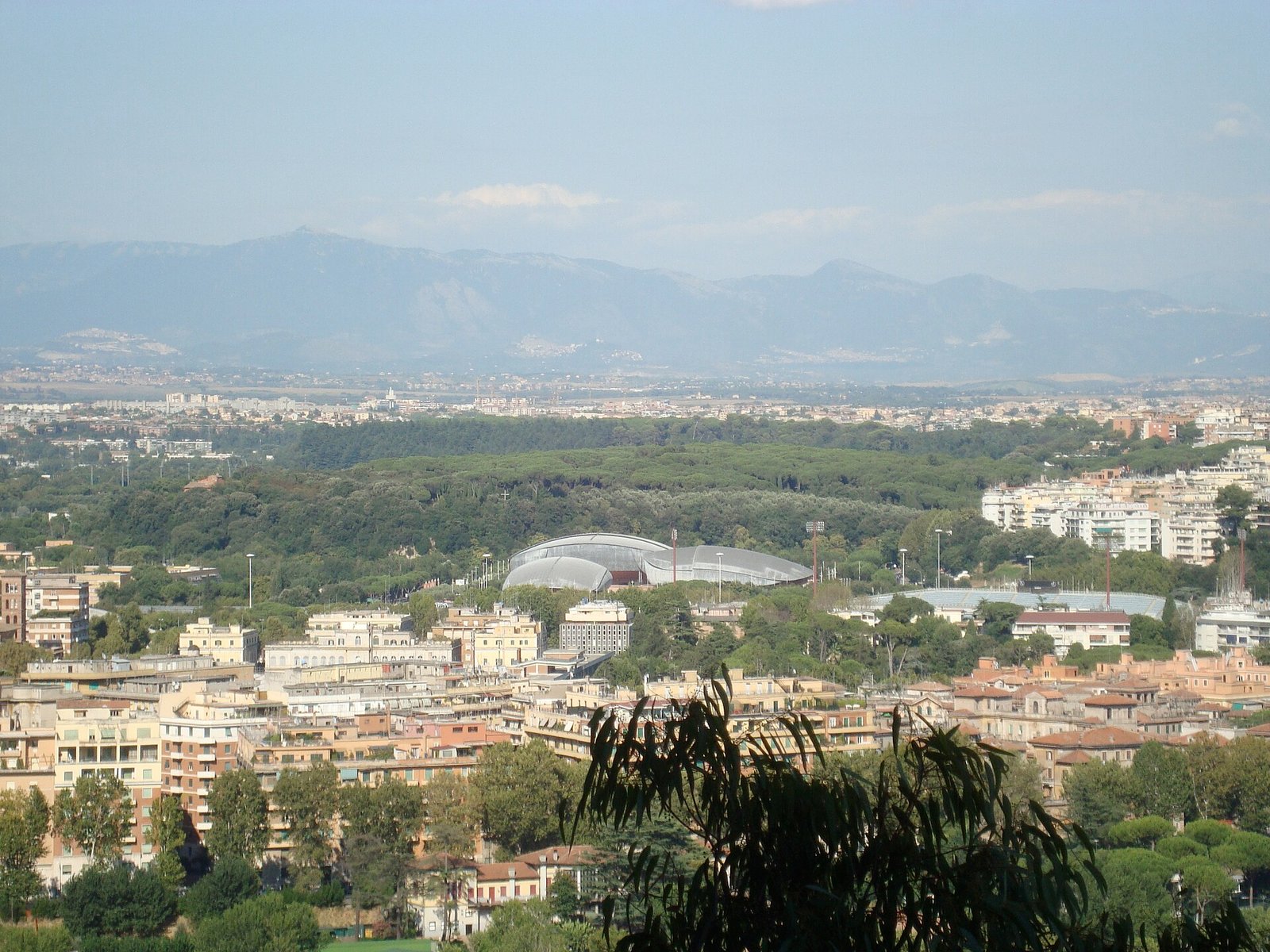 L’Auditorium Parco della Musica. Foto: LPLT, CC BY-SA 3.0, via Wikimedia Commons
Tokio Hotel play in Rome on Wednesday, July 14, 2027 at 21:00, with the Summer Encore 2027 tour, as part of Roma Summer Fest. The concert is held at Cavea of Auditorium Parco della Musica Ennio Morricone, at Viale Pietro de Coubertin 30, 00196 Rome, in the Parioli district, a few steps from the Villaggio Olimpico. The official box office lists it as an open-air arena: the event can take place in the rain and in that case no refund is provided. There are metal detector checks at the entrance. The rules are published on the Auditorium website. Tickets are sold online on the official network listed by Auditorium or at authorized outlets. The price isn't given on the event page and the gate opening time isn't published: that information isn't available. To get there, it's best to plan your route with the ATAC journey planner, because lines and stops can change.
Tokio Hotel in Rome at a glance
The 2027 summer tour was announced when the band hadn't yet started the "Arena Tour 2026". The idea is to bring the new album Encore, out on October 16, 2026, to Europe's open-air stages, along with more than two decades of history. The Rome date is presented as the only Italian stop announced and falls within Roma Summer Fest, the summer series that uses Auditorium's big tiered arena.
The key facts
Date: July 14, 2027. Time: 21:00, as reported by the official box office. Venue: Cavea, Auditorium Parco della Musica Ennio Morricone. Type of event: open-air concert. Sections and prices: not published on the page consulted. If you plan to be there, it's a good idea to check the sales page again in the preceding weeks, because opening times and access details may be updated.
Why the title "Summer Encore"
The name plays on the upcoming album, titled Encore, "bis" in Italian. The 2027 summer tour is therefore the natural extension of the 2026 arena season, designed for festivals and historic open-air locations. Among the dates already known there's also August 15, 2027 in Magdeburg, on Domplatz, the first stop in their hometown since 2005, chosen on purpose for the anniversary of "Durch den Monsun".
An open-air evening
The box office notice is clear: it's an open-air arena and the show isn't called off for a few drops. In July in Rome rain is rare, but the purchase condition applies to everyone anyway, so a light raincoat in your bag is a sensible choice.
The band: four musicians from Magdeburg
Tokio Hotel are Bill Kaulitz (vocals), Tom Kaulitz (guitar, keyboards, piano), Georg Listing (bass, keyboards) and Gustav Schäfer (drums, percussion). Bill and Tom are identical twins. The lineup has stayed the same since the start, which isn't a given for a band that has gone through early fame, breaks and comebacks.
Origins in Magdeburg
The band was formed in Magdeburg, Germany, in 2001. On how the four met, the sources consulted disagree on the details: one version speaks of a music contest at the Gröniger Bad in Magdeburg in 2001, where the twins met Gustav Schäfer, who introduced them to Georg Listing. Another says that the twins, already performing as children around Loitsche, met Listing and Schäfer at a concert when they were 12. Either way, the core is today's lineup.
The name Devilish
At first the four called themselves Devilish and played in Magdeburg clubs. One account attributes the name to a press article that called their sound "devilishly great".
The talent show and meeting Peter Hoffmann
In 2003 Bill took part in the kids' version of the talent show Star Search, where he didn't win: sources give either second place or elimination in the quarterfinals. The performance still caught the attention of producer Peter Hoffmann, who opened the way to the contract and the collaboration with the Hamburg producers.
Why Tokio Hotel
In 2004 the band changed its name to Tokio Hotel: Tokyo for their declared love of the city, hotel for life on the road.
The early days: "Durch den Monsun" and the album Schrei
Their recording debut came in summer 2005 with the single "Durch den Monsun", released on August 15 and number one on the German chart on August 26 of the same year, as well as in Austria. A month later the album Schrei came out, in German, released by Universal.
A lightning-fast debut
The single entered the chart at number 15 and reached the top within a few days. The speed with which the band went from unknown to national phenomenon is why the name is still linked today to the idea of a teenage success that exploded almost out of nowhere.
The numbers of Schrei
The album sold over 500,000 copies worldwide according to the sources consulted, produced four singles in the top five in Germany and Austria and was certified triple gold in Germany, the 300,000-copy threshold. In 2006 came the reissue Schrei - So laut du kannst, with "Rette mich" and "Der letzte Tag", both number one in Germany.
The first awards
In 2005 the band won the Comet Award for best newcomer and the Bambi for best national pop act. In 2006 came the ECHO for best newcomer and the World Music Award for best-selling German artist.
Zimmer 483 and European success
The second album, Zimmer 483, came out on February 23, 2007 and was again in German. According to the sources consulted it sold over 3 million copies in Germany and gave the band three singles in the top five at home, including "Übers Ende der Welt" and "Spring nicht".
The English version: Scream
In June 2007 came Scream, released in Europe on June 4 (in Italy on June 1) and known in Germany as Room 483. In Italy it reached number two on the Hitlist chart. The singles "Monsoon", "Ready, Set, Go!" and "By Your Side" took the band's name beyond the German-speaking world. Combined sales of Zimmer 483 and Scream topped 2.5 million copies according to one of the sources consulted.
The first Italian concert
Their live debut in Italy was on October 30, 2007 at the Mediolanum Forum in Assago, the tour's only Italian date, sold out. Tokio Hotel came back to Rome on July 6, 2008 at Ippodromo Capannelle, for the "1000 Hotels Tour - Open Air".
The vocal cord cyst
In spring 2008 Bill developed a cyst on his vocal cords and had surgery on March 30, 2008. The "1000 Hotels" tour was interrupted and then resumed in May, ending on July 13, 2008 in Werchter, Belgium. It was a critical moment in their career, overcome with the return to the stage and the rescheduled summer dates.
Humanoid, the electronic turn
The third record, Humanoid, came out on October 2, 2009 in Germany and on October 6 in the United States. Recorded in German and English, it's the work in which the band shifted its sound toward more electronic tones. The singles are "Automatic", "World Behind My Wall" and "Darkside of the Sun".
Humanoid City Tour
In 2010 the "Welcome to Humanoid City Tour" came to Italy with four dates: Turin, Padua, Milan and Rome. The Milan concert of April 12, 2010 was recorded and became the DVD Humanoid City Live.
Awards of the Humanoid season
At the MTV Europe Music Awards the band won best group in 2009 and best worldwide stage performance in 2010. In 2008 it had become the first German band to win at the MTV Video Music Awards, with the award for best new artist.
The break and the move to Los Angeles
After the tour, in 2010, the band announced a break and the twins moved to Los Angeles, while Schäfer and Listing stayed in Germany. In those years Bill and Tom worked on other projects, including serving as judges on Deutschland sucht den Superstar in 2013.
Kings of Suburbia and the comeback
The comeback came in 2014 with Kings of Suburbia, released on October 3, preceded by the single "Love Who Loves You Back" on September 26. According to one of the sources consulted the album reached number one in 30 countries and the top five in 17 others. With this work the sound moved toward electropop and synth-pop.
Dream Machine
The next record, Dream Machine, dates from March 3, 2017 and was taken on the road with the 2017-2018 tour, in which the 2018 North American dates were later canceled because of equipment problems.
The documentary Hinter die Welt
In 2017 the documentary Tokio Hotel - Hinter die Welt came out, while in 2024 the twins starred in the Netflix series Kaulitz and Kaulitz, released on June 25, 2024. Both titles are mentioned on the reference page among the band's side activities.
Another label
After the Universal period (2005-2016) and the one with Starwatch Music (2017-2020), on September 1, 2020 the band announced a contract with Sony Music Germany and Epic Records Germany.
From 2019 to Encore
Since 2019 the band's story has been made of tours, singles and two new albums. The most recent part is also the closest to the Rome concert.
Melancholic Paradise Tour
The tour announced in October 2018 started on April 26, 2019 in Manchester and ran until June 20 in Moscow. The 2020 North American and Latin American legs were then canceled because of the pandemic after just three dates.
The 15th anniversary of Durch den Monsun
In 2020 new versions of "Durch den Monsun" and "Monsoon" came out for the 15th anniversary. In December came "Berlin", with VVAVES. In 2021 followed "White Lies" with Vize and a cover of The Who's "Behind Blue Eyes".
The seventh album, 2001
On November 18, 2022 the band released 2001, described as the seventh studio album, with the name chosen to recall the year the band was founded. In 2023 the twins were coaches on the 13th season of The Voice of Germany, and their artist Malou Lovis Kreyelkamp won.
Beyond the World Tour
The "Beyond the World Tour" was postponed several times: planned for 2021, it moved to 2022 and then to 2023 for reasons linked to the conflict between Russia and Ukraine. The 2023 European dates were played, the Latin American and North American ones were held at the end of 2024. One date in Mexico City was canceled by the local promoter.
A Whole New Sound
In 2024 the band released A Whole New Sound, an album of pop-punk covers of Disney songs for Walt Disney Records, out on September 6. In summer 2025 a special concert celebrated 20 years of "Durch den Monsun", on August 15.
Encore
The new album, Encore, is announced for October 16, 2026 and is presented as the eighth studio record. The singles leading up to it are "Changes", "California Nights", "Memory Lane" and "Without You". The cover and the track list were revealed in August 2026. In 2026 the band is busy with the "Arena Tour 2026", before summer 2027.
Essential discography
The mental table of studio records, according to the sources consulted, is simple, and the style changes noticeably from one chapter to the next.
Studio albums
Schrei (2005), Zimmer 483 (2007), Scream (2007, English version), Humanoid (2009), Kings of Suburbia (2014), Dream Machine (2017), 2001 (2022), A Whole New Sound (2024, Disney covers) and Encore (announced for October 16, 2026). The official numbering of the records varies depending on if the English-language versions and the covers collection are counted or not.
Compilations and live releases
Compilations and live releases include New Collection (2008), Best Of (2010, with the new single "Hurricanes and Suns"), Humanoid City Live (2010) and Darkside of the Sun (2011).
Collaborations
Over the years the band has recorded with different artists: Kerli on "Strange" (2010), Far East Movement on "If I Die Tomorrow" (2012), Wyclef Jean and David Correy on "I Am" (2013), VVAVES, Vize, Kraftklub on "Fahr mit mir (4x4)" (2022) and Daði Freyr on "Happy People" (2022).
Awards
The reference page lists over 100 awards since 2005. Only the most relevant are given here.
MTV Europe Music Awards
Best InterAct in 2007, Headliner in 2008, best group in 2009 and best worldwide stage performance in 2010 (edition held in Spain). In 2007 there had also been a nomination for best band.
MTV Video Music Awards
In 2008 the band won the award for best new artist and, on the same night, the fan-voted award for best entrance. It was the first German band to win at the VMAs. In 2011 a win in Japan, for best rock video, was the first for a German band.
Italian awards
In Italy Tokio Hotel received the Festivalbar Digital Prize (2007), the award for best band at MTV's Kids' Choice Award (2007), the Disney Channel Kids Award for best international group (2008) and, at the MTV TRL Awards, the awards for best band (2008), best number one of the year with "Monsoon" (2008) and best TRL artist (2009). In 2015 came the MTV award for best world artist.
Cavea at Auditorium
Cavea is the open-air theater of Auditorium Parco della Musica. According to the Auditorium website it holds from 3,000 to 5,000 seats, depending on the setup. The encyclopedia entry speaks of about 3,000 seats. Its shape is that of a fan-shaped amphitheater, with the tiers opening around a central square, recalling Greek and Roman performance spaces.
An ancient shape
The three large indoor halls are arranged radially around Cavea. From above, the complex looks like a group of beetles resting around a basin, an image that caught on in everyday language.
The dedication to Luciano Berio
According to the reference entry, Cavea is named after Luciano Berio, the composer who was president of Accademia di Santa Cecilia in Auditorium's early years.
The museum under Cavea
The finds unearthed during the excavations, remains of a Roman villa, are displayed in a small museum under Cavea: a detail that sets this stage apart from any other summer arena in the city.
Auditorium Parco della Musica Ennio Morricone
The complex, designed by Renzo Piano, stands in the Parioli district on an area of about 55,000 square meters, between Villa Glori, the Villaggio Olimpico, the Corso di Francia viaduct and Viale Maresciallo Pilsudski.
The halls
The three main halls are Sala Santa Cecilia (2,756 seats, the largest), Sala Sinopoli (1,133 seats) and Sala Petrassi (673 seats). On top of these there's Teatro Studio Gianni Borgna with 308 seats, three recording studios, rehearsal rooms, foyers, cafés, a restaurant and a bookstore.
Who runs it
The venue is run by Fondazione Musica per Roma, set up in 1999 as a joint-stock company and turned into a foundation on July 19, 2004. Since 2003 Accademia Nazionale di Santa Cecilia has held its main season here.
The name of Ennio Morricone
In 2020 the city council approved naming Auditorium after Ennio Morricone: since then its official name has been Auditorium Parco della Musica Ennio Morricone.
Renzo Piano and the architecture
Renzo Piano, born in Genoa on September 14, 1937, won the Pritzker Prize in 1998 and has been a senator for life since August 30, 2013. His works include the Centre Pompidou in Paris, built from 1971 to 1977 with Richard Rogers and Gianfranco Franchini, the Shard in London and the Genova San Giorgio viaduct.
The competition
The sources disagree on the date: the entry on Auditorium speaks of an invitation-only competition won in 1993, the entry on Piano gives 1994. The first stone was laid on January 15, 1995, according to one of the sources.
The acoustics
For the acoustics Piano relied on Jürgen Reinhold of the Müller-BBM firm in Munich, while the landscape consulting was by Franco Zagari. In Sala Santa Cecilia there are 26 cherry wood shells, of about 180 square meters each, with a reverberation time of about 2.2 seconds.
The controversies
The construction was complicated: the contract with the original company was terminated, a new tender was called and costs rose sharply. There was also debate over the lack of a pipe organ and some initial acoustic problems, later fixed with modifications.
A curious fact about Auditorium Parco della Musica Ennio Morricone
The excavations on the building site brought to light the remains of a Roman villa: first a small archaic farm from the 6th century BC, then a patrician villa from the 3rd century BC. Piano changed the project, moving two of the three halls to the west, and the work was delayed by about a year.
Where to see the remains
The remains are between Sala Santa Cecilia and Sala Sinopoli and can be seen from the terrace. The finds are collected in the small museum under Cavea.
The beetles
The shape of the halls has earned the complex nicknames like "beetles", "turtles" and even "computer mice".
Something nobody tells you about Auditorium Parco della Musica Ennio Morricone
Getting to Auditorium by car is the least convenient choice. The reference entry notes that parking is limited and expensive and that cars end up spilling into the Villaggio Olimpico. For an evening concert with thousands of spectators the problem multiplies.
On the day of the show
The Auditorium website says that on Cavea show days the complex closes at 16:00, compared with regular summer hours from 11:00 to 20:00. If you arrive early in the afternoon to see the rest, you have to reckon with this closure.
Services under pressure
The reference entry also mentions criticism of restrooms and ventilation at peak times and of access to the galleries limited to just two elevators: for Cavea, which is outdoors, it's mainly the restroom lines that matter.
My tip for visiting Auditorium Parco della Musica Ennio Morricone
My tip is to arrive well ahead of time and walk the last stretch: the nicest route goes over the Ponte della Musica, a pedestrian and bike bridge that links the Flaminio area with Auditorium and Foro Italico sports area.
Public transportation
The reference entry mentions the Flaminia/Reni and Apollodoro stops and bus lines 910, 982, 168 (on weekdays) and 53 in front of the entrance. For an evening concert, check lines and times on the ATAC journey planner, because the information changes.
What to put in your bag
A light rain jacket, an empty bottle if the rules allow it and your ticket already on your phone. Since there are metal detector checks, it's better to bring little: the rules, published on the Auditorium website, are the source to check for permitted items.
When to choose your seat
Information on Cavea sections for this concert isn't published on the page consulted. In tiered arenas like this one, in general, the central seats offer the best view of the stage, but for the details you have to wait for the official map.
Another well-known fact, yet one that's rarely mentioned
Everyone knows Auditorium is by Renzo Piano. Less remembered is that for years it was one of the most visited cultural venues in Europe. According to the reference entry, in 2014 visitors topped 2 million, second in the world after Lincoln Center in New York.
The 2016 numbers
In 2016 the Foundation organized 608 events, taking in €9,702,260, a record, and selling 287,109 tickets.
Four walls, many languages
The program ranges from classical, jazz, rock and pop to opera, electronic music, world music, theater, dance, circus, literature, exhibitions and science and book festivals.
The right photo to take at Auditorium Parco della Musica Ennio Morricone
The most recognizable photo is the one of the three beetle-shaped halls seen from Cavea square: the late afternoon light of summer makes them stand out before the concert begins.
Before the concert
An hour before the start the summer light is still high: the right angle is from the top of the tiers, with the halls in the background and the audience taking their seats.
From the bridge
From the Ponte della Musica, with its two big steel arches leaning outward, you get a different shot: the Tiber, the structure and, behind it, the green of the area.
During the show
The rules on cameras and recordings are in the event regulations. For pop concerts, the phone is usually the accepted tool, but it's best to check beforehand.
Some important events that happened here in history
The history of Auditorium is short but dense. It goes from the choice of the site to the 2002 openings, up to the big festivals and the dedication to Morricone.
1992-1995: the choice and the project
In 1992 the city council chose the site near the Villaggio Olimpico, after a long debate. Between 1993 and 1994 Renzo Piano won the competition and on January 15, 1995 construction began.
2002: the openings
Sala Sinopoli opened on April 21, 2002. The rest of the complex, including Sala Santa Cecilia, on December 21, 2002. The inaugural concert of Santa Cecilia was conducted by Chung Myung-whun. Some sources give slightly different opening dates.
2006: the Rome Film Fest
Since 2006 Auditorium has hosted the Festa del Cinema di Roma, which you can read more about on the page dedicated to Festa del Cinema di Roma 2026.
2020: the name of Morricone
The city council approved naming it after maestro Ennio Morricone.
1960: the sports around it
The neighborhood around the complex bears the mark of the 1960 Olympics. Stadio Flaminio, designed by Antonio Nervi with structural consulting by his father Pier Luigi, was inaugurated on March 19, 1959 and in 1960 hosted matches of the Olympic soccer tournament.
Who has passed through Auditorium Parco della Musica Ennio Morricone
Among the artists who have recorded here, according to the reference entry, are William Parker, Tuxedomoon, Vinicio Capossela, Mark Knopfler and Keith Jarrett.
Live records
Live albums from Auditorium include those by Christian Fennesz and Ryuichi Sakamoto (Touch, 2005), Enrico Rava and Joe Lovano (ECM, 2014) and The National (4AD, 2024).
Classical music
Accademia Nazionale di Santa Cecilia has had its home here since 2003. The music director is Antonio Pappano. Among the other concerts on the program, at the same Cavea or in Auditorium, there's Dire Straits Reload.
Other rock and pop concerts
The program regularly includes pop and rock, and Cavea is the natural stage for big summer concerts.
The neighborhood: Flaminio, Villaggio Olimpico and surroundings
Before or after the concert, the area offers a few stops. They can all be reached on foot from the complex or with a short walk.
MAXXI
MAXXI, designed by Zaha Hadid, opened on May 28, 2010 in the area of the former Caserma Montello, in the Flaminio district. The main entrance is on Via Guido Reni. The project came out of a competition launched in July 1998. The exhibition Il Villaggio Olimpico di Roma at MAXXI also tells the story of the neighborhood near Auditorium.
Stadio Flaminio
Built in 1957-1958 on the site of Stadio Nazionale, Stadio Flaminio hosted concerts by U2, Duran Duran, Prince and David Bowie in 1987, Michael Jackson in 1988 and 1992 and the Rolling Stones in 1990. It has been protected since 2008. For a walk around the neighborhood see Flaminio, what to see.
Foro Italico
From the Ponte della Musica you can also reach Foro Italico, the sports complex linked by the bridge, along with Villa Glori, Teatro Olimpico and the green of Monte Mario.
Ponte della Musica
The bridge, made of steel and concrete, is 190 meters long and crosses the Tiber between the Della Vittoria and Flaminio districts. Built from 2008, it opened in May 2011 and since May 30, 2013 it has also been named after Armando Trovajoli. Further down, Ponte Flaminio is another landmark of the neighborhood.
Villaggio Olimpico
The Villaggio Olimpico neighborhood borders the Auditorium site and, on show nights, bears the pressure of traffic and parking. For the project and history of the neighborhood, see the MAXXI exhibition mentioned above.
Tickets, access and rules
The sales channel listed is the event's official online box office. The sales page also mentions the option to change the name of the ticket holder, useful if you can't attend.
What the official notice says
The notice is about rain and security checks: it's an open-air arena, the show can take place in the rain and no refund is due. There are metal detector checks at the entrance, with rules available on the Auditorium website.
Prices and sections
This information isn't published on the page consulted. Before buying, it's worth opening the seating map in the sales system and comparing Cavea sections.
Contacts
For information on Auditorium rules, the website gives the address info@musicaperroma.it.
How to get to Auditorium
The address is Viale Pietro de Coubertin 30, 00196 Rome, in Municipio II, Parioli district.
By public transportation
For the exact route, use the ATAC journey planner. A reference source mentions the Flaminia/Reni and Apollodoro stops and some bus lines in front of the entrance.
On foot
Ponte della Musica is reserved for pedestrians, cyclists and electric public transportation. It's a convenient approach from Flaminio to the complex.
By car
Parking is limited and expensive. On busy evenings cars spill into the streets of the Villaggio Olimpico. If possible, it's better to avoid driving.
Frequently asked questions about Tokio Hotel in Rome
When do Tokio Hotel play in Rome?
The concert is set for Wednesday, July 14, 2027 at 21:00, at Cavea, Auditorium Parco della Musica Ennio Morricone, as part of Roma Summer Fest. The date and time are those given by the official box office. The gate opening time isn't published, so it's worth checking the sales page again closer to the date.
Where can I buy a ticket?
Tickets are sold on the event's official network, online or at authorized outlets. The event page also lets you change the ticket holder. The price isn't given in the text consulted, while the Auditorium website refers to its own box office rules for the conditions.
What happens if it rains?
The box office warns that it's an open-air arena and that the event can take place in the rain: in that case no refund is due. Bringing a light raincoat is therefore wise. For the conditions under which the show may be called off, refer to the official rules.
Are there security checks at the entrance?
Yes, there are metal detector checks. The rules, which explain which items you can bring, are published on the Auditorium website. It's best to arrive early and bring only what you need to cut down the time in line at the entrance.
How many seats does Cavea have?
According to the Auditorium website, Cavea is an open-air space with 3,000 to 5,000 seats, depending on the setup. An encyclopedia entry speaks instead of about 3,000 seats. The actual number for the Tokio Hotel concert isn't published.
Which albums will they present?
The tour presentation speaks of the new album Encore, out on October 16, 2026, and of more than two decades of the band's history. The set list hasn't been published, so it's impossible to say which songs will be played, though big hits like "Durch den Monsun" belong to the historic repertoire.
Is it the only Italian date on the tour?
The announcement text speaks of the Rome concert of July 14, 2027 as the tour's Italian concert. Other dates mentioned for summer 2027 are abroad, including August 15, 2027 in Magdeburg, on Domplatz, the band's hometown.
How do I get to Auditorium?
The address is Viale Pietro de Coubertin 30, Parioli district. For the most convenient route, use the ATAC journey planner. On foot you can go via Ponte della Musica, while by car parking is limited and expensive.
My final tip on Tokio Hotel in Rome
Arrive early, on foot if possible, and leave time on the last stretch for a walk across Ponte della Musica before entering Cavea. Then, once you're seated, the evening has three ingredients that are rarely found together: a band with 20 years of repertoire, a new album just out and one of the most recognizable open-air stages in Rome. Checking the box office page again for opening times and prices is the only thing to do calmly in the months before.
Article written by the editorial team of Tour Leader Pro, contact them for Private/Corporate/V.I.P. Tours and Experiences.
Planning a trip to Rome? The English-language guides for visiting the city are on ItalyPlanner.com.