The Three Tenors at the Church of San Paolo entro le Mura, through December 22, 2026
https://www.estateromana.com/en/rome/trip-planner/three-tenors-san-paolo-entro-le-mura/
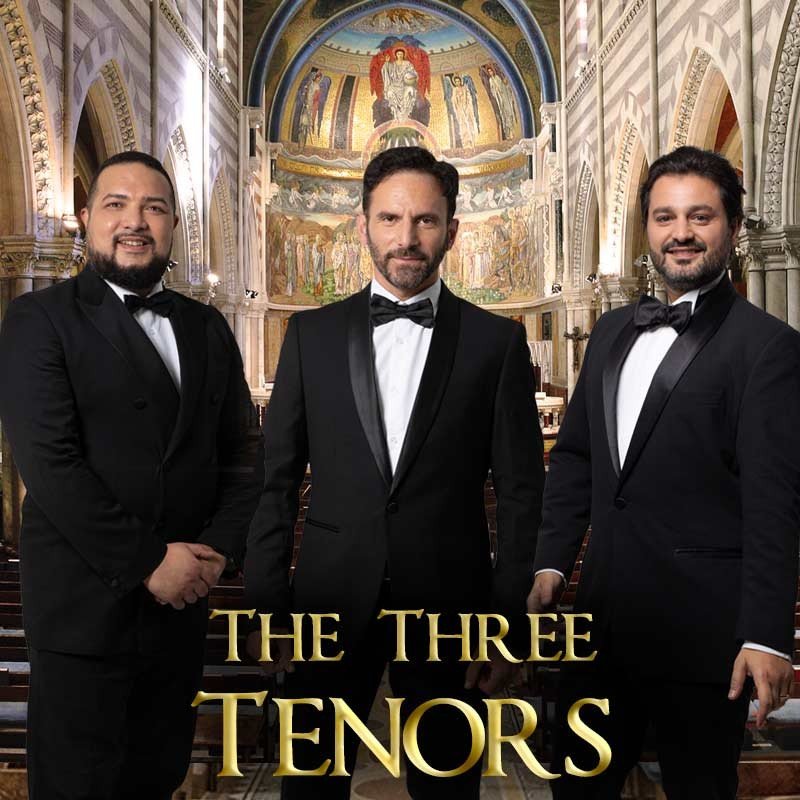
The Three Tenors in Rome is the concert of opera arias and Neapolitan songs that Opera e Lirica presents at the Church of San Paolo entro le Mura, with its entrance at Via Nazionale 16/A, in a season that the Rome municipal tourism portal lists as running from June 16 to December 22, 2026. The evenings follow the calendar published by the organizer: doors open at 8, the concert starts at 8:30 and ends at 10, with a five-minute intermission, for a running time of about 90 minutes. The church is a few minutes' walk from Termini Station. Tickets start at 25 euros, taxes included, and are bought on the official Opera e Lirica site by choosing the date and seat category. Children under seven and people with disabilities enter free while the dedicated seats last, tickets are non-refundable.
Three tenors, a string quartet, a piano, and a neo-Gothic nave. The title evokes a famous formula, but the concert should be taken for what it is: an evening of great arias and songs everyone knows, designed for people visiting Rome who want an hour and a half of live music in a beautiful place. It is not an event for demanding opera buffs, it is a concert built with craft to send the audience out humming. And on that, in my experience, it keeps its promise.
The program of the Three Tenors at San Paolo entro le Mura
The concert is divided into two halves. The first is devoted to the most celebrated Italian opera arias, the second to Neapolitan songs and a few hits of Italian popular song. The organizer warns that the program may be subject to change.
First half: opera
The published program lists, in order: the Intermezzo from Pietro Mascagni's Cavalleria rusticana, Una furtiva lagrima from Gaetano Donizetti's L'elisir d'amore, E lucevan le stelle from Giacomo Puccini's Tosca, Mattinata by Ruggero Leoncavallo, the Meditation from Jules Massenet's Thaïs, La donna è mobile from Giuseppe Verdi's Rigoletto, Granada by Agustín Lara, and to close, Nessun dorma from Puccini's Turandot.
Second half: Naples and surroundings
The second half opens with a medley of Neapolitan songs: Core 'ngrato by Salvatore Cardillo, Maria Marì by Eduardo di Capua, 'O surdato 'nnamurato by Enrico Cannio, Torna a Surriento by Ernesto De Curtis. These are followed by Nel blu dipinto di blu by Domenico Modugno, Con te partirò, which the program credits to Andrea Bocelli, Caruso by Lucio Dalla and, to close, 'O sole mio by Eduardo Di Capua.
The intention of the evening
The organizer describes the concert as a journey through the masterpieces of Italian opera and Neapolitan song: if the first half presents the great operas, the second involves the audience with the enthusiasm of the land of Naples. It promises moments to be moved and to smile, and above all a very close distance to the artists. That is the key to understanding the show.
The artists of the Three Tenors
The voices are those of three tenors from the Opera e Lirica company: Francesco Fortes, Alessandro Fortunato, and Stefano Sorrentino. They are accompanied by a string quintet and piano.
The tenors
Francesco Fortes, Alessandro Fortunato, and Stefano Sorrentino are named by the organizer as the protagonists of the evening. The three-voice format allows for alternating solo arias and closing the two halves with ensemble pieces, according to the now well-established tradition of this kind of concert.
The ensemble
The first violin is Elvin Dhimitri, the second violin Alina Scoticailo, the viola Ilia Kanani, the cello Valentino Ferraro, the piano Denis Volpi. Elvin Dhimitri is also the conductor of the Traviata that the same company stages in the church: a sign of a stable group that knows the space and its acoustics well.
Opera e Lirica
Opera e Lirica Srl is an events agency with offices in Rome and Sorrento. At San Paolo entro le Mura it offers an ongoing program designed for an international audience: besides the Three Tenors, Verdi's Traviata and other concerts. The site is multilingual and booking is designed for those planning their trip from afar.
A listening guide to the Three Tenors: how to follow the evening
A program of 16 pieces in 90 minutes moves quickly. Knowing its structure helps you enjoy it, especially if you don't often attend opera concerts.
The instrumental opening
The evening doesn't begin with a voice but with the Intermezzo from Mascagni's Cavalleria rusticana, entrusted to the strings and piano. It's the moment when the ears get used to the space: listen to how the sound of the strings fills the nave and lengthens under the vaults. Later, the Meditation from Massenet's Thaïs offers a second instrumental pause, with the violin in the foreground.
Three Italian composers, three ways of writing for tenor
The first half lines up Donizetti, Verdi, Puccini, and Leoncavallo. Donizetti with Una furtiva lagrima, Verdi with La donna è mobile, Puccini with E lucevan le stelle and Nessun dorma. Even without knowing them, you can hear the difference between a more intimate, lyrical melody and the pages built to explode in the finale. The advice is not to applaud too soon: Puccini's endings always arrive a moment after what you expect.
A Spanish surprise
In the midst of the Italian arias the program inserts Granada by Agustín Lara. It's a sign that the concert looks to an international audience: a piece tenors love for its momentum and that the audience recognizes at the first refrain.
The second half: everyone sings together
After the intermission the register changes. The Neapolitan songs, from Core 'ngrato to Torna a Surriento, are pieces in which the tenor voice moves more freely. Then come Modugno, Con te partirò, Lucio Dalla's Caruso, and the finale with 'O sole mio. It's the moment when the audience, as a rule, lets go. Don't hold back.
Three Tenors or Traviata: two different evenings in the same church
Opera e Lirica also brings Verdi's Traviata to San Paolo entro le Mura. The two offerings share venue, organizer, and price range, but are designed for different needs.
If you're short on time
The Three Tenors lasts about 90 minutes and ends at 10 p.m. La Traviata lasts about two hours and ends at 10:30 p.m. For those with a packed day or traveling with children, the concert is more manageable.
If you want a story
La Traviata tells a story from beginning to end, with eight roles and the chorus. The Three Tenors is a sequence of famous pieces, with no plot. Those who want to experience opera as theater will choose the first, those who want to hear the best-known melodies, the second.
San Paolo entro le Mura: the church that hosts the concert
The Church of San Paolo entro le Mura (St. Paul's Within the Walls) is an American Episcopal church in the Castro Pretorio district, on Via Nazionale. Built between 1873 and 1880, it was the first non-Catholic church built in Rome after Italian unification. The concert's organizer praises its high vaults and marvelous acoustics.
Street's design
The church was the wish of the Reverend Robert J. Nevin for the American Episcopalian community, which had previously met at the premises of the American Legation to the papal court. The design is by the English architect George Edmund Street, who also designed the Anglican church of All Saints. The style combines neo-Romanesque and neo-Gothic, with a neo-Byzantine apse.
Sienese brick and travertine
On the outside the church alternates red brick from Siena and bands of travertine. The facade has a rose window with the symbols of the Evangelists, the bell tower holds 23 bells cast in 1876. It's a building you recognize in Rome at first glance, so different from the city's Baroque facades.
The interior and the apse
The interior has three aisles, with stained glass windows devoted to the life of Saint Paul. The apse vault is decorated with mosaics designed by Edward Burne-Jones: Christ enthroned in the heavenly Jerusalem, among the archangels Uriel, Michael, Gabriel, Chamuel, and Zophiel. During the concert they are the backdrop for the three tenors.
A twentieth-century organ
The church holds a Mascioni organ from 1962, opus 833, with 41 stops on three manuals and pedal. The earlier organ, built in 1878 by Hilborne L. Roosevelt, is today in the church of Gesù Bambino at Sacco Pastore.
How to get to the Three Tenors at San Paolo entro le Mura
The entrance indicated by the organizer is at Via Nazionale 16/A. The church is a few minutes' walk from Termini Station, which makes it convenient for those staying near the station or in the Esquilino area.
From Termini Station
The walk from Termini is short. It's also the simplest solution on the way back, since the concert ends at 10 p.m.
From other parts of Rome
For those coming from Trastevere, the Vatican, or the northern neighborhoods, ATAC's route planner gives the best combination of the day. It's worth checking the evening return too before you head out.
By car
The organizer lists no parking. In the center at night, a car is not advisable: taxis and public transport are more practical, and those staying nearby are quicker on foot.
Tickets for the Three Tenors in Rome
Tickets for the Three Tenors start at 25 euros, taxes included, and are purchased on the official Opera e Lirica site. The organization warns that the performances are often sold out and advises booking in advance, to secure your preferred date and seat category.
Seat categories and the Roma Pass
Category B, with seats in the last row, costs 25 euros, Category A, with center seats, has a market value of 35 euros. Roma Pass holders get a 10-euro discount: by buying the 25-euro ticket you sit in the Category A center seats.
Free admission
Children under seven and people with disabilities attend free, while the dedicated seats last and according to the terms and conditions published on the organizer's site.
Refunds
Tickets are non-refundable. Before buying, check the date and time, especially if your trip is not yet settled or depends on train and flight connections.
How to organize your Three Tenors evening
90 minutes of concert, from 8:30 to 10 p.m., leave plenty of time for dinner before or after. It's an evening that's easy to fit into even a packed Roman itinerary.
Arriving early
The organizer suggests arriving at least 30 minutes before the start to secure the best seat in your category. Doors open at 8. In a church, where the floor is flat, your position within the category matters a lot.
Clothing and climate
There is no dress code. The church is air-conditioned all year, cool in summer and heated in winter. Sober dress remains the choice most respectful of the place.
With children
For those traveling with kids, the 90-minute format and the second half of well-known songs make this concert better suited to children than a full opera. Under seven, admission is free in the dedicated seats.
Accessibility
People with disabilities enter free in the dedicated seats. For specific access needs it's best to write to the organizer before buying.
What to see around San Paolo entro le Mura
The church is in one of the areas of Rome richest in museums and monuments within a short distance. The afternoon before the concert fills up easily.
The Baths of Diocletian and Palazzo Massimo
A short distance away are the Baths of Diocletian and Palazzo Massimo alle Terme, in the area of Piazza della Repubblica.
The Quattro Fontane and the Quirinale
Climbing toward the hill you reach the intersection of the Quattro Fontane and the Quirinal Palace. Those with energy left can walk all the way to the Trevi Fountain.
For another evening of music
Those who want to compare this concert with Rome's great opera tradition can look at the season of the Rome Opera House, not far away.
Where to eat before or after the Three Tenors
The streets around Termini offer a lot, but not always well. The advice is to move a little farther.
Before the concert
An early dinner, around 6:30, lets you arrive calmly at the opening of the doors. The Monti district, a few minutes' walk away, has suitable trattorias and osterias.
After the concert
At 10 p.m. the city is still awake, and the area between Via Nazionale and Monti still offers many options at that hour. A late dinner or a gelato after the concert is the most Roman way to end the evening.
The Three Tenors season: dates and calendar
The Three Tenors in Rome is a recurring show. The Rome municipal tourism portal lists its 2026 season as running from June 16 to December 22, always at the Church of San Paolo entro le Mura and always starting at 8:30 p.m.
How to choose the date
The available evenings are shown at the time of purchase on the official Opera e Lirica site, which shows for each date the seat categories still free. The organizer's advice is to book in advance, because the evenings are often sold out.
Fall and winter
The season covers all of the fall and runs up to the weeks before Christmas. The church is air-conditioned all year, so the concert is a good solution on cold or rainy evenings too, when a nighttime stroll in the center is less inviting.
The Three Tenors in Rome: useful information at a glance
- Venue: Church of San Paolo entro le Mura, entrance at Via Nazionale 16/A.
- Season: June 16 to December 22, 2026, according to the Rome municipal tourism portal.
- Times: doors at 8, start at 8:30, end at 10, one five-minute intermission.
- Prices: from 25 euros taxes included in Category B, Category A with center seats valued at 35 euros.
- Roma Pass: 10-euro discount, with a Category A seat at the Category B price.
- Free admission: children under seven and people with disabilities, while the dedicated seats last.
- Dress code: none.
- Refunds: tickets are non-refundable.
- Recommended arrival: at least 30 minutes before the start.
A curiosity about the Three Tenors at the Church of San Paolo entro le Mura, through December 22, 2026
The curiosity is hidden in the apse, right behind the singers. The mosaics designed by Edward Burne-Jones contain incognito portraits: nineteenth-century figures who lent their faces to the saints. Among the Christian warriors on horseback, Saint James has the face of Giuseppe Garibaldi, Saint Andrew that of Abraham Lincoln, Saint Patrick that of General Ulysses S. Grant.
Among the Fathers of the Church there are other recognizable faces: Saint Ambrose is Junius Spencer Morgan, father of the banker John Pierpont Morgan, who contributed to the construction, Saint Gregory the Great recalls Archibald Campbell Tait, Archbishop of Canterbury, Saint Basil has the face of the diplomat George Perkins Marsh. In the procession of female saints, Saint Barbara is Georgiana Burne-Jones, the artist's wife, and Saint Cecilia is Mary Dahlgren Astor, Marsh's wife.
There is a curious coincidence: in a concert that ends with 'O sole mio and the Neapolitan songs, Garibaldi looks down on the audience from the apse of an American church. Nobody planned it, but it makes the evening even more Italian.
Something nobody tells you about the Three Tenors at the Church of San Paolo entro le Mura, through December 22, 2026
What goes unsaid is that in a concert like this the repertoire is the fixed element, while how it comes across depends a lot on the seat and the night. In a nave the tenor voices expand under the vaults, and the organizer itself praises the acoustics: but from the middle of the hall back, the closeness to the artists, which is the concert's main promise, fades. The front rows make the difference.
The second thing: the published program is indicative. The organizer clearly writes that it may be subject to change. Those who go to hear a specific piece need to know that, those who go for the evening as a whole will have no surprises.
The third concerns dates. The Rome municipal tourism portal lists the season as June 16 to December 22, 2026. The sure reference for the date of your evening is always the sales calendar on the official Opera e Lirica site: if a date isn't on sale there, don't count on it.
The tip I give you for visiting the Three Tenors at the Church of San Paolo entro le Mura, through December 22, 2026
It's worth choosing this concert as the first or the last evening of your trip. As a first evening, because 90 minutes of famous arias and well-known songs are a light welcome that asks for no preparation and leaves time for dinner. As a last, because closing a trip to Rome with 'O sole mio under a Burne-Jones mosaic has its logic.
On the practical side: buy the category that sits you up front, or use the Roma Pass to get the center seats at the price of the cheapest category, as indicated by the organizer. Arrive at 8, when doors open, to choose your seat and look at the apse before the lights go down.
One last suggestion: before the concert, listen once at home to Nessun dorma and E lucevan le stelle. Nothing more is needed. Those who arrive with those two melodies in their ear recognize them from the first note, and the evening changes tone. The second half, instead, leave to surprise: Neapolitan songs live, in such an intimate space, work better without preparation.
Another well-known fact, yet rarely mentioned
It is known that the Church of San Paolo entro le Mura has hosted concerts for an international audience for years. Less often remembered is that it is also a church of music, equipped with an important organ. The current Mascioni of 1962 has 41 stops on three manuals and pedal, the earlier instrument, an American Roosevelt of 1878, had arrived in the church a few years after its construction.
A second little-cited fact concerns its place in Rome's history. It was the first non-Catholic church built in the city after Italian unification. Before, the American Episcopalian community met at the American Legation to the papal court. That arias by Puccini and songs of Naples are sung there today is the curious and happy outcome of that season of openings.
And a third, for lovers of architecture: the same architect, George Edmund Street, also designed All Saints, Rome's other Anglican church, intended for British worshippers. Two communities, two churches, a single designer.
The right photo to take at the Three Tenors at the Church of San Paolo entro le Mura, through December 22, 2026
Photos during the concert follow the organizer's rules, and respect for the artists comes first. The best images, besides, are taken before and after.
The first photo is the whole: from the back of the nave, before the start, with the music stands and the piano in front of the golden apse. It's the image that tells the concert better than a close-up: music inside architecture.
The second is a detail of the mosaics. With the zoom you can look for Garibaldi among the warriors on horseback, or Lincoln as Saint Andrew. It's the photo to show someone who doesn't believe it.
The third is at the exit, after 10 p.m., on the illuminated facade: red Sienese brick, bands of travertine, the rose window with the symbols of the Evangelists, and the bell tower. A neo-Gothic church in a Baroque city: photographed at night, it looks like it came from another European city.
Some important events that have happened here through history
The church's history begins with a political and religious choice. After unification, the Reverend Robert J. Nevin bought the land and obtained from the Italian government the authorizations to build a place of worship for the American Episcopalian community: it is the first non-Catholic church built in Rome after unification.
Construction lasted from 1873 to 1880, to a design by George Edmund Street. In 1876 the bell tower's peal of 23 bells was cast, in 1878 the organ by Hilborne L. Roosevelt arrived from the United States. The apse was decorated with mosaics designed by Edward Burne-Jones, which turn contemporary figures into saints and warriors: Lincoln, Garibaldi, Grant, Morgan, Archbishop Tait, the diplomat Marsh.
In 1962 the original organ left the church, replaced by the Mascioni opus 833, and was moved to the church of Gesù Bambino at Sacco Pastore, where it remains today, modified several times.
In recent years the church has become one of the regular venues for concerts aimed at the international audience in Rome: the organizer of the Three Tenors presents it as a monumental church rich in history, art, and spirituality, and stresses its acoustics.
Who has passed through the Three Tenors at the Church of San Paolo entro le Mura, through December 22, 2026
Through the church on Via Nazionale have passed, first of all, its founders and its artists: the Reverend Robert J. Nevin, the architect George Edmund Street, the painter Edward Burne-Jones with his assistant Thomas Matthews Rooke, who appears in the mosaics as Saint Longinus.
Then the figures who supported the church or who were portrayed in it: Junius Spencer Morgan, who contributed to the construction, George Perkins Marsh, American diplomat stationed in Rome from 1861 to 1881, and his wife Mary Dahlgren Astor, Georgiana Burne-Jones and her daughter Margaret. And, in mosaic form, Abraham Lincoln, Giuseppe Garibaldi, and Ulysses S. Grant.
Today, every evening of the season, the musicians of Opera e Lirica pass through: the tenors Francesco Fortes, Alessandro Fortunato, and Stefano Sorrentino, the violins of Elvin Dhimitri and Alina Scoticailo, the viola of Ilia Kanani, the cello of Valentino Ferraro, the piano of Denis Volpi. And an audience that comes from all over the world, often on its first Roman evening.
The Three Tenors in Rome: who this concert is for
The concert is built for a broad audience. It helps to know in advance if it's for you.
Yes, if
You want an easygoing evening of live music, with the most famous pieces of Italian opera and Neapolitan song, in a special place and at a modest price.
Maybe, if
You are an opera enthusiast looking for a reference-quality performance. In that case the Teatro dell'Opera season is the better choice, this concert remains a pleasant complement.
For families
90 minutes, an intermission, songs even kids know: it is one of the evening music offerings best suited to families in central Rome.
For solo travelers
A 90-minute concert in a central area, near the station, with assigned seats by category and an international audience: it is an easy evening to enjoy even without company, and a good way to end a day of sightseeing without a care.
Frequently asked questions about the Three Tenors at San Paolo entro le Mura
Until when can you hear the Three Tenors at San Paolo entro le Mura?
The Opera e Lirica Three Tenors at the Church of San Paolo entro le Mura are scheduled, according to the Rome municipal tourism portal, from June 16 to December 22, 2026. The evenings actually available can be seen in the sales calendar of the organizer's official site, which remains the reference for each individual date.
What time does the Three Tenors concert start?
The Three Tenors concert at San Paolo entro le Mura begins at 8:30 p.m. and ends at 10, with a five-minute intermission, doors open at 8. The organizer recommends arriving at least 30 minutes early to choose the best seat in your category.
How much is a Three Tenors ticket?
Tickets for the Three Tenors in Rome start at 25 euros, taxes included, in Category B, Category A with center seats has a value of 35 euros. With the Roma Pass you get a 10-euro discount under the organizer's formula. Tickets are bought on the official Opera e Lirica site and are non-refundable.
What do the Three Tenors sing in Rome?
The Three Tenors program at San Paolo entro le Mura includes in the first half arias such as Una furtiva lagrima, E lucevan le stelle, La donna è mobile, and Nessun dorma, and in the second songs such as Torna a Surriento, Nel blu dipinto di blu, Caruso, and 'O sole mio. The program may vary.
Who are the tenors in the concert?
The tenors of the Three Tenors concert in Rome are Francesco Fortes, Alessandro Fortunato, and Stefano Sorrentino, accompanied by Elvin Dhimitri and Alina Scoticailo on violins, Ilia Kanani on viola, Valentino Ferraro on cello, and Denis Volpi on piano, according to the program published by the organizer.
Is the Three Tenors concert suitable for children?
The Three Tenors concert runs about 90 minutes with a short intermission and has a second half of very well-known songs: it is one of the musical evenings best suited to families. Children under seven enter free while the dedicated seats last.
Where is the Church of San Paolo entro le Mura?
The Church of San Paolo entro le Mura is on Via Nazionale, in the Castro Pretorio district, with the entrance indicated by the organizer at Via Nazionale 16/A. It is an American Episcopal church built between 1873 and 1880, a few minutes' walk from Termini Station.
The final tip on the Three Tenors in Rome
Not everyone is looking for grand opera: many are looking for a simple emotion, well delivered. The Three Tenors at San Paolo entro le Mura offer exactly that. Sit up front, arrive early to look at the mosaics, and let Nessun dorma close the first half the way it should. Then walk out onto Via Nazionale humming: it's the sign that the evening worked.
Article written by the editorial team of Tour Leader Pro, contact them for Private/Corporate/V.I.P. Tours and Experiences.
Planning a trip to Rome? The English-language guides to visiting the city are on ItalyPlanner.com.