The Sleeping Queen by Mauro Astolfi at Teatro Vascello, December 1 to 6, 2026
https://www.estateromana.com/en/rome/trip-planner/the-sleeping-queen-by-mauro-astolfi-at-teatro-vascello-december-1-to-6-2026/
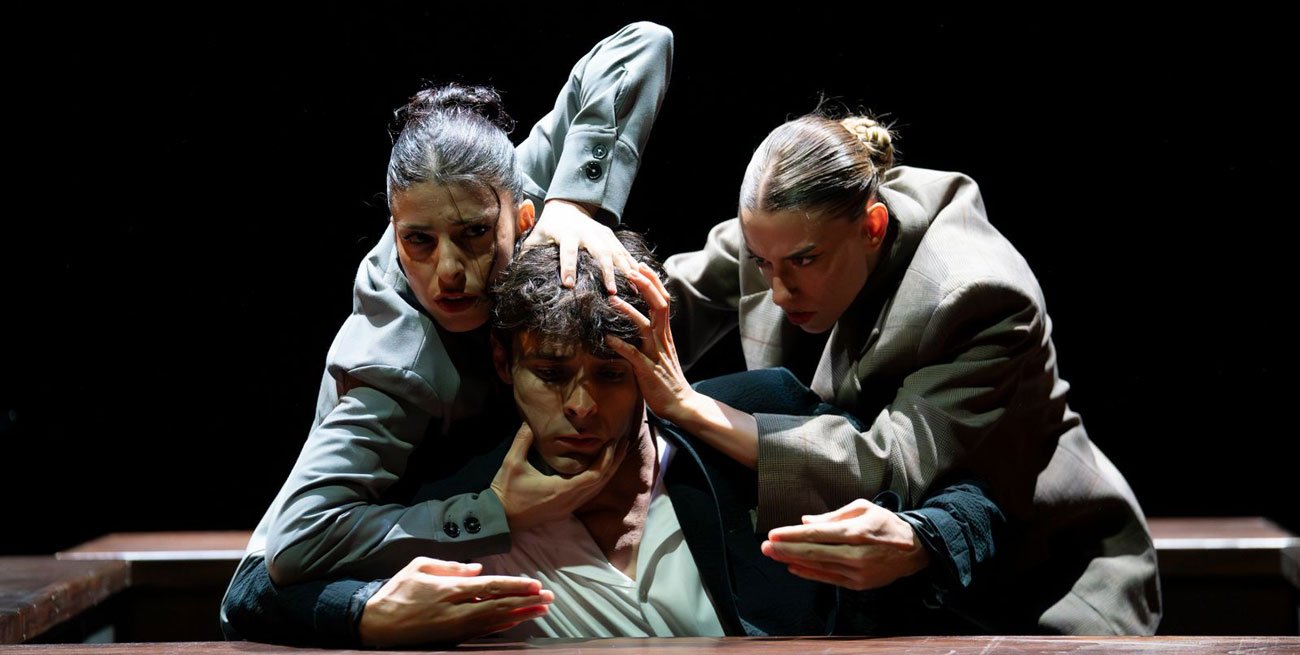
The Sleeping Queen, Mauro Astolfi's new creation for Spellbound Contemporary Ballet inspired by Sleeping Beauty and by Tchaikovsky's music, is on stage at Teatro Vascello from Tuesday, December 1 to Sunday, December 6, 2026: Tuesday to Friday at 21:00, Saturday at 19:00, Sunday at 17:00, with a running time of 64 minutes. The theater is at Via Giacinto Carini 78, 00152 Rome, in Monteverde Vecchio: bus 75 stops in front of the theater, and lines 44, 710, 870 and 871 are also useful. By commuter train from Ostiense, get off at Quattro Venti station, a short walk from the venue. Prices are published on the official Teatro Vascello website, where you buy tickets on the presale circuit authorized by the theater. The box office page for the 2026/2027 season lists subscriptions and conditions.
Language: a performance based on dance, music or visual acts; no English version is announced, any spoken parts are in Italian.
The Sleeping Queen at Teatro Vascello at a glance
The Sleeping Queen has six performances at Teatro Vascello, from December 1 to 6, 2026, for a contemporary dance show lasting just over an hour.
Dates and times
Tuesday, December 1, Wednesday, December 2, Thursday, December 3 and Friday, December 4 at 21:00, Saturday, December 5 at 19:00, Sunday, December 6 at 17:00. These are the times published by the theater on the show's page.
Running time
The theater gives a running time of 64 minutes. It's a compact length, which lets you have a relaxed dinner after the evening performances and not stay out too late even on weekdays.
The production
The Sleeping Queen is a Spellbound production, with the support of the Ministry of Culture and the Lazio Region, in collaboration with Fondazione Teatro Comunale di Vicenza. Choreography and direction are by Mauro Astolfi.
Tickets
Ticket prices aren't given on the show's page: they're published on Teatro Vascello's box office page, which also leads to online purchase on the authorized presale circuit.
What The Sleeping Queen is about
The Sleeping Queen is, according to the theater's presentation, a poetic and symbolic reflection on power, alienation and awakening, which takes the fairy tale of Sleeping Beauty and subverts its codes.
A queen, not a princess
The central figure isn't a princess waiting for her destiny, but a queen: a figure of power and authority who, trapped in her new powers, loses touch with her original purpose and with the people she governs. It's the first reversal of the fairy tale, and it changes everything else.
Sleep as a condition
The queen isn't struck by a supernatural curse but by a symbolic wound: power itself, which from a tool for listening becomes a poison that isolates and numbs. The sleep she falls into is a psychological and spiritual condition, the inability to see, listen and connect with those who depend on her. The castle walls become a place where time seems suspended.
The spindle and the brambles
In the fairy tale the prick of the spindle is the fatal gesture. Here its equivalent is a moment of crisis, perhaps an abuse of power or an act driven by selfishness, that distances the queen from her own humanity. The brambles surrounding the castle, the presentation explains, are the invisible barriers built by privilege, fear and the loss of empathy.
An inner awakening
In the fairy tale the prince's kiss is an external, saving act of love. In The Sleeping Queen the awakening is an internal process, a return to the human being who lives behind the mask of sovereignty. The symbolic kiss becomes a direct confrontation with the suffering, the rebellion or the hope of those around the queen. In the end, according to the presentation, the queen doesn't wake up to be saved but to rediscover herself as a woman, a leader and a human being.
A parable about power today
The show presents itself as a metaphor for contemporary power and for how authority can turn into a prison. The creative process is described as an introspective and social journey, in which the dialogue between body, space and symbol invites the viewer to reflect on the meaning of power today.
The music of The Sleeping Queen: Tchaikovsky reread
The score of The Sleeping Queen is largely based on Pyotr Ilyich Tchaikovsky's original music, with original music by Davidson Jaconello.
The starting ballet
The presentation gives the fairy tale of Sleeping Beauty as the starting point and, for the music, Tchaikovsky's original composition: starting from that score means dealing with a repertoire that ballet audiences know, at least in part, even without realizing it.
Jaconello's work
In Mauro Astolfi's note published by the theater, the score is described as a process of sound investigation in which Jaconello decodes some moments of Tchaikovsky's original structure and transforms it through a contemporary lens. It's a dialogue between 19th-century sound and today's, the same one the choreography sets up with the fairy tale.
Listen beforehand
If you want to prepare, you can listen again to a few passages of Tchaikovsky's Sleeping Beauty before the show. Recognizing the original themes makes the transformation of the score clearer.
The performers and team of The Sleeping Queen
The Sleeping Queen is performed by nine dancers of Spellbound Contemporary Ballet, directed by Mauro Astolfi.
The nine dancers
On stage are Maria Cossu, Marco Prete, Martina Staltari, Miriam Raffone, Filippo Arlenghi, Lorenzo Beneventano, Alessandro Piergentili, Anita Bonavida and Giuliana Mele. They're the company's dancers, trained in Astolfi's language of technical precision and gestural expressiveness.
Lighting, sets and costumes
Lighting design is by Marco Policastro, set construction by Marco Fieni, costumes by Anna Coluccia. Elena Furlan is choreographic assistant.
The company's language
The biography published by the theater describes Astolfi's dance as gestural expressiveness built on classical techniques and hard training, and attributes Spellbound's international profile to the combination of the choreographer's repertoire, the technical excellence of the dancers and planning oriented toward abroad. On stage this translates into a precise, physical dance, in which the narrative comes through the bodies more than through mime.
The role of lighting
In a show about sleep and awakening, walls and brambles, light is part of the dramaturgy: it separates, isolates, opens up. In Spellbound's contemporary dance, the lighting design helps build the space as much as the set does.
Mauro Astolfi, the choreographer
Mauro Astolfi is the choreographer who in 1994, after a long period spent in America, founded Spellbound Contemporary Ballet, a company he directs together with Valentina Marini.
More than 30 creations
For Spellbound, Astolfi has made more than 30 creations, performed on four continents, according to the biography published by Teatro Vascello. His choreographic vision is based on gestural expressiveness, classical techniques and hard training: poetry and precision, the biography says, are the foundation of his works.
Guest choreographer around the world
As a guest choreographer he has created works for the Israel Ballet, for Colombia's Incolballet on the occasion of the Cali Contemporary Dance Biennial, for Balletto di Roma, for Szegedi Kortárs Balett in Hungary, for several German companies including the Gärtnerplatztheater, for Ballet Bern and St Gallen Ballet in Switzerland, for River North Chicago Dance Company, Ballet Ex and Backhausdance in the United States, and for Arts Umbrella Dance Company and Proartedanza in Canada.
Musicals and teaching
He choreographed Michele Guardì's musical opera Promessi Sposi and the project Danza e/è Cultura, cofunded by the Ministry of Education, with Adi Salant, former associate director of Batsheva Dance Company. Since October 2009 he has been artistic director of Centro D.A.F. Dance Arts Faculty in Rome, and from 2016 to 2018 he was a guest teacher at the ballet school of Teatro dell'Opera di Roma.
Spellbound Contemporary Ballet
Spellbound Contemporary Ballet, produced by Associazione Spellbound, was founded in 1994 and since 2022 has been accredited as a National Dance Production Center, according to Teatro Vascello's presentation.
Joint direction
Two years after its founding, Valentina Marini joined the direction, and with her the company began an intense international activity. Today Spellbound ranks among the most competitive Italian companies abroad, appearing at festivals in Europe, Asia and the Americas.
A network of authors
Since 2015 its activities have widened to projects with other choreographers, including Sang Jijia, Dunja Jocic, Jean Guillaume Weis, Marcos Morau, Marco Goecke and Jacopo Godani, and to productions by the associate artists Piergiorgio Milano and Irene Russolillo.
Orbita in Rome
Since 2000 the company has been supported by the Ministry of Culture. Since 2022 the project ORBITA|Spellbound, also recognized by the Lazio Region, has brought a program of dance spread across the city, curated by Valentina Marini, to Teatro Palladium, Teatro Biblioteca Quarticciolo and, from 2026, Teatro Ambra Jovinelli.
Teatro Vascello, home of The Sleeping Queen
Teatro Vascello was inaugurated on May 4, 1989 by Giancarlo Nanni and Manuela Kustermann with the company La Fabbrica dell'Attore, and it opened with I Shall Never Return by Tadeusz Kantor and his Cricot Theatre of Warsaw.
The roots at Teatro La Fede
The story begins in the 1970s with the collective Space Re(v)action and its first permanent home at Teatro La Fede, on Via Portuense. Around Nanni and Kustermann an artistic community formed that ranged across theater, film, dance, music and visual arts, and that favored the image over the word.
A home for experimental work
After Kantor, Vascello welcomed Raul Ruiz, the Centro di Pontedera, American and French contemporary dance, Teatri Uniti, Moni Ovadia, Carlo Cecchi, the Raffaello Sanzio company and Pippo Delbono. Since 1998 La Fabbrica dell'Attore has been recognized as a Teatro Stabile d'Innovazione, and in 2004 the Sala Studio opened.
Dance at Vascello
For years the theater has hosted a contemporary dance series and, for more than 20 years, part of the shows of the Romaeuropa festival. The Sleeping Queen fits into this tradition: auteur dance has one of its reference venues in Rome at Vascello.
How to get to Teatro Vascello
Teatro Vascello is at Via Giacinto Carini 78, in Monteverde Vecchio, above Trastevere and near the Janiculum.
By bus
Bus 75 stops in front of the theater. Alternatively, the theater lists lines 44, 710, 870 and 871. For the trip back after 22:00, check the times with ATAC's journey planner.
By train
From Ostiense station, on the commuter train, get off at Quattro Venti station, on Viale dei Quattro Venti, a short walk from the theater.
By car
The theater suggests parking along Via delle Mura Gianicolensi, about 100 meters away. There are also paid parking lots at Via Giacinto Carini 43, at Via Maurizio Quadrio 22, which has an agreement with the theater for a discount if you show your ticket, and at Via Raffaello Giovagnoli 20.
On foot from Trastevere
From Trastevere you climb up to Monteverde on foot, along the streets that lead toward the Janiculum. It's an uphill walk, to do in comfortable shoes and with plenty of time, and it's pleasant especially before the Sunday afternoon performance.
Taxi and getting back
If you're coming from far away and choose an evening performance, consider a taxi for the trip back: Monteverde Vecchio is a residential neighborhood, quiet in the evening, and after 22:00 waits at the stops can get longer.
How to plan your evening at The Sleeping Queen
With a running time of 64 minutes, The Sleeping Queen leaves room for a relaxed dinner, in Monteverde or down in Trastevere.
The theater bistro
Teatro Vascello has its own bistro, handy for a coffee or a snack before the show.
In Monteverde
The neighborhood has trattorias and pizzerias frequented mainly by residents, with more honest prices than in Trastevere. After the 21:00 performances you come out shortly after 22:00: the right time for a table in the area.
In Trastevere
After the Saturday performance at 19:00 it's best to head down toward Santa Maria in Trastevere and Museo di Roma in Trastevere: there's a huge choice of trattorias and osterias, open until late. On Saturday evening it's best to book.
Sunday, December 6
The 17:00 performance ends shortly after 18:00: there's time for an aperitivo in the neighborhood or to head down to Trastevere before dinner. It's the best date if you're coming from outside Rome or want to take kids to the theater without staying out late.
The neighborhood around Teatro Vascello
Monteverde Vecchio is the upper, residential part of Monteverde, above Trastevere, between the Janiculum and the great historic villas.
The Janiculum
The Janiculum is close to the theater: a walk on the hill, with its view over all of Rome, is the best way to start the evening, passing by San Pietro in Montorio.
Villa Sciarra and Villa Pamphilj
A few minutes away are Villa Sciarra, small and intimate, and Villa Doria Pamphilj, the big park to the west of the neighborhood. In December the gates close early: check the opening hours.
Trastevere
Below Monteverde lies Trastevere, described in our page on what to see in Trastevere. It's the area to head down to after the show.
Accessibility and practical information
Teatro Vascello publishes an accessibility section on its website, worth checking before you buy to find out about entrances, reserved seats and services.
With kids
The Sleeping Queen starts from a fairy tale everyone knows, but turns it into a reflection on power. For kids who study dance, or who know Sleeping Beauty, it's a good first encounter with contemporary dance: 64 minutes without words, with music by Tchaikovsky.
Punctuality
In a dance show where light and darkness are part of the stage, coming in late disturbs everyone. In the evening the bus can take a long time: leave with some margin.
A curious fact about The Sleeping Queen by Mauro Astolfi at Teatro Vascello, December 1 to 6, 2026
The most interesting curious fact about The Sleeping Queen concerns the change in the protagonist's age and role. In the fairy tale and in the 19th-century ballet, Sleeping Beauty is a young princess, struck by a curse, saved by a prince. Mauro Astolfi turns her into a queen, that is, an adult woman who already wields power, and moves the curse from outside to inside: what puts the protagonist to sleep isn't an offended fairy, but power itself turning into poison. The prince's kiss disappears, replaced by a confrontation with the people around her. It's a reversal that speaks to the present without needing to name it. The second curious fact is musical: the sound fabric is still largely Tchaikovsky's, but reread by Davidson Jaconello, who according to Astolfi's note decodes some moments of it and transforms them through a contemporary lens. If you know the classical ballet, you'll recognize familiar fragments in a completely different context. The third concerns the production: the show was created in collaboration with Fondazione Teatro Comunale di Vicenza, and it comes to Rome, Spellbound's home city, in one of the theaters that has hosted auteur dance the most.
Something nobody tells you about The Sleeping Queen by Mauro Astolfi at Teatro Vascello, December 1 to 6, 2026
What nobody says is that The Sleeping Queen is a Roman show in every respect, even if Spellbound works mostly abroad. The company was founded in Rome in 1994, Mauro Astolfi has directed Centro D.A.F. Dance Arts Faculty in Rome since 2009 and has taught at the ballet school of Teatro dell'Opera, and the project ORBITA|Spellbound programs dance at Palladium, at Teatro Biblioteca Quarticciolo and, from 2026, at Ambra Jovinelli. Seeing Spellbound at Vascello means seeing a home company, which festivals in Europe, Asia and the Americas often know better than Roman audiences do. The second thing concerns the running time. 64 minutes is short for a title that evokes Tchaikovsky's great ballet, but contemporary dance works by concentration: a dense hour, with no apparent intermission, in which every movement is measured. If you expect the act structure of classical ballet, you'll find something else, closer to a poem than to a story. The third concerns your seat: in a dance show, the rows too close to the stage make you lose the overall picture. In our view it's best to sit halfway back, where you can see the full design of the nine dancers and the lighting.
My advice for visiting The Sleeping Queen by Mauro Astolfi at Teatro Vascello, December 1 to 6, 2026
The advice is to choose the Saturday, December 5 performance at 19:00 and build an evening around it between Monteverde and Trastevere. In the early afternoon you can climb up to the Janiculum, by way of San Pietro in Montorio, and look at Rome from above in the December light. Then a coffee at the theater bistro, and at 19:00 into the hall. The show lasts 64 minutes: at 20:15 you're out, and heading down to Trastevere you'll find a table without rushing, as long as you've booked. If you prefer quiet, the weekday evenings at 21:00 are ideal: after the show you have dinner in Monteverde, among the residents. Before going, it's worth listening again to a few passages of Tchaikovsky's Sleeping Beauty: 10 minutes are enough to recognize the original themes in the hall and better appreciate their transformation. And it's worth rereading the fairy tale, perhaps the one you remember from childhood: Astolfi's queen is built by contrast, and every departure from the familiar version has a meaning. In the hall, in our view, the best seat is halfway back in the stalls, slightly central: Spellbound's dance is best appreciated as a whole, and Marco Policastro's lighting design needs a bit of distance to be read.
Another well-known fact, yet rarely mentioned
It's known that Teatro Vascello is one of the Roman venues most closely tied to experimentation. It's less often remembered how much room it has given dance from the very beginning. In the early 1990s American and French contemporary dance came through here, with Elizabeth Streb and L'Esquisse, and then, over the years, Enzo Cosimi, Sosta Palmizi, Virgilio Sieni, Cesc Gelabert and Wim Vandekeybus. For years the theater has hosted a series dedicated to contemporary dance, and its long collaboration with Fondazione Romaeuropa has brought part of the festival here for more than 20 years, one of Europe's major dance events. Spellbound and Mauro Astolfi fit naturally into this history. A second rarely mentioned fact concerns Astolfi himself: besides his career as a choreographer for companies around the world, he choreographed Michele Guardì's musical opera Promessi Sposi, a popular show very far from experimental dance. It's a sign of the versatility of an artist who can move from big productions to auteur work with his own company. The third fact: since 2022 Spellbound has been a National Dance Production Center, one of the most important recognitions in the Italian public system, after almost 30 years of activity.
The right photo to take at The Sleeping Queen by Mauro Astolfi at Teatro Vascello, December 1 to 6, 2026
No photos during the show: in a dance work built on light and darkness, a lit screen ruins the stage for half the hall, and the dancers see it. The right photo is taken before and after. Before, from the Janiculum: if you choose the Saturday performance at 19:00 or the Sunday one at 17:00, you can climb up the hill in the early afternoon and photograph Rome in the low December light, then head down toward Via Giacinto Carini. It's an image that captures Vascello's neighborhood well, suspended between the historic city and the hill. After, on your way out, you can photograph the theater entrance with the show's poster: the official poster of The Sleeping Queen shows Astolfi's queen and makes a good memento of the evening. If you love urban photography, there's an overlooked shot at the 75 bus stop in front of the theater, with the Vascello sign in the background. In December, with darkness arriving early, even the Sunday afternoon performance ends under the evening lights: a good moment for a photo of the lit-up neighborhood, among the villini of Monteverde Vecchio.
Some important events that happened here in history
The history of Teatro Vascello is short if measured in years, dense if measured in events. On May 4, 1989 the hall opened with I Shall Never Return by Tadeusz Kantor and the Cricot Theatre of Warsaw: a statement of intent, because Kantor was then one of the most radical names on the European stage. In the early 1990s Raul Ruiz, the Centro di Pontedera and American and French contemporary dance came through. In May 1996 the Extraordinario series presented 16 young experimental companies from all over Italy. In 1998 the Ministry recognized La Fabbrica dell'Attore as a Teatro Stabile d'Innovazione, and in the same year Vascello coproduced a show with the Berliner Ensemble. In 2001 Giancarlo Nanni was the first Italian invited to work and teach at the Actors Studio in New York. In 2003 the Valentino Zeichen Prize, dedicated to poetry, was founded, and in 2004 the Sala Studio opened. In January 2010 Nanni died and the direction passed entirely to Manuela Kustermann. The theater keeps a library and video library with more than 3,000 books, magazines, scripts and texts, as well as its historic video archive. In the 2026/2027 season, in December, The Sleeping Queen brings to Vascello the dance of a company born in the same city and raised on the world's stages.
Who has passed through The Sleeping Queen by Mauro Astolfi at Teatro Vascello, December 1 to 6, 2026
Some of the most important names in contemporary theater and dance have passed across Vascello's stage and, even earlier, through the history of the company that founded it. At Teatro La Fede, its first home in the 1970s, came the saxophonist Steve Lacy, the composer John Cage, the French director Gérard Gelas and the Living Theatre. At Vascello, since 1989, there have been Tadeusz Kantor with Cricot, Raul Ruiz, the Centro di Pontedera, Teatri Uniti, Moni Ovadia, Carlo Cecchi, Giorgio Barberio Corsetti, Societas Raffaello Sanzio, Teatro Valdoca and Pippo Delbono, and for dance Elizabeth Streb, Enzo Cosimi, Sosta Palmizi, Virgilio Sieni, Cesc Gelabert and Wim Vandekeybus. Among the international masters, Bob Wilson and Peter Brook, who presented Beckett's Happy Days here with Natasha Parry. Manuela Kustermann, actress and artistic director, is the constant presence in this story. From December 1 to 6, 2026, Mauro Astolfi and the nine Spellbound dancers join them, Maria Cossu, Marco Prete, Martina Staltari, Miriam Raffone, Filippo Arlenghi, Lorenzo Beneventano, Alessandro Piergentili, Anita Bonavida and Giuliana Mele, with Tchaikovsky's music reread by Davidson Jaconello.
Frequently asked questions about The Sleeping Queen
When is The Sleeping Queen on at Teatro Vascello?
The Sleeping Queen by Mauro Astolfi is on at Teatro Vascello from December 1 to 6, 2026: Tuesday to Friday at 21:00, Saturday at 19:00, Sunday at 17:00. The show lasts 64 minutes, according to the theater's official page.
What kind of show is The Sleeping Queen?
The Sleeping Queen is a contemporary dance show by Spellbound Contemporary Ballet, with choreography and direction by Mauro Astolfi. It rereads Sleeping Beauty as a parable about power: a queen put to sleep by her own power, and an inner awakening.
What music do you hear in The Sleeping Queen?
The score of The Sleeping Queen is largely based on the music of Pyotr Ilyich Tchaikovsky, with original music by Davidson Jaconello, who according to Astolfi's note rereads some moments of the original structure through a contemporary lens.
Who dances in The Sleeping Queen?
Dancing in The Sleeping Queen are Maria Cossu, Marco Prete, Martina Staltari, Miriam Raffone, Filippo Arlenghi, Lorenzo Beneventano, Alessandro Piergentili, Anita Bonavida and Giuliana Mele. Lighting by Marco Policastro, sets by Marco Fieni, costumes by Anna Coluccia.
How much are tickets for The Sleeping Queen?
Ticket prices for The Sleeping Queen at Teatro Vascello are published on the 2026/2027 season box office page on the theater website, where you buy on the authorized presale circuit.
How do you get to Teatro Vascello?
Teatro Vascello is at Via Giacinto Carini 78, in Monteverde. Bus 75 stops in front of the theater, and lines 44, 710, 870 and 871 are also useful. By train from Ostiense, get off at Quattro Venti station. The parking lot at Via Maurizio Quadrio 22 has an agreement with the theater.
Is The Sleeping Queen suitable for children?
The Sleeping Queen starts from the fairy tale of Sleeping Beauty but turns it into a reflection on power, without words and with music by Tchaikovsky. It's suitable for kids curious about dance. For younger children the 64-minute running time is manageable, but the language is that of contemporary dance.
Final advice on The Sleeping Queen
The Sleeping Queen at Teatro Vascello is, in our view, the right chance to see Spellbound in its own city, in a theater that has given room to auteur dance from day one. The advice is the Saturday performance at 19:00, preceded by a walk on the Janiculum and followed by dinner in Trastevere, a seat halfway back in the stalls to take in the whole picture, and 10 minutes of Tchaikovsky on headphones before going in.
Article written by the editorial team of Tour Leader Pro, contact them for Private/Corporate/V.I.P. Tours and Experiences.
Planning a trip to Rome? The English guides for visiting the city are on ItalyPlanner.com.