The Rake’s Progress at Teatro dell’Opera di Roma, November 27 to December 5, 2026
https://www.estateromana.com/en/rome/trip-planner/the-rakes-progress-at-teatro-dellopera-di-roma-november-27-to-december-5-2026/
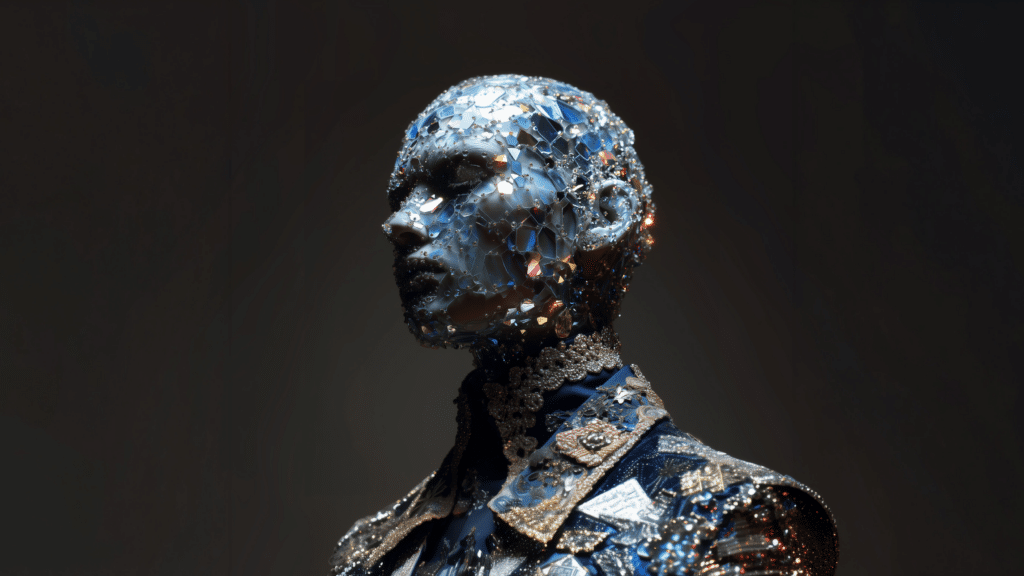
The Rake's Progress at Teatro dell'Opera di Roma: Igor Stravinsky's opera opens the 2026/27 season at Teatro Costanzi, at Piazza Beniamino Gigli 7, with five performances from November 27 to December 5, 2026. The premiere is on Friday, November 27, at 19:00, then Sunday, November 29, at 16:30, Tuesday, December 1, at 20:00, Thursday, December 3, at 20:00 and Saturday, December 5, at 18:00. On Tuesday, November 24, at 19:00 there's the youth preview. You get there with Metro A, Repubblica Teatro dell'Opera stop, or with the buses on Via Nazionale (H, 40, 60, 64, 70, 71, 170, 116T) and Via Depretis (70, 71). Prices are published on the official website of Teatro dell'Opera, and tickets are sold at the theater box office on Piazza Beniamino Gigli or on the venue's official website. The opera is sung in its original language, English, with surtitles in Italian and English.
Language: in Italian with English surtitles.
Michele Mariotti, the foundation's music director, conducts. Direction and costumes are by Rafael R. Villalobos. Lawrence Brownlee sings the role of Tom Rakewell, Nick Shadow is Alex Esposito, and alongside them are Jennifer Larmore, Daniela Barcellona, Rosalia Cid, Simone Alberghini and Ya-Chung Huang. It's a new production of Teatro dell'Opera, with the house Orchestra and Chorus. Frankly: opening a season with Stravinsky instead of Verdi or Puccini is a choice with character, and it deserves to be rewarded by showing up.
The Rake's Progress at Costanzi in brief: dates, times, subscription series and cast
There are five performances of The Rake's Progress at Teatro Costanzi, plus the youth preview on November 24, and each has a different time. Lock in the time of your evening right away, because between Sunday afternoon and Tuesday evening there's a difference of almost four hours.
The performance calendar
- Tuesday, November 24, 2026, 19:00: youth preview.
- Friday, November 27, 19:00: premiere, series A, season opening.
- Sunday, November 29, 16:30: series E.
- Tuesday, December 1, 20:00: series B.
- Thursday, December 3, 20:00: series C.
- Saturday, December 5, 18:00: series D, last performance.
That's eight days in all, from the first to the last. If you put off the decision, you risk being left with a single possible evening, and on top of that the Saturday one, the one most in demand by groups.
The cast
The cast list published by the theater is this: Simone Alberghini (Trulove), Rosalia Cid (Anne, his daughter), Lawrence Brownlee (Tom Rakewell), Alex Esposito (Nick Shadow), Jennifer Larmore (Mother Goose), Daniela Barcellona (Baba the Turk), Ya-Chung Huang (Sellem).
The artistic team
Conductor Michele Mariotti. Direction and costumes Rafael R. Villalobos. Chorus master Ciro Visco. Sets by Pablo Chaves Maza. Lighting by Felipe Ramos. Orchestra and Chorus of Teatro dell'Opera di Roma. The theater presents the show as a new production of the foundation.
Radio and television
The official page says the show is filmed by Rai Cultura and broadcast on Rai 5 and RaiPlay, and that it also airs on Rai Radio 3. The broadcast dates aren't given on the show page.
The Rake's Progress, Stravinsky's English opera
The Rake's Progress, in Italian La carriera di un libertino, is an opera in three acts by Igor Stravinsky on a libretto by Wystan Hugh Auden and Chester Kallman. Written between 1947 and 1951, it was first staged at Teatro La Fenice in Venice on September 11, 1951, conducted by the composer himself. Teatro dell'Opera presents it as a fable in three acts.
From Hogarth's prints to the stage
The idea came from a visit. In 1947 Stravinsky saw at the Art Institute of Chicago a series of eight 18th-century prints by William Hogarth, titled precisely A Rake's Progress, and immediately read in them a sequence of opera scenes. Since moving to the United States he had been thinking about an opera on an English text. It was his neighbor and friend Aldous Huxley who suggested Auden as librettist. Auden then brought in Chester Kallman, and the text was ready in March 1948. The score took three years and was completed on April 7, 1951.
The 1951 Venice premiere
The world premiere at La Fenice, coproduced with La Scala, had Elisabeth Schwarzkopf as Anne, Robert Rounseville as Tom, Otakar Kraus as Nick Shadow and Jennie Tourel as Baba the Turk. Stravinsky conducted the premiere. In the later performances Ferdinand Leitner replaced him. The audience received the opera well, the critics less so. Today it's one of the composer's most performed operas, and time has proven the audience right.
The plot in a few lines
Tom Rakewell, a young man with no desire to work, loves Anne, Trulove's daughter. A stranger appears, Nick Shadow, who announces an unexpected inheritance and offers himself as a servant: his wages will be settled after a year and a day. In London Tom loses himself in Mother Goose's brothel, then on a whim marries Baba the Turk, the bearded lady of the circus, and ruins himself with a machine supposed to turn stones into bread. At the auction of his belongings Anne is still looking for him. When the pact expires, in a graveyard, Nick demands his soul and plays cards with him: Tom wins thanks to his love for Anne, but loses his mind. He ends up in an asylum convinced he's Adonis, and dies when Anne leaves. In the epilogue the characters sing the moral.
Why it sounds like an 18th-century opera
The Rake's Progress closes Stravinsky's neoclassical period. The music takes the 18th century as its model: arias, duets, trios, recitatives accompanied by the orchestra and secco recitatives with harpsichord, a dramaturgy that looks to opera buffa and the Mozart-Da Ponte trilogy. The orchestra has 18th-century dimensions, with winds in pairs, three trumpets, timpani, harpsichord and strings. It's the ideal opera for those who think 20th-century music is hard going. Here the 20th century dresses up as Mozart, and the disguise is the most fun part.
What to listen for in The Rake's Progress: the moments to wait for
The Rake's Progress opens with a short fanfare of trumpets and horns, because Stravinsky didn't want a real overture but a starting signal. From that moment, keep your ears on the harpsichord: every appearance of Nick Shadow is accompanied by one of its arabesques.
Mother Goose's brothel
In the second scene of the first act orchestra and chorus let loose in a toast to Venus and Mars. It's the moment when the brilliant, ironic Stravinsky comes out without disguise, and when Jennifer Larmore, this production's Mother Goose, has her space.
Anne's aria and her cabaletta
At the end of the first act Anne sings a recitative and an aria of great concentration, followed by a virtuoso cabaletta that mimics a certain tradition of Italian opera. It's the soprano's test, here Rosalia Cid.
Baba the Turk
In the second act Baba's aria rests on a mechanical perpetual motion of strings and clarinets that makes it grotesque. Daniela Barcellona already has the role in her repertoire, and that's a point in the evening's favor.
The auction, the card game, the lullaby
The third act is the climax: the auction led with caricatural intent, underlined by an obsessive trumpet. The game between Tom and Nick in the graveyard, accompanied by solo harpsichord, metallic and relentless. Finally the very simple lullaby Anne sings to Tom in the asylum. If you reach the third act tired, you miss the best part: save your energy for the end.
Michele Mariotti on the podium for The Rake's Progress
Michele Mariotti has been music director of Teatro dell'Opera di Roma since 2022 and since October 2026 has also been principal conductor of the Orchestra Sinfonica Nazionale della Rai. The Rake's Progress therefore comes in the first fall of his double role, and marks the season opening that bears his signature.
A career between Bologna and the great opera houses
From 2008 to 2018 Mariotti was principal conductor and then music director of the Teatro Comunale in Bologna, where he conducted, among others, Graham Vick's La bohème, 2018 Premio Abbiati for best production. He received the 36th Premio Abbiati as best conductor and is a regular guest at La Scala, the Paris Opéra, the Wiener Staatsoper, the Royal Opera House in London, the Bayerische Staatsoper, the Metropolitan in New York, the Salzburg Festival, the Rossini Opera Festival and the Festival Verdi in Parma.
The Rome titles
In Rome he has conducted Dialogues des Carmélites, Aida, Mefistofele, Tosca, Peter Grimes, Simon Boccanegra, the Trittico Ricomposto project, West Side Story at the Baths of Caracalla and, in the 2025/26 season, Lohengrin. In 2025 the Stabat Mater directed by Romeo Castellucci in the Basilica of Santa Maria in Ara Coeli. In fall 2026 he was on the podium for Falstaff at Teatro dell'Opera. The presence of Peter Grimes and the Dialogues in his Rome path says a lot: the 20th century isn't foreign to him, and a neoclassical opera asks for the same cleanliness and transparency Mariotti has always sought in Rossini.
Lawrence Brownlee, Alex Esposito and the cast
The cast of The Rake's Progress brings together some of the best-known voices of international bel canto, called to take on a 20th century that takes its forms from bel canto. American tenor Lawrence Brownlee is Tom Rakewell, bass-baritone Alex Esposito from Bergamo is Nick Shadow.
Lawrence Brownlee, Tom Rakewell
Born in Ohio in 1972, raised in Youngstown in a large music-loving family, Brownlee started out singing in a gospel choir and playing piano, bass and drums. He was thinking of law school. His voice teachers persuaded him to study music, first at Anderson University in Indiana and then with a master's at the Jacobs School of Music. In 2001 he won the Metropolitan competition, in 2002 he debuted at Virginia Opera as Count Almaviva and, in the same year, at La Scala. In 2006 came the Richard Tucker and Marian Anderson awards, in 2007 his Met debut. Among his most acclaimed roles are Lindoro, Rinaldo in Rossini's Armida, Tonio in La fille du régiment, Arturo in I puritani and Don Ramiro in La Cenerentola at the Opéra Garnier. In 2014 the New York Times placed him alongside Juan Diego Flórez and Javier Camarena as the new three tenors. In 2015 he had a Grammy nomination for Virtuoso Rossini Arias, in 2017 the best singer award at the International Opera Awards. He recorded Rossini's Stabat Mater with the orchestra of the Accademia di Santa Cecilia and in 2023 launched Rising, a project on Harlem Renaissance poems entrusted to six African American composers.
Alex Esposito, Nick Shadow
Born in Bergamo, Alex Esposito is a bass-baritone known above all for Mozart roles, and in particular for Leporello in Don Giovanni. He debuted at the Royal Opera House in 2007 as Alidoro in La Cenerentola and returned there as Leporello. His repertoire ranges from the four villains of Les contes d'Hoffmann to Méphistophélès in Gounod's Faust and in Berlioz's La damnation de Faust, from Mustafà and Selim to Assur in Semiramide, up to Creon in Oedipus rex: and Nick Shadow is already on his list of roles. A Leporello who becomes a devil is the most logical choice for this opera, which takes so much from Don Giovanni.
Jennifer Larmore, Mother Goose
Born in Atlanta in 1958, Jennifer Larmore studied at Westminster Choir College in Princeton and debuted in 1986 at the Opéra de Nice as Sesto in La clemenza di Tito. Famous for Rossini and Baroque music, she has recorded with René Jacobs, Giuseppe Sinopoli and Charles Mackerras. In 2002 she received the Ordre des Arts et des Lettres, in 2008 a Grammy for best opera recording with Hänsel und Gretel. In recent years she has moved toward the 20th century (The Turn of the Screw, Lulu, Jenůfa) and the French repertoire. A Mother Goose with this history behind her promises a very classy brothel.
Daniela Barcellona, Baba the Turk
From Trieste, born in 1969, Daniela Barcellona is one of the reference performers of Rossini's trouser roles: the breakthrough came on August 8, 1999, with Tancredi at the Rossini Opera Festival, then La Scala, the Met, the Royal Opera House, Salzburg. She sang Verdi's Requiem with Claudio Abbado and the Berliner Philharmoniker in 2001 and opened La Scala several times with Riccardo Muti. In 2018 she won a Laurence Olivier Award with Joyce DiDonato for Semiramide at Covent Garden, in 2021 she was named Knight of the Order of Merit of the Italian Republic. Her repertoire has widened to Amneris, Quickly, Eboli, Didon, Brangäne. She has already sung Baba the Turk at Teatro Real in Madrid. At Teatro dell'Opera di Roma she has performed La fiamma, La Cenerentola, L'italiana in Algeri, Tancredi and Semiramide.
Rosalia Cid, Simone Alberghini, Ya-Chung Huang
Anne is entrusted to Rosalia Cid. Trulove is Simone Alberghini, a baritone born in 1973 and known for his Mozart and Rossini performances. The auctioneer Sellem, a short but exposed part, is Ya-Chung Huang.
The new production by Rafael R. Villalobos
The 2026 Rake's Progress is a new production of Teatro dell'Opera di Roma by Rafael R. Villalobos, who handles both direction and costumes. Sets are by Pablo Chaves Maza, lighting by Felipe Ramos.
A team that does it all
When direction and costumes are in the same hands, the show tends to have a compact visual identity: the way the characters dress becomes part of the directorial reading, not a detail left to others. In an opera like this one, where every scene is a picture, as in the Hogarth prints it all comes from, that matters.
What to expect, and what not to
The theater hasn't published director's notes or production photos on the show page. If you go to see The Rake's Progress, you arrive with no previews of the staging's angle. Better to enjoy it: in a title the Rome audience doesn't often see, surprise is part of the evening.
Surtitles in two languages
The opera is sung in English, with surtitles in Italian and English. Auden and Kallman's libretto is full of wordplay and rhymes: if you know English, you can follow the original text on the surtitles, if not, you have the translation. Either way, read the plot before going in, so you can keep your eyes on the stage.
A curious fact about The Rake's Progress at Teatro dell'Opera di Roma, November 27 to December 5, 2026
The premiere of The Rake's Progress falls on November 27, 2026, exactly 146 years after the inauguration of Teatro Costanzi. The theater opened on November 27, 1880, with Rossini's Semiramide, in the presence of King Umberto I and Queen Margherita. A season that opens on the hall's birthday doesn't happen every year.
The coincidence has an extra flavor if you look at the cast. Semiramide, the 1880 title, is an opera Daniela Barcellona knows very well: her Arsace earned her the 2018 Laurence Olivier Award and an award-winning recording, and at Teatro dell'Opera di Roma she has already sung Semiramide itself. On November 27, 2026, the same voice takes the stage that 146 years earlier was inaugurated with that title, but this time with Baba the Turk's fake beard.
And there's a second curiosity, all about music. The premiere of The Rake's Progress, in 1951, didn't take place in an English-speaking country but in Italy, at La Fenice in Venice, coproduced with La Scala. An opera American by birth, English by language and 18th-century by style saw the light on an Italian stage with an international cast. Bringing it back today to a major Italian opera house, with an Italian conductor and half an Italian cast, is something of a homecoming. It's the story to remember in Piazza Beniamino Gigli before going in.
Teatro Costanzi: the hall that opens with Stravinsky
Teatro Costanzi has a capacity of 1,560 seats, across the stalls, three tiers of boxes, balcony and gallery, under a dome frescoed by Annibale Brugnoli from Perugia. When it opened, in 1880, it could hold up to 2,212 spectators.
A horseshoe hall born for acoustics
Builder Domenico Costanzi entrusted the design in 1879 to Milanese architect Achille Sfondrini, a theater specialist, who conceived the horseshoe hall as a sounding box. Construction took 18 months. For an opera like The Rake's Progress, written for a small, transparent orchestra, a hall that renders details well is a clear advantage: Nick Shadow's harpsichord, in a dead theater, would get lost.
The chandelier and Piacentini's renovation
In 1926 the theater passed to the City and architect Marcello Piacentini renovated it, moving the entrance onto the square now named after Beniamino Gigli. The great crystal chandelier was lit for the first time on February 27, 1928, for Arrigo Boito's Nerone. In 1958 new work by Piacentini gave the theater the look we see today.
Choosing your seat for an opera like this
The theater's price list distinguishes premium and regular stalls seats, stall boxes and boxes on three tiers, central and side, with front and back seats, balcony and gallery. The seating plan is published in the maps section of the official website. For The Rake's Progress, sung in English with surtitles, the practical advice is to avoid the back seats in the side boxes: from there you see both the stage and the surtitle screen badly. The balcony, facing the stage, is still the best compromise among sound, view and price. The page for Rome Opera House gathers the rest of the information about the venue.
Something nobody tells you about The Rake's Progress at Teatro dell'Opera di Roma, November 27 to December 5, 2026
What almost nobody says is that the orchestra of The Rake's Progress is the size of a Mozart orchestra: two flutes, two oboes, two clarinets, two bassoons, two horns, three trumpets, timpani, harpsichord and strings. No trombones, no tubas, no bass drum. If you fear an evening of 20th-century walls of sound, relax: here the 20th century has the measure of the 18th, and the voices never have to fight to be heard.
The second thing is about the surtitles. Auden's English is refined, full of rhymes and innuendo, and the Italian translation on the screen necessarily simplifies. If your English is good, follow the line in the original language: many lines, especially Nick Shadow's, reveal their double meaning only there.
The third is about the house rules, which at Costanzi are strict and worth knowing. Once the performance has started you can't enter the stalls or the numbered seats in the balcony and gallery: latecomers wait in the foyer. The coat check is mandatory for umbrellas, hats, bags, helmets and cameras, and phones, photos and recordings are forbidden in the hall. In late November, with the risk of rain, the coat check line is the real bottleneck of the evening. And The Rake's Progress doesn't allow any dead minutes: the opening fanfare lasts a few moments, and if you miss it you walk in with the scene already started.
A last note, for those who love opera on TV: the official page announces the Rai Cultura filming for Rai 5 and RaiPlay and the broadcast on Radio 3. Seeing the opera live and then listening again at home, with the plot by now clear, is the best way to understand how much Stravinsky hid inside a score that seems simple.
Tickets for The Rake's Progress at Teatro dell'Opera
Tickets for The Rake's Progress are sold at the Teatro dell'Opera di Roma box office on Piazza Beniamino Gigli and on the theater's official website, in the Box Office section. Prices by section for the 2026/27 season are published by the theater on its Prices page.
The box office on Piazza Beniamino Gigli
The window is at Piazza Beniamino Gigli 1, a few meters from the theater entrance. For that day's performance, tickets are sold at the theater in the hour before the start. At the window you pay in cash, by debit card and with the main credit cards. The theater asks you to use only the channels authorized by the foundation.
Subscriptions and series
The letters next to the dates (A, B, C, D, E) indicate the subscription series. The November 27 premiere is series A, the Sunday afternoon series E. For a season opening, part of the seats is taken by subscribers: if you buy a single ticket, you have more room in the repeat performances than at the premiere.
The youth preview
On Tuesday, November 24, at 19:00 there's the youth preview. For conditions and how to get in, the reference is the theater's box office page.
My tip for The Rake's Progress at Teatro dell'Opera di Roma, November 27 to December 5, 2026
My tip for The Rake's Progress at Costanzi is the Sunday, November 29, performance at 16:30, in the first row of the balcony or in a front seat of a central box. It's the performance that combines the premiere cast, repeat-performance prices and a time that doesn't force you to rush.
Here's the reasoning. The November 27 premiere is the season opening: dark attire welcome, a hall full of subscribers and guests, higher prices. A lovely evening, but if you want to listen to and understand a new title, it's not the most suitable. Tuesday and Thursday at 20:00 end late, and in early December those coming from outside Rome pay for it on the way back. Saturday at 18:00 is the groups and families performance. Sunday afternoon, on the other hand, leaves time for a relaxed lunch, arriving rested and coming out with the city still awake.
On preparation: read the plot the night before, and if you can, look at Hogarth's eight prints, which are easy to find in reproduction. Recognizing on stage the brothel, the auction or the asylum from the original cycle multiplies the pleasure. You don't need to listen to the music in advance: The Rake's Progress is an opera better understood the first time live than on record.
On the hall: arrive at least 40 minutes early. The coat check is mandatory, you can't get in once the performance has started, and before you sit down it's worth looking up at the lit chandelier. During the show you won't see it like that again.
How to get to Teatro dell'Opera for The Rake's Progress
Teatro Costanzi can be reached with Metro A, Repubblica Teatro dell'Opera stop, in Piazza della Repubblica, a few minutes' walk from Piazza Beniamino Gigli. In late November, with dark evenings and the risk of rain, it's the simplest and driest option.
By metro
From the Repubblica Teatro dell'Opera stop, walk down Via Nazionale or take Via del Viminale, and in a few minutes you're in front of the theater. From Termini you can use the same line A or walk: the station is close.
By bus
- Via Nazionale: H, 40, 60, 64, 70, 71, 170, 116T.
- Via Depretis: 70, 71.
- Via Cavour: 16, 75, 84, 150 (holidays), 360, 590, 649, 714.
- Termini station: 16, 38, 75, 86, 90, 217, 310, 360, 649, 714.
These are the lines the theater lists on its How to reach us page. In the evening frequencies and routes may change: check them on the day.
By taxi
There's a taxi service for the audience at the theater entrance, and during intermissions the house staff take bookings for the trip back. After the 20:00 performances on December 1 and 3, it's the service I recommend.
By car
A car isn't recommended: the area between Via Nazionale, the Viminale and Termini is central and busy, and the theater doesn't list any parking of its own. If you're coming from outside, leave the car along line A and continue by metro.
Another well-known fact, yet rarely mentioned
Everyone knows that Cavalleria rusticana premiered at Teatro Costanzi on May 17, 1890, and Tosca on January 14, 1900. Few remember that the same hall, in its years as a private theater, was one of the most open in Italy to foreign repertoire: under the leadership of soprano Emma Carelli, from 1912, Wagner's Parsifal, Saint-Saëns's Samson et Dalila and Diaghilev's Ballets Russes came to Rome.
The detail isn't secondary for those going to see The Rake's Progress. A theater that over a century ago opened its doors to Wagner, Saint-Saëns and Diaghilev's company, that is, to the best of European music and dance of the moment, today opens its season with an opera Russian by composer, English by language and American by birth. Costanzi's international calling is older than the cast list suggests, and this opening puts it back at the center.
Then there's a second well-known but rarely mentioned fact: for its first 46 years Costanzi was a private theater that the State had refused to take over. It was kept going by builder Domenico Costanzi, then by his son Enrico, then by impresario Walter Mocchi and his wife Emma Carelli. Only in 1926 did the City buy it and rename it Teatro Reale dell'Opera. In 1946, with the Republic, it took the name Teatro dell'Opera di Roma. Rome's opera house, then, was born from private initiative and from a woman at the head of a major theater at a time when that was very rare.
The right photo to take at The Rake's Progress at Teatro dell'Opera di Roma, November 27 to December 5, 2026
At Costanzi you can't take photos in the hall, with or without flash: the right photo of The Rake's Progress is taken outside, in Piazza Beniamino Gigli, with the lit facade behind you. In late November it's dark even when you come out of the 16:30 performance, and it's precisely in the dark that the theater entrance looks its best.
The square is the one onto which Marcello Piacentini moved the entrance in the renovation that followed 1926, to make room for the audience that crowded in on performance nights. For the November 27 opening night the square fills with dark suits and elegant arrivals: it's the only night of the year when a photo at the Costanzi entrance really tells the story of the event.
The advice of those who have seen many is always the same: photograph the people, not the building. The group of friends with the program in hand, the couple in front of the door, the young man coming for the youth preview on the 24th: those are the images you'll look at again. You can find the facade in any archive.
Then there's the photo you can't take, and that's worth taking home with your eyes: the hall with Brugnoli's dome and the chandelier still lit, in the minutes before the lights go down. Sit down early and look at it calmly. For a souvenir of the show, the official production image is the one the theater publishes on The Rake's Progress page.
Some important events that happened here in history
Teatro Costanzi was inaugurated on November 27, 1880, with Gioachino Rossini's Semiramide and became Teatro dell'Opera di Roma in 1946. In between are two world premieres that changed the history of Italian opera and two renovations that changed its look.
- 1879: Domenico Costanzi entrusts the design to architect Achille Sfondrini.
- November 27, 1880: inauguration with Semiramide, in the presence of Umberto I and Queen Margherita, after 18 months of work.
- May 17, 1890: world premiere of Pietro Mascagni's Cavalleria rusticana.
- January 14, 1900: world premiere of Giacomo Puccini's Tosca.
- 1907: management passes to impresario Walter Mocchi. From 1912 soprano Emma Carelli leads it, bringing Parsifal, Samson et Dalila and Diaghilev's Ballets Russes to Rome.
- 1926: the City buys the theater, which becomes Teatro Reale dell'Opera. Renovation by Marcello Piacentini.
- February 27, 1928: second inauguration with Arrigo Boito's Nerone and first lighting of the great chandelier.
- 1935: the permanent Chorus is founded at the wish of Tullio Serafin.
- 1946: the theater takes the name Teatro dell'Opera di Roma.
- 1958: new work by Piacentini ahead of the 1960 Olympics.
On November 27, 2026, with The Rake's Progress, a line is added to this list: the season opening on the exact day of the hall's birthday. The most moving date to tell, though, is still January 14, 1900: Tosca was born here, within these walls.
Who has passed through The Rake's Progress at Teatro dell'Opera di Roma, November 27 to December 5, 2026
King Umberto I and Queen Margherita, present at the November 27, 1880, inauguration, passed through Teatro Costanzi, and then Pietro Mascagni and Giacomo Puccini, who saw Cavalleria rusticana and Tosca born here. But for those going to see The Rake's Progress, the most interesting list is another one.
There's Emma Carelli, a soprano, who from 1912 for 14 years led the Impresa Costanzi and brought to Rome La fanciulla del West, Il trittico, Parsifal, Samson et Dalila and Diaghilev's company, that is, the world the young Stravinsky came from. There's Walter Mocchi, the impresario who was her husband. There's Marcello Piacentini, who reworked the building twice. There's Tullio Serafin, who created the permanent chorus.
Then the conductors who have led the orchestra and chorus: Victor de Sabata, Gianandrea Gavazzeni, Herbert von Karajan, Carlo Maria Giulini, Karl Böhm, Zubin Mehta, Georges Prêtre, Georg Solti, Giuseppe Sinopoli, Mstislav Rostropovich, Riccardo Muti, Daniele Gatti.
And then there are the voices of this production, which already have a history at Costanzi. Daniela Barcellona has sung Respighi's La fiamma, La Cenerentola, L'italiana in Algeri, Tancredi, Semiramide and, with Michele Mariotti, Luisa Miller there. Mariotti himself, music director since 2022, has conducted Tosca, Aida, Peter Grimes, Lohengrin and Falstaff there. From November 27, 2026, Lawrence Brownlee, Alex Esposito and Jennifer Larmore join the list, three names the international audience knows from the stages of New York, London and Paris. This year too the list grows longer, and with names worth the trip.
Around Costanzi: Repubblica, Viminale and Monti
Teatro Costanzi is between Via Nazionale, Via del Viminale and Via Depretis, a few minutes from Piazza della Repubblica and Termini station. If you arrive an hour early, you have around you some of the most interesting places of ancient and late 19th-century Rome.
Piazza della Repubblica and the Baths of Diocletian
Coming out of the metro you're in Piazza della Repubblica, with the Basilica of Santa Maria degli Angeli and the remains of the Baths of Diocletian. Toward Termini is Palazzo Massimo alle Terme, home of the Museo Nazionale Romano: for the Saturday performance at 18:00 you can combine the museum in the morning and the opera in the late afternoon without taking any transportation.
Toward Monti and Santa Maria Maggiore
Going down Via Nazionale you reach the Monti rione, with its narrow streets and evening life. In the opposite direction, past Via Cavour, Santa Maria Maggiore is a good quarter of an hour on foot.
Where to eat before and after The Rake's Progress
Around Teatro dell'Opera, places to eat are concentrated on Via Nazionale, Via del Viminale, the streets toward Termini and the Monti rione. In the theater you can only eat and drink at the inside bars, so dinner needs to be planned before or after.
Depending on the performance time
For the 19:00 premiere and for Saturday at 18:00, go for a late lunch and a light aperitivo, leaving dinner for afterward. For the 20:00 performances on December 1 and 3 you can have an early dinner, around 18:30, on the streets around the Viminale. For Sunday at 16:30, Sunday lunch is your real ally: long, but not too long.
After the show
Monti is the most natural choice, on foot from Via Nazionale, with osterias, wine bars and pizzerias. After the evening performances, book ahead, because many kitchens close early. I don't name places: they change management more often than productions change. The rule is simple, though: avoid the menus translated into five languages hanging on the door near Termini and push a few streets toward Monti.
Accessibility at Teatro Costanzi
For Teatro Costanzi the theater indicates a visitor route accessible to people with walking difficulties, except for some points like the Royal Box and the gallery. The Rake's Progress page doesn't give specific information on accessible seats.
My practical advice is to contact the box office before buying, at 06 48160255 and 06 4817003 or at ufficio.biglietteria@operaroma.it, explaining your needs. If you have mobility issues, avoid the gallery. For those with hearing difficulties, the surtitles in Italian and English are a concrete help: choose a seat from which the screen can be seen well. The taxi service at the entrance, with booking during intermissions, makes leaving at the end of the evening easier.
Late November in Rome and the season that opens
The Rake's Progress opens a 2026/27 season of Teatro dell'Opera that continues at Costanzi with Andrea Chénier from January 17 to 26, 2027, Lucia di Lammermoor at the end of February, I due Foscari in March, Iphigénie en Tauride in April, Lady Macbeth of Mtsensk in May and Il trovatore between June and July. At Teatro Nazionale, from December 18 to 23, 2026, there's Peter Pan.
How to plan the weekend
The weekend of November 28 and 29 works well: on Saturday a museum in the area and dinner in Monti, on Sunday afternoon the 16:30 performance. If you stay until December 5, there's the last performance on Saturday at 18:00. For groups and companies who want an evening at the opera organized from arrival to exit, with a guide and logistics, there's Tour Leader Pro.
Frequently asked questions about The Rake's Progress in Rome
When is The Rake's Progress on stage at Teatro dell'Opera di Roma?
The Rake's Progress is on stage at Teatro Costanzi from November 27 to December 5, 2026. The premiere is on Friday, November 27, at 19:00. The repeat performances are on Sunday, November 29, at 16:30, Tuesday, December 1, at 20:00, Thursday, December 3, at 20:00 and Saturday, December 5, at 18:00. On Tuesday, November 24, at 19:00 there's the youth preview.
Who sings and who conducts The Rake's Progress in Rome?
The Rake's Progress at Teatro dell'Opera di Roma is conducted by Michele Mariotti, with direction and costumes by Rafael R. Villalobos. Lawrence Brownlee is Tom Rakewell, Alex Esposito Nick Shadow, Rosalia Cid Anne, Simone Alberghini Trulove, Jennifer Larmore Mother Goose, Daniela Barcellona Baba the Turk and Ya-Chung Huang Sellem.
In what language is The Rake's Progress sung at Costanzi?
The Rake's Progress is sung in English, the original language of Wystan Hugh Auden and Chester Kallman's libretto. Teatro dell'Opera di Roma provides surtitles in Italian and English, so you can follow the plot even without knowing the language. Still, it's best to read a summary before going in.
Where do you buy tickets for The Rake's Progress?
Tickets for The Rake's Progress are sold at the Teatro dell'Opera di Roma box office on Piazza Beniamino Gigli and on the theater's official website. Prices by section are published on the Prices page. For groups and accessible seats the box office answers at 06 48160255 and 06 4817003.
How do you get to Teatro dell'Opera di Roma by public transportation?
Teatro dell'Opera di Roma, at Piazza Beniamino Gigli 7, can be reached with Metro A, Repubblica Teatro dell'Opera stop. By bus, the lines on Via Nazionale (H, 40, 60, 64, 70, 71, 170, 116T), Via Depretis (70, 71) and Via Cavour serve it, as well as those leaving from Termini.
Is there a dress code for the opening with The Rake's Progress?
At Teatro dell'Opera di Roma dark attire is welcome at the opening night and at premieres, and so at the November 27 premiere of The Rake's Progress, which opens the season. For repeat performances the theater doesn't give a specific code. Bags and umbrellas must in any case be left at the mandatory coat check.
Will The Rake's Progress be broadcast on TV or radio?
Yes, according to the official page of Teatro dell'Opera, The Rake's Progress is filmed by Rai Cultura and broadcast on Rai 5 and RaiPlay, and also airs on Rai Radio 3. The broadcast dates aren't given on the show page.
Can you get in late to The Rake's Progress?
No, at Teatro Costanzi once the performance has started you can't enter the stalls or the numbered seats in the balcony and gallery: latecomers to The Rake's Progress wait in the foyer. The opera opens with a fanfare of a few seconds, so arrive at least 40 minutes early.
If you're wondering if it's worth it, the answer is yes, without hesitation. Choose Sunday the 29th at 16:30, take the balcony, read the plot the night before and look at Hogarth's prints. Then sit down early, look up at the chandelier and let Stravinsky tell you, with Mozart's lightness, the story of a young man who sells his soul for easy money. It's one of the smartest openings Costanzi has offered in recent years.
Article written by the editorial team of Tour Leader Pro, contact them for Private/Corporate/V.I.P. Tours and Experiences.
Planning a trip to Rome? English-language guides for visiting the city are on ItalyPlanner.com.