The Prince of Egypt the Musical at Teatro Brancaccio, October 29 to November 15, 2026
https://www.estateromana.com/en/rome/trip-planner/the-prince-of-egypt-the-musical-at-teatro-brancaccio-october-29-to-november-15-2/
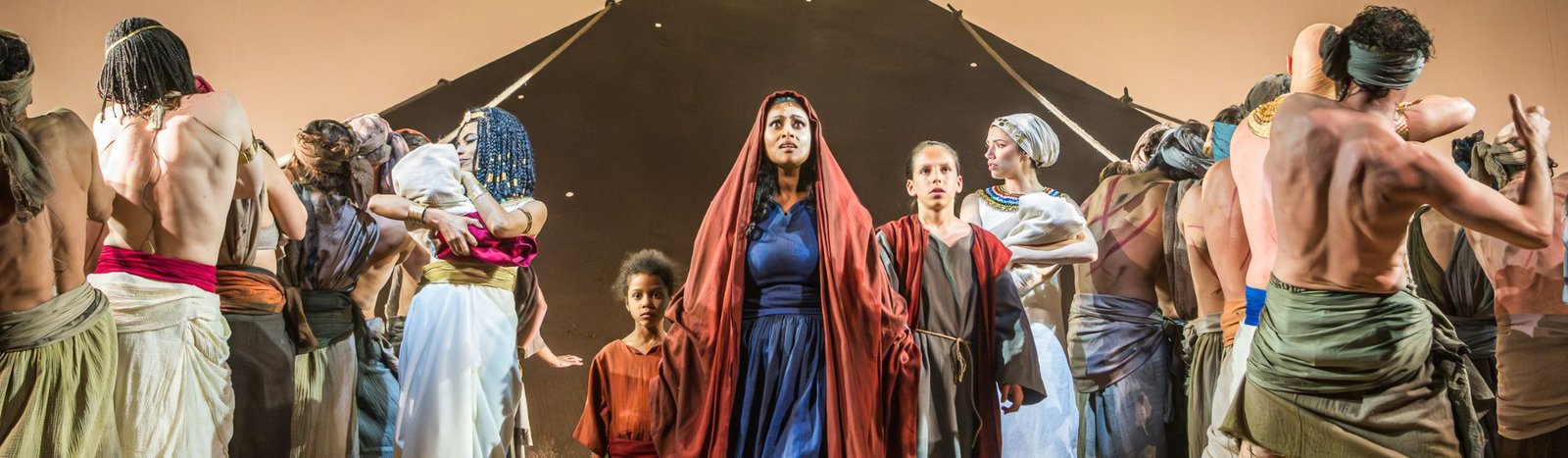
The Prince of Egypt (Il Principe d'Egitto), the musical based on the DreamWorks animated film with music and lyrics by Stephen Schwartz, had its national premiere at Teatro Brancaccio, Via Merulana 244 (00185 Rome), on Thursday, October 29, 2026 at 21:00. The theater presents the run until November 15, 2026. The published schedule lists performances from October 29 to November 8, with evening shows at 21:00 and matinees at 16:00. You get there by metro A, Vittorio Emanuele stop, by metro B, Cavour stop, or by buses 16, 75, 714, 717 and C3, which stop on Via Merulana by the theater. The prices published by the theater range from 46 euros (Poltrona B and I Balconata B) to 80 euros (Poltronissima A). Tickets are sold at the box office on Via Merulana and on the authorized presale network indicated on the official Teatro Brancaccio website.
Language: performed in Italian. No English version or English surtitles are announced.
Direction and sets are by Federico Bellone, and the production is by Broadway Italia, the same company that brought The Phantom of the Opera and Anastasia to Italy. Moses is Riccardo Maccaferri, Ramses is Lorenzo Tognocchi. Among the musicals of the Roman autumn it's the most ambitious title on paper, because it brings together a score by the author of Wicked, a hall of nearly 2,000 historic seats and a production that declares 50 people on stage. The risk, with blockbusters, is that the effects swallow the story. Here that's exactly the bet.
The Prince of Egypt at Brancaccio at a glance: dates, times and prices
The Prince of Egypt the Musical is on at Teatro Brancaccio from October 29, 2026, with 13 performances listed in the theater's schedule between October 29 and November 8. It's the national premiere of the new Italian production, after the May preview in Trieste.
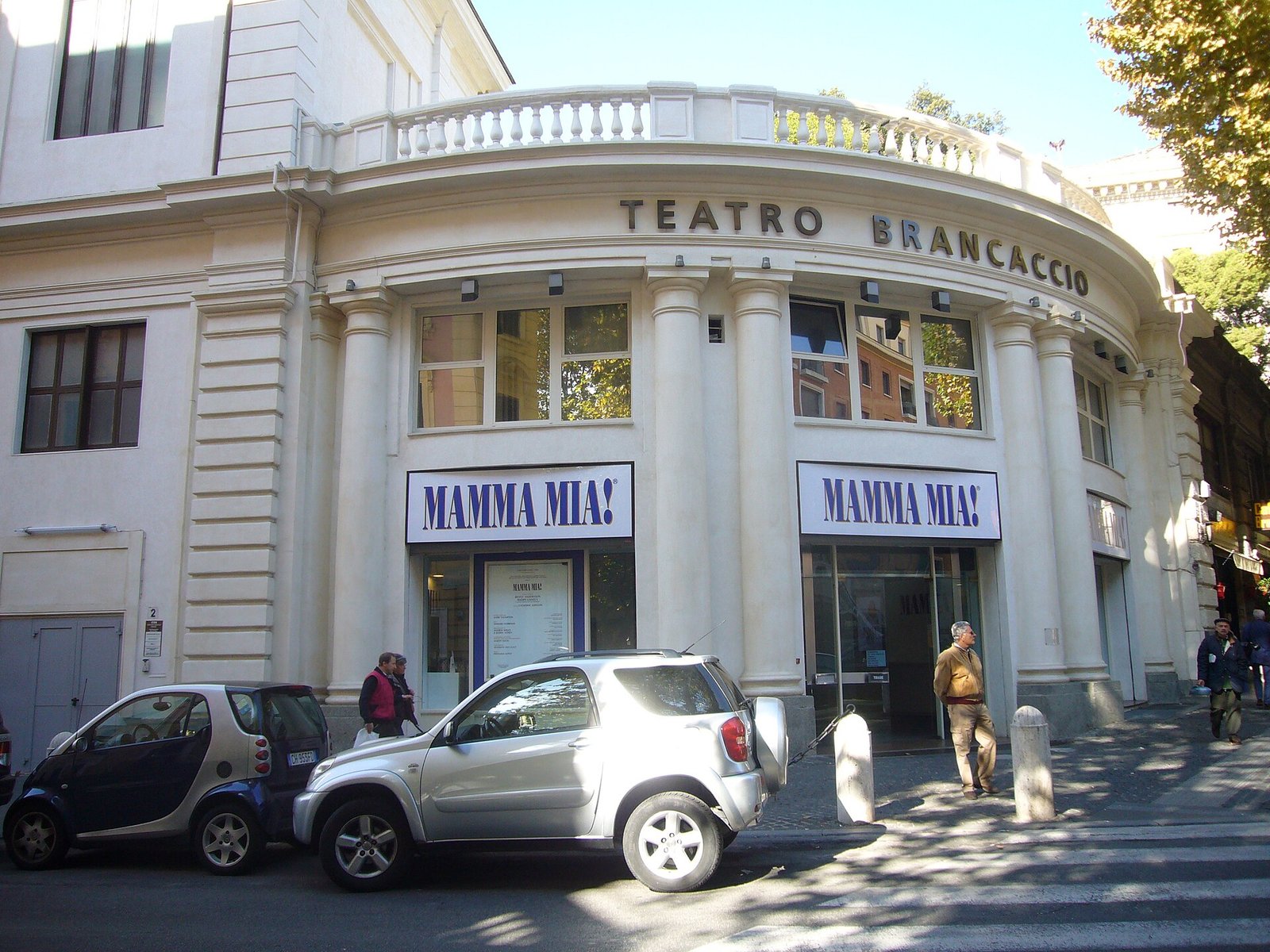
The performance schedule published by the theater
- Thursday, October 29, 21:00: national premiere.
- Friday, October 30, 21:00.
- Saturday, October 31, 16:00 and 21:00.
- Sunday, November 1, 16:00 and 21:00.
- Monday, November 2, 16:00.
- Wednesday, November 4, 21:00.
- Thursday, November 5, 21:00.
- Friday, November 6, 21:00.
- Saturday, November 7, 16:00 and 21:00.
- Sunday, November 8, 16:00.
Tuesday, November 3 is a rest day. Monday, November 2 has only the matinee: an unusual choice for the Brancaccio, where the box office is normally closed on Mondays, explained by the All Saints' long weekend.
The dates after November 8
The show's official presentation gives the national premiere at the Brancaccio from October 29 to November 15, 2026. The schedule table, however, stops on Sunday, November 8, and in the season program the Brancaccio has an Eduardo De Crescenzo concert scheduled for Friday, November 13. Those who want to go in the second week of November should check that the date appears in the schedule on the official website before buying: if it isn't there, it isn't on sale.
Prices by section
The price list published by the theater for The Prince of Egypt has six sections, all at full price:
- Poltronissima A: 80 euros.
- Poltronissima B: 69 euros.
- Poltrona A: 51 euros.
- Poltrona B: 46 euros.
- I Balconata A: 51 euros.
- I Balconata B: 46 euros.
The theater's rules specify that any fees and presale charges must be clearly shown at the time of purchase and on the ticket. The second balcony doesn't appear in the price list for this title: for Anastasia, in January 2026, the theater sold it at 40 and 28 euros. If it reappears here too, the sales system will say so, not the price list.
What The Prince of Egypt, the musical, is
The Prince of Egypt the Musical is the stage adaptation of the DreamWorks animated film, with music and lyrics by Stephen Schwartz and book by Philip LaZebnik. The version coming to Rome is a new Italian edition, directed by Federico Bellone and produced by Broadway Italia.
From the DreamWorks film to the stage
The official presentation recalls that the animated film of the same name, produced by DreamWorks, Steven Spielberg's production company, set the highest box office in history for an animated film after the Disney ones. The move to the stage followed a precise path: the world premiere in Silicon Valley, then the original West End production in London, directed by Scott Schwartz, which opened in 2020. The original production's credits are long: DreamWorks Theatricals, Michael McCabe and Neil Laidlaw with John Gore, Tom Smedes and Peter Stern, Ramin Sabi, The Araca Group, James L. Nederlander and Michael Park. In Italy the title is presented through an agreement with Music Theatre International, the agency that handles performance rights.
The point, for theatergoers, is this: it isn't a film transferred to a stage, nor a copy of the London production. It's a staging conceived by the Italian team, with new sets, new effects and a company cast here.
Stephen Schwartz, the composer
Stephen Schwartz has won three Academy Awards and has written scores the public knows even without knowing it: Pocahontas, The Hunchback of Notre Dame, Wicked. In The Prince of Egypt the song everyone waits for is When You Believe, Oscar for best original song, made famous by Whitney Houston and Mariah Carey. On stage the song isn't a concert number: it comes inside the story, and the way the direction places it will say a lot about the night. In our view the title stands or falls there, more than on the plagues.
The story told on stage
The plot revolves around a baby abandoned on the Nile and raised in the Egyptian royal family, who thus becomes the brother of the heir to the throne. It's the story of Moses and Ramses, two brothers whom history puts on opposite sides: on one side the power of the pharaoh, on the other an enslaved people. The production insists on three themes, freedom, identity and sacrifice, and on the spectacle of the plagues of Egypt. Bellone, in his director's notes, speaks of a great story of faith and community, and above all of forgiveness: the key to the story isn't the victory of one over the other, but what remains of the bond between the two brothers.
Broadway Italia and Federico Bellone's team
The Prince of Egypt is produced by Broadway Italia Srl, with direction and sets by Federico Bellone: the same producer and director pairing behind the Italian editions of The Phantom of the Opera and Anastasia.
Federico Bellone, direction and sets
The theater presents Bellone as one of the most authoritative directors of contemporary musical theater, already behind the Italian successes of The Phantom of the Opera and Anastasia the Musical. Here he designs both the direction and the sets, a choice that in a staging of this scale carries weight: the person who designs the space and the person who moves the actors are the same, and this usually shows in the fluidity of the scene changes. In the director's notes published by the theater his definition of the show is clear: «Kolossal. This is the word that best fits this staging». He then recalls the great crowd scenes in the style of Ben-Hur and a childhood memory linking the film to the cartoons of his generation, from Beauty and the Beast to Aladdin.
Paolo Carta and the plagues of Egypt
The illusions and special effects are by Paolo Carta, whom the production calls a leading professional in the field and who creates, according to the official presentation, an unprecedented use of stagecraft to recreate the plagues of Egypt. Carta isn't a new name for the Brancaccio: he appears in the credits of Anastasia, staged here in January 2026, with the same role. The work on effects is openly the backbone of the show, and the theater's rules warn in general that effects with open flames, pyrotechnics or strobes, previously authorized, may be used on stage: those sensitive to strobe lights would do well to ask at the box office before booking.
Lighting, sound, costumes, music
The full creative team, as published by the theater, includes Giovanni Maria Lori as music supervisor, Elena Cicorella for costumes, hair and makeup, Valerio Tiberi on lighting design and Poti Martin on sound design. Lori, Tiberi and Poti Martin also appear in the credits of Anastasia: it's a technical team the Brancaccio audience has already seen at work in this hall. For a theater this size, sound design isn't a detail: with a large orchestra and two balconies, the difference between a good and a bad musical night is often made by the sound system, more than by the voice.
The cast of The Prince of Egypt in Rome
The cast published by Teatro Brancaccio for The Prince of Egypt is led by Riccardo Maccaferri (Moses) and Lorenzo Tognocchi (Ramses), with Giulia Sol as Tziporrah.
Moses and Ramses
The musical rests on the relationship between the two brothers. Riccardo Maccaferri is Moses, the prince who discovers his origins and chooses his people. Lorenzo Tognocchi is Ramses, the heir to the throne who experiences that choice as a betrayal. They're two roles built in parallel: the story keeps putting them face to face, and the audience ends up divided. Those who have seen the film know that sympathy doesn't all go to Moses.
The female figures
Giulia Sol is Tziporrah. Michelle Perera plays two roles, Yocheved and Miriam. Daniela Pobega is Queen Tuya, the queen of the Egyptian court where the child of the Nile grows up. Matilde Guidotti is Nefertari. The double role given to Michelle Perera is a company choice often seen in big musical productions: the same performer crosses two different moments of the story, and to the attentive viewer the return of the same voice says something about the bond between the two figures.
Pharaoh, priest, Aaron and the ensemble
Gipeto also plays two roles, Pharaoh Seti and Jethro: the ruler of the court where Moses grows up and a figure from the world Moses meets outside that court, given to the same voice. Fabrizio Corucci is the priest Hotep, Renato Tognocchi is Aaron. In the ensemble the theater names Chiara Vergassola, Rocco Di Donato and Lorenzo Maria Giambattista. The production speaks of 50 people on stage in all: it's a number for a large hall, and the Brancaccio is one of the few in Rome where a staging like this can breathe.
The Prince of Egypt tour: Trieste, Rome, Milan
The new Italian production of The Prince of Egypt follows a three-stage route announced by Teatro Brancaccio: national preview at Teatro Rossetti in Trieste from May 14 to 17, 2026, national premiere at the Brancaccio in Rome from October 29, then Teatro Arcimboldi in Milan from November 26 to December 13, 2026.
The pattern is typical of big musical productions: a trial-run venue away from the spotlight, then the official presentation in one of the two big markets, Rome or Milan. The fact that the national premiere is in Rome and not Milan says something about the weight the Brancaccio has gained in the musical circuit. For the Roman audience there's also a practical advantage: between May and October the show had months to settle, and those who see it in Rome see a version already tested by an audience.
Those who can't find a seat in Rome still have Milan, at the end of November. For a Roman, though, the choice is simple: the Brancaccio can be reached by metro, it's inside the historic city and it's a few minutes from Termini.
A curious fact about The Prince of Egypt the Musical at Teatro Brancaccio, October 29 to November 15, 2026
The most concrete curious fact concerns the premiere title. The Brancaccio announces The Prince of Egypt as a national premiere, yet the show has already been staged in Italy: the national preview was in Trieste, at Teatro Rossetti, from May 14 to 17, 2026. There's no contradiction. In theater production language, the preview is a trial run open to the public, the national premiere is the official debut, the one critics measure. Rome has the second, Trieste had the first.
The second curious fact is in the calendar. The Brancaccio box office is closed on Mondays, and musicals in a run usually rest at the start of the week. For The Prince of Egypt, instead, the rest day falls on Tuesday, November 3, while on Monday, November 2 there's a 16:00 matinee. It's All Souls' Day, which follows All Saints' Sunday: the production has bet on families' long weekend.
The third concerns the team. Those who went to the Brancaccio for Anastasia, between January 22 and February 1, 2026, have already seen most of The Prince of Egypt's technicians at work: Paolo Carta for illusions and special effects, Giovanni Maria Lori as music supervisor, Valerio Tiberi on lighting, Poti Martin on sound. The price list for the main sections is identical too, to the cent: 80, 69, 51 and 46 euros. It's the same working group returning to the same hall nine months later, with a bigger title. In a world where big productions often change home, it's a sign of mutual trust between the theater and the producer.
Teatro Brancaccio: the hall and how it's laid out
Teatro Brancaccio, at Via Merulana 244, has had its current layout since 1937: two foyers, a large orchestra and two raised levels, first and second balcony, for about 2,000 seats at the time. It's one of the largest halls in Rome for drama and musicals.
Orchestra and balconies
The hall reads in three bands. The orchestra is divided into the Poltronissima and Poltrona sections, each in bands A and B, plus the Gold and Gold Vip bands that appear in the theater's booking system. Above are the first balcony, divided into A and B, and the second balcony. For The Prince of Egypt the published prices cover the orchestra and the first balcony. The useful fact is this: I Balconata A costs the same as Poltrona A, 51 euros, and I Balconata B the same as Poltrona B, 46 euros. So the theater considers the first balcony equivalent to the rear orchestra.
Where to sit for a blockbuster
Here the verdict is clear. For a show that relies on crowd scenes, effects and the movements of 50 people, being right under the stage isn't always the best place: you see the faces, you lose the overall design. The central first balcony gives back the geometry of the stage and the lighting, and for a staging by a director who is also the set designer it's often the most fitting position. Those who go for the voices and the acting, and want to see Moses and Ramses face to face, should choose the Poltronissima. In between, Poltrona A is the most reasonable compromise. A practical warning: the balconies aren't served by elevators, and you reach them on foot.
The Brancaccino and the rest of the complex
The Brancaccio is the main hall of a larger complex. It includes the Brancaccino, a theater of about 100 seats with telescopic seating, dedicated to contemporary playwriting and children's theater, a park area used for training and a large terrace overlooking Via Merulana. The theater is home to the Viola Produzioni theater production center, and hosts the STAP Brancaccio Academy for acting, directing and playwriting and the BMA Brancaccio Musical Academy, directed by Lorenzo Gioielli, Rossella Marchi and Piero Di Blasio, as well as the Brancaccio Danza center directed by Alessia Gatta. Those who go to see a musical in this hall, in short, enter a building where musical theater is taught every day.
Something nobody tells you about The Prince of Egypt the Musical at Teatro Brancaccio, October 29 to November 15, 2026
What nobody says is written in the theater's rules, and almost nobody reads it: the Brancaccio asks spectators to show up at least an hour before the start. For the 21:00 evening show that means being on Via Merulana at 20:00, for the 16:00 matinee, at 15:00. It isn't a formality. With a hall this big, two foyers, visual checks on bags and backpacks and a coat check where umbrellas must be left too, the line at the entrance on sold-out nights is real.
And the rules are strict on latecomers: entry to the hall after the show has started is forbidden, and those who arrive late wait in the foyer until the first available intermission. In a musical this means missing the entire first act, that is, in the case of The Prince of Egypt, the two brothers' childhood, the Nile, the discovery of origins: the part without which the rest loses meaning. If the show has no intermission, the theater may at its discretion let the latecomer in, but without guaranteeing the assigned seat.
A second unspoken thing: backpacks. The rules forbid bringing into the hall bulky containers over 17 liters not authorized by the staff. Those coming from work with a laptop backpack, or a family with a big bag for the kids, risk a mandatory trip to the coat check and a line on the way out. The solution is simple: small bag, folding umbrella, a coat you can hold on your knees. Third: tickets are in the buyer's name, after a personal data registration, and can't be transferred for any reason without agreement with the theater. Those buying for a group need to know this beforehand, not at the entrance.
How to get to Teatro Brancaccio
Teatro Brancaccio is at Via Merulana 244, in the Esquilino neighborhood, less than a kilometer from Termini station and a few steps from the Vittorio Emanuele stop on metro A. It's among the easiest theaters to reach by public transport in Rome.
By metro
The theater gives two options. Metro A, Vittorio Emanuele stop, is the closest: you come out on Piazza Vittorio Emanuele II and reach Via Merulana in a few minutes on foot. Metro B and B1, Cavour stop, are the alternative for those coming from the Monti or Colosseum side, with a slightly longer walk. From Termini, where the two lines cross, the theater is less than a kilometer away: those with time can do it all on foot, passing Santa Maria Maggiore.
By bus and surface lines
The theater lists three stops. On Via Merulana, at the Merulana/Brancaccio and Merulana/Mecenate stops, lines 16, 75, 714, 717 and C3 pass. At the Labicana/Merulana stop, at the intersection with Via Labicana, lines 3, 53, 75, 85, 87, 186, 571, 810, C3 and the N10 night bus pass. For the way back after the evening show, which ends late, the N10 is the line to note. The practical advice: on the way there metro A, on the way back one of the lines on Via Merulana or Via Labicana, to avoid walking at night to Piazza Vittorio if you don't know the area.
By taxi
The theater lists the nearest taxi stands: Largo Brancaccio, Piazza Vittorio Emanuele II at number 113, Via Principe Amedeo at 138, Via Giolitti at 6 and Via Venosta. Coming out of a sold-out evening show, the Largo Brancaccio stand empties in a few minutes: those who need a taxi are better off moving toward Piazza Vittorio or booking it by phone.
By car
The car is the choice I advise against. The theater doesn't list partner parking, the Esquilino is a dense neighborhood and evening parking is difficult, especially on long weekends like All Saints'. Those coming from outside Rome would do better to leave the car near a metro A or B station, along the line, and continue by metro to Vittorio Emanuele or Cavour.
My advice for The Prince of Egypt the Musical at Teatro Brancaccio, October 29 to November 15, 2026
My advice is just one, and it's worth more than all the others: choose a performance in the second week of the published schedule, between Wednesday, November 4 and Sunday, November 8, and sit in the central first balcony.
The reason for the date is simple. The first performances of a Roman run, and in particular the national premiere on October 29, are nights of guests, press and industry people: the hall is full of people watching the show with a professional eye, and the atmosphere is different. The All Saints' weekend, between Saturday, October 31 and Monday, November 2, packs five performances into three days and is the most in demand among families. The following week, with the evening shows on Wednesday, Thursday and Friday, has the most attentive audience and a company already broken in by a series of Roman performances.
The reason for the seat is the one already seen: for a staging built on crowd scenes, lighting and effects, the right distance is worth more than closeness. The first balcony costs the same as the rear orchestra, 51 euros for band A and 46 for band B, and gives back the whole stage. If the budget allows and you're going for the voices, Poltronissima A at 80 euros remains the best seat for seeing the faces.
One last thing: if you don't have children, go to an evening show and not a matinee. The 16:00 matinees are designed for families, and the hall will sound like a hall full of families. That's perfectly fine, but it's a different night.
Tickets for The Prince of Egypt: box office, presale, groups
Tickets for The Prince of Egypt at Teatro Brancaccio cost from 46 to 80 euros and are sold on the official channels indicated by the theater: the box office at Via Merulana 244, the official website, the official call center and authorized sales points.
Box office and hours
The Teatro Brancaccio box office is at Via Merulana 244 and is open to the public Tuesday to Saturday from 16:00 to 19:00. On Sunday it opens during show hours, if there's a performance. On Monday it's closed. The box office phone assistance answers Tuesday to Friday from 14:00 to 16:00. The theater also offers the option of paying by credit card through a payment link, by booking the ticket via email with the box office.
Online and by phone
The theater's rules list as official channels the website teatrobrancaccio.it, the Viola Produzioni box offices at the Brancaccio, the official call center at 06 80687231 and authorized sales points. From the show's page on the theater's website you reach the authorized presale network. Purchase requires a mandatory personal data registration and tickets are in the buyer's name. The theater warns that tickets bought from unauthorized channels may not give access to the hall, and recalls that resale at a markup is prohibited by law.
Groups, companies and partnerships
For groups, companies and partnerships the Brancaccio has a dedicated Promotions Office, reachable at 06 80687232 or by email to the theater's communications office. Those organizing an outing for a class, an association or a company group should start there, not from the online network. The theater also offers two subscription formats for the 2026-2027 season, the Brancaccio Fan Card and the Super Fan Card, starting from 196 and 204 euros respectively: those planning to come back several times in the season can consider them, but the details of the titles included should be asked at the box office. After buying the subscription, tickets for the individual shows are booked by contacting the box office.
Exchanges, refunds and lost tickets
The rules are clear: tickets can't be exchanged or refunded, except if the event is canceled or as required by law. Those who can't go for personal reasons lose the ticket. The theater also reserves the right to change date, time, staging and cast, which don't entitle anyone to a refund. If a digital ticket bought at the box office or on the theater's webshop is lost, a copy can be requested at the box office at no cost. For those bought on other channels you have to contact the sales channel used.
Another well-known fact, yet not often mentioned
All Romans who go to the theater know that the Brancaccio is a musical theater. Less often mentioned is the fact that for 15 years, from 1985 to 2000, this hall housed the Fondazione dell'Opera di Roma. The stage where today Moses and Ramses sing Stephen Schwartz was for 15 years one of the homes of opera in the capital.
This matters for those going to see The Prince of Egypt, because it explains the hall. A theater that has carried opera has a large orchestra, two deep balconies and a stage able to take stagings with many people on it. When the production speaks of 50 people and a blockbuster, it's speaking of a show that needs exactly this kind of space.
After the Opera, management passed to the City of Rome, which entrusted the direction to Gigi Proietti until 2007. Then came Maurizio Costanzo's management until 2010 and Stage Entertainment Italia's until 2012. Since September 2012 the artistic direction has been Alessandro Longobardi's, and the theater is home to the Viola Produzioni production center, which presents it today as one of the main national references for producing and hosting musicals, alongside dance, contemporary circus, stand-up, drama and youth theater.
And there's another little-told fact: the Brancaccio wasn't born with this name. It opened in January 1916 as Teatro Morgana, and took its current name only in 1937. Many Romans who have been going there for decades don't know it.
House rules at Teatro Brancaccio: what to know before going in
Teatro Brancaccio's rules apply to all performances of The Prince of Egypt: arrive at least an hour early, no entry once the show has started, no photos or filming during the show, no food in the hall.
Arrival, latecomers and seats
Besides arriving an hour early, the rules ask you to sit only in your assigned seat: for safety reasons swapping seats isn't allowed, not even with empty seats. The house staff can ask to see your ticket at any time. Reduced-price tickets are valid only with a document proving the right to the discount. Without one, you pay the difference.
Bags, umbrellas and coat check
The theater has a coat check, a bar and merchandise sales. Umbrellas, large or small, don't go into the hall: they must be left at the coat check, in a bag provided by the staff. It's forbidden to bring in plastic bottles over half a liter, glass containers, motorcycle helmets, professional and semi-professional cameras, tripods, selfie sticks. Food and drinks are consumed only at the bar, during intermissions.
Phones, photos and dress
The rules forbid photographing the show with or without flash and making audio or video recordings, even with a phone, and ask that phones be turned off before the start. On dress the theater asks for clothing suited to the decorum of the hall, without a real code. At a national premiere at the Brancaccio you'll see everything, from dark suits to sweaters: the real rule is not to show up in gym clothes.
The right photo to take at The Prince of Egypt the Musical at Teatro Brancaccio, October 29 to November 15, 2026
No photos during the show: the theater's rules forbid photographing and filming the performance, even with a phone. The right photo, therefore, is taken before and after, and there are two that make the night.
The first is the theater's facade on Via Merulana, in the evening, with The Prince of Egypt poster lit up. My advice is to cross the street and shoot from the opposite sidewalk, with a wide lens: that way the whole front of the theater fits in, plus a piece of Via Merulana, one of the longest and straightest streets in the center. The best moment is the hour before the show, when the audience starts arriving and the late October light has already gone: with standard time, it's almost dark at 18:00. A photo with people lined up in front of the entrance tells the story of the night better than any close-up.
The second is the hall seen from above, before the lights go down. From the first balcony you see the orchestra filling up and the closed curtain: it's the only image of the hall you take home. No flash, no selfie sticks, and with the phone back in your pocket as soon as the lights start to dim: the house staff are watchful, and they're right to be.
Those who want an image of the show have the official material the theater publishes, from the poster to the promotional video. In our view the photo of the line on Via Merulana, at 20:00 on a November day, will tell you more 10 years from now.
The Prince of Egypt with children
Teatro Brancaccio lists The Prince of Egypt in the Musical and Family categories, and the director presents it as a show for the whole family. The 16:00 matinees, on weekends and on Monday, November 2, are the performances designed for those going with their kids.
Age, companions and tickets for little ones
The theater's rules require children under 14 to be accompanied by an adult. Children under 3 get in free if they don't take a seat, with a document proving their age. Admission remains at the production's discretion, depending on the type of show. Everyone else pays the full price of the chosen section: the price list published for this title shows no reductions for kids.
Which performance to choose and what to expect
The story is the Exodus told through two brothers, and it contains hard moments: slavery, the plagues, the clash between a people and a ruler. The production relies on special effects precisely for the plagues, and the theater's rules warn in general that there may be effects with flames, pyrotechnics and strobes on stage. With a child under six I'd choose a matinee and an aisle seat, so you can step out into the foyer without disturbing anyone. From seven up, especially if the film has already been seen at home, the show works: Schwartz's songs hold attention, and the scale of the staging does the rest. For older kids, and particularly those who study music or singing, I'd instead recommend an evening show: the energy in the hall is different.
A last practical note: food isn't allowed in the hall. Snack at the theater bar before the start, and a half-liter bottle of water in your bag.
Accessibility of Teatro Brancaccio for The Prince of Egypt
Teatro Brancaccio states that it has no architectural barriers for access to the orchestra: there's a ramp, an area dedicated to wheelchairs and an accessible restroom on the ground floor, reachable from the orchestra foyer.
Wheelchairs and reduced mobility
For performances organized by the operator, the theater provides, while they last, four orchestra spaces for wheelchair users with a companion and two orchestra seats for people with walking difficulties, with a companion if needed. The balconies aren't wheelchair accessible: there are no elevators to the upper sections. Spaces must be booked by sending the box office the dedicated form, filled out and accompanied by the disability certificate or the Disability Card, plus the companion allowance certificate if applicable. The box office then communicates the rate set by the production on stage and confirms availability. The theater is explicit: a regular ticket bought through other channels doesn't guarantee access for people with disabilities.
Visual and hearing disabilities and service dogs
For spectators with visual and hearing disabilities the theater reserves, on booking, orchestra seats while they last. Those with a service dog can ask to enter the hall with the animal by writing to the box office and attaching the disability certificate that indicates the assistance service. For The Prince of Egypt, with its light effects, I'd advise a photosensitive spectator to ask the box office, when booking, if the show includes strobe effects.
Some important events that happened here in history
The history of Teatro Brancaccio begins in January 1916, when the hall opened under the name Teatro Morgana. It was built against the embankment of the gardens of the Field-Brancaccio noble palace, whose name comes from Isabella Field, married to Prince Brancaccio. The link with Palazzo Brancaccio is therefore physical even before it's in the name.
Over the years the theater went through several renovations, both to enhance the exterior and to improve how the interior works. The decisive moment was 1937: the hall opened in the layout we know, with two foyers, a large orchestra and two balconies for about 2,000 seats at the time, and took the name Teatro Brancaccio. Since then it has been considered, by tradition, the theater of Rome.
The second chapter opened in 1985, when the hall became the home of the Fondazione dell'Opera di Roma, which stayed until 2000. Then the City of Rome took over, entrusting the direction to Gigi Proietti until 2007. Maurizio Costanzo's management followed until 2010 and Stage Entertainment Italia's until 2012. Since September 2012 the artistic direction has been Alessandro Longobardi's.
The most recent years are those of the transformation into a cultural complex: the Brancaccino, the park area for training, the terrace on Via Merulana, the academies. In 2014 Spazio Impero opened, with nine rehearsal rooms, in a network with the production center's other spaces, Sala Umberto and Spazio Diamante. The theater then started an energy efficiency project funded by the European Union, Next Generation EU, through the Ministry of Culture, and digitization projects with funds from the Lazio Region. The national premiere of The Prince of Egypt, on October 29, 2026, fits into this story as the latest in a series of big musical premieres hosted here.
Around the Brancaccio: Esquilino, Monti and Via Merulana
Teatro Brancaccio is on Via Merulana, in the Esquilino neighborhood, between the Basilica of Santa Maria Maggiore, the Colosseum and the Basilica of San Giovanni in Laterano. Those arriving an hour or two early have around them one of the most history-packed areas of the city.
Before the show: what's a few steps away
Via Merulana runs between two of Rome's major basilicas: on one side Santa Maria Maggiore, on the other St. John Lateran. The theater is along the stretch between the two, and a walk before the evening show can start from either basilica. On the same street are Palazzo Merulana and, a little farther on, the Auditorium of Maecenas, two addresses that Brancaccio regulars end up knowing. To the north, past the metro stop, is Piazza Vittorio Emanuele II with the Porta Alchemica, one of the most photographed curiosities of the Esquilino. To the west you go down into the Monti district: for those who want to discover it at leisure there's our guide to Rione Monti.
The advice for October and November is to take the walk before the show and not after: at 17:00 there's still a bit of light, at 23:00 the monuments are closed and the Esquilino at night, for those who don't know it, is less welcoming than the center.
Where to eat before or after the show
The area offers three different options. Via Merulana and the streets around the theater have neighborhood bars and restaurants, good for an aperitivo or a quick meal before the evening show. Piazza Vittorio and the streets around it are the multiethnic Esquilino, with cuisines from half the world and modest prices. The Nuovo Mercato Esquilino is the place where you best understand this side of the neighborhood, but it's a market, not an evening option. The Monti district, a quarter of an hour on foot, has trattorias, osterias and wine bars, and it's the best choice for dinner after the evening show, when you come out late and want a relaxed table. A practical tip: book. On sold-out nights, a whole hall leaves the theater at the same time and looks for a table in the same blocks.
Who has passed through The Prince of Egypt the Musical at Teatro Brancaccio, October 29 to November 15, 2026
Over its history, some of the biggest names in Italian and international entertainment have passed across the Brancaccio stage. The theater itself recalls some: Totò, Anna Magnani, Aldo Fabrizi, Gigi Proietti among the actors, and Fabrizio De André, Louis Armstrong and Jimi Hendrix among the musicians. It's a list that says a lot about the nature of the hall: Roman variety and cinema, singer-songwriter music, jazz and rock had a home here, even before musicals.
Proietti, in particular, wasn't just an actor passing through: after 2000 he ran the theater on behalf of the City of Rome, until 2007. After him, until 2010, Maurizio Costanzo was in charge.
The 2025-2026 season gives an idea of who passes through Via Merulana today. In musicals: Anastasia, from January 22 to February 1, 2026, with much of The Prince of Egypt's technical team, Aggiungi un posto a tavola with Giovanni Scifoni and the special participation of Lorella Cuccarini, in December and for New Year's Eve, Singin' in the Rain in April, the Rocky Horror Show in November, Frida Opera Musical, with Federica Butera, Drusilla Foer and Andrea Ortis, Topo Gigio the musical. In dance, Akram Khan and Manal AlDowayan with Thikra: Night of Remembering. In music, Roberto Vecchioni, Patty Pravo, Michele Zarrillo. And a night with Dita Von Teese and Nocturnelle.
In the same season as The Prince of Egypt the Brancaccio hosted, among others, Amélie the musical with Giulia Ottonello in the days right before, from October 22 to 25, and hosts Aggiungi un posto a tavola from December 10. Those coming for Moses and Ramses enter a hall that in recent years has seen a sizable part of large-scale Italian musical theater pass through.
Rome between late October and mid-November, the season of The Prince of Egypt
The Prince of Egypt arrives at the Brancaccio in one of the most particular weeks of the Roman calendar: the run began a few days after the return to standard time and crosses the All Saints' long weekend.
All Saints' and the November 2 long weekend
In 2026 November 1, All Saints' Day, falls on a Sunday, and November 2, All Souls' Day, on a Monday. The show's calendar takes advantage of it: five performances between Saturday, October 31 and Monday, November 2, with double shows on Saturday and Sunday and a matinee on Monday. For those coming from outside Rome it's the ideal weekend to combine the musical with a visit to the city. For those who live in Rome it's the weekend when finding a seat will be hardest. Those who are flexible should look at the following week.
Weather, light and clothing
Between late October and November Rome alternates still mild days with the first rainy spells. For the theater there are two practical consequences. The first: umbrellas don't go into the hall and end up at the coat check, so a folding umbrella or a good raincoat is better. The second: with standard time darkness comes early, and those who want to pair the show with a walk between Santa Maria Maggiore and Monti need to do it in the early afternoon. For the 16:00 matinees the combination is excellent: lunch in Monti, a walk, the theater, and the evening stays free.
The Brancaccio after The Prince of Egypt: the November program
Those who discover the Brancaccio with The Prince of Egypt will find a packed program in the following weeks. On November 13 the theater has Eduardo De Crescenzo with Essenze Jazz, on November 16 Hans Zimmer's film scores with the Ensemble Symphony Orchestra, a fitting choice for those who left The Prince of Egypt with film music in their ears, on November 17 Steve Hackett with his tour The Best of Genesis and Solo Gems, on November 20 Michele Bravi with the Commedia Musicale Tour. In December Aggiungi un posto a tavola returns, from the 10th, and from March 31, 2027 comes Mrs Doubtfire the musical with Francesco Cicchella. For everything else, our Teatro Brancaccio page gathers history, hall and practical information.
Frequently asked questions about The Prince of Egypt at the Brancaccio
When is The Prince of Egypt the musical on in Rome?
The Prince of Egypt the musical premiered at Teatro Brancaccio in Rome on Thursday, October 29, 2026 at 21:00, as a national premiere. The theater presents the run until November 15, 2026. The published schedule lists 13 performances between October 29 and November 8, with evening shows at 21:00 and matinees at 16:00. For dates after November 8 it's best to check on the theater's official website.
How much are tickets for The Prince of Egypt at the Brancaccio?
Tickets for The Prince of Egypt at Teatro Brancaccio range from 46 to 80 euros, according to the price list published by the theater. Poltronissima A costs 80 euros, Poltronissima B 69, Poltrona A and I Balconata A 51, Poltrona B and I Balconata B 46. Any fees and presale charges are shown at the time of purchase.
Where do you buy tickets for The Prince of Egypt in Rome?
Tickets for The Prince of Egypt are sold at the Teatro Brancaccio box office, Via Merulana 244, open Tuesday to Saturday from 16:00 to 19:00, or from the theater's official website, which links to the authorized presale network. There's also the official call center at 06 80687231. For groups there's the Promotions Office, at 06 80687232.
Who are the leads of The Prince of Egypt in Italy?
In The Prince of Egypt at Teatro Brancaccio, Riccardo Maccaferri is Moses and Lorenzo Tognocchi is Ramses. With them are Giulia Sol (Tziporrah), Gipeto (Pharaoh Seti and Jethro), Michelle Perera (Yocheved and Miriam), Daniela Pobega (Queen Tuya), Matilde Guidotti (Nefertari), Fabrizio Corucci (Hotep) and Renato Tognocchi (Aaron). Direction and sets are by Federico Bellone.
Is The Prince of Egypt suitable for children?
The Prince of Egypt is classified by Teatro Brancaccio as a Family show and the director presents it as a show for the whole family. The 16:00 matinees are the most suitable performances. Children under 14 get in only if accompanied. Under 3, entry is free without a seat, at the production's discretion. With the youngest, the intensity of the plagues should be considered.
How do you get to Teatro Brancaccio by public transport?
Teatro Brancaccio, at Via Merulana 244, can be reached by metro A, Vittorio Emanuele stop, or metro B, Cavour stop. On Via Merulana lines 16, 75, 714, 717 and C3 stop. At the Labicana/Merulana stop 3, 53, 85, 87, 186, 571, 810 and the N10 night bus also pass. From Termini the theater is less than a kilometer away.
What time should you arrive at the Brancaccio?
Teatro Brancaccio's rules ask you to show up at least an hour before the start: at 20:00 for The Prince of Egypt's evening shows, at 15:00 for the matinees. Entry to the hall after the show has started is forbidden and latecomers wait in the foyer until the first intermission, thus missing the whole first part of the show.
Is Teatro Brancaccio wheelchair accessible?
Teatro Brancaccio has a ramp to the orchestra, four orchestra spaces for wheelchair users with a companion, two for people with walking difficulties and an accessible restroom on the ground floor. The balconies have no elevator. Spaces are booked by sending the box office the theater's form with the required certification.
My final advice on The Prince of Egypt
Go, but go well. Buy from the theater's website or at the box office on Via Merulana, never from unauthorized resellers. Choose an evening show between November 4 and 7, central first balcony if you want the whole stage, Poltronissima if you want the faces. Arrive at 20:00, leave your umbrella at the coat check and your phone in your pocket. A blockbuster is judged in a single moment, and here that moment has a title: When You Believe. If it hits you from the Brancaccio balcony the way it should, the night is a success. Those who want to build a day around the show between Santa Maria Maggiore, the Esquilino and Monti, with a guide who knows these neighborhoods, can contact Tour Leader Pro.
Article written by the editorial team of Tour Leader Pro, contact them for Private/Corporate/V.I.P. Tours and Experiences.
Planning a trip to Rome? English guides for visiting the city are on ItalyPlanner.com.