The Nutcracker at Nuovo Teatro Orione, December 4, 2026
https://www.estateromana.com/en/rome/trip-planner/the-nutcracker-at-nuovo-teatro-orione-december-4-2026/
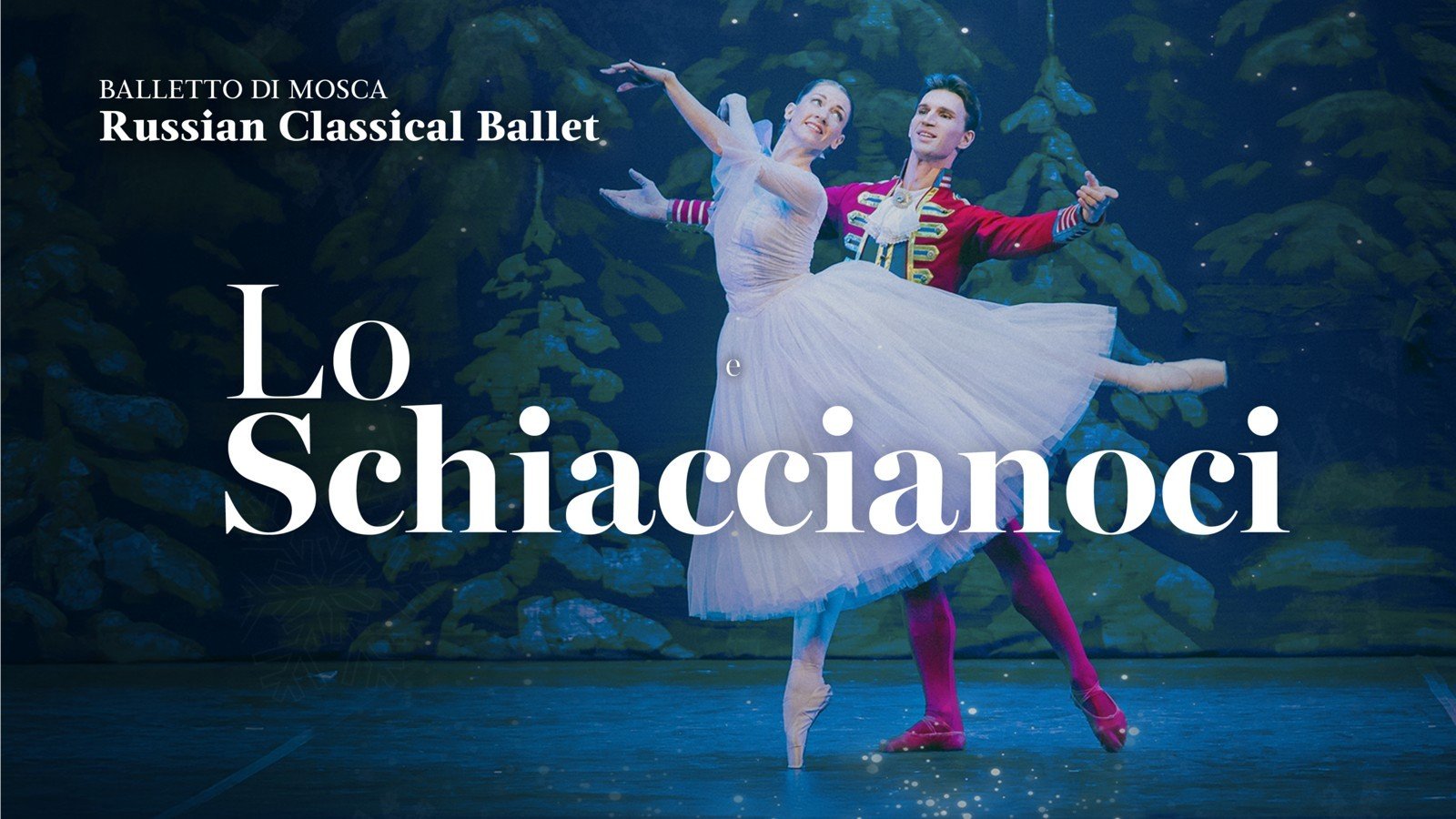 Immagine: Nuovo Teatro Orione (card dello spettacolo sul sito ufficiale)
The Nutcracker at Nuovo Teatro Orione: Tchaikovsky's Christmas ballet is on stage on Friday, December 4, 2026, according to the program published on the theater's official website. The address is Via Tortona 7, 00183 Rome, in the Appio-Latino neighborhood. The theater says it's a few minutes from Re di Roma station, on line A, and has plenty of parking space. The website gives neither the start time nor the price. The image on the show card lists the company as Russian Classical Ballet, with the words “Balletto di Mosca”. Tickets are sold from the button on the “lo schiaccianoci” card on teatrorione.it. For questions you can call the office (06 83546662) or write to info@teatrorione.it. To plan the trip from your starting point, check the ATAC journey planner.
Language: opera sung in its original language; no English surtitles are announced, so check with the theater.
The Nutcracker on Via Tortona: what we know
For this performance the official information is minimal: title, date and purchase link. Here's the picture, with what's missing.
Date and time
Friday, December 4, 2026, one performance only. The time hasn't been published.
Address
Nuovo Teatro Orione, Via Tortona 7, 00183 Rome, in the Appio-Latino neighborhood, not far from the Re di Roma stop on Metro A.
Company
Russian Classical Ballet: the image on the card on the theater's website shows “Balletto di Mosca” and “Russian Classical Ballet”, the same name that appears on the linked purchase page. The cast and choreography, however, haven't been announced: we don't yet know which dancers will take the stage.
Prices
Not published on the theater's website. You see them at the time of purchase.
Watch out for the same title: two Nutcrackers on the same day
In Rome, in December, The Nutcracker is on the program in several halls, and on December 4, 2026, the title appears at least twice. Turismo Roma also lists a Nutcracker at Teatro Brancaccio, at Via Merulana 244, from December 4 to 6, 2026, with choreographic direction by Alessia Gatta, with Manuel Paruccini, 23 dancers and international guests: a contemporary version in which Clara, on Christmas night, enters an abandoned amusement park.
How not to get it wrong
The one at the Orione is a different show, on Via Tortona, with another company. When buying, always check the name of the hall and the address: if you want the contemporary reworking set in the amusement park, choose the Brancaccio. If you're looking for the hall with on-site parking near the Re di Roma metro, choose the Orione.
The other versions in the city
On estateromana.com you'll also find The Nutcracker of Teatro dell'Opera di Roma, the one by Balletto di Roma at Teatro Olimpico and the version by the Almatanz company at Teatro Ghione.
From Hoffmann's tale to the Saint Petersburg libretto
At the origin of the ballet is a story by Ernst Theodor Amadeus Hoffmann, The Nutcracker and the Mouse King, published in 1815. The libretto, however, doesn't follow Hoffmann directly, considered too dark and gory, but the lighter version Alexandre Dumas père drew from it in 1845, Histoire d'un casse-noisette.
The commission
The new ballet was commissioned by Ivan Vsevolozhsky, director of the Russian Imperial Theaters, the same man who a few years later would promote the revival of Swan Lake. Tchaikovsky composed it between 1891 and 1892 as Op. 71. The commission called for it to be staged on the same evening as the opera Iolanta.
Petipa and Ivanov
Marius Petipa, master of the imperial ballets, provided the general directions and entrusted the choreography to his assistant Lev Ivanov, who thus signed the show that was staged.
The December 18, 1892, premiere
The Nutcracker premiered on December 18, 1892, at the Mariinsky Theater in Saint Petersburg, with musical direction by Riccardo Drigo and choreography by Lev Ivanov. The evening was not a success: a fate similar to that of Swan Lake in Moscow, 15 years earlier.
The first cast
The Sugar Plum Fairy was Antonietta Dell'Era. Pavel Gerdt played Prince Coqueluche. Olga Preobrajenska was Columbine and Nikolai Legat was also on stage. The role of Clara was given to a girl from the Mariinsky ballet school, a choice that Alexander Gorsky, in 1919, abandoned by giving the part to an adult dancer.
A piano reduction that was too hard
The piano reduction of the score was prepared by Sergei Taneyev, the composer's student and friend. It turned out so difficult that Tchaikovsky prepared a simpler version.
The plot in two acts
The ballet is divided into two acts, one set in the reality of a bourgeois home and one in the world of dreams.
Act one: Christmas Eve
In a German home Mr. Stahlbaum is giving a party. Uncle Drosselmeyer arrives with gifts and magic tricks. Clara receives a nutcracker shaped like a toy soldier, which her brother Fritz breaks and her uncle repairs. At midnight Clara dreams of a battle between mice and toy soldiers: the nutcracker faces the Mouse King, Clara helps him by throwing her slipper, and the victorious toy turns into a prince. The act ends with the Waltz of the Snowflakes.
Act two: the Land of Sweets
Clara and the prince arrive in the Land of Sweets, where the Sugar Plum Fairy and Prince Coqueluche throw a party in the girl's honor. The divertissement dances, the pas de deux and the Waltz of the Flowers follow one another. At the end Clara and the nutcracker are crowned and leave on a sleigh pulled by reindeer, before the final apotheosis.
An apotheosis with bees
The original ending closes with an apotheosis in which a swarm of bees appears: a detail to compare with the ending chosen by the company dancing at the Orione, which hasn't been announced.
The characters to recognize
Clara, who in the original version was called Marie, is the protagonist. Fritz is the mischievous brother. Drosselmeyer is the magician uncle who sets the story in motion. On the fantasy side are the nutcracker, the Mouse King, the Sugar Plum Fairy and Prince Coqueluche.
Clara, Marie, Masha
The girl's name has changed form many times. In Hoffmann she was called Maria, in the Russian libretto she was Marie and in Russia, after World War I, she became Masha for patriotic reasons.
Drosselmeyer
The uncle is the character who links the two worlds: he brings the gift in the first act, repairs the nutcracker broken by Fritz and thus sets Clara's dream in motion. At the Orione the company's interpretation isn't described, so the weight of his role will be one of the discoveries of the evening.
The celesta and the most famous pages
The Nutcracker score contains some of the most listened-to pieces in all ballet music. The most recognizable is the Dance of the Sugar Plum Fairy, in the second variation of the pas de deux, dominated by the crystalline timbre of the celesta.
An instrument discovered in Paris
Tchaikovsky had heard the celesta in Paris and used it in some passages of the second act. He wasn't the first to use it, because Charles-Marie Widor had already done so in 1880, and Tchaikovsky himself also included it in the symphonic poem The Voyevoda, Op. 78.
Waltz of the Flowers and Trepak
Among the best-known pages are the Waltz of the Flowers and the Trepak, the Russian dance of the divertissement. Together with the Dance of the Sugar Plum Fairy, they've had a life of their own in the concert hall, thanks to the suite.
The Op. 71a suite
The composer drew from the ballet a suite of about 20 minutes, with the same orchestral forces, and conducted it in Saint Petersburg on March 7, 1892, to triumphant success, even before the stage premiere.
The versions that made history
Like Swan Lake, The Nutcracker owes much of its fortune to 20th-century reworkings. In 1919 Alexander Gorsky restaged it for the Bolshoi, giving Clara to an adult dancer. Then came the versions by Lopukhov in 1929, by Vasily Vainonen for the Kirov in Leningrad in 1934 and by Yuri Grigorovich for the Bolshoi in 1966.
Europe and the United States
In Western Europe the ballet premiered in London, at Sadler's Wells, in June 1934, with Ivanov's choreography. In Italy it arrived at La Scala in 1938 with choreography by Margherita Froman. In the United States it was brought by Willam Christensen with the San Francisco Ballet in 1944, while George Balanchine, in 1954, divided it into two parts, reality and dream, for New York City Ballet.
La Scala, four years after London
The Italian debut at La Scala, in 1938, came four years after the London one. The choreography was by Margherita Froman.
Film
The ballet has also made it into film: from Walt Disney's Fantasia to Emile Ardolino's film of the Balanchine version (1993), to Andrei Konchalovsky's The Nutcracker (2010) and Lasse Hallström's The Nutcracker and the Four Realms (2018). In 1988 the weekly Topolino even published a parody with Minnie, with the roles of the nutcracker and the Mouse King reversed.
Tchaikovsky's last ballet
The Nutcracker is the composer's third and last ballet, after Swan Lake, staged in Moscow in 1877, and The Sleeping Beauty, begun in 1888. When the curtain rose at the Mariinsky, in December 1892, Tchaikovsky had less than a year to live: he died in Saint Petersburg on November 6, 1893, officially of cholera, although the hypothesis of suicide has also been put forward.
The years of maturity
These were the years of the Sixth Symphony, the Pathétique, and of fame that was by then international: think of the tour of the United States in which the composer also conducted the opening concerts of the new Carnegie Hall in New York. The long correspondence with Nadezhda von Meck, the patron who had supported him since 1877 without ever meeting him, had recently ended, in 1890.
The evening with Iolanta
The 1891 commission called for a double bill: the opera Iolanta and the ballet on the same evening. The ballet, in its original version, lasts about 90 minutes.
December at the Orione: the holiday program
The Nutcracker is part of a busy month for the hall on Via Tortona. The program on the official website lines up, in December 2026, Swan Lake on the 2nd, The Nutcracker on the 4th, Next Stop Christmas on the 11th (marked “presto in vendita”, on sale soon), Da quei ragazzi from the 18th to the 20th and, from December 26, the return of the musical Forza venite gente about Francis of Assisi.
Two Tchaikovsky ballets in the same week
For classical dance lovers, December 2 and 4 offer the chance to see, two days apart, the first and the last of Tchaikovsky's ballets in the same hall. According to the images on the two cards on the theater's website, Swan Lake is performed by the European Classical Ballet company and The Nutcracker by the Russian Classical Ballet.
The hall on Via Tortona
Nuovo Teatro Orione is a hall with stalls and gallery built in the 1950s. The official website calls it Rome's fourth-largest theater by capacity and lists its seats, 548 in the stalls and 428 in the gallery. Elsewhere it gives a total capacity of 980 seats, a figure that doesn't quite match the sum of the two sections, which is 976.
The management and the project
Since 2024 the theater has been run by Carlo Oldani, Claudio Romano Politi and Gabriele Figus. The website talks about the new management's “young and bold” mindset and announces a major relaunch for the venue, with the goal of reaching within two years at least two large in-house productions, one concert a month and collaborations with high schools and schools.
Services and activities
Besides the shows on the program, the theater is rented for events, hosts the acting course Attori in corso and lists among its partners Education First, The Social Hub, This Unique and Scena Factory. The sound system is a Funktion One tailored to the hall. The website also highlights more than 2,700 Google reviews, including those praising the seats, the acoustics, the on-site parking and the reasonable prices.
A curious fact about Nuovo Teatro Orione
The Orione's foyer isn't just a waiting area. In the 2024/2025 season, the first under the new management, the lobby was redesigned as Scena, a social club open Monday, Tuesday and Wednesday with a program of art, music, talks and performances, including a podcast recorded live called Unboxing, according to the presentation published by European Affairs.
The weekly aperitivo
Turismo Roma, in its listing for the theater, mentions an aperitivo with live music once a week in the large foyer, which also hosts exhibitions and events. Day and time aren't published: if you want to combine the show with a stop in the foyer, you can ask the office.
Something nobody tells you about Nuovo Teatro Orione
On the Orione's website, shows don't have their own presentation page: each title is a card with an image, a date and a buy button. For The Nutcracker this means that the company name, Russian Classical Ballet, can be read only on the card image and on the linked sales page, while choreography and running time can't be read on the theater's website. If you want to know more about the cast before buying, you have to open that page or call the office.
Why it's worth calling
The office, at 06 83546662, is the only official channel for confirming the time, running time, any discounts for children and the parking rules. Some show portals list different numbers: trust the one published on teatrorione.it.
My tip for Nuovo Teatro Orione
If you're bringing children, my tip is about choosing your seat. For a child the gallery has the advantage of a clear view over people's heads, while in the stalls, in the first rows, the stage is closer but the adult in front can block the view. Arrive early: with the on-site parking listed on the website you avoid hunting for a spot on the street on a Friday evening in December, and you have time for a stop at the foyer bar.
Tell the story beforehand
The ballet has no dialogue. Telling the children, before going in, the story of the party, the battle with the mice and the journey to the Land of Sweets helps them follow the stage and recognize the characters when they appear. Another idea is to play at home, in the days before, the Waltz of the Flowers and the Dance of the Sugar Plum Fairy: finding them again in the theater, played for the stage, makes the evening more engaging even for those who have never seen a ballet.
The way back
If you're going back by metro, the Re di Roma stop on line A is a few minutes away. For the time of the last run, check the ATAC website before the evening.
Another well-known fact, yet rarely mentioned
Many people remember that the Orione was a TV studio. Less often do they say how long that period lasted. According to the theater's history page, as early as the 1970s the hall was used as a soundstage for films, like Lucio Fulci's La pretora. In the 1990s, having permanently given up film screenings, it hosted TV productions, with plenty of room for the Mediaset network.
From set to stage
For long periods, then, the stage on Via Tortona worked for film and TV cameras as well as for the audience in the hall. The return to a program with tickets, a lineup and a season, championed by the new management, is also a return to the theater's origins, born in the 1950s for opera, operetta and dance.
The right photo to take at Nuovo Teatro Orione
The shot to take home is the one of the curtain still closed, taken from the center of the gallery with the stalls filling up: it captures the anticipation of a December evening and the scale of a hall with almost a thousand seats. For children, a photo in the foyer before the start, ticket in hand, is the simplest souvenir of their first ballet.
During the show
The website doesn't publish the rules on photos and video in the hall. Before taking pictures with the curtain open, ask the staff, remembering that flash and lit screens bother dancers and audience.
Some important events that happened here in history
The history of the place begins long before the theater. The Appio-Latino neighborhood takes its name from two of Rome's oldest roads: Via Latina, used as early as protohistoric times, and Via Appia, decreed in 312 BC.
Aqueducts and the Middle Ages
Between 144 BC and 212 AD five aqueducts rose in the area of today's Via del Mandrione. After the Gothic Wars of the 6th century the area was depopulated, and in 1122 Pope Callixtus II had the Acqua Mariana built to irrigate the Agro lateranense, that is, the land around the basilica of San Giovanni in Laterano.
The 20th century
Between 1895 and 1934 the public housing of the Alberone was built, among Rome's very first workers' settlements. In the 1960s the Borghetto Latino, the shantytown along Via Latina, was abandoned. The theater was born in that postwar period, in the 1950s, and in 1980 the metro arrived with Re di Roma station.
The 2024 relaunch
The latest turning point is recent: on September 19, 2024, the new management opened the season Oltre, Nuovi confini, with 14 titles on the program, 4 of them original productions, and more than 150 artists, according to European Affairs. In the following seasons the program has continued to alternate musicals, concerts, comedy and dance, as the 2026/2027 lineup published on the website shows.
Who has passed through Nuovo Teatro Orione
Two names of Italian comedy appear on the theater's history page, which in the 1980s hosted rehearsals for their big productions. Ugo Tognazzi, born in Cremona in 1922 and died in Rome in 1990, had started in revue with Wanda Osiris's company and formed with Raimondo Vianello the duo of the TV variety show Un due tre, from 1954 to 1959. Gigi Proietti, a Roman, born and died on November 2, in 1940 and 2020, had staged A me gli occhi, please in 1976 and in 2003 created the Silvano Toti Globe Theatre in Villa Borghese.
Dance, puppets and film
Before them, in the 1950s, the hall hosted dance evenings by ballerina Ivana Gattei, and in the 1960s the Piccoli di Podrecca, the marionettes of the theater founded by Vittorio Podrecca in 1914. In the 1970s Edwige Fenech and Oreste Lionello worked there on films.
A film with two twins
La pretora, the 1976 film by Lucio Fulci that the theater lists among those shot in the hall, had Edwige Fenech in the double role of the twins Viola and Rosa Orlando, with Oreste Lionello and Gianni Agus in the cast.
Today
In the 2026/2027 season the program brings to Via Tortona, among others, Michele Mezzanotte with Tutto ok and Morgan Jay with La dolce vita tour.
Before or after the show: the surroundings
Via Tortona is the starting point for very different places. To the south the neighborhood opens toward the Caffarella valley, part of the Appia Antica Regional Park, where the church of Sant'Urbano alla Caffarella stands, among the monuments of Appio-Latino. To the north, past the Aurelian Walls, is the San Giovanni area.
Street names worth reading
Walking through the neighborhood, pay attention to the street signs. Many streets of Appio-Latino recall cities and regions of the ancient world, others historians like Cesare Baronio, Theodor Mommsen and Gino Capponi. Via dei Cessati Spiriti owes its name to the bandits who once infested the area, Via di Ponte Lungo to the length of the railway bridge, Via della Caffarelletta to the estate of the same name. The Alberone, finally, takes its name from a centuries-old holm oak cut down in 1980-81.
An idea for a Saturday
If you're coming from outside Rome for the Friday performance, you can devote the next morning to a walk in the Caffarella, reachable from the neighborhood. For routes and park entrances, check the directions of the Appia Antica Park Authority.
Re di Roma, the theater's station
The metro stop closest to the theater, according to the Orione's website, is Re di Roma, on line A. The station opened on February 16, 1980, when the first section of the line went into service, between Anagnina and Ottaviano. It's underground, with the two tracks in separate tunnels and a shallow mezzanine connected by stairs and escalators.
Mosaics by name artists
If you pass through the concourse you can see some mosaics made for the Artemetro Roma prize by François Morellet and Carla Accardi: a small museum of abstract art before you reach Via Tortona.
When San Giovanni closes
During big events in front of the basilica of San Giovanni in Laterano, when the San Giovanni stop is closed, it's Re di Roma that replaces it: useful information if the evening coincides with an event in the square.
Practical information
- Show: The Nutcracker, ballet to music by Pyotr Ilyich Tchaikovsky.
- Date: Friday, December 4, 2026.
- Time and running time: not published.
- Company: Russian Classical Ballet, according to the image on the card on the theater's website.
- Venue: Nuovo Teatro Orione, Via Tortona 7, 00183 Rome.
- Tickets: buy button on the show card on teatrorione.it. Price not published.
- Official contacts: 06 83546662, info@teatrorione.it.
- Transportation: line A, Re di Roma station. Theater parking. Personalized route with the ATAC journey planner.
Frequently asked questions about The Nutcracker
When is The Nutcracker danced at the Orione?
Friday, December 4, 2026, in a single performance, according to the program on the official website of Nuovo Teatro Orione. The start time isn't published on the website. You can usually find it on the sales page linked from the show card, or by asking the theater office at 06 83546662 in the days before.
Which company dances?
The Russian Classical Ballet, presented as Balletto di Mosca in the image on the card on the theater's website. The same name appears on the linked purchase page. Cast and choreography haven't been published. For confirmation before buying, contact the theater office directly.
How much is a ticket?
The price isn't published on the Nuovo Teatro Orione website. You find out at the time of purchase, which starts from the button on the “lo schiaccianoci” card on teatrorione.it. If you're interested in any discounts for children, families or groups, ask the office before buying, because the conditions aren't listed on the website.
Is it the same show as at Teatro Brancaccio?
No. Turismo Roma lists a Nutcracker at Teatro Brancaccio at Via Merulana 244 from December 4 to 6, 2026, with choreographic direction by Alessia Gatta and Manuel Paruccini among the performers, in a contemporary version. The one at the Orione is another show, at Via Tortona 7, on December 4 only: check the name of the hall when you buy.
Is The Nutcracker suitable for children?
It's the fairy tale of a girl, Clara, who on Christmas night dreams of a battle between mice and toy soldiers and a journey to the Land of Sweets, and it's one of the ballets most tied to the holidays. The theater doesn't publish a minimum age or running time: in its original version the ballet lasts about 90 minutes, but each company may offer different cuts or intermissions.
What is the Dance of the Sugar Plum Fairy?
It's the second variation of the pas de deux in the second act, given to the Sugar Plum Fairy, the ruler of the Land of Sweets. You recognize it by the sound of the celesta, the instrument Tchaikovsky had discovered in Paris and used for some passages of the second act. It's one of the most famous pieces in the score.
Which story is the ballet based on?
On E. T. A. Hoffmann's story The Nutcracker and the Mouse King, from 1815, in the softened version Alexandre Dumas père made of it in 1845. The libretto is based on Dumas because Hoffmann's original was considered too gory. The original choreography was by Lev Ivanov, following directions from Marius Petipa, for the Mariinsky in Saint Petersburg.
How big is the hall?
According to the official website, the Orione is Rome's fourth-largest theater by capacity: 548 seats in the stalls and 428 in the gallery, for a total of 976, although another section of the same website lists 980 seats. For a dance show the gallery lets you see the pattern of the corps de ballet from above, the stalls let you be closer to the soloists.
How do you get to the theater?
According to the Nuovo Teatro Orione website, it's just a few minutes' walk from Re di Roma station, line A, and if you come by car you'll find plenty of reserved space. For the full route, including buses and connections from other parts of the city, the reference is the ATAC journey planner.
Final advice on The Nutcracker
The Nutcracker at the Orione is a chance for those looking for the Christmas ballet in a large hall outside the historic center, with on-site parking and the metro a few minutes away. The official information, though, is scarce: before buying, open the purchase page linked from the theater's website to read the time and price, and if in doubt call the office. Watch out for the same title as the Brancaccio Nutcracker on the same days, choose the gallery if you're bringing small children and tell them the story before the curtain rises. If you love Tchaikovsky, you can pair this evening with Swan Lake, scheduled in the same hall two days earlier, on December 2.
Article written by the editorial team of Tour Leader Pro, contact them for Private/Corporate/V.I.P. Tours and Experiences.
Planning a trip to Rome? English-language guides for visiting the city are on ItalyPlanner.com.