The Body of an American by Jacopo Gassmann at Teatro India, February 20 to 28, 2027
https://www.estateromana.com/en/rome/trip-planner/the-body-of-an-american-by-jacopo-gassmann-at-teatro-india-february-20-to-28-202/
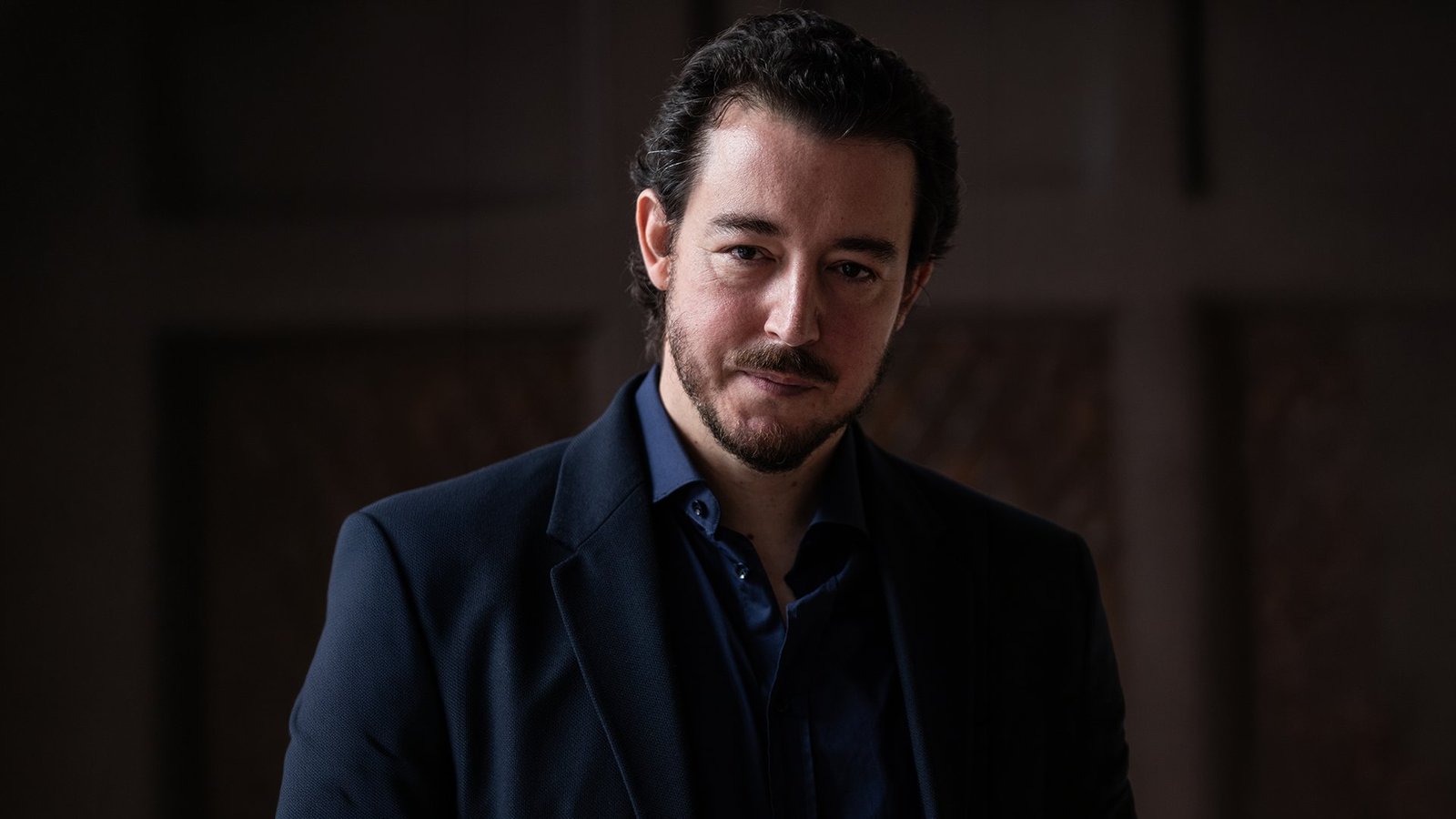
The Body of an American by Dan O'Brien, directed by Jacopo Gassmann, is on at Teatro India in Rome from February 20 to 28, 2027, on Lungotevere Vittorio Gassman 1, at the corner of Via Luigi Pierantoni, between Testaccio, Ostiense and Marconi. There are eight performances: Saturday the 20th and Sunday the 21st of February, then from Tuesday the 23rd to Sunday the 28th of February. On Monday the 22nd the theater is dark. The start times are published by the Teatro di Roma on its ticketing network. On stage are Danilo Nigrelli and Paolo Mazzarelli, in the translation by Enrico Luttmann and Marco Maria Casazza. The show is produced by LAC Lugano Arte e Cultura in coproduction with the Teatro di Napoli, the Teatro Nazionale di Genova and the Teatro di Roma, in the 2026/2027 season Theater Is Life. You get to Teatro India by Metro Line B to Garbatella and then about one kilometer on foot across Ponte dell'Industria, by train to Roma Trastevere station, about 700 meters away, or by buses 170, 766, 775, 780 and 781, which stop at Piazza della Radio. Prices are published on the official Teatro di Roma website, and tickets are bought on the foundation's official website or at its ticket offices. All the information is on the official show page.
Language: a performance based on dance, music or visual acts; no English version is announced, any spoken parts are in Italian.
At the heart of the text is a photograph: the one the Canadian photojournalist Paul Watson took in Mogadishu in 1993, with the body of an American soldier dragged through the streets. From the encounter between the playwright and the photographer comes a reflection on image, memory and trauma. Below you will find the dates, the content of the show, the biographies of Dan O'Brien, Paul Watson and Jacopo Gassmann, the history of Teatro India, how to get there, what is nearby, where to eat and the most frequently asked questions.
The Body of an American at Teatro India: dates and essential information
The Body of an American has eight performances at Teatro India, from February 20 to 28, 2027, with Monday the 22nd off.
The dates
Saturday the 20th and Sunday the 21st of February. Tuesday the 23rd, Wednesday the 24th, Thursday the 25th, Friday the 26th, Saturday the 27th and Sunday the 28th of February 2027.
The times
The start times are given by the Teatro di Roma on its ticketing network: it is best to check the one for your chosen date at the time of purchase.
Who is behind the show
Text by Dan O'Brien, translation by Enrico Luttmann and Marco Maria Casazza, direction by Jacopo Gassmann. On stage are Danilo Nigrelli and Paolo Mazzarelli.
Four theaters for one production
Produced by LAC Lugano Arte e Cultura, in coproduction with three Italian national theaters: Naples, Genoa and Rome. A wide network, a sign of the attention surrounding the project.
What The Body of an American is about
The Body of an American is born from the exchange between the American playwright Dan O'Brien and the Canadian photojournalist Paul Watson, author of the photograph of the body of the American soldier William David Cleveland dragged through the streets of Mogadishu in 1993.
A symbolic image
From that photograph begins a reflection on the relationship between image, memory and trauma. The presentation by the Teatro di Roma poses two questions: how does pain, once turned into an image, continue to live beyond the instant of the shot? Is an unanesthetized gaze still possible today?
From Rwanda to the Arctic
The show crosses different times and places, from Rwanda to Afghanistan to the Canadian Arctic, and explores the ethical and personal consequences of Watson's shot and the link between the great events of history and the wounds they leave in individual lives.
History and personal story
O'Brien intertwines contemporary history and personal story: his own, as a writer, and that of the photographer. The text questions the relationship with violence, with information and with the power of images.
Two actors
On stage are two performers, Danilo Nigrelli and Paolo Mazzarelli: a two-voice structure that reflects the dialogue between the playwright and the photographer from which the text was born. Two bodies and two voices to tell of dozens of places and years: a choice that entrusts everything to the word and the presence of the actors.
The Body of an American: the story of the text and the awards
The Body of an American won the Edward M. Kennedy Prize for Drama, shared with All the Way by Robert Schenkkan, and is Dan O'Brien's best-known work.
The debut in Portland
The play debuted in 2012 at Portland Center Stage, directed by Bill Rauch. Since then it has toured the United States and the United Kingdom, winning awards on both sides of the Atlantic. The LAC production with the three Italian national theaters brings the play into a new language, in the translation by Enrico Luttmann and Marco Maria Casazza.
London and Northampton
The European premiere came in 2014 with a long run at the Gate Theatre in London and at the Royal and Derngate in Northampton, directed by James Dacre. That same year O'Brien made the shortlist for the Evening Standard Award as most promising author.
New York
In 2016 the show arrived off Broadway, at the Cherry Lane Theatre, produced by Primary Stages and Hartford Stage and directed by Jo Bonney, and was listed by the New York Times among the critics' picks.
The other awards
The play also won the Horton Foote Prize for best new American play, the L. Arnold Weissberger Award given by the Williamstown Theatre Festival and the PEN Center USA Award for Drama.
Who is Dan O'Brien: the playwright
Dan O'Brien, born in 1974, is an American playwright, poet, memoirist, essayist and librettist. His best-known works are The Body of an American and the poetry collection War Reporter.
Poetry and theater
Alongside theater, O'Brien publishes poetry: War Reporter is his best-known collection. O'Brien received a Guggenheim Fellowship for 2015/2016, and with The House in Scarsdale: A Memoir for the Stage he won the PEN America Award for Drama in 2018.
The latest works
In 2023 he published three books: Survivor's Notebook, a childhood memoir titled From Scarsdale and a theater trilogy, True Story. In 2024 his play Newtown debuted at the Geva Theatre Center.
An author of memory
In 2021 he published a collection of essays on playwriting, childhood and trauma, A Story That Happens. Trauma and the way it is told are the thread that runs through all his work, and The Body of an American is its strongest example.
Who is Paul Watson: the Pulitzer photographer
Paul Watson, born in Weston, Ontario, on July 13, 1959, is a Canadian photojournalist who won the 1994 Pulitzer Prize for Spot News Photography with the shot he took in Mogadishu in 1993 for the Toronto Star.
The photograph
The shot shows the body of Sergeant William Cleveland, crew chief of a US Army helicopter, dragged through the streets of Mogadishu during the civil war in Somalia. It is on permanent display at the Newseum in Washington, in the gallery of Pulitzer Prize-winning photographs.
30 years of conflict
His work covers almost three decades and conflicts in more than 12 countries: Eritrea, Somalia, southern Sudan, Angola, Mozambique, South Africa, Romania, Serbia, Kosovo, Afghanistan, Pakistan, Kashmir, Iraq and Syria. At the Toronto Star he won four Canadian National Newspaper Awards.
The books
He wrote Where War Lives, about his experience as a war reporter, which won an award in 2007. He also wrote Magnum Revolution, with Jon Lee Anderson of the New Yorker, and Ice Ghosts, about the search for Franklin's lost expedition, which the Guardian named among the best science books of 2017.
The movies
Watson appears in the documentary Under Fire: Journalists in Combat by Martyn Burke, from 2012, which made the Oscar shortlist and won a Peabody Award in 2013.
Who is Jacopo Gassmann: biography of the director
Jacopo Gassmann was born in Rome in 1980. He graduated in film directing from New York University and earned a master's degree in theater directing at the Royal Academy of Dramatic Art in London.
Film and documentary
In the United States he makes shorts and video art, including About the house, from Julio Cortázar, presented at the Locarno Festival in 2004. He directs documentaries such as La voce a te dovuta, presented at Locarno, Istanbul and Montpellier, and Il più bel gioco del mondo, presented in Piazza del Campidoglio.
Theater in Rome
In 2005 he directed Il minore ovvero preferirei di no with Roberto Herlitzka, on the life and work of Ennio Flaiano, at Auditorium Parco della Musica. In 2013 he directed La pace perpetua by Juan Mayorga at Teatro Belli. In 2017 he translated and directed Disgraced by Ayad Akhtar, a Pulitzer Prize winner, co-produced by Teatro della Tosse and Teatro di Roma.
Mayorga, Thorpe, Crimp
With Il ragazzo dell'ultimo banco by Mayorga, for Piccolo Teatro di Milano, he won the Premio Flaiano for directing in 2019. His project on the theater of Chris Thorpe won the Premio Enriquez in 2018. He directed Niente di me by Arne Lygre at Biennale Teatro in 2020, Ifigenia in Tauride at Teatro Greco di Siracusa in 2022 and The City by Martin Crimp in the 2023/2024 season, already with the LAC.
The latest years
In the 2024/2025 season he directed Shakespeare's Macbeth for Teatro di Napoli and Il Golem by Mayorga, co-produced by Fondazione Teatro di Roma. He won the theater critics' prize for directing in 2020, the Premio Adolfo Celi in 2024 and, in September 2026, the Premio Visconti at the Ischia Film and Art Festival.
Teatro India: history of the home of The Body of an American
Teatro India is the second venue of Fondazione Teatro di Roma, next to Teatro Argentina and Teatro di Villa Torlonia, and it opened on September 7, 1999 in the spaces of the former Mira Lanza factory, on the right bank of the Tiber.
From chemicals to soap
At the start of the 1900s the Mira factory stood here, with the first brick buildings by the engineer Giulio Filippucci. In 1913 the plant passed to the City of Rome and produced glycerin during the years of World War I. Then, also because of its proximity to the Mattatoio di Testaccio, it converted to soap.
Mira Lanza
Competition with the Unione Stearinerie Lanza and the arrival of Henkel and of Procter and Gamble led to the alliance from which Mira Lanza was born. The decline began with World War II. The plant closed in 1952 and the sheds later housed the warehouses of the Rancati company, a supplier of theater and film props.
The name
The name was chosen by Mario Martone, then director of Teatro di Roma: India, like the name of a country on the model of Argentina, and as an evocation of travel. For a show that crosses continents, from Africa to the Arctic, it is an extremely fitting name.
What it looks like
Three naves, dark exposed brick, pitched roofs, wood and iron beams and red velvet seats. The halls are modular and lend themselves to shows in the round, itinerant shows or shows on several levels.
A curiosity about The Body of an American by Jacopo Gassmann at Teatro India, February 20 to 28, 2027
The most interesting curiosity concerns the Arctic. The show, according to Teatro di Roma's presentation, reaches the Canadian Arctic, and in our view Paul Watson's biography helps explain why. After decades of wars, the photographer devoted a book, Ice Ghosts, to the search for Franklin's lost expedition, which the Guardian named among the best science books of 2017. The reporter who photographed the horror of Mogadishu ended up telling one of the great stories of exploration, a biographical arc that lends itself to the stage. A second curiosity concerns the photographer himself. Watson also appears in a documentary, Under Fire: Journalists in Combat by Martyn Burke, which won a Peabody Award in 2013. His figure had already become a story before reaching the stage. A third curiosity concerns Teatro India in February 2027. In the same hall, until February 14, Vorrei una voce by Tindaro Granata is on stage, another production by LAC of Lugano, which in a single month brings three shows to Rome, between India and Vascello.
A thing nobody tells you about The Body of an American by Jacopo Gassmann at Teatro India, February 20 to 28, 2027
What the presentations don't say is that at the center of the show there is a violent photograph, and that the subject is not handled lightly. Anyone who remembers that shot knows what it is about: the body of a soldier dragged by a crowd. The show doesn't just display it, it questions it, but it's a good idea to arrive prepared, especially if you are taking a young person to the theater. My advice is to read a few lines beforehand about the photograph and the context of the civil war in Somalia. It helps you follow the jumps in time and place in the text. The second thing nobody says concerns the form. The Body of an American is not a traditional drama with a linear plot. It is a dialogue between two men who write to each other, meet and remember, and it crosses countries and years. If you love spoken-word theater you will appreciate it. If you are looking for action, you will have to adapt. The third concerns the schedule: Teatro di Roma publishes it on the ticketing circuit, and it's wise to check it for your date before leaving, because Teatro India is not on anyone's way and entry after the show has started may not be allowed.
The advice I give you for visiting The Body of an American by Jacopo Gassmann at Teatro India, February 20 to 28, 2027
My advice is to choose one of the performances of the second week, between Tuesday, February 23 and Friday, February 26, when the show already has a few performances behind it. Walk from the Garbatella metro stop across Ponte dell'Industria. The industrial Rome of the Gazometro and the former Mira Lanza is the right backdrop for a text about the 20th century and its wounds. Before going in, look up Paul Watson's photograph and look at it once. It is an uncomfortable experience, but it is the most honest way to prepare. If you want to go deeper, you can read something from War Reporter, O'Brien's best-known poetry collection. For those who follow the Roman season, February 2027 offers a small unintentional LAC showcase: Carmelo Rifici's Orestea at Vascello in the first half of the month, Vorrei una voce at Teatro India from the 9th to the 14th, The Body of an American from the 20th. Three very different shows from the same house, worth lining up. Finally, book in time: with eight performances and two big-name actors, weekend dates fill up fast.
How to get to Teatro India for The Body of an American
Teatro India is at Lungotevere Vittorio Gassman 1, formerly Lungotevere dei Papareschi, at the corner with Via Luigi Pierantoni, across from the Gazometro.
Metro
The nearest stop on metro line B is Garbatella, about a kilometer away. You exit toward Via Ostiense, cross the Tiber on Ponte dell'Industria, the 19th-century iron bridge, and reach the theater along the river: 12 or 15 minutes at a normal pace.
Train
Roma Trastevere station, served by the regional lines FL1, FL3 and FL5, is about 700 meters away. For those arriving from Fiumicino it is often the fastest way.
Bus and tram
Lines 170, 766, 775, 780 and 781 stop in Piazza della Radio, a few minutes' walk away. Tram 8 serves the Trastevere station area. Before heading out, it's wise to check the routes with the Atac journey planner.
By car
Teatro India is outside the limited traffic zone of the center. Between Viale Marconi and the Lungotevere, parking is easier than in Trastevere, but on weekends it's wise to arrive with a quarter of an hour to spare.
Another well-known fact, yet rarely mentioned
The idea that a photograph can change the perception of a war is often repeated. The price paid by the person who takes it is mentioned less. Paul Watson won the Pulitzer in 1994 for the Mogadishu photo, but his biography tells of almost 30 years of work in more than 12 countries at war, from Eritrea to Syria, and four Canadian national journalism awards, some for uncomfortable investigations, such as the one on the torture and killing of a Somali boy by Canadian soldiers after the international intervention against the famine of 1992. The Body of an American was born precisely from this question: what stays inside the person who looks at, and photographs, horror. A second fact known to insiders and little told to the general public: the photograph is on permanent display at the Newseum in Washington, in the gallery of the Pulitzers. An image this harsh has become part of the official memory of American journalism. A third fact concerns Italian theater. Jacopo Gassmann has built a large part of his career bringing contemporary English-language and Spanish authors to Italy, from Chris Thorpe to Martin Crimp, from Ayad Akhtar to Juan Mayorga, often translating them himself. O'Brien fits into this path.
Around Teatro India: Ostiense, Testaccio and the Gazometro
Teatro India sits where Testaccio, Ostiense and Marconi meet, along the stretch of the Tiber that best tells the story of the industrial Rome of the 20th century.
The Gazometro and Ostiense
Across the river rises the Gazometro. Ostiense is the neighborhood of street art and of the Centrale Montemartini, where the ancient sculptures of the Capitoline Museums are displayed among turbines and boilers.
Testaccio
Heading north you reach Testaccio, with Ex Mattatoio, Monte dei Cocci and the Pyramid of Cestius.
San Paolo and Porta Portese
Farther south is the Basilica of Saint Paul Outside the Walls, one metro stop from Garbatella. Heading north, along the right bank, you go back up toward Porta Portese and Trastevere.
The right photo to take at The Body of an American by Jacopo Gassmann at Teatro India, February 20 to 28, 2027
For a show about the power and the weight of photographs, the question of the right photo has a particular meaning. During the performance, of course, no shots. But in this case the phone switched off is also a choice consistent with the theme, a way of looking without immediately turning the gaze into an image. The photo is taken outside. The first is the one with the Gazometro: Teatro di Roma itself writes that the Gazometro keeps watch over the theater, and at night, at the end of February, the lit metal structure beyond the Tiber is a sharp image, almost like a reportage shot. The second is taken from Ponte dell'Industria, with the iron trusses in the foreground and the sheds of the former Mira Lanza on the opposite bank: the Rome of labor, which visitors rarely see. The third is a non-photo: before shooting, for once, stop and look. It is the question the show asks: is a gaze that isn't anesthetized still possible? The Lungotevere in the evening is a good place to try.
Where to eat before or after The Body of an American
Around Teatro India the options split between the Ostiense and Testaccio side, livelier, and the Marconi side, more of a neighborhood feel.
Ostiense
Across the bridge, along Via Ostiense and in the streets around the Gazometro and Garbatella, there are restaurants, pizzerias and places frequented by students and by people who work in the area.
Testaccio
Testaccio is the neighborhood of the Roman cooking of the fifth quarter, born around Mattatoio. The trattorias between Piazza Testaccio and Via Marmorata are a quarter of an hour on foot.
Marconi and Trastevere
On the theater's side, toward Viale Marconi, you find neighborhood pizzerias and trattorias, not very touristy. If you prefer Trastevere, take tram 8 after the show.
Some important events that happened here in history
The history of the place is marked by a few dates. At the start of the 1900s, on the right bank of the Tiber, the Mira factory is born, with the first brick buildings by the engineer Giulio Filippucci. In 1913 the plant passes to the City of Rome and produces glycerin for the years of World War I: a Roman factory serving a war, an unexpected thread with a show that talks about wars. After the war, taking advantage of its proximity to the Mattatoio di Testaccio, the factory converts to soap. Years of competition with the Unione Stearinerie Lanza follow, up to the merger from which Mira Lanza is born, faced with the arrival of the multinationals. World War II marks the start of the decline, because of the lack of labor and the spread of synthetic detergents. In 1952 the plant closes. The spaces become the warehouse of the Rancati company, specialized in theater and film props. In the spring of 1999 the City buys part of the area, and on September 7 of the same year Teatro India opens, the second venue of Teatro di Roma. Since then it has hosted seasons of contemporary theater, set design workshops, summer cinema and music arenas such as India Città Aperta. In autumn 2026 the hall hosted Gli elefanti nella stanza by Francesca Astrei.
Tickets, accessibility and practical tips
Tickets for The Body of an American are bought on the official website of Teatro di Roma and at the foundation's box offices. Prices are published on the official website.
Accessibility
Teatro di Roma devotes a section of its website to the accessibility of its halls. For reserved seats or other needs, it's wise to contact the box office before the performance.
With kids
The theme, a war photograph and the violence of the images, makes the show suitable for high school students who study contemporary history or journalism, with some preparation. It is not designed for children.
February in Rome
The end of February is a good time to visit Rome: few crowds, longer days, cool evenings. A coat and an umbrella are enough.
Who has passed through The Body of an American by Jacopo Gassmann at Teatro India, February 20 to 28, 2027
The first name tied to this place is that of the engineer Giulio Filippucci, who designed the first brick buildings of the Mira factory. For decades the men and women workers of Mira Lanza passed through here, then the prop makers of the Rancati company, who supplied props to theaters and film sets. The name of the theater is Mario Martone's, director and then head of Teatro di Roma, who oversaw the birth of the new venue. In its years of activity Teatro India has been the foundation's place of experimentation, with Italian and foreign companies, workshops and summer festivals. Jacopo Gassmann, a Roman, has already worked several times for Teatro di Roma, from Disgraced in 2017 to Il Golem in the 2024/2025 season. From February 20 to 28, 2027 the director, the actors Danilo Nigrelli and Paolo Mazzarelli, and the translators Enrico Luttmann and Marco Maria Casazza pass through Teatro India. And with them, ideally, Dan O'Brien, Paul Watson, Sergeant William Cleveland and all the places the text crosses, from Mogadishu to Rwanda, from Afghanistan to the ice of the Canadian Arctic.
Frequently asked questions about The Body of an American
When is The Body of an American on in Rome?
The Body of an American is at Teatro India from February 20 to 28, 2027: Saturday 20 and Sunday 21, then Tuesday 23 through Sunday 28. Monday 22 is a rest day. Showtimes are published by Teatro di Roma on its own ticketing circuit.
Who is in The Body of an American?
The Body of an American stars Danilo Nigrelli and Paolo Mazzarelli, directed by Jacopo Gassmann, in a translation by Enrico Luttmann and Marco Maria Casazza. It is produced by LAC of Lugano with the national theaters of Naples, Genoa and Rome.
What is The Body of an American about?
The Body of an American is about the photograph taken by Paul Watson in Mogadishu in 1993, with the body of an American soldier dragged through the streets. From the dialogue between the playwright Dan O'Brien and the photographer comes a reflection on image, memory and trauma.
Who is Dan O'Brien?
Dan O'Brien is an American playwright and poet born in 1974. The Body of an American won the Edward M. Kennedy Prize for Drama and the Horton Foote Prize. With The House in Scarsdale he won the PEN America Award for Drama in 2018.
Who is Paul Watson?
Paul Watson is a Canadian photojournalist born in 1959, winner of the 1994 Pulitzer Prize for the photograph taken in Mogadishu for the Toronto Star. He has worked in more than 12 countries at war and is the author of the book Ice Ghosts on the Franklin expedition.
Is the show suitable for young people?
The Body of an American is suitable for high school students, with some preparation on the historical context, because it revolves around a very harsh war photograph. It is not designed for children. If in doubt, it's wise to ask Teatro di Roma box office.
Where is Teatro India?
Teatro India is at Lungotevere Vittorio Gassman 1, at the corner with Via Luigi Pierantoni, between Testaccio, Ostiense and Marconi. You reach it on foot from the Garbatella stop on metro line B, from Trastevere station or by the buses that stop in Piazza della Radio.
Final advice on The Body of an American
The Body of an American is a show that asks something of the spectator: to look at a photograph you would rather forget and to ask yourself what to do with it. In our view it's best to pick a weeknight in the second week, arrive prepared on the context and rely on the dialogue between the two performers. Jacopo Gassmann has long practice in contemporary English-language theater, and O'Brien's text is among the most awarded of its kind. All the premises for a serious evening, in the best sense of the word, are there.
Article written by the editorial team of Tour Leader Pro, contact them for Private/Corporate/V.I.P. Tours and Experiences.
Planning a trip to Rome? The English-language guides to visiting the city are on ItalyPlanner.com.