Swan Lake at Teatro dell’Opera di Roma, December 17 to 31, 2026
https://www.estateromana.com/en/rome/trip-planner/swan-lake-at-teatro-dellopera-di-roma-december-17-to-31-2026/
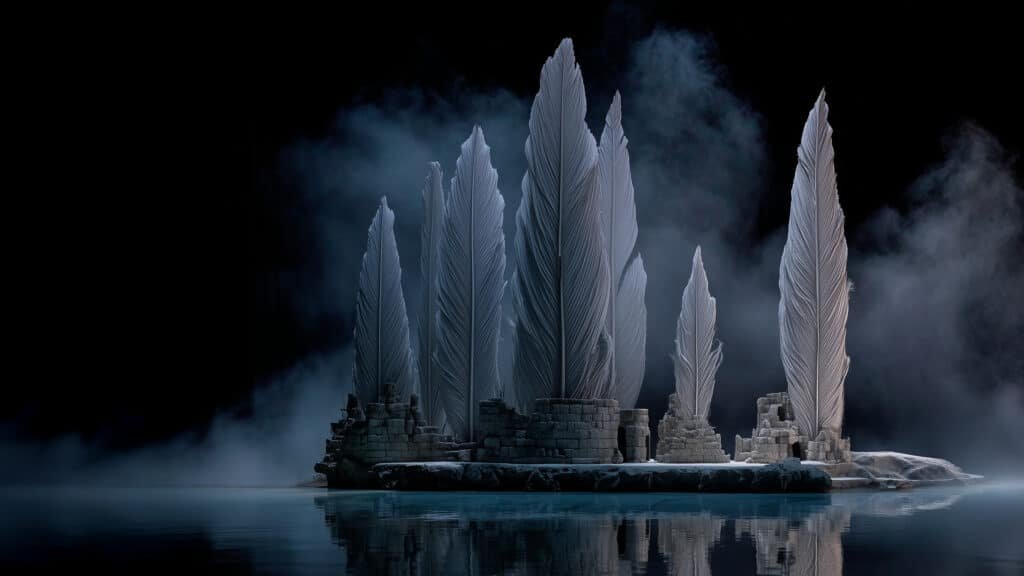
Swan Lake at Teatro dell'Opera di Roma returns to Teatro Costanzi, the main hall of the opera house at Piazza Beniamino Gigli 7, from December 17 to 31, 2026, in Benjamin Pech's choreography to Pyotr Ilyich Tchaikovsky's score. The opening night is Thursday, December 17 at 20:00, followed by 13 more performances up to the New Year's Eve show on Thursday, December 31 at 18:00. You get there by metro line A, Repubblica Teatro dell'Opera stop, or by the buses of Via Nazionale (H, 40, 60, 64, 70, 71, 170, 116T) and Via Depretis (70, 71). The price list published by the theater for the 2026/27 season runs from 22 to 120 euros on opening night and from 17 to 95 euros for the other performances. The December 31 performance has its own prices, from 30 to 170 euros. Single tickets have been on sale since October 8, 2026, at the box office in Piazza Beniamino Gigli 1 and through the authorized presale network indicated on the official website of Teatro dell'Opera di Roma.
Language: opera sung in its original language; no English surtitles are announced, so check with the theater.
On the podium is Ido Arad. The guest artists are Fumi Kaneko and Vadim Muntagirov, stars of the Royal Ballet in London, and Paul Marque, étoile of the Opéra national de Paris, alongside the Étoiles, Primi ballerini, Soloists and Corps de Ballet of Teatro dell'Opera di Roma directed by Eleonora Abbagnato. It is the title with which the theater opens its dance season, and it is the city's Christmas classic. Plainly: if you want to see only one ballet in Rome this winter, this is it, and the dates to circle are those of the pair Kaneko and Muntagirov.
Swan Lake at the Costanzi at a glance: dates, times and performers
Swan Lake at Teatro Costanzi has 14 performances in 15 days, from December 17 to 31, 2026, with times that change from one date to another: from 11:00 on the morning of Christmas Eve to 20:30 for the double shows on Saturday and on December 30. The calendar published by the theater is this, with the subscription series next to the dates that have them.
The performance calendar
- Thursday, December 17, 2026, at 20:00: opening night, series A.
- Friday, December 18, at 20:00: series B.
- Saturday, December 19, at 15:00: series D.
- Saturday, December 19, at 20:30.
- Sunday, December 20, at 16:30: series E.
- Tuesday, December 22, at 20:00: series C.
- Wednesday, December 23, at 20:00.
- Thursday, December 24, at 11:00: the morning performance on Christmas Eve.
- Sunday, December 27, at 16:30.
- Tuesday, December 29, at 20:00.
- Wednesday, December 30, at 15:00.
- Wednesday, December 30, at 20:30.
- Thursday, December 31, at 18:00: the New Year's Eve performance.
December 21, 25, 26 and 28 are missing: on those days, Christmas and Boxing Day included, there are no performances. Anyone planning a stay over the holidays must therefore choose between the week before Christmas and the days between the 27th and the 31st.
The guest artists, date by date
The show page lists the guest performances this way: Paul Marque on December 17, on the 19th at 20:30 and on the 20th. Fumi Kaneko and Vadim Muntagirov on December 24, 27, 29 and 31. For the other dates the theater has not yet published the casting of the leading roles, which will be entrusted to the artists of the house's Corps de Ballet. If you want to see a specific name, buy only after checking the date: it is the first mistake I see people make, and the most expensive.
The artistic team
Music by Pyotr Ilyich Tchaikovsky, ballet in a prologue and four acts. Conductor Ido Arad, choreography by Benjamin Pech, choreography assistant Gillian Whittingham, sets and costumes by Aldo Buti, lighting by Vinicio Cheli. Orchestra, Étoiles, Primi Ballerini, Soloists and Corps de Ballet of Teatro dell'Opera di Roma. The theater presents the show as its own production.
How long it lasts
For the December 2026 edition the running time has not yet been published. In the revival of the 2023/24 season of the same production the theater listed about two and a half hours with a single intermission: 70 minutes for the first and second acts, a 25-minute break, 55 minutes for the third and fourth. It is a useful reference for planning dinner and the trip back.
Swan Lake, Tchaikovsky's first ballet
Swan Lake is the first of Tchaikovsky's three ballets, composed in Moscow between August 1875 and April 1876 and first performed at the Bolshoi Theatre on February 20, 1877 in the Julian calendar, March 4 in ours. The other two are The Sleeping Beauty and The Nutcracker: three titles that on their own hold up a good part of the world's classical repertoire.
A premiere received coolly
On the night of the Moscow debut the choreography was by Julius Wenzel Reisinger and the lead was Pelageya Karpakova. Historical accounts speak of a lukewarm reception: the orchestra and conductor found the score complicated and far from their habits, the dancers were used to less demanding music, and the staging recycled materials from earlier shows. Critics of the time dismissed the music as monotonous, interesting perhaps only to musicians. In the following years, at the Bolshoi, about a third of the score was replaced with pieces taken from other ballets. Two new stagings, in 1880 and 1882, with choreography by Joseph Hansen, did not change things.
The rebirth of 1895
The turning point came in Saint Petersburg, after the composer's death. The director of the imperial theaters, Prince Vsevolozhsky, buoyed by the success of The Sleeping Beauty and The Nutcracker, decided to revive the title. The work passed to Marius Petipa, ballet master of the imperial theater, and his assistant Lev Ivanov. After a second act presented on its own in a tribute to Tchaikovsky on March 1, 1894, on January 15, 1895 in the Julian calendar the Mariinsky Theatre saw the first complete staging. Petipa handled the first and third acts, Ivanov the two white acts, the second and the fourth. The score was revised by the Italian composer and conductor Riccardo Drigo, who also inserted piano pages by Tchaikovsky orchestrated by him. It was a success, and from that moment the ballet entered the repertoire of Saint Petersburg, of Moscow and then of the world.
Why almost everyone starts from Petipa and Ivanov
Most companies still base choreography and musical structure on that 1895 version. The Roman staging says so too: Benjamin Pech's choreography, in its first edition in 2018/19, was presented as drawn from Marius Petipa and Lev Ivanov. That is why anyone who has seen a Swan Lake in London, Paris or Moscow recognizes the same key moments in Rome: the dance of the little swans, the adagio of the second act, the black swan pas de deux in the court ball.
The story in four acts
In the first act Prince Siegfried celebrates his birthday and his mother asks him to choose a bride at the ball the next day. In the second, by a lake, he meets Odette, a princess turned into a swan by the sorcerer Rothbart: by day she is a swan, by night she becomes a woman again, and only a promise of love can break the spell. In the third, at the court ball, Rothbart presents his daughter Odile, dressed in black and made to resemble Odette: Siegfried chooses her and, without knowing it, betrays his vow. In the fourth the prince returns to the lake to ask forgiveness. How it ends depends on the version, and it is not a detail: I talk about it further on.
Benjamin Pech's version for the Rome Opera
The choreography seen at the Costanzi is by Benjamin Pech, a former étoile of the Paris Opéra, and this December 2026 run is at least the third time Teatro dell'Opera di Roma has staged it, after the editions of the 2018/19 and 2023/24 seasons. It is therefore a house production, well tested, with sets and costumes by Aldo Buti and lighting by Vinicio Cheli.
Who Benjamin Pech is
Born in Béziers in 1974, Pech began with jazz dance at the age of eight and in 1986 entered the Paris Opéra Ballet School. In 1992, at 18, he joined the Corps de Ballet. He rose quickly: coryphée in 1994, sujet in 1997, premier danseur in 1999. On September 22, 2005, during a tour in Shanghai, he was named étoile after dancing Albrecht in Giselle and Frédéri in L'Arlésienne. Among his main roles is Siegfried in Swan Lake itself, along with Basilio in Don Quixote, Prince Désiré in The Sleeping Beauty and the title roles in Onegin, The Firebird and Romeo and Juliet. He has worked with Balanchine, Robbins, Forsythe, Kylián, Preljocaj and Ratmansky, and left the stage on February 20, 2016 at the Palais Garnier. Since then he has worked as choreographer, ballet master and artistic consultant.
An extra prologue
The theater presents the ballet in a prologue and four acts. The prologue stages the backstory, that is, the moment when Odette falls under Rothbart's spell, which in many versions is left to the orchestral introduction alone. The history of the versions recalls that staging that short introduction as a backstory is a choice made several times in the 20th century, and that it does not conform to the 1877 original: it is one of the liberties that make one staging recognizable against another.
The earlier Roman editions
In the 2018/19 season the same choreography was on stage across December and January, with Nir Kabaretti on the podium and Patricia Ruanne as choreography assistant. Odette and Odile were Anna Nikulina, Alessandra Amato, Susanna Salvi and Marianna Suriano, the prince Semyon Chudin, Claudio Cocino, Germain Louvet and Michele Satriano. In the 2023/24 season Koen Kessels conducted, with assistants Isabelle Guérin and Gillian Whittingham. Among the performers were Rebecca Bianchi, Alessandra Amato, Marianna Suriano and, as guests, Fumi Kaneko and Vadim Muntagirov. After that edition the show was taken on tour to the Gran Teatre del Liceu in Barcelona, again with Muntagirov in the lead.
A curiosity about Swan Lake at Teatro dell'Opera di Roma, December 17 to 31, 2026
Fumi Kaneko and Vadim Muntagirov, who dance Odette and Siegfried at the Costanzi on December 24, 27, 29 and 31, were married on February 11, 2026: in Rome they return to Swan Lake for the first time as husband and wife. Their wedding was announced by Kaneko herself a few days later, and is reported in the dancers' published biographies.
The coincidence has a particular flavor in this very theater. Kaneko and Muntagirov had already danced Benjamin Pech's Swan Lake together at the Costanzi in December 2023, in the performances of the 22nd in the evening, the 25th and the 27th: three evenings that left a mark in Rome, so much so that the theater, announcing the season, recalls Muntagirov's presence and the tour to Barcelona that followed. They return, then, to the same stage, in the same choreography, with the same orchestra, three years later and with a ring on their finger.
Swan Lake is, by construction, a story of a couple and of betrayed trust. The pas de deux of the second act, the white adagio, is the page in which the ballerina surrenders to her partner. The one in the third act, the black swan, is the page in which she deceives him. Seeing these two moments danced by a couple who are truly one outside the theater adds a layer of reading that no director can invent. It is not gossip: it is one of the reasons the ballet audience has always followed stable couples, from Margot Fonteyn and Rudolf Nureyev onward. Muntagirov, moreover, built a good part of his fame on partnerships: at English National Ballet his rapport with Daria Klimentová, 19 years older, was compared by critics to that of Fonteyn and Nureyev.
The advice is simple: if you can choose, take one of their four dates. The performance on the 24th at 11:00 in the morning is the most unusual, the one on the 27th at 16:30 the most comfortable, the one on the 31st the most festive and the most expensive.
Fumi Kaneko, Vadim Muntagirov and Paul Marque: who the guests of Swan Lake are
The guest artists of this Swan Lake come from two great European companies: Fumi Kaneko and Vadim Muntagirov are principals of the Royal Ballet in London, Paul Marque is an étoile of the Opéra national de Paris. The theater pairs them with the artists of the Roman Corps de Ballet, who dance the other dates and the solo parts.
Fumi Kaneko, Odette and Odile
Born in Osaka in October 1991, Kaneko began dancing at three and at eight entered Jinushi Kaoru's school, with training mostly in the Russian style. She won first prize at the Varna international competition in 2008 and silver at the Moscow competitions in 2009 and the United States in 2010. In April 2011 she joined the Royal Ballet without speaking English. She became first artist in 2012, soloist in 2013, first soloist in 2018 and principal in May 2021. She has danced Kitri in Don Quixote, the Sugar Plum Fairy in The Nutcracker, Aurora in The Sleeping Beauty, Juliet in MacMillan's Romeo and Juliet, and created the role of Satan in Wayne McGregor's Dante Project. Her debut as Odette and Odile, planned for 2020, was postponed because of the pandemic. She then took it on as a principal. In January 2020 she had stepped in at the last moment for Lauren Cuthbertson as Aurora in the cinema broadcast of The Sleeping Beauty: the kind of episode that says a lot about a ballerina's reliability.
Vadim Muntagirov, Prince Siegfried
Born in Chelyabinsk in 1990 to dancer parents, Muntagirov trained in Perm from the age of nine. In 2006, after a scholarship won at the Prix de Lausanne, he moved to the Royal Ballet School in London. In 2009 he joined English National Ballet, where he became first soloist in 2010, principal in 2011 and lead principal in 2012. In 2014 he moved to the Royal Ballet as a principal. He has twice won the Prix Benois de la Danse: in 2013 for the prince in The Sleeping Beauty and in 2019 for Siegfried in Swan Lake itself. He is a permanent guest artist of the National Ballet of Japan and has danced as a guest with the Paris Opéra Ballet, the Mariinsky and American Ballet Theatre. Siegfried is the role that gave him fame: in 2010, at 20, at English National Ballet, he danced it with Daria Klimentová, who stepped in at the last minute, in an evening also featured in a BBC documentary.
Paul Marque, the Paris étoile
Born in Dax in 1997, Marque began with jazz dance at four and at 10, in January 2008, entered the Paris Opéra Ballet School. In the Corps de Ballet he was promoted coryphée in 2016, sujet in 2017, premier danseur in 2018. In 2016 he won the gold medal at Varna. On December 13, 2020, at 23, he was named étoile at the end of a Nureyev La Bayadère streamed in a theater closed by the pandemic. His repertoire includes Swan Lake, Giselle, La Sylphide, The Nutcracker, Don Quixote, Cinderella and La Bayadère. The Roman public has already seen him as Solor in La Bayadère at the Costanzi, recalled by the theater in the season announcement.
Ido Arad on the Swan Lake podium
Conducting the Orchestra of Teatro dell'Opera di Roma in Swan Lake is Ido Arad, a conductor born in Florida and raised in Tel Aviv, who from 2016 to 2018 was Kapellmeister and assistant to the general music director at the Deutsche Oper Berlin. For a ballet whose score is as symphonic as the 19th-century repertoire gets, the choice of conductor matters more than the ballet audience tends to think.
A German training
Arad studied classical guitar at the Robert Schumann Hochschule in Düsseldorf and conducting with Lutz Köhler at the Universität der Künste in Berlin. Before Berlin he was first Kapellmeister and deputy music director at the theater in Freiberg and at the Stadttheater in Bremerhaven, where he conducted, among others, Tannhäuser, Eugene Onegin, Don Carlo, La bohème and Rusalka. At the Deutsche Oper he debuted in 2015 conducting at the last minute Tchaikovsky's Eugene Onegin itself, then Carmen, The Magic Flute, The Barber of Seville, Un ballo in maschera, Don Carlo, La traviata and Les Huguenots.
Ballet in his repertoire
The most interesting fact for this production is his familiarity with the dance repertoire: with the Staatsballett Berlin he has conducted Tchaikovsky's The Nutcracker and The Sleeping Beauty and Prokofiev's Romeo and Juliet. He worked as assistant to Asher Fisch at the Bayerische Staatsoper in Munich and at the Teatro Real in Madrid, and made his Italian debut at the Comunale di Bologna with Luisa Miller. A conductor who knows the theatrical Tchaikovsky, opera and ballet, is just what a score needs that the first orchestra in 1877 found too difficult.
What to listen for
It is worth keeping one ear on the pit even while your eyes are on the stage. The first swan theme, which opens the introduction, already carries the descending scales that run through the whole ballet and allude to the fate of the two lovers. In the first act a second theme appears, that of the swan maiden, which returns in the third act to suggest the resemblance between Odette and Odile. Whoever follows these returns understands why, in the end, Swan Lake won its bet with time.
Teatro Costanzi: the hall that hosts Swan Lake
Teatro Costanzi today has 1,560 seats among the stalls, three tiers of boxes, balcony and gallery, under a dome frescoed by the Perugian Annibale Brugnoli and a chandelier of 27 thousand crystal drops. At its birth, in 1880, it could hold up to 2,212 spectators.
A theater designed for sound
The builder Domenico Costanzi commissioned the project in 1879 from the Milanese architect Achille Sfondrini, a theater specialist. Sfondrini prioritized acoustics: the horseshoe hall was conceived as a sounding box, and construction took only 18 months. The building seen today, however, bears the signature of Marcello Piacentini, who renovated it after the City bought it in 1926, moving the entrance to the square that now bears the name of Beniamino Gigli, and who redesigned it a second time in 1958, ahead of the 1960 Olympics.
How to watch a ballet from this hall
In ballet, unlike opera, the view of the floor pattern matters enormously: the lines of the corps de ballet in the white acts are designed to be read from above. For this reason the balcony and the central boxes of the first and second tiers give more to Swan Lake than they do to an opera. The stalls, especially in the first rows, bring you closer to the soloists but flatten the geometries of the 32 swans.
The sections
The price list distinguishes the stalls premium seats (rows 1 to 13), the stalls seats (rows 14 to 19 and side seats), the stalls boxes, the first, second and third tier boxes, central and lateral, with front seats and back seats, the balcony (first row and second and third rows) and the gallery, divided into first and second. The updated seating plan is in the maps section of the theater's website. For the full profile of the venue see our page on the Rome Opera House.
The Callas passage
The Costanzi connects internally with the Hotel Quirinale through what the theater calls the historic Callas passage. It is not a parlor curiosity: on the evening of December 31 it is exactly through there that spectators who have chosen the New Year's dinner package pass, which I talk about in the chapter on tickets.
Something nobody tells you about Swan Lake at Teatro dell'Opera di Roma, December 17 to 31, 2026
At the Costanzi, those who arrive late with a stalls ticket wait in the foyer until the first intermission, and in Pech's Swan Lake the only intermission comes after about 70 minutes, at the end of the second act. Arriving five minutes after the start means missing the first act and the whole white act, that is, the more famous half of the ballet.
The theater's house rules are clear: entry to the hall is guaranteed until the start of the performance, and afterward is not permitted, unless the staff indicate otherwise. Late spectators with premium stalls or stalls tickets are asked to wait in the foyer for the first intermission, where there are monitors to follow the performance. Staff may indicate temporary seats different from the assigned ones, but only when they can be reached without disturbing others.
The second point concerns the holiday calendar, and almost everyone underestimates it. The theater's box office is closed on public holidays: among the performance dates there are December 25 and 26, and before that December 8, the feast of the Immaculate Conception. Those who think of stopping by the counter on those days will find the shutter down. Better to plan ahead.
The third concerns subscriptions. The performances of December 17, 18, the 19th in the afternoon, the 20th and the 22nd are tied to series A, B, D, E and C: a considerable share of the best seats, on those evenings, is already taken by subscribers. The performances outside the subscription, that is, the 19th in the evening, the 23rd, 24th, 27th, 29th, the two shows on the 30th and the 31st, have proportionally more free seats when you buy a single ticket. Three of the four dates of the pair Kaneko and Muntagirov are among these, and the fourth is New Year's Eve. This is why, to anyone asking how to find a good seat for Swan Lake, the answer is always the same: buy as soon as possible, and look at the off-series dates first.
Tickets and prices for Swan Lake at the Costanzi
For Swan Lake Teatro dell'Opera applies the ballet price band shared with Don Quixote: at the December 17 opening night from 22 to 120 euros, at the other performances from 17 to 95 euros. The December 31 performance has its own list, from 30 to 170 euros. Single tickets have been on sale since October 8, 2026. The full price list is in the prices and subscriptions booklet for the 2026/27 season, which you can download from the Prices page of the official website.
The price list by section, opening night and other performances
- Stalls premium seats: 120 euros on opening night, 95 at the other performances.
- Stalls seats: 110 and 90 euros.
- Central stalls boxes, first and second tier, front seats: 120 and 95 euros. Back seats: 90 and 70 euros.
- Lateral first-tier boxes, front seats: 105 and 80 euros. Back seats: 65 and 40 euros.
- Lateral second-tier boxes, front seats: 70 and 50 euros. Back seats: 35 and 25 euros.
- Lateral third-tier boxes, front seats: 45 and 35 euros. Back seats: 23 and 17 euros.
- Balcony first row: 50 and 40 euros. Second and third rows: 35 and 30 euros.
- First gallery: 25 and 22 euros. Second gallery: 22 and 20 euros.
The New Year's Eve performance
For the Thursday, December 31 performance at 18:00, which the price list pairs with the San Silvestro all'Opera package, prices rise: 160 euros for premium stalls and stalls, 170 for the front seats of the central boxes, 150 for the back ones, 135 and 115 for the lateral first-tier boxes, 89 and 50 for the second tier, 68 and 30 for the third, 83 for the balcony first row and 48 for the second and third, 35 and 30 euros for the first and second gallery. The theater also offers a 580-euro package that includes a premium stalls seat, a stalls seat or a central box seat and the New Year's dinner at the Hotel Quirinale, reached from inside the theater through the Callas passage.
Where to buy
The theater's box office is at Piazza Beniamino Gigli 1, open Monday to Saturday from 10:00 to 18:00 and Sunday from 9:00 to 13:30, closed on public holidays. Online you buy on the theater's website and through the authorized presale network indicated on the show page. Reservation by phone or email is also possible, without fees, with payment later. The theater urges you to use only the channels expressly authorized by the foundation and declines all responsibility for purchases made elsewhere.
Discounts
The season's rules provide a 25 percent discount for children under 12, for under-30s and for over-65s, always excluding opening nights and balcony and gallery seats. For under-30s and over-65s an ID is required at the entrance. Residents of Lazio who have never attended a Teatro dell'Opera performance can get 50 percent on a selection of titles and dates offered by the theater. Cultural associations in groups of at least 10 people get 10 percent on stalls and boxes for the subscription performances and 20 percent for those outside the subscription, opening nights excluded. For groups it is almost always the most convenient route, and for Swan Lake, with so many off-series performances, it really counts.
The advice I give you for visiting Swan Lake at Teatro dell'Opera di Roma, December 17 to 31, 2026
My advice for Swan Lake at the Costanzi is the performance on Sunday, December 27 at 16:30, with Fumi Kaneko and Vadim Muntagirov, in a front seat of a central or lateral second-tier box or in the first row of the balcony. It is an off-series performance, at the regular performance price, with the most awaited guest pair, at a time that leaves the evening free.
Here is the reasoning. The December 17 opening night has the charm of the dance season's inauguration, but it costs more and has a good part of the hall taken by subscribers. The December 31 performance is a party, and you pay for it as such. The one on the 24th at 11:00 is beautiful for those in town on Christmas Eve, but forces a rushed morning on a day when Rome is already all in motion. The 27th, instead, falls on the Sunday between Christmas and New Year's, when the city slows down: you come out at 19:00, stroll toward Monti, dine without a clock.
On the seat I am firm. In Swan Lake the best moments are the geometries of the corps de ballet in the white acts, and they must be seen from above. The balcony first row, at 40 euros for a regular performance, is in our judgment the best ratio of price to view in the whole hall for a ballet. A front seat in a lateral second-tier box costs 50 euros and offers a side view but from above. Those who can spend more should take a front seat in a central box, at 95 euros: you see everything, you hear everything. Those on a tight budget should choose the first gallery, at 22 euros: far away, but frontal.
Those who want Paul Marque have only three dates, the 17th, the 19th in the evening and the 20th in the afternoon: Sunday the 20th at 16:30 is the most comfortable, but it is in series E, so take it right away. And arrive at least 40 minutes early. With a single intermission after 70 minutes, missing the start means missing half the ballet.
How to get to Teatro dell'Opera for Swan Lake
Teatro Costanzi is reached by metro line A, Repubblica Teatro dell'Opera stop, a few minutes' walk from Piazza Beniamino Gigli. On December evenings, with holiday traffic and possible rain, it is by far the most sensible way.
By metro
Line A stops at Repubblica Teatro dell'Opera, in Piazza della Repubblica, and from there you walk a few minutes to the theater. Those arriving from Termini station can take the same line A or walk. ATAC is a Mobility Partner of Teatro dell'Opera from this season: on December 24 and 31, however, it is best to check the service hours in advance on the transport company's website, because on holiday evenings they may change.
By bus
The theater lists these lines:
- Via Nazionale: H, 40, 60, 64, 70, 71, 170, 116T.
- Via Depretis: 70, 71.
- Via Cavour: 16, 75, 84, 150 (holidays), 360, 590, 649, 714.
- Termini station: 16, 38, 75, 86, 90, 217, 310, 360, 649, 714.
Via Nazionale and Via Depretis run along the sides of the theater: you get off there and reach the square in a few steps.
By taxi
At the theater entrance there is a taxi service for the public, with Radio Taxi 6645, and during the intermission the house staff collects bookings for the return ride. The theater also lists the number 06 6696. In late December, with the city full, it is a service to use without hesitation, especially after the 20:00 and 20:30 performances.
By car
I advise against the car. The area between Via Nazionale, Via del Viminale and Termini is central and busy, and on holiday days even more so. The theater does not list a parking lot of its own. Those coming from outside Rome should leave the car at a park-and-ride along line A and continue by metro.
Another well-known fact, yet rarely mentioned
Swan Lake, today the most famous ballet in the world, was a half failure at its 1877 premiere, and became the masterpiece we know only 18 years later, when Tchaikovsky was already dead. Almost all enthusiasts know it. Almost nobody tells the audience entering the hall.
At the Bolshoi in Moscow, in February 1877, everything went wrong. The conductor was, according to accounts, little more than an amateur, and with the orchestra he found the score too complicated. The dancers were used to simpler music. The staging was put together with materials from earlier shows, Reisinger's choreography was judged banal, and the two leads who alternated in the performances were not up to it, in talent or age. The Gazzetta Teatrale admitted a few successful moments, but found the music monotonous. In the following seasons the ballet stayed on the bill, but ever more mutilated: a third of the music ended up replaced with pages from other ballets. The critic Nikolay Kashkin, a friend of the composer, told of it in his memoirs.
Tchaikovsky died in November 1893 without seeing his ballet triumph. It was Prince Vsevolozhsky, in Saint Petersburg, who gave it a second life, entrusting it to Petipa and Ivanov: on January 15, 1895 the Mariinsky saw Swan Lake as we know it. The ending too was touched up: the composer's brother, Modest, reworked the libretto, and wrote that he had to change its entire text because it was so poorly made. With the revolution, and above all in the Stalin era, happy endings arrived, with Siegfried defeating Rothbart and Odette becoming a woman again, as in Vladimir Bourmeister's 1953 version.
It is a story to know before you go in, because it changes the way you watch. The Swan Lake you will see is the fruit of a second chance, and of collective work lasting decades. And the ending the choreographer chooses is never a given: tragic, with the two lovers swallowed by the lake, or reconciled in an apotheosis. Watch how Pech resolves it.
House rules, dress and children at Swan Lake
Teatro dell'Opera di Roma recommends a minimum age of four for its performances, and every child must have their own ticket. Dark dress is welcome on the opening night and at premieres. For the Swan Lake opening night, December 17, dress accordingly. For the other performances smart dress is enough.
What to leave at the coat check
The coat check is free and it is mandatory to leave umbrellas, hats, bags, helmets, cameras and audio and video recording devices. The management is not responsible for items not deposited. In the hall it is forbidden to use phones and smartwatches with sound or light signals, to take photographs and to record. Devices must be kept silent for the whole performance. Food and drink are allowed only in the bars and foyers, and smoking is forbidden in all areas of the theater.
The right photo to take at Swan Lake at Teatro dell'Opera di Roma, December 17 to 31, 2026
At the Costanzi photographing in the hall is forbidden, with or without flash: the right photo of your Swan Lake is taken outside, in Piazza Beniamino Gigli, with the lit facade of the theater behind you. This holds during the final applause too, however strong the temptation.
In December darkness comes early, and for all the evening performances, but also for the 16:30 ones as you leave, the square is lit. That is where it is worth stopping: Piacentini's facade, the audience arriving dressed for the holidays, the lights of the foyer. The square was designed precisely to welcome the crowd of show nights, when Piacentini moved the theater's entrance there to make room for the public that crowded under the porticoes on show nights: it is the natural backdrop of an evening at the theater.
One tip: photograph people, not the building. A little girl on her first time with the program in her hand, a couple of friends treating themselves to Swan Lake as a Christmas gift, the group toasting after the New Year's Eve performance. You can find the building in any archive. Your evening you cannot.
The hall, with Brugnoli's dome and the great lit chandelier, remains an image to take in calmly before the lights go down. Those who want to see it in full light can book a guided tour of the theater. And those who want a memento of the show will find on the official Swan Lake page the production image, signed like the whole season visual by the digital artist Elena Manferdini.
Some important events that took place here in history
Teatro Costanzi was inaugurated on November 27, 1880 with Rossini's Semiramide, saw the world premieres of Cavalleria rusticana in 1890 and Tosca in 1900, and since 1946 has been called Teatro dell'Opera di Roma. For those coming to see a ballet, there is also a history of dance in this hall, less told but just as rich.
Dates to remember
- 1879: Domenico Costanzi commissions the project from the architect Achille Sfondrini.
- November 27, 1880: inauguration with Rossini's Semiramide, in the presence of King Umberto I and Queen Margherita, after 18 months of work.
- May 17, 1890: world premiere of Pietro Mascagni's Cavalleria rusticana.
- January 14, 1900: world premiere of Giacomo Puccini's Tosca.
- 1907: management passes to the impresario Walter Mocchi. From 1912 it is led by his wife, the soprano Emma Carelli.
- Years of the Impresa Costanzi: novelties such as La fanciulla del West, Il trittico, Parsifal, Samson et Dalila and Diaghilev's Ballets Russes arrive in Rome.
- 1926: the City of Rome buys the theater, which becomes Teatro Reale dell'Opera. Renovation by Marcello Piacentini.
- February 27, 1928: second inauguration with Arrigo Boito's Nerone.
- 1946: the theater takes the name Teatro dell'Opera di Roma.
- 1958: a new and definitive intervention by Piacentini ahead of the 1960 Olympics.
- 2018/19 season: Benjamin Pech's Swan Lake on stage at the Costanzi across December and January.
- 2023/24 season: Pech's Swan Lake returns with Fumi Kaneko and Vadim Muntagirov as guests, and then goes on tour to the Liceu in Barcelona.
The Ballets Russes at the Costanzi
The passage of Diaghilev's Ballets Russes, in the years when Emma Carelli directed the theater, is the date that links the Costanzi to the great history of 20th-century ballet. Diaghilev's company was, among other things, the one that in November 1911 brought Swan Lake in a single act to Covent Garden in London. It is one of the thin threads joining this hall to the December title, and it is worth knowing before you go in.
The Corps de Ballet of Teatro dell'Opera di Roma and the 2026/27 dance season
The Corps de Ballet of Teatro dell'Opera di Roma, directed by Eleonora Abbagnato, opens with Swan Lake a dance season of seven ballets, one of them entrusted to the Dance School, and two tours abroad. In Swan Lake the house's Étoiles, Primi ballerini, Soloists and Corps de Ballet dance: the swans, on stage, are them.
A company that travels
In the 2026/27 season the company takes Giselle, in Carla Fracci's choreography, to the Theater im Pfalzbau in Ludwigshafen on November 21 and 22, 2026, in the year of the ninetieth anniversary of the birth of the great ballerina, long tied to the Rome Opera. On June 25, 2027 it will instead be at the Granada Festival of Music and Dance with Le Deux Nuits, a diptych by Giorgio Mancini and Angelin Preljocaj created for the Roman theater with costumes by Maria Grazia Chiuri for Christian Dior Couture.
The thread leading to December
Those who saw Icone della danza in October, the gala evening conceived by Eleonora Abbagnato at the Costanzi, arrive at Swan Lake with eyes already trained. And those who want to know another face of the same theater in the fall can read our page on Falstaff at Teatro dell'Opera di Roma: same hall, another world.
Who has passed through Swan Lake at Teatro dell'Opera di Roma, December 17 to 31, 2026
Through Teatro Costanzi have passed King Umberto I and Queen Margherita on the evening of the 1880 inauguration, Pietro Mascagni and Giacomo Puccini with their world premieres, and Diaghilev's Ballets Russes in the years of the Impresa Costanzi. But for Swan Lake the list has more recent names, all verifiable on the theater's playbills.
In Benjamin Pech's Swan Lake there passed, in the 2018/19 season, Anna Nikulina and Semyon Chudin as guests, alongside Alessandra Amato, Susanna Salvi, Claudio Cocino and Germain Louvet. With them Marianna Suriano and Michele Satriano, with Nir Kabaretti on the podium. In the 2023/24 season Rebecca Bianchi and Alessio Rezza, again Alessandra Amato and Claudio Cocino, Marianna Suriano and Michele Satriano, and the guests Fumi Kaneko and Vadim Muntagirov, with Koen Kessels conducting. Behind the scenes, choreography assistants such as Patricia Ruanne, Isabelle Guérin and Gillian Whittingham.
In December 2026 the list grows with Paul Marque, on his return to Rome after La Bayadère, and with Fumi Kaneko and Vadim Muntagirov, who return to the Costanzi as husband and wife. And with Benjamin Pech, the étoile who was Siegfried in Paris and who in Rome found the hall where his Swan Lake became a Christmas classic.
Around the Costanzi: Viminale, Repubblica and the Esquilino
Teatro Costanzi stands between Via Nazionale, Via del Viminale and Via Depretis, a few minutes' walk from Piazza della Repubblica and Termini station. Those arriving an hour early, or with a free afternoon before an evening performance, have within reach some of the most interesting places of Umbertine and ancient Rome.
Piazza della Repubblica and the Baths of Diocletian
Coming up from the metro you emerge in Piazza della Repubblica, where you find the Basilica of Santa Maria degli Angeli e dei Martiri and the remains of the Baths of Diocletian. Toward Termini is Palazzo Massimo alle Terme, seat of the Museo Nazionale Romano: a morning at the museum and Swan Lake in the afternoon makes a full day without taking any transport.
Toward Monti and Santa Maria Maggiore
Going down Via Nazionale you meet the Palazzo delle Esposizioni. Farther down begins the Monti district, with its narrow streets and evening life. Beyond Via Cavour the Basilica of Santa Maria Maggiore is reached on foot in a good quarter of an hour: in the Christmas days it is a stop to combine happily with the ballet.
Teatro Nazionale, a short walk away
At Via del Viminale 51 is Teatro Nazionale, the foundation's second hall, born in 1925 as Supercinema. During the same days as Swan Lake, from December 18 to 23, 2026, it hosts Leonard Bernstein's Peter Pan, presented for the first time in Italy in staged form, with Luca Micheletti as director and performer.
Swan Lake between Christmas and New Year's in Rome
Swan Lake is the title that Teatro dell'Opera di Roma devotes to the Christmas holidays: the performances cover the two weeks from December 17 to New Year's Eve. For those planning a stay in Rome over the holidays, it is the fixed point around which to build the program.
A ballet for the holidays
In Rome Christmas at the theater has a long tradition, and Swan Lake has become its face in recent years: the 2018/19 and 2023/24 editions of the same production were already on stage between December and early January. For the rest of the city, from the markets to the nativity scenes to the lights, there is our guide to Christmas in Rome.
New Year's Eve
The December 31 performance at 18:00 ends in time for dinner, and those choosing the theater's package go directly to the Hotel Quirinale through the Callas passage. Those who want to celebrate elsewhere have the whole night ahead: for concerts, squares and New Year's dinners, there is our guide to New Year's Eve in Rome. It is the most elegant way to close the year in the city, and also the most sober.
Where to eat before and after Swan Lake
Around Teatro dell'Opera the eating options concentrate on Via Nazionale, Via del Viminale, the streets toward Termini and, a little farther, the Monti district. The theater allows food and drink only in the inside bars and foyers, so dinner must be arranged before or after.
Before the performance
For the 15:00 and 16:30 performances the most sensible solution is a not-too-late lunch in the area and dinner afterward. For the 20:00 and 20:30 ones you can dine early, around 18:30, near Via Nazionale or Viminale: the theater is a few minutes' walk. For the 11:00 performance on December 24, a quiet breakfast and a Christmas Eve lunch right afterward, perhaps in Monti.
After the performance
The Monti district is the natural choice for those leaving an afternoon performance: you walk down from Via Nazionale and find a wide choice of osterias, wine bars and pizzerias. After evening performances, and on all evenings between Christmas and New Year's, book ahead: the city is full and many kitchens close early.
Swan Lake with children and teenagers
Swan Lake is the ideal ballet for taking a child to the theater for the first time, and Teatro dell'Opera recommends a minimum age of four. Under 12 there is a 25 percent discount, opening nights excluded. The discount does not apply to balcony and gallery, so it should be used on stalls and boxes.
Which performance to choose
For children the best performances are the afternoon ones: Saturday the 19th at 15:00, Sunday the 20th and Sunday the 27th at 16:30, Wednesday the 30th at 15:00. And the morning of the 24th at 11:00, which for a family in town at Christmas is a perfect gift. The first block lasts about 70 minutes: for a small child that is a lot, and it is worth preparing them.
How to prepare them
Tell the story beforehand, in a simple version: the prince, the swan princess, the evil sorcerer, the sorcerer's daughter dressed in black who deceives the prince. Play the swan theme and the first-act waltz at home. Once in the hall, point out that the white swan and the black swan are danced by the same ballerina: it is the thing children remember for years.
Older kids
For teenagers the under-30 discount applies, again 25 percent on stalls and boxes excluding opening night, with ID at the entrance, or the Carta Giovani Opera, whose conditions for the 2026/27 season are published on the theater's website. For a teenager who studies dance, seeing a Paris étoile and two Royal Ballet principals live is a rare opportunity, and worth the ticket on its own.
Accessibility at Teatro Costanzi for Swan Lake
Teatro Costanzi, according to the house rules, has no architectural barriers: from the main entrance a straight path leads directly into the stalls, where there are spaces for four wheelchairs and four companions, and an elevator serves the first, second and third-tier boxes.
For people with disabilities and their companions a 25 percent discount is provided, where possible, on box and stalls tickets, opening night excluded. When the disability involves the use of a wheelchair, the ticket for the person with the disability costs 5 euros. The companion pays full price on opening nights and a discounted 30-euro ticket at ballet repeat performances. With only four wheelchair spaces in the stalls and 14 performances, the practical advice is to book as soon as possible, contacting the box office by phone at 06 48160255 or 06 4817003 or at ufficio.biglietteria@operaroma.it. The taxi service at the entrance, booked during the intermission, is a concrete help at the end of the evening.
Frequently asked questions about Swan Lake at the Costanzi
When is Swan Lake on at Teatro dell'Opera di Roma?
Swan Lake is on at Teatro Costanzi from December 17 to 31, 2026. Opening night is Thursday the 17th at 20:00. The other performances are the 18th at 20:00, the 19th at 15:00 and 20:30, the 20th at 16:30, the 22nd and 23rd at 20:00, the 24th at 11:00, the 27th at 16:30, the 29th at 20:00, the 30th at 15:00 and 20:30, the 31st at 18:00.
How much do tickets for Swan Lake at the Costanzi cost?
Tickets for Swan Lake at the Costanzi cost from 22 to 120 euros at the December 17 opening night and from 17 to 95 euros at the other performances, depending on the section. The December 31 performance has its own price list, from 30 to 170 euros, and a 580-euro package with New Year's dinner at the Hotel Quirinale.
When can you buy tickets for Swan Lake?
Single tickets for Teatro dell'Opera di Roma's shows, Swan Lake included, have been on sale since October 8, 2026. You buy them at the box office at Piazza Beniamino Gigli 1, Monday to Saturday from 10:00 to 18:00 and Sunday from 9:00 to 13:30, or online on the theater's website and through the authorized network.
On which dates do Fumi Kaneko and Vadim Muntagirov dance?
In Swan Lake at Teatro Costanzi Fumi Kaneko and Vadim Muntagirov dance on December 24 at 11:00, the 27th at 16:30, the 29th at 20:00 and the 31st at 18:00. Paul Marque, étoile of the Paris Opéra, is on stage on the 17th at 20:00, the 19th at 20:30 and the 20th at 16:30.
Who choreographs and who conducts Swan Lake in Rome?
The choreography of Teatro dell'Opera di Roma's Swan Lake is by Benjamin Pech, a former étoile of the Paris Opéra, with sets and costumes by Aldo Buti and lighting by Vinicio Cheli. Ido Arad conducts. On stage are the theater's Orchestra, Étoiles, Primi ballerini, Soloists and Corps de Ballet.
How long does Swan Lake at Teatro dell'Opera last?
For the 2026 edition of Swan Lake the running time has not yet been published. In the 2023/24 revival of the same Benjamin Pech production Teatro dell'Opera listed about two and a half hours with one intermission: 70 minutes for the first two acts, a 25-minute break, 55 minutes for the third and fourth.
Can you take a child to Swan Lake?
Yes, Teatro dell'Opera di Roma recommends a minimum age of four for its shows, and every child must have their own ticket. Under 12 there is a 25 percent discount on stalls and boxes, opening night excluded. The most suitable performances are the afternoon ones and the one at 11:00 on December 24.
How do you get to Teatro dell'Opera di Roma by public transport?
Teatro dell'Opera di Roma, at Piazza Beniamino Gigli 7, is reached by metro line A, Repubblica Teatro dell'Opera stop. By bus there are the lines of Via Nazionale (H, 40, 60, 64, 70, 71, 170, 116T), Via Depretis (70, 71) and Via Cavour, as well as those leaving from Termini station.
Can you enter the hall late for Swan Lake?
No, at Teatro Costanzi you cannot enter once the performance has started: those with a stalls seat wait in the foyer for the first intermission, following the show on monitors. In Swan Lake the intermission comes after about 70 minutes, so it is best to arrive at least 40 minutes before the start.
To close, my advice for experiencing this Swan Lake: choose one of the off-series Kaneko and Muntagirov dates, take the balcony first row or a second-tier box, and arrive at Piazza Beniamino Gigli well ahead of time. Swan Lake is understood from above and enjoyed calmly, not by running from the coat check to the door as the orchestra begins the introduction. For groups and companies who want a ballet evening organized from arrival to exit there is Tour Leader Pro.
Article written by the editorial team of Tour Leader Pro, contact them for Private/Corporate/V.I.P. Tours and Experiences.
Planning a trip to Rome? The English-language guides to visiting the city are on ItalyPlanner.com.