Sergio Cammariere in Concert in Rome, December 11, 2026
https://www.estateromana.com/en/rome/trip-planner/sergio-cammariere-in-concert-in-rome-december-11-2026/
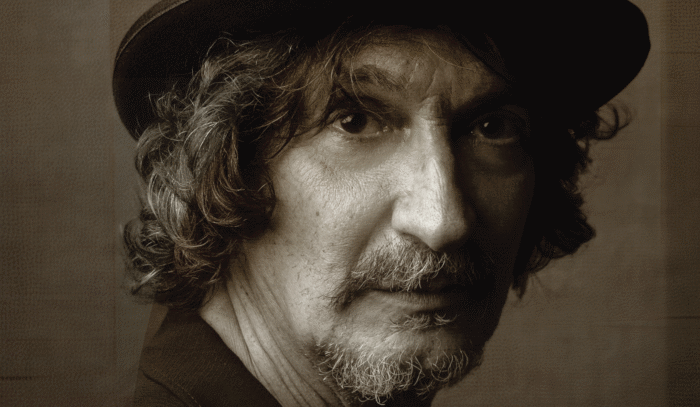
Sergio Cammariere is announced in Rome for Friday, December 11, 2026 at Sala Sinopoli in Auditorium Parco della Musica Ennio Morricone, the Renzo Piano complex in the Villaggio Olimpico area, the one everyone in the city simply calls Flaminio. It's a piano concert, built on the repertoire of 30 years of singer-songwriter music crossed with jazz, with room for the improvisation that for this artist is never an accessory but the load-bearing structure of the evening.
Who's playing. Sergio Cammariere, born in Crotone on November 15, 1960, is a pianist before he is a singer-songwriter, and you can hear the difference from the first minute. The general public got to know him in 2003 with "Tutto quello che un uomo" at the Sanremo Festival, but his story begins much earlier, between film scores, critics' awards and a long stretch in the Italian jazz scene. Live he brings a trio or a quartet, depending on the production, and the piano remains the center of gravity of everything.
Where it's played. Sala Sinopoli is the middle hall of the Auditorium, named after the conductor Giuseppe Sinopoli. The venue's listings give it 1,133 seats, against 2,756 for Sala Santa Cecilia and 673 for Sala Petrassi. It's an indoor hall, with a gallery on three sides and acoustics designed to adapt to the number of performers: for a piano and voice concert in December, you'd be hard pressed to ask for better in Rome.
If you're interested in the rest of the Roman music season, the concerts page collects the events in the city, and the Auditorium Parco della Musica listing describes the complex in detail.
The December 11, 2026 concert in Sala Sinopoli, what is known and what is worth checking
First the most honest thing to say. Sergio Cammariere's presence on the Sala Sinopoli bill for December 11, 2026 comes from the event announcement, and it's the date the whole page you're reading is built around. But it isn't information set in stone like the Colosseum's opening hours: concert dates move, change halls, slip by 24 hours for production reasons, and it happens even to artists far more settled than he is. Before buying a plane ticket or booking a hotel for that evening, the right move is a check on the Auditorium's official calendar. 30 seconds, and it saves you a wasted trip.
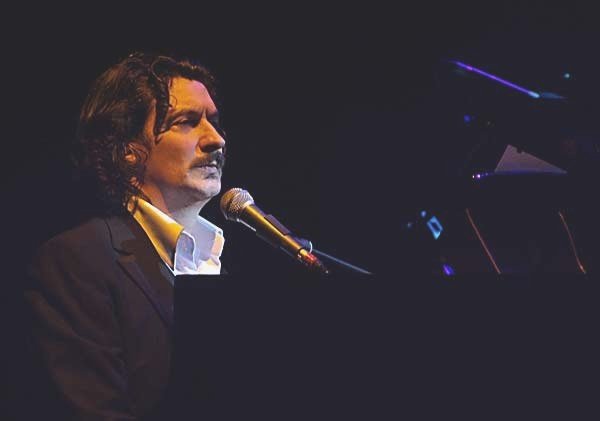
That said, the placement makes sense and doesn't clash at all. Cammariere has always played in theaters and concert halls, not in sports arenas, and Sala Sinopoli is exactly the size of his Roman audience: a little over a thousand people, all seated, all at a reasonable distance from the piano. December, besides, is the month when his repertoire works best. Cammariere's songs have a vein of Mediterranean melancholy that disperses outdoors in summer. Inside a heated hall, with the city wet outside, it condenses.
What kind of evening to expect
If you've never seen him live, I'll tell you the typical shape of his concerts, because knowing what's coming changes how you sit. Cammariere doesn't do a show. There are no costume changes, no narrative set design, no video behind him. There's a grand piano, a warm light, and a man who alternates sung songs with long instrumental passages. In between he talks, and he talks well: he tells how a piece was born, mentions a musician, makes a joke about Calabria or Rome. The register is the confidential one of the jazz club, transported into a hall of 1,100 seats.
The practical consequence is that silence becomes part of the show. In his concerts the endings of pieces fade out slowly, often on a chord held with the pedal, and an audience that applauds too early spoils the effect for everyone. If you go, wait until the hand leaves the keyboard. It's a courtesy that has largely been lost in Roman halls and that here actually matters.
On the length I don't want to invent numbers for you. Concerts of this format, in Italy, tend to run between an hour and 40 minutes and two hours, intermission included when there is one. Plan the evening with that margin and you won't find yourself watching the clock thinking about the last stretch.
Tickets, seats, and which section to choose
Tickets for events in Sala Sinopoli are bought through the Auditorium's official ticket office, online or in person at the complex's box office. Quoting prices that would be wrong months from now makes no sense. The criterion is better, because it doesn't expire.
Sala Sinopoli has an orchestra section and a gallery that runs along three of the four sides. For a piano and voice concert, the central orchestra between row 5 and row 15 is the safest choice: you're close enough to see the hands on the keyboard and far enough to receive the sound already composed, not shot at you. The very first rows have an obvious appeal but put you below the level of the stage, with the piano lid hiding half the work.
The front gallery, for an acoustic concert, is not a punishment at all: from there the sound arrives more evenly and the view of the hall is better. The side galleries, on the other hand, have the flaw of all side galleries in the world: if you end up on the wrong side relative to the piano's opening, you hear less string and more wood. If you buy at the last minute and only those are left, choose the side the lid points toward, which in the standard layout is the one on the audience's right.
Start time, coat check, and the things that cost you 20 minutes
Evening events at the Auditorium generally start between 20:30 and 21:00, but the exact time is the one written on the ticket and not the one you remember. Arrive 40 minutes early, not 10. The reason isn't the line at the turnstiles, which moves. It's the coat check. In December everyone comes in with coats, scarves and umbrellas, and the cloakroom becomes the real bottleneck of the evening, both on the way in and above all on the way out, when 1,100 people storm it at the same time.
A simple and very effective suggestion: if you have a coat you can keep folded on your lap, keep it. Leaving Sala Sinopoli without having to get back in line at the coat check means reaching the tram or the car 10 minutes ahead of everyone else, and at that hour, in that area, 10 minutes are worth a lot.
In the Auditorium's halls, entry once the concert has started is managed by the staff, who as a rule let latecomers in only in the pauses between pieces and show them to the nearest free seats, not necessarily yours. For a piano concert, where the silences count, it's a rule they apply with some strictness. Translation: if you arrive late you risk hearing the first quarter of an hour standing at the back.
Who Sergio Cammariere is, for those who know him only from one song
There's a misunderstanding that has followed Cammariere for over 20 years and it's worth clearing up right away, because it affects how you listen to one of his concerts. Many file him away as the polite singer-songwriter who in 2003 came third at Sanremo with an elegant song. That's true, and it is not the whole story at all. When he climbed onto that stage he was already 42, with a jazz discography behind him, about 10 film scores for Italian cinema and a Premio Tenco. Sanremo didn't create him. It made him visible.
Crotone, the piano, and the long invisible apprenticeship
He was born in Crotone in 1960 and Calabria, in his music, isn't folklore but temperature. The sea that appears obsessively in his titles isn't the postcard sea. It's the Ionian, wide and empty, looking east. In the eighties and nineties he works mostly as a musician and composer, away from the spotlight. In 1992 he signs his first film score, for "Quando eravamo repressi" by Pino Quartullo. The following year "I ricordi e le persone" comes out, credited to Kunstler, Cammariere and Stress Band, produced by Vincenzo Micocci, a name that for anyone who knows the history of Italian records counts as a credential.
Other film work follows: "Teste rasate" by Claudio Fragasso in 1994, "Uomini senza donne" by Angelo Longoni in 1996, and a series of films and shorts that almost nobody today connects with his name. It's in those years that the real craft is built, that of someone who has to write music on command, tailored to a scene, and learns to make a few notes say a lot.
In 1997 he takes part in the Premio Tenco and wins the IMAIE Prize as best musician and performer of the event, by unanimous vote of the jury. In 1998 he releases the EP "Tempo perduto". In 1999 he performs at Teatro Flaiano in Rome, with Giorgia O'Brien, in the show "Oggetti smarriti" directed by Rossana Siclari. Rome, in short, has been on his résumé since long before he was famous.
The record that changes everything
On August 20, 2001 "Dalla pace del mare lontano" comes out, his solo debut album, published by Via Veneto Jazz and produced by Biagio Pagano. It's the record that establishes his grammar: lyrics by Roberto Kunstler, a tribute to Charles Trenet with words by Pasquale Panella, and a team of musicians taken straight from Italian and international jazz. Fabrizio Bosso on trumpet and flugelhorn, Luca Bulgarelli on double bass, Amedeo Ariano on drums, Olen Cesari on violin, Alex Britti on guitars.
2002 is the year of recognition: Premio Carosone, Premio De André as best artist of the year, Targa Tenco for best debut work. He also wins the Musica e dischi referendum as best emerging artist. At 42, someone who had been playing for 20 years is officially classified as emerging. The history of Italian music is full of these unintentional comedies.
Sanremo 2003 and what came after
His participation in the 2003 Sanremo Festival with "Tutto quello che un uomo" brings him third place, the Critics' Prize, the prize for best musical composition and two platinum records. In the same year he receives from Assomusica the award for best live act of the year, and the video album recorded at Teatro Strehler in Milan comes out. It's the moment when the general public discovers him, and when he, with a choice that deserves recognition, decides not to turn into what the general public expected.
In 2004 comes "Sul sentiero", 12 compositions on lyrics by Kunstler, Panella and, for one piece, Samuele Bersani, plus two instrumentals. In the same year he shares the stage with Toots Thielemans at Pescara Jazz, which for a pianist raised in jazz is worth more than a chart position. In 2006 "Il pane, il vino e la visione" comes out. In 2007 he writes the score for "L'abbuffata" by Mimmo Calopresti and wins the prize for best soundtrack at the Montpellier International Mediterranean Film Festival.
He returns to Sanremo in 2008 with "L'amore non si spiega", also sung as a duet with Gal Costa. From there comes "Cantautore piccolino", an anthology record dedicated to Sergio Bardotti and Bruno Lauzi that reaches number one on the chart and goes gold: inside are a tribute to Keith Jarrett with "My Song", a reading of "Estate" by Bruno Martino with Fabrizio Bosso on trumpet and some unreleased pieces, among them "Nord", for solo piano.
The 2010s, jazz widens
In October 2009 he releases "Carovane", 13 pieces featuring instruments that have nothing to do with Italian jazz: sitar, moxeno, vina, tampura, tabla. In the same year he sings a song by Randy Newman for the Italian version of Disney's "The Princess and the Frog". In 2010, together with Fabrizio Bosso, he writes the score for three Charlie Chaplin comedies. In 2011 he co-signs with Dacia Maraini "Teresa la ladra", based on "Memorie di una ladra", and records "Anema e core" with Lucio Dalla and Olen Cesari on violin.
In March 2012 the self-titled album "Sergio Cammariere" comes out, dedicated to his friend Pepi Morgia, a lighting artist: 12 tracks ranging from jazz to bossa nova, from samba to Balkan rhythms. In September 2014 "Mano nella mano" arrives for Sony Music, 11 tracks including a tribute to Bruno Lauzi, with Antonello Salis on accordion and Gegè Telesforo on vocals.
In November 2016 he releases "Io", and here's a Roman detail worth knowing before you walk into Sala Sinopoli: the record was recorded between Casa del Jazz and Auditorium Parco della Musica. For him it's not a concert in just any hall. It's a hall he has already worked in. "Io" contains two duets, "Cyrano" with Gino Paoli and "Con te o senza te" with Chiara Civello, and a jazz waltz titled "Chi sei" in tribute to Sergio Endrigo, with the string orchestra conducted by Paolo Silvestri.
In 2017 "Piano" comes out, his first record entirely for solo piano, which contains "Dodici minuti di pioggia", taken from the film of the same name by Fabio Teriaca and awarded best song at the Los Angeles Film Awards in April 2019. In May 2019 he releases "La fine di tutti i guai", with all lyrics by Roberto Kunstler and the lineup that has accompanied him live for years: Amedeo Ariano, Luca Bulgarelli, Daniele Tittarelli on soprano sax, Bruno Marcozzi on percussion.
The 2020s, up to today
In February 2020 he pays tribute to Sergio Endrigo on television by reinterpreting "L'arca di Noè". In April "Tu, io e domani" comes out, written by Joe Barbieri and sung with Fabrizio Bosso, Luca Bulgarelli and Tosca, with the proceeds going to Civil Protection engaged in the pandemic. In March 2021 he publishes with Rizzoli the book "Libero nell'aria", written with Cosimo Damiano Damato. On May 14 of the same year "Piano nudo" comes out, an entirely instrumental album. In December "In concerto al Teatro Sistina", recorded in Rome in 2003, is made available.
In April 2023 he releases "Una sola giornata", 13 pieces of swing, jazz and bossa nova, worked on over about eight years. In the same period he composes, with Lucio Gregoretti, the music for "La quattordicesima domenica del tempo ordinario" by Pupi Avati. In October 2024 his hometown awards him the Pitagora d'oro, Crotone's highest civic honor. In November 2025 "La pioggia che non cade mai" comes out, once again with lyrics by Roberto Kunstler, featuring Alfredo Golino, Ares Tavolazzi, Alfredo Paixão, Luca Bulgarelli, Amedeo Ariano, Daniele Tittarelli and Giovanna Famulari.
In June 2026, a few months before the Rome date, his first EP, "Tempo perduto", recorded in 1998 and for almost 30 years left in a form that was hard to find, is released on all platforms: five tracks plus the live version of "Dalla pace del mare lontano" from the 1997 Premio Tenco. Whoever goes to the December 11 concert therefore goes at a particular moment in his career, with a new record from the year before and a return to his origins that has just resurfaced.
Auditorium Parco della Musica Ennio Morricone, understanding where you're setting foot
Many people arrive at the Auditorium thinking they're going to a theater. It isn't a theater. It's a citadel of music on 55,000 square meters, set between Villa Glori, the Villaggio Olimpico, the Corso di Francia viaduct and Viale Maresciallo Pilsudski, and it's worth arriving half an hour early just to walk around it.
Renzo Piano and the three beetles
The design is by Renzo Piano, who won an invitation-only competition held in 1993. The three main volumes are the three concert halls, housed in buildings of different sizes, clad in lead, arranged in a fan around an open-air theater, the cavea. The shape they resemble, and the one everyone in Rome has nicknamed them after, is three beetles resting on the lawn. Around them runs a walkable terrace you can follow on foot, and from there the outline of the lead roofs, with rain on them, is one of the most beautiful and least photographed things in contemporary Rome.
Piano worked together with Jürgen Reinhold of the Müller-BBM firm in Munich for the acoustics of the three halls, and with the landscape architect Franco Zagari for the outdoor spaces. The complex was included in the Census of Italian Architecture from 1945 to Today, promoted by the Ministry of Culture. In the category of buildings for cultural promotion the database collects 79 works, and only two meet all seven criteria set by the methodology: Auditorium Parco della Musica and the renovation of the Lingotto in Turin, both by Renzo Piano Building Workshop.
The halls, the real numbers
The three halls carry the names of Santa Cecilia, patron saint of music, with 2,756 seats. Giuseppe Sinopoli, with 1,133 seats. And Goffredo Petrassi, with 673 seats, a hall that at the opening was still generically called Sala Settecento, after the number of seats. To these are added the open-air cavea of about 3,000 seats, named after Luciano Berio, and the 308-seat Teatro Studio, named after Gianni Borgna.
Besides the halls there are three recording studios, rehearsal rooms, a foyer that is actually the atrium shared by the three halls, bars, a café, a restaurant with street access as well, and a large bookstore. The complex houses the offices of the Fondazione Musica per Roma, which runs it, and of the Accademia Nazionale di Santa Cecilia, for which it has been the main home since 2003.
Why Sala Sinopoli is the right hall for this concert
Sala Santa Cecilia is designed for the symphony orchestra and has a reverberation time of around 2.2 seconds, an unusual value meant to carry the sound of acoustic instruments to over 2,700 seats without amplification. Beautiful for Mahler. Not ideal for a piano and a voice, where the tail of the reverb risks muddying the words.
Sala Sinopoli is the exact opposite of a specialized hall: its stated prerogative is the adaptability of the interior space according to the number of performers and the acoustic behavior the event requires. Aesthetically it's more sober, with walls and a ceiling at right angles, without the American cherry shells that make the big hall spectacular. It's a hall that works, not a hall that asks to be looked at. For singer-songwriter music, for club jazz brought to theater format, for solo piano, it's the natural choice at the Auditorium.
A curiosity about Sergio Cammariere in Concert in Rome, December 11, 2026
The curiosity I prefer to tell about Sergio Cammariere isn't about a record. It's about family. Sergio Cammariere is a cousin of Rino Gaetano. Both from Crotone, both ended up in Rome, both inside Italian song, and with two destinies that couldn't be more different: Rino Gaetano dead at 30 on Via Nomentana in 1981, with a fame that exploded and then grew posthumously into a popular cult. Sergio Cammariere emerged 20 years later, at an age when others stop, with a slow and very long career.
It isn't a kinship he has ever exploited, and that should be said. For decades he almost never put it in the front row. It came out publicly above all in 2011, when Cammariere took part in the first Rino Gaetano Day in Piazza Sempione, in Monte Sacro, a few hundred meters from where Rino Gaetano lived in Rome, and exactly 30 years after his death. On stage that evening, among others, were Ernesto Bassignano, Claudio Santamaria and Andrea Rivera.
The interesting thing isn't the biographical fact, it's what you do with it. Cammariere has stated several times that he admires his cousin's songs, and in particular those tied to Calabria: "Anche questo è sud", "I tuoi occhi sono pieni di sale", "Ad esempio a me piace il sud". If you keep this list in mind and then listen to the way Cammariere treats the South in his lyrics, the thread shows very clearly. They're two opposite ways of saying the same thing. Rino Gaetano took the pain and disguised it as a nursery rhyme, with the absurd rhyme and the rough voice. Cammariere takes the same material and dresses it as bossa nova, with the ninth chord and the impeccable diction. The sarcasm of one and the elegance of the other are two strategies for not crying in public.
Take this piece of information with you into Sala Sinopoli on December 11. When he starts one of the pieces in which the sea appears as a fixed horizon, that sea isn't a tourist postcard. It's the Ionian as seen by a Crotone family that sent two musicians to Rome in two different generations, and got only one of them back.
Something nobody tells you about Sergio Cammariere in Concert in Rome, December 11, 2026
Here it is, and it's a structural fact that changes how you listen to the evening: Sergio Cammariere isn't a singer-songwriter who learned to play the piano, he's a pianist who at some point started to sing. It sounds like a pedant's distinction. It isn't at all, and anyone who goes to his concerts expecting a lineup of songs with accompaniment loses half the evening.
The clearest sign is in his discography, where the instrumental records aren't accidents. "Piano" from 2017 is the first record entirely for solo piano. "Piano nudo" from 2021 is entirely instrumental. In almost all the sung albums there are one or two pieces without words: "Nord" in "Cantautore piccolino", "Casa Lumière" and "Capocolonna" in "Sul sentiero", "Thomas" and "Essaouira" in the self-titled 2012 album. No ordinary singer-songwriter does this. A pianist does.
The second sign is the list of his working companions. Fabrizio Bosso, Luca Bulgarelli, Amedeo Ariano, Bruno Marcozzi, Daniele Tittarelli, Javier Girotto, Stefano Di Battista, Roberto Gatto, Gabriele Mirabassi, Bebo Ferra. They aren't pop session players, they're the backbone of Italian jazz of the last 30 years. Someone who brings these people into the studio and onto the stage isn't looking for a sound carpet. He's looking for people who answer back.
The practical consequence for you, on December 11, is twofold. First: the high points of the evening may happen when nobody is singing. If during a solo you get distracted because you're waiting for the chorus, you came to the wrong concert. Second: the setlist isn't set in stone. In concerts built on improvisation the order of the pieces, the length of the introductions and even the arrangement change from night to night, depending on the hall, the mood and how the others play. Going to a Cammariere concert expecting a faithful reproduction of the records is like going to a seafood restaurant and ordering what you ate last year.
And there's a third consequence, less obvious. A concert built on the piano in a hall of 1,133 seats is, in terms of listening value for the price, one of the best deals of the Roman music season. The sound of a grand piano in a hall with that volume of air reaches you in a way that doesn't exist in arenas and that exists only halfway in clubs, where people talk and glasses clink.
The advice I give you for visiting Sergio Cammariere in Concert in Rome, December 11, 2026
Advice number one isn't about the music, it's about logistics, and I say it from experience of too many evenings at the Auditorium that ended worse than they had to: don't come by car if you have an alternative, and if you come by car don't count on the road.
How to get there without stress
The Villaggio Olimpico area has a flaw recognized since the design stage: the metro doesn't reach it. The nearest station is Piazzale Flaminio, on line A, and from there a couple of kilometers remain. The classic connection is tram 2, which starts right from Piazzale Flaminio and runs up Viale Tiziano. Get off at the Apollodoro stop and walk five or six minutes toward Viale Pietro de Coubertin. It's the recommended route, and in December it has the advantage of being almost entirely covered between metro and tram.
Alternatively there are the bus lines that run along Viale Tiziano, Via Flaminia and Piazza Apollodoro area. I won't write the numbers from memory, because Roman lines change route more often than would be reasonable. Open the public transport app that same day and have it give you the combination from wherever you're starting.
If you're coming from the historic center and there are two or three of you, a taxi from Piazza del Popolo to the Auditorium is a short ride and, split, costs less than you imagine. The problem is the return: at the end of the concert 1,100 people leave together and free taxis on Viale de Coubertin become a mirage. Book the return before you go into the hall, or plan to walk back up toward Viale Tiziano, where the passing traffic offers more.
Parking, and why it's better to decide beforehand
The Auditorium has an underground car park with an entrance on Viale Pietro de Coubertin side, and it's the most convenient solution by far, as long as you arrive early. On double-event nights, when something is playing in Santa Cecilia and Sinopoli at the same time, the spaces run out well before the shows begin and the queue on the ramp eats the 20 minutes you thought you had in your pocket.
Parking along Viale Tiziano and in the streets of the Villaggio Olimpico is possible but competitive, with many paid stalls and residents coming home in the evening. If you decide on the car, the rule that works is simple: be there at 19:45 for a 21:00 concert, eat calmly inside the complex or nearby, and show up in the hall rested instead of sweaty.
What to do before the concert
December plays in your favor. In the weeks before Christmas the Auditorium has for years hosted holiday installations in the outdoor spaces and in the square between the three halls, and the complex is alive from the afternoon. Arriving early means being able to stroll on the outdoor terrace, look at the city from the top of the empty, cold cavea, step into the bookstore, get something at the bar without the crush of the intermission.
If you have a free afternoon, within a few minutes' walk you have MAXXI, the national museum of 21st-century arts designed by Zaha Hadid, which closes late in the evening only on some days but in the afternoon is perfect to pair with an evening concert. On the other side, the Ponte della Musica takes pedestrians and bicycles to the Foro Italico bank in five minutes, and at a December sunset, with the river low and the raking light, it's one of the most underrated places in Rome.
Inside the complex, if you're interested in the history of instruments, the musical instruments museum linked to the Accademia Nazionale di Santa Cecilia is worth a visit, and it preserves the institution's collection. Check the hours beforehand, because they don't follow those of the concerts.
What to wear, which in December is not a detail
Inside Sala Sinopoli it's warm. Outside, on Viale de Coubertin, at 11 at night in a Roman December, it's often 5 degrees and there's a wind that comes off the river with nothing to stop it, because the complex is surrounded by open spaces. The worst combination is the heavy coat that cooks you in the hall and nothing underneath. Dressing in layers here isn't magazine advice: it's the difference between leaving happy and leaving with a sore throat.
On the dress code, no formality. At the Auditorium you go as you are. You'll see ladies in fur next to kids in sweatshirts, and nobody who notices. It's one of the things that make this place more civilized than certain European concert halls.
Another well-known fact, and yet rarely mentioned
The well-known fact is that the Auditorium was designed by Renzo Piano. Everyone knows it, it's written everywhere, and usually the conversation ends there. What almost nobody tells is that the project you see today isn't the project Piano had drawn, and that what changed it were the Romans who died 2,000 years earlier.
During the excavations for the foundations, in the late nineties, the remains of a Roman villa of the Republican age emerged, with basins, cisterns and a wine press. In Italy a discovery like that stops everything. The construction site was halted, the Soprintendenza stepped in, and the original project had to be substantially modified: two of the three beetles were shifted westward, almost to the point of grazing the Corso di Francia viaduct that cuts the Villaggio Olimpico in two. To make room for that shift it was also necessary to intervene on the area's traffic layout, with Viale De Coubertin closed to car traffic.
The finds weren't hidden or shipped off to a warehouse. They're displayed in a small museum carved out beneath the cavea, and the remains of the villa can still be seen outdoors, in the space between Sala Santa Cecilia and Sala Sinopoli itself, the one where Cammariere will play. Put another way: to go to the December 11 concert you walk, literally, past a Roman villa from the second century BC, and most of the audience walks around it looking at their phones.
The second little-mentioned side of the story is less romantic. The construction site had a very troubled history: the contract with the winning firm was terminated midway and a new tender was called, costs rose considerably and criticism from the Corte dei conti focused on the rise. The very choice of the area, decided by the city council in 1992 after a very long debate, didn't convince everyone, and not only because of the shape of the terrain: the distance from the metro and from the main public transport routes was considered a limit even then. Whoever complains on concert night about having to take the tram is complaining about a decision made 34 years ago.
Then there's the detail of the naming, which is recent and which almost nobody uses in speech: since 2020, after a resolution of the Rome city council, the complex has been named after Ennio Morricone. Say it to a taxi driver and you'll get a pause of silence. Say Auditorium and he'll take you there.
The right photo to take at Sergio Cammariere in Concert in Rome, December 11, 2026
First the rule that applies inside and is good to know: in the Auditorium's halls, during concerts, filming isn't free. The staff steps in on raised phones, and in a hall of 1,100 seats where the piano plays acoustically the annoyance is real, not theoretical. The right photo, therefore, is almost never the one of the stage.
The photo that really works
The photograph to take home you make outside, and you make it beforehand. The spot is the walkable terrace that runs around the buildings, at the blue hour, meaning the 20 minutes after sunset. In December in Rome the sun goes down a little after 16:30, so around 17:00 the sky is that deep blue no filter manages to imitate, and the warm lights of the complex are already on. At that moment the lead roofs of the three halls stop being gray and become dark and glossy like an insect's shell, which is exactly the effect Piano was after.
Framing: stand on the terrace with the cavea behind you and Sala Sinopoli on the diagonal, not head-on. Head-on, a beetle looks like a warehouse. On the diagonal you can read the curvature, and the curvature is the whole project. If it rains, don't put the camera away: wet wood and lead reflect the lights and the floor of the square turns into a mirror. The best photos in this place all come on the ugly evenings.
The other two framings I recommend
The second is from the bottom of the cavea, the open-air amphitheater of 3,000 seats at the center of the complex. In winter it's empty and closed to the public for shows, but from the edge you get a perspective that in summer, with the seats occupied, is impossible: the empty steps in the foreground and the three volumes closing in around them.
The third is the least obvious and the best: the remains of the Roman villa between Santa Cecilia and Sinopoli, shot so as to have the ancient stones in the foreground and the lead cladding of the hall behind, out of focus. 2,200 years of distance in a single frame, 10 meters from the ticket office. If you do it well, it's a photo that tells Rome better than any view of the historic center.
The group portrait, and the mistake everyone makes
If you're in a group and want the souvenir photo of the evening, take it at the entrance and not at the exit. At the exit you'll be tired, chilled, with your coat buttoned wrong and the face of someone who just wants to find a taxi. At the entrance you're rested and the foyer lights, which are warm and diffused, do you a favor that no outdoor light will.
The classic mistake is instead the selfie with the ticket in your hand in front of the event poster: it always comes out blurred, always backlit, and in a year it won't tell you anything. Better a photograph of the grand piano on the empty stage, taken as soon as you enter the hall while the audience is settling in and nobody is playing yet. That one you can take, it disturbs nobody, and with time it's the photograph that really takes you back into the evening.
Some important events that happened here in history
Sala Sinopoli has a particularity that sets it apart from all the other halls of the Auditorium and that isn't just a detail for enthusiasts: it's the hall the complex was born with. Not the big hall, not the cavea. This one.
April 21, 2002, the Auditorium opens right from here
The complex was inaugurated on April 21, 2002, the birthday of Rome, with the opening of Sala Sinopoli. The rest of the construction site wasn't finished, and for eight months the city had an auditorium that consisted of a single working hall. When you walk in on December 11, 2026 for the concert, you'll therefore be entering the space where the whole story of Italy's most visited cultural complex began.
At the inauguration, despite his very advanced age, Goffredo Petrassi wanted to be present, the composer after whom the smallest hall would be named shortly after, on his death in 2003. And he had the honor of a world premiere right in Sala Sinopoli: that of the Ouverture da Concerto for orchestra that he had composed in 1931. A piece written by a very young author in Italy between the wars, performed for the first time 71 years later, in a brand-new hall, in front of its almost 100-year-old author. Rome produces these coincidences with a regularity that doesn't exist elsewhere.
December 21, 2002, the opening of the rest
Eight months later, on December 21, 2002, the rest of the complex was opened and Sala Santa Cecilia was inaugurated, with a concert by the Orchestra of the Accademia Nazionale di Santa Cecilia conducted by Chung Myung-whun. From that moment the Auditorium is the structure we know, and since 2003 it has been the permanent home of the Accademia's concert season, which also houses here its own Bibliomediateca and the musical instruments museum.
2006, the Film Festival arrives
Since 2006 the Auditorium has hosted the Rome Film Festival, which has turned the complex, for about 10 days a year, into a machine of red carpets, lines and press conferences. For those who come to the place for the music, it's the only period of the year when finding parking becomes a serious matter. In December, fortunately, that problem doesn't arise.
2016, when Cammariere worked here too
There's a minor event that nonetheless ties the artist directly to the hall, and it's worth pointing out: the album "Io", released in November 2016, was recorded between Casa del Jazz and Auditorium Parco della Musica. It features the string orchestra conducted by Paolo Silvestri. It isn't rare for an artist to record in this complex, given that it hosts three recording studios, but for Cammariere it means that on December 11, 2026 he isn't arriving in just any hall. He's arriving in a place he has already used as a work tool.
2020, the name of Morricone
In 2020, by a resolution of the Rome city council, the Auditorium was named after Ennio Morricone, who died that same year. The full name, the one that appears on official documents and on tickets, is Auditorium Parco della Musica Ennio Morricone. In everyday Roman usage, though, the complex remains just the Auditorium, and "andare all'Auditorium" is a phrase that in Rome needs no further specification.
The numbers that tell how big it is
One figure to grasp the scale. During 2016 the Fondazione Musica per Roma alone staged 608 events in the complex's spaces, excluding conference-type events, with revenue of 9,702,260 euros and 287,109 tickets sold. The total visitors to the Parco della Musica in 2014 were estimated at more than 2,000,000, a figure that led people to speak of the complex as the first European cultural facility by number of visitors and the second in the world after Lincoln Center in New York. A concert in Sala Sinopoli is a small event inside an enormous machine, and that also explains why the organization, in the evening, works well: here they let a lot of people through, every day.
Who has passed through Sergio Cammariere in Concert in Rome, December 11, 2026
The question lends itself to two readings, and I keep both, because both are useful to whoever sits in the seat on December 11.
Who has passed through Sala Sinopoli and the Auditorium
The first name, in chronological order, is that of Goffredo Petrassi, present at the April 21, 2002 inauguration for the world premiere of his Ouverture da Concerto. The second is Chung Myung-whun, on the podium of the Orchestra of the Accademia Nazionale di Santa Cecilia for the inauguration of the big hall in December of the same year. Since then the Accademia, one of the oldest musical institutions in the world, with an academic body of 70 full members and 30 honorary ones, has had its home here: its current music director is Daniel Harding, and the presidency and artistic management belong to Massimo Biscardi.
Alongside the classical programming runs that of the Fondazione Musica per Roma, which in the three halls brings rock, pop, jazz, contemporary music, opera, electronic and ethnic music, and then theater, dance, circus, literature, poetry, exhibitions, author meetings, science and book festivals, as well as the seasons of the four resident orchestras. In the halls of this complex, in a little over 20 years, a quantity of music has passed through that no other Italian venue can claim. I won't list names I can't verify one by one, and I'll spare you the poster-style list: the substance is that if an international artist plays Rome in theater format, they almost always play here.
Who has passed through the stage next to Cammariere
The second reading is more useful for preparing for the evening. Who has worked with Sergio Cammariere says a great deal about what music you'll hear. In his recording and concert history we find Fabrizio Bosso on trumpet and flugelhorn, Luca Bulgarelli on double bass, Amedeo Ariano on drums, Bruno Marcozzi on percussion, Olen Cesari on violin, Daniele Tittarelli on soprano sax. And then, in rotation, Javier Girotto, Stefano Di Battista, Roberto Gatto, Gabriele Mirabassi, Bebo Ferra, Michele Ascolese, Antonello Salis, Arthur Maia, Alfredo Paixão, Ares Tavolazzi, Alfredo Golino, Max Ionata, Roberto Taufic, Jimmy Villotti, Gianni Ricchizzi, Sanjay Kansa Banik.
On the vocal front, he has sung duets with Gal Costa at Sanremo in 2008, with Gino Paoli and Chiara Civello in "Io", with Lucio Dalla in "Anema e core" in 2011, with Tosca and Fabrizio Bosso in "Tu, io e domani" in 2020, and in 2007 he was on the Sanremo stage as a guest of Simone Cristicchi for "Ti regalerò una rosa". He also shared the stage with Toots Thielemans at Pescara Jazz in 2004.
Among the lyricists, the constant figure is Roberto Kunstler, who signs the words of much of his output from the first record to "La pioggia che non cade mai" in 2025. Alongside him, over time, Pasquale Panella, Sergio Secondiano Sacchi, Giulio Casale, Samuele Bersani. Among the acknowledged masters, the names he returns to cite most often are Sergio Endrigo, to whom he has dedicated more than one tribute, Bruno Lauzi and Sergio Bardotti, after whom the entire record "Cantautore piccolino" is named.
A necessary warning, and I write it plainly: none of these names is announced for the evening of December 11. The lineup accompanying Cammariere changes from tour to tour, and in some recent productions he has appeared solo. Consider them the genealogy of the music you'll hear, not a list of guests.
The repertoire, what he might play and what to listen to before going
I won't promise you a setlist, for the reasons given above. I do give you some listening preparation, which is what turns a concert into a memorable evening instead of a pleasant hour and a half.
The five pieces you have to know
"Tutto quello che un uomo", from 2003, is the piece you know even if you think you don't. It had a second life in 2021, when it entered the soundtrack of Giulio Base's film "Un cielo stellato sopra il ghetto di Roma".
"Dalla pace del mare lontano", which gives its title to the debut album, is the manifesto piece: the sea, the distance, the suspended chord. A live version exists, recorded at the 1997 Premio Tenco and released in June 2026 together with the EP "Tempo perduto", which is the best way to hear where everything comes from.
"Sorella mia", a 2002 single, and "L'amore non si spiega", from 2008, are the two songs that best show how he treats melody when he decides to be direct.
"Cantautore piccolino" is the statement of poetics: a man who calls himself small while writing for gold records. Pure Calabrian irony.
"Tempo perduto", recorded in 1998 and long unobtainable, is the oldest piece in his solo repertoire. If he plays it, you'll notice that almost 30 years later it has stayed identical in the pianistic gesture.
An instrumental piece to pay attention to
"Nord", in "Cantautore piccolino", is a composition for solo piano. Listen to it before going, because it's the piece that best explains his left hand: obstinate, rhythmic, almost a bass, while the right hand carries the melody. When in concert you hear him build an improvisation on a theme, that mechanism is always the same, and recognizing it transforms the listening.
The jazz context, for those who want to go deeper
If you want to understand the tradition he works in, the references he himself has brought into his records are two, and they're declared. The first is Keith Jarrett, whose "My Song" he recorded in "Cantautore piccolino": from there comes the idea of the piano that sings by itself, without needing words. The second is Brazilian bossa nova, which appears everywhere in his phrasing and which in 2012 becomes explicit with "Com'è che ti va", an interpretation of a piece written by Vinicius De Moraes with Italian lyrics by Sergio Bardotti and Nini Giacomelli.
Between the two there's a third, less cited reference: the Italian jazz of the nineties, that of the Roman clubs and the small labels. If after the concert you feel like hearing that scene live, the right places in Rome are Alexanderplatz, the city's historic jazz club, Casa del Jazz, where incidentally Cammariere recorded part of "Io", and Gregory's near Via Veneto.
December in Rome, how to fit the concert into a sensible day
An evening concert on a December Friday is the perfect arrival point of a well-built Roman day. I suggest two routes, depending on the time you have.
The short route, from the afternoon to the concert
Start from Piazza del Popolo in mid-afternoon. Climb to the Pincio terrace, which in December at four already has good light, then come back down and take Via Flaminia north. If you're interested in contemporary architecture, stop at MAXXI. If you're interested in walking, continue to Milvian Bridge, which in the evening, lit up, deserves the 10-minute detour. Then head back toward Viale Tiziano and you're at the Auditorium in time to eat an early dinner.
The long route, for those with the whole day
Morning in the center, with the classic climb from the Campidoglio, and if you feel like museums, the Capitoline Museums in December are much less crowded than in summer. A slow lunch. Afternoon at Villa Borghese, which from Piazza del Popolo takes you north almost without leaving the green, and from there you go down to Flaminio. You reach the Auditorium with tired legs and a clear head, which is exactly the right condition for a piano concert.
Where to eat before, without illusions
Inside the complex there's a bar, a café and a restaurant with street access as well. They're convenient and predictable, with the strengths and weaknesses of dining at performance venues: performance venue prices and service calibrated to the event schedule, so quick. If you want to eat better, the Villaggio Olimpico and the area around Piazza Apollodoro and Viale Tiziano have a decent offering of neighborhood trattorias and pizzerias. The advice on method is always the same: book, because on concert nights the whole area fills up at once, and none of those places is big.
Frequently asked questions about Sergio Cammariere in Sala Sinopoli
What time does the concert start
The official time is the one shown on the ticket and on the Auditorium calendar. The complex's evening events usually start between 20:30 and 21:00. Allow 40 minutes early for the coat check and entry.
Are the seats numbered
Yes. Sala Sinopoli is a hall with numbered seats, orchestra and gallery. There is no standing room and no free entry.
Can you take photos or film during the concert
Filming during performances isn't freely allowed and the hall staff steps in. Photos in the common areas, in the foyer and outside are no problem.
Is the concert suitable for children
It depends on the age and the habit. It's a seated concert, with long silences and no aggressive amplification: a child who can handle an hour and a half of listening will be perfectly happy, one who can't becomes a problem for the people around. For the minimum age rules, which can vary from event to event, it's best to ask the ticket office.
How does parking work
The Auditorium has an underground car park with access from Viale Pietro de Coubertin side. On nights with several simultaneous events it fills up early. The alternative is street parking in the Villaggio Olimpico area, heavily contested in the evening.
Is the December 11, 2026 date certain
It comes from the event announcement, but concert dates can change. Before organizing a trip, a check on the Auditorium's official calendar is the most sensible move.
Are there other concerts at the Auditorium in that period
December is a full month for the complex, between the symphonic season of the Accademia Nazionale di Santa Cecilia, jazz, Christmas events and concerts by the Fondazione Musica per Roma. If you're in Rome for several days, the official calendar deserves a look: it's common to find two interesting things in the same week. Our concerts page follows the city's main events.
The verdict, in short
If I had to recommend a single Italian singer-songwriter concert to someone who doesn't know the genre and wants to understand why we care so much about it in Italy, I'd choose an evening like this, and not out of local pride. Sergio Cammariere is one of the very few Italian artists who manages to stand inside two worlds that generally ignore each other: the song audience, which wants words and melody, and the jazz audience, which wants the unexpected. He manages to hold them together because he makes no concessions to either.
Sala Sinopoli, then, is the right hall. It isn't the big hall, it isn't the one that makes the news, and that's exactly why it works: 1,100 people, all seated, a piano, a Roman December outside the door. Anyone looking for spectacle will find little. Anyone looking for music will find plenty.
The only warning I repeat, because it's the only one that can ruin the evening: check the date and time on the official calendar before you set out, and arrive early. Everything else, at the Auditorium, works by itself.
Before we close
If the December 11 concert is the reason you're coming to Rome, or even just the excuse, you might as well build something around it that's worth the trip. For anyone who leads groups, guides and tour leaders who really work with visitors in Italy, you'll find the operational tools and resources for the trade on Tour Leader Pro, made precisely for the practical side of organizing.
If instead you're planning the trip for yourself, and want to understand how to fit Rome into a wider Italian itinerary, with the real travel times and the right seasons for each region, Italy Planner is the resource I recommend: it's built exactly for that kind of problem, turning a wish list into a calendar that holds up in practice.
Then I'll see you in the hall. At a piano concert it pays to arrive half an hour early and sit with your coat in your lap. By now you know why.