Sergej Khachatryan and Alexandre Kantorow at Auditorium Parco della Musica, February 3, 2027
https://www.estateromana.com/en/rome/trip-planner/sergej-khachatryan-and-alexandre-kantorow-at-auditorium-parco-della-musica-febru/
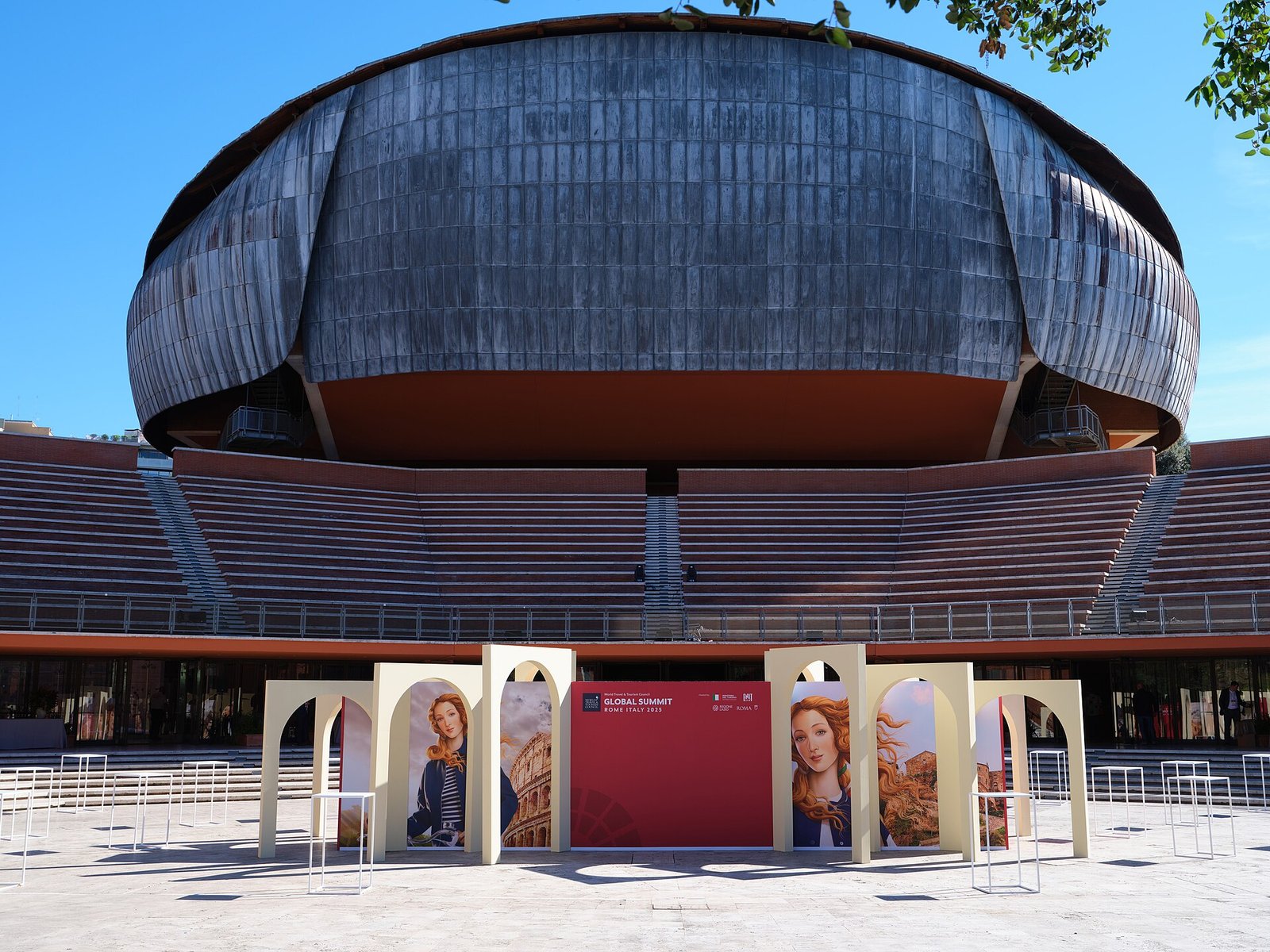
The violinist Sergej Khachatryan and the pianist Alexandre Kantorow play as a duo on Wednesday, February 3, 2027 at 20:00 in Sala Sinopoli at Auditorium Parco della Musica Ennio Morricone, Viale Pietro de Coubertin 30, for the Accademia Nazionale di Santa Cecilia's chamber season. The program features four sonatas for violin and piano: Mozart K 304, Brahms No. 3 Op. 108, Debussy and Babadzhanyan. You reach the Auditorium on Metro A to Flaminio and then tram 2, stops Flaminia/Reni or Apollodoro, or by buses 910 from Termini, 53, 982 and 168. Tickets cost 38 euros in the orchestra, 26 in the gallery second section and 18 in the gallery third section, they are bought at the Auditorium box office, at the one on Via Vittoria 6 and on the presale circuit authorized by the Accademia, reachable from the concert's official page.
An Armenian violinist who won the Sibelius at 15 and the Queen Elisabeth at 20, a French pianist who in 2019 became the first Frenchman to win Moscow's Tchaikovsky Competition: the duo is one of those that fill the bills of Europe's great halls. In Rome it plays in a compact hall, with a program that crosses three centuries of the sonata for violin and piano.
Khachatryan and Kantorow at Santa Cecilia: the evening
The recital by Sergej Khachatryan and Alexandre Kantorow is a single date, Wednesday, February 3, 2027 at 20:00, in Sala Sinopoli at Auditorium Parco della Musica, within the Accademia Nazionale di Santa Cecilia's 2026/2027 chamber season.
A single date
Unlike the symphonic concerts, repeated three times, the chamber season recitals take place on a single evening. Those who want to be there have no second chance: it is the main reason not to put off buying.
The presale
The Accademia opened on September 10, 2026 ticket sales for all concerts scheduled through February 27, 2027, and therefore for this recital too, from January 12, 2027 sales open for concerts from March to the end of the season.
The chamber season
The Accademia's chamber season opened in October at the Teatro dell'Opera di Roma with the soprano Lisette Oropesa and continues all winter, largely in Sala Sinopoli. In the preceding weeks the Quatuor Ebène passes through with the complete Beethoven quartets and Schubert's Winterreise, on January 20. The Khachatryan and Kantorow duo fits into a bill of very high level.
The program: Mozart, Brahms, Debussy and Babadzhanyan
The program of the Khachatryan and Kantorow recital includes Mozart's Sonata for piano and violin K 304, Brahms's Sonata No. 3 for violin and piano Op. 108, Debussy's Sonata for violin and piano and Arno Babadzhanyan's Sonata for violin and piano.
Mozart, K 304
The very title, sonata for piano and violin, indicates the order of the parts as the era understood it: the piano is as much a protagonist as the violin. It is an opening suited to a duo in which the pianist is a leading soloist, and not an accompanist.
Brahms, Sonata No. 3
Brahms's Third Sonata has a precise link with Khachatryan: it was on his first record for EMI Classics, released on October 7, 2002, played with his sister Lusine, 10 years later the violinist recorded the complete Brahms sonatas for Naïve. Kantorow, for his part, won the 2025 Gramophone Piano Award with an album devoted to Brahms and Schubert. Two performers who have already said a great deal on Brahms meet on the evening's central piece.
Debussy
Debussy's Sonata for violin and piano takes the evening to France, Kantorow's country. Beside Brahms's density it offers another way of thinking about the duo, freer in form, made of colors and sudden changes of mood.
Babadzhanyan
The closing is Armenian. Arno Babadzhanyan is among the composers on the album My Armenia, which Khachatryan recorded with his sister for Naïve and which won the Echo Klassik as best chamber recording in the 20th/21st-century category. It is the piece in which the violinist brings the music of his country to the stage, and in our opinion the most personal moment of the recital.
Who Sergej Khachatryan is
Sergej Khachatryan, an Armenian violinist born in Yerevan on April 5, 1985, is one of the most awarded violinists of his generation: first prize at the Sibelius Competition in Helsinki in 2000, at 15, and at the Queen Elisabeth Competition in Brussels in 2005.
From Armenia to Germany
He has lived in Germany since 1993, at nine he gave his first concert with orchestra, at the Kurhaus in Wiesbaden. His name is also written Sergey or Sergei: the Accademia uses Sergej for this recital and Sergey for the January symphonic concert.
The competitions
In 2000 he won the Louis Spohr Competition for young violinists and the Sibelius Competition, the youngest winner in the competition's history, and took second prize at the Fritz Kreisler Competition, in 2002 second prize at Indianapolis. First prize at the Queen Elisabeth, in 2005, brought him on loan the 1708 "Huggins" Stradivari.
A career between orchestras and recitals
He debuted in New York on August 4, 2006 with Beethoven's Concerto at Avery Fisher Hall, conducted by Osmo Vänskä, and has played with the Berliner Philharmoniker, the Royal Concertgebouw Orchestra, the London Symphony, the Cleveland Orchestra and the New York Philharmonic. In recital he plays regularly with his pianist sister Lusine, from London's Wigmore Hall to Carnegie Hall, he toured with Alisa Weilerstein and Inon Barnatan the Transfigured Nights program.
Prizes and records
In 2010 he received the Beethoven Ring of Bonn, in 2012 the title of Honored Artist of Armenia, in 2014 the Credit Suisse Young Artist Award. From 2010 to 2022 he played the 1740 "Ysaÿe" Guarneri del Gesù, with that instrument he recorded Ysaÿe's six sonatas for solo violin, released in 2024 and praised by the German record critics.
Who Alexandre Kantorow is
Alexandre Kantorow is a French pianist born on May 20, 1997, winner in 2019 of the first prize, gold medal and Grand Prix at the 16th International Tchaikovsky Competition in Moscow: the first Frenchman to win it in the competition's history.
A family of violinists
His father is the violinist and conductor Jean-Jacques Kantorow, his mother, Kathryn Dean, is also a violinist. According to biographies, his parents hesitated to steer him toward music and left him for a long time in a non-specialist school, so that he could cultivate other interests, from astrophysics to poetry.
The training
He began piano at five at the Pontoise conservatory, at 11 he studied with Pierre-Alain Volondat, then with Igor Lazko at the Schola Cantorum in Paris, with Frank Braley and Haruko Ueda, and finally with Rena Shereshevskaya at the École Normale de Musique. At 16 he was invited to the Folle Journée in Nantes, at 17 he played at the Philharmonie de Paris with the Orchestre Pasdeloup before about 2,500 people.
The Tchaikovsky and after
At the 2019 Tchaikovsky Competition he was the only finalist to play Tchaikovsky's Second Concerto, in addition to Brahms's Second. In 2023 he received the Gilmore Artist Award, a recognition one does not compete to obtain. On July 26, 2024 he played Ravel's Jeux d'eau in the rain during the opening ceremony of the Paris Olympic Games.
Honors and records
In 2024 he was named a knight of the National Order of Merit, having already been one of the Order of Arts and Letters. He records for the Swedish label BIS, his album Brahms Schubert won the 2025 Gramophone Piano Award. His first recording, in 2014, was an album of French sonatas for violin and piano with his father.
A curiosity about Sergej Khachatryan and Alexandre Kantorow at Auditorium Parco della Musica, February 3, 2027
The loveliest curiosity concerns the pianist. Alexandre Kantorow is the son of two violinists, and his first record, in 2014, was precisely an album of French sonatas for violin and piano recorded with his father Jean-Jacques. The repertoire he brings to Rome with Khachatryan, Debussy's sonata included, is therefore the one from which his recording life started: the duo with a violin is for him a family language.
The second concerns competitions. Khachatryan won the Sibelius at 15, the youngest in the competition's history, Kantorow won the Tchaikovsky at 22, the first Frenchman ever. On the stage of Sala Sinopoli two firsts meet, 19 years apart.
Third curiosity: a few days earlier, in mid-January, Khachatryan plays in Sala Santa Cecilia, a few meters away, Beethoven's Violin Concerto with Thomas Guggeis. In under three weeks the Roman audience hears him in both guises, soloist with orchestra and chamber musician, in the two main halls of the same complex.
Sala Sinopoli, the chamber music hall
Sala Sinopoli is the middle one of the three halls at Auditorium Parco della Musica, named for Giuseppe Sinopoli, and was the first to open, on April 21, 2002. More compact than Sala Santa Cecilia, it hosts much of the Accademia's chamber season.
The inauguration with Petrassi
At the hall's opening, in April 2002, Goffredo Petrassi wanted to be present and heard the world premiere of his Ouverture da concerto for orchestra, written in 1931. The smallest hall of the complex now bears his name: the three halls together pay homage to Rome's musical history.
The Aristaios museum
The Auditorium complex also has the Aristaios museum, with Giuseppe Sinopoli's collection, beside the archaeological museum, the Accademia di Santa Cecilia's Museum of Musical Instruments and the exhibition spaces AuditoriumGarage and AuditoriumArte. Those who arrive early can turn the wait into a small visit.
Why a recital in a compact hall
A sonata for violin and piano lives on details: the breath of the bow, the pedal, the pianissimos. In a medium-sized hall these details reach the gallery too, and the audience has the feeling of a private concert, while staying inside one of the largest musical complexes in Europe.
One thing nobody tells you about Sergej Khachatryan and Alexandre Kantorow at Auditorium Parco della Musica, February 3, 2027
The first thing almost nobody says is that for this recital the cheapest ticket, 18 euros in the gallery third section, is not a fallback choice. In a chamber hall the duo's sound arrives with good definition even from the high seats, and the view from above of Kantorow's keyboard has its charm. Those on a limited budget can hear two winners of the major international competitions for the price of a movie with popcorn.
The second is that the violinist's name changes from one page to another of the Accademia's website: Sergej for this recital, Sergey for the January symphonic concert with Guggeis. He is the same person. Those looking for information or recordings will find his name as Sergei too.
The third is the order of the program. Babadzhanyan at the close is a rare choice for a European recital: the Armenian composer is rarely performed in Italy, and the evening ends with a piece many in the hall will hear for the first time, rather than with the Brahms everyone knows.
The advice I give you for visiting Sergej Khachatryan and Alexandre Kantorow at Auditorium Parco della Musica, February 3, 2027
The advice is to listen first to one thing only: Brahms's Third Sonata, in any good recording. It is the longest and densest piece of the program, and knowing its outline lets you follow the dialogue between the two in the hall, rather than chasing the form.
Second piece of advice: sit, if possible, on the side from which you see the pianist's hands. In a duo with a pianist like Kantorow, watching the keyboard adds a lot, the violin, by contrast, is seen well from almost every seat.
Third: do not look at your phone between one sonata and the next. The passage from Brahms's density to Debussy's lightness is one of the loveliest moments of the evening, and you catch it only by staying inside the concert.
And for those who can, it is worth pairing the February recital with the January symphonic concert with Khachatryan: hearing the same violinist with a full orchestra and then face to face with a piano is the best way to understand what kind of performer he is.
Tickets for Khachatryan and Kantorow: prices and outlets
Tickets for the Khachatryan and Kantorow recital cost 38 euros in the orchestra, 26 euros in the gallery second section and 18 euros in the gallery third section. The only authorized sellers are the Auditorium Parco della Musica box office, the box office on Via Vittoria 6 and the outlets of the presale circuit authorized by the Accademia.
The two box offices
The Auditorium box office, in the greenhouse space, is open every day from 11:00 to 20:00. The one on Via Vittoria 6, near Via del Corso and Piazza del Popolo, is open Monday to Friday from 11:00 to 19:00 and Saturday from 11:00 to 14:00, with electronic payment only.
Online
To buy online, start from the concert's official page, with the purchase button below the date, which leads to the event page on the authorized circuit. The Accademia warns that it is not responsible for surcharges applied by unauthorized resellers.
Young people
The Accademia has a page devoted to all discounts for young people, at santacecilia.it/giovani, conditions and availability for chamber concerts should be checked there or at the infoline 06 8082058, or by writing to biglietteria@santacecilia.it.
How to get to the Auditorium for the recital
For the Khachatryan and Kantorow recital at Auditorium Parco della Musica take Metro A to Flaminio and then tram 2 to the Flaminia/Reni or Apollodoro stops, alternatively buses 910, 53, 982 and 168.
Metro and tram
From Piazzale Flaminio tram 2 climbs along Via Flaminia toward Piazza Mancini. Getting off at Flaminia/Reni or Apollodoro, a few minutes on foot through the Olympic Village lead to Viale Pietro de Coubertin.
Bus
The 910 links Piazza dei Cinquecento, in front of Termini station, directly to the Auditorium. The 53 passes Piazza Mancini, the 982 serves Viale XVII Olimpiade, the 168 comes from Tiburtina station. For evening times, use the Roman transport company's route planner.
By car
Viale Pietro de Coubertin is closed to traffic in front of the entrance. The Auditorium's paid lots have limited spaces, and on evenings with several concerts at once the streets of the Olympic Village saturate. A Wednesday night in February is generally quieter than a weekend, but a margin is still advisable.
Another well-known fact, yet rarely mentioned
It is well known that Moscow's Tchaikovsky Competition is one of the most important in the world. Less cited is that until 2019 no Frenchman had ever won it: Kantorow was the first, and he did so by bringing to the final Tchaikovsky's Second Concerto, which no other finalist had chosen. Those who hear him in Rome in a chamber program see a pianist who can be a great-concerto soloist and a discreet partner.
A second fact known to insiders concerns Rome: before 2002 the city had no complex of halls built for music. The Augusteo had been demolished in 1936, and for over 60 years the seasons lived in stopgap halls. Only in 1992 did the city council choose the Olympic Village area and in 1993 Renzo Piano won the competition.
Sala Sinopoli, where the duo plays, was the first of the three halls to go into operation, in April 2002, several months before Sala Santa Cecilia: the chamber season thus lives in the complex's oldest hall.
How to plan the evening
For the Wednesday, February 3 recital it is best to arrive at the Auditorium half an hour before 20:00. Sala Sinopoli is smaller than the Santa Cecilia and the lines are shorter, but coat check and checks still take a few minutes.
Before the concert
The foyer shared by the halls has a bar, a coffee shop and a large bookstore of records and music books, where you often find recordings by the performers on the bill. From the terrace between Sala Santa Cecilia and Sala Sinopoli you can see the remains of the Roman villa discovered during construction.
Punctuality
The Accademia warns that its concerts start punctually. For a recital with four sonatas, arriving late means missing the opening Mozart: best avoided.
After the concert
A sonata recital generally leaves time for a not-too-late dinner. On the way out, the cavea named for Luciano Berio is the natural place to wait for the crowd to thin out.
The right photo to take at Sergej Khachatryan and Alexandre Kantorow at Auditorium Parco della Musica, February 3, 2027
In the hall, during the recital, no photographs: in a sonata for violin and piano silence is part of the music. The right shot is before the start, with the piano open on the empty stage of Sala Sinopoli and the violin's music stand beside it: a simple image that tells the evening.
Outside, at recital time it is already dark and Renzo Piano's beetle-shaped halls are lit up. From the cavea you frame the three lead-clad volumes, with the lights reflecting on the metal surface.
For an image nobody takes, the remains of the Roman villa from the terrace between Sala Santa Cecilia and Sala Sinopoli: bricks of the 3rd century BC and 2002 architecture in the same frame, a few steps from the recital hall's entrance.
During the final applause, without flash, the duo bowing together: it is the only moment when the phone disturbs no one.
Some important events that took place here in history
The Auditorium's ground was inhabited as early as the 6th century BC, when a small archaic farm stood there, in the 3rd century BC a Roman villa was built in its place. The remains emerged during construction and forced Renzo Piano to shift two of the three halls to the west, almost to the Corso di Francia viaduct. The finds are displayed in the archaeological museum under the cavea.
In 1936 the demolition of the Augusteo left Rome without a symphonic hall. The plan for a new auditorium dragged on for decades, until in 1992 the city council chose the Olympic Village area and in 1993 Piano won the competition. On April 21, 2002 Sala Sinopoli opened, with Goffredo Petrassi present, on December 21, 2002 Sala Santa Cecilia, with the Accademia's orchestra conducted by Myung Whun Chung.
Since 2003 the Auditorium has permanently hosted the Accademia's seasons, since 2006 the Rome Film Festival, and in 2020 the city council approved its naming for Ennio Morricone.
Who has played at Sergej Khachatryan and Alexandre Kantorow at Auditorium Parco della Musica, February 3, 2027
The first name tied to Sala Sinopoli is that of Goffredo Petrassi, present at the 2002 inauguration to hear the first performance of his Ouverture da concerto. Luciano Berio, then president of the Accademia, gave his name to the cavea, Giuseppe Sinopoli, for whom the hall is named, is also remembered by the Aristaios museum with his collection.
The 2026/2027 chamber season brings to the Auditorium's halls performers like Evgeny Kissin and András Schiff, who play together in Sala Santa Cecilia, as the page for their concert recounts, the Quatuor Ebène with the complete Beethoven quartets, Sol Gabetta with Bertrand Chamayou, Jordi Savall with Vivaldi.
On the symphonic side the season is opened by Daniel Harding with Wagner's Siegfried and in November sees Kirill Petrenko on the podium. On February 3, 2027 it is the turn of two winners of the Sibelius and the Tchaikovsky, in one of the most anticipated chamber evenings of the winter.
Accessibility and kids
For Accademia concerts, people with walking disabilities holding the Disability Card get a 15% reduction on two tickets, to be bought at the box office, wheelchair users pay 10 euros and their companions enter free, while dedicated seats last.
Booking
For non-ambulatory people booking is mandatory, from 15 days before the concert until the day before, at 06 8082058 or biglietteria@santacecilia.it. For the February 3 recital booking opens January 19.
Arriving unhurried
Those with mobility difficulties do well to arrive with a margin and to ask staff right away for the most comfortable route to Sala Sinopoli. The complex is open and between one entrance and another you walk outdoors.
With kids
For a kid who studies violin or piano, seeing a duo of this level up close is a rare formative experience: in a chamber hall you perceive breaths, glances, understanding. For small children a recital of four sonatas remains demanding.
The Auditorium's neighborhood
The Auditorium occupies about 55,000 square meters between Villa Glori, the Olympic Village, the Corso di Francia viaduct and Viale Maresciallo Pilsudski, in an area of Rome where twentieth-century and contemporary architecture alternate with greenery.
The MAXXI
A few minutes on foot, toward Via Guido Reni, is Zaha Hadid's MAXXI. For those with the afternoon free, an exhibition and then a walk to the Auditorium is a coherent way to spend the day.
Toward the Tiber
The Ponte della Musica links Flaminio to the Foro Italico a few steps from the Auditorium, farther north, Milvian Bridge is one of northern Rome's busiest evening gathering spots.
Toward the center
Tram 2 takes you back to Piazzale Flaminio, at the gates of Villa Borghese, Piazza del Popolo and the Tridente.
Where to eat before or after the recital
At the Auditorium there are a bar and coffee shop in the foyer and a bar-restaurant with access from the street too: the most convenient solution for a Wednesday when you arrive straight from work.
In the neighborhood
Between the Olympic Village, Via Flaminia and Piazza Mancini there are pizzerias, trattorias and neighborhood bars, frequented more by residents than tourists. To eat before the 20:00 recital it is best to book.
After the concert
After the recital the widest choice is at Ponte Milvio, a few minutes away. Toward Piazzale Flaminio you enter the historic center area, with its prices.
February in Rome
Early February is one of the calmest times to visit Rome: few crowds, days beginning to lengthen, concert and theater seasons in full swing. For those traveling off-season it is a favorable moment, with livable museums and lower prices.
The musical week
On February 6, 2027 the flutist Lucie Horsch plays at the Aula Magna of the Sapienza for the IUC Season, with the program Metamorphosis. Those staying a few days in Rome can pair the Khachatryan and Kantorow recital with another chamber concert in another historic hall of the city.
The weather
February evenings can be cold and damp. At the Auditorium you walk outdoors between the halls: leave your coat at the coat check and bring a folding umbrella.
Frequently asked questions about Khachatryan and Kantorow in Rome
When do Khachatryan and Kantorow play in Rome?
Sergej Khachatryan and Alexandre Kantorow play as a duo on Wednesday, February 3, 2027 at 20:00 in Sala Sinopoli at Auditorium Parco della Musica Ennio Morricone, Viale Pietro de Coubertin 30, for the Accademia Nazionale di Santa Cecilia's chamber season. It is a single date.
What is the recital's program?
The Khachatryan and Kantorow recital includes Mozart's Sonata K 304, Brahms's Sonata No. 3 Op. 108, Debussy's Sonata for violin and piano and Arno Babadzhanyan's Sonata for violin and piano, an Armenian composer also on the violinist's album My Armenia.
How much do tickets cost?
Tickets for the Khachatryan and Kantorow recital cost 38 euros in the orchestra, 26 euros in the gallery second section and 18 euros in the gallery third section. Discounts for young people are indicated by the Accademia on the santacecilia.it/giovani page.
Where do I buy tickets?
Tickets for Khachatryan and Kantorow are bought at the Auditorium Parco della Musica box office, open every day from 11:00 to 20:00, at the box office on Via Vittoria 6 and on the presale circuit authorized by the Accademia, reachable from the concert's official page.
Who is Alexandre Kantorow?
Alexandre Kantorow is the French pianist born in 1997 who in 2019 won first prize, gold medal and Grand Prix at the Tchaikovsky Competition in Moscow, the first Frenchman in history. In 2023 he received the Gilmore Artist Award and in 2025 the Gramophone Piano Award.
Where is Sala Sinopoli?
Sala Sinopoli is one of the three concert halls of Auditorium Parco della Musica Ennio Morricone, at Viale Pietro de Coubertin 30. It is the middle hall of the complex, the first inaugurated in 2002, and hosts much of the Accademia's chamber season.
How do I get to Auditorium Parco della Musica?
You reach Auditorium Parco della Musica on Metro A to Flaminio and then tram 2, stops Flaminia/Reni or Apollodoro, or by buses 910 from Termini, 53, 982 and 168. In front of the entrance the road is closed to traffic.
The final advice on Khachatryan and Kantorow in Rome
Two firsts from the great competitions, a program running from Mozart to Babadzhanyan's Armenia by way of Brahms and Debussy, a compact hall and tickets starting at 18 euros: in our opinion it is one of the most convincing chamber recitals of the Roman winter. The advice is to buy early, because the date is single, to listen first to Brahms's Third and, for those who can, to pair it with the January symphonic concert with Khachatryan himself.
Article written by the editorial team of Tour Leader Pro, contact them for Private/Corporate/V.I.P. Tours and Experiences.
Planning a trip to Rome? The English guides to visiting the city are on ItalyPlanner.com.