Sensing the Future at MAXXI, November 25, 2026 to January 31, 2027
https://www.estateromana.com/en/rome/trip-planner/sensing-the-future-at-maxxi-november-25-2026-to-january-31-2027/
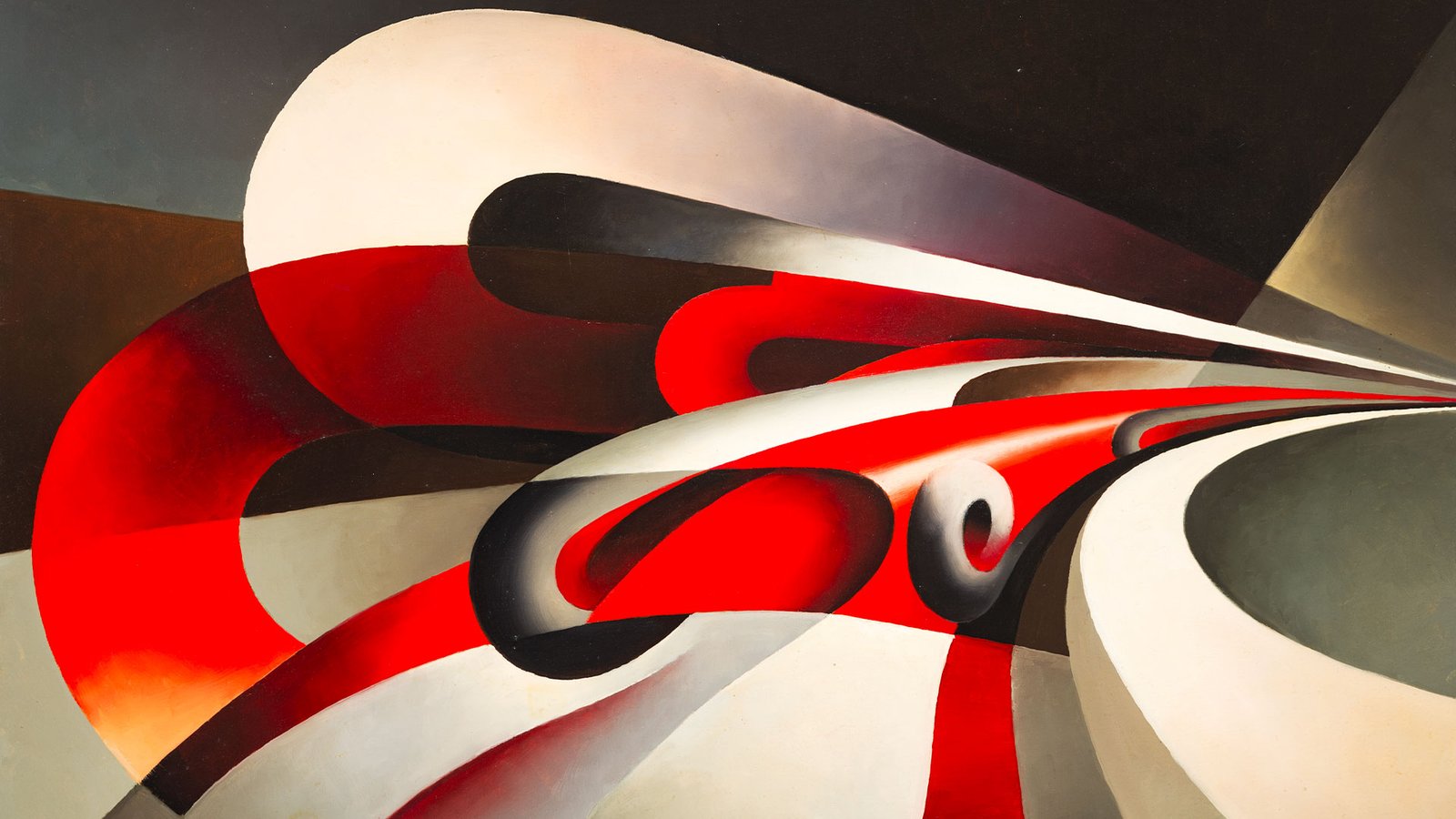
Sensing the Future, the exhibition curated by Gabriele Simongini that sets the masterpieces of Futurism against new works by Italian artists of today, is open at MAXXI from November 25, 2026 to January 31, 2027, in the extra MAXXI spaces. The museum is at Via Guido Reni 4a, in the Flaminio district (00196 Rome), and is open Tuesday to Sunday from 11:00 to 19:00, closed on Monday, the ticket office closes an hour before the museum. You get there on Metro A to Flaminio and then tram 2 toward Piazza Mancini, or on buses 53, 910, 168 and 982 that serve the nearby Auditorium, on Via Guido Reni there is a stop bearing the museum's name. Prices are published on the official MAXXI website, and tickets are bought at the desk or online from the venue's official site.
The title says it all: sensing the future. The exhibition takes the Futurists literally and brings them into the time they had imagined, that is, ours. Speed and simultaneity, the movement's two keywords, are today the air we breathe every day, for better and for worse. Seeing a painting by Balla or Crali next to a work built with today's technology is the most direct way to understand how far those painters saw, and also where they were wrong.
Sensing the Future at MAXXI: dates, hours and address
Sensing the Future can be visited at MAXXI from Wednesday, November 25, 2026 to Sunday, January 31, 2027, during museum hours: Tuesday to Sunday from 11:00 to 19:00, closed on Monday.
The dates to note
The exhibition opens on November 25 and closes on January 31: a little over two months, crossing the Christmas holidays. It is a short window, and whoever puts it off until January risks finding it in the final days, when the latecomers arrive.
The hours
MAXXI is open from 11:00 to 19:00 Tuesday to Sunday. The ticket office stays open until an hour before the museum closes: to get in you must therefore arrive by 18:00. For the year-end holidays it is best to check the museum's official website.
The address
The museum is at Via Guido Reni 4a, 00196 Rome, in Flaminio. The exhibition is installed in the spaces the museum calls extra MAXXI: at the entrance staff point out the route. The museum's profile is on the page about MAXXI.
Tickets and discounts
The ticket is bought at the desk or online from the exhibition page on the official MAXXI website. The museum publishes a long list of discounts and free admissions: among the former, young people between 18 and 25 and groups of at least 15 people, among the latter, children under 18, anyone showing an ID on their birthday, people with disabilities and their companions.
What you see in Sensing the Future
Sensing the Future brings together works by Giacomo Balla, Umberto Boccioni, Tullio Crali, Fortunato Depero, De Pistoris, Gerardo Dottori, Filippo Tommaso Marinetti and Růžena Zátková, alongside new works by Fabio Giampietro, Donato Piccolo and Quayola. The museum's declared aim is to bring "the Futurists into their own future", that is, today.
The curator's idea
MAXXI's presentation text starts from a simple observation: in many aspects of daily life the Futurists' ideas have become ordinary reality. Two in particular, speed and simultaneity, are now reference points for everyone. Gabriele Simongini's exhibition takes this finding seriously and turns it into a path: the Futurists as theorists and anticipators of the present.
Boccioni's sentence
The museum accompanies the exhibition with a quotation from Pittura scultura futuriste, the book published by Umberto Boccioni in 1914, in which the painter writes that the Futurists' work "anticipates by at least 100 years the Italian artistic sensibility". More than 100 years have passed since that book: the exhibition tests the wager.
The Futurist masterpieces
The historical selection includes the movement's founding names, Marinetti, Balla, Boccioni, and those of the so-called second Futurism, Depero, Dottori, Crali, together with figures less known to the general public such as De Pistoris and Růžena Zátková. It is a choice that spans the arc of the movement, from the years of the manifesto to those of aeropainting.
The new works
Alongside the Futurists, three Italian artists, Fabio Giampietro, Donato Piccolo and Quayola, present new works inspired by Futurist theories to imagine the near future. It is the riskiest part of the exhibition, and the most interesting: putting a work of today beside a Balla means accepting a severe comparison.
The exhibition's image
The image chosen by the museum to present the exhibition is Le forze della curva by Tullio Crali, an oil on canvas of 1930, measuring 70 by 90 centimeters, listed as coming from a private collection. It is an aeropainting: the curve of a flight rendered as a visible force.
Futurism: Italy's first avant-garde
Futurism is the artistic and cultural movement founded by Filippo Tommaso Marinetti with the manifesto of 1909, considered the first historical Italian avant-garde of the twentieth century and one of the first European avant-gardes.
A total movement
The Futurists did not limit themselves to painting. They explored sculpture, poetry, theater, music, architecture, dance, photography, cinema and even gastronomy. It is this ambition to remake everything, from the painting to the way of eating, that makes the movement so close to life today, in which technology enters every daily gesture.
Influence outside Italy
The movement influenced kindred currents in other European countries, in Russia, in France, in the United States and in Asia. It was one of the first cases in which an artistic idea born in Italy traveled to the rest of the world instead of arriving from it.
Aeropainting
In the years after the First World War, aeropainting took hold, a pictorial strand of Futurism expressing the myth of the machine and the enthusiasm for flight, the dynamism and speed of the airplane. The 1929 manifesto of aeropainting carries, among others, the signatures of Marinetti, Balla, Depero and Dottori. Many of the works on view belong to this season.
The artists of Sensing the Future: biographies
The historical artists of Sensing the Future cover three generations of Futurism, from Marinetti, born in 1876, to Tullio Crali, born in 1910 and active until 2000.
Filippo Tommaso Marinetti
Born in Alexandria, Egypt on December 22, 1876 and died in Bellagio on December 2, 1944, Marinetti was a poet, writer and playwright. He is remembered above all as the founder of the movement, whose manifesto he presented in 1909. Without him Futurism would not have had its organizing force: he was the director of an avant-garde that thought of itself as an army.
Giacomo Balla
Born in Turin on July 18, 1871 and died in Rome on March 1, 1958, Balla was a painter, sculptor, set designer and author of words-in-freedom. He signed with the other Futurists the movement's manifestos. In his paintings he represented light, movement and speed, with a tone often ironic and light, far from the cult of violence that characterized other Futurists. He lived in Rome for a long time, and his home in the Vittoria district can be visited today.
Umberto Boccioni
Born in Reggio Calabria on October 19, 1882 and died in Verona on August 17, 1916, Boccioni was a painter, sculptor and writer. His research on the representation of movement and on the relations between object and space deeply influenced twentieth-century painting and sculpture. He lived little more than 30 years, but his works are held in many public museums, in 1988 the Metropolitan Museum in New York devoted to him a major retrospective of 100 works.
Fortunato Depero
Born in Fondo on March 30, 1892 and died in Rovereto on November 29, 1960, Depero was a painter, sculptor, designer, illustrator, set designer and costume designer. He signed the manifesto of aeropainting and is one of the protagonists of the second Futurism. He is perhaps the Futurist closest to today's graphics and design.
Gerardo Dottori
Born in Perugia on November 11, 1884 and died in the same city on June 13, 1977, Dottori was a Futurist painter and signatory of the aeropainting manifesto. His views from above turn the Umbrian landscape into a matter of curves and light.
Tullio Crali
Born in Igalo, on the Bocche di Cattaro, on December 6, 1910, and died in Milan on August 5, 2000, Crali was self-taught. He grew up in Zadar and then Gorizia, discovered Futurism at 15 and in 1928 flew for the first time. In 1929 he came into contact with Marinetti and joined the movement, in the very year of the aeropainting manifesto. In 1932 he exhibited in Paris in the first show of Italian aeropainters, he took part in the Rome Quadriennali of 1935, 1939 and 1943 and in the Venice Biennale of 1940. His best-known painting, Incuneandosi nell'abitato, of 1939, shows a dive from the pilot's point of view. After the war he remained faithful to Futurist poetics, living in Turin, Paris, Cairo and finally Milan.
Donato Piccolo
Born in Rome in 1976, Donato Piccolo is an artist who works with mixed techniques and in his research questions the technology of machines, computers and artificial intelligence. In 2023 he exhibited with Luca Vitone at the Museo di Roma at Palazzo Braschi in the exhibition Landscape, in 2014 he staged a performance at MACRO, in 2017 he had a solo show at the youth center of the Hermitage in Saint Petersburg, Thinking the Unthinkable.
Fabio Giampietro and Quayola
The other two contemporary artists, Fabio Giampietro and Quayola, present new works conceived for the exhibition. To learn about their work before the visit, the starting point is the artists' official websites and the exhibition page on the MAXXI site.
Gabriele Simongini, the curator
Sensing the Future is curated by Gabriele Simongini, who signs the project and the idea of bringing the Futurists back into their own future.
A project of comparison
The exhibition's approach is that of a dialogue between eras: not a retrospective on Futurism, but a comparison between the movement's theories and the research of artists today. It is a format that asks the visitor for a little extra effort, and rewards those who make it.
How to read the path
The suggestion is to look first at the Futurists, looking in each painting for the speed and simultaneity indicated by the curator, and then move on to the new works asking if those two ideas are still alive or have turned into something else.
Zaha Hadid's MAXXI, the venue of Sensing the Future
MAXXI was inaugurated in 2010 and is the first Italian national museum devoted to contemporary arts and architecture, designed by Zaha Hadid after the international competition of 1998. Bringing the Futurists into this building has an obvious logic: an architecture made of curves and flows is the space Balla and Crali would have recognized as their own.
From barracks to museum
The museum is built on military ground. In 1997 the Ministry for Cultural Heritage obtained from the Ministry of Defense the area of the former Montello barracks, occupied by workshops and disused pavilions. From that moment a piece of city closed to the public was destined for culture.
The 1998 competition
The 1998 international competition called for a museum of architecture and one of 21st-century arts, plus spaces for experimentation, a library, an auditorium, spaces for live performance and for education. There were 273 entries. Zaha Hadid won, with a project chosen for its ability to blend into the urban fabric and offer the city a sequence of public spaces.
The square and the always-visible works
The complex occupies an area of 29,000 square meters and has at its center a large square named for Alighiero Boetti, where works are displayed. Inside the museum, three installations remain always visible, whatever exhibition is on: those by Anish Kapoor, Sol LeWitt and Maurizio Mochetti.
The season's exhibitions
In the same period MAXXI hosts other exhibitions, including the one devoted to Sophie Calle, open until February 7, 2027. With a single ticket and a well-organized day you can see several exhibitions, but two demanding routes in a row is a lot: better to choose.
How to get to MAXXI for Sensing the Future
MAXXI is reached from the center on Metro A to Flaminio and then tram 2 toward Piazza Mancini, or on buses 910, 53, 168 and 982.
Metro A and tram 2
From the Flaminio station of Metro A, in Piazzale Flaminio, tram 2 departs, with its opposite terminus at Piazza Mancini, and crosses the museum's district. You get off at the stop nearest Via Guido Reni and walk toward the Tiber. It is the simplest route for those arriving from Termini, from Piazza di Spagna or from the Vatican.
The buses
The 910 links Termini to Piazza Mancini and is the most convenient for those leaving the station who don't want to change. The 53 arrives from Largo Chigi, a step from Via del Corso. The 168 links Largo Maresciallo Diaz with Tiburtina station, the 982 Viale XVII Olimpiade with Quattro Venti station.
The MAXXI stop
On Via Guido Reni there is a stop bearing the museum's name, about 130 meters from the entrance, marked as wheelchair accessible. The lines that stop there may change during the season: better to check before leaving.
By car and parking
By car you arrive from Via Flaminia or the Lungotevere. Parking on the nearby streets is difficult on weekdays and almost impossible on concert nights at the Auditorium or match days at the Stadio Olimpico. The Auditorium has two paid parking lots, surface and multistory, with spaces reserved for people with disabilities, about 10 minutes on foot from the museum.
On foot from the Tiber
The Ponte della Musica, for pedestrians and cyclists, links Flaminio with the Lungotevere at the level of the Foro Italico. Those staying in Prati or the Della Vittoria district can arrive on foot across the river: a walk that prepares you well for an exhibition on speed, precisely because it is slow.
Flaminio around MAXXI: what is nearby
MAXXI is in Flaminio, between Via Flaminia, the Tiber and the Parioli hill: in a few minutes on foot you reach the Auditorium, the Ponte della Musica and Villa Glori.
The Auditorium Parco della Musica
The Auditorium Parco della Musica, designed by Renzo Piano and named for Ennio Morricone, is about 10 minutes on foot away. In the foyer and gardens there is a small free itinerary of contemporary art, with neons by Maurizio Nannucci, some Cellotex works by Alberto Burri and two sculptures by Keith Haring.
Villa Glori
Behind the Auditorium rises the hill of Villa Glori, opened in 1924 as the Parco della Rimembranza. Since 1997 it has hosted installations by contemporary artists. After an indoor exhibition, it is the natural outdoor continuation, on dry days.
Valle Giulia and Villa Borghese
Farther south, tram 2 takes you in a few minutes to Piazzale Flaminio and Villa Borghese, where you find the National Gallery of Modern and Contemporary Art and the Etruscan Museum of Villa Giulia. For those who want more Futurism after the exhibition, the Galleria Nazionale is the most logical destination.
Casa Balla
On the other side of the Tiber, at Via Oslavia 39b, in the Della Vittoria district, is Casa Balla, the apartment where Giacomo Balla lived from 1929 with his wife Elisa Marcucci and his daughters Luce and Elica, turning it into a total work of art. Declared of cultural interest in 2004 and restored, it was opened to the public in 2021 with MAXXI's support. Visits are by appointment, in set periods: it is worth checking if they coincide with those of the exhibition.
How to organize your visit to Sensing the Future
Sensing the Future takes about an hour and a half, with the museum's square, the permanent works and the trip from the center, the visit takes half a day.
The day and the time
MAXXI is closed on Monday. Tuesday and Wednesday are the quietest days, early afternoon is the best time. If you have only the weekend choose the morning, right after the 11:00 opening, and remember the ticket office closes at 18:00.
Museum services
MAXXI offers a coat check, restrooms including accessible ones, a coffee shop, bar and restaurant, audio guides, guided tours and workshops. The calendar of events is on the museum's official website.
Visiting in a group
For groups this exhibition works well, because it lends itself to comparison: in front of a Crali painting and a digital work of today everyone has a different reaction. With groups a short introduction to Futurism in the square works, then an hour of free visiting and a discussion at the bar. For private and corporate visits, Tour Leader Pro organizes custom itineraries.
MAXXI accessibility
MAXXI is listed by Roma Capitale's tourism portal as a museum accessible to people with disabilities, with dedicated restrooms, people with disabilities and their companions enter free according to the museum's website.
Getting around the museum
For routes, elevators and access conditions to individual galleries, the reference is the museum, at 06 3201954. It is best to call before the visit, especially on the busiest days.
Broad free admissions
The MAXXI website lists among the free admissions people with disabilities and their companion, people on the autism spectrum, deaf people, people with cognitive disabilities and their caregivers, on presentation of the European Disability Card or a letter from the reference association or facility.
Sensing the Future with children
Sensing the Future is one of the MAXXI exhibitions best suited to kids and teenagers: those under 18 enter free and the themes of speed and the machine speak to the youngest too.
With the youngest
Diving airplanes, curves, bright colors: Futurist painting is immediate, and a child understands it without explanations. Ask them to find in each painting something that moves, it is a game that works.
With teenagers
With older kids the exhibition becomes a serious question: the Futurists had imagined a fast, connected world, and here it is. Is it better or worse than they thought? The comparison with today's works helps answer.
Where to eat near MAXXI
MAXXI has a coffee shop, bar and restaurant inside: for a visit to Sensing the Future it is the most practical solution.
In the museum and at the Auditorium
Besides the museum's services, the Auditorium Parco della Musica, 10 minutes on foot away, has a bar and restaurant, surrounded by greenery.
Flaminio, Parioli and Ponte Milvio
Flaminio is a residential district, with places designed for those who live and work there: great for a quick lunch. For dinner, the Parioli and Milvian Bridge are a few minutes away by taxi.
Sensing the Future between November and January: the time of year in Rome
Sensing the Future covers the quietest season of the Roman year, from late November to late January, with the Christmas holidays in the middle.
Late November and December
The days shorten and the afternoon light vanishes early: the museum's square should be seen before sunset. In the holiday weeks Roman museums fill with families, whoever can, should visit the exhibition in the first weeks.
January
After Epiphany museums return to calm, but for Sensing the Future January is also the last month. The closing is Sunday, January 31: the final weekend will be crowded.
A curiosity about Sensing the Future at MAXXI, November 25, 2026 to January 31, 2027
The image with which MAXXI presents the exhibition is Le forze della curva by Tullio Crali, painted in 1930. Crali was then 20, had flown for the first time only two years earlier, in 1928, and had joined the Futurist movement only in 1929, the year of the aeropainting manifesto. The painting chosen to tell the future, in short, is the work of a young man who had just discovered what it means to see the world from above.
There is a detail that makes the choice even more interesting. Crali was a pilot before he was a theorist: his painting, over the course of the 1930s, becomes more and more realistic, because he wants to convey to the viewer the concrete experience of flight. It is exactly what many works built with digital technology do today: bring the viewer inside an experience, instead of putting it in front of them.
And there is a chronological coincidence. Crali died in 2000, on the threshold of the century the Futurists had imagined. The exhibition places him beside artists who work fully in that century, and who in some way answer his question.
One thing nobody tells you about Sensing the Future at MAXXI, November 25, 2026 to January 31, 2027
Futurism is often told as a Milanese movement, tied to Marinetti and Boccioni. It is said less that Rome was a capital of it. Giacomo Balla lived and worked in Rome for most of his life, and died there in 1958. In June 1929 he moved with his wife and daughters into a fourth-floor apartment in a large building on Via Oslavia, in the Della Vittoria district, and transformed it, room by room, into a total work of art: painted walls, doors, furniture, clothes, objects of daily use.
His daughters Luce and Elica, both painters, lived there until their deaths, in 1993 and 1994, and preserved almost everything. In 2004 the house was declared of cultural interest, after a long restoration, in 2021 it was opened to the public with the logistical support of MAXXI itself and the Soprintendenza Speciale di Roma.
Here is the thing few people know: the museum hosting Sensing the Future is the same one that helped open the Roman home of Rome's most important Futurist. Whoever leaves the exhibition wanting to see Futurism lived, and not just displayed, has a rare opportunity a couple of kilometers away, to be booked in advance.
The advice I give you for visiting Sensing the Future at MAXXI, November 25, 2026 to January 31, 2027
The advice is to come to the exhibition with a precise idea in mind: the curator's two words, speed and simultaneity. In front of each work, historical or contemporary, ask yourself where they are. In an aeropainting the speed is evident, simultaneity, that is, the ability to show several moments or several points of view together, requires a second look. In today's works the relationship often reverses.
Then go through the path twice. The first time, in sequence, to get a general idea. The second, in reverse, starting from the contemporary works and returning to the Futurists: it is surprising how much the reading of a Balla painting changes after seeing a work built with a machine.
Finally, time. With well-prepared groups an hour and a half is enough, alone it is best to take two, and close with a coffee on the museum's square. If the weather is good, a walk on the Ponte della Musica helps fix your impressions. Avoid the last weekend of January: the exhibition closes Sunday the 31st, and those who put it off will all arrive at once.
Another well-known fact, yet rarely mentioned
That Futurism exalted speed everyone knows. Less remembered is how total a movement it was, able to concern itself with everything: painting, sculpture, poetry, theater, music, architecture, dance, photography, cinema and even gastronomy. The Futurists did not want only to paint the modern world, they wanted to remake it, starting from daily gestures.
This explains why an exhibition like Sensing the Future makes sense precisely today. The Futurists' ideas, the museum observes, have become ordinary reality: we live surrounded by screens that show several things at once, by vehicles that shorten distances, by instant communication. Futurism had imagined the form of this world before technology made it possible.
And there is another known and little-cited fact. Futurism was not only Italian: it influenced kindred movements in Russia, France, the United States and Asia. It was one of the first times an artistic idea born in Italy set out toward the world instead of arriving from it.
The right photo to take at Sensing the Future at MAXXI, November 25, 2026 to January 31, 2027
The rules on photographs in the galleries vary from exhibition to exhibition and should be checked at the entrance. Where they are allowed, the right photo is not that of a single painting, which you find better in catalogs, but one that puts in the same frame a Futurist work and a work of today: it is the image that tells the exhibition.
Outside the galleries, the photo to take is that of Zaha Hadid's building. MAXXI's curves, the suspended volumes, the lines crossing above the square are in some way the built version of an aeropainting. The best spot is Alighiero Boetti square, looking toward the entrance.
In late November and December sunset comes early. A photo of the square with the museum's lights on, around 17:00, conveys well the idea of a museum of the future in the middle of a residential district. It is also the right moment to leave and look for a tram before rush hour.
Some important events that took place here in history
The history of the place where Sensing the Future is visited begins with a military area and arrives at a national museum in little more than a decade.
1997: the barracks handed over
In 1997 the Ministry for Cultural Heritage obtained from the Ministry of Defense the area of the former Montello barracks, occupied by workshops and by then-unused pavilions. It is the museum's birth certificate.
1998: the international competition
The following year the competition for the new contemporary arts hub gathered 273 entries from around the world. The project by Zaha Hadid won, spread over 29,000 square meters around a large open square.
2010: the inauguration
In 2010 MAXXI opened to the public as the first Italian national museum for contemporary arts and architecture. Since then it has produced and hosted exhibitions of art, architecture, design, photography and fashion, and series of cinema, theater and dance.
2021: Casa Balla
In 2021, with the logistical support of MAXXI and the Soprintendenza Speciale di Roma, Casa Balla opened to the public, on Via Oslavia. For Futurism in Rome it is an important date: the master's home, left almost intact for decades, becomes visitable.
1924: the Parco della Rimembranza
A short walk from the museum, the hill of Villa Glori was opened in 1924 as the Parco della Rimembranza for the fallen of the First World War. A few years later, in 1929, Giacomo Balla would move with his family to Via Oslavia, on the other side of the Tiber.
Who has played at Sensing the Future at MAXXI, November 25, 2026 to January 31, 2027
Through MAXXI have passed, first of all, the architects and artists who built it and who inhabit it permanently. Zaha Hadid designed it, winning the 1998 competition. Anish Kapoor, Sol LeWitt and Maurizio Mochetti are present with always-visible works, the square bears the name of Alighiero Boetti.
With Sensing the Future some of the most important names of twentieth-century Italian art pass through here: Filippo Tommaso Marinetti, founder of the movement, Giacomo Balla, who lived in Rome for most of his life, Umberto Boccioni, who died in Verona in 1916 at 33, Fortunato Depero, Gerardo Dottori and Tullio Crali, protagonists of aeropainting. Beside them, De Pistoris and Růžena Zátková, less known to the general public.
And today's artists pass through: Fabio Giampietro, Donato Piccolo, a Roman born in 1976, who has already exhibited at the Museo di Roma at Palazzo Braschi and at MACRO, and Quayola. The curator Gabriele Simongini called on them to answer, with new works, Boccioni's wager on the 100 years.
In the same autumn the museum hosts the Sophie Calle exhibition, and in the district every evening the Auditorium audience passes through and, on match days, that of the Stadio Olimpico. Flaminio is a district where the contemporary is met everywhere, and where the Futurists, who loved the crowd and movement, would have felt at home.
Frequently asked questions about Sensing the Future at MAXXI
When can I see Sensing the Future at MAXXI?
Sensing the Future is open at MAXXI in Rome from November 25, 2026 to January 31, 2027, in the extra MAXXI spaces. The museum is open Tuesday to Sunday from 11:00 to 19:00 and closed on Monday, the ticket office closes an hour before the museum.
Where is MAXXI and how do I get there?
MAXXI is at Via Guido Reni 4a, 00196 Rome, in the Flaminio district. From the center you get there on Metro A to Flaminio and then tram 2 toward Piazza Mancini, or on buses 910, 53, 168 and 982.
Which artists are in the Sensing the Future exhibition?
Sensing the Future shows works by the Futurists Giacomo Balla, Umberto Boccioni, Tullio Crali, Fortunato Depero, De Pistoris, Gerardo Dottori, Filippo Tommaso Marinetti and Růžena Zátková, alongside new works by Fabio Giampietro, Donato Piccolo and Quayola. The exhibition is curated by Gabriele Simongini.
How much does a ticket for Sensing the Future cost?
Ticket prices for Sensing the Future are published on the official MAXXI website, where you can also buy the ticket online. The museum offers discounts, among others, for young people between 18 and 25 and for groups, and free admission for children under 18.
How long does it take to visit Sensing the Future?
For Sensing the Future at MAXXI plan on an hour and a half, two hours if you read unhurriedly. Adding the museum's square, the permanent installations and the trip from the center, the visit takes half a day.
Is the Sensing the Future exhibition suitable for children?
Sensing the Future is suitable for children too: Futurist painting, with airplanes, curves and colors, is immediate, and children under 18 enter free at MAXXI. With teenagers the comparison between Futurists and today's artists opens interesting discussions.
What is the aeropainting seen in the exhibition?
Aeropainting, well represented in Sensing the Future, is a strand of Futurism that took hold after the First World War and expresses enthusiasm for flight and the speed of the airplane. The 1929 manifesto carries, among others, the signatures of Marinetti, Balla, Depero and Dottori.
The final advice on Sensing the Future
In exhibitions on Futurism the risk is almost always the same: looking at the paintings as relics of a distant era. Sensing the Future does the opposite, and that is why it deserves the visit. Go on a Tuesday afternoon in December, with the words speed and simultaneity in mind, look first at Crali and then at the works of today, and step out onto the MAXXI square as the lights come on. You will realize that the Futurists' future is the place where you live.
Article written by the editorial team of Tour Leader Pro, contact them for Private/Corporate/V.I.P. Tours and Experiences.
Planning a trip to Rome? The English guides to visiting the city are on ItalyPlanner.com.