Salotto Paolantoni with Francesco Paolantoni at Teatro Brancaccio, March 15, 2027
https://www.estateromana.com/en/rome/trip-planner/salotto-paolantoni-with-francesco-paolantoni-at-teatro-brancaccio-march-15-2027/
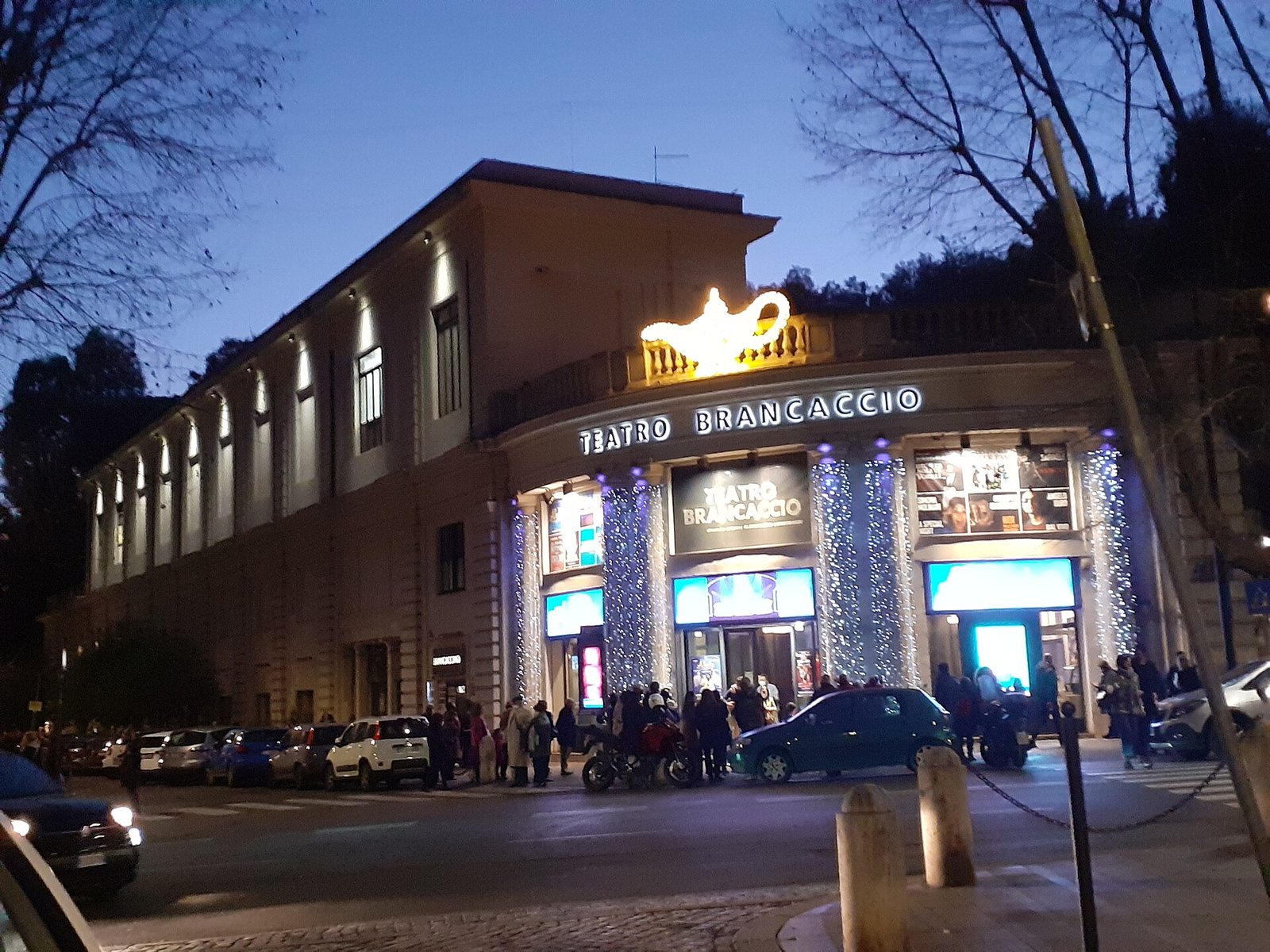
Francesco Paolantoni brings Salotto Paolantoni to Teatro Brancaccio in Rome on Monday, March 15, 2027 at 21:00, for one night only, with Arduino Speranza. The theater is at Via Merulana 244, in Esquilino, a few steps from the Vittorio Emanuele stop on metro A. The full prices published by Brancaccio range from 29 euros for the second balcony to 48 euros for Poltronissima A. Tickets are bought on the official Teatro Brancaccio website, which links to the presale circuit authorized by the organization, or at the theater's box office. The organization is by Vincenzo Berti and Gianluca Bonanno for Ventidieci.
Language: performed in Italian. No English version or English surtitles are announced.
Salotto Paolantoni at Brancaccio: date, time and prices
Salotto Paolantoni is on at Teatro Brancaccio for one night only, Monday, March 15, 2027, at 21:00.
One date only
Monday, March 15, 2027, starting at 21:00. Monday is the day off for many Roman theaters, and a comic evening on a Monday night in March is a good chance to start the week lightly. With just one date, it's best not to wait until the last weeks to buy.
Prices
Teatro Brancaccio publishes these full prices: Poltronissima A 48 euros, Poltronissima B 42 euros, Poltrona A 38 euros, Poltrona B 35 euros, I Balconata A 38 euros, I Balconata B 31 euros, II Balconata A and B 29 euros. The first balcony A costs the same as Poltrona A: the theater considers it equivalent to the rear orchestra.
Where to buy
Tickets are bought from the show's page on the Teatro Brancaccio website, with the Buy and Book buttons, or at the box office on Via Merulana. The site links to the presale circuit authorized by the organization.
The address
Teatro Brancaccio, Via Merulana 244, 00185 Rome, on the stretch of Via Merulana between Santa Maria Maggiore and San Giovanni in Laterano.
What you'll see: an open living room
Salotto Paolantoni is born, according to Teatro Brancaccio's presentation, as a domestic and informal space where Francesco Paolantoni's comedy meets the audience up close, almost as if he were a guest at home more than an artist on stage.
A living room with the audience
The show has the form of a real open living room. The themes are those of everyday life: politics, family, the couple, cooking, small manias and big neuroses. Paolantoni tackles them with lightness, improvisation and a constant back-and-forth with the audience: the audience isn't just a spectator, it is the host's interlocutor.
Stories, sketches and fables
The direction builds a deliberately simple and recognizable setting, which becomes the pretext for a continuous flow of stories, sketches, fables and digressions. The rhythm alternates moments of narration, surreal dialogues and improvisations: a formula that brings out Paolantoni's eclecticism, able to move from monologue to character, from nonsense to the dry punchline.
With Arduino Speranza
Alongside Paolantoni is Arduino Speranza. The presentation speaks of an ensemble work, of a stage game that relies on closeness, mutual listening and a comedy that is never predictable. In the official images the two are on stage between two yellow armchairs: the living room of the title is literal.
For all ages
The theater stresses that the show is designed to engage spectators of all ages, with special attention also to the youngest audience. The fables, in particular, are the part of the evening that speaks to children too. It's a rare choice for a comedian who became known on television with characters designed for an adult audience, and who here builds an evening to share as a family.
Francesco Paolantoni: biography
Francesco Paolantoni was born in Naples on March 3, 1956, in the Quartieri Spagnoli, to a father from the Marche and a Neapolitan mother: actor, comedian and playwright, he is one of the most recognizable faces of Italian television comedy from the 1990s to today.
School and cabaret
In the mid-1970s he enrolls in the Scuola d'arte drammatica of the Circolo artistico di Napoli and acts for over a decade in several theater companies. In 1986, with Stefano Sarcinelli, he brings the show Fame, saranno nessuno to Zelig in Milan and wins the «Cabaret amore mio» festival in Grottammare.
With Salemme and Covatta
He takes part as an actor and collaborates on the texts of Vincenzo Salemme's comedy La gente vuole ridere. With Salemme he writes and performs Killer, and with Giobbe Covatta he performs «Io e lui», another Salemme comedy. On his own he creates The School of the Art of De Lollis.
Television
He is Cupid in Indietro tutta! by Renzo Arbore. He takes part in Fate il vostro gioco, Banane and Tirami su, where he meets Giobbe Covatta and Enzo Iacchetti. The consecration comes in the mid-1990s with the characters of Mai dire Gol by the Gialappa's Band, and with Quelli che il calcio by Fabio Fazio and L'ottavo nano by Serena Dandini and Corrado Guzzanti. Since 2016 he has often been a guest on Stasera tutto è possibile, whose regular cast he joined in 2019. He was a regular guest at the table of Che tempo che fa.
Cinema
He debuts in cinema in 1985 with Blues metropolitano by Salvatore Piscicelli. Then come L'amore molesto by Mario Martone, Hotel Paura by Renato De Maria, Baci e abbracci by Paolo Virzì, Liberate i pesci! by Cristina Comencini, which earns him a Nastro d'argento nomination as best supporting actor, and Bimba, Sabina Guzzanti's directorial debut. On television he is also Max Peluso in a few episodes of Un posto al sole.
Recent years
In 2020 he is a contestant on the 10th edition of Tale e quale show, where he returns in 2022 paired with Gabriele Cirilli. In the same period he publishes the book «Mungi da me», with Edizioni MEA. He takes part in Celebrity Chef with Alessandro Borghese, in Ballando con le stelle paired with Anastasia Kuzmina, in 2025 in Freeze on Rai 2, and in 2026, with Biagio Izzo, in Pechino Express, L'estremo oriente, as the couple of the Spassusi.
Arduino Speranza and the Ventidieci production
Arduino Speranza is Paolantoni's stage partner in Salotto Paolantoni. The organization is by Vincenzo Berti and Gianluca Bonanno for Ventidieci.
A duo on stage
The theater doesn't publish a biography of Arduino Speranza, but describes his role precisely: the ensemble work with Paolantoni, the mutual listening, the stage game. In a comic living room the second person on stage is the sidekick, the one who picks up the jokes, provokes the digressions, keeps the thread when the host wanders off into improvisation.
The living room formula
The living room form is an old one in Italian comic theater: a domestic setting, someone telling, someone listening, and the audience taking part. Salotto Paolantoni takes it up with the tools of television comedy, the sketch and the character, and with those of the theater, the fable and improvisation.
A curiosity about Salotto Paolantoni with Francesco Paolantoni at Teatro Brancaccio, March 15, 2027
The funniest curiosity concerns Paolantoni's most recent traveling companion. In 2026 the Neapolitan comedian took part in Pechino Express, L'estremo oriente, paired with Biagio Izzo, and the two called themselves the Spassusi. A few weeks after Salotto Paolantoni, on April 21, 2027, Biagio Izzo will also be at Brancaccio with L'arte della truffa: the pair from the trip through Asia meet again, a month apart, on the same stage on Via Merulana.
The second curiosity is about age. Paolantoni was born on March 3, 1956: on March 15, 2027 he will step onto the Brancaccio stage just days from his 71st birthday. After more than 50 years of career, from the Neapolitan companies of the 1970s to Stasera tutto è possibile, his Roman show is a living room where people also talk about small manias and big neuroses: the comedian who made three generations of television viewers laugh sits in an armchair and tells stories.
The third is about place. Brancaccio is a hall of about 2,000 seats at the time, with two balconies: bringing an intimate living room there is a challenge. The presentation insists precisely on closeness to the audience, and it will be interesting to see how Paolantoni builds it in one of the biggest halls in Rome.
Teatro Brancaccio: the hall and how it's laid out
Teatro Brancaccio, at Via Merulana 244, has had its current configuration since 1937: two foyers, a wide orchestra and two raised levels, first and second balcony, for about 2,000 seats at the time.
Orchestra and balconies
The orchestra is divided into Poltronissima and Poltrona sections, each in bands A and B. Above are the first balcony, divided into A and B, and the second balcony. For Salotto Paolantoni the prices cover all the sections, from Poltronissima A to the second balcony.
Where to sit for a comic living room
For a show that relies on closeness and interplay with the audience, in our view the orchestra is the better choice: Poltronissima for those who want to be inside the living room, Poltrona A as a compromise. From the balconies you hear everything, but the play of glances and jokes with the front rows is lost. The balconies, moreover, are not served by elevators.
The Brancaccio complex
Brancaccio is the main hall of a larger complex: the Brancaccino, a theater of about 100 seats, a park area for training, a terrace on Via Merulana. The theater is home to the production center Viola Produzioni and hosts the academies of acting, directing, musical theater and dance.
Something nobody tells you about Salotto Paolantoni with Francesco Paolantoni at Teatro Brancaccio, March 15, 2027
What you don't read in the presentations is that in a show built on back-and-forth with the audience, the front rows aren't just the best seats: they're also the most exposed. Anyone sitting in Poltronissima A should expect to become, for a few minutes, part of the living room. Anyone who prefers to laugh without being called into play can choose Poltrona B or the first balcony.
The second thing concerns the theater's rules. Brancaccio asks you to arrive early, doesn't allow entry after the show has started, forbids photos and filming during the show and doesn't let umbrellas, bottles over half a liter or glass containers into the hall. In mid-March, with rain possible, the umbrella has to be left at the coat check.
The third is that on Monday evening Esquilino and Monti are quieter than on the weekend: finding a table after the show is easier, and the metro at the exit is less crowded.
How to get to Teatro Brancaccio
Teatro Brancaccio is at Via Merulana 244, less than a kilometer from Termini station and a few steps from the Vittorio Emanuele stop on metro A.
By metro
The theater's directions are two. Metro A, Vittorio Emanuele stop, is the nearest: you exit onto Piazza Vittorio Emanuele II and reach Via Merulana in a few minutes on foot. Metro B and B1, Cavour stop, are the alternative for those coming from the Monti or Colosseum side.
By bus
The theater lists three stops. On Via Merulana, at the Merulana/Brancaccio and Merulana/Mecenate stops, lines 16, 75, 714, 717 and C3 pass. At the Labicana/Merulana stop lines 3, 53, 75, 85, 87, 186, 571, 810, C3 and the night line N10 pass, useful for the return.
By taxi
The theater points out the nearest taxi stands: Largo Brancaccio, Piazza Vittorio Emanuele II at number 113, Via Principe Amedeo at 138, Via Giolitti at 6 and Via Venosta.
By car
The theater doesn't list any affiliated parking, and in the evening Esquilino is a neighborhood where parking is hard. Those coming from outside Rome do better to leave the car near a metro station and continue to Vittorio Emanuele or Cavour.
My advice for seeing Salotto Paolantoni with Francesco Paolantoni at Teatro Brancaccio, March 15, 2027
My first advice is to choose the orchestra, and to choose it knowing what you want. In Poltronissima you enter the living room, with the funny risk of being drawn in. In Poltrona A you are close enough to catch every expression without being on the front line. For a comedian who works a lot with his face and with pauses, distance matters.
The second advice is to arrive early, as the theater asks, and to use the time for a walk on Via Merulana. In mid-March at 19:30 there's still a thread of light, and from Brancaccio you reach Santa Maria Maggiore or San Giovanni in Laterano in a few minutes.
The third is to bring someone who knows Paolantoni only from television. The living room is the format in which the comedian shows the side that television grants less: the stage-trained actor, able to hold a hall with a story, a fable, an improvisation.
Another well-known fact, yet rarely mentioned
It's well known that Francesco Paolantoni became famous with the characters of Mai dire Gol by the Gialappa's Band, in the mid-1990s: it's the television everyone remembers. It's less often mentioned that before then he had behind him more than 10 years of theater in several companies, training at the Scuola d'arte drammatica of the Circolo artistico di Napoli and a cinema debut in 1985 with Salvatore Piscicelli. And that in 2000 Cristina Comencini directed him in Liberate i pesci!, a role that earned him the Nastro d'argento nomination.
The fact explains the nature of Salotto Paolantoni. A show that stands on stories, fables and improvisations needs an actor who knows how to be on stage without a safety net of ready-made sketches, and Paolantoni comes from there: from the Neapolitan theater of the companies, from the cabaret of Zelig in the 1980s, from the comedies written with Vincenzo Salemme. Television came later.
There is also a second well-known, little-cited fact. Paolantoni was born in the Quartieri Spagnoli to a father from the Marche: the quintessential Neapolitan comedian has half of his roots in the Marche.
Around Brancaccio: Esquilino, Monti and Via Merulana
Teatro Brancaccio is on Via Merulana, between the Basilica of Santa Maria Maggiore, the Colosseum and the Basilica of San Giovanni in Laterano.
The two basilicas
Via Merulana runs between two of Rome's major basilicas: Santa Maria Maggiore on one side, St. John Lateran on the other. The theater lies along the stretch between the two: from one end of the street to the other you walk in about 20 minutes, and a stroll before the show can start from one basilica and end at the entrance of Brancaccio. In mid-March, around 19:00, the facades of the two basilicas are already lit.
Palazzo Merulana and the Auditorium of Maecenas
On the same street are Palazzo Merulana, with its art collection, and a little farther the Auditorium of Maecenas. The name of the theater recalls Palazzo Brancaccio, right up against whose garden the hall was built.
Piazza Vittorio and Monti
To the north is Piazza Vittorio Emanuele II with the Porta Alchemica. To the west you go down into the rione Monti, with trattorias, osterias and wine bars.
The right photo to take at Salotto Paolantoni with Francesco Paolantoni at Teatro Brancaccio, March 15, 2027
The right photo is taken on Via Merulana, from the opposite sidewalk, with Brancaccio's facade lit and the show's poster at the entrance. It's the image of a theater that since 1916 has been part of the neighborhood's life, and that over the years has hosted variety, opera, musicals and great comedy.
Inside, during the show, the theater's rules forbid photos and filming, with or without flash, even with a phone. Before the start, from the orchestra, a shot of the hall with the two balconies is worthwhile and, if already in view, of the living room on stage with the yellow armchairs.
The third photo is the one for afterward: Via Merulana at night, with the perspective running toward the lit Santa Maria Maggiore, is one of the most beautiful views of Esquilino.
Some important events that happened here in history
The history of Teatro Brancaccio begins in January 1916, when the hall was inaugurated under the name Teatro Morgana.
1916, Teatro Morgana
The hall was built against the embankment of the gardens of the noble palace of the Field Brancaccio family, whose name comes from Isabella Field, married to Prince Brancaccio. The link with Palazzo Brancaccio is physical even before it is in the name.
1937, Teatro Brancaccio
After several renovations, in 1937 the hall is inaugurated in its current configuration, with two foyers, a wide orchestra and two balconies for about 2,000 seats at the time, and takes the name Teatro Brancaccio.
From 1985 to today
From 1985 to 2000 the hall is the home of the Fondazione dell'Opera di Roma. Then the City entrusts the direction to Gigi Proietti until 2007. Maurizio Costanzo follows until 2010 and Stage Entertainment Italia until 2012. Since September 2012 the artistic direction has been Alessandro Longobardi's, and the theater becomes a cultural hub with the Brancaccino, the academies and, since 2014, Spazio Impero.
Who has passed through: Salotto Paolantoni with Francesco Paolantoni at Teatro Brancaccio, March 15, 2027
On the Brancaccio stage some of the biggest names in Italian and international entertainment have passed. The theater itself recalls a few: Totò, Anna Magnani, Aldo Fabrizi, Gigi Proietti among the actors. Fabrizio De André, Louis Armstrong and Jimi Hendrix among the musicians.
Proietti, in particular, was not just a passing actor: after 2000 he directed the theater on behalf of the City of Rome, until 2007. After him, until 2010, the management was Maurizio Costanzo's, and until 2012 Stage Entertainment Italia's.
In the 2026-2027 season Brancaccio hosts, among others, Raffaella il Musical, which closes on March 6, and Mrs Doubtfire il Musical, from March 31. Between the two big musicals, on March 15, comes Francesco Paolantoni's living room: the comedian from the Quartieri Spagnoli enters a hall that has seen Totò pass, and for a Neapolitan comedian that carries a meaning of its own.
Accessibility at Teatro Brancaccio
Teatro Brancaccio states that it has no architectural barriers for access to the orchestra: there is a ramp, an area dedicated to wheelchairs and an accessible restroom on the ground floor, reachable from the orchestra foyer.
Reserved seats
For performances organized by the operator the theater makes available, while they last, orchestra seats for people in wheelchairs and for people with walking difficulties. The balconies are not wheelchair accessible. Seats must be booked by sending the box office the appropriate form with the required documentation. The conditions for a show by a guest production must be checked with the box office.
Visual and hearing disability
For spectators with visual and hearing disabilities the theater reserves, by booking, orchestra seats while they last.
Salotto Paolantoni with children
Salotto Paolantoni is one of the few comic shows of the season that the theater expressly presents as designed for all ages, with special attention also to the youngest audience.
The fables
Among stories and sketches, the presentation mentions fables: it's the moment when the living room speaks to children too. For a family it's a good chance to bring kids to the theater with a comedian the parents know from television.
The time
A 21:00 start on a Monday can be late for the youngest children, who go to school the next day. It's worth considering age and, if need be, choosing seats near the exit.
Where to eat before or after the show
The Brancaccio area offers three different options: the cafés and places of Via Merulana, the multiethnic Esquilino of Piazza Vittorio and the trattorias of the rione Monti.
Before the show
Via Merulana and the streets around the theater have neighborhood cafés and places, good for an aperitivo or a quick meal before 21:00. The streets around Piazza Vittorio offer cuisines from half the world at low prices.
After the show
The rione Monti, a quarter of an hour's walk away, has trattorias, osterias and wine bars, and is the best choice for dinner after the show. On Monday night many kitchens close earlier: it's best to reserve.
House rules at Teatro Brancaccio
The Teatro Brancaccio rules apply to all shows: arrive early, no entry after the show has started, no photos or filming during the show, no food in the hall.
Arrival and seats
The rules ask you to occupy only your assigned seat: for safety reasons switching seats isn't allowed, even with empty armchairs. Hall staff may ask to see your ticket at any time. Reduced-fare tickets are valid only with a document proving the right to the discount.
Bags, umbrellas and coat check
The theater has a coat check service and a bar. Umbrellas don't go into the hall and must be left at the coat check. Plastic bottles over half a liter, glass containers, motorcycle helmets, professional cameras, tripods and selfie sticks are forbidden. Food and drinks are consumed only at the bar.
Phones and dress
The rules ask you to turn off phones before the start. On dress the theater asks for attire befitting the decorum of the hall, without a real code: for a comic living room on a Monday night, city clothes are enough.
How to organize the evening of March 15
With a single show, on a Monday at 21:00, the evening is organized around three moments: the stroll in the neighborhood, the show, dinner or the trip home.
The afternoon
Those who arrive early can start from Santa Maria Maggiore, walk down Via Merulana and stop at Palazzo Merulana. Or go up from Monti, with its shops, to Piazza Vittorio. These are routes of 20 or 30 minutes, with many reasons to stop.
Before going in
The theater asks you to arrive early: for an evening at 21:00 it's best to be on Via Merulana around 20:15, pick up the tickets, leave your coat and umbrella at the coat check and take your seat unhurriedly.
After the show
On Monday night the city is quieter. For the trip home, metro A from Vittorio Emanuele and the night line N10 from Via Labicana cover a good part of the city. The taxi stands at Largo Brancaccio and at Piazza Vittorio are a few steps away.
March in Rome, a Monday of comedy
Salotto Paolantoni falls in mid-March, between the end of winter and the start of the Roman spring, at a time when the theater season is in full swing and the city doesn't yet have the Easter crowds.
The weather
In mid-March the evenings can be cool and rainy. Between the metro and the theater there are only a few minutes on foot, but an umbrella is useful: at Brancaccio it then has to be left at the coat check, because it doesn't go into the hall.
A week of theater in Esquilino
In the same week, a few minutes' walk from Brancaccio, Teatro Ambra Jovinelli hosts another comedy with a well-known television face: anyone staying in Rome a few days can make Esquilino their theater neighborhood, and choose one evening for each of the two halls.
Frequently asked questions about Salotto Paolantoni
When is Salotto Paolantoni on at Brancaccio?
Salotto Paolantoni is on at Teatro Brancaccio in Rome on Monday, March 15, 2027 at 21:00, for one night only. Francesco Paolantoni is on stage with Arduino Speranza. The organization is by Vincenzo Berti and Gianluca Bonanno for Ventidieci.
How much do tickets for Salotto Paolantoni cost?
The full prices published by Teatro Brancaccio for Salotto Paolantoni are: Poltronissima A 48 euros, Poltronissima B 42, Poltrona A 38, Poltrona B 35, I Balconata A 38, I Balconata B 31, II Balconata A and B 29 euros.
What is Salotto Paolantoni about?
Salotto Paolantoni is a comic show in the form of an open living room: Francesco Paolantoni tackles daily life, politics, family, the couple, cooking, small manias and big neuroses with stories, sketches, fables and improvisations, in a continuous game with the audience.
Is the show suitable for children?
Salotto Paolantoni is presented by Teatro Brancaccio as a show for spectators of all ages, with special attention to the youngest, to whom the fables above all are addressed. The 21:00 start on a Monday should be considered for the youngest children.
Where is Teatro Brancaccio?
Teatro Brancaccio is at Via Merulana 244, in Esquilino. The nearest stop is Vittorio Emanuele on metro A, or alternatively the Cavour stop on metro B. Several bus lines pass on Via Merulana.
Who is Francesco Paolantoni?
Francesco Paolantoni is a Neapolitan actor and comedian born in 1956, known for the characters of Mai dire Gol, for Quelli che il calcio and Stasera tutto è possibile, and for films such as Liberate i pesci! by Cristina Comencini. In 2026 he took part in Pechino Express with Biagio Izzo.
Final advice on Salotto Paolantoni
The advice is to book early, choose the orchestra and decide if to sit in the living room, in Poltronissima, or at a safe distance, in Poltrona. Salotto Paolantoni is a single night, on a Monday in March, with a comedian who has behind him 50 years of Neapolitan theater, cabaret and television and who here returns to the simplest form: telling stories, improvising, talking with the audience. In our view it's the right evening for anyone who wants to laugh without pretensions and discover the theatrical side of a face everyone knows from television.
Article written by the editorial team of Tour Leader Pro, contact them for Private/Corporate/V.I.P. Tours and Experiences.
Planning a trip to Rome? The English guides to visiting the city are on ItalyPlanner.com.