Romaeuropa Festival 2026, 100 shows and 1,000 artists from around the world
https://www.estateromana.com/en/rome/trip-planner/romaeuropa-festival-2026-100-shows-and-1-000-artists-from-around-the-world/
Romaeuropa Festival 2026, the 41st edition, runs from September 8 to November 15, 2026: about 100 shows, around 240 performances, about 1,000 artists from all over the world, spread across some 20 different spaces in the city. The festival began on September 8 and stays on until November 15.
Language: a performance based on dance, music or visual acts; no English version is announced, any spoken parts are in Italian.
What it is. For 40 years REF has been the festival that brings the best of contemporary creation from around the world to Rome: dance, theater, music, performance, digital arts and video games, with Italian premieres, coproductions and original productions. The full program is on romaeuropa.net.
The venues. Not one venue, but about 20: Auditorium Conciliazione, Auditorium Parco della Musica, Mattatoio di Testaccio, Teatro Argentina, Teatro Vascello, Teatro India, Teatro Olimpico, Teatro Brancaccio, Teatro Valle, Teatro Costanzi, MAXXI, the American Academy. The festival is, in fact, a way to cross Rome from one stage to the next.
About 100 titles in two and a half months, 20 addresses, genres ranging from auteur choreography to electronic concerts, from experimental theater to artist video games: nobody sees everything, and nobody has to. The right question isn't how many shows you can squeeze in, but which path makes sense within such a wide program. These lines were written on September 12, with the festival open for four days, and updated at the end of October, when a little over two weeks are left. The festival weeks are the only time of year when Romaeuropa stops being a program on paper and becomes something physical: people getting off the 23 bus in front of Mattatoio at 20:30, orderly lines under the porticoes of the Conciliazione, the foyer of the Vascello full of 20-year-olds, the Ostiense neighborhood filling up at midnight with people discussing a show they've just seen. In the REF weeks Rome changes its rhythm slightly, at least in certain areas and at certain hours.
The dates, the numbers and what 41st edition really means
The 2026 edition opened on September 8 and closes on November 15. That's 69 calendar days, practically 10 weeks. The festival signs itself RE41F, an acronym that in official communications has by now replaced the full name, and the numbering is consistent with its history: the first edition dates back to 1986, and anyone who wants to do the math finds confirmation in past editions, with the 38th held in 2023.
The figure of about 100 shows counts titles, not nights: there are many more performances, around 240. It means that an interesting title is almost never a one-time chance to grab on the fly, because many shows have two, three, four dates and some stay on the program for 10 days. Even in the festival's last weeks there's no need to rush: you need to look at the calendar calmly and see where your free evenings fit.
Distribution over time
The festival doesn't have a constant intensity. September starts with a series of big concentrated events, almost one a day in the largest halls, and then from the second half of the month it changes register: the center of gravity shifts to Mattatoio, where the most experimental sections, the late-night concerts, the talks and the installations are concentrated. October is by far the busiest month, with international auteur dance, experimental theater and the two series dedicated to new generations overlapping. November opens up to family audiences and closes with a final day of music, on the 15th, which works as a real closing party.
It doesn't take over the city completely: it crosses it for 69 days, leaving room for everything else. In the same period Rome hosts many other things, from the Rome Film Fest at the Auditorium to the theater seasons reopening, and Romaeuropa coexists with all of them without canceling them.
From Villa Medici to the Opificio: how Romaeuropa was born
The story begins in 1986, and it begins in a precise place: Villa Medici, home of the French Academy in Rome, on the Pincio. That year the Associazione degli Amici di Villa Medici was born, the result of an Italian-French initiative. It wasn't a foundation yet, it wasn't called Romaeuropa yet, but the DNA is all there: a French cultural institution on Roman soil that decides to open its gardens and spaces to the international contemporary scene.
Anyone who knows Villa Medici immediately understands why that place worked as an incubator: a 16th-century villa with gardens overlooking all of Rome, occupied since 1803 by the French Academy, an institution that for two centuries has hosted artists in residence. A place used to creators passing through, with spaces that become a stage without being a theater. The first editions took place right there.
The formal steps
The association became the Fondazione Romaeuropa Arte e Cultura on February 7, 1990, and obtained recognition as a legal entity on April 30, 1992 by decree of the Ministry of Tourism and Entertainment. They're bureaucratic steps, but they tell a trajectory: in six years a series born around a villa became a structured cultural organization, able to program entire seasons and move international productions.
Since then there have been many accolades. The festival takes place under the High Patronage of the Presidency of the Italian Republic, and in 2006 the Wall Street Journal named it among the four best festivals in Europe. The Foundation has also been included in many bilateral cultural agreements between Italy and other countries, at the proposal of the Foreign Ministry: a detail that explains why at REF you see companies that almost never come to Italy.
The current headquarters
Since January 2008 the Foundation has been based at the Opificio Romaeuropa, Via dei Magazzini Generali 20/A, in the Ostiense neighborhood. It isn't a logistical detail. Moving the headquarters from a villa on the Pincio to a former industrial space between Ostiense and Testaccio tells a precise choice of position within the city: the festival stopped looking at Rome from the top of the Pincio and put itself in the middle of the urban fabric that over the last 20 years has produced the city's most interesting scene. Meetings, talks, presentations and conferences are held at the Opificio, and it's home to one of the festival's box offices.
It's worth remembering two parallel experiences: from 2003 to February 2014 the Foundation curated the program of Teatro Palladium in Garbatella on behalf of Roma Tre University, and since 2010 there has been Digitalife, the exhibition project dedicated to digital cultures that for years worked as the festival's technological heart.
The festival's geography: 20 spaces and how to get around them
This is the part that confuses first-timers at REF the most. There's no single Romaeuropa venue. There's a map. And the map changes every year, because it depends on what the shows on the program need. It's worth knowing, because choosing a show also means choosing a neighborhood, a time to get home and a means of public transport.
Mattatoio di Testaccio, the real headquarters
If the festival had a home, it would be here. The former Mattatoio complex in Testaccio, with the spaces of the Pelanda, alone hosts the absolute majority of the 2026 edition's events: the experimental sections, the Ultra Club concerts, the talks, the installations, the children's workshops, the theater of the new generations. Many nights there are two or three events at different times in the same complex, which makes it possible to build a whole evening without moving.
Mattatoio is a 19th-century industrial complex, designed for slaughtering, converted into a cultural space. You enter from Piazza Orazio Giustiniani, in the heart of Testaccio, a short walk from the Nuovo Mercato Testaccio and the Museo Diffuso del Rione Testaccio. Metro B Piramide is about 10 minutes' walk away, and from there you can see the Pyramid of Cestius.
Since September 19 a second festival box office has also been open at the Pelanda, at Piazza Orazio Giustiniani 4, Tuesday to Friday from 14:00 to 18:00 and Saturday and Sunday from 10:00 to 13:00 and from 14:00 to 18:00.
Auditorium Conciliazione
Auditorium Conciliazione hosted the opening of the edition and some of September's biggest draws. A hall of just under 2,000 seats, solid acoustics, a location that couldn't be more central: you step out and have St. Peter's Basilica at the end of the street. For those coming from outside Rome it's the easiest venue to reach.
Auditorium Parco della Musica
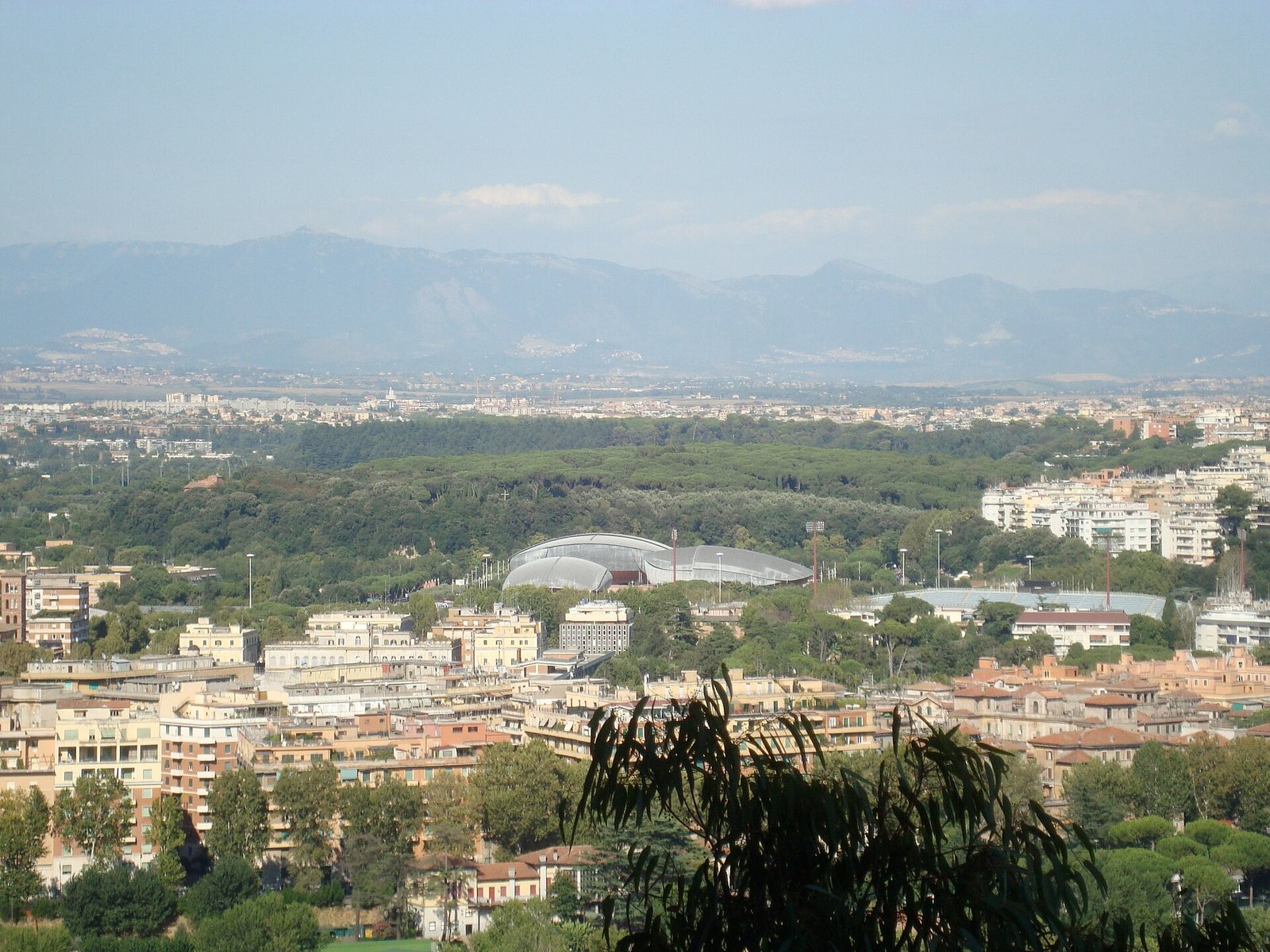
Auditorium Parco della Musica, in Flaminio, is the venue for the major concerts: the complex designed by Renzo Piano has three main halls plus the cavea, and in the REF program it hosts concerts that require an orchestra, big amplification or projection. In the same period it's also involved in other city events, from the Rome Film Fest to the Dissonanze dates: it's worth checking which hall you're entering, because the entrances are separate.
Teatro Vascello
In Monteverde, on Via Giacinto Carini, the Vascello is the theater the festival uses for experimental theater and mid-size dance, and this year it uses it intensively: from the second half of September to the end of November it hosts about 10 different titles. It's outside the historic center, and for those who don't know the area it's the venue that requires the most attention to getting home at night.
Teatro Argentina, Teatro India, Teatro Valle
All three venues of the Teatro di Roma are on the program. The Argentina, in Largo di Torre Argentina, hosts some of the edition's heaviest international titles. Teatro India, on the Lungotevere in the Marconi area, inside a former industrial plant, was used for dance in September. Teatro Valle comes in during November with a long run. Three completely different settings: the 18th-century Italian-style theater, the industrial shed, the restored historic theater.
Teatro Olimpico, Teatro Brancaccio, Teatro Costanzi
Teatro Olimpico, in Piazza Gentile da Fabriano in Flaminio, came in at the end of October with a large-scale show that needs a tall proscenium. Teatro Brancaccio, on Via Merulana, hosted a circus and choreographic production in September. And Teatro Costanzi, the historic hall of the Rome Opera House, opens its doors to the festival for two November nights dedicated to contemporary ballet. Seeing contemporary dance in the Opera's hall is one of those things that happen only during REF.
The less obvious venues
Then there are the spaces that aren't theaters: Zaha Hadid's MAXXI, which hosted a video installation in October, the American Academy in Rome on the Janiculum, a foreign institution that rarely opens to the public and where a festival concert is often the only way in, and the Accademia di Belle Arti, Campo Boario branch, right next to Mattatoio.
This geographical spread is a choice, not a fallback. Those who follow five shows in five different venues over 10 weeks have, without realizing it, made a tour of Rome that no tourist itinerary offers.
The 2026 program, month by month
What follows isn't the full program, which would be unreadable, but a map of the moments that define the edition. At the end of October most of these events have already passed: the November ones remain. Names, dates and venues come from the festival's official program. For exact times and availability it's always worth checking romaeuropa.net before setting out, because performances get added and times get adjusted.
September: the opening and the turn toward Mattatoio
The festival opened on September 8 at Auditorium Conciliazione with the dance of Sofia Nappi and the KOMOCO company, with the two works DODI and Chora, il vuoto all'origine. Opening with an Italian choreographer of the youngest generation is a statement of intent: REF, which for decades imported, has for some years been exporting and producing.
On September 9, again at the Conciliazione, Caterina Barbieri with Christian Marclay and the ONCEIM Orchestra brought Constellation, with Non puoi contare l'infinito and Barbieri's own live set. On September 10 and 11 Nacera Belaza and Valérie Dréville presented L'Echo at Teatro India.
On September 14 Benjamin Millepied arrived at the Conciliazione with November Ultra and Paris Danse for SUMMERLAND. On the 15th at Auditorium Parco della Musica there was Fatoumata Diawara, the Malian voice who has been touring European festivals for years. On the 16th, again at the Auditorium, the Philip Glass Ensemble accompanied Godfrey Reggio's Powaqqatsi live, the second chapter of the Qatsi trilogy: a film that without the music performed in the hall is something else. The 17th was the turn of Jeff Mills with Kety Fusco for The Trip To Vega, one of the crossovers between Detroit techno and acoustic instruments that the festival offers every year in some form.
From September 18 to 20 the Greek Christos Papadopoulos brought Landless to Teatro Vascello. On the 19th the American Academy in Rome hosted Michael Gordon's Field of vision with Blow Up Percussion, at 18:00: an unusual time and an even more unusual venue.
On September 19 the Ultra Club started at Mattatoio, probably the most interesting structural novelty of recent years. It isn't a concert series, it's a format: nights with several sets in sequence, from 17:00 until late, between experimental electronics, vocal experimentation, installations and artist video games. Between September 19 and 27 AGATHA forward, Rareș, the label 42 Records, Marta Del Grandi, the Galician Fillas de Cassandra, Davide Ambrogio, Kangding Ray and Chiara Passa's installation passed through there.
On September 24 and 25 the Korean Eun-Me Ahn brought Post-Orientalist express to Teatro Argentina. On the 26th the Design Talks day was held at Mattatoio, from 11:00 in the morning: talks, workshops, panels, a market, an exhibition, music, with two workshops designed for children and families. It's one of the festival's most accessible days and one of those when Mattatoio looks more like a fair than a theater.
Also on the 26th, Teatro Brancaccio hosted Raphaëlle Boitel's KA-IN with the Groupe acrobatique de Tanger, and Teatro Argentina offered Silencio in Moritz von Oswald's new version with the EVO Ensemble. The 27th was the Game Day at Mattatoio, dedicated to the video game as an artistic language: Ayoung Kim's Delivery Dancer Simulation, the Total Refusal collective, a modding workshop, a talk on video games and contemporary art. The same evening, in concert, the Osmium project bringing together Hildur Guðnadóttir, James Ginzburg, Rully Shabara and Sam Slater.
September 29 closed the month with two musical events of opposite character: Brahms's Die schöne Magelone in a new reading with texts by Sabine Scho, and Hans Thomalla's Nachtmusik with Ensemble LUX:NM.
October: the busiest month
October was the month when the festival reached its maximum density. From September 30 to October 1 Lora was staged, by Lora Juodkaite and Rachid Ouramdane for the Compagnie de Chaillot. From the 1st to the 4th (LA) HORDE arrived with the Ballet national de Marseille and Après moi, le déluge: the collective that put French contemporary dance back on magazine covers, and that works on the border between choreography, club culture and digital imagery.
From October 2 to 4 Boris Charmatz with Terrain presented Muette, and on the 2nd and 3rd Pankaj Tiwari with CAMPO brought The harvest of broken promises. On October 3 and 4 Vinicio Capossela presented E Morte non avrà dominio, the only Italian singer-songwriter on the program, in a format halfway between concert and theater. On the 4th Blow Up Percussion returned with a tribute to Steve Reich. On the 6th Sasha Waltz returned with Bach Cello Dance, together with cellist Anastasia Kobekina, while from the 7th to the 11th Giorgina Pi directed Lemnos.
On October 8 and 9 Wim Vandekeybus with Ultima Vez brought back What the body does not remember in its 2026 revival: it's the work that in 1987 changed the way physical dance was thought of in Europe, and seeing it again almost 40 years later was an opportunity that doesn't come often.
Between October 8 and 11 Mattatoio hosted dancing days, the section dedicated to new choreography: Chara Kotsali, Roberta Racis with ATTO BIANCO, Nik Rajsek with KINK, Michael Incarbone and Max Gomard, Giacomo Luci, the Vidavé Company passed through, and on the 10th at 21:30 Silvia Gribaudi with AMAZZONI. On the 11th there was also the showcase of DNAppunti Coreografici, the project that selects and supports young Italian choreographers. Also on the 11th, at Teatro Argentina, a double performance at 16:00 and 21:00 of Max Richter's four seasons changed, with the BRYGGEN Bruges Strings.
On October 13 anni luce started, the section dedicated to the new generations of theater, all at Mattatoio: Baraonda by Gruppo Uror, Noir by Usine Baug, ASTERIONE by Giovanni Onorato and Andrea Veneri, and from the 16th This is not an airport by Davide Pascarella, È pericoloso leggere i giornali by Annachiara Vispi and Sofia Russotto, Elegia di un cinghiale ferito by Matteo di Somma and Violetta Ghersina. From the 13th to the 15th MAXXI hosted Miasma, a video installation by Giorgina Pi.
From October 15 to 18, at Teatro Argentina, Romeo Castellucci with SOCIETAS presented Faust, fatto non detto. Castellucci is the most debated contemporary Italian author and the one most programmed abroad, and his relationship with Romaeuropa is a long one: over the years his productions at the festival have produced both enthusiasm and very heated controversy. On the 17th and 18th Tempo Reale brought the audiovisual installation Giuseppe Chiari, la luce to Mattatoio, drawn from a 1966 score. On the 20th and 21st the Vascello hosted Ben Duke's The last Hamlet.
From October 21 to 30 Mattatoio hosted Heimat, Patria/Straniero, a 10-day project made with the company of the Accademia d'Arte Drammatica Silvio d'Amico, in which different directors each signed one stage: Thom Luz, Fabiana Iacozzilli with Biljana Srbljanović's Belgrade Trilogy, Leonardo Lidi with Letizia Russo's Edeyen, Leonardo Manzan with Il salto di Nureyev, Ersan Mondtag with Elfriede Jelinek's Winterreise. For those who wanted to understand where Italian theater is heading in the coming years, that was the right week.
On October 24 and 25, two strong international titles: Jaha Koo's Haribo Kimchi with CAMPO at Mattatoio, and Tiago Rodrigues's No yogurt for the dead with NTGent at the Vascello. Rodrigues, who is Portuguese, directs the Festival d'Avignon. On the 24th the Ultra Club offered Costellazione Boario, a route going from the Pelanda to the Accademia di Belle Arti, Campo Boario branch. On the 27th and 28th Giovanni Ortoleva presented Can Can, and on the 28th and 29th Marta Cuscunà brought La Medium to the Vascello. From October 29 to November 1 Teatro Olimpico hosts Le Pas du Monde by Collectif XY, a contemporary circus company that works on human constructions: it's the most suitable show for those who want to bring to the festival someone who doesn't usually go to the theater.
November: families and the closing
From October 30 Mattatoio turns for two and a half weeks into the headquarters of the kids + family section, which runs until November 15. On the program are Pau Segalés's MAGINARIUM, Anna Confetti's Where is Stefie?, ZONZO Compagnie's Jazz Jazz Jazz, Artefactos Bascos's BATU, Animal Religion's Copiar, TeatroViola's Giraffe about the zoologist Anne Innis Dagg, then from November 6 Campsirago Residenza's Miloemaya, Frida Odden Brinkmann's Cirkus Antero, LABÚ Teatre and Cris Clown's Triplette, and finally from the 13th Dudu Arnalot's fOrat, de Dansers' A Small Anatomy, and kenji shinohe's manga beat and dance.
This is the most underrated part of the festival. REF kids isn't children's theater in the reassuring sense of the term: it's contemporary circus, dance, music and installation designed for a growing audience, and many shows are nonverbal, so they also suit families who don't speak Italian.
On October 31 and November 1, at the Vascello, Catalogo brings together Silvia Gribaudi, Francesca Pennini with CollettivO CineticO, Sotterraneo, and Emio Greco with Pieter C. Scholten. On November 2 at Auditorium Parco della Musica The Köln Concert is staged with Maki Namekawa and Thomas Enhco: the piano transcription of Keith Jarrett's legendary 1975 concert, one of the best-selling solo piano records in history. On November 4, again at the Auditorium, Hans Werner Henze's Voices with the New European Ensemble conducted by Carlo Boccadoro, while on the 4th and 5th the Vascello hosts Pietro Giannini's STARMAN.
On November 7 and 8 Katerina Andreou works with Carte Blanche, Norway's national contemporary dance company, for HOW ROMANTIC. On the 8th the Auditorium hosts the Blade Runner film concert, with The Avex Ensemble performing Vangelis's score live: it's one of those events that sell out first, because it draws a much wider audience than the festival's usual one.
On November 10 and 11 Teatro Costanzi welcomes the Opera Ballet Vlaanderen with a triple bill by Jan Martens, Anne Teresa De Keersmaeker and Christos Papadopoulos: On speed, Grosse Fuge and Opus. Seeing De Keersmaeker on the stage of the Rome Opera is, for dance followers, one of the high points of the entire edition. From the 10th to the 22nd Teatro Valle hosts Memoria di ragazza, which Silvia Costa adapts from Annie Ernaux with Federica Fracassi, Francesca Mazza and Emanuela Villagrossi, and from the 13th to the 22nd, at the Vascello, Giacomo Bisordi and Fabrizio Sinisi's Il Prodigio.
On November 14 Jlin with Third Coast Percussion presents Vernacular at the Auditorium. And on the 15th the festival closes with a full day of music: Giovanni Sollima and Enrico Melozzi's 100 Cellos Morning Session, Vanessa Wagner with Philip Glass's complete piano etudes, Third Coast Percussion with Aguas da Amazonia, also by Glass, and to close Enrico Melozzi with the Orchestra Notturna Clandestina for The Classical Rave Party. Closing 69 days of festival with an orchestra playing in rave format is, let's say, consistent.
Tickets, Passepartout and how buying really works
Here's the part worth understanding before everything else, because Romaeuropa's pricing system is different from that of almost all other Italian festivals, and those who don't know it end up spending more than necessary.
The coins system
The festival doesn't sell subscriptions to fixed shows: it sells the Passepartout, a package of credits. Each event is given a value from 1 to 8 coins, shown next to the title on the website, and you build your own path by choosing shows until the credits run out. The basic packages are 80 euros for 10 coins, 160 euros for 20 coins, 240 euros for 30 coins. There's also the Passepartout Plus, designed for those who see a lot, with 280 euros for 40 coins, 350 euros for 50 coins and 420 euros for 60 coins.
Two things to know: the Passepartout is in the holder's name and only one ticket per event can be added, so it isn't a way to bring friends along, and it can be given as a gift, with the recipient choosing the shows later.
For families there's the Passepartout Kids & Family, 80 euros for 10 coins, available only at the festival box offices and by phone, and the Kids PLUS version at 150 euros for 20 coins, which however has an early purchase window.
Discounts and reductions
The festival gives the under-25 audience a 25 percent discount on all events: it isn't a promotion on some dates, it applies across the whole program. Information is available from the box office at 06 45553050.
All festival events can also be bought with the Carta del docente, but not online: you have to go through phone, WhatsApp or email, writing to the festival's promotion office.
Where to buy tickets
There are four direct channels. Online from the official website. By phone at 06 45553050, Monday from 14:00 to 18:00 and Tuesday to Sunday from 10:00 to 13:00 and from 14:00 to 18:00. Via WhatsApp, every day from 10:00 to 13:00 and from 14:00 to 18:00. And in person, at the Opificio box office at Via dei Magazzini Generali 20/A, with the same hours, or at the Pelanda in Piazza Orazio Giustiniani 4 starting from September 19. You can also buy directly at the box office of the theater hosting the show.
The Foundation explicitly warns that it isn't responsible for tickets bought outside its direct channels and authorized sellers. For a festival with tickets in the holder's name, the unofficial secondary market is a real risk: it's best to buy from the festival's channels and that's it.
A curious fact about Romaeuropa Festival 2026, 100 shows and 1,000 artists from around the world
Italy's most international festival was born as an offshoot of a French institution. It isn't a colorful detail: it's the key to understanding everything else.
In 1986 the French Academy in Rome had occupied Villa Medici for more than 180 years. It was, and is, an institution that hosts artists in residence, has them work in Rome for a year and sends them back to France. A continuous flow of creators passing through the city. The idea of opening that flow to the Roman public, of turning the villa into a place where the international contemporary scene could show itself, is the spark from which the Associazione degli Amici di Villa Medici was born.
The consequence is that Romaeuropa has never had a theater of its own. The other big European festivals are almost always born around a space: a palace, a courtyard, an arena. REF was born inside a villa that didn't belong to it, and it kept working that way, borrowing other people's spaces. 40 years later, this original lack has become its signature: a festival without a home has to invent a geography every year, and that's why it doesn't fossilize.
Then there's a second element that few connect. Over its history the Foundation has been included in Italy's bilateral cultural agreements with other countries, at the proposal of the Foreign Ministry. It means that when Italy signs a cultural agreement with South Korea or Belgium, Romaeuropa can become the physical place where that agreement turns into shows. A Korean company coming to Rome often goes through a diplomatic channel before an artistic one. This explains why the program looks, year after year, like a map of Italy's cultural relations around the world.
Something nobody tells you about Romaeuropa Festival 2026, 100 shows and 1,000 artists from around the world
Romaeuropa isn't, for its core audience, a festival of big names: it's a festival of discovery. No official presentation says so, because it sounds like a downgrade when it's actually its greatest value.
Let's look at the numbers for the current edition. Out of about 100 titles, the names a non-insider recognizes right away are maybe 10: Philip Glass, Max Richter, Vinicio Capossela, Blade Runner, Romeo Castellucci, Sasha Waltz, Anne Teresa De Keersmaeker, Jeff Mills. All the others are companies, choreographers, ensembles and collectives the general public has never heard of. It isn't a communication flaw: it's the project.
The practical consequence needs to be said clearly: if you choose only based on known names, you spend more and see the least interesting part of the festival. The recognizable titles cost more coins, sell out first and are almost always productions touring Europe that you could catch elsewhere. The unknown titles cost less, are available until the last minute, and in many cases pass through Rome only once. It's easy to check by looking at the names that passed through the festival in the 1980s and 1990s, when nobody knew them yet: Merce Cunningham and Jan Fabre in 1987, William Forsythe and Trisha Brown in 1989, Anne Teresa De Keersmaeker in 1993. Those who saw them in Rome saw them before they became canon.
The second thing nobody says concerns prices. The coins system isn't a subscription: it's a mechanism that explicitly rewards those who accept not knowing what they're choosing. Shows are worth from 1 to 8 coins, and with a 10-coin package you can see eight or nine small shows or just one big title plus another. The festival, with its pricing structure, openly encourages the second path. Whoever understands this understands Romaeuropa.
My advice for Romaeuropa Festival 2026, 100 shows and 1,000 artists from around the world
My advice is just one and it applies both to those who live in Rome and those passing through for a few days: choose a venue, not a show. And that venue, for the vast majority of people, is Mattatoio di Testaccio.
Here's why. A festival spread across 20 spaces imposes, on those who approach it by title, tiring logistics: one night Monteverde, two days later Flaminio, on Saturday Via della Conciliazione. Mattatoio instead alone concentrates most of the events, and many nights offers two or three events at staggered times in the same complex: you arrive at 18:00, see an installation, have a drink, see one show at 20:00 and another at 21:30, without ever taking public transport.
How to organize a night at Mattatoio
I arrive an hour early and use it for Testaccio, not for standing in line. The neighborhood at 19:00 is one of the best things in Rome: the market has closed but the square is lively, and Via Galvani and Via Zabaglia have a density of trattorias and bakeries that has no equal. In an hour you eat something serious and get to the show without hurrying.
For the way home I keep in mind that metro B closes around 23:30 on weekdays and that many Mattatoio shows start at 21:00 or 21:30. It's the most important calculation of the night. On Friday and Saturday the metro closes later, and that's why to those who don't know Rome well I recommend concentrating the long nights on the weekend.
For those with only a few days in Rome, and for those bringing children
Those in the city for three or four days who want to see just one thing should reason the opposite way: choose the most beautiful venue, not the title. A night at Teatro Costanzi, Teatro Argentina or Auditorium Conciliazione brings together the show and a piece of the city that alone is worth the ticket.
Those bringing children are still in time: the kids and family section occupies Mattatoio from October 30 to November 15 with about 10 titles, almost all contemporary circus, dance and music, many nonverbal. With the 10-coin Kids and Family Passepartout you cover several shows in the same complex.
Another well-known fact, yet not often mentioned
Romaeuropa Festival has always been a producer too. Not just a host.
Anyone who follows the scene knows it, and no tourist guide writes it, because it's a fact you can't see from the stage. Yet it radically changes the meaning of what you watch. The festival coproduces shows with theaters and institutions across Europe, commissions new works, puts resources into productions that then tour the rest of the world for years. On the program, every year, there are titles that exist partly thanks to Roman money and structures.
The networks within which this happens have unpoetic names: EFA, the European Festivals Association, the Réseau Varèse for contemporary music, of which Romaeuropa was a member from 1999 to 2015, and the Theatron and Aerowaves networks, funded by the European Union. Aerowaves in particular is the system that every year selects the most interesting emerging choreographers in Europe, and a sizable part of the dancing days section comes from that pool.
The second well-known but rarely mentioned fact concerns the work on young Italian authors. The two sections anni luce for theater and dancing days for dance aren't courtesy showcases: they're structured paths, with selections, mentoring, rehearsal spaces and international visibility. The DNAppunti Coreografici project, which this year presented its results on October 11 at Mattatoio, selects young Italian choreographers and takes them all the way to the stage. Many names that now tour European theaters have passed through it.
Finally, there's a third element, mentioned even less: from the start the Foundation has worked on the relationship between public and private investment, and in 2009 Federculture gave it a special award precisely for that cooperation. Since 2015 RAI has been the festival's main media partner. Those wondering how an Italian festival manages to bring 100 international shows in 10 weeks find a sizable part of the answer here.
The right photo to take at Romaeuropa Festival 2026, 100 shows and 1,000 artists from around the world
A necessary premise: you don't take photos inside the halls. During shows filming is forbidden almost everywhere, for rights reasons and out of respect for the performers and the audience. So the right photo isn't a photo of the show.
The right photo is the courtyard of Mattatoio in the hour before the show, with the 19th-century iron and brick structures in the background and the audience gathering in the middle.
It works for a precise reason. The former Mattatoio complex is made of metal trusses, canopies, cast-iron pillars and brick surfaces, and on festival nights it's lit with cold, colored lights that clash with the warm brick. The contrast between the 19th-century structure, designed for slaughtering, and an audience waiting for an electronic concert is exactly the image of Romaeuropa: a city that reuses itself.
When to shoot
In September and the first days of October the good hour is around 19:15, when the sky is still deep blue but the artificial lights are already on: it lasts about 20 minutes. From the end of October, with standard time, the same condition shifts to around 17:45. The balance between skylight and floodlights, in that quarter of an hour, needs no correction.
The other two shots that work
The first is the exit from Auditorium Conciliazione after an evening show: the dome of St. Peter's lit up at the end of the street, with the audience dispersing against the light. An image that sums up the festival's happy oddity, that is, absolute contemporary inside absolute Rome.
The second is Monte dei Cocci seen from Via Zabaglia, two minutes from Mattatoio: a hill more than 30 meters high made entirely of fragments of Roman olive oil amphorae. In the evening it's lit from below and the venues dug into its side have their signs on. Nobody coming for the festival thinks of photographing it, and yet it's 300 meters from the entrance.
What to avoid
Flash in the courtyard, which flattens everything. Photos of the artists at the exit: many are at the end of a physically grueling show and it isn't the moment. And the photo of your ticket: the Passepartout is in the holder's name, the code is readable, and posting it on social media is a real risk.
Some important events that happened here in history
40 years of festival produce layers. Some moments changed the Italian scene, others marked the biographies of individual artists, others still produced controversies that made the national newspapers.
1986, the founding
The Associazione degli Amici di Villa Medici was born, from an Italian-French initiative. The first editions took place in the spaces and gardens of the French Academy. It's ground zero.
1987 and 1989, the dance that changed everything
At its second edition the festival brought to Rome both Merce Cunningham, within the program with the Paris Opéra Ballet, and Jan Fabre with Das Glas Im Kopf Wird Vom Glas. Cunningham was the patriarch of American modern dance, trained with Martha Graham and a fellow traveler of John Cage. Fabre was a 28-year-old Flemish provocateur. Putting them on the same program, at the second edition, says everything about the project's ambition. That same year Carolyn Carlson also came. In 1989 came Trisha Brown, one of the founders of American postmodern dance, with Lateral pass, Opal loop and Astral Convertible, and William Forsythe with Agon. For Italian dance, which then had very few chances to see the international scene live, these were decisive nights.
1990 and 1992, the structure
On February 7, 1990 the Fondazione Romaeuropa Arte e Cultura was formally born, and on April 30, 1992 came recognition as a legal entity by ministerial decree. Also in 1990 the festival presented the film version of Peter Brook's Mahabharata, the first of the English director's many Roman appearances.
1993, Anne Teresa De Keersmaeker
Achterland arrived. De Keersmaeker was then 33 and had founded Rosas eight years earlier. In the following decades she would return many times: Toccata in 1996, Verklärte Nacht and Vortex Temporum in 2015, Rain in 2016, Drumming Live in 2022, EXIT ABOVE in 2023, A little bit of the moon in 2025. Few artists have such a continuous relationship with the festival.
1995 and 1998, Philip Glass
Glass played solo piano in 1995. In 1998 he returned with Monster of Grace, a project made with Robert Wilson: one of the first stage works to incorporate stereoscopic projection. In 2012 the festival paid tribute to him, in 2021 it presented Koyaanisqatsi, in 2022 Einstein on the Beach. This year the Philip Glass Ensemble returned on September 16 with Powaqqatsi, and the closing day on November 15 includes two programs devoted entirely to his music. Wilson, for his part, presented the Timescope Project in 2000 and his Woyzeck in 2002.
2006, international recognition
The Wall Street Journal named Romaeuropa among the four best festivals in Europe. It's the moment when the series born around a villa officially entered the international conversation.
2012 and 2015, digital and the 24 hours
In 2012 the Digitalife edition hosted Marina Abramović's The Onion, and in 2015 the festival presented John Cage's Sonatas and Interludes. These are the years when REF built its identity in the field of digital cultures, a path that went through projects like Sonarsound Roma, the Festa Elettronica and Romaeuropa Webfactory. Also in 2015 Jan Fabre's Mount Olympus, to glorify the cult of tragedy was staged: a show lasting 24 consecutive hours, among the most extreme events ever hosted by an Italian festival.
Recent years
Akram Khan has passed through the festival with impressive continuity, from Kaash in 2002 to Thikra in 2025, by way of Zero Degrees, Desh, Torobaka and Xenos. Sasha Waltz has been returning since 2008, with Impromptus, Continu, Dido and Aeneas, Kreatur, up to Beethoven 7 in 2024 and this year's night. Laurie Anderson came in 2010 with Delusion and in 2025 with X2. Forsythe returned in 2019 and 2025.
It must be said, in all honesty, that not every appearance was peaceful. Some productions hosted by the festival sparked very heated protests, reaching the national news, with works publicly defended by the Foundation against attacks calling for their cancellation. A festival that programs contemporary art for 40 years without ever making anyone angry simply wouldn't be doing its job.
Who has passed through Romaeuropa Festival 2026, 100 shows and 1,000 artists from around the world
The complete list would be unreadable, because we're talking about 40 years and a few thousand artists. Here are those whose appearance is documented in the festival's archives, divided by field, because it's the most useful way to understand what Romaeuropa has been.
Dance
Merce Cunningham, 1987 and 2003 with Pond Way, Pictures and Fluid Canvas. Trisha Brown, from 1989 to 2011 with five different appearances. William Forsythe, from 1989 to 2025, four editions nearly 40 years apart. Carolyn Carlson, 1987, 1992 and 1995 with Vu d'ici. Anne Teresa De Keersmaeker, eight appearances from 1993 to 2025, plus this year's Opera Ballet Vlaanderen triple bill at the Costanzi. Sasha Waltz, from 2008 to today. Akram Khan, 14 appearances from 2002 to 2025. Wim Vandekeybus with Ultima Vez, also present in this edition with the revival of his most famous work.
And then, in this edition, the generation that now occupies that place: Boris Charmatz, the collective (LA) HORDE with the Ballet national de Marseille, Christos Papadopoulos, Jan Martens, Eun-Me Ahn, Benjamin Millepied, Katerina Andreou, Nacera Belaza, Rachid Ouramdane, Collectif XY, Carte Blanche.
Theater
Peter Brook, with six documented appearances from 1990 to 2023: the film version of the Mahabharata, Love is my sin, Un Flauto magico da Mozart, The suit, The Prisoner, Tempest Project. Robert Wilson, present from 1991 to 2002. Jan Fabre, 12 appearances from 1987 to 2019, including the 24 hours of Mount Olympus. Romeo Castellucci with SOCIETAS, on the program this year too at Teatro Argentina. And also Milo Rau, Pippo Delbono, Emma Dante, Alain Platel, Virgilio Sieni, the duo Deflorian and Tagliarini, Wen Hui, Cecilia Bengolea and François Chaignaud.
This year they're joined by Tiago Rodrigues, director of the Festival d'Avignon, Jaha Koo, Thom Luz, Ersan Mondtag, Marta Cuscunà, Silvia Costa, Ben Duke, Leonardo Lidi, Fabiana Iacozzilli, Leonardo Manzan, Giovanni Ortoleva, Giorgina Pi.
Music
Philip Glass, from 1995 to today, with five documented appearances besides the current edition's. John Cage, performed in 2015. Steve Reich, with a program that brought him together with Gerhard Richter and the Ensemble Intercontemporain, and to whom this year the festival paid tribute on October 4. Laurie Anderson, 2010 and 2025. And in this edition Max Richter, Jeff Mills, Caterina Barbieri, Fatoumata Diawara, Moritz von Oswald, Hildur Guðnadóttir, Jlin, Kangding Ray, Vinicio Capossela, Giovanni Sollima, Enrico Melozzi, Vanessa Wagner, Carlo Boccadoro.
Visual and digital arts
Marina Abramović, present at the 2012 edition of Digitalife with The Onion. And, this year, Ayoung Kim, Chiara Passa, Total Refusal, the collective 2girls1comp, together with the Roman academies taking part in the Game Day and the Design Talks.
How to get to the main venues
Transport is the variable that most often ruins a night at the festival, especially for those who don't know Rome. These are the essential pointers.
Mattatoio, Piazza Orazio Giustiniani, Testaccio: metro B Piramide stop and 10 minutes on foot along Via Marmorata and Via Galvani, or tram 3 and bus 83 along Viale Aventino, 170 on Via Marmorata. For the way home, metro B closes around 23:30 on weekdays, later on Friday and Saturday. Those leaving after that time have night buses or a taxi from Piazzale Ostiense.
Auditorium Conciliazione, Via della Conciliazione: metro A Ottaviano stop and 12 minutes on foot, or buses 40 and 64 from Termini to Piazza Pia. Walking out toward Castel Sant'Angelo is one of the best evening walks in the city.
Auditorium Parco della Musica, Viale Pietro de Coubertin: tram 2 from Piazzale Flaminio, Apollodoro stop, or bus 910 from Termini and 53 from Piazza San Silvestro. On nights with several events at once it's worth allowing a few extra minutes to figure out which of the three halls you're entering.
Teatro Vascello, Via Giacinto Carini, Monteverde: tram 8 to Trastevere and then a bus uphill, or the 75 and 44. It's the venue farthest from the center and the one that needs the most attention for getting home. Teatro Argentina: buses 40, 62, 64, 70, 87, 492 and tram 8, right in the center. Teatro Costanzi, Piazza Beniamino Gigli: metro A Repubblica stop, three minutes on foot. Teatro Olimpico, Piazza Gentile da Fabriano: tram 2 from Flaminio to Mancini, or buses 280 and 910.
Frequently asked questions about Romaeuropa
Is the festival already over or is there still time?
There's still time. The opening was on September 8 and the closing is on November 15: at the end of October the last two weeks remain, with the kids + family section, the triple bill at the Costanzi and the closing day.
Is the Passepartout or single tickets better?
It depends on how many shows you plan to see. The Passepartout pays off from three or four events, and pays off a lot for those going for low-coin titles. For just one thing, a single ticket is the normal route.
Do you need to know Italian?
For much of the program, no. All the dance, all the music, the installations, contemporary circus and most of the kids section are nonverbal or nearly so. Foreign-language theater is generally surtitled. Italian theater, yes, that requires the language.
Is there anything with free entry?
Some side events, particularly talks, meetings and certain installations, have historically had free entry or a reduced contribution. Conditions change from year to year and should be checked event by event on the official website.
Can I bring children to the regular shows?
Better not, unless they're listed as suitable. The festival has a section precisely for this, concentrated between October 30 and November 15 at Mattatoio, with shows designed for specific age groups.
How do I choose if I don't know any of the names?
Choose the genre and the venue, not the name. Electronic music lovers should go to the Ultra Club at Mattatoio, dance lovers should look at the titles at the Vascello and the Argentina, those who want a large-scale night should look at the Auditorium and the Costanzi. The festival is built so that this strategy works. And in the same period the city offers much more, from an exhibition at MAXXI to long music residencies like Francesco De Gregori's at Teatro Sala Umberto.
Frequently asked questions about Romaeuropa Festival 2026, 100 shows and 1,000 artists from around the world
When is Romaeuropa Festival 2026?
Romaeuropa Festival 2026 opens on September 8 and closes on November 15, for 69 calendar days, practically 10 weeks. The festival signs itself RE41F because it's the 41st edition: the first dates back to 1986.
Where are the Romaeuropa Festival shows held?
Romaeuropa Festival shows don't have a single fixed venue: they're spread across about 20 different spaces all over Rome, and the map changes every year depending on the needs of the shows on the program. Mattatoio di Testaccio works as the festival's real headquarters.
How does the Passepartout ticket system work?
Romaeuropa Festival doesn't sell subscriptions to fixed shows but the Passepartout, a package of credits called coins. Each event is given a value from 1 to 8 coins based on its importance, and the spectator buys the credit package and spends it on the shows they choose.
Is the Passepartout or single tickets better?
It depends on how many shows you plan to see at Romaeuropa Festival: the Passepartout pays off for those planning to follow more than two or three events during the festival's 10 weeks, while for a single occasional night the single ticket remains the simplest choice.
How do you get to Mattatoio di Testaccio, the main venue?
You get to Mattatoio di Testaccio, in Piazza Orazio Giustiniani, by metro B to the Piramide stop and then 10 minutes on foot along Via Marmorata and Via Galvani, or by tram 3 and bus 83 along Viale Aventino, or the 170 on Via Marmorata. For the way home, metro B closes around 23:30 on weekdays.
Is there still time to see something at the end of October?
Yes: Romaeuropa Festival 2026 opened on September 8 and closes on November 15, so at the end of October about two weeks remain, with the kids + family section at Mattatoio, the Opera Ballet Vlaanderen triple bill at the Costanzi and the final day on November 15.
Was Romaeuropa Festival born in Rome?
Yes, but with origins tied to France: the festival was born in 1986 at Villa Medici, home of the French Academy in Rome on the Pincio, from the Italian-French initiative that founded the Associazione degli Amici di Villa Medici. From that core it grew to become Italy's most international festival.
The point of it all
Romaeuropa remains for me the hardest thing to explain to those coming from outside. It isn't a monument, it isn't an exhibition, it has no address. It's a habit the city picked up 40 years ago and never lost: for 10 weeks a year, from September to November, Rome stops being only the place where you look at the past and also becomes the place where you look at what's happening now, elsewhere, in the rest of the world.
The curious thing is that it does so using almost exclusively old buildings: a 19th-century slaughterhouse, an 18th-century theater, an opera house, a former industrial plant, a foreign country's academy on a hill. None of these places was built to host a Korean choreographer or an Icelandic composer, and precisely for this reason, when it happens, it works. The program runs from September 8 to November 15, 2026. The final advice is the most obvious: open the festival calendar, find two or three free evenings between now and November 15, and choose based on those. Not the other way around. Romaeuropa rewards those who trust it, and almost always the best memory remains the show you knew nothing about before going in.
Article written by the editorial team of TourLeaderPro, contact them for Private, Corporate and V.I.P. Tours and Experiences. Those who would like a guided walk in Testaccio and Ostiense, between Monte dei Cocci, Mattatoio and the industrial archaeology that now hosts the festival, accompanied by a licensed guide, can write from the TourLeaderPro contact page. For agencies and operators building cultural and evening programs in Rome in the autumn months, a consulting service is available in the area reserved for tour operators.
Planning a trip to Italy? English-language guides are on ItalyPlanner.com. To plan your Roman days, the reference is the page on the best things to do in Rome, while those spending three full days in the city will find a ready-made plan in the 3-day Rome itinerary. For the evenings, the page dedicated to Rome at night is useful.